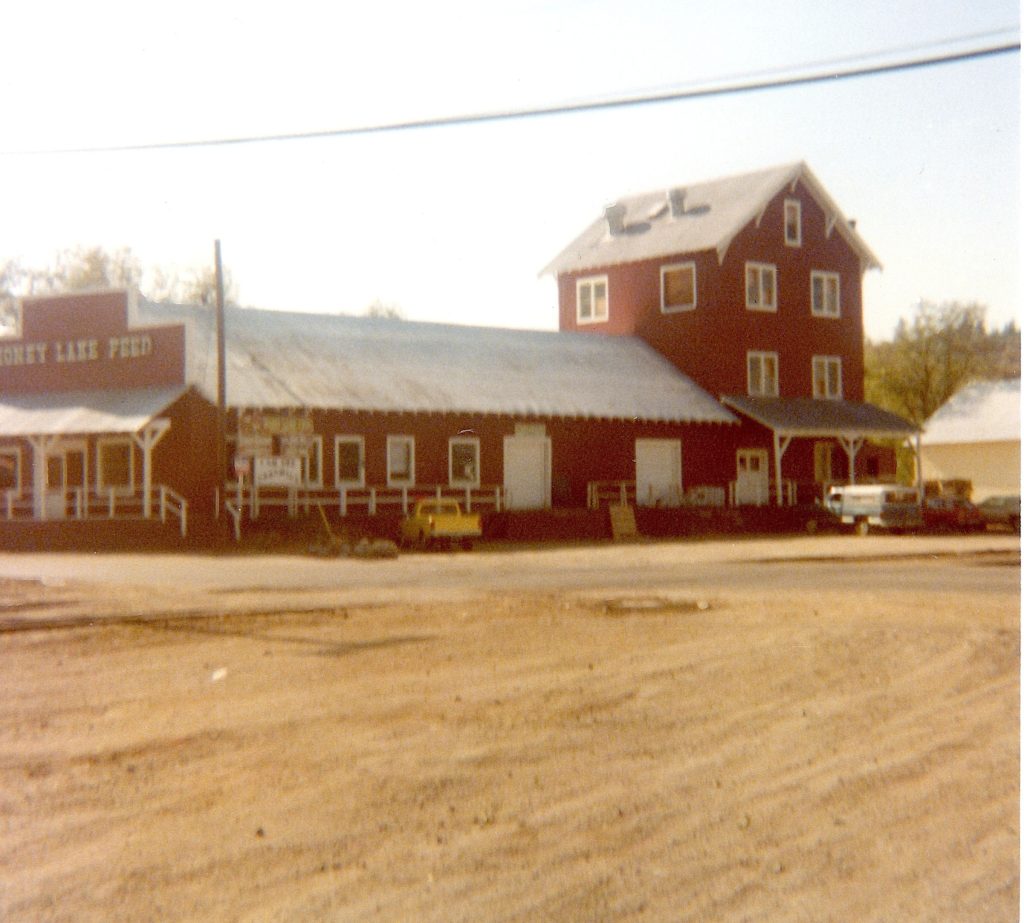
Honey Lake Feed located on Richmond Road, Susanville was the last of locally grown wheat/milled flour which the flour mill portion ceased in the 1940s. The building was destroyed by fire in the early 1980s.
I am pleased to introduce Mile High Mill & Grain Company located on Sunset Ranch near Ravendale. One can now obtain locally organic grown milled flour! The owners Tom and Andrea Traphagan has graciously extended yours truly to tour the facility, in which I will do a follow up later this spring.
In the meantime, you can learn a whole lot more by checking out their website at Mile High Mill
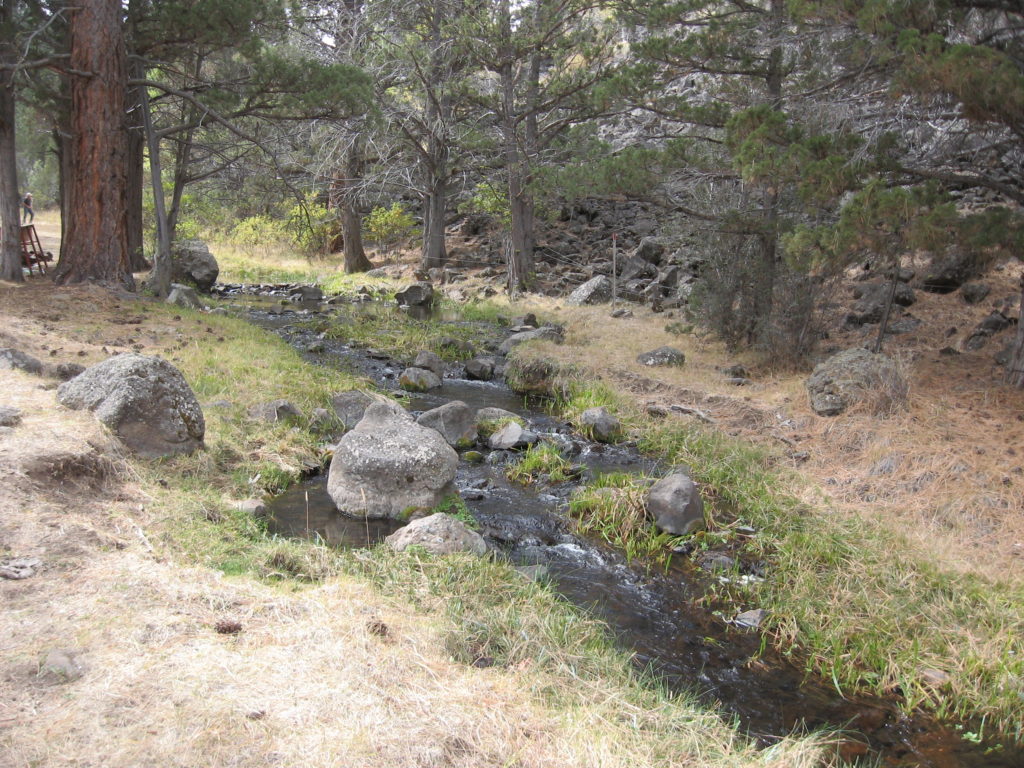
Bailey Creek at the popular picnic area of yore, October 8, 2020
Bailey Creek is located on the north flank of Fredonyer Mountain and flows out into the Madeline Plains. It was originally known as Bayley Creek, for George H. Bayley, a stockman of the Likely region of Modoc County. For a number of decades it was the location of the Old Timers Picnic, which consisted mainly of past and present residents of the Madeline Plains.
In 1899, George Bayley constructed a reservoir upstream. That was original intention for the visit there last fall, but a new locked gate prevented us from going there. It just so happens the reservoir along with 280 acres is for sale.
The Highland School was a short-lived district, that was referred by the name where the school was located—-Termo. It is interesting to note that Don Garate’s book Termo to Madeline does not even refer to the school by its official name.
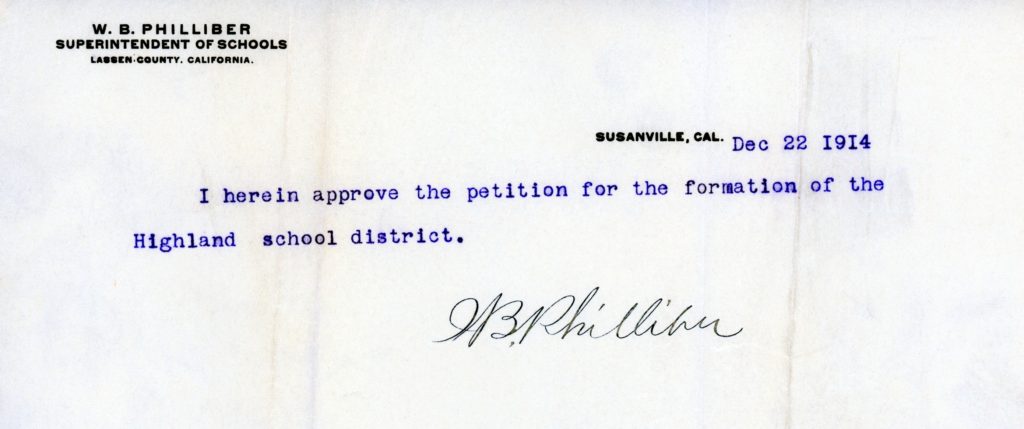
Information on the school is rather scant. When the petition was submitted on November 6, 1914 it contained the following signatures—Martha Cox, Elvira Smith, Mrs. C.C. Brack, Margaretta Drees,Wm. Boydston, Mrs. J.A.Shoaf, Mrs. W.H.Brown, and E.B. Coffin. Collectively, they had sixteen children. Which they met the criteria of at least having ten children. They also resided anywhere between six and thirteen miles from the nearest school. Thus, they met the second criteria of being more than two miles from the nearest school house.
The school district was approved on January 5, 1915. Its existence was brief, and in 1925 the Highland School was annexed to Ravendale. The following year, the school’s fixtures were transferred to the Madeline School only to be destroyed by a fire in 1927.
Spread the word, and encourage a friend to subscribe
The abandoned Milford Flour Mill as it appeared in 1901. Courtesy of the A.J. Mathews family
It has been over a century since a flour mill was built in Lassen County. In the preliminary planning phase, we might see local flour on the market again. The proposed flour mill is in one area of the county where there never has been a flour—the Madeline Plains. Once, I receive additional material, I will provide an update, but I find this exciting news.
The region’s first flour mill was located at Milford. It was built in 1861 for J.C. Wemple and Judson Dakin. In 1864, another flour mill was built at Johnstonville. As the population grew, the need for flour increased and in 1882, H.H. Dakin built a flour mill at Janesville. The Johnstonville and Milford flour mills went out of operation in the early 1900s, and by 1915, the Janesville mill struggled and closed by 1920.
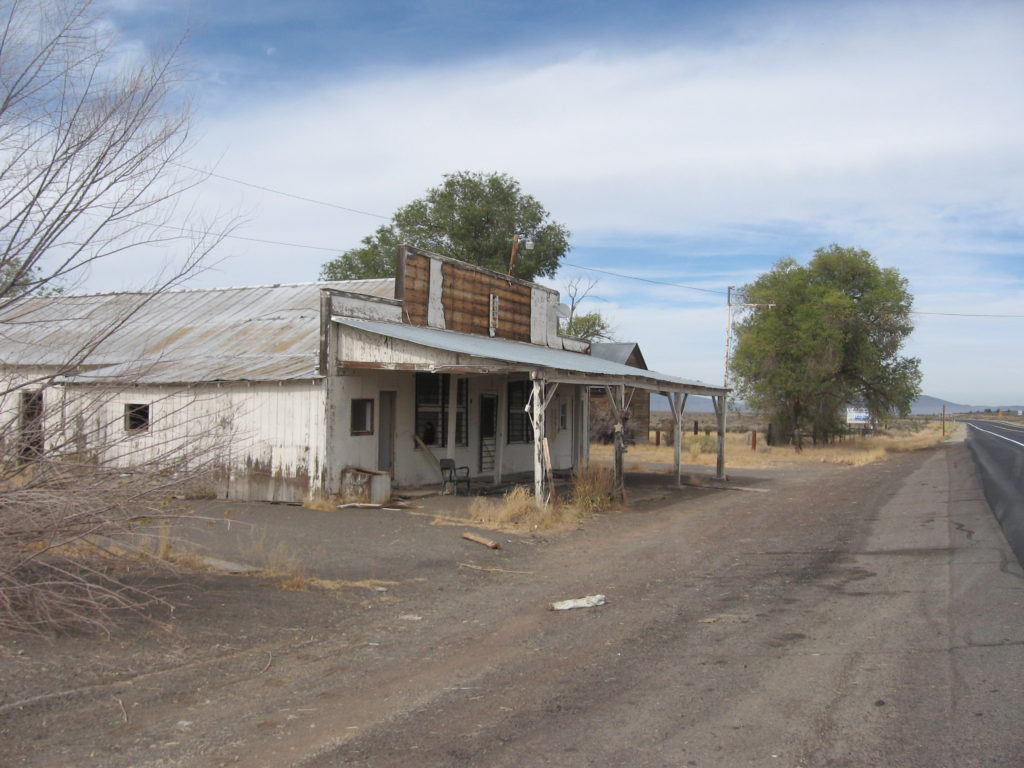
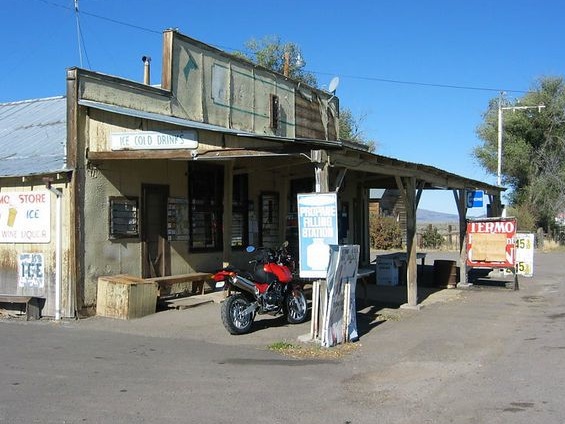
The town of Termo certainly has seen better days. The town came to life when the NCO Railroad extended its line north from Amedee to the Madeline Plains. In June 1900 the railroad named its new terminus Termo, meaning the end and it certainly looks like that now.
The landmark Termo Store.
One of the fatal blows to Termo came in January 1989 when postal officials from Reno inspected the premises of the Termo Post Office, which they felt was a hazard to the postmaster and the patrons. On February 2, 1989 the Termo Post Office ceased to exist.
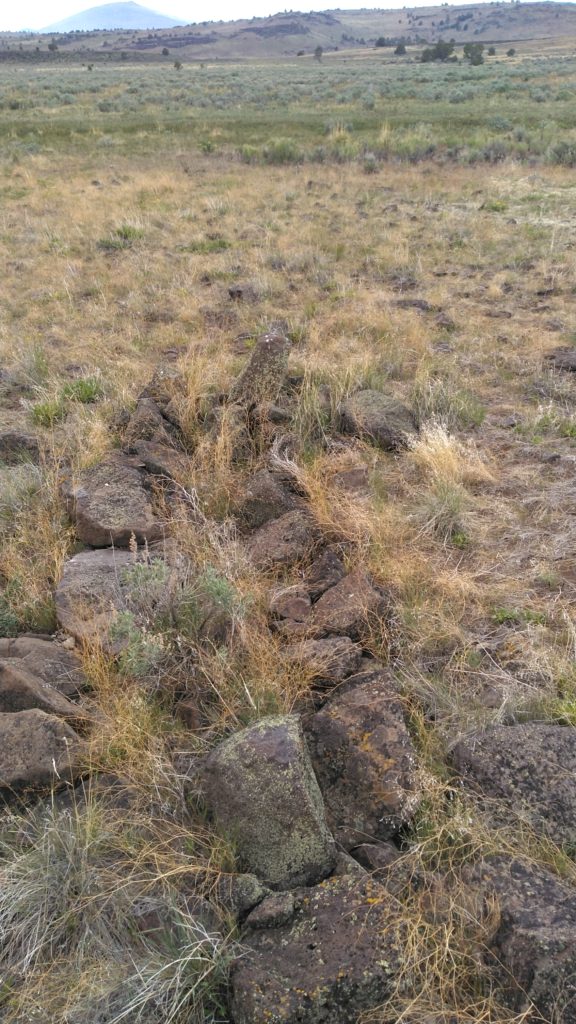
First a little background. For those not familiar, Painters Flat is a remote location in northeast Lassen County, not far from the Nevada border. It was so named after Alexander A. Painter who died and is buried there. On June 19, 1860, Painter was part of a posse after a band of renegade Indians who killed Horace Adams in the Honey Lake Valley. They followed the Indians’ tracks north to the Madeline Plains. From there, they headed east through a canyon. Just before entering a valley there, they were ambushed by the Indians, Alexander A. Painter was mortally wounded. Painter’s body was moved a mile northeast from where he died. He was buried there beneath a cedar tree.
Fast forward to the mid-1990s. Terry Mallery and I made several expeditions there in search of Painter’s grave. We used the Lander’s written account of the event for reference. We struck out. In the spring of 2020, Brent Espil sent me the above photograph, with the question, “Is this Painter’s grave?”. Unfortunately, I do not have an answer.
Coming soon in search of another grave expedition in the Smoke Creek Desert.
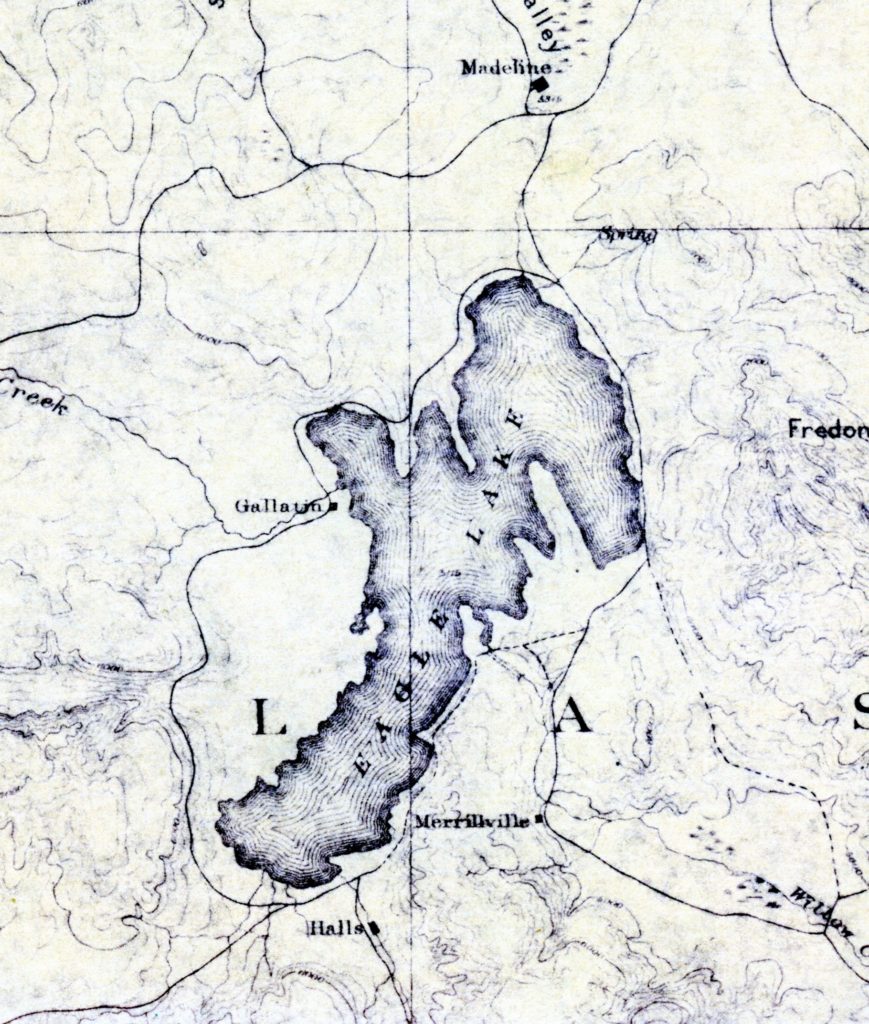
Some might be interested in this map of Eagle Lake. No doubt, there might be a few folks, who think that the cartographer had gone mad. I can rest assure you that was not the case. In the modern era, the Gallatin name has always been synonymous with the south shore of the lake. As one can see from the map, the south shore was referred to as Halls in the late 1800s. It was so designated as Wright P. Hall, a Susanville resident and well known Lassen County public figure, owned Papoose Meadows since 1876. Albert Gallatin’s, ranch manager Byron Bell had a sheep camp near what is known today’s as Spaldings. Prior to this, there had no designation for that locale. In 1914, things suddenly changed. Malvena Gallatin had a built summer home at the south end of the Lake. It was in 1914, the first Spalding subdivision was plotted on the west side of the lake.
Another interesting note, is Madeline located in Grasshopper Valley. The first Madeline was established in 1870s as a stage stop to accommodate travelers to Hayden Hill and other points north. The Madeline we know today on the Madeline Plains came into existence 1902 with the arrival of the NCO Railroad, which was formally known as Van Loans.
Spread the word, and encourage a friend to subscribe
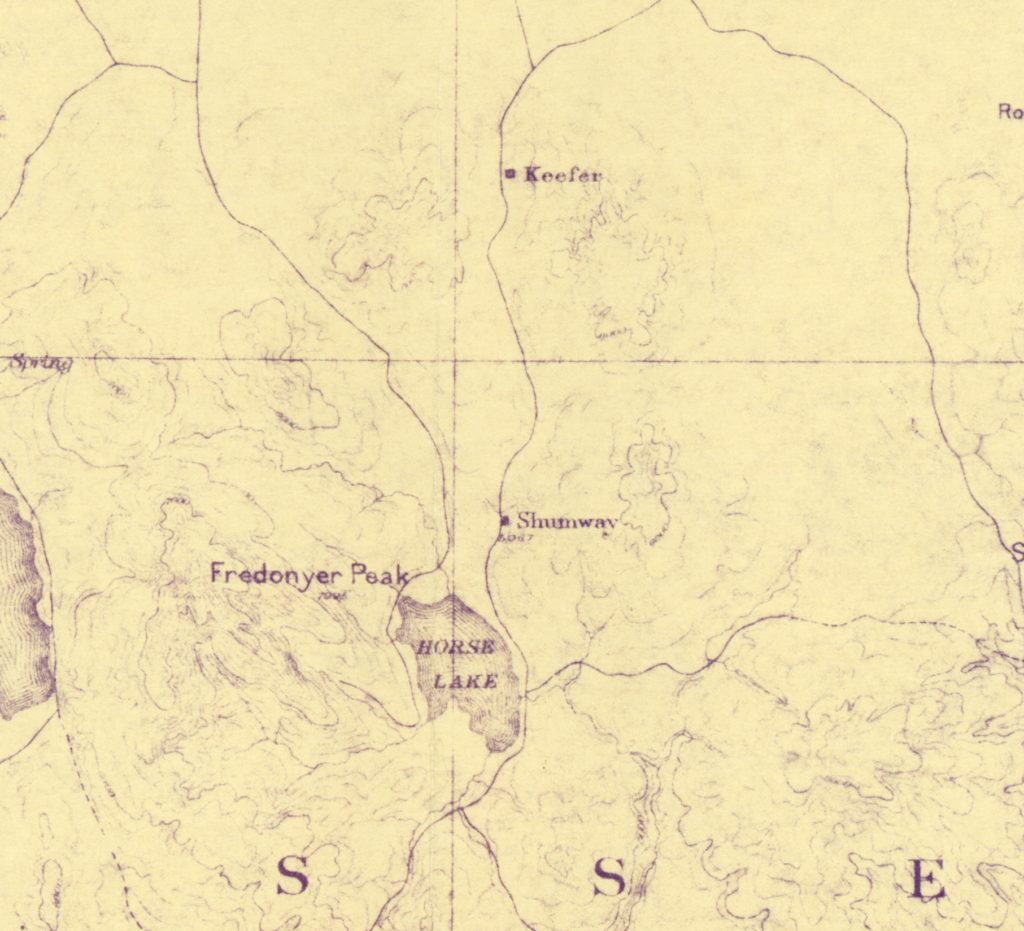
Keefer, on the edge of the Madeline Plains, was one of those lonely stage stations. In 1869, the most direct route to Alturas and Surprise Valley from Susanville followed a most interesting route. The road travelled north to Willow Creek Valley and onward to Horse Lake. It then veered straight north to the Madeline Plains. Let me inform the intrepid explorer, I traveled the route from Horse Lake to the Madeline Plains——its one of those roads you only do once.
On June 3, 1890, James Edward Keefer (1861-1916) purchased this stage station from Herman Knipping for $600. In 1898, the station had already been shuttered, and Knipping was residing at Vina, Tehama County when he sold the property for an undisclosed amount to Mahala Shumway. The station was also known as Knippers, Mud Springs and Long Hollow Camp..
Spread the word, and encourage a friend to subscribe
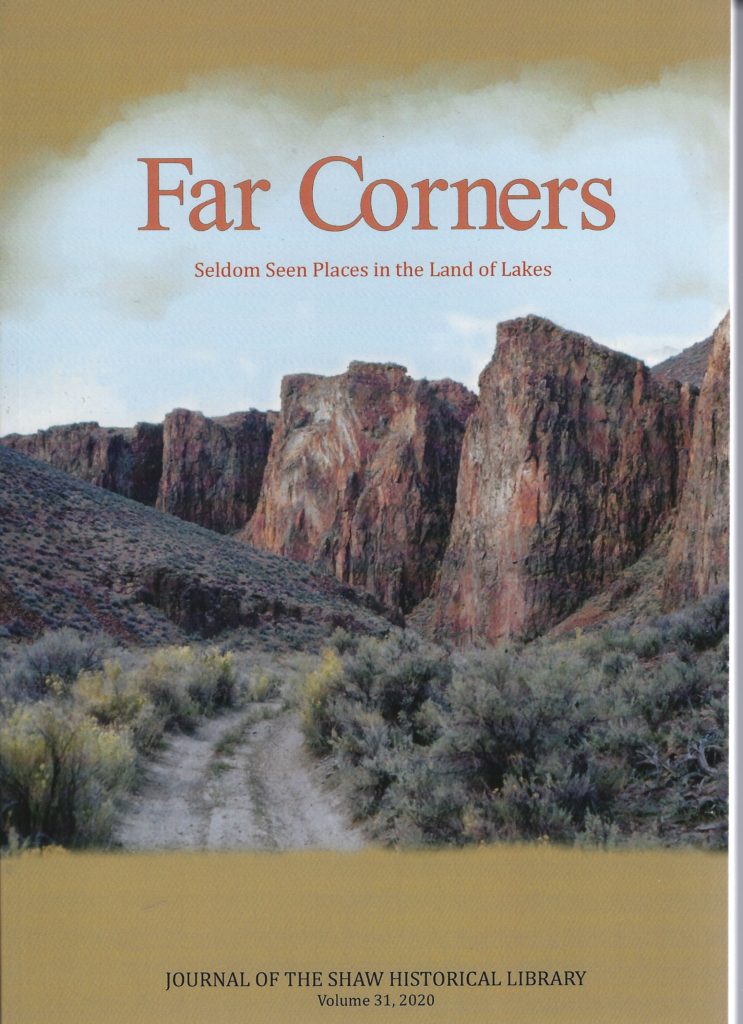
Seldom seen places, from forgotten settlements in northern Klamath and Lake counties to “Ghosts” of Crater Lake National Park and the Tri-Corners area where the states of Oregon, California and Nevada come together are featured in the newly released 2020 Journal of the Shaw Historical Library.
“Far Corners: Seldom Seen Places in the Land of the Lakes,” features stories by a variety of authors about settlements and communities that were or, in some cases, exist with small populations.
“We tried to include important historical sites, such as railroad stops, stagecoach stops, boat landings, military camps and ranches that played a noteworthy role in the development of the area,” Lawrence Powers writes in the introduction, which also includes a listing of 195 communities in the 11 counties in four states that are part of the Shaw’s “Land of the Lakes.”
Far Northern California is represented in stories about Picard, Clear Lake, Tionesta and Long Bell Camp and the Madeline Plains communities of Madeline, Termo and Ravendale by a variety of authors, including Powers, Ryan Bartholomew, Sylvia Copeland and Ron Hathaway.
The far Northern Klamath County communities of Mowich, Crescent Lake and Shevlin are featured in a trio of articles by John Driscoll while Stephen Mark, the historian for Crater Lake National Park, tells about “ghosts” at the park and writes about historic places in Malheur County.
Marie Lee, a Lakeview author of several historical non-fiction books who also is the Lake County Museum director, provides information about such little-known North Lake County settlements as Cliff, Arrow, Buffalo, Connley, Fleetwood, Viewpoint, Loma Vista and more. A separate story features Valley Falls.
A comprehensive history of commercial uranium mines that were located near Lakeview is provided by Michelle Durant, an archeologist for the Fremont-Winema National Forest.
Adding a unique perspective about Wagontire is Larry Wagner. His mother, Vera Addington Wagner, was born and lived at the community located between Lakeview and Burns.
Providing insight about Camp Warner, an Army post that originated at what is now the Hart Mountain National Antelope Refuge, is Dan Goheen while author John Griffin provides little-known details about the gunfight at the Shirk Ranch. Steve Kandra writes about the Civilian Conservation Corp’s Camp Klamath.
Stories by Lee Juillerat tell about Pla-ik-ni, the ancestral home of the late Edison Chiloquin, along with Hardin City and Lowell Jones’ memories of the Long-Bell logging camp and community of Tennant.
A goal of the Journal is to provide information on places people may or may not have heard about or visited. As Powers writes, “many small unincorporated communities thrive. A few have become famous as gateways to tourist attractions and events … some have persisted as stable communities without the benefit of an economic magnet, and other flourished for a brief time and disappeared.”
Copies of “Far Corners” are available at the Klamath County Museum and Basin Book Trader in Klamath Falls, Modoc County Museum in Alturas, Country Hearth in Cedarville, Howard’s Drugs in Lakeview, Margie’s Book Nook in Susanville or by contacting the Shaw Historical Library by email at shawlib@oit.edu or by calling 541-85-1686.
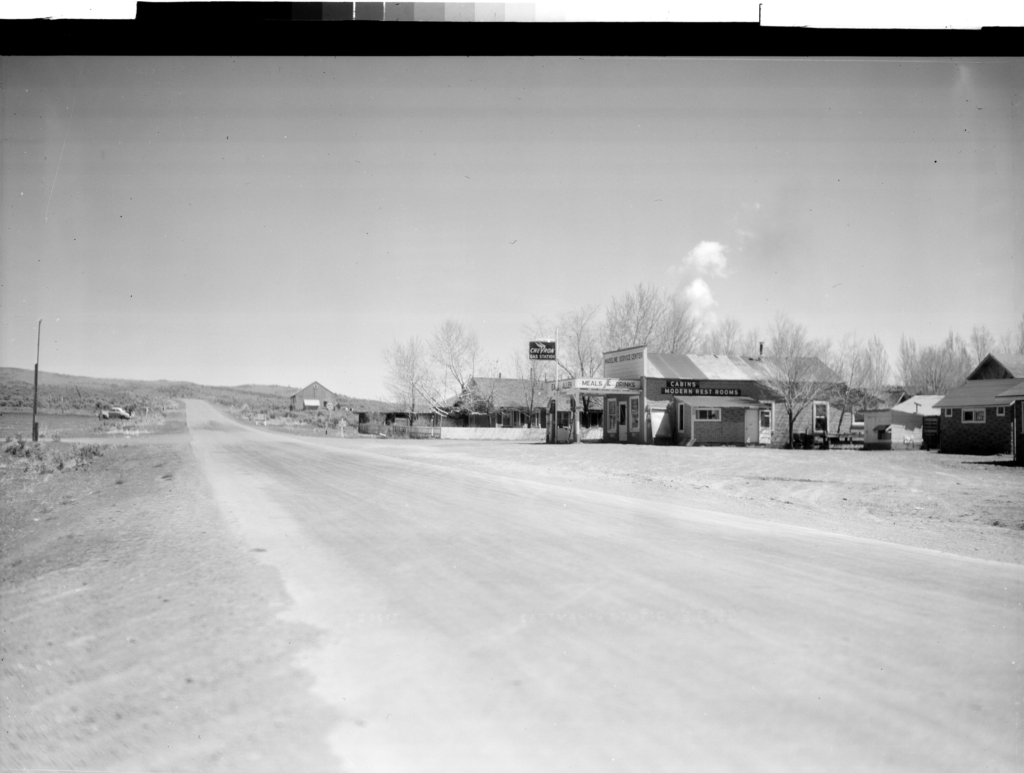
Madeline, Lassen County, 1948–Eastman Collection, U.C. Davis
In the late 1920s, the Southern Pacific Railroad was in a disarray locally, while they fought against the Western Pacific/Great Northern’s Inside Gateway link between Keddie and Klamath Falls. The Southern Pacific had a monopoly on the region and were in a constant flux to combat its proposed competition.
Take for instance in 1929, Southern Pacific greatly reduced its freight rates on timber products. In November 1929, Southern Pacific sent a survey crew out east of the town of Madeline. The surveyors job was to locate a possible line from Madeline eastward through Red Rock Valley and Tuledad Canyon with the ultimate goal towards Gerlach. This officials concluded that this 72 mile route, would save 120 miles to the Klamath Basin. Of course, it was never built, and in 1930 the ICC approved the competitor’s route.