A Fruit Growers railroad logging crew with iies and a Clyde tracklayer, 1932 in Pine Creek Valley
A subscriber inquired from the Ask Tim post of April about railroad logging/grades west of Eagle Lake. I have been slow to post, as I have been experiencing technical issues with scanning, however on a bright note that will soon be resolved.. Of course, to properly address this topic will take several posts. However, I wanted to begin the series with these two illustrations.
A Fruit Growers Clyde tracklayer in operation near Camp Harvey, 1947
The top one is an excellent photograph depicting everything needed, workers, railroad ties and a Clyde tracklayer machine. Fruit Growers initial railroad logging began just north of present day Highway 44, and a little southeast of McCoy Flat Reservoir in 1920. The Susanville mill was still under construction, so only a small volume of logs were needed. The following year, witnessed large scale railroad logging activity and the establishment of two large logging camps Camp B & C.
Stay tuned more to follow.,including a map showing all the lines and spurs.
A historic view near present site of Susanville Ranch Park parking lot/trail head.. Courtesy of Hank Martinez
Susanville is fortunate to have the Bizz Johnson Trail on the south side of town and Susanville Ranch Park with multiple trails on the north side of town. Each has their own unique story how they evolved. Today, we focus on Susanville Ranch Park.
The first person to examine the property for non-agricultural purposes was T.B.Walker, founder of the Red River Lumber Company. In 1912, the Walker family had a heated debate. as to their permanent mill, though a site had been selected at Mountain Meadows. T.B. Walker had given considerable thought to this particular site. However, as we known Mountain Meadows would win over, and the town of Westwood became a reality,
The ranch as it appeared in 1922, when Fruit Growers owned it.
In 1919, enter Fruit Growers Supply Company when they were scouting around for a mill site. That company went one step further and purchased the property for while undecided one the site, they wanted the water rights to Bagwell Springs. While Fruit Growers chose a different Susanville location, they retained the property. After all it would be beneficial for pasture for horses, a then an important component in logging. Fruit Growers then established a dairy there. It was brief, and it was a leased to the Okelly family who operated Lassen Dairy there for several decades.
In 1934, Fruit Growers offered to sell the ranch to the City of Susanville. Fruit Growers cited it would make an ideal golf course, that the money received from the golf course could be used to develop the remainder of the property into a park. The City liked the idea, but said no. In 1935, Fruit Growers sold the ranch to the Republic Electric Power Company who wanted to acquire Bagwell Springs as an additional water supply for Susanville. Over the years, that Company went through numerous reorganizations and became CP National. In 1984, CP National donated the ranch to Lassen County, and it is now a county park.
An interesting footnote to the story is that Lassen Community College examined the property for a future campus back in the 1960s, but the asking price was too expensive at $3,500.
In 1914, Red River Lumber Company purchased three Baldwin locomotives from. the Tonopah Goldfield Railroad for its Westwood operation. Of course, Red River had quite a fleet of locomtives at Westwood.
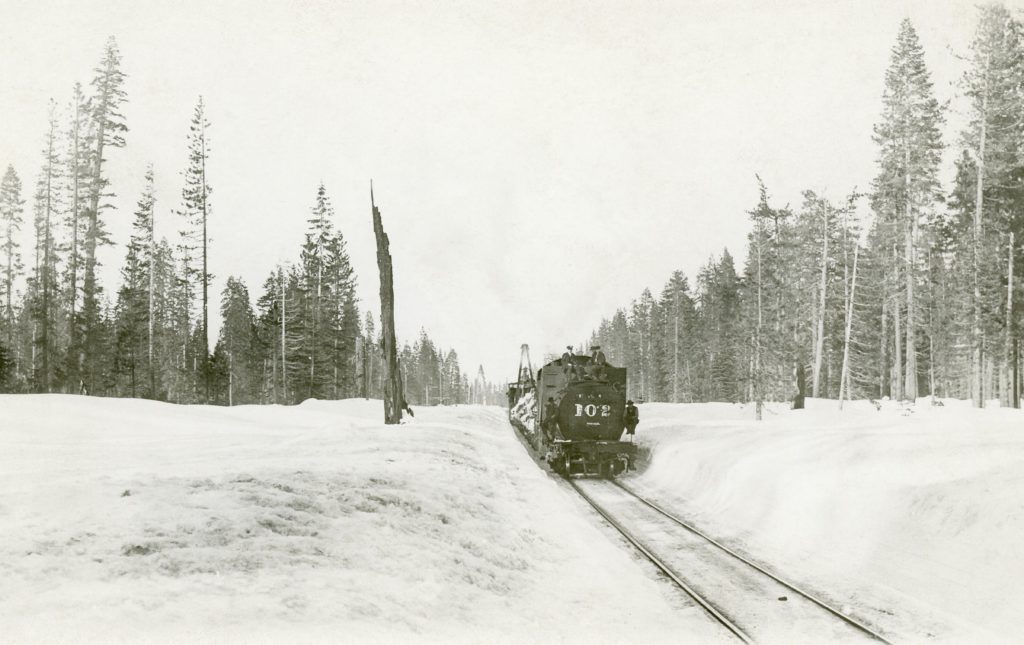
The 102 remained in operation during Red River’s tenure there and the locomotive became the property of Fruit Growers Supply Company in 1944. When Fruit Growers closed the Westwood mill in 1956, the 102 was sold for scrap.
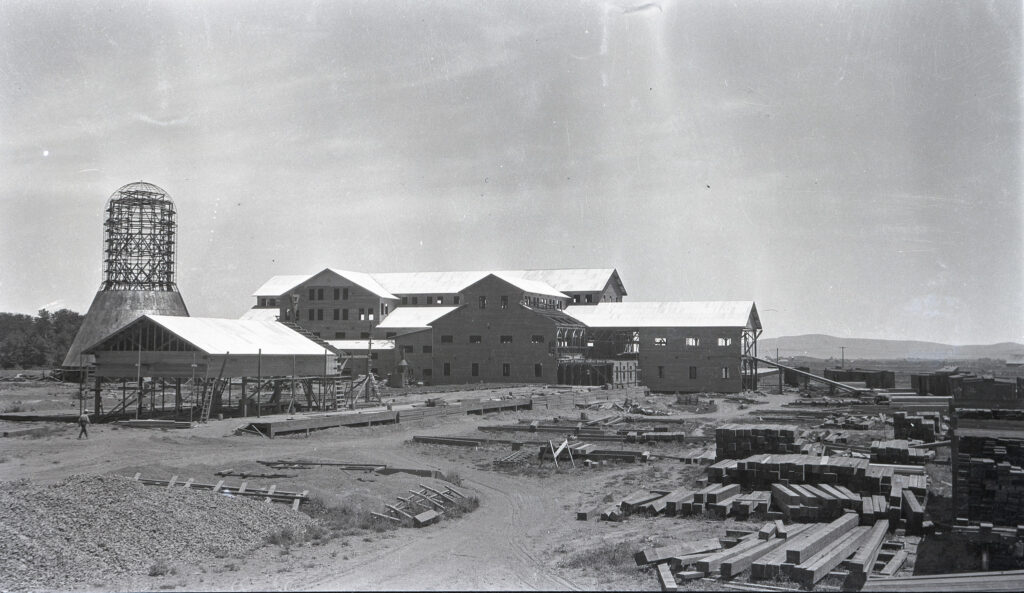
Fruit Growers Susanville plant under construction, 1920–Ed Standard
Saturday, April 16, 1921 was the dedication of Fruit Growers Supply Company’s new mill facility at Susanville. Of course, there was usual amount dignitaries on hand to celebrate the moment and give speeches. Thomas B. Dozier, a Fruit Growers’ attorney served as master of ceremonies. Dozier’s opening statement was simple, “We will supply the boxes from the Snowkist woods for shipment of Sunkist—all from California.” Dozier informed those assembled that the California Fruit Growers Exchange (renamed Sunkist in 1951) represented 10,500 growers, who produced three-quarters of the citrus in the United States.
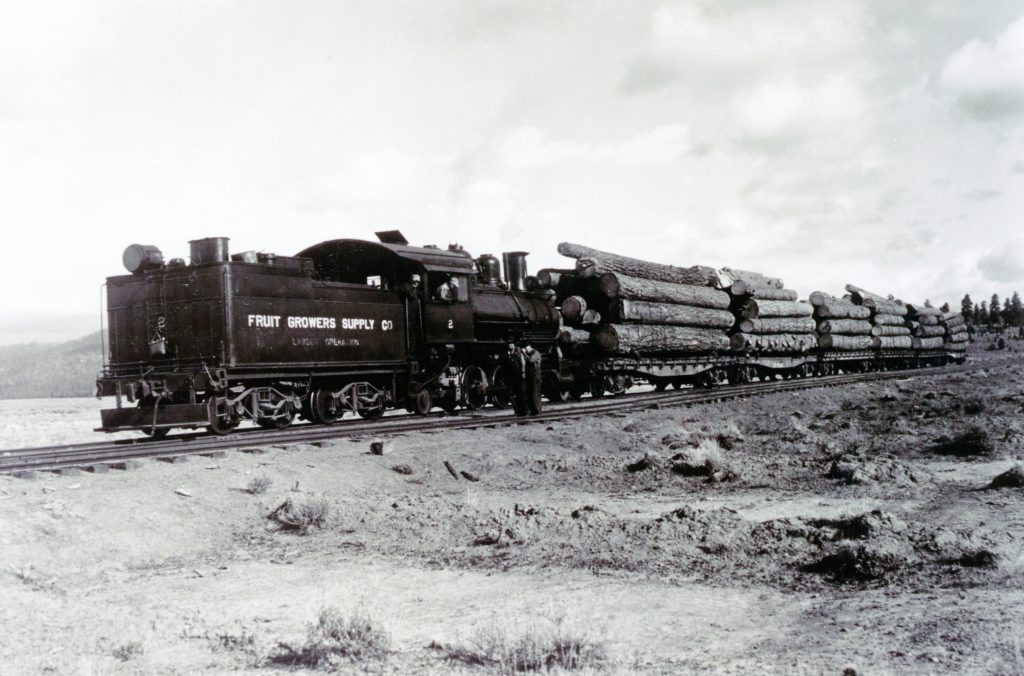
Fruit Growers logging train, Pine Creek Valley, 1940–Russell Gilbert
If you ever spent much time exploring the region west of Eagle Lake, you probably have encountered remnants of Fruit Growers logging railroad system. From 1920 through 1952 Fruit Growers railroad logged, and like many operations, finally converted to truck logging.However, it should be noted railroad and truck logging worked in tandem—transfer stations.
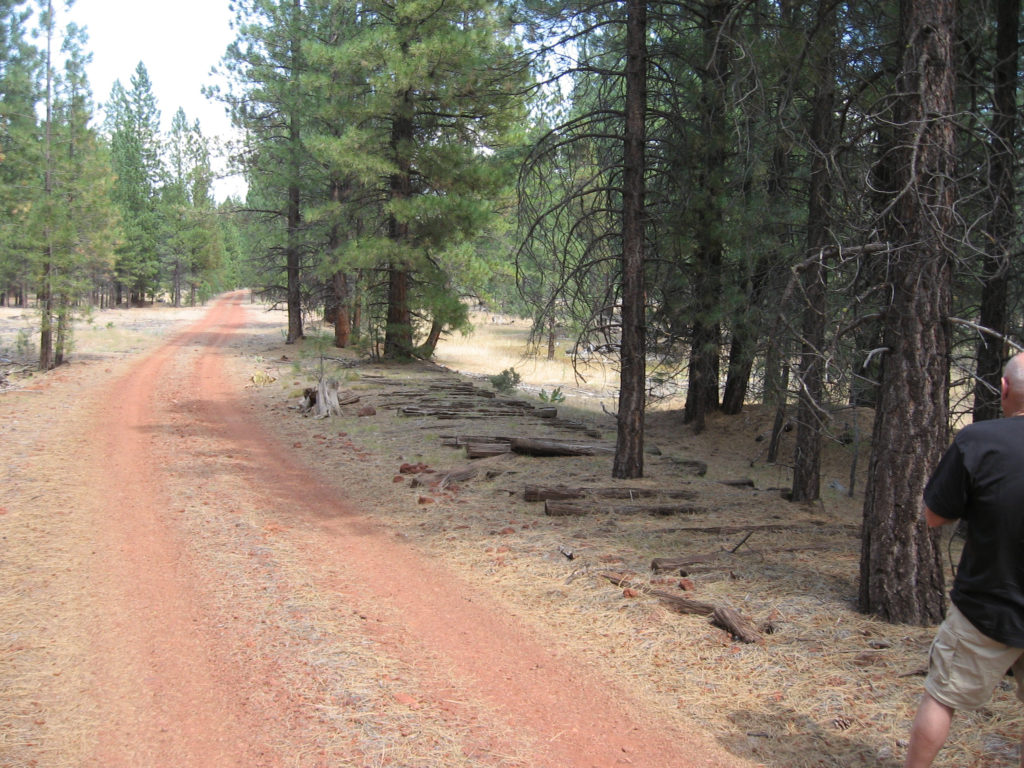
It was one of those days, that I had a lapse of better judgment should have, but did not take a picture of Shay’s Hole. However, about a mile down the road, we stopped to take pictures of these old railroad ties still in place, August 18, 2016.
In the future this will be a topic we will explore.
Dynamiting the Westwood millpond, January 27, 1949. Courtesy of Fruit Growers Supply Company
In January 1949, the temperatures plummeted to nearly thirty degrees below zero at Westwood. The millpond there froze. When Red River designed the facility, they placed piping from the powerhouse that forced steam air directly into the millpond near the sawmill. This system was no match for Mother Nature. To keep the mill operating it was necessary to use dynamite to blast loose the logs in the millpond. Continue reading It Was Cold in 1949→
This old water tank is the last remnant of Camp 8, Photo taken June 18, 2015
Fruit Growers operated a total of 11 logging camps, though Camp Y could hardly be classified a camp. The camps were designated with the first letters of the alphabet, i.e, Camp A. After Camp F closed, the next would be G, the seventh letter in the alphabet, but Fruit Growers switched to numbers when Camp 7 was opened at Bridge Creek.
Camp 8, had the unique distinction of being referred to as Summit Camp, it being on the Summit between Pine Creek Valley and Eagle Lake. Not a great deal is known about the activities at Camp 8. It was the first camp that a young Arthur Anderson went to work. What he remembered vividly was watching the death of his friend Daniel Dragovich, whose skull was crushed in a logging accident near the camp on July 2, 1928. For Anderson this served as a wake up for him, and he decided to change professions. He later became an attorney and in 1972 he was elected Lassen County Superior Court judge, serving one term.
Subscribe and support this site for as little as $4.17 a month.
Fruit Growers Supply Company is a non-profit purchasing agent co-operative of Sunkist. The latter is a marketing co-operative of citrus growers. There was a time when fruit and vegetables were shipped in wooden boxes, that is another story. Fruit Growers, as it is known entered the lumber business reluctantly to manufacture wooden boxes for their member owned citrus growers.
One of Fruit Growers earliest lessons learned was the value of employees. To retain a reliable/skilled workforce amenities were provided to prevent labor turnover. When Fruit Growers mill opened its Susanville mill in 1921, they were in hopes the town would provide such. Susanville had been so overwhelmed by its short term growth, that it was just too much.
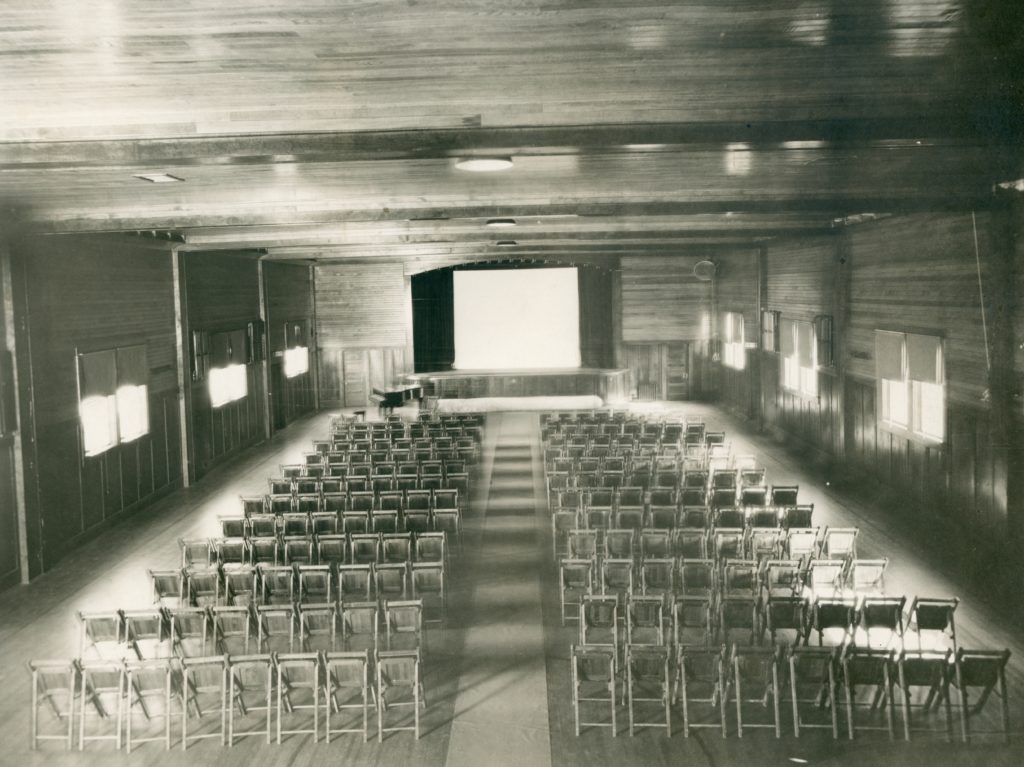
The movie theater in the Story Club, 1923. It was used by many religious denominations for services. Courtesy of Fruit Growers Supply Company.
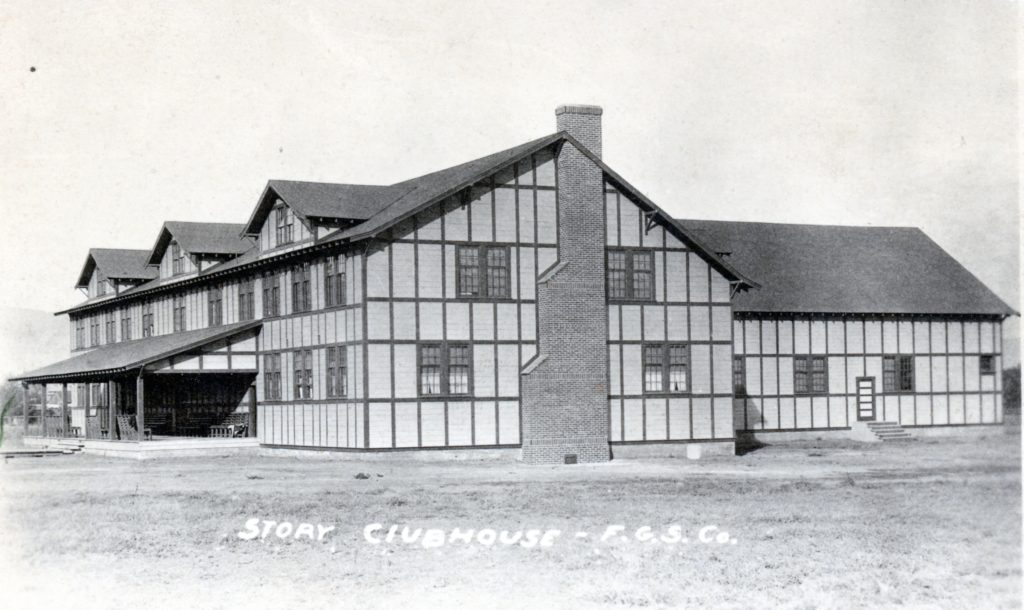
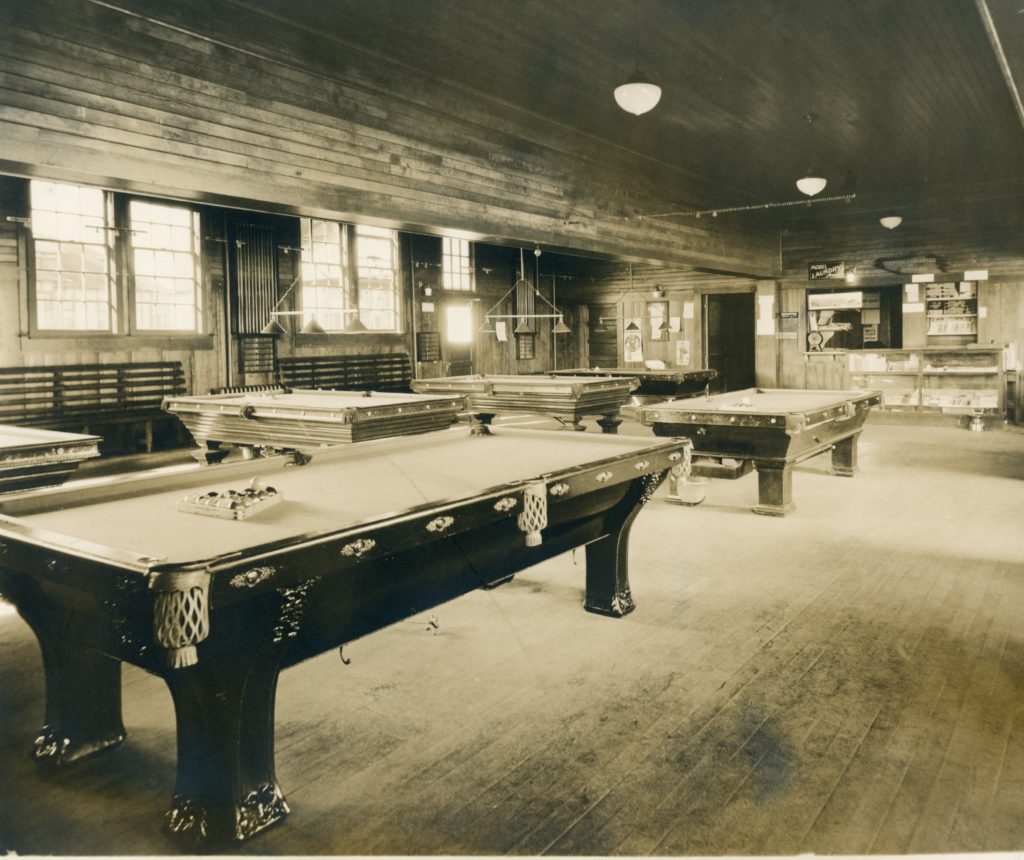
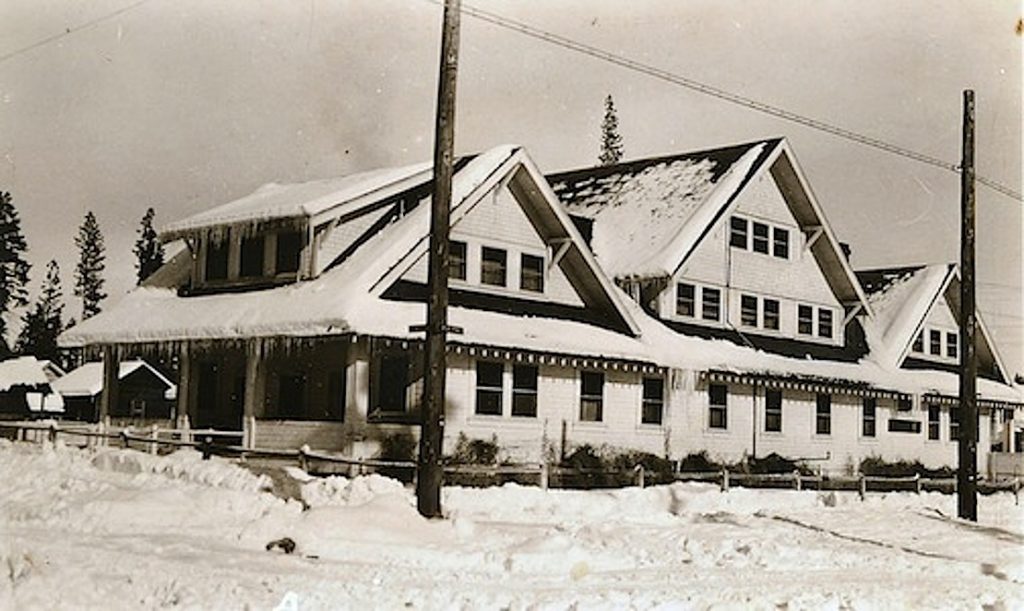
While Fruit Growers would provide housing and a hospital, that was not enough. In 1922, they had a three-story recreational building constructed on their premises. Susanville had never experienced a facility like this. Of the many attractions inside the building was a theater that could seat 450 people. It was a multi-purpose room that served as a ballroom and other forms of entertainment—including indoor baseball which I do not know how that operated. The place boasted a billiard room, a restaurant, soda fountain, and a library. The place was named the Story Club, after an influential member of Sunkist who donated the initial stock for the library.
The billiard room, Story Club, Susanville, 1923. Courtesy of the Fruit Growers Supply Company
On the north side of the building there was a children’s playground. The Story Club was destroyed by fire in 1944. Times had changed, and Fruit Growers converted the site into a park known as Riverside.
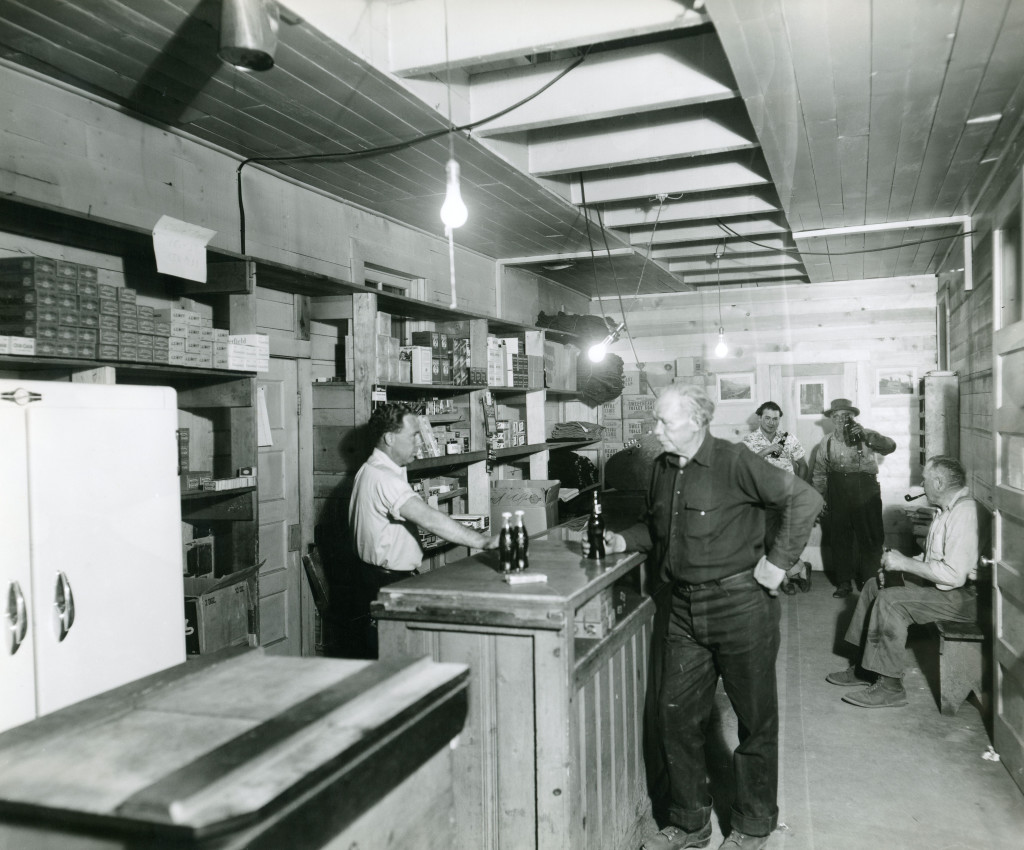
Fruit Growers Camp Harvey Commissary, 1947–FGS Company
While yesterday we explored Rev. Parsons’ attempt to make Susanville a “dry” town” the Fruit Growers Supply Company did something unusual in their logging camps after Prohibition. Fruit Growers in their logging camps did something radical—they served beer. However, since it was known many loggers over indulged in alcoholic beverages away from camp, Fruit Growers was well aware of that fact. However, Fruit Growers’ policy then understood the value of taking care of your employees, they reciprocated the same to their employer.. To prevent any kind of over indulgence, one could only have two beers. As a preventive measure, for some one to sneak passed that limit, one was served the two beers at the beginning. People who worked in those Fruit Growers logging camps that I interviewed stated there were no issues or associated problems with the beer. There were some that thought. it was a nice amenity and stated how well they were treated by the company.
In 1911, the California Legislature implemented a voluntary Workmen’s Compensation Act. It failed way short of its goals. In 1913, the introduced a new version, but this time it was mandatory. It initially affected large manufacturers. In yesterday’s column, T.B. Walker was not pleased with this legislation and with the construction of Westwood underway, there was no way to avoid it.
Companies had two options: 1) They could make payments to the State which set up a special account or 2) They could self insure.
Red River Lumber Company went the self-insured route. Each month one-dollar was deducted from employee’s salaries. This money would fund the Westwood Hospital. For employees it was a good deal. In turn, they received full medical coverage, and even for not work related injuries. As far as I am aware Red River continued with the self-insured route until they sold Westwood in 1944.
When Fruit Growers Supply arrived on the scene they, too, opted for self-insured, just as they did at Hilt. In 1942, Fruit Growers opted out of self-insured and money collected from employees were sent to the State. This was not so good for employees, because their insurance covered only accidents on the job. One of the side effects was hospital at Hilt was closed, but converted into a first aid clinic.