Tag Archives: Fruit Growers Supply Company

Susanville – Sunkist Street

Sunkist Street, 1921. Courtesy of Ed Standard

In 1919, when the Fruit Growers Supply Company decided to locate its second lumber mill at Susanville, they thought that community would come forth to provide housing for its workforce.  It kind of happen. Yet, Fruit Growers with over 1,000 employees for its Susanville operation, was too much for the community to handle. To be able to attract a stable workforce, Fruit Growers only option was to develop its own residential district next to the mill. Those streets all have names associated with the citrus industry, such as Sunkist.

For those not familiar with Fruit Growers, it is a purchasing agent for co-operative then known as the California Fruit Growers Exchange comprised of citrus growers. In 1907, the Exchange coined the brand Sunkist and in 1952, they renamed the Exchange to Sunkist.

Never miss a story, click here to support and subscribe.

Honey Lake Produce

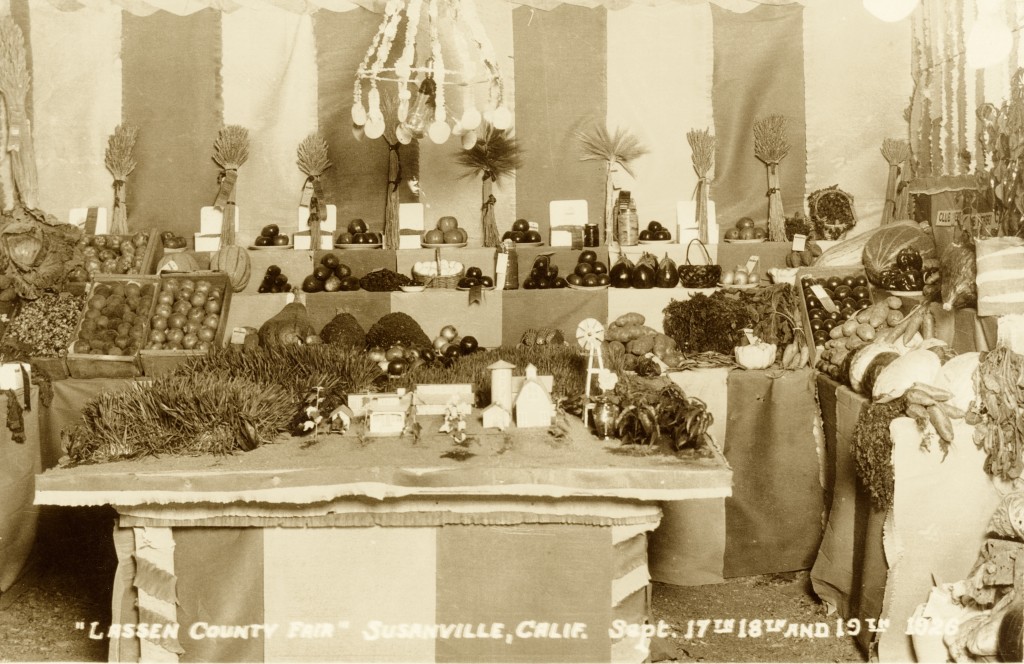
Produce exhibit Lassen County Fair, 1926.

Tomorrow marks the return of the farmer’s market in Susanville.  Please note the location has changed and it is on Pancera Plaza, Main and South Gay Streets, and not the Susanville Depot. When the big lumber mills were established it was a bonanza to the local agricultural community. In 1924, the Fruit Growers Supply Company purchased the following for its workforce.

300 pounds of fresh apricots 25,000 pounds of apples
500 pounds of asparagus 5,000 pounds of beets
4,000 pounds of green beans 21,000 pounds of cabbage
3,540 pounds of cucumbers 1,270 pounds of sweet corn
10,400 pounds of carrots 10,500 pounds of cauliflower
2,200 pounds of celery 5,200 pounds of grapes
12,600 pounds of watermelon 17,560 pounds of other melon
11,600 pounds ofgreen onion 50,000 sacks of dry onions
13,400 pounds of peaches 100 pounds of pears
1,000 pounds of peppers 13,800 pounds of tomatoes
89,200 pounds of beef 24,500 pounds of veal
33,600 pounds of pork 2,200 pounds of turkey
3,860 pounds of poultry 1,300 cases of eggs
21,800 pounds of butter 14,220 pounds of ham & bacon
117,500 pounds of flour

Never miss a story, click here to subscribe and support.


Riverside Hospital

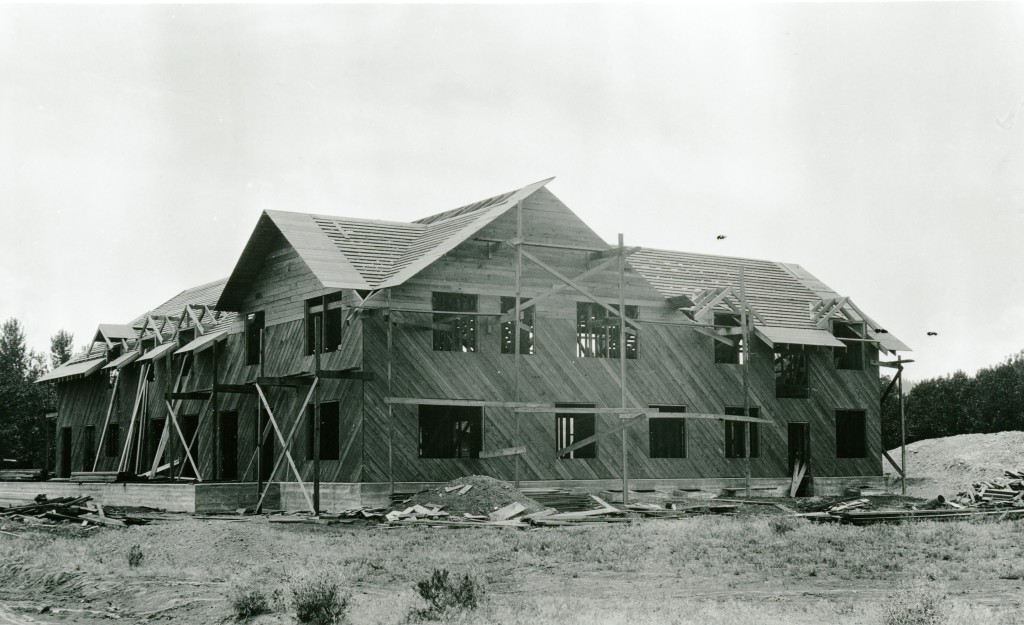
Construction of Riverside Hospital, 1920. Courtesy of Ed Standard

When Fruit Growers decided to establish a mill at Susanville, there were a number of factors to be considered. Due to its size, they had to meet the 1913 Workmen’s Compensation Insurance and Safety Act. At Hilt, Fruit Growers had to establish a hospital and since Lassen County had  built a new hospital in 1916, it was initially thought it could handle their needs. However, that was not the case. Continue reading Riverside Hospital

Westwood’s Rumor Mill

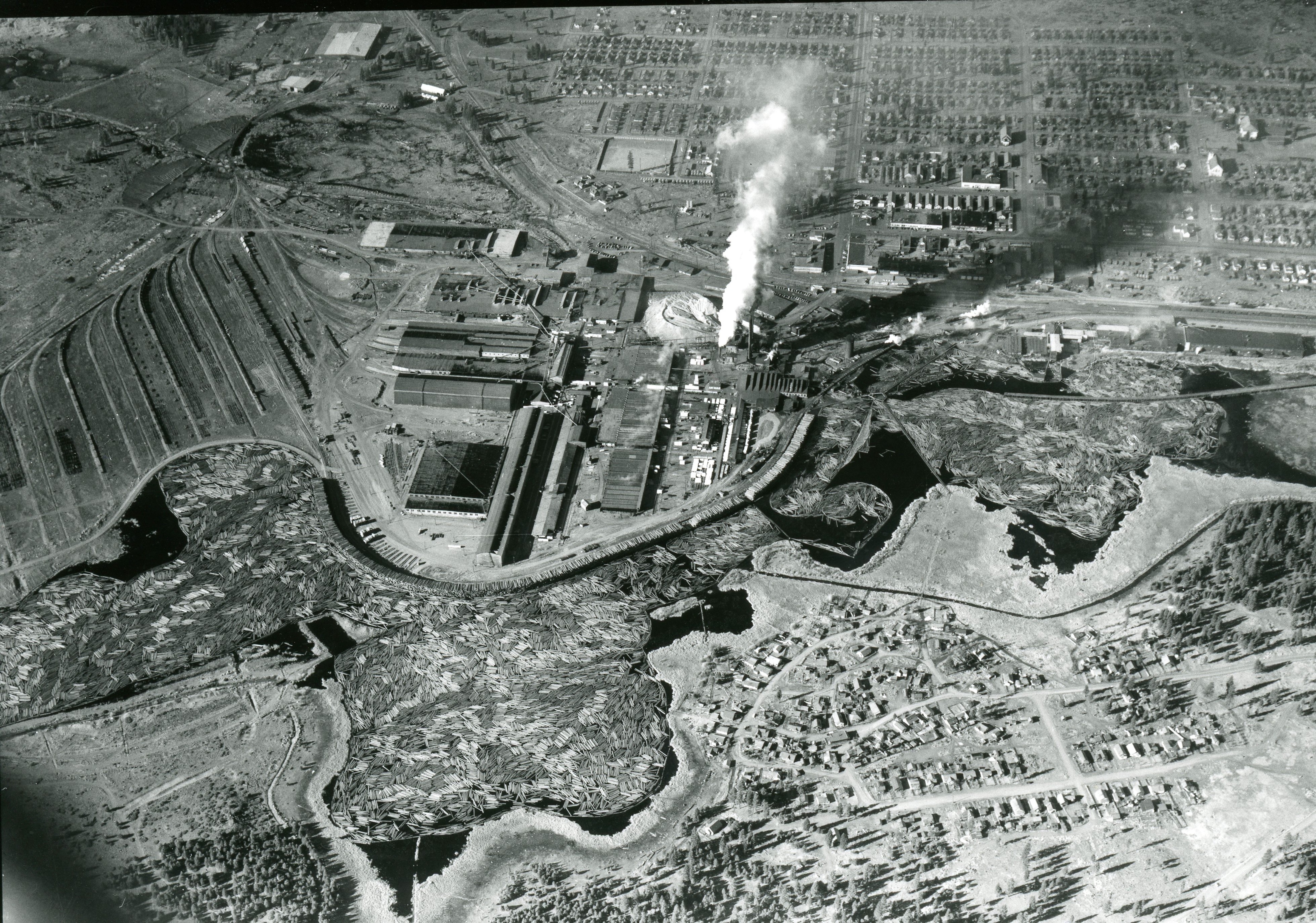
Westwood Mill, 1946. Courtesy of Hank Martinez
Westwood, 1946. Courtesy of Hank Martinez

Yesterday’s photograph featured the dynamiting of the Westwood millpond and the freeze of 1949. There was a side affect of that freeze. The freeze reduced California’s citrus crop, and in turn reduced the need of wooden boxes and Fruit Growers box factories in Susanville and Westwood were temporarily closed. In May when the Westwood box factory re-opened, it was only with one shift. Continue reading Westwood’s Rumor Mill

Westwood’s Frozen Millpond

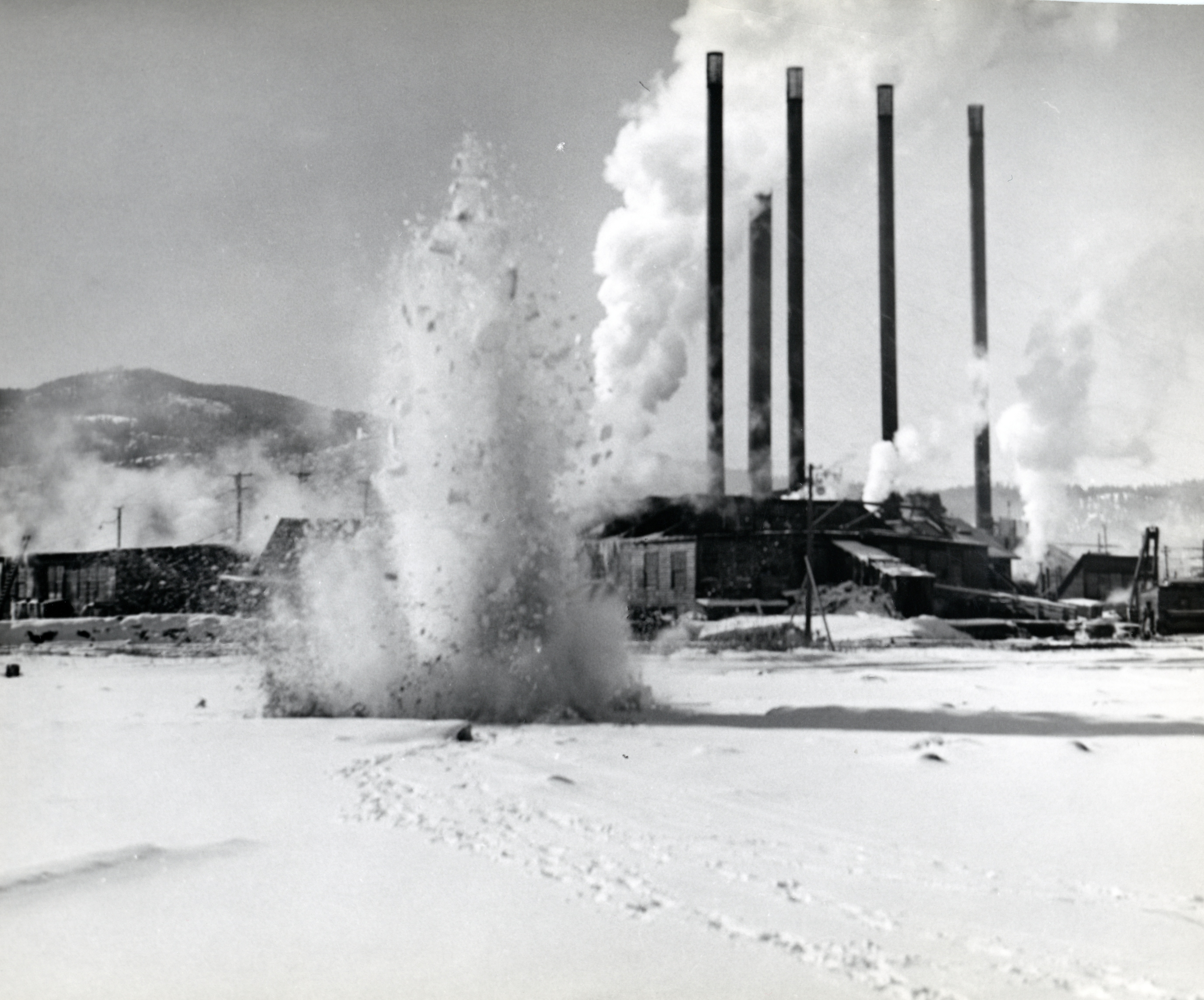
Dynamiting the Westwood millpond, January 27, 1949. Courtesy of Fruit Growers Supply Company

In January 1949, the temperatures plummeted to nearly thirty degrees below zero. The millpond froze. When Red River designed the facility, they placed piping from the powerhouse that forced steam air directly into the millpond near the sawmill. This system was no match for Mother Nature. To keep the mill operating it was necessary to use dynamite to blast loose the logs in the millpond. Continue reading Westwood’s Frozen Millpond

Winter Log Decks

Red River's winter log deck near Camp 16
Red River’s winter log deck near Camp 16

First of all, coming from a family logging heritage, its still hard to fathom, that lumber mills no longer exist in Lassen County.

The two largest mills, Fruit Growers and Red River maintained two type of winter log decks. Usually, normal logging operations ceased in November. Yet, to keep the mills operating throughout the winter, required to have a substantial amount of harvested timber. There was the log deck at millpond, and then a second one out in the woods.  The latter was not brought into the mill until spring, since the winter supply was nearly exhausted. The log decks in the woods provide enough ample supply during the transition, since it would take some time when the logging camps opened in the spring, to provide a steady supply to the mill.

Never miss a story, click here.

Christmas Trees

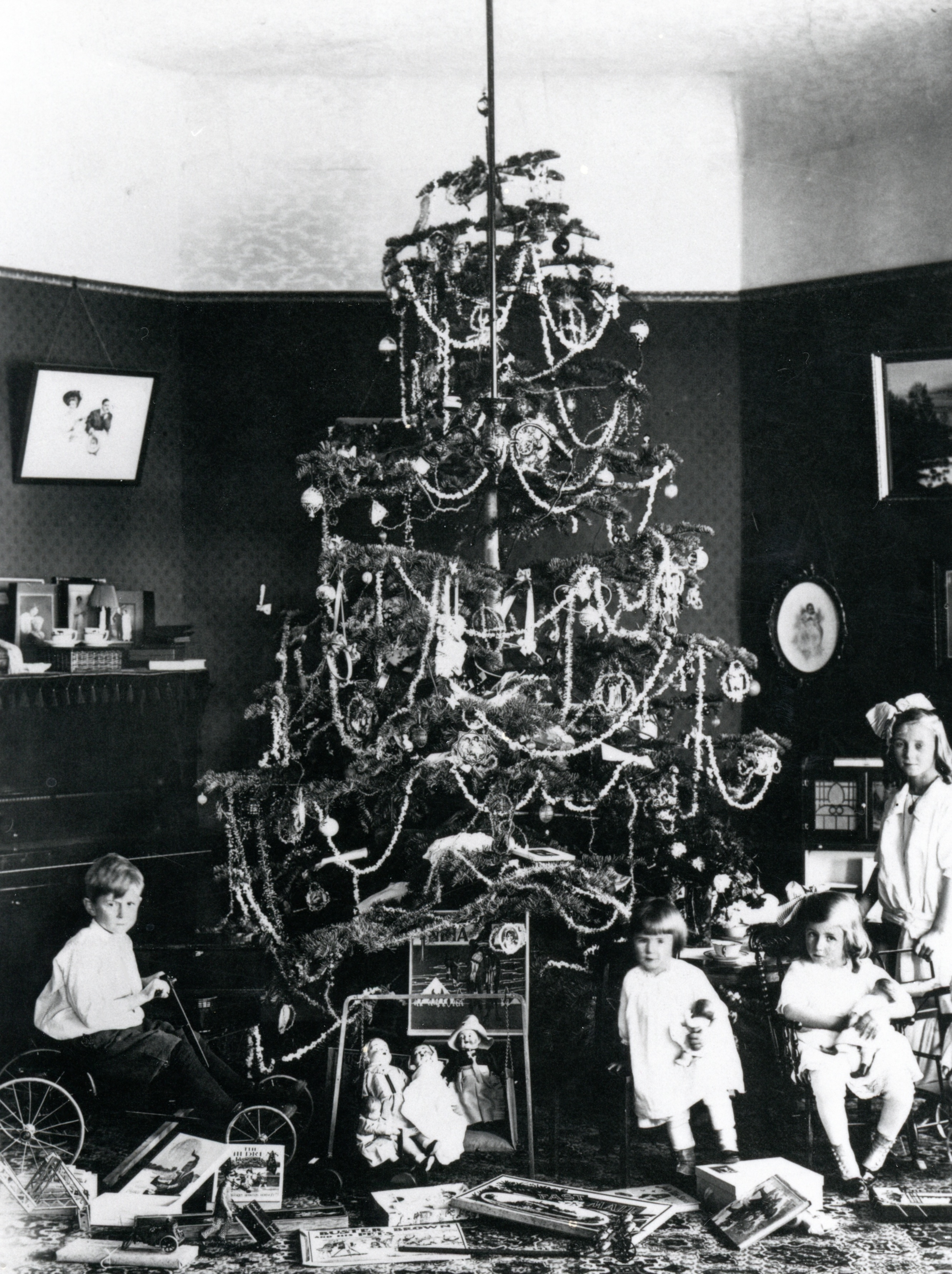
Christmas, 1917, in the Swain home, better known today as the Susanville Elks Lodge. Pictured are the Swain Children: Fitzhugh, Nellie, Blanche and Frances. Courtesy of Frances Swain

Christmas trees had a slow start around these parts. During the 1860s and 1870s the Susanville Methodist Church would put up a community Christmas tree. By 1900, the area no longer a pioneer outpost and with more prosperous times some of the local populous would adorn their home with a tree.

After World War II Christmas trees became a regular holiday adornment in most homes. It also started to become big business. In 1950, Fruit Growers Supply Company implemented a Christmas tree farming lease program. In 1966, they sold over 70,000 Christmas trees for just over $100,000. Between 1950 and 1996 Fruit Growers sold 1,422,158 Christmas trees at an average price of $1.51 per tree.

It is never too late, subscribe today and enjoy tomorrow with daily notifications. You can also surprise someone with a gift subscription.

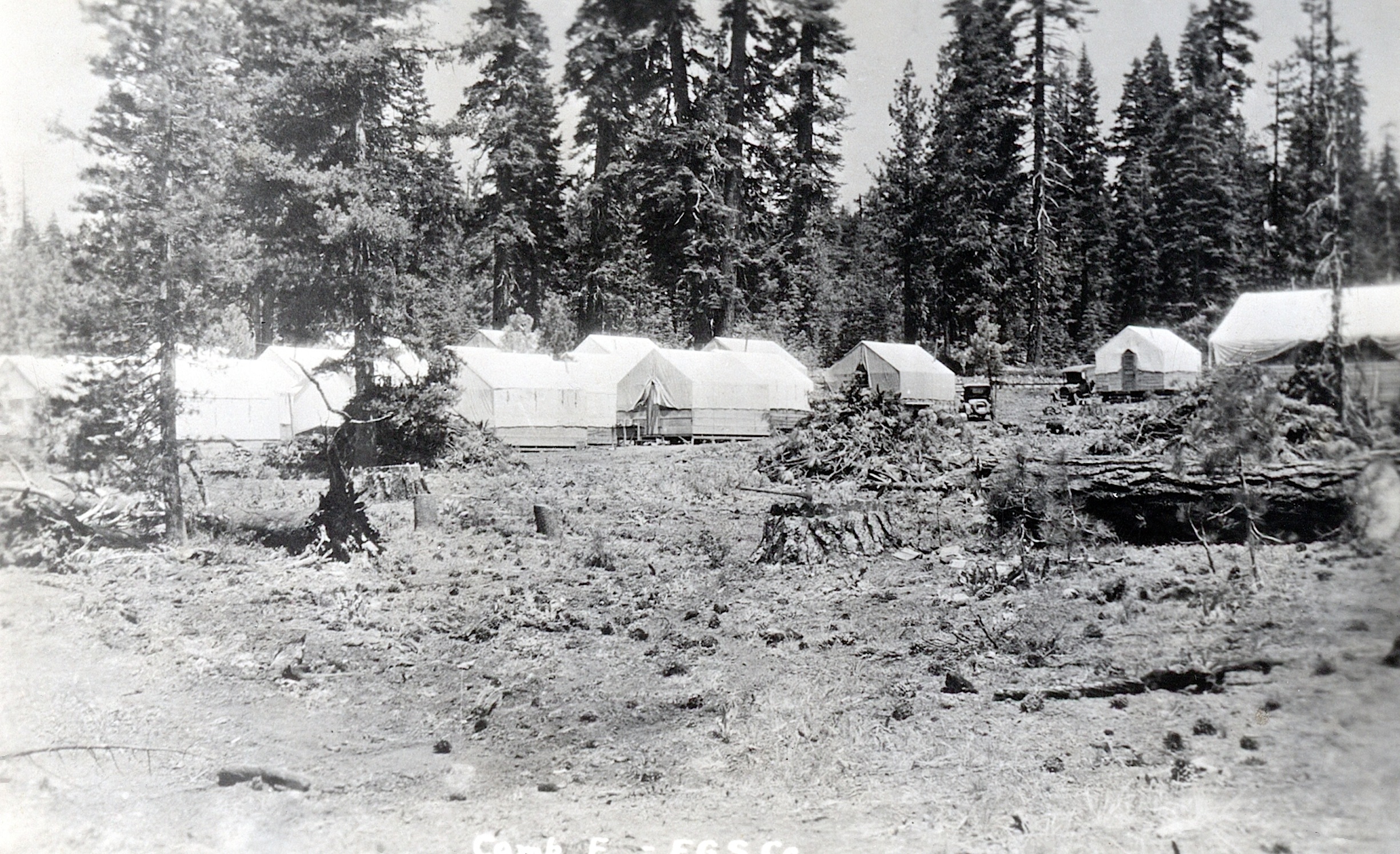
FGS Logging Camps E, Y & 9

Camp E395
Camp E, Fruit Growers Supply Company. Courtesy of Lola L. Tanner

Fruit Growers Supply Company had a total of eleven railroad logging camps. Technically, the longest operating, Camp 10, should have been named Camp 11.

Of these camps, three were quite small and operated for only one logging season during the 1920s. The first was Camp E at Merrill Flat. It was followed by tiny and peculiar Camp Y. Then there was Camp 9, which from most accounts only housed timber fallers. Unlike the other camps that had portable wooden buildings these camps had canvas-wooden tents.

Become a supporter for just $5 a month to ensure quality history available to all. Click here.

Hilt, California

Hilt, California, 1972. Courtesy of Fruit Growers Supply Company

This lumber community, now gone, played an important role in Lassen County’s history. Hilt, Siskiyou County, California was located near the Oregon border. In 1907, two events occurred that had a profound impact on that community. The Northern California Lumber Company and the Fruit Growers Supply Company were both formed that year. Fruit Growers it should be noted was a purchasing co-operative of the citrus growers, and still is today. In this period, all citrus and vegetables were shipped in wooden boxes. Shortly after the Northern California Lumber Company was formed they purchased the Hilt Sugar Pine Company.  Continue reading Hilt, California