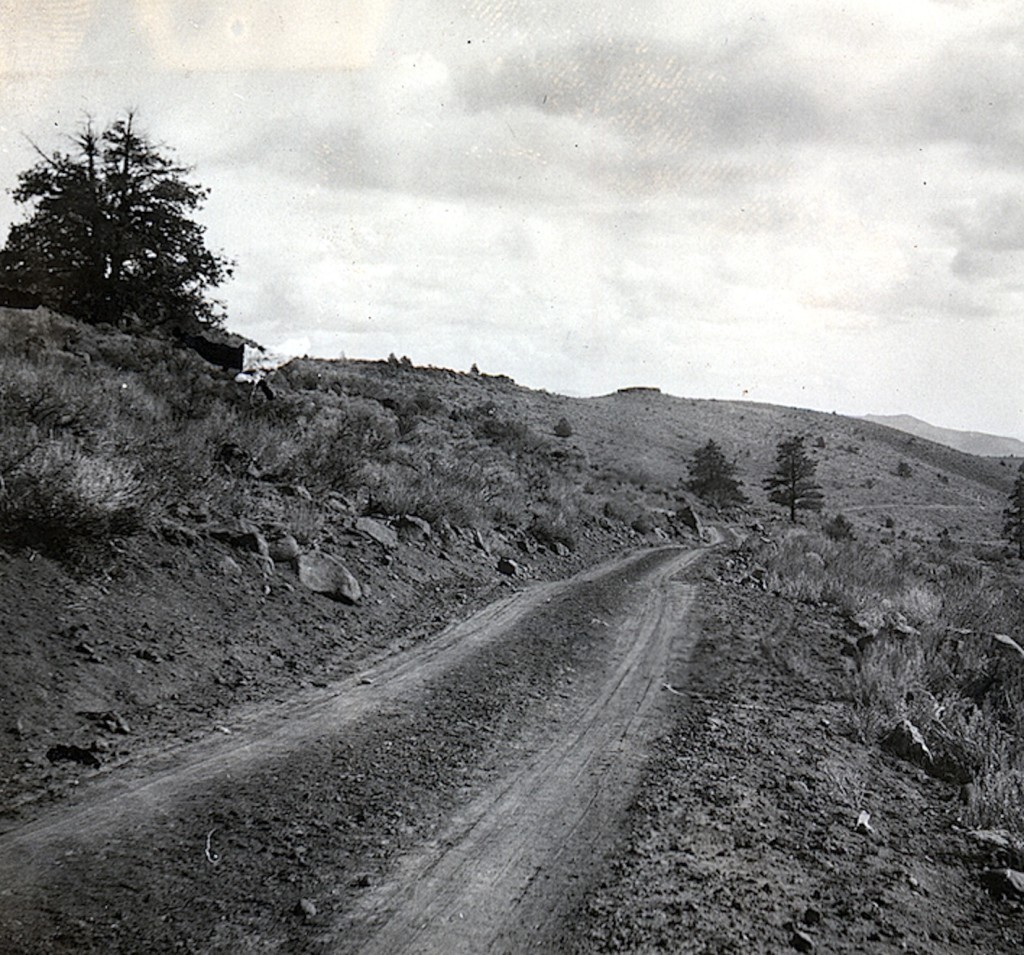
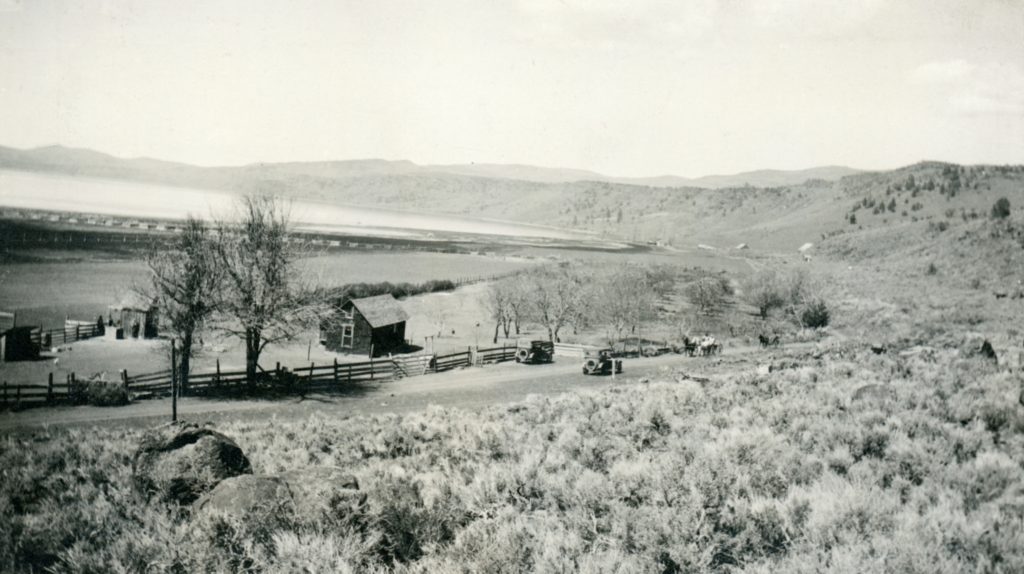
Rice Canyon Road, 1920. Courtesy of Lola L. Tanner
Today, I am out for a little adventure to Rice Canyon and Fort Sage Mountain, and all points inbetween. Many folks may not realize that the route through Rice Canyon, was the main road north leaving Honey Lake Valley. All the equipment and machinery used in the construction of the Bly Tunnel at Eagle Lake came this route. It was not until 1947, when the current Antelope Grade on what would eventually become Highway 139 was completed. By the way, it was named for Ed Rice who settled near there in 1857. The best known resident back in the day was the family of Charlie Piute whose family cemetery is located near there.
Native American mythology of the western Great Basin has that a serpent lurks in the waters of the various lakes, whether it be Eagle, Pyramid or Tahoe. Some versions assert the lakes are connected by underground channel, and this is why sightings of the serpent are rare as the serpent is constantly traveling from lake to lake.
According to the Lassen Advocate of August 13, 1976: “Suspicions of a possible Loch Ness monster in Eagle Lake were aroused Tuesday, Aug. 10, at about dusk when a group of people apparently saw a mysterious creature twice surface near the Eagle Lake marina.According to Gene Moore of Hemet, California who was fishing from shore, it looked like a 15 to 20 foot creature that almost looked like a big eel.
In early March, 1930 a jubilant Jim Fritter of Eagle Lake had proclaimed that Eagle Lake had already risen by two feet. He speculated that the lake level would rise an additional three feet. This was good news for the farmers of the Honey Lake Valley, since there would be Eagle Lake water flowing through Bly Tunnel. Elsewhere it was reported that 13.3 inches of precipitation had been measured so far that winter, with December being very wet.
Fast forward to April 2018, when Eagle Lake saw an increase of 2 inches for that month.
In 1891, the Eagle Lake Land & Irrigation Company became the latest entity to tap Eagle Lake to irrigate the sagebrush lands near Amedee. They had two propositions to do this. The long term was to finish Merrill’s tunnel. The second one involved a pumping plant to deliver the water. Like the predecessors they would utilize the channel of Willow Creek. At Belfast where Willow Creek enters the Honey Lake Valley the company constructed a twenty-one mile ditch to Amedee. In October 1892, with everything in place, water flowed from Eagle Lake to Amedee. Water would briefly flow the following year. However, the company plagued with financial problems filed for bankruptcy. The pumping plant was dismantled in 1903.
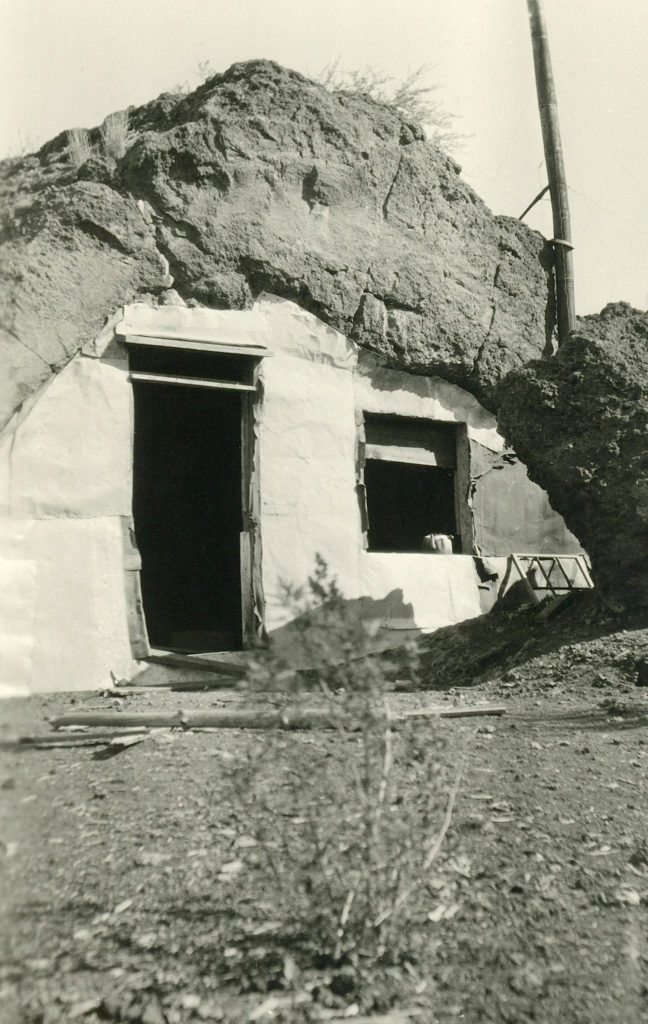
It is always fascinating what one may come across in the most unexpected places. A lava cave near BlyTunnel was converted into a dwelling of sorts by construction workers at the tunnel, and then abandoned after activity ceased there. Jim Martin, a travel writer for the Sacramento Bee did a feature article on Eagle Lake in 1968 and made mention of this unique residence and wrote: “But before you get there, you will notice a metal tank on your left. If you park there, you will find a trail nearby. By following this trail you will come upon a lava cave which has been converted into living quarters. It looks like a place for gnomes or some characters from Tolkien’s Lord of the Rings. It once was used by construction workers and goodness knows who else. It is deserted now.”
Negative envelope from A.H. Bosworth, a Fall River Mills merchant.
Every day is a new learning process and some times I grasp what is in front of me, other times it just takes a bit longer to learn something new. One of my quandaries for some time is the scanning of old photograph negatives. I mean old, not your typical 35mm or 2 1/4x 21/4. These negatives are 6 inches by 3 inches, plus some other sizes, from the 1910s and 1920s.
I have thousands of negatives from that time period. For example I have nearly 1,000 negatives of professional photographer O.O. Winn taken from 1920 to 1923 of the construction and initial operations of the Fruit Growers Supply Company. I have hundreds of Lola L. Tanner’s negatives from 1915-1925 of Eagle Lake and Willow Creek Valley. Recently, Richard Goudy of Chico asked for assistance with his family photographs of the time era mentioned that are of the Milford and Westwood areas.
My question is does any one have any experience with this, or know some one that has?
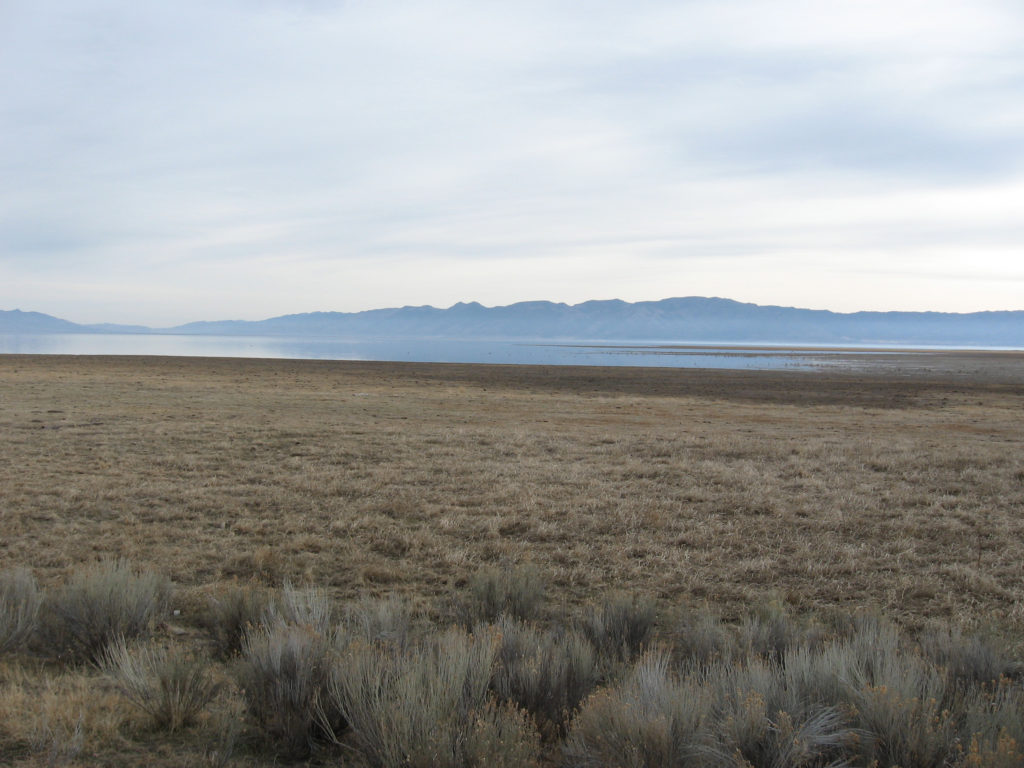
Honey Lake seen from Tanner Ranch, January 17, 2018In the fall of 1938, Professor S.T. Harding of the University of California spent some time investigating earthquake effects and water levels in the Honey Lake Valley. He had heard that an 1889 earthquake created an outlet to Honey Lake. However, he found nothing to substantiate this claim. He noted that from the winter of 1937-38 that Eagle Lake rose seven feet, but was still twenty feet short of the high water mark.
It should be noted there was a major earthquake in the region in 1889, where in Eagle Lake dropped by two feet. Harding would return to the region to extensive research on the water levels of Eagle Lake.
Fritter Ranch, Eagle Lake, 1921. Courtesy of Lola L. TannerIn 1884, James Fritter, along with his wife Frances and three small children left Butte County and located on the northeast shore of Eagle Lake, claiming 160 acres. Nothing unusual about that. In 1903, he planted an apple and peach orchard, which he had many successful harvests, which is rather remarkable given the elevation at the lake, that even regular gardening can be a challenge.
For a brief time, Fritter had political ambitions. In 1900, he ran for State Assembly and lost. Two years later, he ran for a seat on Lassen County Board of Supervisors and was successful. However, things did not go smoothly. Willow Creek Valley resident, H.A. Morrill contested the election, citing that Fritter was not residing in the district. The matter drug on for some time in the court, but in the end he prevailed. In 1910, Fritter ran for public office for the last time, again for a seat on the Lassen County Board of Supervisors. He lost in a landslide to W.C. Brockman.
As the years went by his grown children moved onto other things. In January 1932, with his years advancing and running the ranch by himself, he opted for retirement at Pacific Grove. He died there two years later. It should be noted the family still owns the original 160-acre homestead.
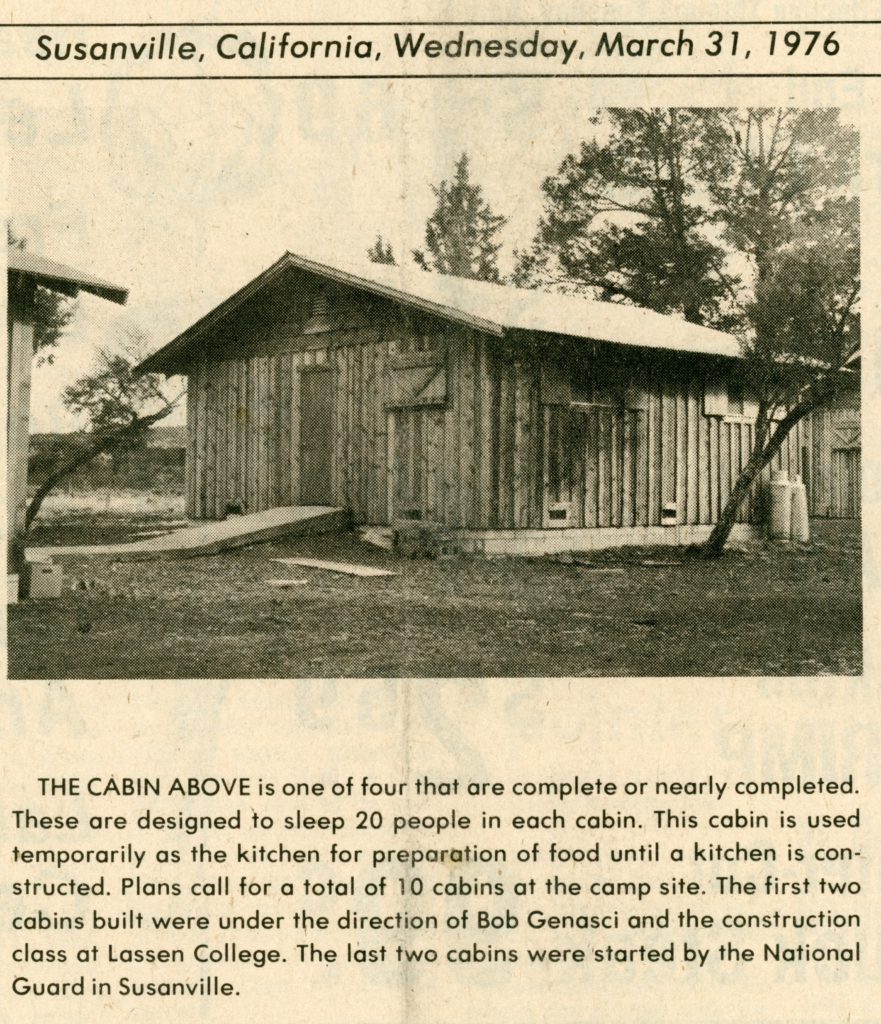
In 1976, the Lassen Advocate had a feature article on the development of the youth camp.
It is officially known as the Lassen County Youth Camp, but its location on the east shore of Eagle Lake and just north of Chico State Biological Field Station, it received the unofficial lake moniker. On November 6, 1962, the County of Lassen received a land patent from the Bureau of Land Management to establish the camp. By 1965, various fund raising drives began and work was done with volunteer labor. In 1974 a restroom and shower facility was completed. It should be noted that a portion of that money came from left over funds from the Save Our Center campaign, which was the result when the state had intentions to close down the California Correctional Center at Susanville. In 1976, the kitchen and dining hall was constructed.
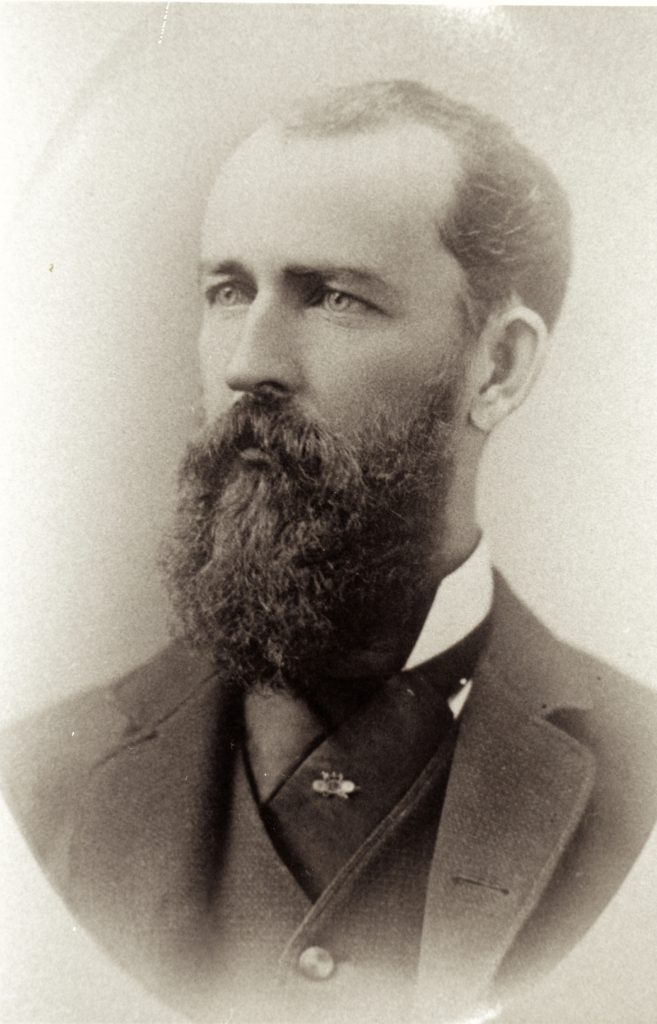
Thomas B. Sanders. Courtesy of Gilbert MorrillThomas Bracken Sanders
He was born on November 29, 1848 in Illinois, one of thirteen children, yet ten of his brothers and sisters died in infancy, some of whom are buried in the Susanville Cemetery. It should be noted that the family came west in 1860 and settled in Plumas County and in 1867, they moved to Susanville.
One of his more interesting jobs began in the late 1870s, when he went to work for the Fish & Game Department as a deputy. They kept him busy planting fish in the various lakes and streams to learn what would best adapt in the area. In January 1879, Sanders along with Dr. H.S. Borette and William Dow introduced the first non-native species of fish at Eagle Lake. It was two wagonloads consisting of 225,000 Great Basin whitefish. That fall they planted brown bullhead catfish at Eagle Lake. Sanders also planted catfish in the Susan River and Piute Creek, where they did quite well. Take for instance, in 1883, Masillon Martsteller caught a twelve pound catfish from the Susan River. Sanders, himself, caught a catfish from Piute Creek that weighed fourteen pounds.
While Fish & Game paid Sanders a stipend for what he did, the work was sporadic and the payment not sufficient to make a living. For a livelihood he learned the carpentry trade. He specialized in making cabinets, furniture and trunks. As most furniture makers of this era, he was called upon to make coffins. He added undertaker to his profession and continued until 1896 when he sold out to Tom Oakes. In 1897, he moved to Sacramento where his brother, Plumas Sanders resided. It was not a good move. Two years later, unable to find steady work, he committed suicide.