Tag Archives: Eagle Lake

Eagle Lake Circus Grounds

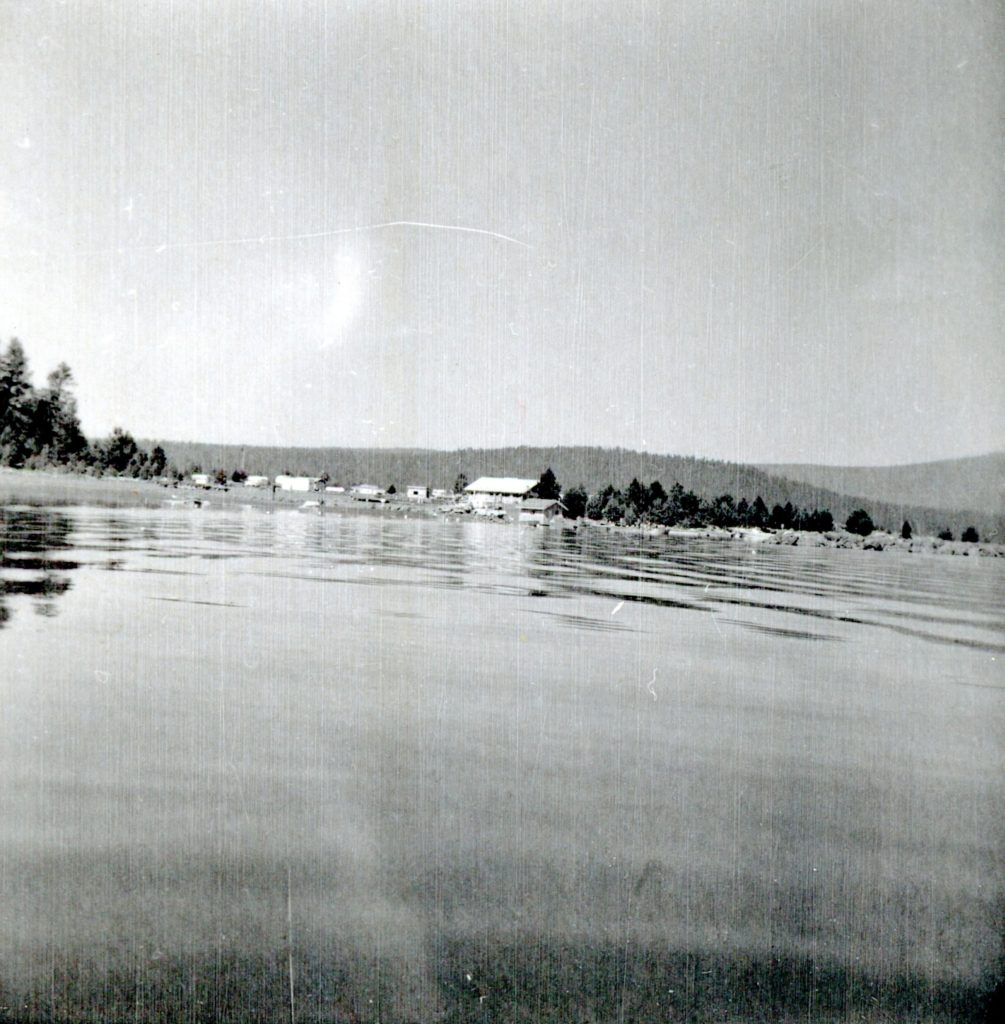
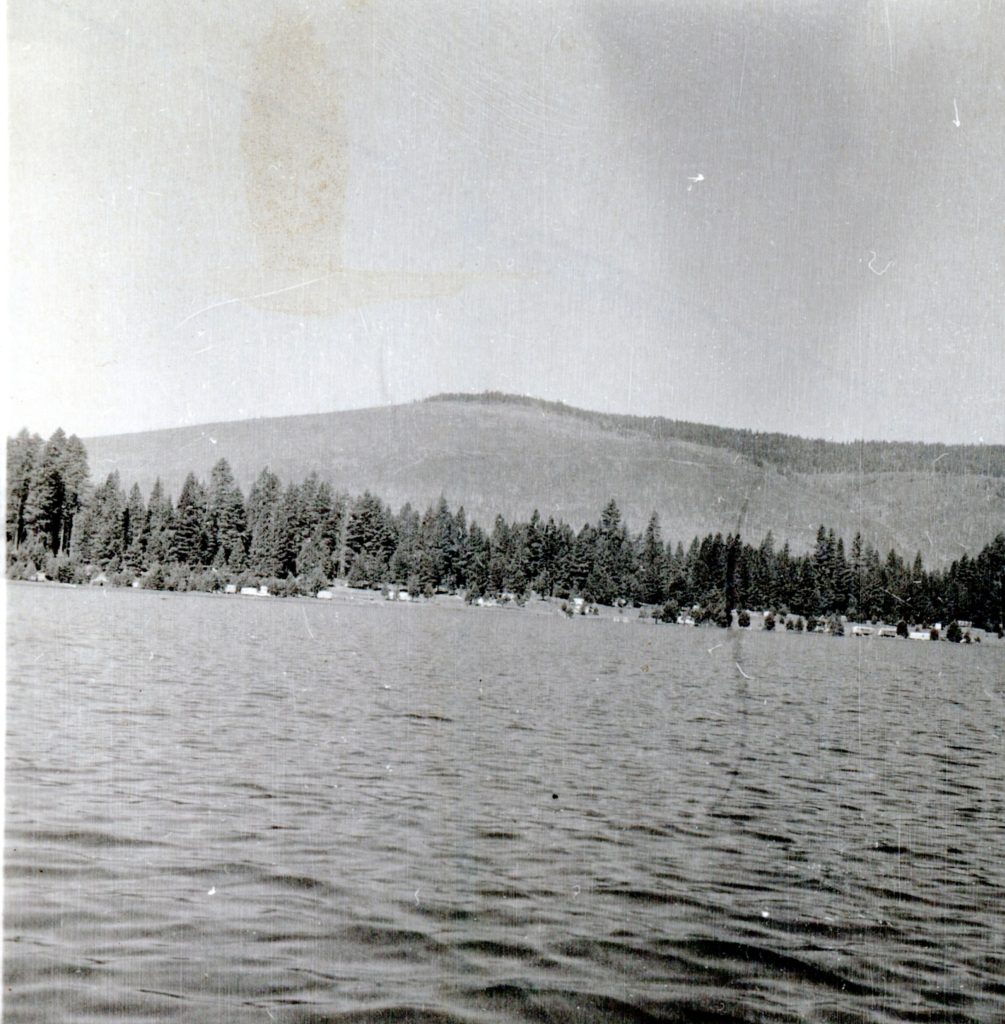
A early 1960s view from the lake of the Circus Grounds. Note the aftermath of the Merrill Fire in the background.

Located at the southwest corner of the lake, was an informal campground known as the Circus Grounds. During the early 1920s the big three lumber companies held a summer water carnival at Sunkist Lodge. The event drew thousands and this location became the overflow for campers. In the early 1960s, the forest service developed three campgrounds at the south shore—Aspen Grove, Eagle and Merrill. While the Circus Grounds, located on forest service property, was allowed to continue on, it having been a popular spot with the locals since the 1920s. By the 1970s, the writing was on the wall so to speak, and forest service converted the site as today’s Christie Campground.

Subscribe
 

The Bly Inlet Problem

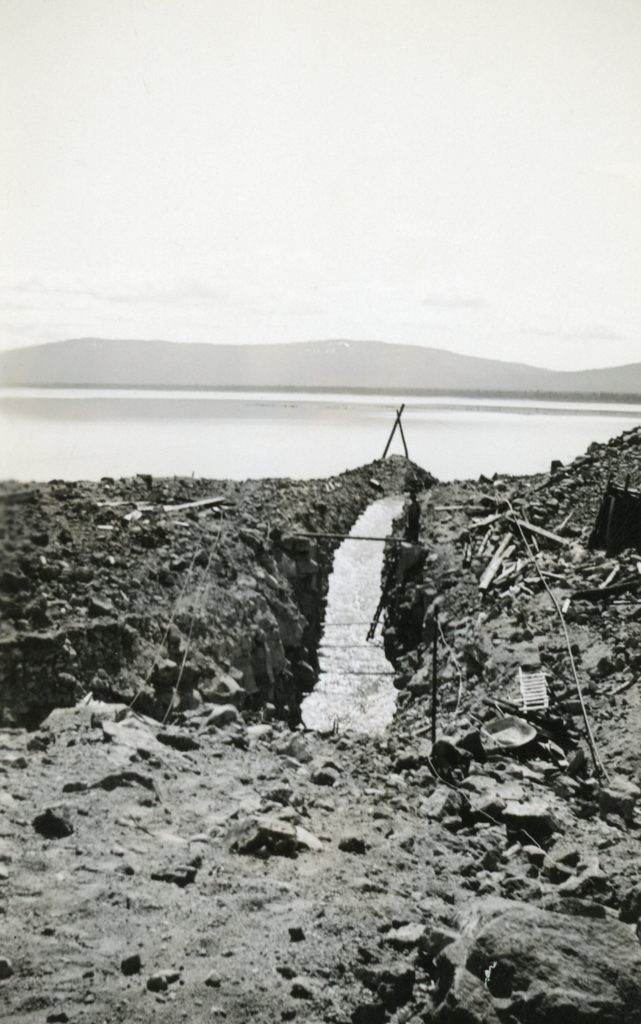
The first of many of deepening the intake to the Bly Tunnel.

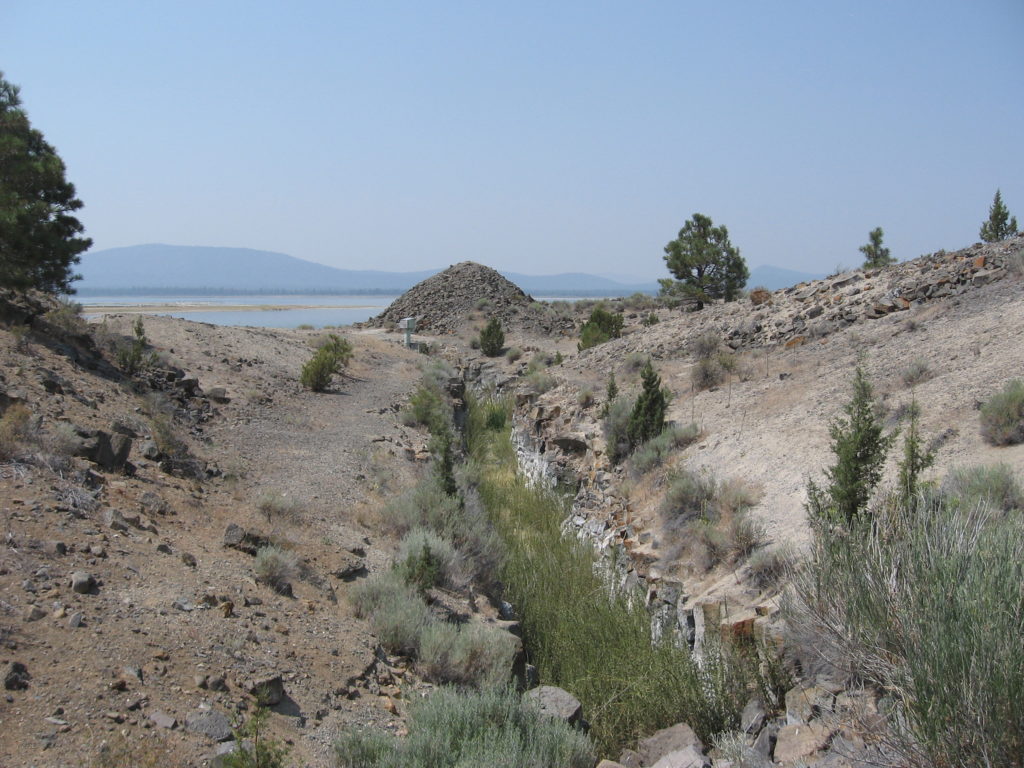
In 1928, the Tule & Baxter Creek Irrigation Districts brought in yet another engineer to examine the Bly Tunnel, with a special emphasis on the inlet channel. Of course, they did like what they were told that it would take at least $100,000 to fix the problem, and it might only extend the life of the project by ten years. The Districts continued on with annual blasting through solid rock to deepen the channel. This exercise in futility finally ended in 1935 when they conceded.

August 9, 2018

Should you ever have the opportunity, it is well worth the visit to see the inlet channel. While I took this photograph August 9, 2018, it does not do it justice of the solid rock encountered. It also means, I either need a better camera, improve my photography skills or both!

Donate

Eagle Lake Remnants

Plenty to see at Tunnel Works No. 2

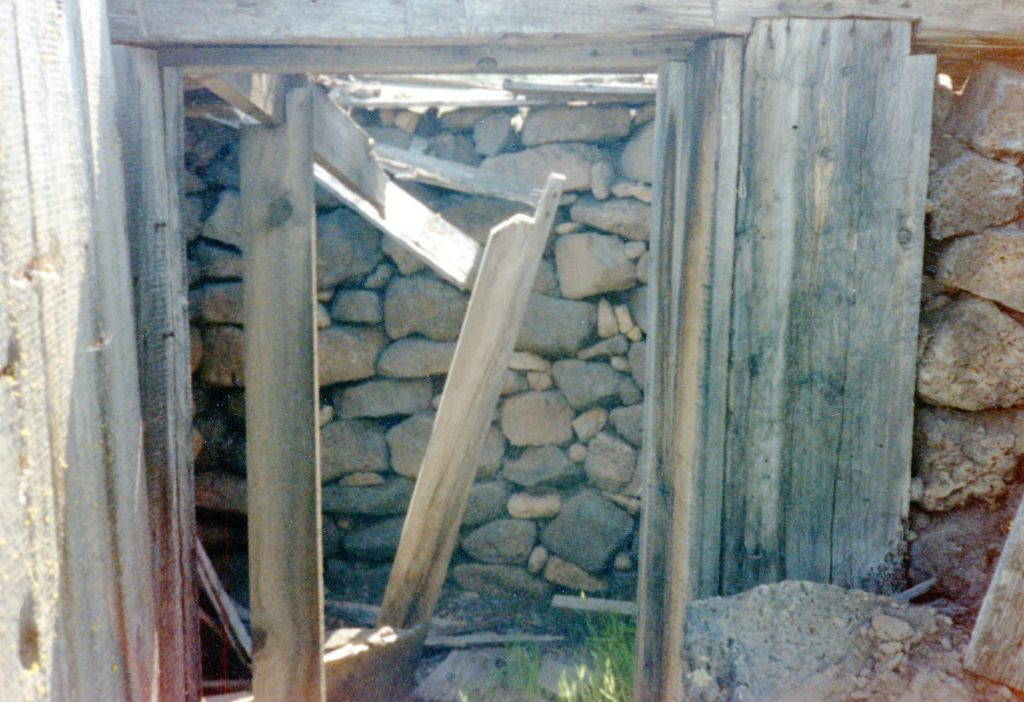
Since it is December, I am busy filing and/or cataloging items in anticipation for a fresh start with a new year approaching. I came across the above photograph on an old trip to Tunnel Works No. 2 of the Eagle Lake Land & Irrigation Company. While the short-lived company only existed from 1891-1894, it did accomplish a lot.  While they knew it would take a very long time to complete the tunnel that Merrill had begun a decade earlier, they had a vision to provide necessary funds. They installed a pumping plant to pump water out of the lake, and sent water to the east side of the Honey Lake Valley. Thus, they were able to sell water for the 1893 irrigation season, while work continued on the tunnel. However, by the fall of 1893 with nation’s financial panic in full force, they were unable to sustain operations and went bankrupt.

Donate

Bly Tunnel sealed

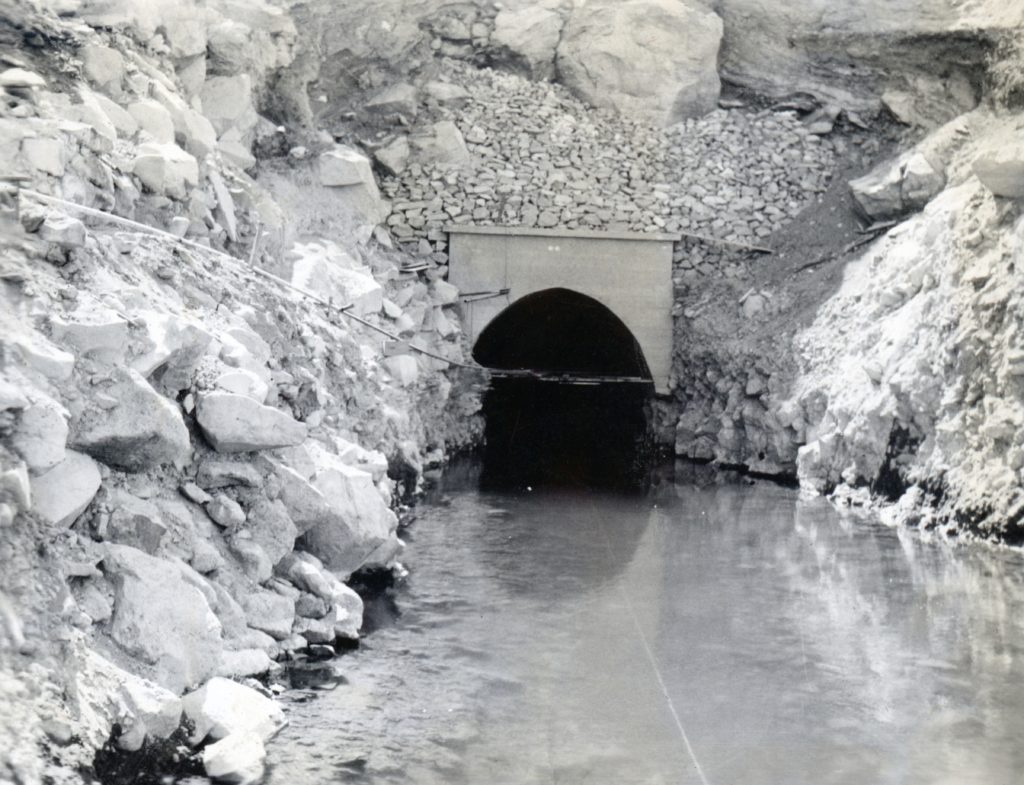
Bly tunnel inlet, July 1924. Courtesy of Wyn Wachhorst

In 1871, Hayden Hill postmaster, A.W. Blair was the first person to conceive the idea to tap Eagle Lake to irrigate the sagebrush lands of Honey Lake Valley.  Nearly fifty years later, it was Leon Bly, who finally succeeded in building a tunnel where others had failed. In 1923, the mile and a half long tunnel, costing $975,000 was completed as far as Bly and the contractors were concerned. However, the contractor only put in a cut of three feet below the surface at the intake, instead of eight feet. From that time on the tunnel was plagued with problems. In 1973, the Bureau of Land Management revoked the right-of-way for the tunnel and deemed it a safety hazard. Using tailings from the tunnel construction, they put a temporary plug to the tunnel. Finally, on November 26, 1986 the BLM hired Western Roads, Inc., to place a permanent concrete plug at the tunnel’s inlet.

Subscribe

Eagle Lake Marina

A view of the marina from the lake, circa 1963.

In the mid-1950s, the Lassen National Forest Service inconjunction with Lassen County officials began the planning process to make improvements at the south shore of Eagle Lake, since it still remained in its primitive state. One of the top priorities was the development of a marina near Gallatin Beach. The county leased the property from the forest service and in 1961 completed the marina. The following year, the county sub-leased the operation to Richard Gentry. In 1970, due to the rising level of the lake, the boat harbor was revamped. Upon completion it was named the William W. White boat harbor, for former Lassen County Planning Commissioner who was an ardent supporter of the project.

Subscribe

Colley Point Dedication

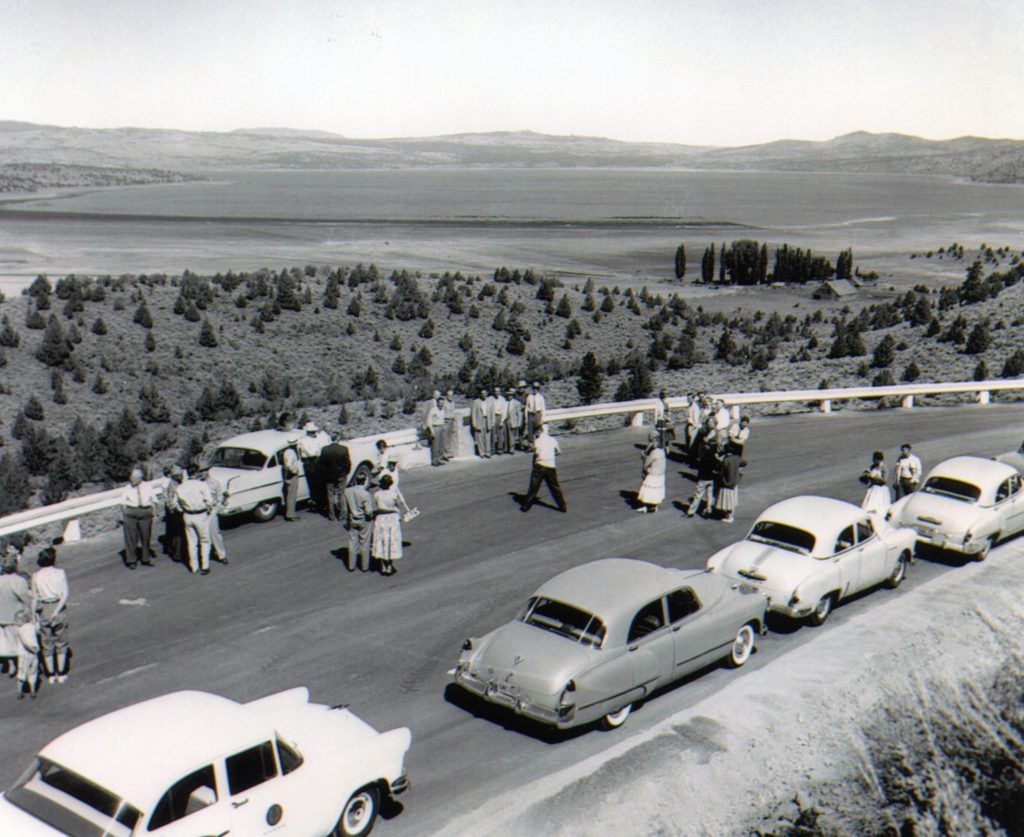
Dedication ceremonies at Colley Point.

Sunday, August 26, 1956 was a historic day in transportation circles. At Colley Point, overlooking Eagle Lake, witnessed the dedication of Lassen-Modoc Joint Highway #14. The project began in 1929, with the goal of a highway from Susanville to the Oregon border near Malin. Over the span of time, sixteen different public and private entities were involved with the construction of the highway. At center stage during the ceremony, a great deal of credit was given to Pete Gerig, one of the original directors who was committed to see it from beginning to end. In December 1959, the route became State Highway 139.

Subscribe or Donate

Eagle Lake’s Bucks Bay

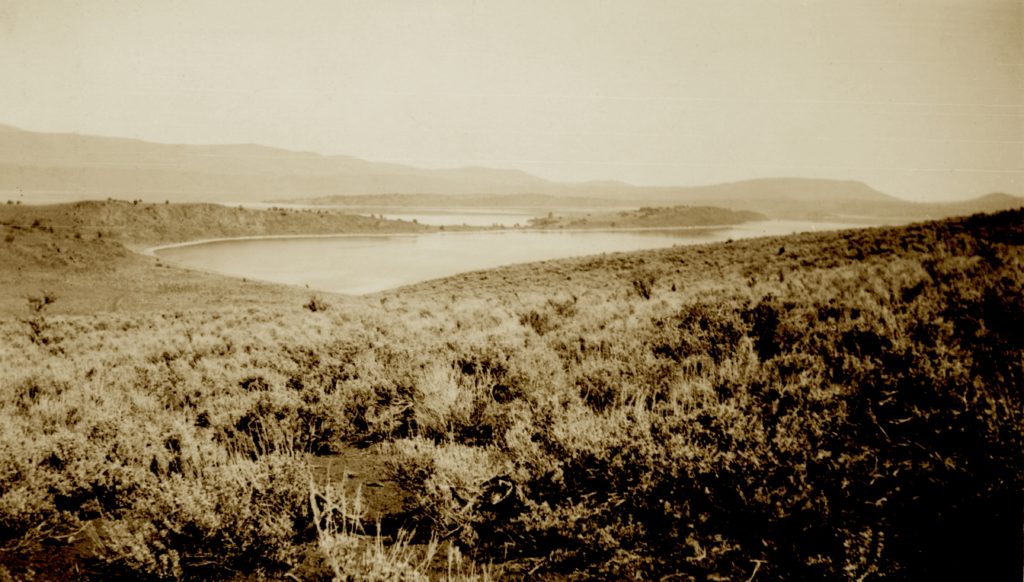
Bucks Bay, Eagle Lake, 1921. Courtesy of Lola L. Tanner

Locally, with Eagle Lake’s Whaleback Fire, on a lot of people’s mind, The last time I checked the fire has consumed over 18,000 acres.  I thought I share this 1921 photograph of Bucks Bay taken by my grandmother Lola L. (Murrer) Tanner. No doubt the naming of the place stems from some deer hunting tale or two, though we may never know.

Currently, there is voluntary evacuations for Bucks Bay and Stones, as fire pushes northward from Spaulding Tract. Yesterday evening, there was a community meeting concerning the fire, though I did not attend. When I am out and about later this morning, and I receive additional information, I will provide an updated post.

Subscribe

Eagle Lake, Pelican Island

L
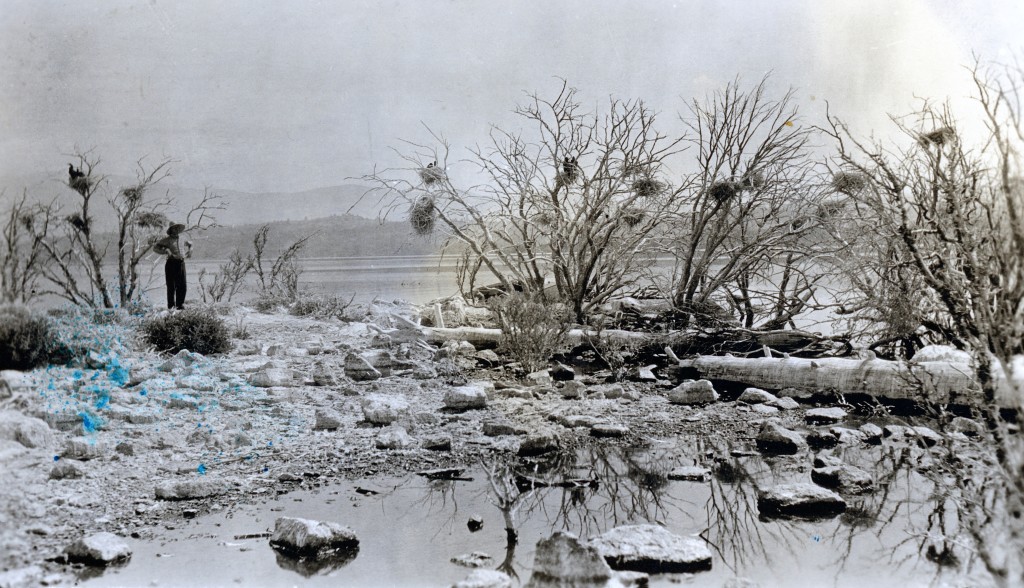
Pelican Island, 1916, D.M. Durst

This is a follow up of last week’s post of Ada Gerking York’s memoirs.  She also observed: “Eagle Lake contains two islands, Shag and Pelican, both of which are gradually being submerged by the rising of the water. These islands are the meeting places of various water birds; in early summer, one can imagine one’s dreams of gathering eggs, as there are so many lying there on the ground. The lake is very deep near Shag Island, the bottom has not been fathomed yet. The northern wing is not so deep and according to the account of a very old Indian, this part of the lake was dry many years ago, and he with a party of Indians crossed it while hunting deer, the ground being level as a floor.”

Subscribe.

Eagle Lake Ice Caves

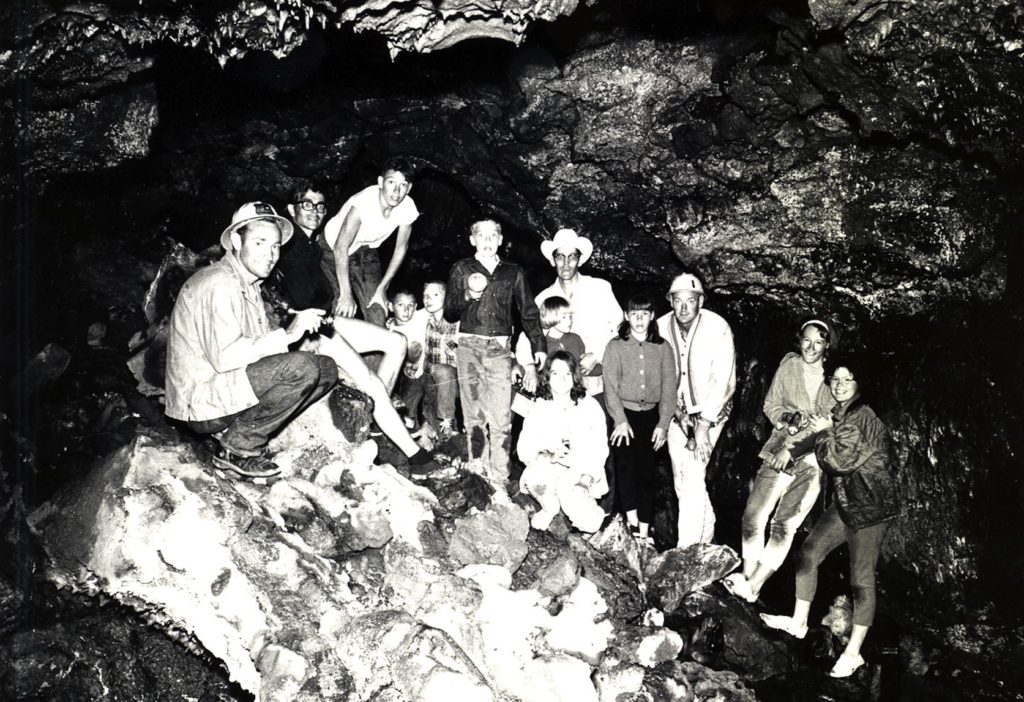
An Eagle Lake ice cave, 1965.

It is a rarity to come across early day descriptions of the various ice caves on the west side of Eagle Lake. The following account was a part of Ada Gerking York’s memoirs (1877-1936). She was raised in Willow Creek Valley and spent most of her married life in Grasshopper Valley.

”Eagle Lake is surrounded by many wonders, especially on the west side, great lava beds of which little is known.  A great volcanic crack extends for ten miles; some places 10 to 15 feet deep, others bridged and so on. The place where I visited had a bridge upon which I went; I found a small hole in the ground and dropped a rock down. It struck far below then rolled, clattering among other rocks, fell again, and was some moments before all was quiet again. One of the party went into the crack and found an entrance to the cave under the bridge, but cannot be explored on account of its depth. Another time I visited the caves, how many I forgotten, and I think there are many yet unexplored; some of them had monstrous holes as openings, and in entering I found large rooms, some of which were exquisitely shaped. One known as “The Grottos” had many stalactites and stalagmites; some have more than one opening and some several apartments. One contains ice and is known as the Ice Cave and ice may be had any time of the year.”

Donate.


Pine Creek, Lassen County

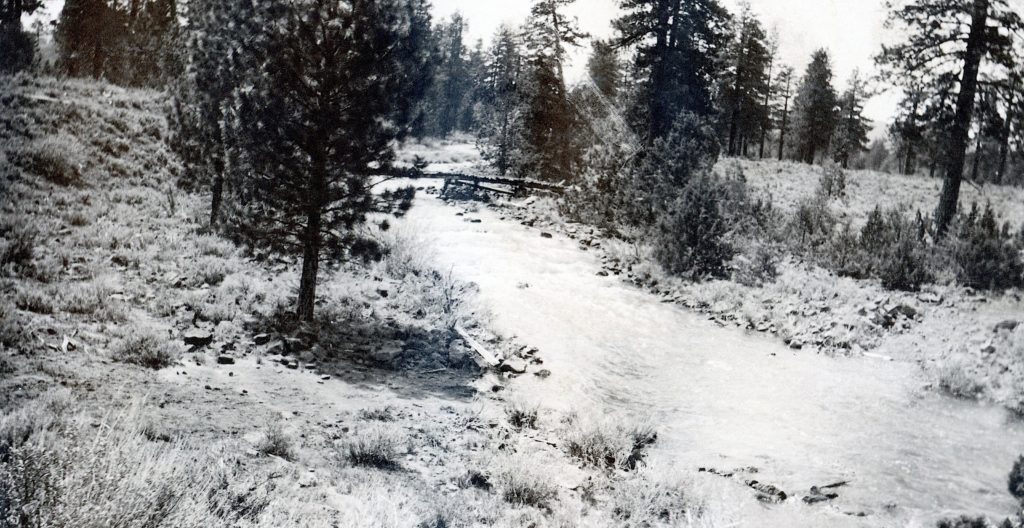
Pine Creek, 1921. Courtesy of Lola L. Tanner

In 1938, Ernst Antevs research on the Rainfall and Tree Growth in the Great Basin was published. A segment concerns Lassen and Modoc Counties. The following is an interesting footnote from that study:  “The sources of Pine Creek, the only large tributary of Eagle Lake, are less than a mile from those of the Susan River, the main feeder of Honey Lake. The seasonal runoff in these streams may therefore undergo similar fluctuations, and with undisturbed conditions, the lakes should do the same. Actually, Honey Lake has fluctuated  in harmony with the known precipitation of the region, but this has not been the case with Eagle Lake. The moistest times since 1850 have been 1868, 1890-93 and 1904-07, and since 1907 the measured rainfall and runoff have on the whole decreased, while the highest recent stand in Eagle Lake was recorded in 1917. The fact that from 1801 to 1821 a thicker wood mantle was formed in the Susanville trees than during any two later decades prevents us from concluding from the stump at the 82 foot level that the precipitation from 1760 to 1860 was continuously light and much smaller than it has been since 1860. In short, the levels of Eagle Lake cannot be used as a basis for conclusions about the rainfall before 1850. A reasonable explanation of this controversial problem was given the writer in 1931 by Mr. G.N. McDow, president of Lassen County Abstract Co., Susanville, who expressed the opinion that the rise of Eagle Lake was due to a closing of its subterranean outlet about 1890 by an earthquake.”

Subscribe!