
Subscribe!
Subscribe!

Over the course of time the region has seen a wide variety of barn styles. Some had lasted through time and others not, for one reason or another.
In 1864, a German immigrant, Jurgen Jensen located in Susanville, where entered into a partnership with William Brockman, to operate a blacksmith shop. In the ensuing years, the two men, went off on their own, each locating on property along Johnstonville Road.
In 1891, Jensen had a large three-story barn built on his ranch. On September 11, 1923, the barn was destroyed by fire and it was believed to be caused by spontaneous combustion. Stored inside was 200 tons of hay, valued at that time around $3,500. The barn was insured for $1,500, but it was not enough to cover the cost to replace it.

Susanville’s Farmers Market returns today for the season. It is temporary being relocated on North Gay Street, next to the Bank of America parking lot, while Pancera Plaza is being renovated.
It was my intent to share some interesting historical production figure from the Honey Lake Valley agricultural community in the 1920s. However, I have misplaced my notes. I was hoping to locate them over Memorial Day weekend, since I tackled a backlog of filings, but they did not surface. When they do, I will post the same.

This story has nothing to do with the kind of chicken nuggets people purchase at fast food outlets. Early on in my research career, I heard a lot of stories, some were true and others, not, but nonetheless they were good tales.
One particular tale was told to me many times, and that a particular incident occurred more frequently especially in the Gold Run and Richmond area. It was not unusual for a person who while prepping a chicken to eat, during the dressing stage, would find a small gold nugget stuck in the chicken’s craw. To add credence to this story, I came across the following tidbit: Lassen Advocate, March 25, 1897 – Vic Perry, the rustling poultry and egg denier, so reports say, recently killed and dressed a chicken for market, in the craw of which he found two dollars and seventeen cents worth of gold. We do not mention the matter as one that is particularly noticeable in this section, however remarkable it might be in other localities but simply present it as an ordinary every day sort of a fact.

One of the first agricultural enterprises undertaken in Lassen County was the establishment of flourmills. Due to the region’s isolation during the 1800s it was important for the region to self sustain itself. One of the most important products needed by the residents was flour. In 1861, J.C. Wemple and Judson Dakin built the region’s first flour mill at Milford. In 1882, H.H. Dakin, built a larger, more efficient mill at Janesville, which eventually replaced the Milford mill. The Milford mill did remain in operation until the late 1880s. In the 1890s, the mill was abandoned and in the early 1900s it finally collapsed. Other flourmills were established at Bieber, Janesville, Johnstonville and Susanville, more on those later.
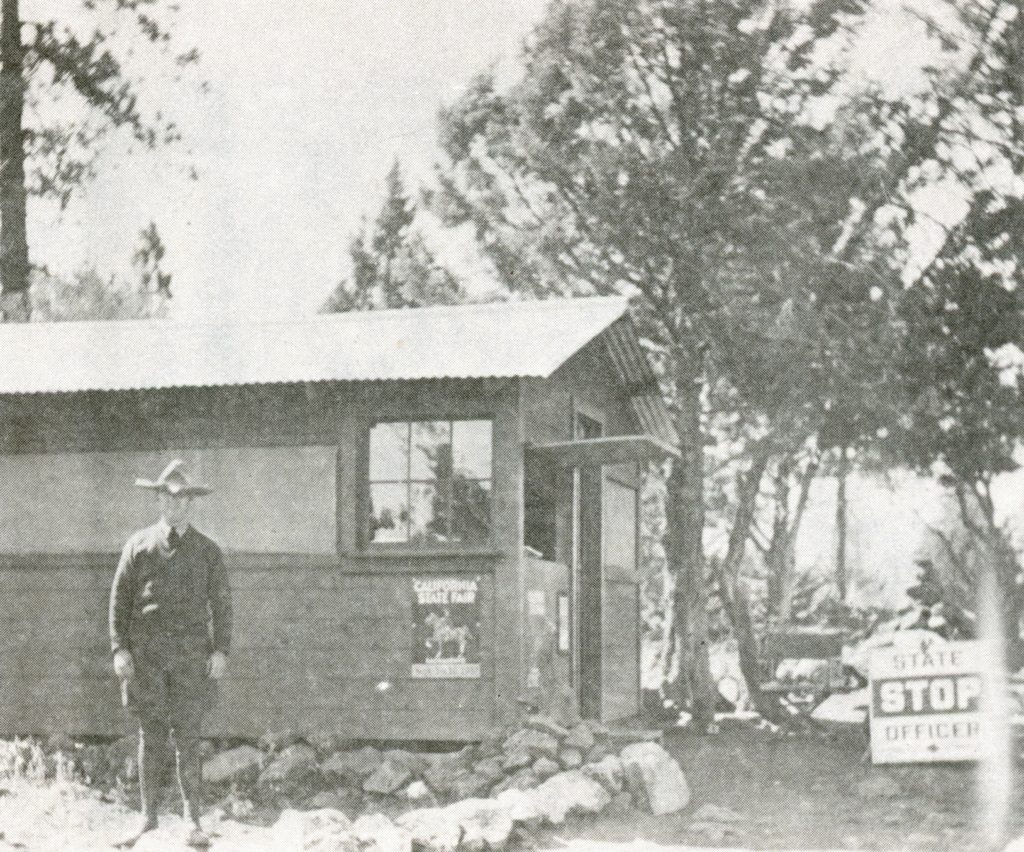
Most people may not be aware the agricultural inspection stations originated with an alfalfa weevil infestation in the southern portion of Lassen County in 1921. The county originally conducted the operations, and in 1923, the state took over.
The infestations spread and more stations were opened one just west of Susanville near the present day intersection of Highway 36 and Eagle Lake Road. Another one ten miles north of Susanville, just before approaching Willow Creek Valley. These would later be replaced and in 1953, the main station was at Long Valley. In 1976, when the segment of highway 395 was to become a divided highway, the station was in limbo, and the current one was put into place in 1986.

Note: Margie’s Book Nook has received a couple copies of The Wild Horse Gatherers. First come, first serve. There are some other out of print books that the store has recently received.
A hundred years ago, the wild horse population was kept under control by out of work wranglers. During the winter months, it was not unusual for ranches to let go extra help, especially single men. A number of these men, would take a 160 acre desert homestead to make a home, especially properties with unclaimed springs. To make some extra money, they would catch wild horses and break them. By spring they would sell the horses, and pocket the money. Continue reading Wild Horses
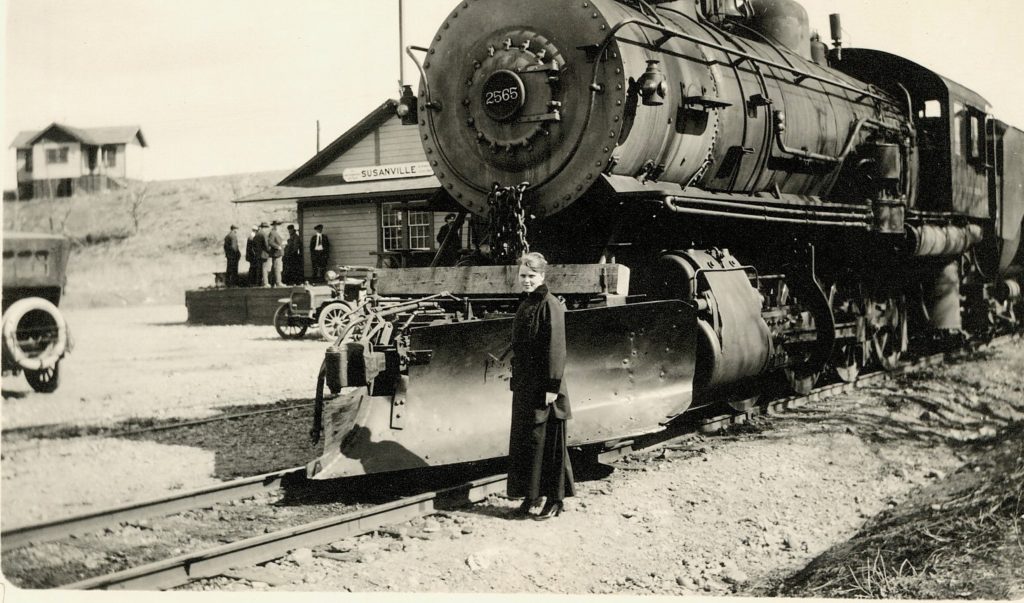
When the Fernley & Lassen Railroad was built through a major segment of the Honey Lake Valley, the residents rejoiced. This was especially true for the agricultural community. One of the major crop exports was apples, and now there was an easy and efficient way to ship them.
Yet, on the other hand, no one knew what to expect when the Red River Lumber Company established its company town. Again, the agricultural community was a main benefactor. In a sense, the railroad was not needed to ship meats and produce out of the area, but to ship to Westwood, a new town that had to be fed. When the mills of Fruit Growers and Lassen Lumber were established in Susanville, that increased the demand for more local products.

Believe it or not, it is a natural sink. According to the Government Land Office Survey designated it as Alkali Lake. It was still referred to as such as late as 1889. In 1875, Benjamin H. Leavitt constructed a small reservoir at that location. In 1889, the reservoir was enlarged. When construction was underway, Victor E. Perry, Leavitt’s son-in-law, worked on the dam. Perry planted a gold nugget there and when it was discovered it caused great excitement with the other workers. Leavitt informed the construction workers that they could keep whatever gold they might find, as long as it did not interfere with the construction. With that incentive, the men worked twice as fast to build the reservoir, in hopes of locating more gold.

The United States Government Land Office played an important role in the development of region locally, as well as across the western United States. It was through the Government Land Office (GLO) is where a person went to file for a federal and, in certain instance a state, land claim, once the region was officially surveyed by the government. Continue reading The Government Land Office