Tag Archives: Agricultural

GeoProduct’s Honey Lake Hydroponic Farms

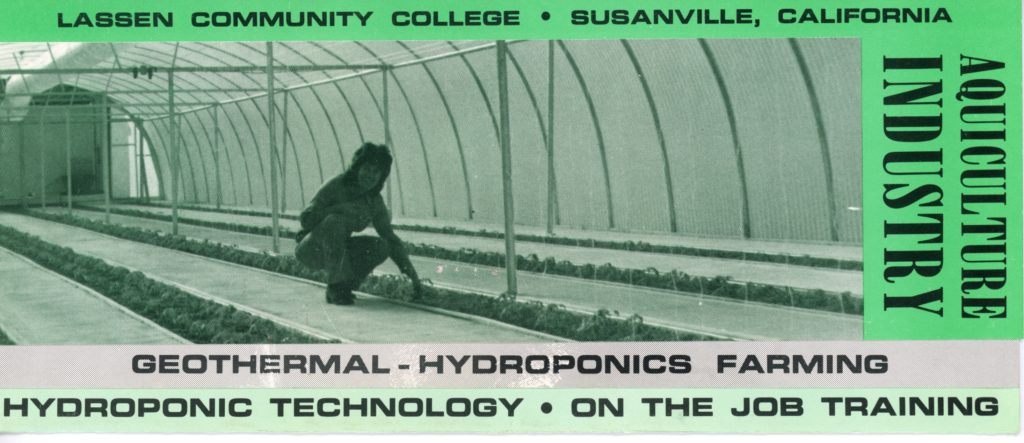
A Lassen College brochure offering a degree in hydroponics.

With all the publicity generated by Hobo Wells Hydroponics it caught the attention of Alexander Black, of GeoProducts based in Oakland. With what seemed a blink of an eye, GeoProducts secured a lease to 3,000 acres directly across from Hobo Wells. GeoProducts named this venture Honey Lake Hydroponic Farms. Their technique would be somewhat similar to Hobo Wells, though they would use cold water containing 16 nutrients to feed the plants.

In 1977, GeoProducts constructed 30 greenhouses similar to Hobo Wells, which by way was dormant. On other hand, Black, like so many promoters of developments on the east side of the Honey Lake Valley, suffered from illusions of grandeur. According to Black the company would build a total of 150 greenhouses,. Next on the list a power plant, which would enable to build 700 greenhouses. Also in works, their own alfalfa ranch, and a alfalfa dehydration plant. Such a large scale operation would need housing for its employees, since Wendel with a mere population of 30 could not accommodate. With that in mind in 1979, plans were in the works for 200 home community, exclusively powered by geothermal energy.

Any visitor today to Wendel, knows that these proposals never materialized. Just by the early 1980s, like Hobo Wells, GeoProducts abandoned their operation. There seems to be one general consensus, one problem it was too costly to transport the tomatoes to a large outside market.

Support
 

Hobo Wells Hydroponics

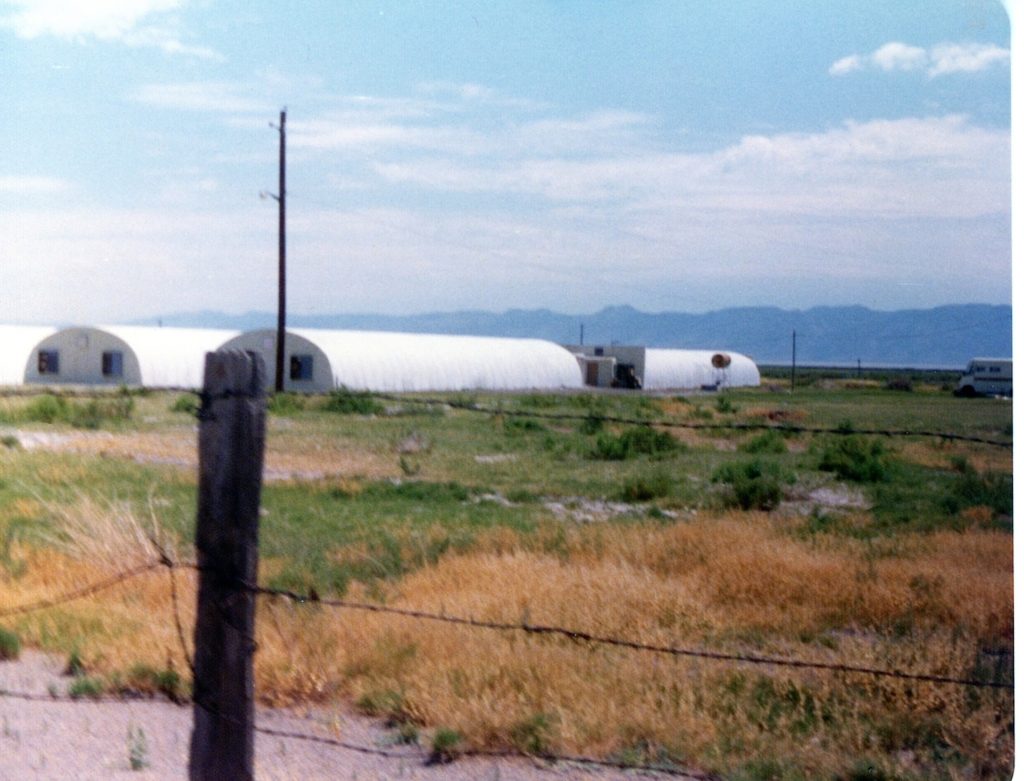
Hobo Wells greenhouses,May 1975

In 1971, an itinerant hunter from San Diego ventured into the wilds of Lassen County. One of the things he encountered was Wendel Hot Springs. Whatever the case may be this wandering hunter, Phil Gutman, had an epiphany.

The following year, Gutman did something extraordinary, that no one had done before. Gutman came up with the concept of Hydroponic farming utilizing the hot springs for there geothermal potential. On August 28, 1972 Hobo Wells Hydroponics, Inc. was finalized along with two other partners—Mark Souza and Gutman’s son, Andy. Hobo Wells entered into a long term lease with Mapes Ranch for the property. In August 1972, the first greenhouse was built, measuring 28 feet wide, 140 feet long shaped like a quonset hut covered with a translucent plastic. It was planted with 1200 tomato seedlings. The seeds are initially started peat moss, and set in pea gravel in nine-inch-deep beds.  Then several times a day the plants are watered with the necessary nutrients. They also experimented with other vegetables and florals as well, but the high quality tomatoes were in demand, thus the most profitable. Hobo Wells operation was not limited to a single growing season, as the geothermal heating allowed the operation to grow year round.

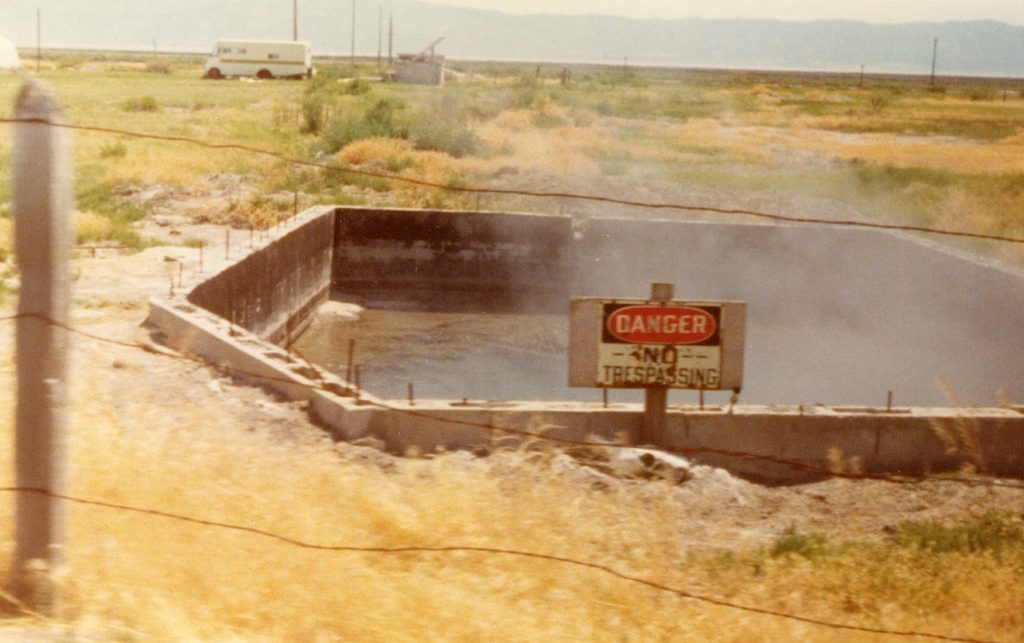
They constructed a concrete block around the spring to conserve heat. May 1975

Another aspect of this enterprise that is unique, was that Gutman had no background in agriculture or geothermal energy. As a matter of fact, he had only retired from the Army after twenty years of service.

In time, the operation expanded to six greenhouses. The goal was to raise 40,000 pounds of vine ripened tomatoes per greenhouse, per year.

Hobo Wells received extensive press coverage, locally, state and nationwide. In addition, he designed an taught a two-year course in Aquiculture at Lassen Community College, where the students received first hand training at Wendel. All that attention, brought in a competitor across the road by the name of GeoProducts.

Something happened that changed the operations. First there was the sale of the Mapes Ranch in 1976. Then for reasons unknown, Gutmans and Souza were no longer on the scene in 1977 and the greenhouses were idled.  In 1979, John DeLapp of Standish had taken over Hobo Wells. By the early 1980s the operation was abandoned.

Tomorrow: GeoProduct’s Honey Lake Hydroponic Farms

Support


A Surprise Tuesday Tidbit – Mile High Mill

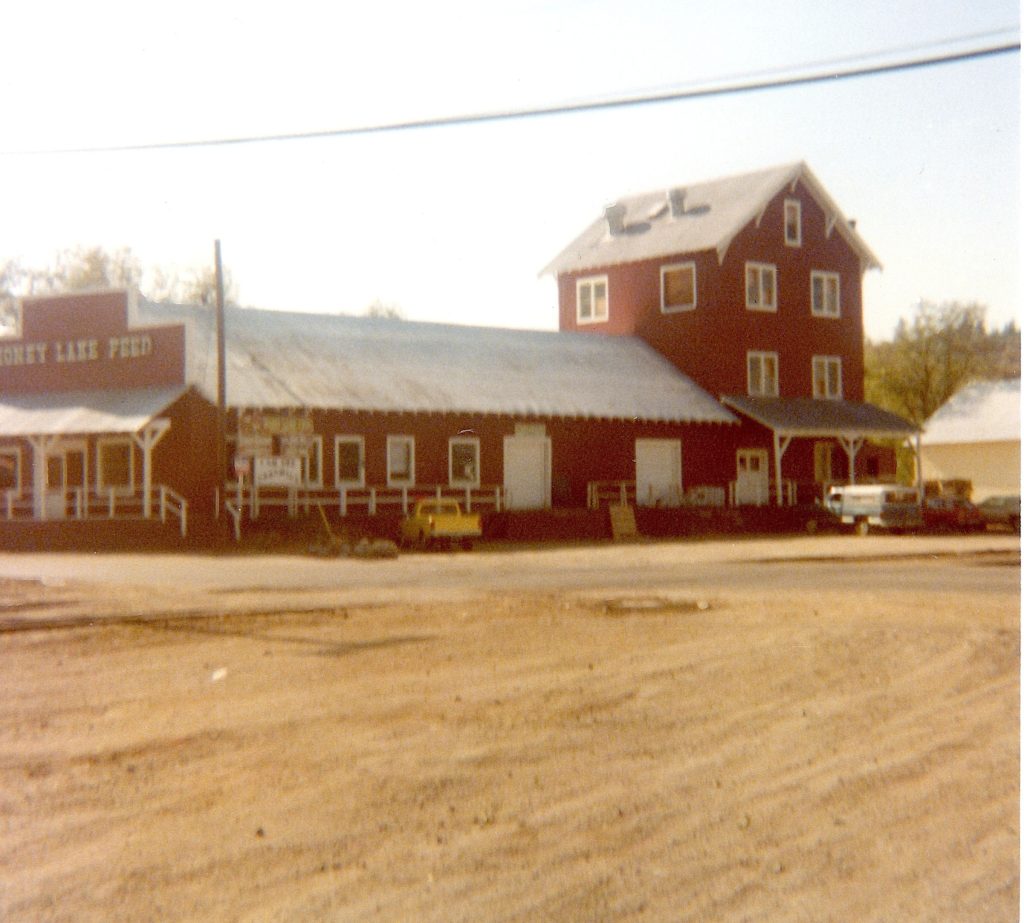
Honey Lake Feed, 21 October 1978

Honey Lake Feed located on Richmond Road, Susanville was the last of locally grown wheat/milled flour which the flour mill portion ceased in the 1940s. The building was destroyed by fire in the early 1980s.

I am pleased to introduce Mile High Mill & Grain Company located on Sunset Ranch near Ravendale. One can now obtain locally organic grown milled flour!  The owners Tom and Andrea Traphagan has graciously extended yours truly to tour the facility, in which I will do a follow up later this spring.

In the meantime, you can learn a whole lot more by checking out their website at  Mile High Mill

Tim

Homestead Act of 1862

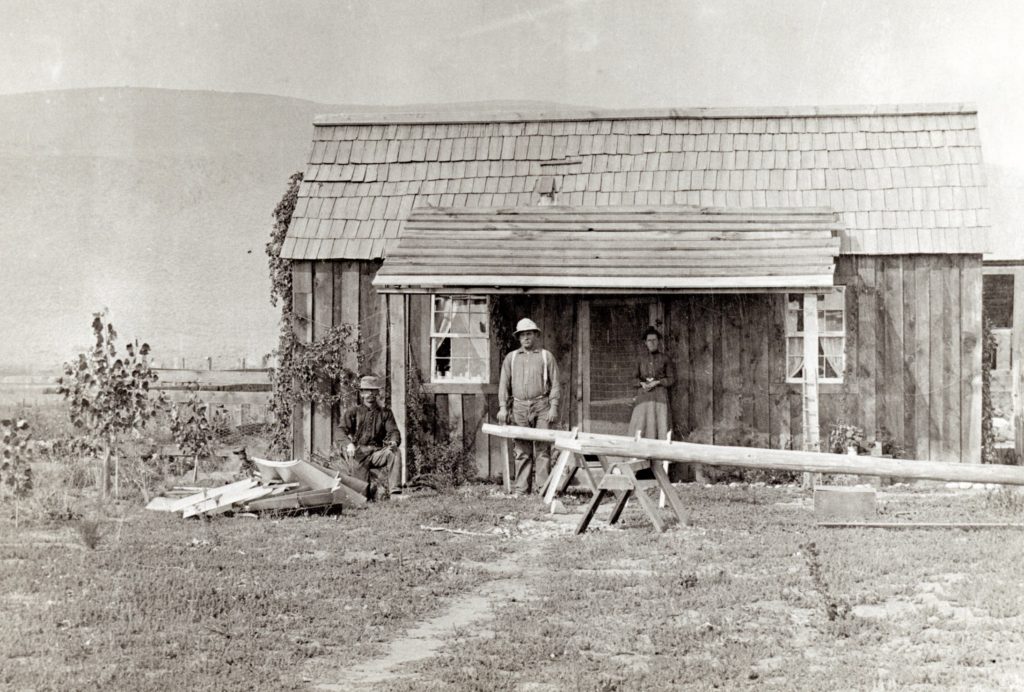
Robert & Mabel Barham homestead near Standish, 1903—Helen Rice

On May 20, 1862 President Lincoln signed the Homestead Act of 1862. It was part of the nation’s westward expansion and made filing on government lands easier. A great deal of the American West was settled in this manner, this region was no exception.

For a small registration fee, one could file on 160 acres of government land. After making improvements, and making it your primary residence one could acquire the title to the land at a cost of $1.25 per acre. By 1934, 270 million acres of government land had been transferred through this act. It remained on the books until it was finally repealed in 1976.

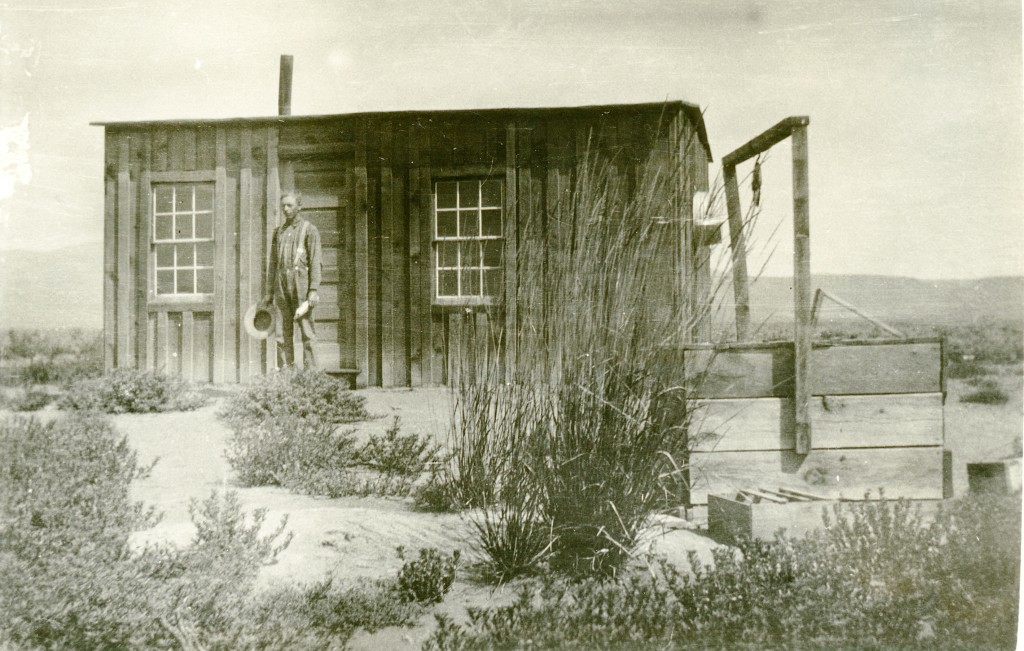
The Zarbock homestead. Carl R. Caudle Collection

Support

The Vanishing Windmill

January 26, 2020

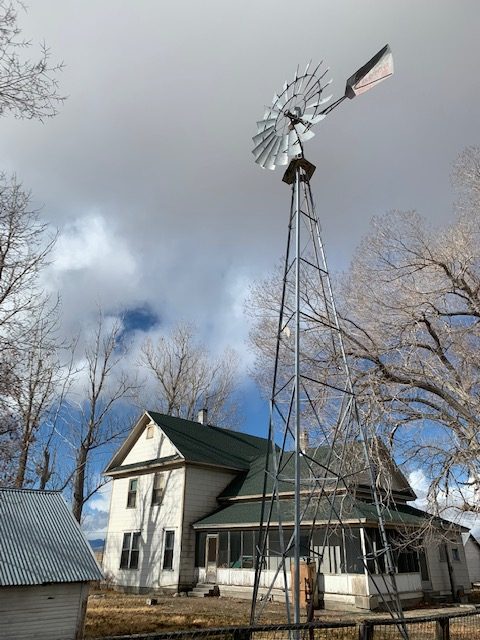
Bringing electricity to the Honey Lake Valley was a long, slow process that began in the 1920s. When power finally did arrive, it brought about the slow demise of the windmill. Phil Hall (1909-1996) and a native of Long Valley,  commented that there were at least fifty windmills between Susanville and Doyle. Hall’s statement came from a 1989 conversation with another old time rancher, Claude Harwood. In response to Phil’s comment, Claude stated that they did not have power from Buntingville to Milford until 1938. Claude continued after that, people stopped using them. Phil added the abandoned windmills also became victims of wind, blowing them down.

Subscribe

Your Tuesday Tidbit-Shinn Ranch

Shinn Ranch, January 9, 2021—Greg Johnson

This is brought to you by Greg Johnson, who made the expedition to Shinn Ranch on January 9, 2021. He was not only kind enough to share the photographs he took, but was gracious to give me permission to share. Thank you, Greg!

Shinn Ranch is located in a remote part of eastern Lassen County—you either know it or never heard of it.  Believe me, it is not place where one would make a casual Sunday drive to visit. Shinn Ranch is  not far from the Nevada border and upper Smoke Creek. It was so named for fifty-year-old Oliver Shinn who located there with his family in 1870. This is a very remote location and how Shinn found it, and why he settled there remains a mystery. As Johnson, during his visit, pondered while he accessed the ranch on a ATV, the Shinn family had no such luxury. To obtain provisions required a trek to Susanville via horseback and/or wagon.

Shinn Ranch, January 9, 2021—Greg Johnson

In 1884, Oliver Shinn died there and later that year, his widow, Louise sold the ranch to the Winters family, who had extensive ranch properties in western Nevada. In 1889, George Winters planted a grove of Cottonwood trees that has had been a stand out feature of Shinn Ranch.

Portion of the Cottonwood grove at Shinn Ranch, January 9, 2021—Greg Johnson.

Tim

Your Tuesday Tidbit—Hobo Wells Hydroponics

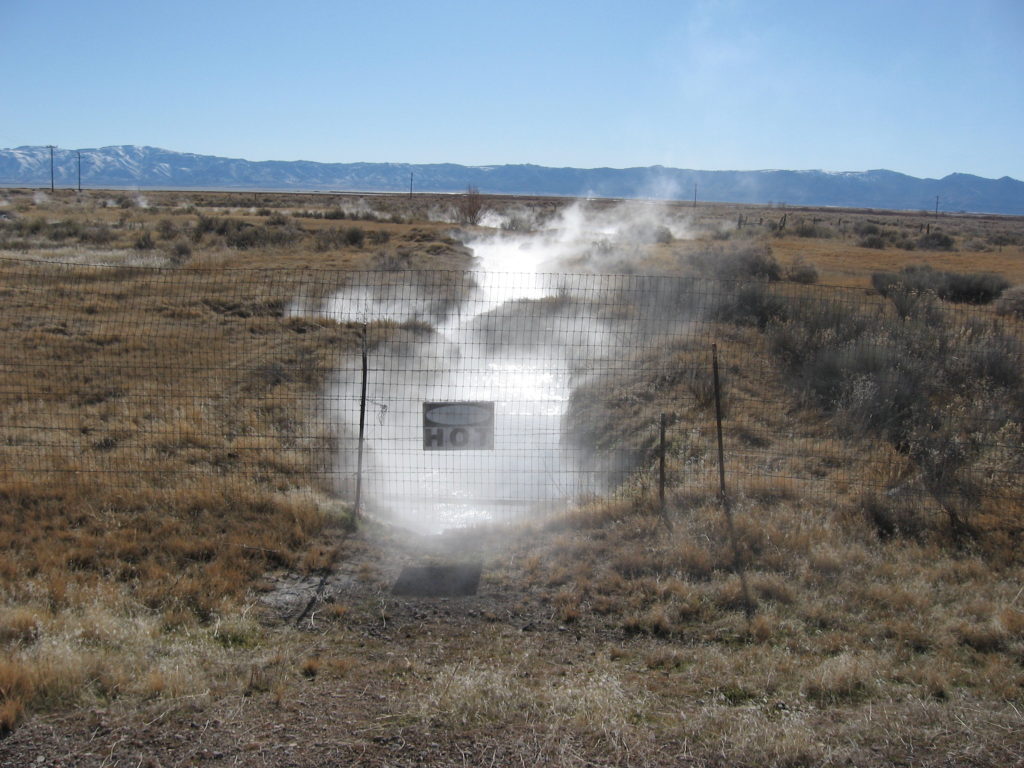
Wendel Hot Springs, February 15, 2018

Actually, this is slightly different take on things. In the 1970s, Philip Gutman’s Hobo Wells Hydroponic operation at Wendel seemed to have a bright future. By 1975, Lassen College incorporated into its curriculum an offered an Associated Arts Degree in Hydroponics.  By the late 1970s, Geoproducts, Inc. became involved to expand the enterprise. By the early 1980s the operation was abandoned. Does anyone know why it shuttered?

Tim

The Slow Demise of Bennett & Latyon

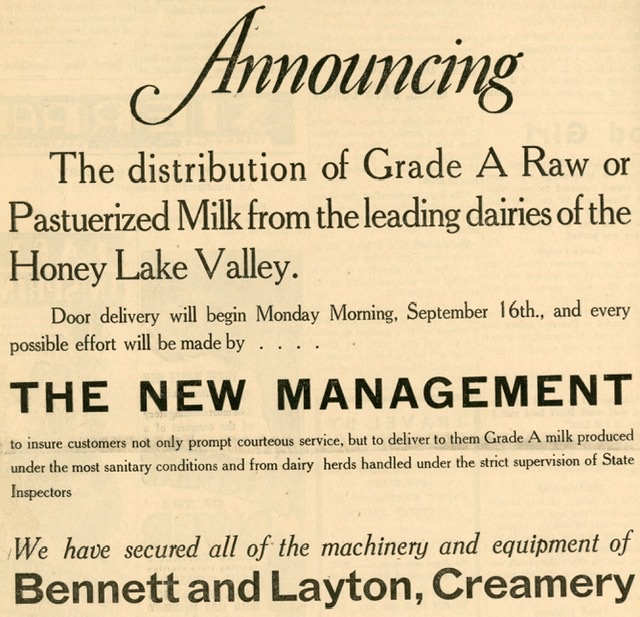
The Bennet & Layton transfer advertisement

Now, this something different, since I am approaching this topic in reverse. For starters, Bennett & Layton (actually when established it was Bennett & Cardinal) was a regional powerhouse of a creamery located at 75 South Gay Street, Susanville. The two-story concrete building is still there. This was a full fledged creamery that even produced its own line of ice cream.

However, the nation’s great depression of the 1930s took a toll on Bennett & Layton, like so many other enterprises. To protect their vital interest in September 1935 several Honey Lake Valley ranchers negotiated a lease with Bennett & Layton to use its cooling and sterilization section of the plant to properly prepare milk for local consumption. This group of dairymen consisted of: J.H. McClelland, Mardis Barry, L.E. DeForest, Masten Ramsey, Lester Clark, Fred Hall, J.H. Elledge and McKay & Lowe.

Spread the word, and encourage a friend to subscribe

Locally Sourced

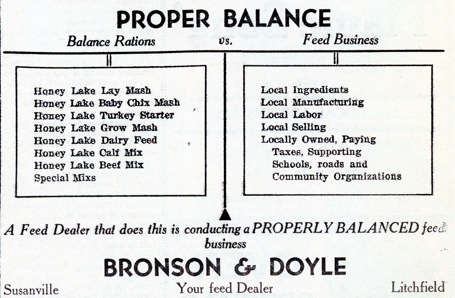
Bronson & Doyle Ad, Lassen Mail, 5 April 1935

Bronson & Doyle was a local feed and agricultural equipment operation. Some seasoned residents may remember their landmark building on Richmond Road across from the railroad depot.

In this day and age of farm to table movement, makes this 1935 advertisement of Bronson & Doyle seem way ahead of their time.

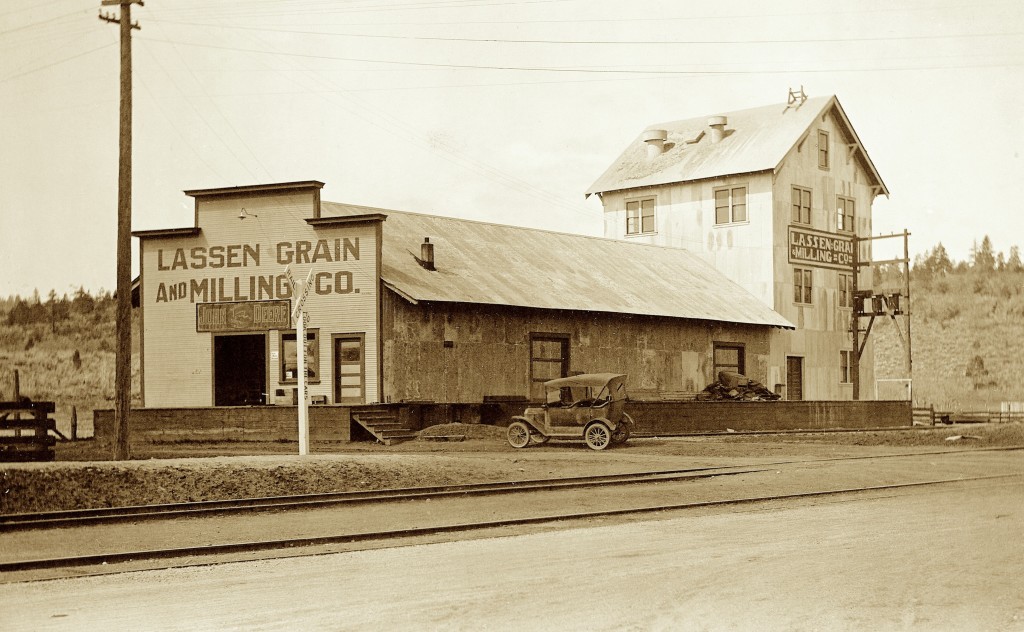
Lassen Grain & Milling
Lassen Grain & Milling Company, circa 1918. Courtesy of Dick & Helen Harrison

Bronson & Doyle acquired the Lassen Grain & Milling Company located on Richmond Road back in the 1930s.

Subscribe

Those plucky bondholders

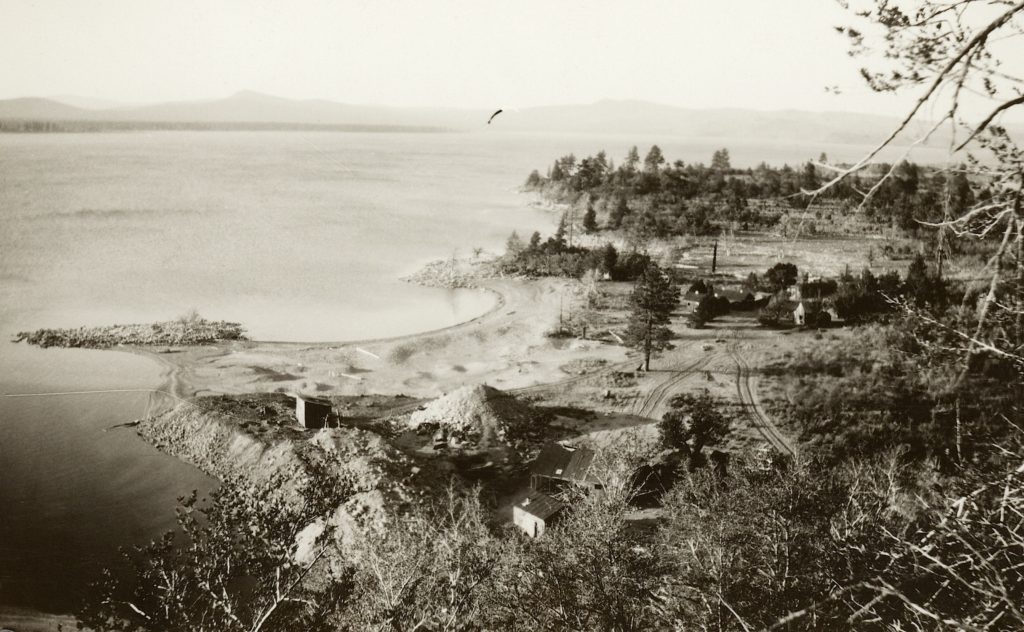
Grant Smith’s tunnel works, Eagle Lake, 1922–Courtesy of Lola L. Tanner

A month had not even passed since the grand celebration held at Litchfield for the completion of the Bly Tunnel at Eagle Lake, that things were not good. Grant Smith & Company of Seattle, Washington was the contractor to build the tunnel. In June 1923, the company asked for a special meeting with the Baxter Creek and Tule Irrigation Districts who financed the $1.25 million project with bonds. Grant Smith informed those gathered they experienced a number of problems during construction and requested that they leave and return in the fall after irrigation season to correct the defects. The bondholders said no. They sensed if they allowed Grant Smith to even leave temporarily, the odds of them returning were nil. The situation would turn real ugly over the next year with some startling revelations that would in part doom the whole irrigation enterprise.

Subscribe