Category Archives: History

CCC Discovery of Petroglyphs

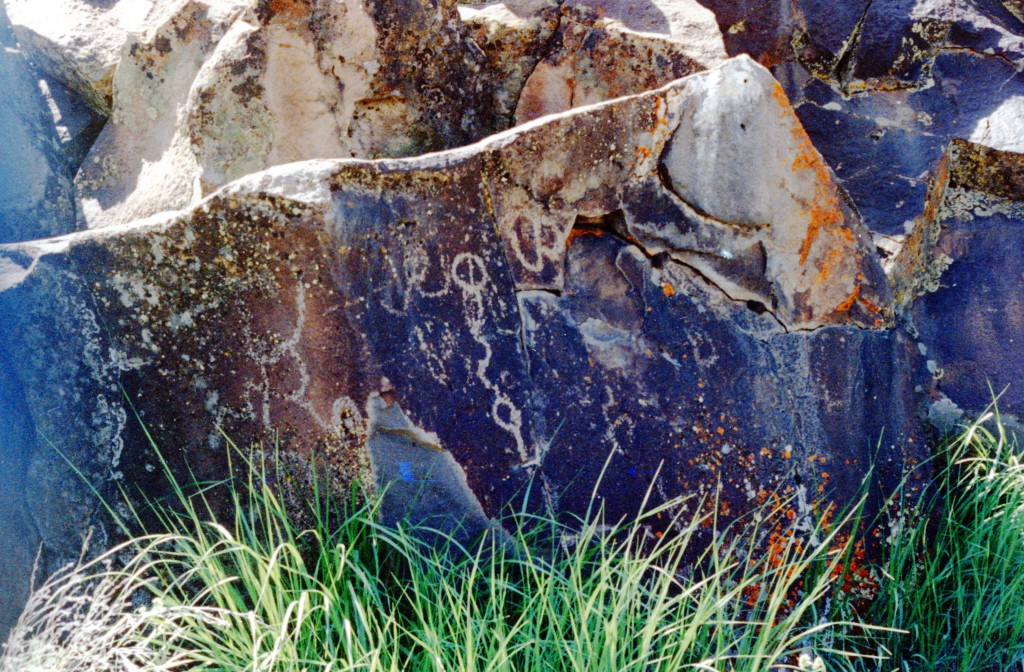
One of many glyphs to be seen along Upper Smoke Creek.

In the Happy Days CCC newspaper of September 11, 1937 carried a brief article of the Secret Valley CCC’s discovery of nearby petroglyphs. The following was a brief description: “What looks like childish scrawls are the latest known discoveries in petroglyphs, ancient rock drawings, found by the men of Co. 740, Litchfield, Calif., and now attracting the attention of scientists in this and other countries.”

This was not the first reported discovery of petroglyphs by the Secret Valley CCC’s. The Lassen Mail of March 13, 1936 reported:

”CCC workers in the Secret Valley camp are wondering this week if they have discovered ancient Indian inscriptions or merely run across the work of some amateur cartoonist who was whiling away his time with little stone hatchet.

Sunrise Chamber, 2015, Belfast

”An aged Indian revealed several inscriptions to camp workers, carved in rocks in the vicinity of the CCC camp claiming that said marks are relics of the dim and distant past. Photographs were taken of the inscriptions and are now in the possession of the foreman of the camp.“

On a final note, neither article gave the location, however, it should be noted that there two petroglyph sites near the Secret Valley CCC that being Petes Creek and Stoney Creek.
Support by subscribing.

Honey Lake Conservation Team

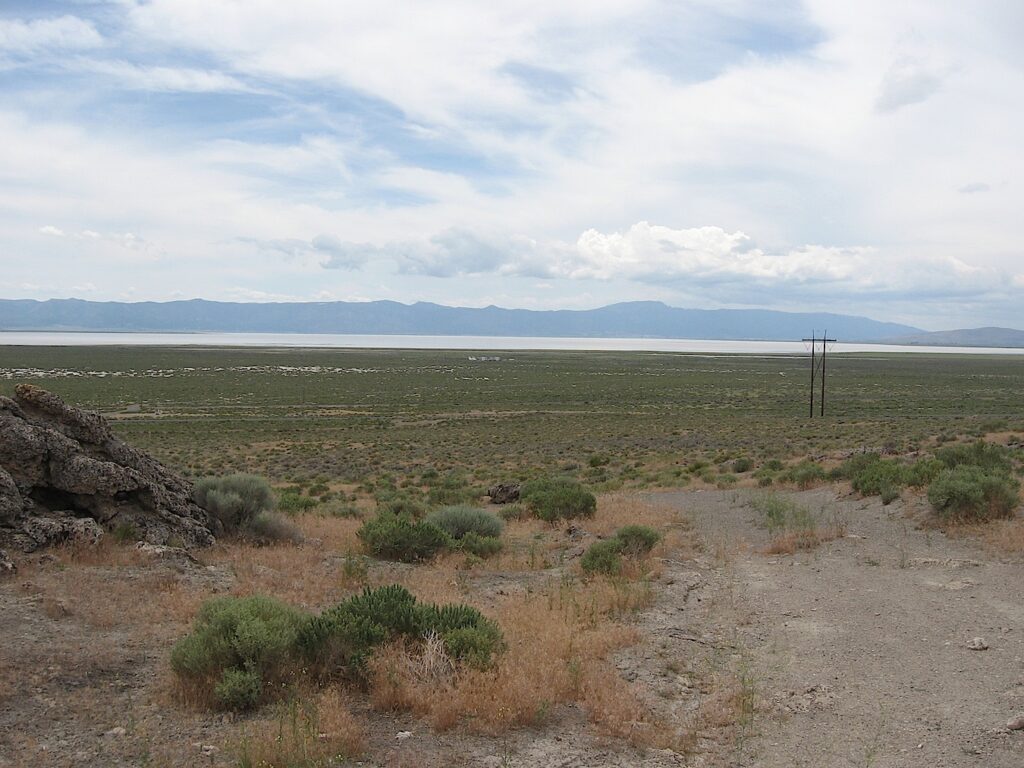
A view of Honey Lake from the east side, June 14, 2023

In the late 1970s, the Sierra Army Depot attempted to dispose of its ownership of Honey Lake. They went so far to put a for sale on it. Of course, this caught the attention of the State of California, who had ceded over the lake to the Army back in 1933. The State wanted it back if the Army had no use for it. The State was interested in possible geothermal development. Before taking back the lake, they wanted to be assured that there were no unexploded devices in the lake bed. The Depot could not guarantee that, so the fate of the lake’s ownership was put on hold.

Enter the Base Relaignment Closure for the Sierra Army Depot beginning, in 1997, but I maybe wrong on the year, so someone correct me if I am wrong. BRAC as it was referred to, was to down size the military base. It was a slow process, especially what to do with the surplus property known as Honey Lake.

On October 20, 2003, the Sierra Army Depot decided to unload its ownership of the lake when they deeded over 57,632 acres to a consortium named the Honey Lake Conservation Team. This  non-profit alliance comprised  the Center for Urban Watershed Renewal, Trust for Public Land, Michael Baker, Jr. Inc, and The Bioengineering Group. To conduct various studies and future uses they were paid $8.6 million. Who knew Honey Lake was so valuable?  The Honey Lake Conservation Team quickly prepared a study as a guide for future use. On November 8, 2006, they considered their work complete and deeded the ownership over of the lake to the State of California. It should be noted that the Depot retained 4,486 acres on the southeastern corner of the lake.

Support by subscribing.

Who Was Baron Lahontan?

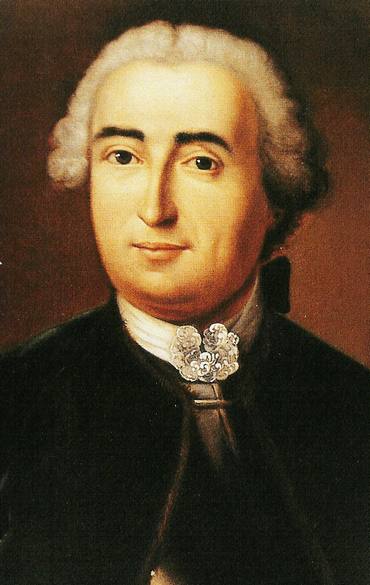
Baron-Louis-Armand de Lum Lahontan

The name is widely applied in the territory of the western Great Basin. Baron Lahontan (1666-1715) was part of the French military and early explorer who in 1668 arrived in New France (Canada) to defeat the Great Lakes Iroquois. Lahontan later deserted the military and returned to Europe. As an exile, he could not return to France to claim his inheritance. Lahontan settled in Holland and began work on his memoirs. The first of three volumes published in 1703, New Travels of Monsieur le baron de Lahontan in North America,  was an immediate success. One of Lahontan’s claims was the discovery of the Longue River that would provide passage to the Pacific Ocean. Lahontan’s book were quite popular and were published in English, French, Dutch and German. Lahontan had his critics, and they questioned his so-called discoveries. Whatever the case may be, Lahontan’s work influenced cartographers of North America for the next 100 years. Lahontan’s theory of the Longue River was finally laid to rest by the expeditions of Lewis & Clark.

Support by subscribing.


Who Wants to Buy a Courthouse?

Lassen County Courthouse and Hall of Records, 1908–David Zoller

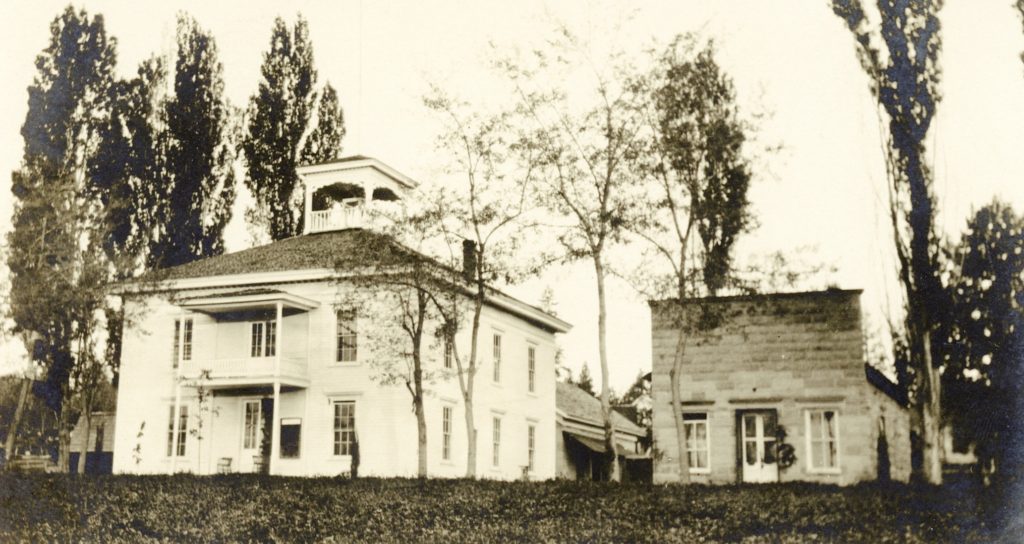
In June 1915, Lassen County voters approved a bond measure to build a new courthouse. It would be constructed on the site of the existing one. In September 1915, the old courthouse was put on rollers and moved to the property line along Lassen Street. It would remain in place there and used until the new courthouse was completed, though eventually many of the county offices were relocated in the county jail.

In November 1916, the county advertised for bids for the sale of the old courthouse in anticipation of moving into the new facility. Plenty of people inspected the building. The county did not know when the building would be available. In January 1917, the county received two bids for the structure one from Sierra Packing Company for $50 and the other from Charlie Emerson for $60. The county rejected both and decided to auction it off. When that event would happen no one knew. There were delays in moving into the new building, one of the big obstacles was that of the cost of furniture. During the first week in April moving into the new courthouse began in earnest.

On April 28, 1917, the auction was held with Johnstonville resident George Bennett’s winning bid of $85. Bennett immediately sold it at a higher undisclosed amount to Susanville resident Dan Armstrong who tore down the building and used it for scrap lumber. Armstrong, it should be noted in 1920 subdivided his property east of Weatherlow Street to Foss Street, which over the years the majority was purchased by Lassen Union High School.

Subscribe

Robert Stinson, Early Day Photographer

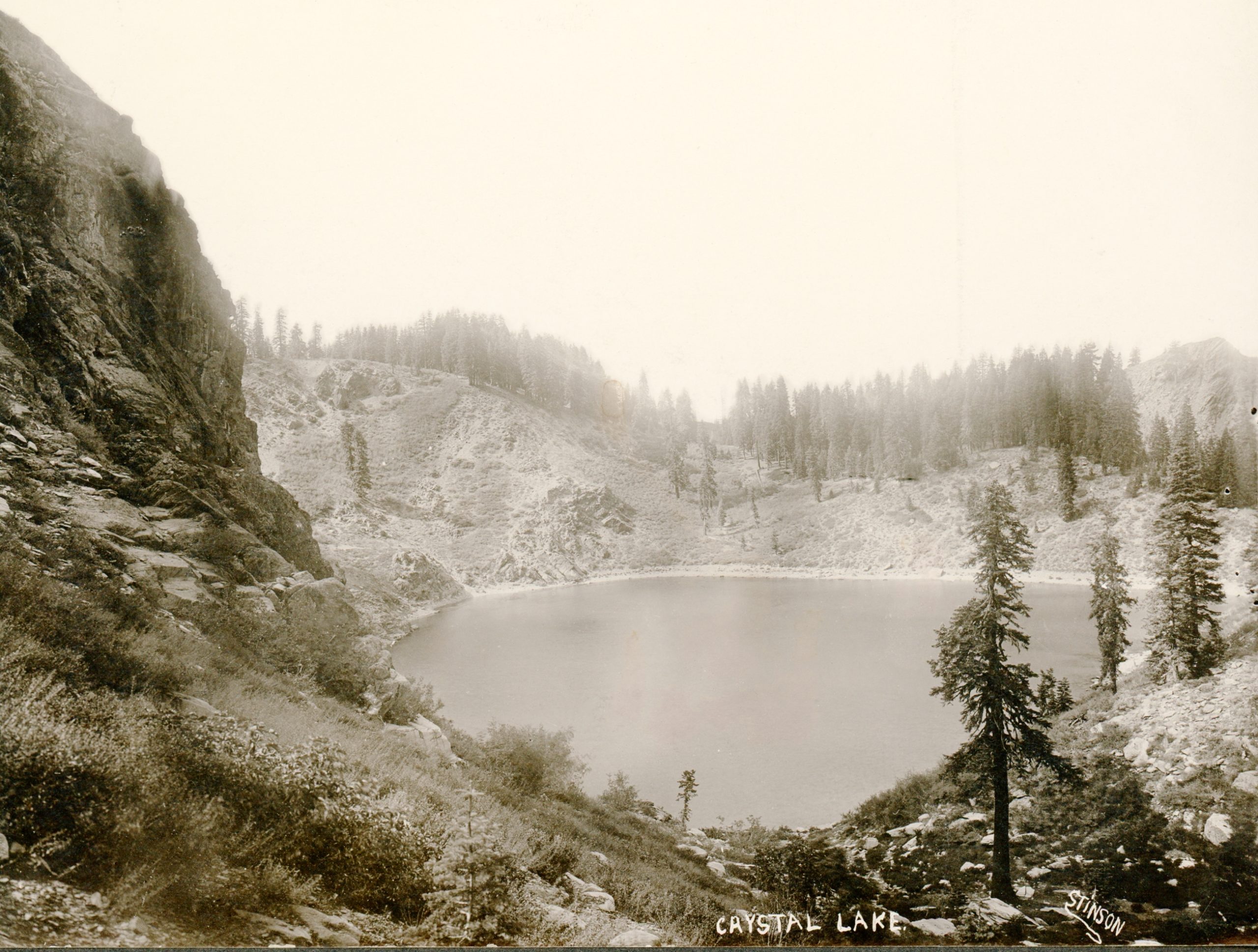
Crystal Lake, Plumas County, 1914, is a Stinson photograph—-C.R. Caudle Collection

Robert Stinson was born in Quincy, Plumas County in 1882, and followed in his father’s footsteps as a commercial photographer. It was a tough trade to operate a business in a rural region. So like many others it became necessary to be itinerate traveling from community to community for business. In 1913, Red River hired Stinson as their company photographer, who at the time was located in Red Bluff. Stinson’s main job was to make a complete photographic inventory of all the buildings being constructed in the town, as well as the sawmill plant. A portion of this collection exists in the T.B. Walker papers housed with the Minnesota Historical Society. Stinson just happened to be at the right place at the right time, when Lassen Peak set off a series of volcanic eruptions beginning in 1914. Unfortunately, for Stinson and other photographers such as P.J. Thompson, were overshadowed by that B.F. Loomis, but that is another story, for another time. Stinson stay at Westwood was brief and left Red River in 1915 to be replaced Otto Kratzer. On a final note, Red River always had an in-house photographer, though they also hired others for commercial work.

Robert Stinson
Robert Stinson’s grave at the Westwood Cemetery.

For reasons not known when Stinson passed away in 1932, he was buried in the Westwood Cemetery.

Support by subscribing.

Rice Canyon Road

Rice Canyon
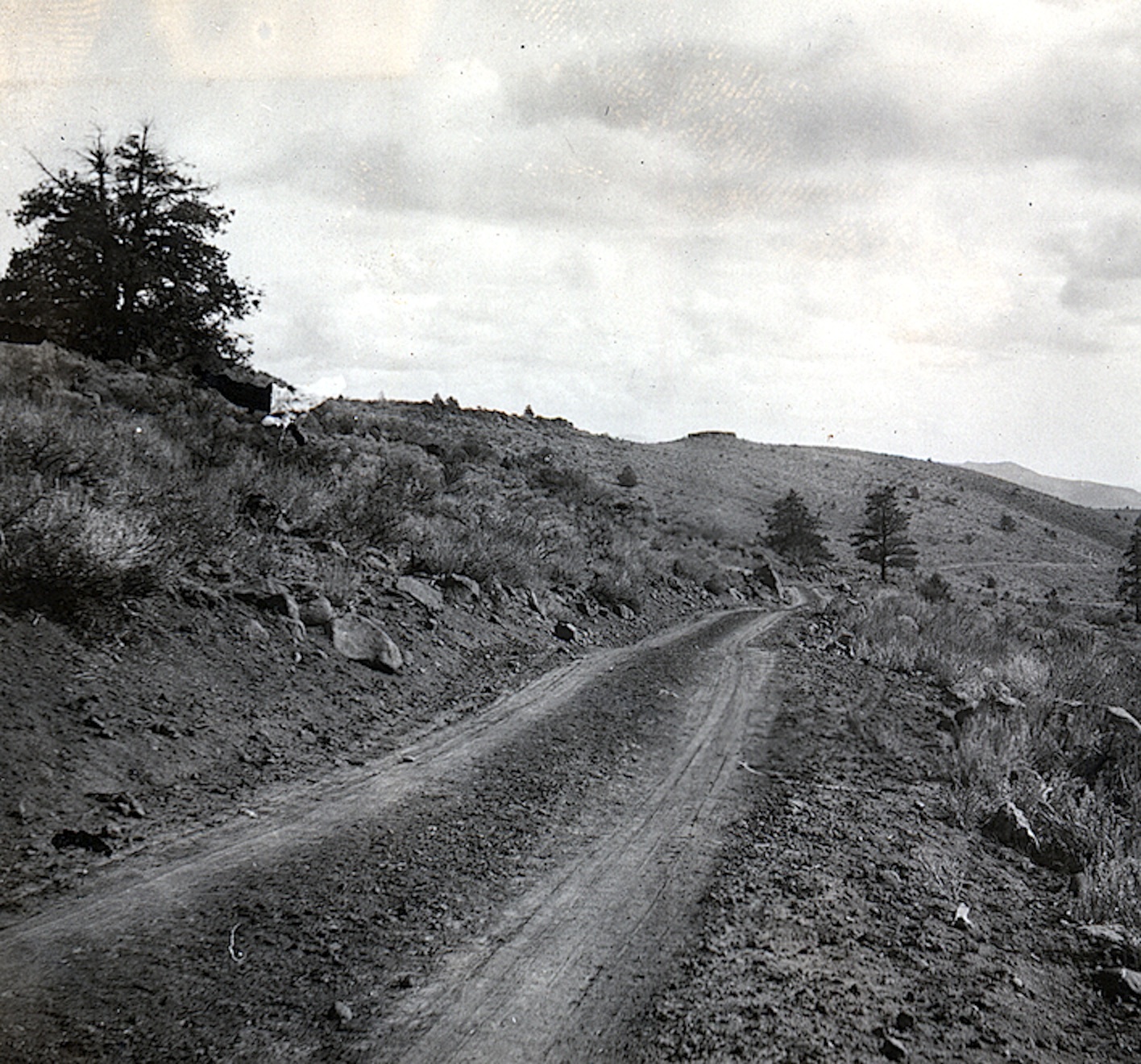
Rice Canyon Road, 1920. Courtesy of Lola L. Tanner

Today, this road is best known as the gateway to High Desert State Prison. In an earlier time it was the easiest route heading north out of the Honey Lake Valley. As a matter of fact, several proposed railroad companies surveyed a rail line through the canyon. In the early 1920s, when the Bly Tunnel was under construction at Eagle Lake, it was the preferred route of teamsters to haul equipment and supplies to that site. Continue reading Rice Canyon Road

A Great Place to Camp

Hamilton Branch postcard, circa 1910

In the early 1900s when Great Western Power Company began the purchases of property at Big Meadows, Plumas County to transform it into a reservoir known today as Lake Almanor, residents and visitors alike found the company was a not a friendly neighbor. Initially, Great Western required a person to obtain a permit to fish and/or camp on their lands. This had to be done at there San Francisco office. In 1908, they changed their policy and prohibited fishing and camping on their properties at Big Meadows.

A correspondent to the Plumas National Bulletin newspaper of June 29, 1908 informed readers that there were places in and around Big Meadows that visitors would still enjoy. The writer noted,  “Among the streams in Big Meadows and adjacent thereto in which it is lawful to fish and on whose banks it is lawful to camp are Hamilton Branch in the canyon before it enters the swamp lands of the east arm of Big Meadows purchased by the Great Western Power Company for a reservoir site..” The correspondent continued since Prattville was the gateway to the National Forest Reserves there were plenty of nearby streams and lakes which visitors could enjoy.

Support by subscribing.


Closure of the Susanville Depot

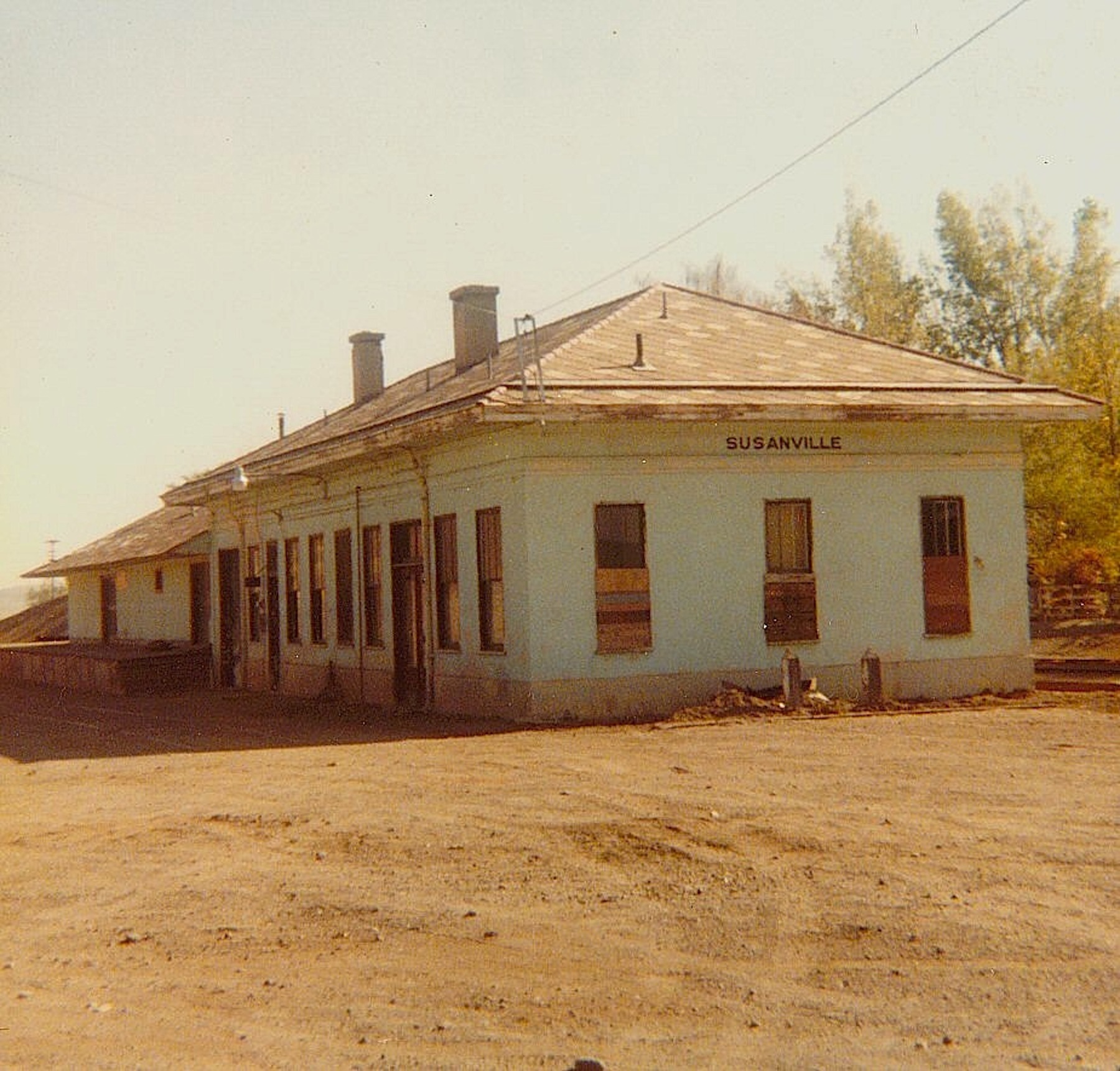
Susanville Depot, 1970.

On October 12, 1979 the Southern Pacific closed the Susanville depot, one of the last vestiges of the Westwood Branch. Of course, it did not come as a surprise. About the only activity there was an occasional REA truck at the loading dock, but that company went bankrupt in 1975.

Depot 78
Susanville Depot, September 1978.

When the depot was built in 1913, it was a lively place. In 1927, an addition was made to accommodate the increase of passengers and freight. Changes were on the horizon. In 1933, the Southern Pacific discontinued passenger service. Another blow came in 1955 by two events. Fruit Growers Supply Company announced that summer it would close its Westwood mill. In December 1955 a torrential flood damaged the railroad tracks between Susanville and Westwood. Instead of making costly repairs, the Southern Pacific simply closed that segment. By 1970, there were only two lumber mills in Susanville—Coin and Sierra Pacific. Thus, the depot outlived its usefulness.

Subscribe


Lassen High’s 1907 Valedictorian

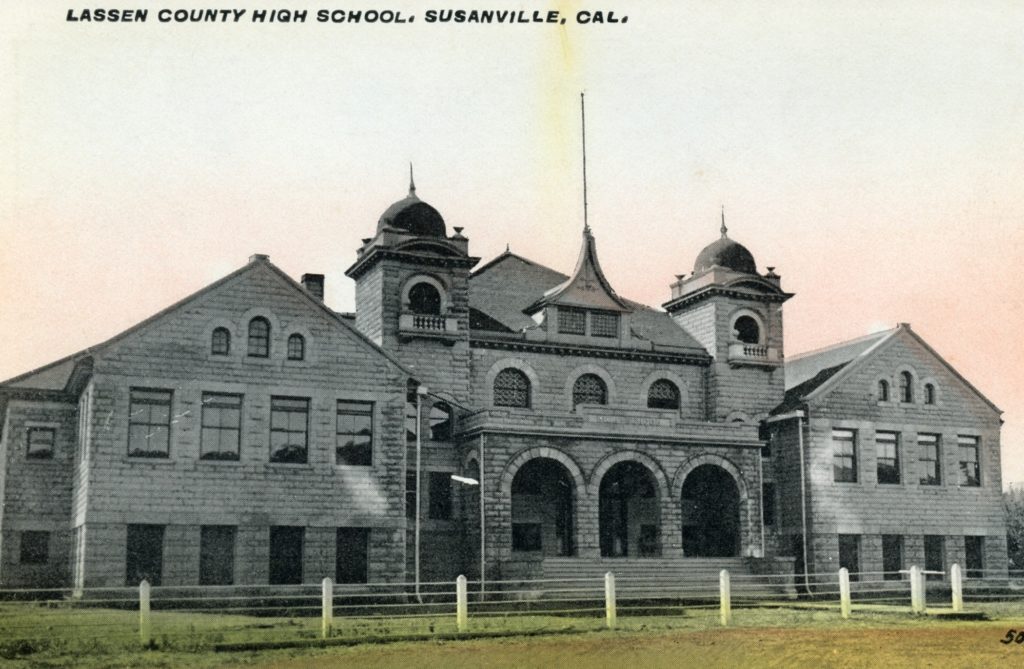
Lassen County High School, circa 1908

On June 21, 1907, Lassen County High School held its first graduation ceremony. It should be noted that in 1906, there was a three year-commercial course of graduates. The Class of 1907 consisted of Medford Arnold, Hanchen Lesser, Lena Cahlan, Jessie Hulsman, Evelyn Hulsman, Ralph Taylor, Jeanette Alexander, Kate Deforest, Ruth Hemler, Wright Spalding and Percy Holmes.

Evelyn Hulsman was the Class Valedictorian and the following is a synopsis of her speech that appeared in the Lassen Advocate, June 28, 1907: “Nemesis of an Amateur” was the theme of Valedictorian, Miss Evelyn Hulsman. The young lady had gone to Shakespeare for inspiration and in the pictured career of MacBeth she found it. Vividly with well chosen language she retold the story of MacBeth’s machinations, his great crime and the disastrous consequences to himself when ‘Great Birnam wood to high. Dunsine hill,’ came against him and sword Manduff put an end to his unworthy ambitions. Miss Hulsman’s effort was a notable one in many particulars. It was delivered with strong dramatic effect and token conscientious preparation. It is much too long for reproduction in these columns. A fact we regret.

Subscribe

Lassen Weekly Mail

For over a fifty year stretch Susanville was home to two newspapers the Lassen Advocate and the Lassen Weekly Mail. Since 2020 the community is no longer served by a newspaper.

On October 25, 1886, the Mail made its debut on the streets of Susanville with Nevada newspaperman Benjamin M. Barney at its helm.  Barney, however, lacked capital for his new enterprise and made M.B. Bransford, a partner. In addition, he borrowed $1,088.38 from Robert Tremain to purchased a new printing press.  In 1891, Bransford became sole proprietor and  moved the printing office into the Masonic Building.

In 1893, the Masonic Building and much of Susanville’s business district was destroyed by fire. Bransford abandoned the newspaper, and Tremain who was still owed money for the printing press, took over the paper. Tremain’s son, Joseph Mellow operated the paper and eventually purchased his parent’s interest.

Tremain had newspaper experience, and even worked at a time as foreman of the Lassen Advocate. Tremain’s journalistic endeavors bordered on the mundane, with the exception of one big topic, the Red River Lumber Company. Tremain and Red River’s owners, the Walkers became real cozy. This paid big dividends, and the Mail published the inside scoop on all of Red River’s proposed activities.

In 1911, when Susanville was on the verge of tremendous growth, Tremain sold the newspaper, and soon ushered in the era of the Cook family, more about that later.

Support by subscribing.