Category Archives: History

Who to Blame?

Red River’s lumberyard up in flames, September 17, 1917. Courtesy of Walter “Doug” Luff

For years corporations and politicians, too, during any major event play the unfounded  blame game to curry favor in public opinion, even what they relayed had no factual basis. At the same time, behind closed doors, their actions were the opposite.

An interesting case occurred on September 17, 1917 when the south lumberyard of Red River Lumber Company’s Westwood operation caught fire.The fire destroyed two million board feet of lumber valued at $800,000. Officials were quick to pass judgement that it was an arson set by the Industrial World of Workers (IWW) a union detested by lumber companies. While the charges would later be unfounded, Red River’s initial message of the dangers of unions was the major headlines and that was what the public believed.

The story does not end there. Red River filed a lawsuit against American Cast Iron Pipe Company for $91,305.31 for defective water pipes that hampered fire-fighting. As can be customary in civil litigation, the case dragged on and did not go to trial until June 1923. The court side with American Cast Iron Pipe  and Red River lost the case.

Support by subscribing.
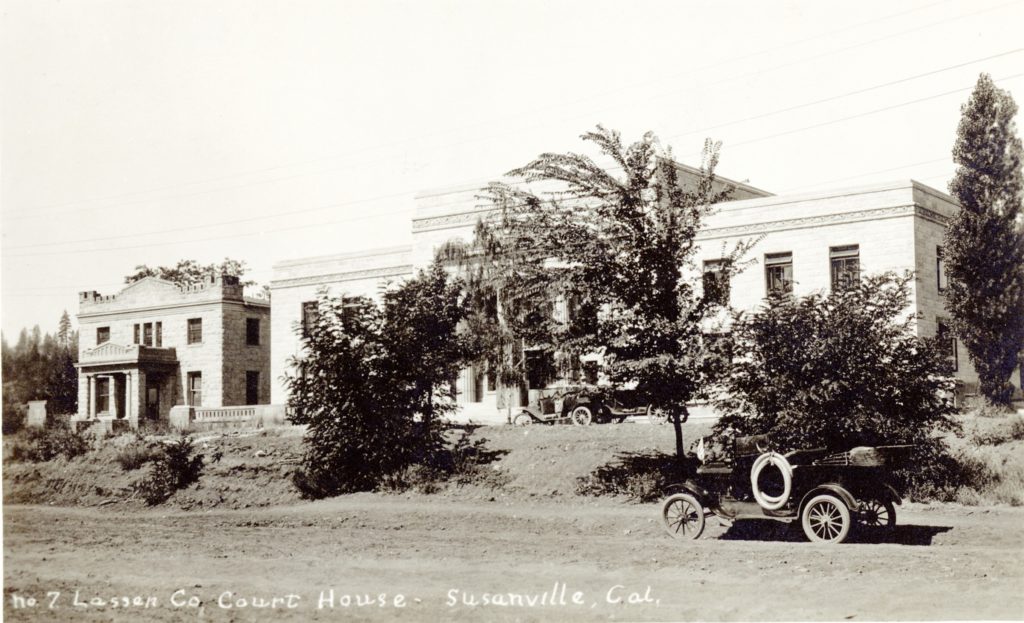
 

“The Courthouse Burned Down”

Lassen County Courthouse, spring 1917. Courtesy of Elberta M. Fraley

When I first started research into the local history, at a very young age I might add, it was an interesting learning experience. At that time a local dentist, Bob Amesbury, was in a sense anointed “the” local historian. He, along with others, would inform me the county did not have any old records, since the courthouse burned down many years ago. When I paid my first research trip to the Lassen County Courthouse, I quickly learned that was not the case. At that time, Gil Morrill was the Lassen County Auditor/Recorder. Gil was gracious to show me around to all the various records in his office dating. back to 1864, when the county was created. For some, I found later, who stated the courthouse had burned, was just an excuse to make up their own story versus doing the tedious work to research what exactly happened.

The courthouse burned down story was not confined to Lassen. When visiting other counties to conduct research, certain county officials did not want to be bothered to retrieve old documents, and would give me that song and dance routine that the courthouse burned down, even though it never did.

Tim

A 1936 Trip to Amedee

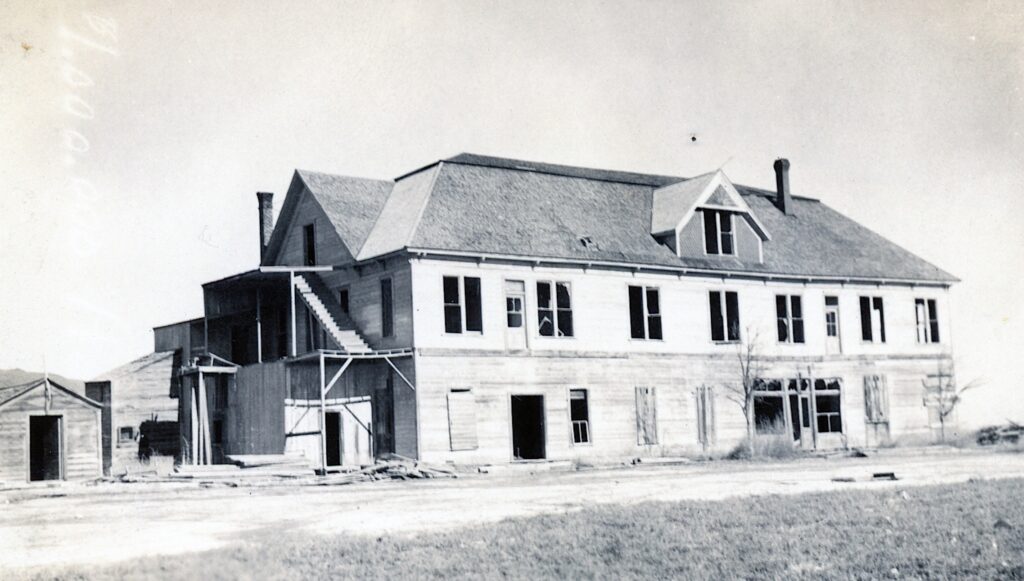
Hotel Amedee, March 10, 1936–C.H. Bennett Collection

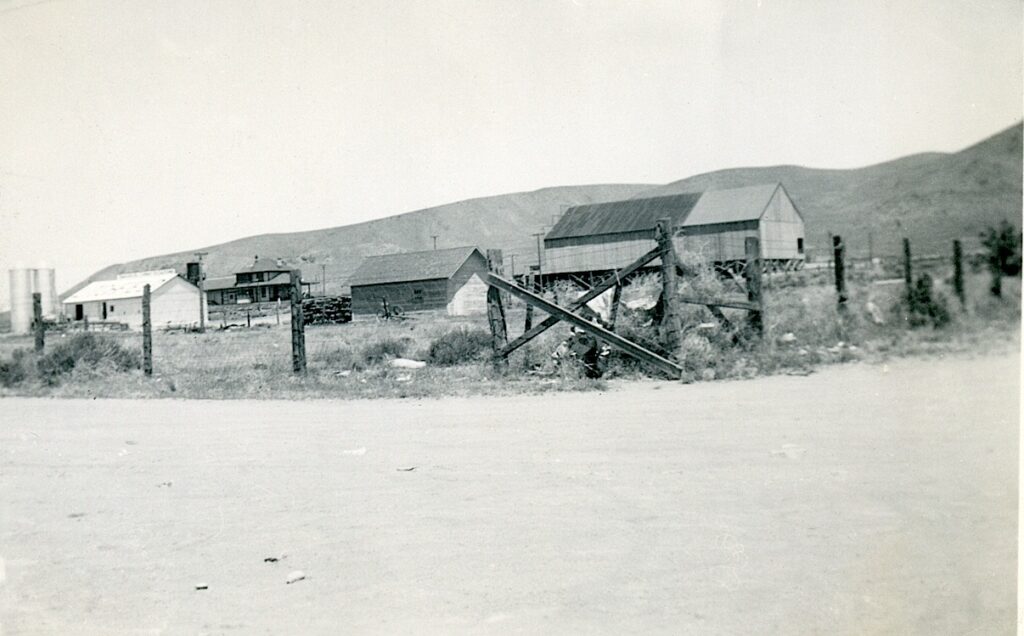
In the spring of 1936, Secret Valley CCC Company Clerk C.H. Bennett made a jaunt to the ghost town of Amedee. He noted that the old hotel was originally a million dollar structure, and thus how folklore is created. Truth be known, when the hotel was completed in 1892, at a cost of $25,000.

By World War I,  Amedee was already in a slow decline. In 1922, a major event by NCO Railroad sealed the town’s fate. The railroad abandoned a 16 mile segment of the line between Rayl and Wendel. On October 31, 1922, the last NCO train passed through Amedee. In addition, in that same year the Amedee School’s operation was transferred to Wendel. On February 29, 1924, the Amedee Post Office closed and there was no need to replace it  with the Rural Free Delivery service, since the only people residing there were caretakers of the property.

Tim

Baxter Creek Siphon Update

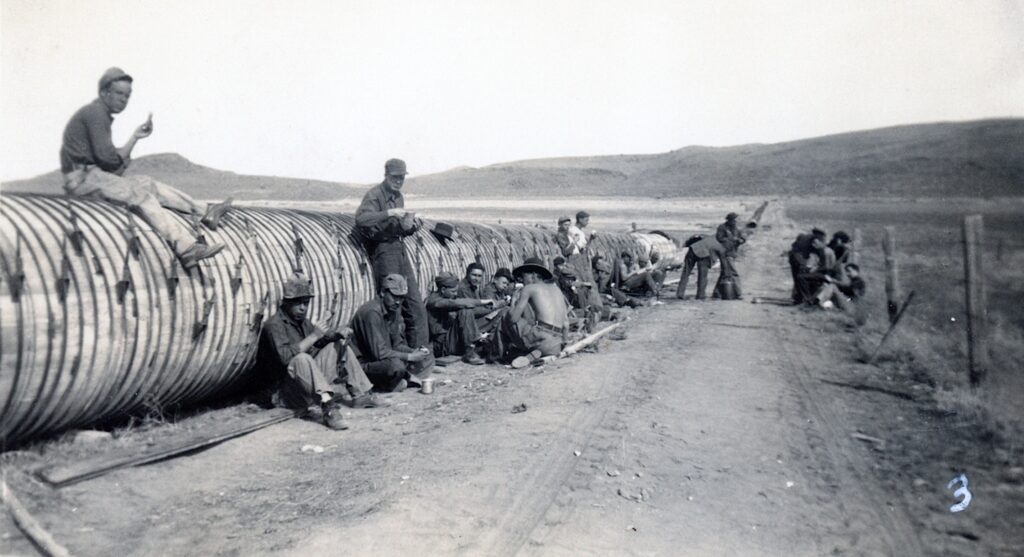
Secret Valley CCC’s doing repair work on the Baxter Creek siphon, 1936—C.H. Bennett Collection

Last year, I briefly wrote about the Baxter Creek Siphon.  Since then I do have some additional information. First a little background. The siphon was portion of the Baxter Creek & Tule Irrigation district’s distribution of water from the Bly Tunnel at Eagle Lake. A siphon was needed to convey water over the Susan River, then to a canal along Bald Mountain to Baxter Creek.

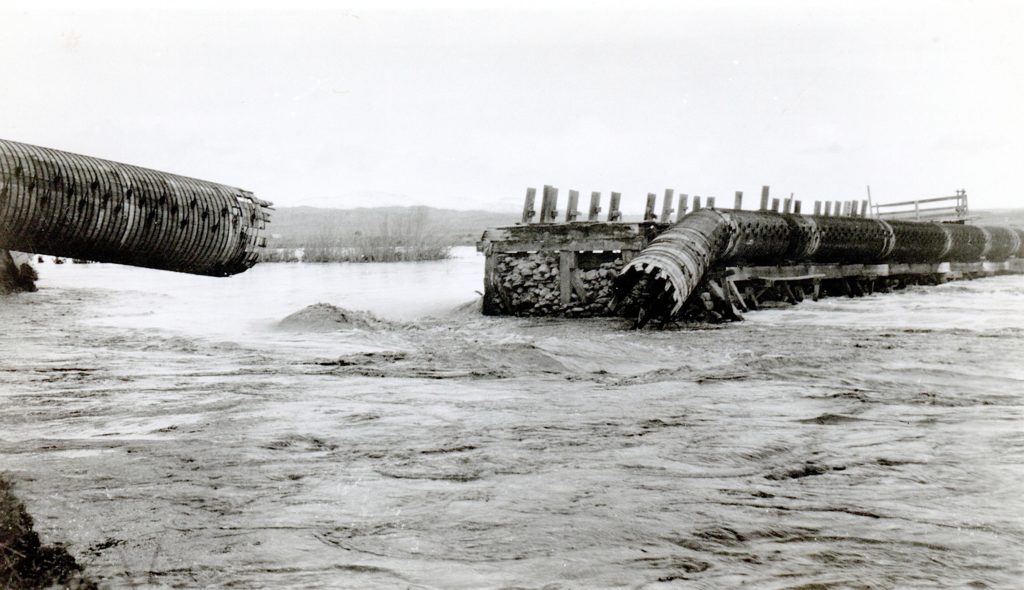
The siphon made of redwood and a diameter of 52 inches. The main siphon was three miles in length. In 1935, a flood damaged a portion of siphon where it crossed Susan River.

Susan River, 1935 — Lola L. Tanner

What is puzzling about the first photograph is why CCC’s were working on repairs to the siphon, as Bly Tunnel had been abandoned due to low water levels in 1935. May be some one was optimistic that water would flow again from Eagle Lake.

Tim

Mill Creek Store

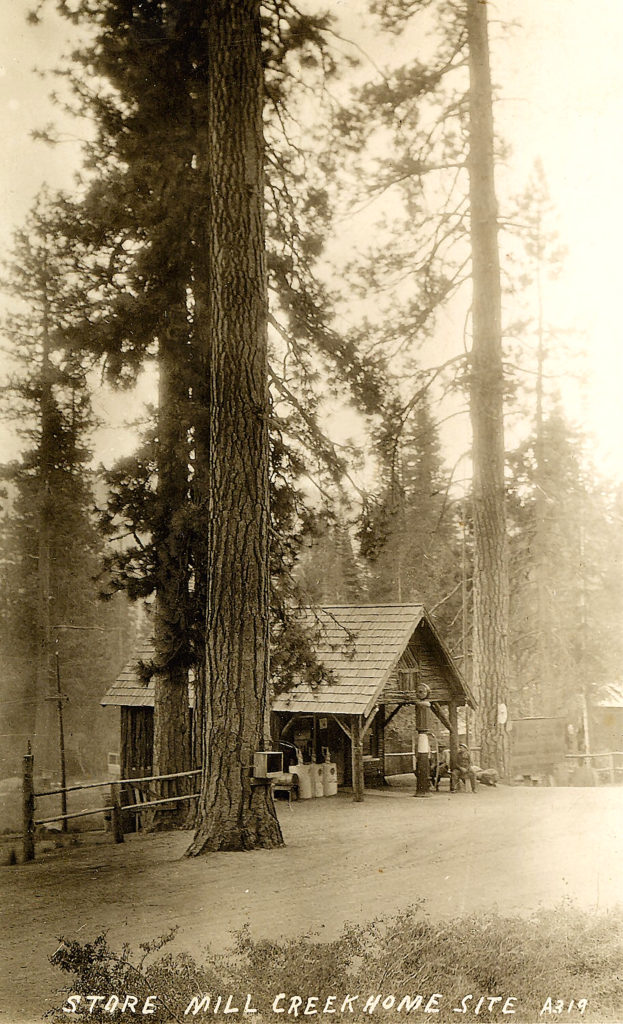
Mill Creek Store. Courtesy of Margaret A. Purdy

Once upon a time, Highway 36, took a long windy route to make the ascent over Morgan Summit—though one can still travel the old route, which is now Highway 172.  If you do, one comes across the Mill Creek Store and restaurant. The community and resort originated as the Mill Creek Campsite by the Lassen National Forest. In 1924 the forest service surveyed for a planned 25 summer homesites, a store and resort. E.J. Foster and Leon Cordy of Cottonwood (Shasta County) leased the store and resort site, and built a store and several cabins. The forest service would expand the summer homesites to 118.

Tim

Litchfield, Lassen County

A unique view of Litchfield, 1936–C.H. Bennett Collection

In the past we have explored the origins of Litchfield. For those just tuning in, here is a brief overview. With the approaching Fernley & Lassen Railroad traversing the Honey Lake Valley in 1912,, the survey route went north of Standish through the Gibson Ranch. B.F. Gibson plotted a new townsite on his property that he initially dubbed “New Standish.” He had hope to lure Standish residents and businesses to the new townsite, since it would have the benefit of the railroad. It should be noted Standish was only three miles away. In 1913, Gibson’s townsite was recorded and named Litchfield, after his late father-in-law Andrew Litch, which Gibson acquired his ranch.

While Litchfield did not become the major commercial hub envisioned, it was still a busy place. The Litchfield Depot was the major shipping point for the agricultural community for decades to come. In 1923, a huge barbecue was held at Litchfield as part the dedication ceremony of the Bly Tunnel at Eagle Lake that would provide water for reclamation in the Honey Lake Valley. It was estimated that some 5,000 people attended. Yet, for all the activity at Litchfield I rarely come across any photographic record of activities at Litchfield.

Support by subscribing.

Where Are We—Rush Creek

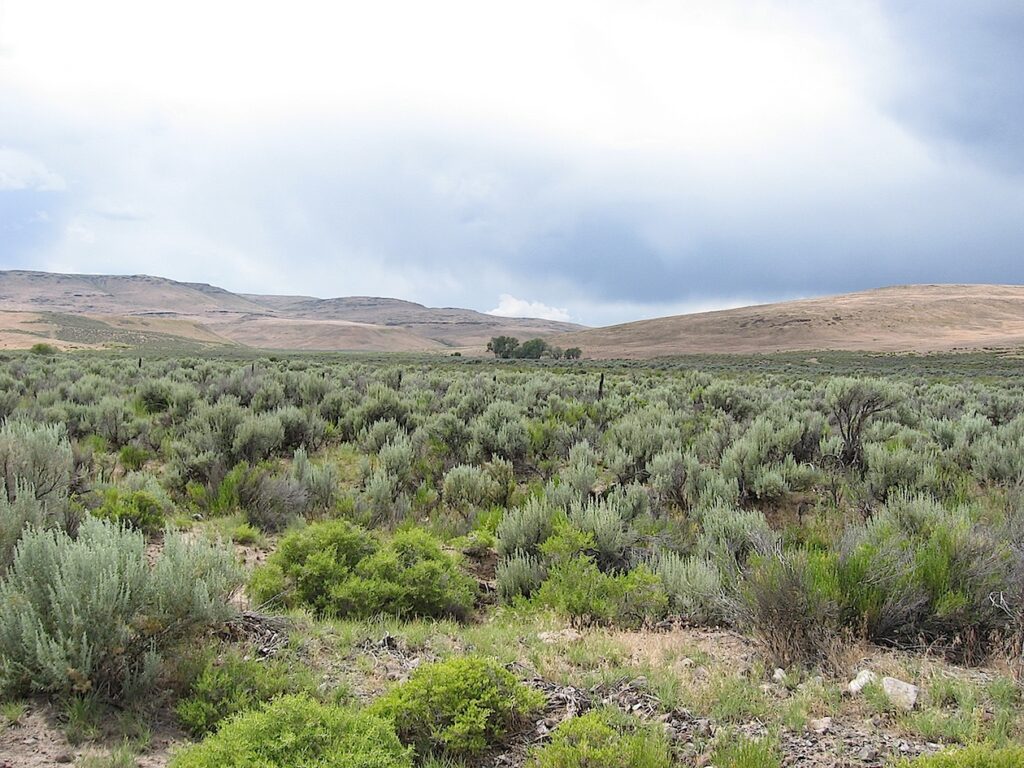
Rush Creek Ranch, June 26, 2023

This stream is tributary to Smoke Creek near the California/Nevada border. The name dates back to the 1850s, referred to by travelers along the Noble Emigrant Trail. The name may have had its origin from attacks by Indians  and the ermigrants along the trail. In 1863, during the Kidder & Ives state boundary line suervey, their report made reference to this locale after a skirmish with Indians and note, “The Indians rushed to the rocks to give us a warm reception.”

Tim

A Historic Moment, Albeit A Quiet One

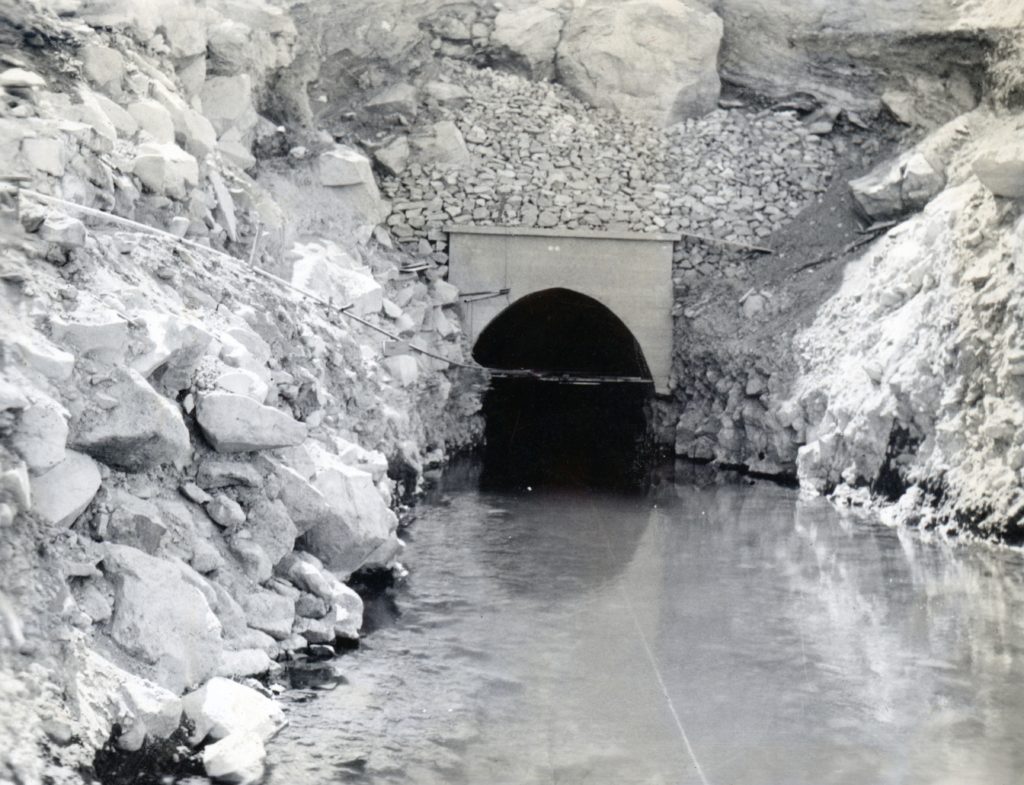
Bly tunnel inlet, July 1924. Courtesy of Wyn Wachhorst

It was 100 years ago today, with no fan fare, that 50 cubic feet per second of water was released through the Bly Tunnel at Eagle Lake.  The $1.25 million project conclusion was bittersweet.  Earlier, in May, some 5,000 people gathered at Litchfield for a grand barbecue to celebrate the completion of the tunnel.  What the public was not aware was Grant Smith Company, the contractor to build the tunnel, only built three foot below the lake level at the inlet, versus the eight feet agreed upon with the irrigation districts. The company refused to allow water through the tunnel,, until an agreement was reached. The legal wrangling went on all summer until a settlement was made.  In the short and long term the Baxter Creek and Tule Irrigation District were big losers. First, they lost the 1923 irrigation season. They would spend a decade trying to correct the inlet problem, and finally gave up.

Tim

Smoke Creek Road

Viewland, 1974. Photograph by and courtesy of D.B. Martin

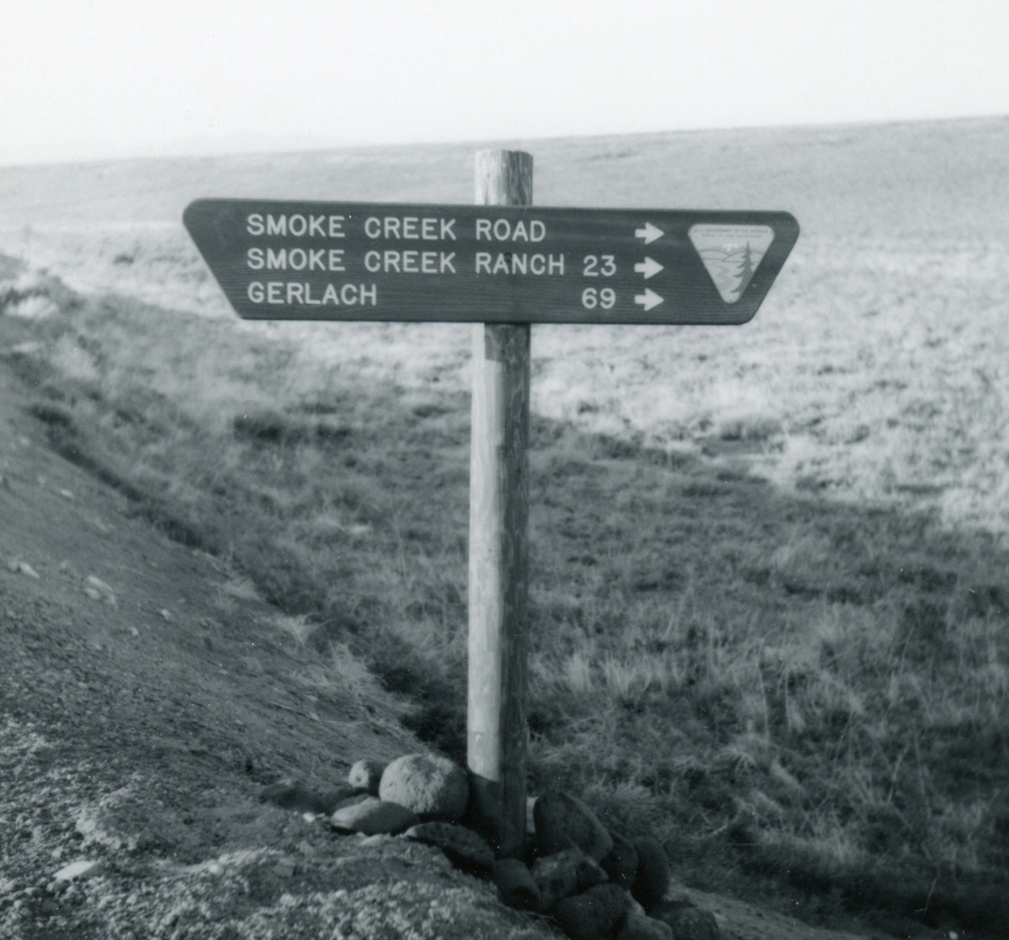
The turn off for this road, for those not acquainted, is a right turn off Highway 395 north between Viewland and Mud Flat. The first road in that section going to Nevada was Noble’s Emigrant Trail of the 1850s. Over the years, the route was slowly modified. The road we know today was constructed by the Secret Valley CCC camp in 1937. These men also did significant work on the road across Mud Flat, as well as road work between Ash Valley and Madeline.

Tim