Category Archives: History

The American Plan

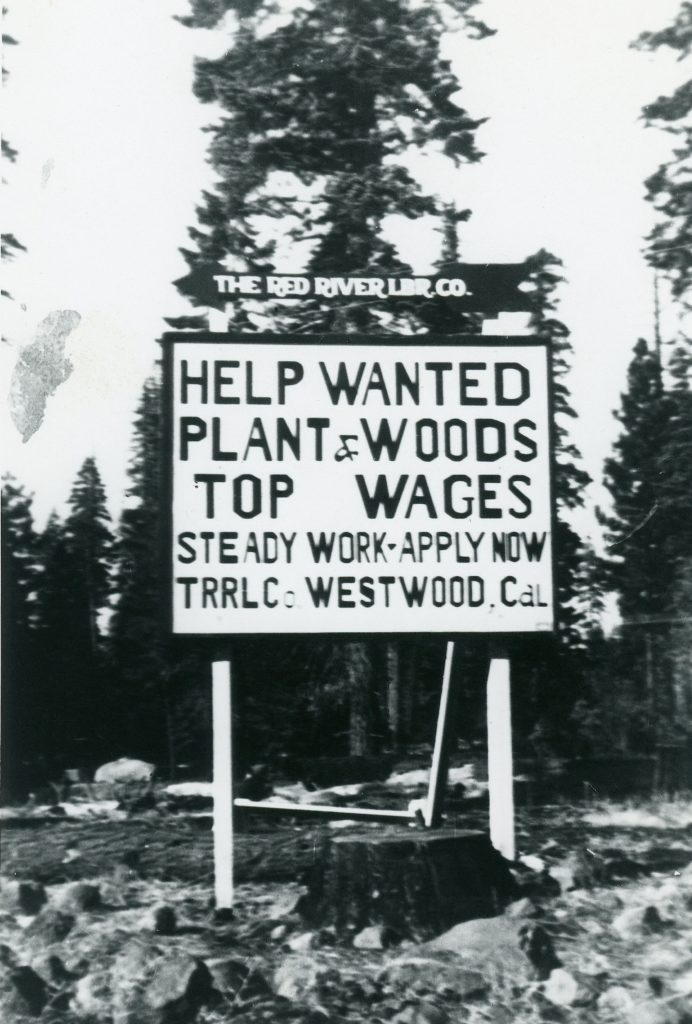
Red River Lumber Company had a large employee turnover.

The labor movement received a big boost during World War I. However, unions lost some momentum after the war as nation went into a recession. Industry on the other hand came up with strategies to counter act the union movement. One of these was the American Plan. The plan had its origins from the labor turmoil of World War I and was first adopted in November 1919 by the metal trades. In time, the Industrial Relation Association of California got behind the movement. It recognized that the model had to be flexible, since there were many variables between industries.

The plan deemed unions a nuisance—a barrier between the employer and the employee. In the simplest of terms, both the employer and employee had to maintain certain obligations. For the employer, one of the critical factors was to design its business wherein the employee was guaranteed steady employment.

In 1921, the Red River Lumber Company adopted the American Plan as a way to stave off the union movement. Actually, during the 1920s Red River’s labor issues were nominal. By the end of the decade, things changed. It was not just from Red River’s own financial turmoil, but the lumber market was headed in a downward
spiral, even before the stock market crash of 1929. Like many lumber operations, Red River was forced to curtail operations.  On July 28, 1930, Red River reduced wages by 15% and adopted a five-day week, with an eight hour working day. Red River did make a concession for its employees. It reduced the rents in Westwood accordingly and board at logging camps was reduced to $1.25 a day.

The American Plan at Red River was put to the ultimate test, but circumstances were overwhelming. Red River sought other solutions and company would experience labor turmoils during the 1930s.
Donate

Lassen Volcanic Wilderness Act

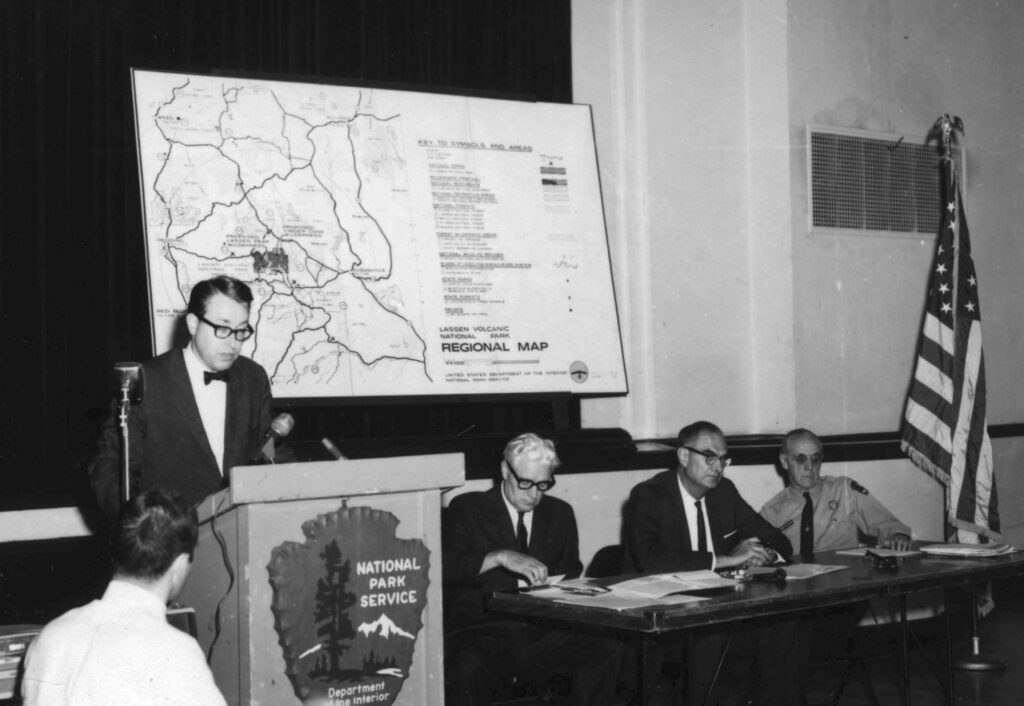
1966 Wilderness Hearing—National Park Service

When Lassen Park was established in 1916, most of it was in a primitive state.  There was a lot of internal debate as to what type of development should occur. The initial conclusion was that there would be only one road and the remainder of the park remain in its natural state. This approach did not sit well with the people living around the park, who were under the impression that it would be developed, bringing throngs of tourists, and providing an economic bonanza to them.

One of the problems was the private lands inside the park boundary—especially that of Drakesbad. Any park improvements would increase the value of these private holdings, thus adding to higher cost when the park would be in a position to acquire them. In 1935, it was decided to place the eastern portion of the park under a “primitive” designation for a period of ten years.

In the 1950s, the movement was growing to a seek a clear definition what a primitive and/or wilderness area consisted. This culminated in the passage of the Wilderness Act of 1964. A large segment of Lassen qualified for this designation. The question park officials had to determine was how much of the park should be designated  as wilderness. Of course, individuals and organizations alike had their own opinion.

After numerous public hearings, written statements and other commentary the park recommended that 73,333 acres be designated as wilderness—nearly two-thirds of the park. Of course, not everyone was pleased with this decision. Organizations such as the Sierra Club and the Wilderness Society had urged for more land —101,000 acres, almost the entire park. Their proposals would encompass all the land in the park with the exception of the corridor of the loop highway and a few other improved properties. Ultimately, a compromise was reached. On October 19, 1972, President Richard Nixon signed the Lassen Volcanic Wilderness Act, involving 78,982 acres.

Donate

The Strange Case of Richard Quilty

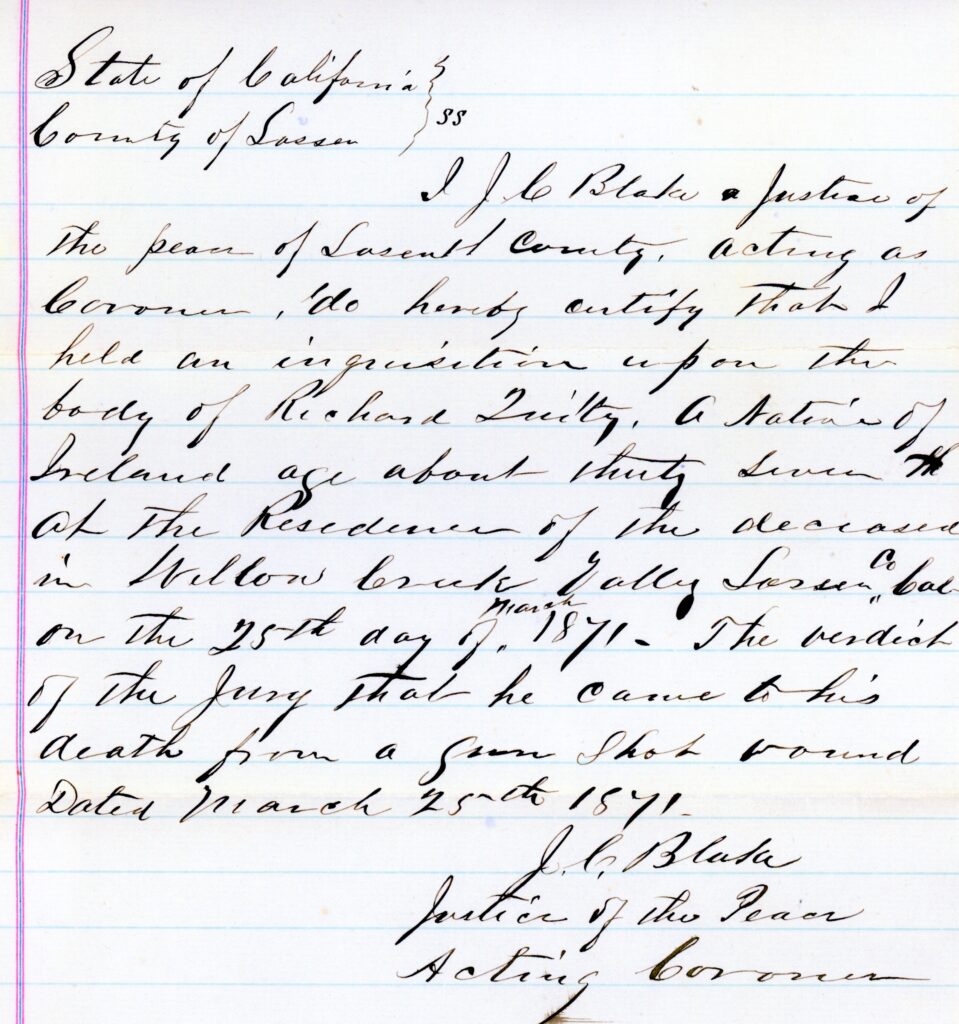
Quily’s coroner’s verdict.

In March 1871, volunteers gathered to build a schoolhouse in Willow Creek Valley, a mile east of the Neuhaus (Murrer) ranch. It was during the final phase of construction when tragedy struck. On March 23, Richard Quilty, a 37 year-old Irishman, was shot to death in a related incident. During the morning a number of neighbors worked on the schoolhouse. One workman was John Bergstrom,
an employee of Quilty. As Bergstrom assistance was not needed, Quilty instructed him to leave the schoolhouse and build a bridge over the creek. Unknown to Bergstrom, the location of the bridge was on property occupied by Jacob Miller, but claimed by Quilty. At noon, Miller left the school for his home to have lunch. Miller encountered Bergstrom at work on the bridge. Miller demanded Bergstrom to stop work on the bridge, as it was located on as on his property. Bergstrom obliged and returned to other duties that Quilty hired him for.

Late in the afternoon, Bergstrom headed back to Quilty’s home. Along the way he encountered Quilty. Bergstrom relayed to Quilty about the encounter he had with Miller. Quilty responded “Well, we’ll go and see Miller about it.” They proceeded to Miller’s house. Quilty confronted Miller as to why he drove Bergstrom away. Miller responded that it was his land, and he was not going to have a bridge built there. A heated exchange ensued. Quilty in an excited moment responded to Miller, “You’re a liar, the land is not yours, and you cannot have it. Come out here and I will bust your head for you.” During the argument, Miller was inside the house, while Quilty stood near the door, and Miller’s wife stood in the threshold. Miller’s wife pushed Quilty back, and Quilty yelled to Bergstrom “He has got a gun.” At that instant, Miller fired his rifle striking Quilty in the stomach, causing him to stagger and fell to the ground. Miller rushed to the door exclaiming, “Don’t you call my wife a whore, you son of a bitch.” Quilty instructed Bergstrom to get Ben Neuhaus, which he did. When Bergstrom and Neuhaus arrived they found Quilty lying on the ground with Mrs. Miller sitting by his side with a pale of water bathing his face. She told Neuhaus she was sorry that Jake shot him, but Quilty was forcing his way into the house to kill her. Quilty’s only response was that he was dying and asked Neuhaus and Bergstrom to take him home. They did and Quilty died two hours later.

Two days later, the Grand Jury convened to determine what transpired. The Millers’ testimony and Bergstrom’s were similar, except Bergstrom stated Quilty never said anything disrespectful about Mrs. Miller. In conclusion, Jacob Miller was acquitted as it was deemed there was not sufficient evidence so that Miller should be tried for murder. Whatever the case may be the Millers sold out two years later and moved to Oregon.

Donate

The Mountain Miser

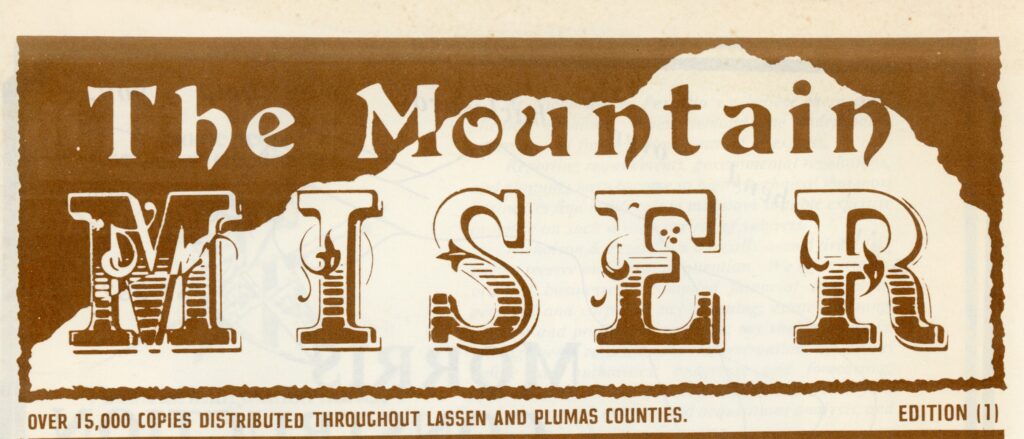
The publication’s masthead

This was a short lived publication of the early 1980s.  Founded by Jim and Sally Schlaudraff it would be classified as a shopper. Today, with the internet it would seem rather quaint. The initial issue was composed of advertisements, many in the form of reproduced  business cards. Subsequent issues carried interesting feature stories, but albeit rather brief.

During the next few Tuesdays, will feature advertisements from this publication, as well as others.

Tim

Susanville’s Alpine Hotel

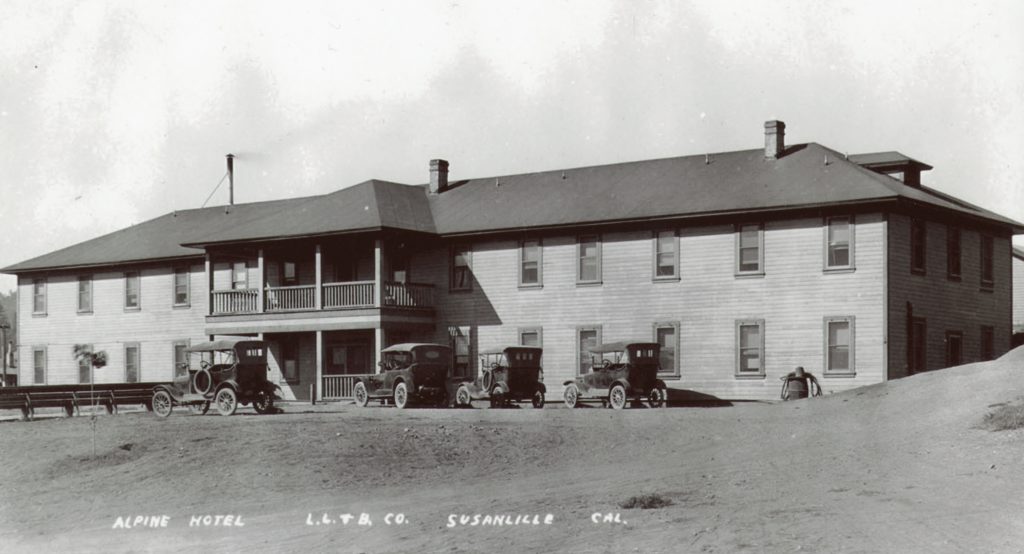
Alpine Hotel was a dormitory for the employees of the Lassen Lumber & Box Company

Along the same vein as Westwood’s Hotel Saville, in Susanville there  was the Alpine Hotel. It was located on the west side of the 700 block on Alexander Avenue, across the street from Lassen Lumber & Box Company. It was built in 1919 to provide dormitory housing for the single men employed at Lassen Lumber.

Lassen Lumber’s glory years were brief and in 1935 the Alpine Hotel found a new life as a dormitory for Lassen College. The college used the building throughout the 1940s. It was by the way, where the forestry students were housed. Other than that, I know very little about the Alpine Hotel. May be one day, I will get lucky and uncover some of its history.

Tim

Hotel Saville Explained

Westwood Independent, April 2, 1918

Last Friday, (10/6/23) featured a photograph of Westwood’s Hotel Saville. It confused some readers, as they did not think that the Red River Lumber Company allowed and/or operated hotels in Westwood. Those readers are correct.

Red River, in its own peculiar way, named their boarding houses “hotels.” These facilities housed single men, while houses were reserved for families. The Hotel Saville was built in 1913, and was one of the first rooming houses constructed there for Red River’s employees. It was a substantial structure with 250 rooms. Initially it housed Spaniards. In a bit of trivia, when T.B. Walker visited New York City on financial matters, he always stayed at the Hotel Saville.

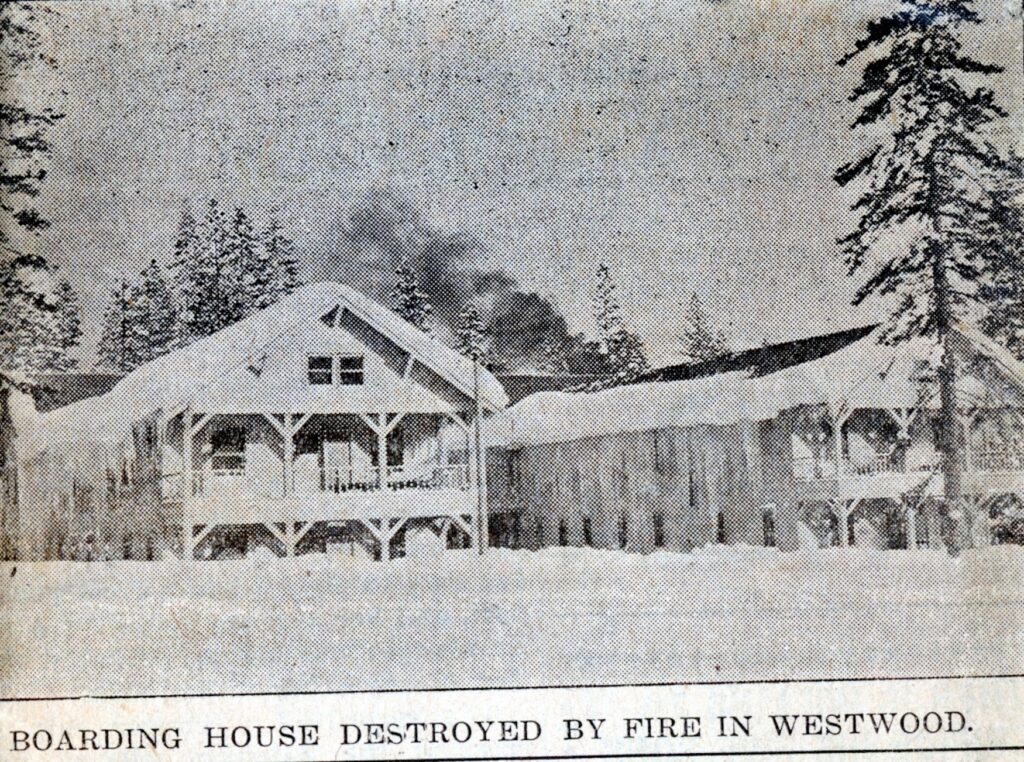
On Sunday night, March 30, 1918 a fire broke out on the the lower floor of the Saville.  The fire spread quickly and some five hundred men battled the blaze. Every effort was made to contain the fire, for fear it might spread to neighboring Westwood Club and Opera House.

Tim

Where Are We—Amedee Geothermal Plant

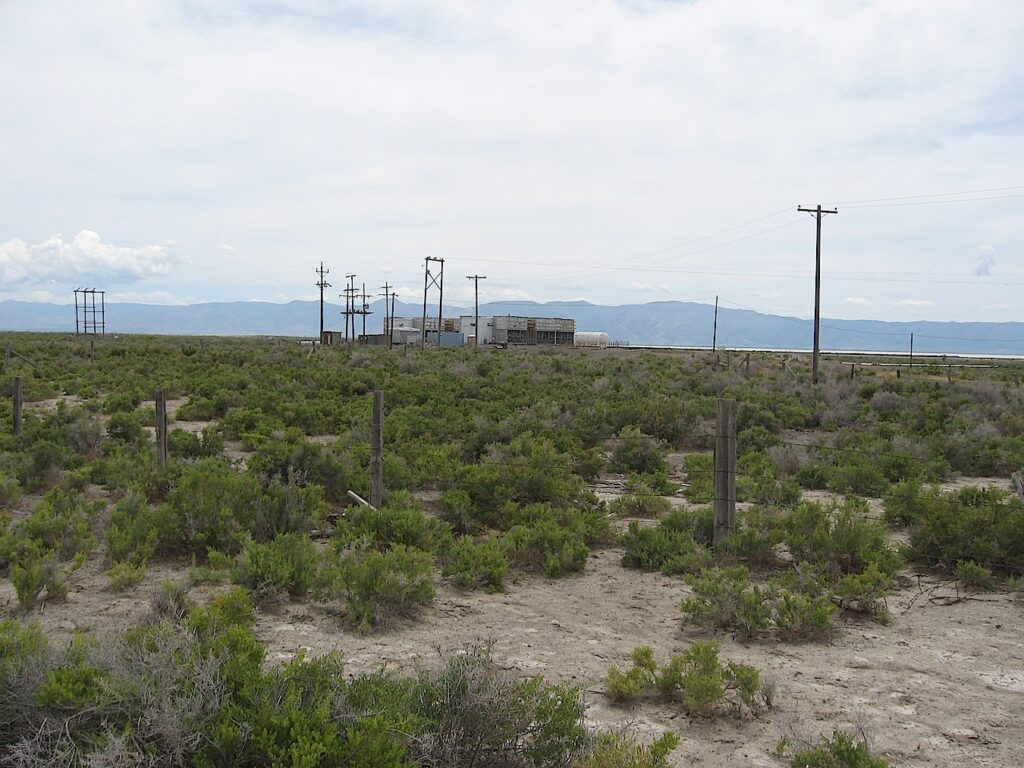
Amedee Geothermal Plant, June 14, 2023

In 1984, Janesville resident, Matti Ripatti and California Hydro Systems recognized the geothermal potential of the Amedee Hot Springs. They applied to the Lassen County Planning Department for a permit to construct a geothermal plant there. The permit was granted and in 1988 the power plant was constructed. Ripatti had a 25 year lease to the site and springs with the Humphrey family, owners of the property. The plant is currently operated by Amedee Geothermal Ventures.

Tim

Lassen County’s First Culinary School

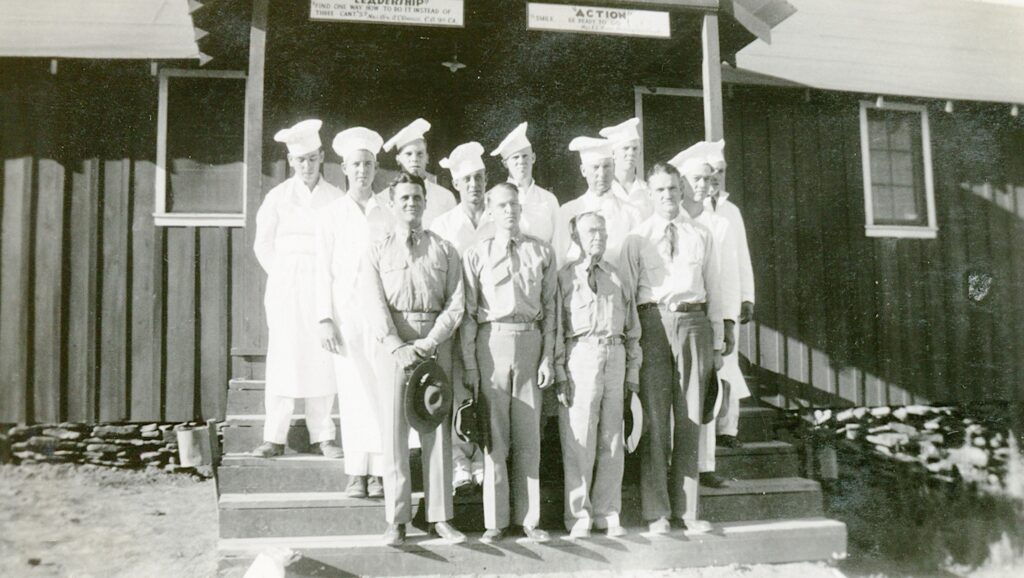
The graduates—C.H.Bennett Collection

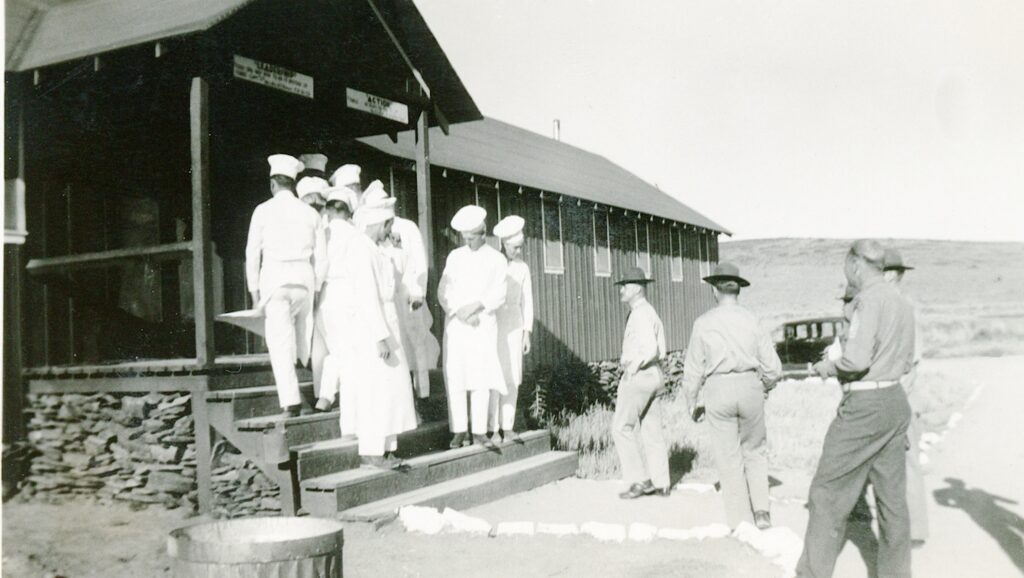
A speciality school to train chefs and bakers in Lassen County, years ago? It did exist briefly, but neither a public or private institution. Enrollees had to be a part of the Civilian Conservation Corp. The Secret Valley Camp held one special training. It was a four week course in food sanitation and preparation.

Generally, most people associate the CCC’s with manual labor associated with public works projects. There was another element to the CCC program. Many of the enrollees had sparse educations. In the evenings, the camps held a wide variety of educational courses. Interestingly, at Secret Valley, one of the popular courses dealt with first aid.

Support by subscribing.