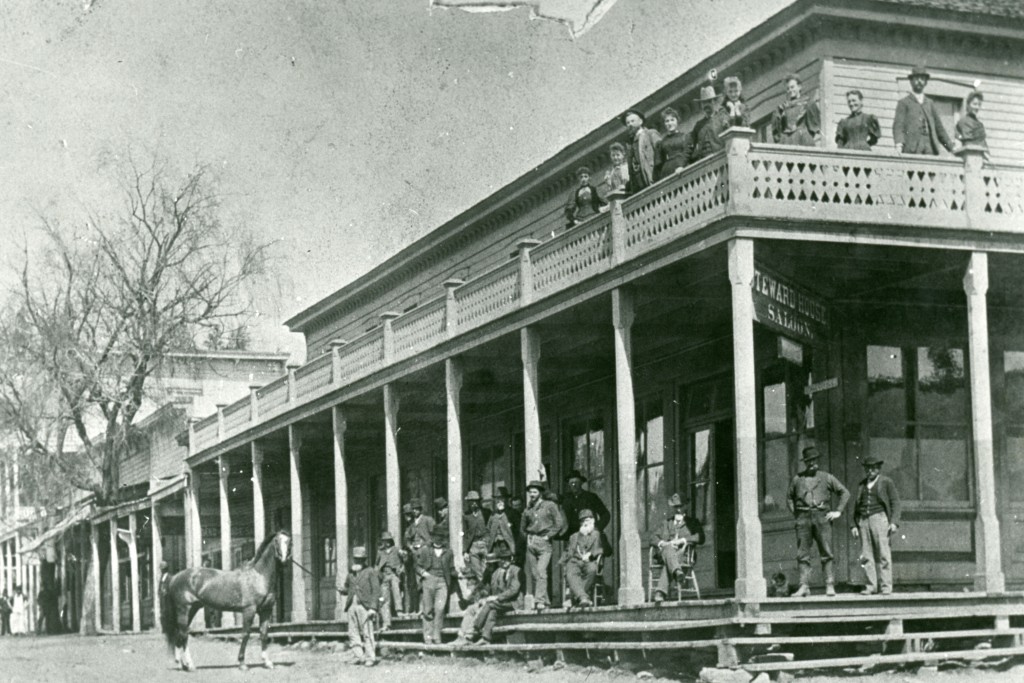
Susanville’s Stewart House, 1881. It sometimes was used as a hospital. Courtesy of Dallas & Joyce Snider
It was druggist that played a key role in medical care, as physicians were few and far between in the pioneer era. In the summer of 1860, Dr. Zenas J. Brown arrived in Susanville and began dispensing drugs from a canvas tent. He met with commercial success and at 802 Main Street, he had an octagonal drug store built—which the locals gave him the nickname of Doctor Eight Square. The following year he was joined Dr. Robert F. Moody, and Moody would become sole proprietor of the firm within three years. Dr. Brown it should be noted introduced the first apple trees to the region, which at one time was a major export crop.
Then there is Dr. Zetuz N. Spalding’s arrival to the region in 1857, and would later be the founder of the venerable Spalding Drug Store. One of Spalding’s earlier advertisements noted his many skills: “Z.N. Spalding, Physician, Surgeon and Accoucheur. Teeth extracted without pain, by use of Anaesthetics.”
It should be noted that the first Lassen County Hospital was not built until 1883. Those who were indigent were housed in a local hotel. The innkeeper would then submit a bill to the county for reimbursement.
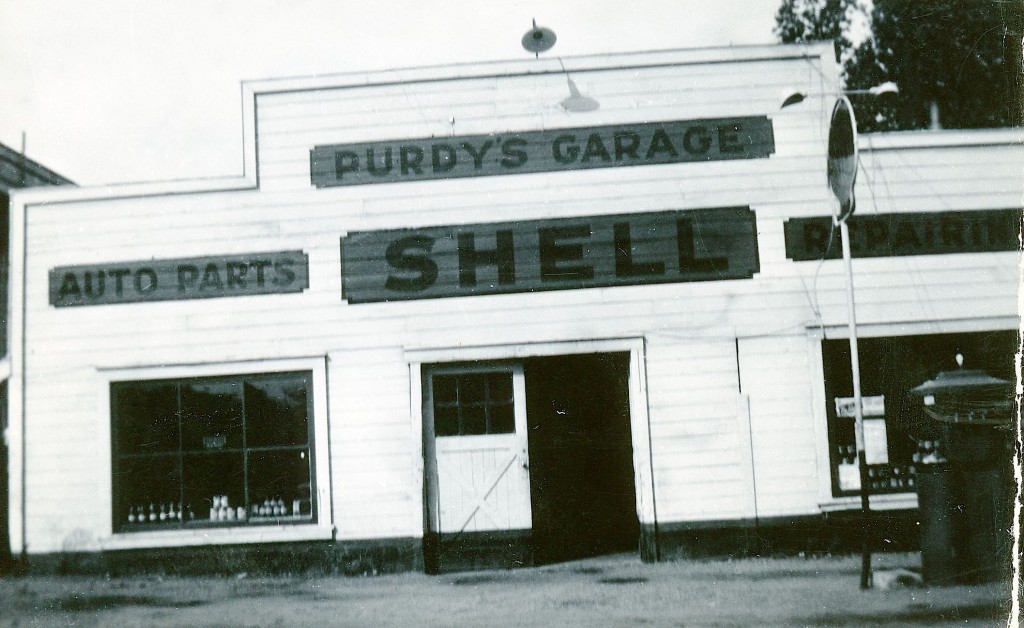
Purdy’s Garage, date unknown. Courtesy of Margaret Purdy
Some one wanted to know about the history of Susanville’s T&A Lounge located on the corner of Main and Sacramento Streets. In 1939, my grandparents, Ira and Margaret Purdy bought the Main
Street frontage between Sacramento and Spring Streets. My grandfather had a gas station and garage on the corner of Main and Spring Streets. Ira sold the vacant lot on the corner of Main and Sacramento to Tony Tonin and Al Surian—hence the name T&A. It was a short lived partnership, but Surian’s son, Gino, still owns the establishment.
My apologies for using a photograph of Purdy’s Garage instead of one of the T&A. I am still in that transitory period with issues transferring scans, hopefully the transition is just a few months away.
Leona Jackson at Susanville’s SP Depot, 1919–Lola L. Tanner
In 1913-14 when the Fernley & Lassen Railroad was built through a major segment of the Honey Lake Valley, the residents rejoiced. This was especially true for the agricultural community. While there was the NCO railroad, many deemed it expensive and unreliable. There was also other issue, its depots were not conveniently located.
Yet, on the other hand, no one knew what to expect when the Red River Lumber Company established its company town of Westwood. The agricultural community was overwhelmed that it had a large local market, and thanks to the railroad it was easy to get their products to Westwood. The scenario would repeat itself with establishment of the lumber mills—Lassen Lumber & Box Company and Fruit Growers Supply Company—in Susanville. The bottom line, it came as a total surprise that the railroad would create a large local market for local products. The region witnessed an increased local production in the agricultural sector, that allowed for more export of produce by rail.
The 101 as it appeared in 1941. Courtesy of Dina Matteucci
The 101 Nite Club was perhaps the liveliest of the four roadhouses between Susanville and Westwood. It is also the least documented, providing a challenge to unearth its story. The club took its name from the 101 Ranch and was located directly across from the ranch house. The operators leased the property from the McKenzie family, owners of the 101, but what the arrangements were is open to speculation, since those documents were never recorded.
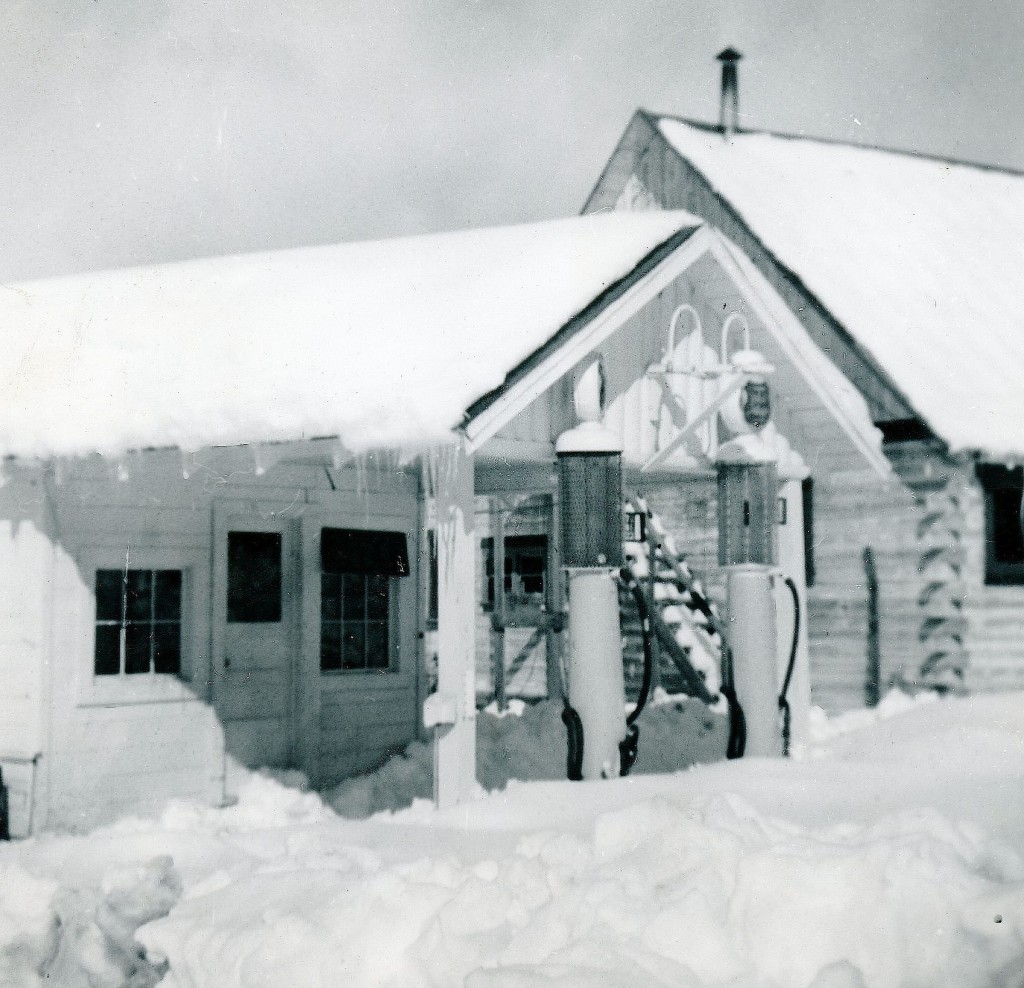
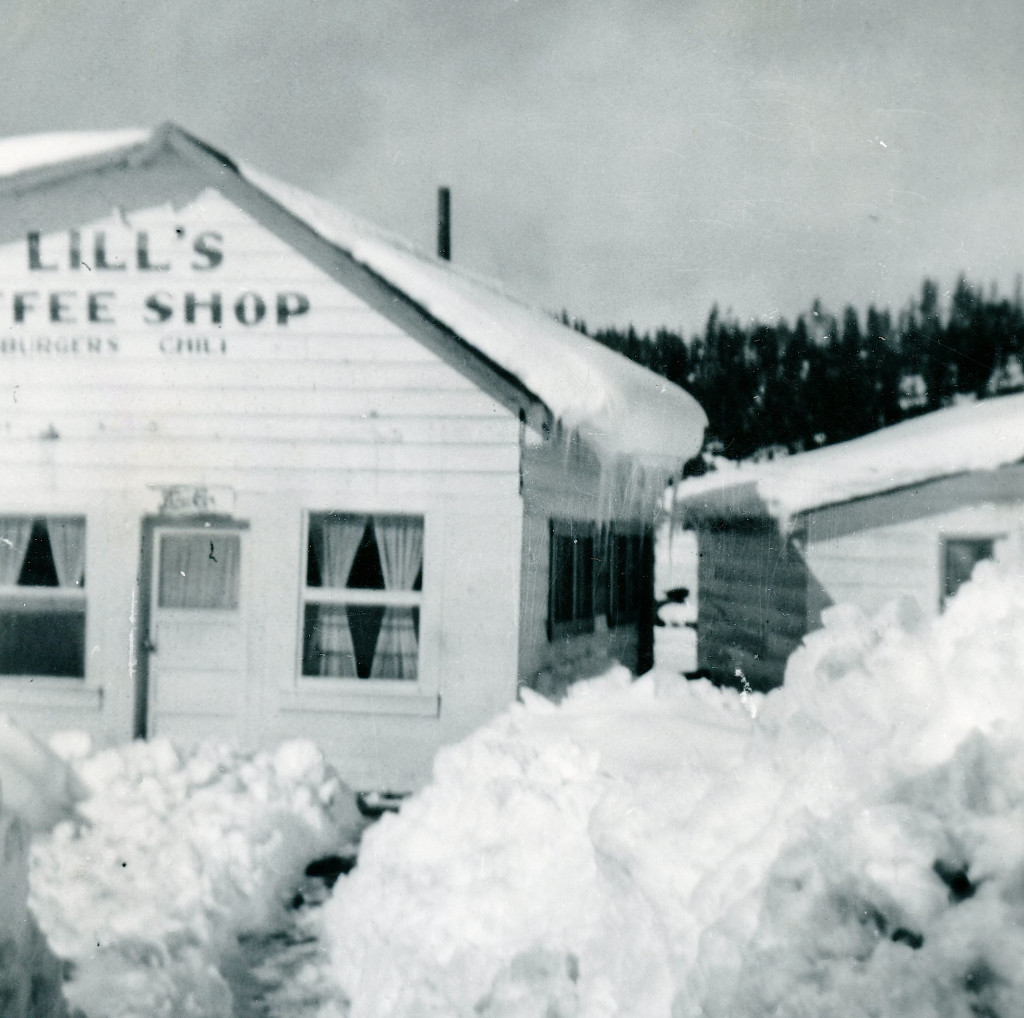
The 101 was established in late 1937 or early 1938 by Old Town resident Steve Actis. It was a large structure containing a bar and dance floor and live music was a part of the routine operation. In addition, there was a separate gas station and restaurant and a number of cabins behind the club. The cabins were rented out to loggers, but also provided housing for the musicians who performed there.
In 1941, one those musicians, Ray Orlandi, along with his new wife, Dina, took over the operations of the 101. However, it was not until June 6, 1942 that a bill of sale was recorded wherein Orlandi paid Actis $2,000 for the establishment. The Orlandi’s tenure would be brief for they decided to purchase Tony’s a bar in Susanville, later known as the 802.
The gas station at the 101.
In 1943, succeeding the Orlandi’s were Dom and Pearl Falletti. As Jacqueline McKenzie Leininger recalled her father, Jack and his brother Abner leased the 101 cattle operation from their mother, Lulu McKenzie. Lulu was not pleased with the bar, especially the fights and the loud music it generated on Saturday nights. Jacqueline fondly remembers the Falletti’s and noted: “Dom and Pearl ran the 101 Bar, and their daughter Betty was Bobi Lynn McKenzie’s [Abner’s daughter] best friend. There were little houses in back of the bar where loggers lived. Pearl was known for her Italian meals and Dom would take care of the bar. There were terrible fights, one night a man was sliced open with a knife and rushed to the Westwood hospital.
“Abner and his crew of cowboys would use the back part of the bar to tie their horses and hide them from Shirlie, Abner’s wife. They made the mistake of tying the horses too close to the bar and Shirlie could see the horses switching their tails. Bobi would be sent across the road on her horse to fetch the men home for lunch.”
Lill’s Coffee Shop at the 101
For reasons unknown every couple of years there was always a change in the operators of the 101. In May 1946 Falletti’s sold to Paul Fenoglio and Everett Curry. Whatever happened to Curry is not clear, but in June 1947, long time Westwood resident Earl Felion replaced Curry as Fenoglio’s partner. In January 1949, Felion bought out Fenoglio. Earl, with his wife, Ruth became the last operators of the 101. On April 26, 1952, the Felions sold the inventory and fixtures to Duane and Mary Bouchard for $1,500. The 101 Bar, not the building, was relocated to Standish to become known as the Wayside Inn.
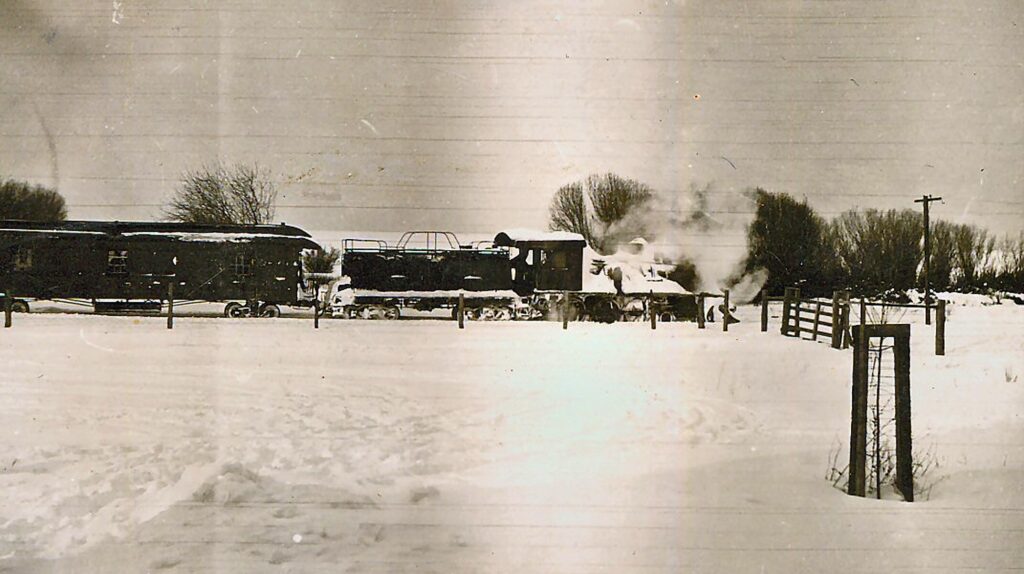
First of all, I am not sure where I am going with this. While examining photograph scans on my old computer I came across this photograph of a NCO train at Likely in 1916.
When I was a growing up, I was very naive and gullible. I was told that Likely received its name, since it would be “likely” to meet a Flournoy there. Actually, there is a lot of truth to that statement. In 1871, the patriarch John D. Flournoy settled in Modoc County, which then was still part of Siskiyou County. The Flournoy family is still part of the fabric of that area.
Likely was originally known as South Fork, it being located along the South Fork of the Pit River. Thanks to the internet one can choose what ever version of the naming of Likely they prefer. However, as a person of principle, I will stick with primary sources. From 1878 to 1882 the community had its own post office named South Fork.
In 1886, the residents petitioned the Postal Department to re-establish the post office. The South Fork name denied. Three more names were submitted—all denied. As folklore has it, at a meeting that one person stated “Its likely we will never agree upon a name.” Thus, the origin of the name Likely, and the Likely Post Office was established on April 13, 1886 with Marx Lauer, first postmaster.
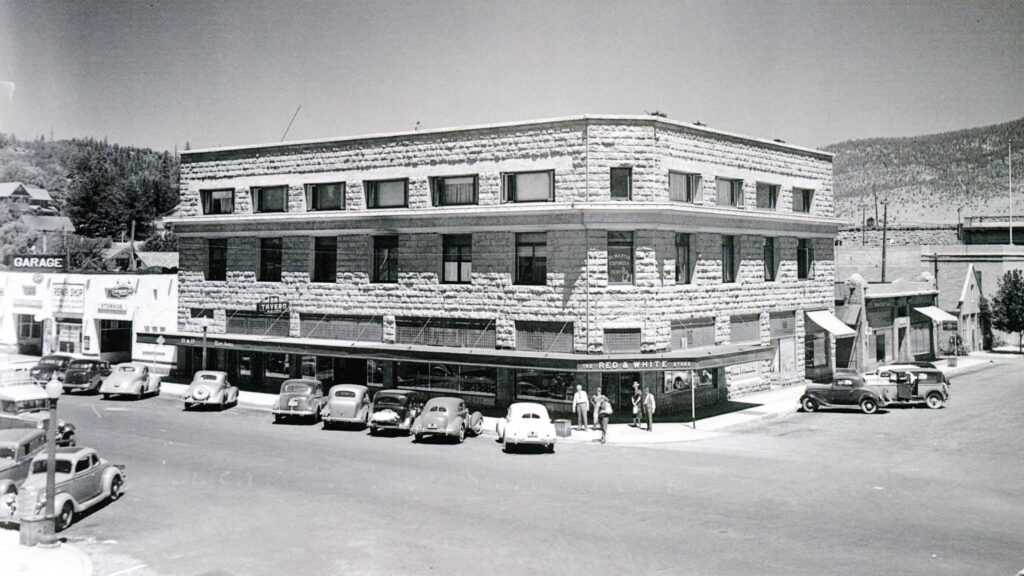
Susanville’s Knoch Building located at the corner of Main and North Lassen Streets has a long storied history. It was built in 1893 as a Masonic Hall, destroyed by fire in 1898 and subsequently rebuilt.
David Knoch who loaned the local Masons for the initial construction, would foreclose on that organization and took possession of the property and over time became known as the Knoch Building.
Knoch Building, circa 1900. Courtesy of Philip S. Hall
After Knoch’s passing in 1908, his son, Isaac “Ike” Knoch took possession of the building. With the arrival of the railroad to Susanville in 1913, it brought tremendous growth to the region. In 1914, when Knoch proposed to add a third story to the building. He was told it could not be done. Well, as Knoch recalled years later, “That was all I needed the word can’t.” Work on the third story was to commence shortly after Labor Day 1914, However, with the Moose Lodge proposed a harvest festival in which Main Street would be shut down for several days, the work on the third floor was postponed. When the $34,000 project was completed, Susanville also had its first elevator.
Jules Hurlbut’s homestead cabin., that eventually became Spalding Tract. Courtesy of Orville Watkins
In 1914, John Spalding announced his intention to subdivide “his” ranch on the west side of Eagle Lake. However, truth be known it was not actually his. The property in question belonged to his brother-in-law, Jules Hurlbut. At the age of 8, Jules came to Lassen County with his parents, Timothy Judd and Caroline, along with his sister, Mira Eleanor. The family first located in Willow Creek Valley, where other family members resided, but would soon locate to Eagle Lake. In 1881, John Spalding married Mira E. Hurlbut.
Pine Creek, circa 1914. It sholuld be noted that John Spalding’s original homestead was on the north side of Pine Creek. Courtesy of Wyn Wachhorst
In time, Jules homesteaded the property that is now Spalding Tract. During the 1880s, Albert Gallatin went on a buying spree acquiring the majority of private properties around the lake, including that of John Spalding. Jules Hurlbut held firm, and would not sell to Gallatin. A confirmed bachelor, Jules spent most of his life at Eagle Lake. In 1937, he retired to Susanville and died there in 1941. He is buried in the Susanville Cemetery, there is no marker for his grave.
The site of the McKissick Ranch, Madeline Plains, June 2004
Long Valley pioneer, Jacob McKissick created a large ranching empire in Lassen and Washoe counties. It would all come crashing down with his death in 1900. McKissick was a life-long bachelor, so there was a lot of speculation as to who would receive what. The bulk of his estate he left to his nephew, Benjamin Howard McKissick, who had a spent the greater portion of his life working for his uncle. Of course, this did not set well with other family members, and lawsuits were filed to contest the will. In 1903, Benjamin Howard McKissick could no longer handle the stress of these conflicts and committed suicide in a most painful way, by swallowing carbolic acid. This event, of course, created even more estate litigation.
On February 4, 1914, H.G. Humphrey, W.H. Moffat and J.L. Humphrey. incorporated as the McKissick Cattle Company. They slowly began purchasing many of the McKissick Estate properties. In 1926, J. L. Humphrey went solo, and part of the dissolution process he took possession of the McKissick Ranch in Secret Valley, and holdings at Amedee. Humphrey had two children—Jack and Lucille. Jack would inherit Amedee, Lucille married Hugh French and received the Secret Valley property.
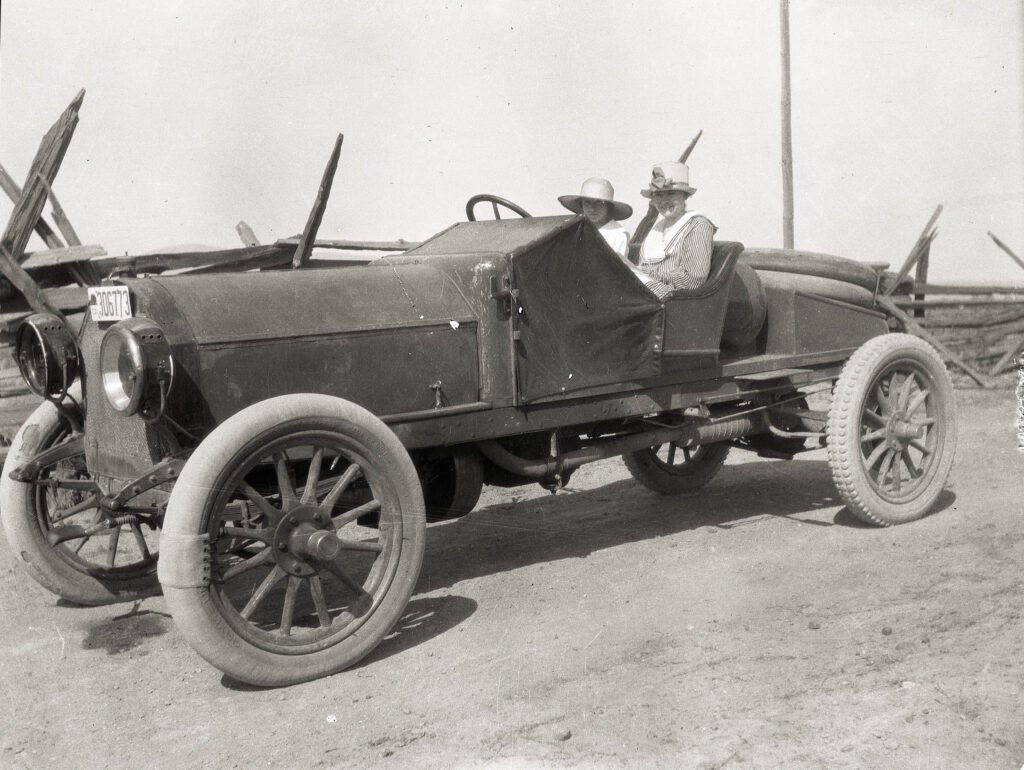
An early 1920s scene, Willow Creek Valley—Lola Tanner
Does any one have a clue as to what type of automobile this is? My grandmother, Lola Murrer (1899-1973) is on the left, but I do not know who the other person is. Lola’s first cousin, Alfred Talbott (1895-1966) was a master mechanic and for all I know he might have built this contraption.
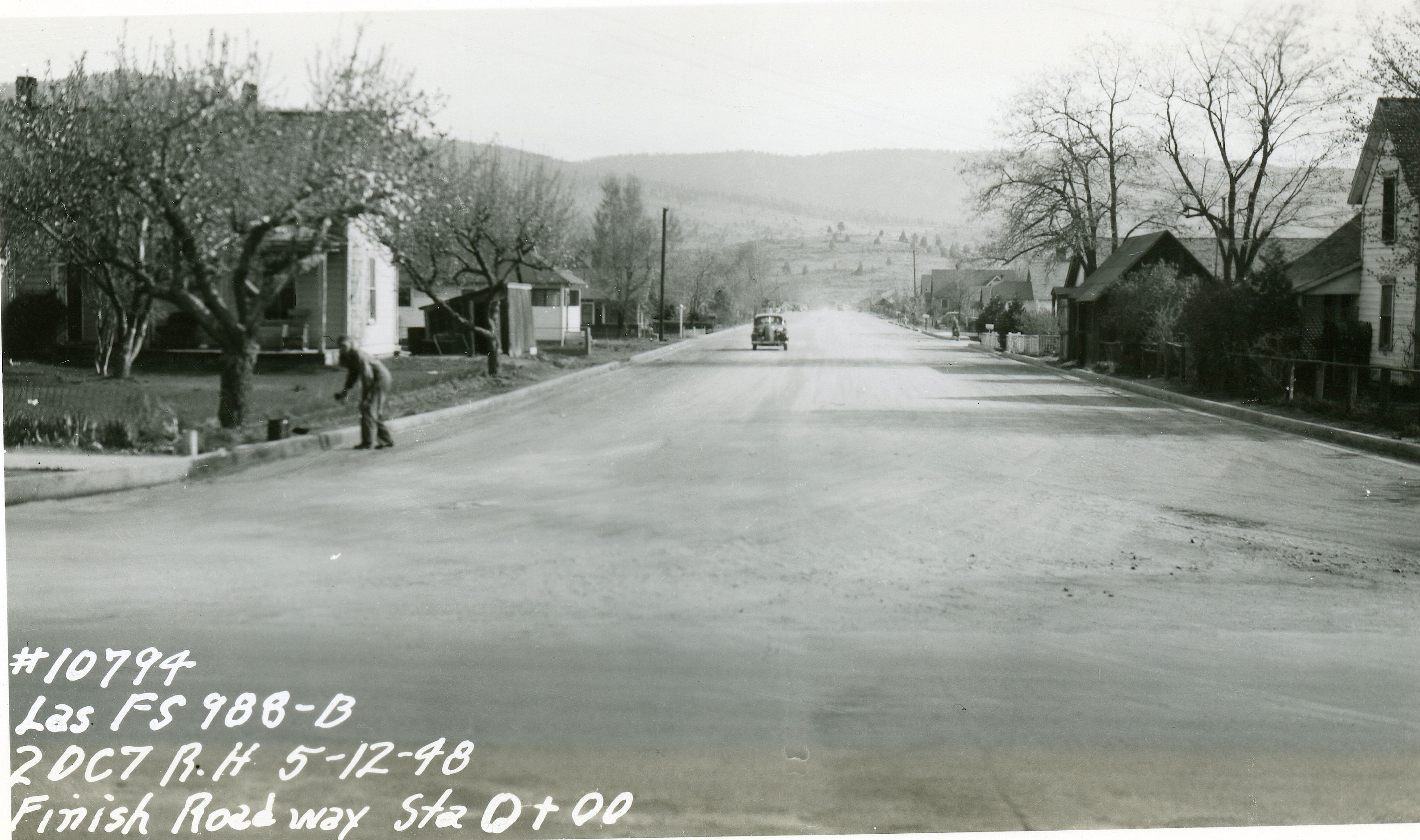
On January 16, 1911 M.O. Folsom unveiled his East Addition, Susanville subdivision containing 300 lots. Many of its north/south streets were named for trees, i.e., Ash, Cedar, Fir, Spruce. The east/west were numbered, i.e, First, Second, Third, Fourth and Fifth.
Ash Street, initially ended at Fifth Street. Travelers headed north either used Hall Street or Weatherlow Street to Chestnut. In 1947, Ash Street was incorporated into the Lassen-Modoc Joint Highway #14, the pre-cursor to State Highway 139. Ash Street was extended to connect the highway making for a straight route into Susanville.