Many an interesting character has passed through Lassen County over the years. In early 1927, was World War I veteran Frank Heath. He was on a mission to ride horseback through every state of the Union on a single horse. He left Washington, D.C. on April 1, 1925 on his horse he named the Gypsy Queen. In all he would travel 11,523 miles and on November 14, 1927 arrived back in Washington, D.C. Continue reading An Interesting Journey—Frank Heath→
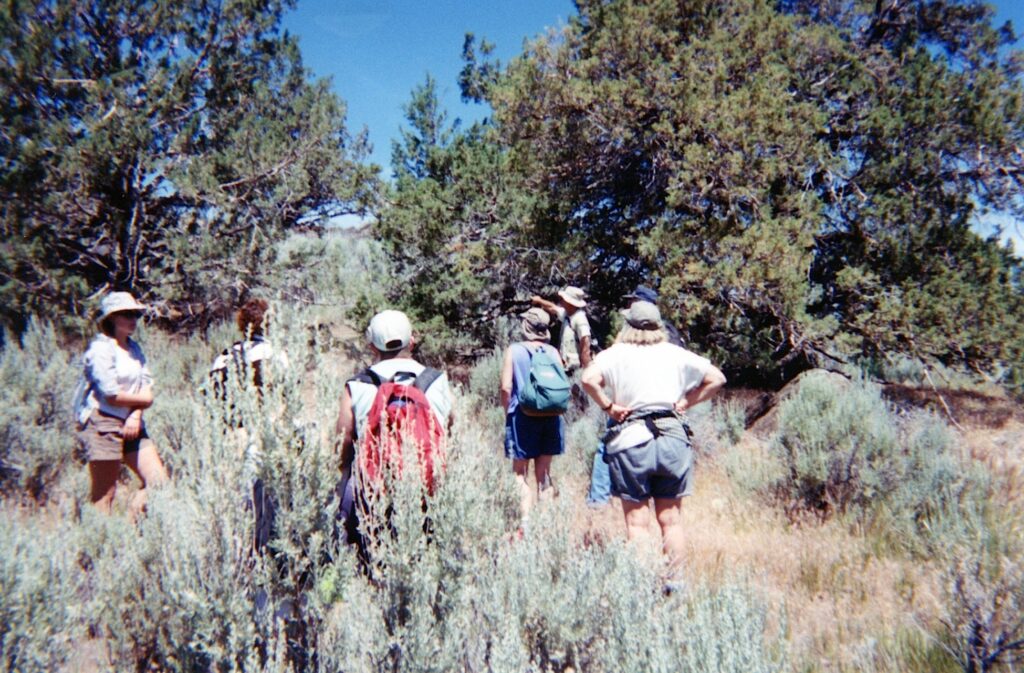
Years ago, the second week in May in California was designated as Archeology Week—now October is designated as Archeology Month. Back in 1992, BLM archeologist Don Manuel and myself, as a historian conducted a prehistoric/historic tour of the Smoke Creek Desert territory. It turned out to be widely popular and for a time several tours of different locations were held throughout the year. I recently came across a photograph of the Upper Smoke Creek Tour. These outings were rather popular.
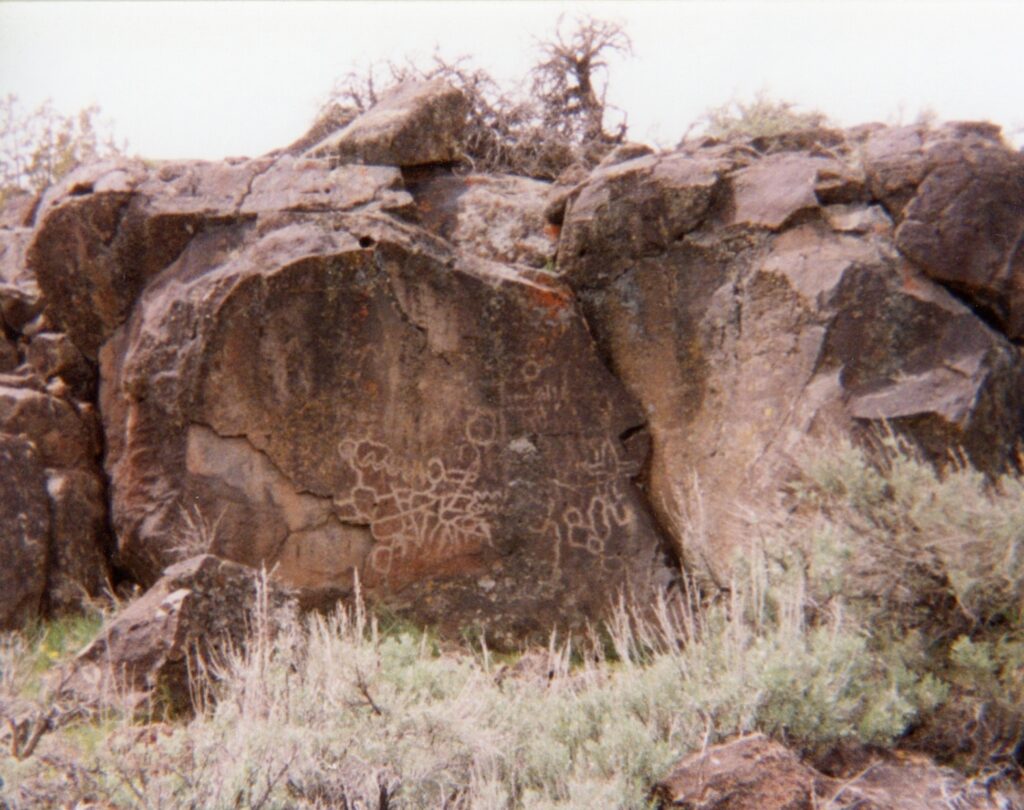
One of many petroglyphs observed along Upper Smoke Creek, 1993.
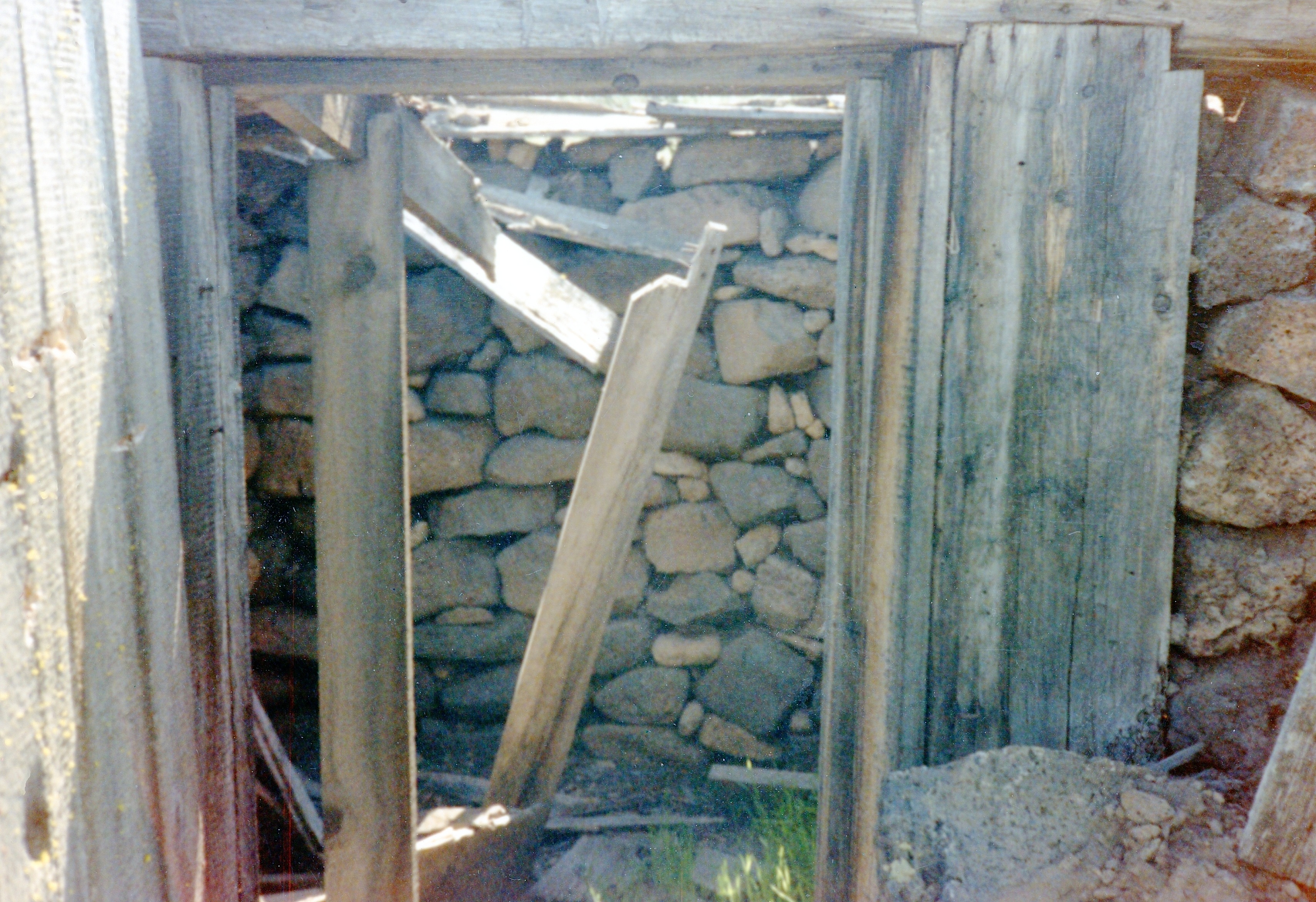
One of the more unusual tours was an east side Eagle Lake tour. Manuel did not partake in this one, and Stan Bales was the BLM representative. This tour included stops at the two Eagle Lake tunnels, as well as the the Eagle Lake Land & Irrigation Company tunnel works and pumping plant location.
Plenty to see at Tunnel Works No. 2
From time to time I receive inquiries as to whether the BLM tours will be resurrected. From what little interaction I have with BLM it seems doubtful. Though, I do inform those interested, that they need to contact BLM directly and may be, if the stars are in alignment the inquiry will connect with someone who cares.
First of all, it boggles my mind, how B.F. “Frank” Murphy and Marion “Comanche George” Lawrence discovered and claimed the salt marsh in the summer of 1864 in the Smoke Creek Desert. For most of its existence Murphy was the main operator of the Buffalo Salt Works. Two types of salt was produced. The first being table salt that was 99.8% pure. A lesser grade was sold to mining operators with a smelting plant that utilized the salt. The salt was obtained from wells, the brine pumped into vats, and left to dry. In 1888, it was reported that 200 tons of salt was produced annually.
Red River Lumber Company was unusual in that it did not routinely have commercial films made of its operations, as their competitors did. It was deemed a good business practice to show prospective retail buyers, as well as investors, of one’s operation. In the 1930s, Red River officials debated the issue, particularly as it might be beneficial if forced to sell Westwood. On the other hand Red River’s neighbor the Fruit Growers Supply Company routinely had films made. For them it was important for the citrus growers to see what was involved with their investment.
In the summer of 1928 Caterpillar tractors sent a camera man to Westwood to film Red River Lumber Company’s entire operation–from the falling of trees to finished board. Caterpillar was interested in Red River’s operations. Red River’s skilled machinists were constantly making improvements to Caterpillar tractors. Among old time Red River employees there was the folklore that Red River had more patents on Caterpillar tractors than Caterpillar. Whatever the case may be, in November 1928 the film made its debut at the Westwood Theater.
It would be interesting to know if the film exist in Caterpillar archives. After all, Fruit Growers had a 1925 film of their Lassen Operation in their archives, which I did a showing at the Susanville Depot many years ago.
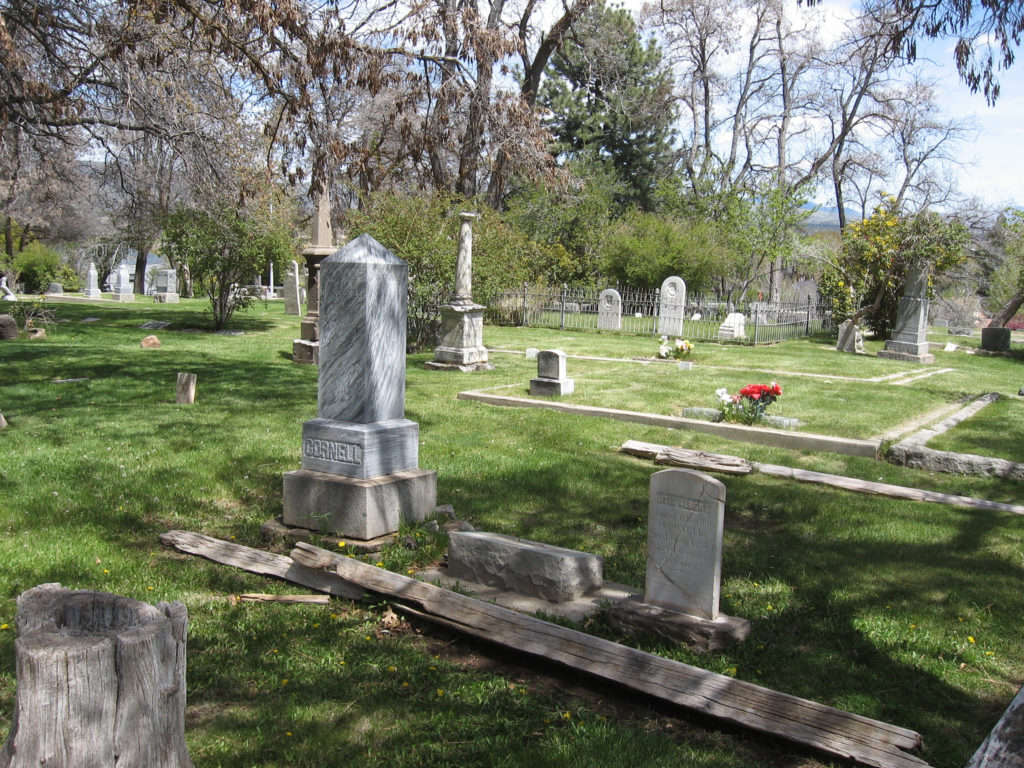
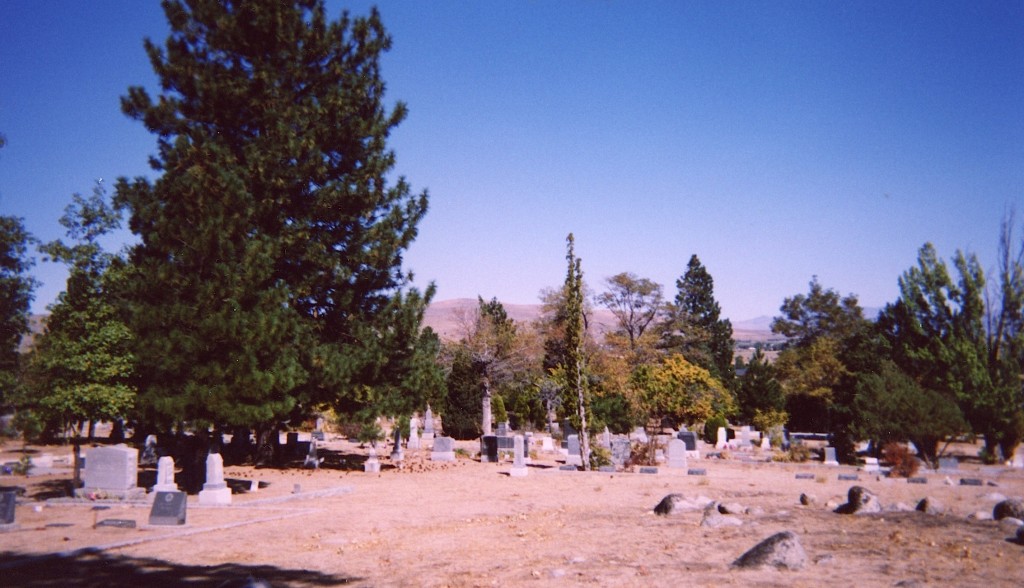
Cornell family plot, Susanville Cemetery, May 2, 2017
There was a recent inquiry about whether Lassen County, that maintains the Susanville Cemetery kept burial records. This falls under the common used term these days, its complicated.
There was a ledger of burials that the sexton kept at the Susanville Cemetery. This register was kept in a small combination tool storage shed, with a little work space for the sexton to maintain records. In 1970 or 1971, the sexton, a descendant of a prominent family, consumed one too many intoxicating beverages and accidentally caught the building on fire, and with it cemetery burial register was destroyed.
While the Lassen County Recorder’s Office has burial permit records that dates back to the 1890s, they only indicate the name of the cemetery, but no specifics as to the location, i.e. section and plot number.
Janesville Cemetery
Fortunately, I was able to copy the burial register for the Janesville Cemetery. While it dates back to the early 1900s, it is incomplete. The Westwood Cemetery, not only did I do a headstone census, but I was able to examine all the burial records for the first fifty years, which some concise data can be found elsewhere on this site.
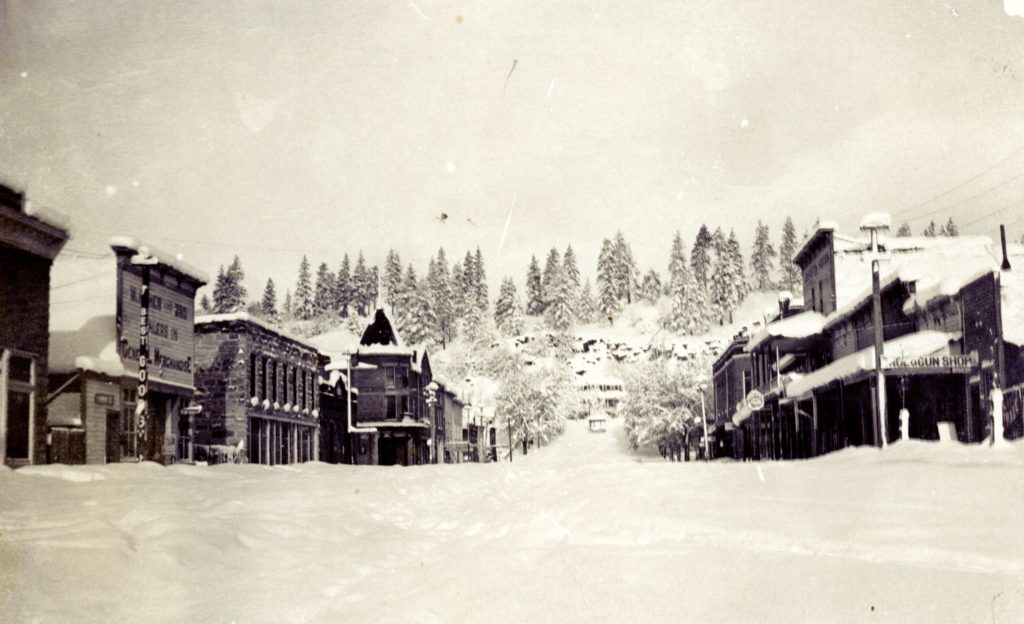
Personally, this latest storm was over-hyped for the region. Some forecasts called for feet of snow, but in reality it was inches. Anyhow, lets examine some big storms that occurred several years apart.
1911- On January 13 there was three foot of snow in Susanville, but the big snow still had not hit. Then it really began to snow. Six days later the storm finally ceased, five feet of snow had fallen and the depth on the ground now reached eight feet! In January 116 inches of snow had fell in Susanville, with a total precipitation of 11.59 inches.
Construction of the Fernley & Lassen Railroad, west of Susanville, January 1914. Courtesy of B.R. Zimmerman Collection
1914 – In January was another repeat of 1911. Susanville once again had eight feet of snowfall. This, of course, did not stop the railroad construction crew between Susanville and Westwood.
1916 – On New Year’s Day a snowstorm hit Susanville and dropped four feet of snow in two days. For the month Susanville received nine and a half feet of snow for the month of January. When it was not snowing it was bitter cold. On January 30 the temperature dropped to minus fourteen below zero.
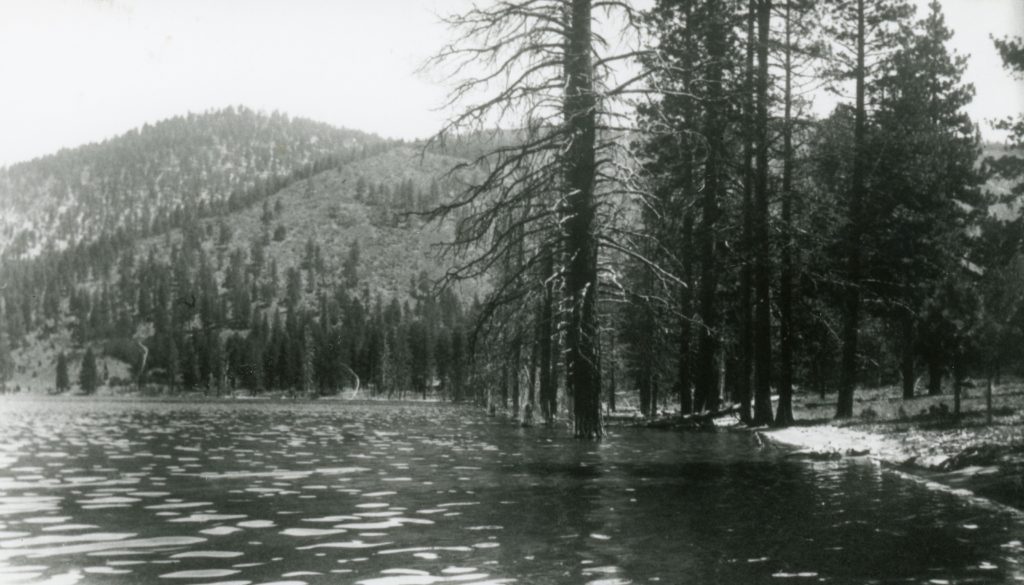
Gallatin Beach and Peak, 1916. Courtesy of Wyn Wachhorst
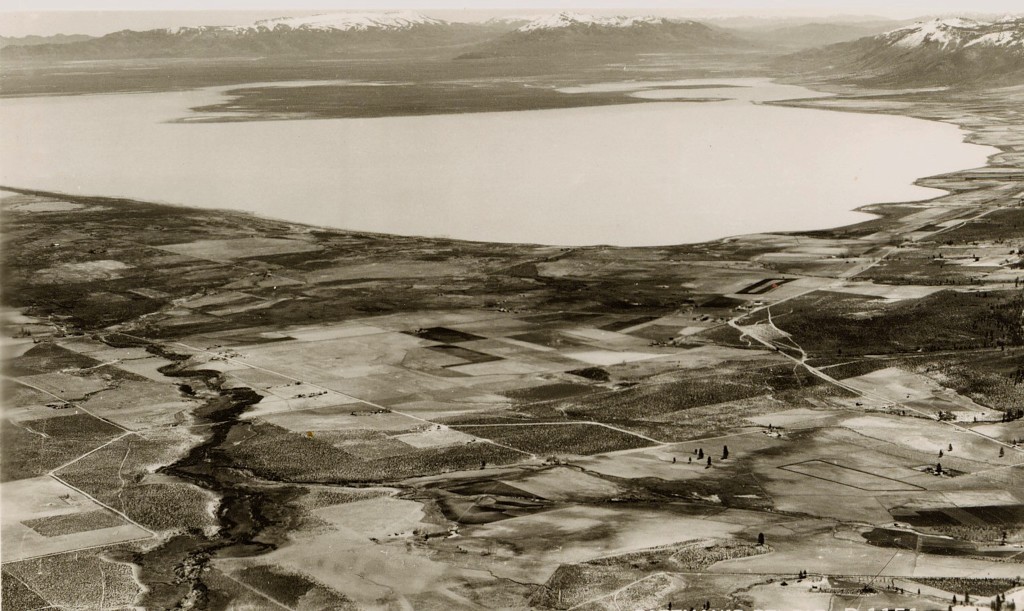
Eagle Lake was a beneficiary of these wet winters. In 1917, the lake reached its highest recorded water level.
In January 1860, Dexter Demming was brutally murder at his cabin at Willow Creek Valley by a band of renegade Indians. A posse was formed to search for the Paiutes. The posse encountered them at Snowstorm Canyon. A skirmish occurred, but it was in vain, for the Indians had the upper hand due to the rugged terrain. The posse’s efforts was not a total loss, for they did recover some of Demming’s belongings.
Back in Susanville a meeting was held to determine what the next course of action should be. Some where of the opinion they should go en masse to Pyramid Lake to confront Chief Winnemucca. about Demming’s murder. Cooler heads prevailed and two men, Captain William Weatherlow and Thomas J. Harvey, were designated to make the diplomatic visit with Chief Winnemucca.
The two men met with Winnemucca and prevailed upon him to turn over the tribal members that committed the murder. During the course of conversation Winnemucca was evasive. In conclusion, and by surprise, Winnemucca informed them, the settlers could purchase Honey Lake Valley for $16,000. Upon payment Winnemucca stated there would be no livestock theft, murder or mayhem. This revelation left the two men bewildered.
From a historical standpoint, Winnemucca’s offer is a complete surprise. It has never been revealed who advised the sale of Honey Lake Valley and equally important how the price was determined. Weatherlow and others felt the offer was nothing more than blackmail. Whatever the case may be, tensions became intense and finally that spring escalated into the Pyramid Lake War of 1860.
North Lassen Street, Susanville, showing City Fire & Hall, circa 1930
Tuesday, is primary election day in California, so I thought it only fitting to have an election story—oh do I have many having spent many years working as a county election official. One of the most disheartening aspects is when there is low voter turnout. The general public is not aware, just how much work and preparation is involved. Okay, enough of my soap box and on to the story at hand.
The April 1930 Susanville City Council election turnout was pathetic, only eighteen votes cast! Robert M. Cook, editor and publisher of the Lassen Mail wrote:
”On Monday of this week three men were up for election as members of the city governing board. Exactly eighteen votes were cast in the election booth. That number on the face of it shows there is no local interest in how the town is run or who runs it. And the men who are on the town council board are the men who say how and where the taxpayer’s money shall be spent.
”It seems reasonable to suppose that interest, more or less, would be cenetered at election time on whom should occupy places on this governing body. The few votes cast last Monday would indicate the reverse.
”Whether or not he or she should cast a vote is up to the individual concerned. And if a person is not concerned to the extent of casting a vote then adverse criticism should cease.
”The job of councilman carries with it nothing but work and grief. There is no salary attached to the office, nor rarely any credit for work done. It is more or less of a wonder that any one would take the office as a gift, let alone having to ‘run’ for it. The different men who hold places on the board should be given a vote of thanks for accepting the responsibility they do. Instead all they get is a lot of knocks by persons who are too indifferent to express their choice of whom they want through the medium of the ballot box.
”The office of councilman is an important one and should not be treated indifferently. If there is not any interest shown in who runs the town and does the work of planning and directing, then you can’t blame the powers that be if no interest is shown on their part.”
A ladies “smoker party”, circa 1920. Courtesy of Juen Chappuis
April 1, is not only April Fool’s Day, but the official date of Lassen County’s creation. More on that later on April 1.
Since it kind of the doldrums of this time of year, I was thinking of maybe combining the two events and just a have fun jovial celebration on that date. During the early 1900s around these parts, it was not unusual for some fraternal organization or individual(s) to come up with some wild themes like in 1914 the “Parade of Horribles.”
A 1912 float to resemble an airplane, that was a failed event. Courtesy of Leona Byars
The possibilities are endless. May be an organization would sponsor a fund raising dinner the night before which would culminate with the coronation of the next day’s Fool for the Day. Get the legal community involved and they could select a “court jester” to accompany the Fool for the Day to promote various community projects. Let’s not stop there, engage law enforcement community to select a Bailiff to accompany that duo. Make it a community wide event, tap into the students at Lassen College for their creativity among other things. After all, we could use a day of merriment and hi jinx. We could use a Tom Foolery Day.
The Amedee Post Office had the unique distinction of its opening and closing dates. The post office was established on New Year’s Eve, 1890 with Lewis Brubeck as the first postmaster. It should be noted that many of the railroad agents, also served as postmaster over the years. So, it was 100 years today on Leap Year Day 1924, witnessed the closure of the Amedee Post Office. The post office and town was named for Amedee Depau Moran, one of the owners of the NCO Railroad.
The east side Honey Lake Valley residents were not completely without mail service like they are today. Located between Amedee were Stacy and Wendel, both railroad communities. Stacy resident Allison Newman, who my Dad introduced me to him as the “mayor of Stacy.” Newman was that town’s postmaster for decades until it closed in 1951. The Wendel Post Office closed in 1993.
Spread the word, and encourage a friend to subscribe.