Category Archives: History

The Main Street Dilemma Continued

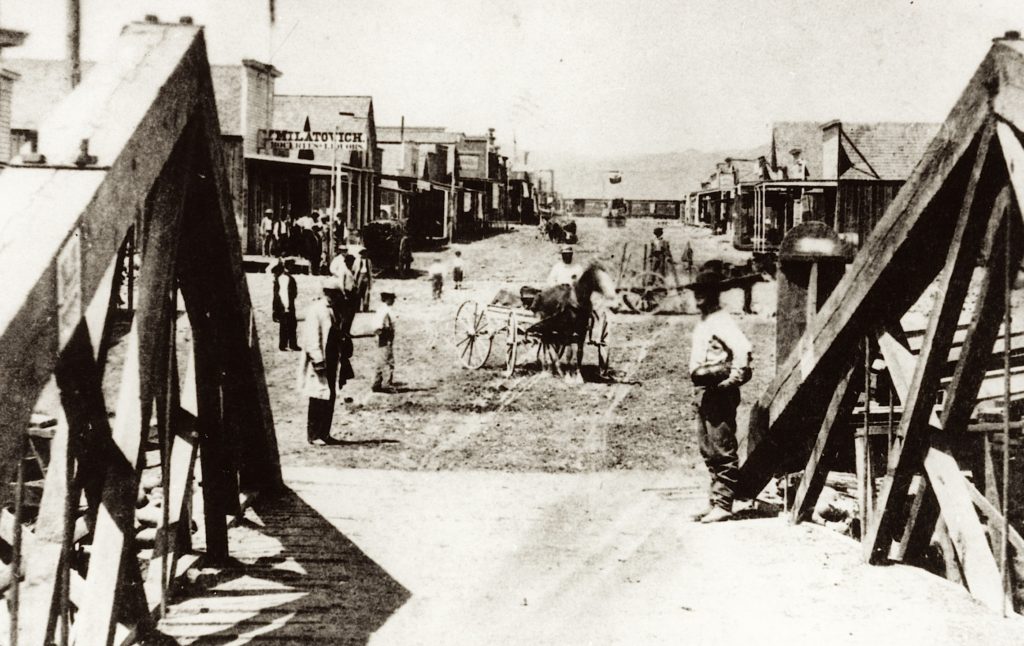
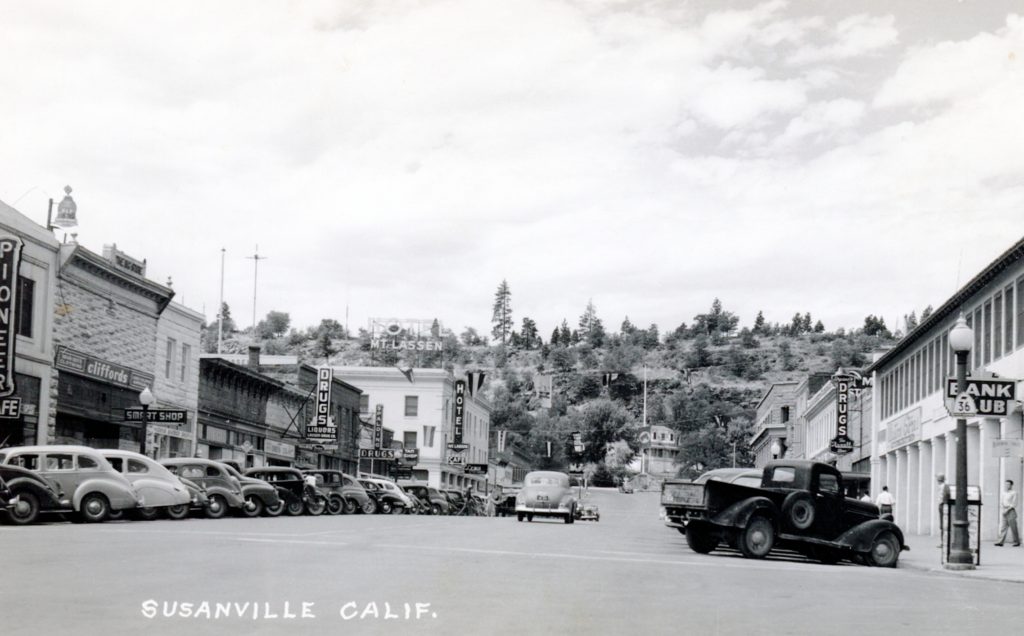
Main Street, Susanville, 1938

In September 1933, the City of Susanville had transferred the right-of-way of Main Street to the State of California. This was in accordance with State legislation for integration of city streets that were part of the state highway system. In the beginning all worked well.

After World War II when life returned to somewhat normalcy, the City learned a few lessons of what they could and could not do—the hard way. In 1947, to alleviate congestion on Main Street, the City proposed to install stoplights at the intersections of Main with Lassen and Weatherlow. When the State Highway Division learned of this, it objected. The State said Main Street did not meet the requirement of 100 cars per hour passing through the intersections. Their solution to relive the congestion, introduce parallel parking on Main Street, then striping to make four lanes—two in each direction. That went over like the proverbial lead balloon with the merchants.

Over the next couple of years it was a highly debated topic. The resistance group was no match for the State.. In 1949, State Highway Engineer R.N. Putnam informed the City that it must discontinue angle parking on Main Street.

On July 10, 1950, the City Council moved forward to adopt parallel parking for Main Street. The Council no doubt was concerned that if it was not in compliance with State law, the State conceivably could withhold the City’s apportionment of gasoline tax money. The parallel parking ordinance went into effect on August 10.

There was, of course, public uproar. It was not until the summer of 1952, the issue had simmered down, and slowly everyone adjusted to the fact that parallel parking was here to stay.

Subscribe


Susanville’s Main Street Political Problems

One of the many wrecks at the retaining wall entering Susanville.

Susanville’s main thoroughfare has been an interesting political foot ball since the town incorporated in 1900. Initially, the major debate was fire issues. As the town progressed, some wanted civic improvements, others did not. Of course, those opposed, while they wanted nice items such as sidewalks, gutters, and paved streets, they did not want to pay for them.

The town’s Main Street would be and still is a contentious issue. The bickering between California Highway officials and the City began in 1920. The issue then, was the during construction of Highway 36 and its approach into Susanville.

The first battle was the approach. The City refused to give the State Highway Department the right-of-way to the town’s Main Street. The state would only build the highway to the city limits. To connect the highway to Main Street resulted in a nasty “S” curve. This was an internal problem with the city and problems with property owners not willing to grant right-of-ways to correct the situation.  The retaining wall entering Susanville was the scene of numerous wrecks. But changes were on the horizon when the cash strapped city made a major concession that has ever since affected its main thoroughfare.  More about that tomorrow.

Tim

Virginia City’s Famed Piper’s Opera House

The grave of Earl Conkey, died 1879, Susanville Cemetery, October 1976

This notable landmark in one of Nevada’s premiere mining towns has a connection to Honey Lake Valley. It should be duly noted Virginia City’s existence no longer has nothing has much ado about mining for gold and silver, but what is does best these days is mine the pocketbooks of tourists.

For those not familiar with Myron Lake, he is considered the founder of Reno. In 1859, C.William Fuller located along the Truckee River in the Truckee Meadows and built a toll bridge and small hotel there being nothing else. (Today, that location is known as the Virginia Street bridge). Business would soon be brisk with the discovery of the Comstock and the establishment of Virginia City. In June 1861, Fuller traded his enterprise for land in the Honey Lake Valley to Myron Lake. Lake continued acquiring more property in the Truckee Meadows and timing can mean so much. In 1868, the Central Pacific Railroad was approaching the Truckee Meadows as part of the nation’s first transcontinental line.Lake sold the railroad 160 acres for  depot and town and Reno was born.

Virginia Street Bridge, Reno,—Nevada Historical Society

In 1862, the widowed Jane Conkey Bryant with her three children—Florence, Seymour and Lillian—came to the Honey Lake Valley upon the urging of her parents—Sylvester & Betsy—along with various siblings.   (The Conkeys resided on present day Wingfield Road known as Nagel’s Happy Valley Ranch). It should be noted Lake, prior to  his move to theTruckee Meadows was a neighbor to the Conkeys. It is unclear how Lake courted Jane, but the two were married in Janesville in 1864. To make a long story short, Jane’s daughter, Florence married William Thompson. The Thompson’s daughter, Ethel married Ed Simmer owner of Piper’s Opera House in Virginia. City. The property remained in the family for years, though for a time in a neglected state. In the 1960s, Louise Zimmer Driggs restored the Opera House in the 1960s and eventually donated ti to the non-profit organization that operates it today.

Subscribe


Red River’s Indian Valley Railroad Proposal

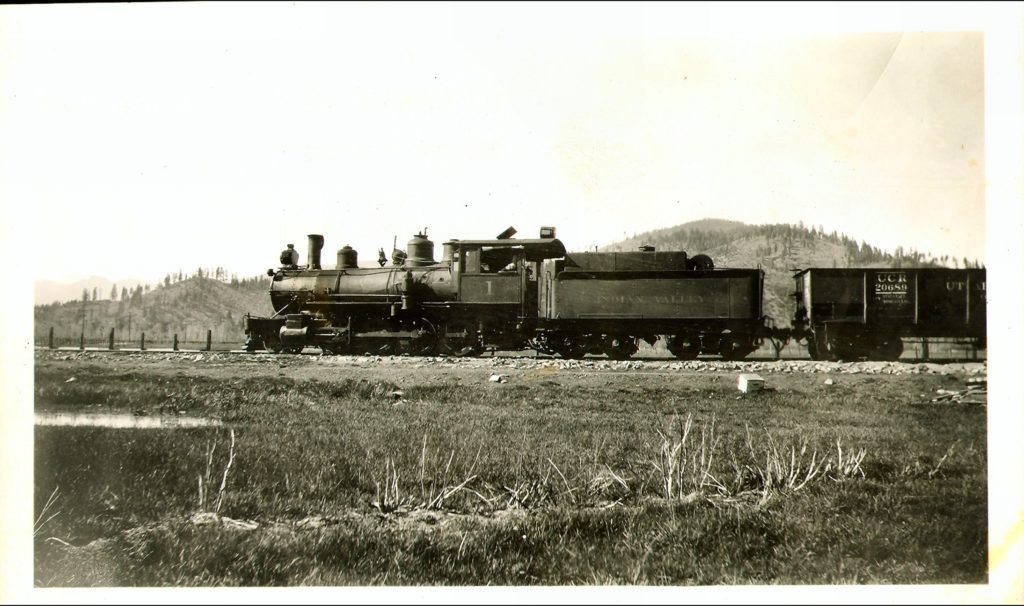
Indian Valley Railroad. Courtesy of the Plumas County Museum

One of the biggest issues T.B. Walker had against the Red River Lumber Company’s location at Westwood, was it lacked a railroad link directly to California.  For a time there was a glimmer hope with the Indian Valley Railroad.

On June 30, 1916, the Indian Valley Railroad (IVR) was incorporated to build a line from Paxton on the Western Pacific Railroad to the Engel Copper Mine near Taylorsville–a distance of 21 miles. Sixteen months later the rail line was completed. It should be noted, that it was originally proposed as a narrow gauge line, but Willis Walker of the Red River Lumber Company objected. After all, Walker was keen enough to see the possibilities for a link to Westwood, and with that would force the Southern Pacific Railroad to be more competitive in their rates.

Early on the IVR had its sights on Westwood. In 1918 a survey was made to extend the line to Westwood was conducted, With Red River’s main branch logging railroad extending along the east shore of Lake Almanor to Canyon Dam, there was not much territory separating the two lines. In 1927 a request was sent to the Interstate Commerce Commission to put in this proposed line to be known as the Northern California Railroad. It was rejected. However, in the works was the Western Pacific and Great Northern Railroads to connect their respective lines with a new railroad from Keddie, Plumas County to Klamath Falls, Oregon. This was approved in 1930, and Red River Lumber Company would finally have a second railroad connection it had always sought.

Never miss a story, click here to subscribe.

Government Land Grab at Juniper Lake?

Juniper Lake, 1930s.

Juniper Lake is located in the southeastern corner of Lassen Volcanic National Park.  On April 1, 1914, C.P. and Cora Snell purchased 475 acres that included Juniper Lake. They eventually created a 1,500 lot subdivision. It should be noted that Lassen Park was not created until 1916. These inholdings inside the park created numerous problems for park officials.

After some thirty years of wrangling with the Snell’s Juniper Lake Resort and subdivision promotions, Lassen Park officials finally found resolution. While the park negotiated with the Snells, there was another obstacle—they had to negotiate with various owners who owned some 300 lots.

In 1957, park officials made an appeal to those lot owners to sell. This fell on proverbial deaf ears. The only way officials could overcome this impasse was to file condemnation suits. The owners were not pleased and considered it a government land grab. In the spring of 1959, forty owners, who held title to 259 lots at Juniper, were served with Notice of Intent by the park to condemn. The government’s offer was for $16,687.50, or approximately $64 per lot. It should be noted that many of those lots had been purchased for as little as $2.28 per lot at delinquent tax sales.

Ruth Pancera of Susanville was livid when she was served with the notice. She remarked how she had been “harassed” by federal officials for two years to sell her property at an “unreasonably low price.”  The same sentiment was echoed by Dr. Richard Bahme of Berkeley, spokesman for the newly formed Juniper Lake Resort Owners Property Association. Bahme said, “the federal government is now attempting to buy our property at obsolete and unrealistic prices, based on what it might have cost 40. years ago, instead of its value today.” In addition, they felt discriminated against, for the suit did not affect the property owners  with cabins, which numbered only a dozen.

The disgruntled owners fought, and the proceedings dragged on for five years, until the Department of Interior ultimately prevailed. It should be noted that the Dixie Fire, 2021, destroyed some of those existing cabins, and some intend to rebuild.

Subscribe

Constantia’s White House

Ross1
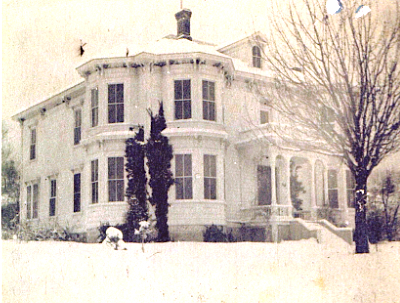
The White House—Courtesy of Joan Drum

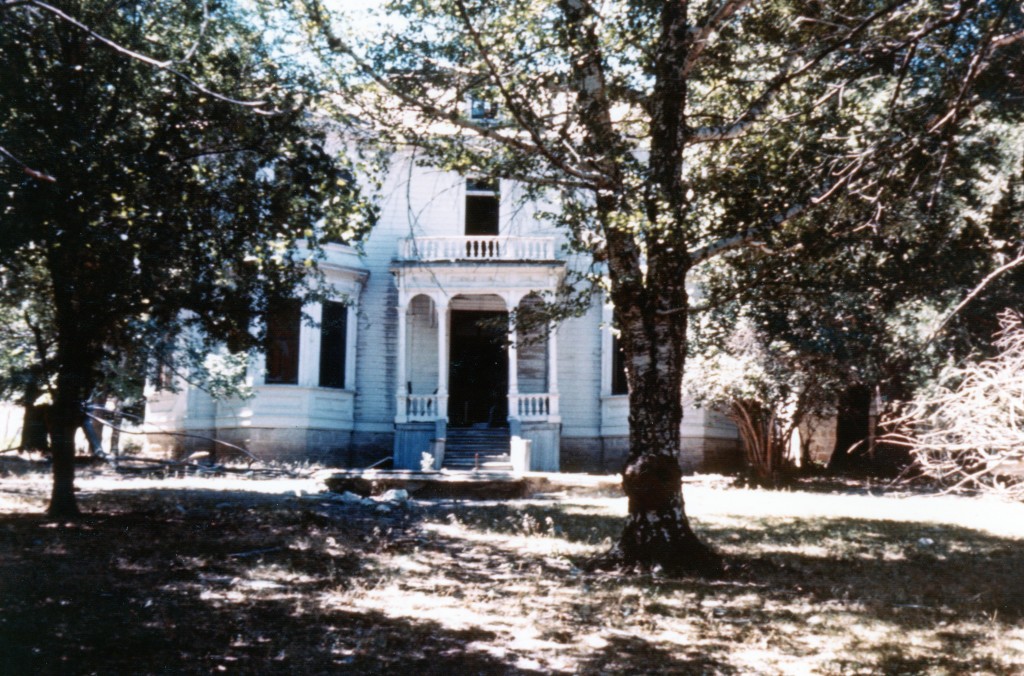
In 1863, Albert Elijah Ross (1836-1911) located on what would be later named Constantia. In 1884, Ross constructed a 17-room mansion there at a cost of $14,000. This residence and well-known landmark was simply referred to as the White House. In the early 1890s, Ross moved to San Jose to benefit his children’s education and eventually sold the property in 1898.  The ownership of Constantia would change several times until it became a part of the Pyramid Land & Livestock Company. In 1922, that Company filed bankruptcy and the Galeppi family purchased the Constantia Ranch. The Galeppi’s, for various unknown reasons, did not reside in the famed White House. Fred Galeppi stated that during World War II, the house was still in good shape, and even had furniture. During the construction of Sierra Army Depot during this time, Galeppi stated soldiers used the house for recreation, but over the years it slowly began to be vandalized.  In the early 1960s, most recall 1963, the house burned down. The cause of the fire remains unknown, though various residents of the region have their own story.

The "White House" at Constantia, circa 1960
The “White House” at Constantia, circa 1960

Never miss a story, click here to subscribe.

A Provocative Question

Lassen Union High School, 1942

When Lassen Union High School was torn down in 1968, there were a myriad of reasons that it needed to be replaced, which is a story in itself. Whatever the case may be, many in the community were not happy.

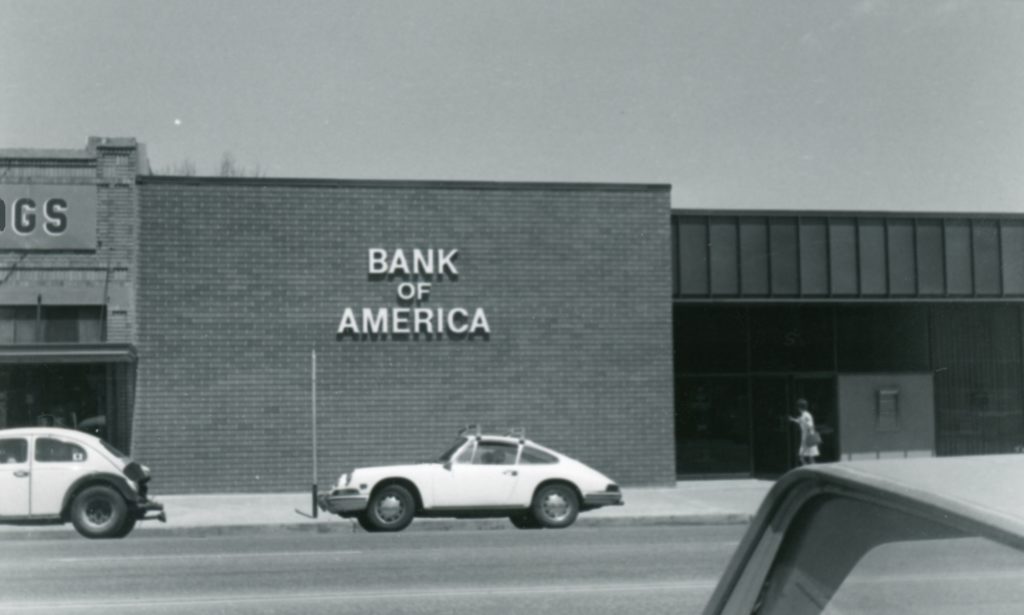
Bank of America, 1972.

The next iconic structure in Susanville to be demolished came a few years later that of the Bank of America building on the corner of Main and North Gay Streets—now a parking lot. Awhile back, some one asked me why it was torn down. To be quite honest I do not know, and structure was barely fifty years old. It was stated at the time, and it was nationwide, for a modern look.  If any one knows the particulars, please share.

The second short-lived bank building.

Its replacement, a bland building, was short-lived and demolished in 1978. It was just not functional, and a drive thru window caused problems with cars being backed up on Main Street, among other issues.

Tim

The Circus Comes to Town

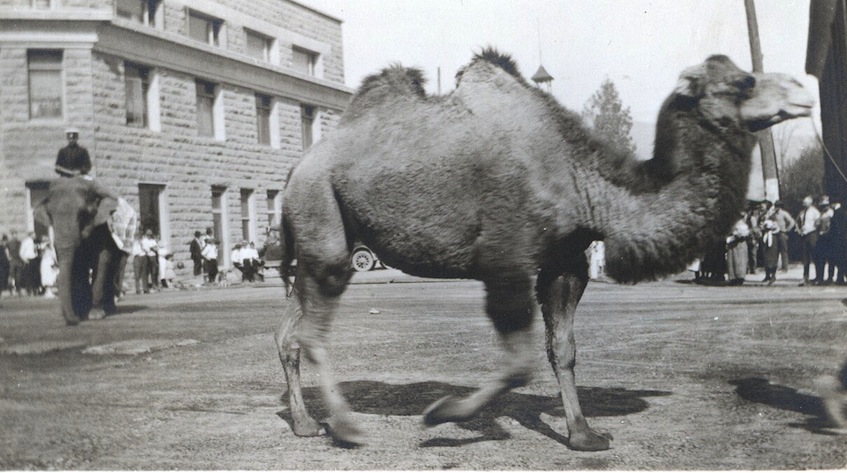
That is right, a camel at the intersection of Main and Lassen Streets. B. Dorsey Collection

In 1916, the Al G. Barnes Circus advertised that his “The Only Real Wild Animal Show on Earth! was coming to Susanville. It was announced that there would be 65 animal acts and exotic animals from around the world. The circus never arrived, as the circus train derailed near Flanigan, Nevada.

Two years later, Barnes’ circus finally did make it to town. On May 8, 1918 crowds lined Main Street for a mile-long parade with exotic animals.  At Halltown tents were set up for the performances. The only problem encountered this time was the typical erratic spring weather witnessed a few snow flurries during the day.

Never miss a story, click here and subscribe.

Tuesday Tibbit—Susanville Symphonietta Orchestra

February 15, 1935 Program

Lately, in the news is the Susanville Symphony’s proposal before the City about the acquisition of Sierra Theater for a Performing Arts Center.  While it is an ambitious undertaking, there are a few caveats—can it sustain itself?  After all, anyone who has been involved community organizations, they experience peaks and valleys, and in some instances fold, for many reasons. A common thread is that it is usually a handful of dedicated people that keeps an organization alive.

Anyhow, while the Susanville Symphony has been around for awhile, it was not the first of its kind locally. In the 1930s it was the Susanville Symphonietta Orchestra. During the 1960s and 1970s it was the Susanville Community Concert series.

Tim

A Lassen Park Lost Mine Story

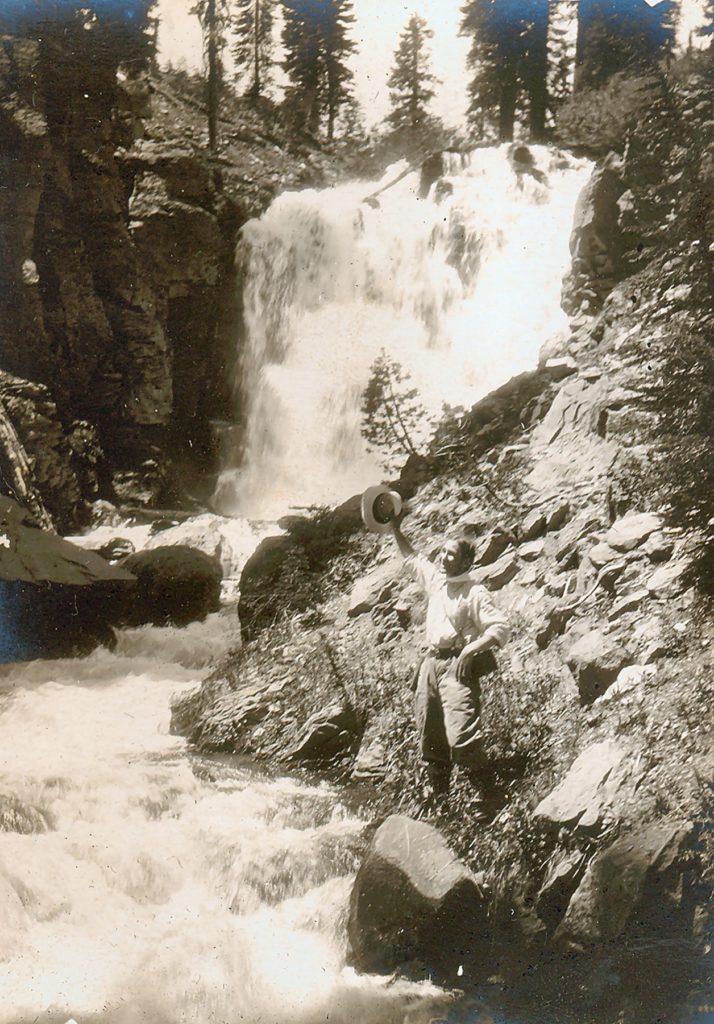
Kings Creek Falls, 1908–Sifford Collection

The American West is littered with lost gold mine stories. The Lassen Peak area was of no exception. In the early 1900s, Tom Ravenscroft had a ranch ten miles east of Susanville, and occasionally took in travelers. On one occasion a stranger stopped in and became ill during his stay. The Ravenscrofts nursed him, but to no avail; he died there. The stranger told Ravenscroft of a gold mine he had discovered in Kings Creek Valley, near Lassen Peak. There he made a dugout on the side of the mountain where he found the gold.  He extracted two or three sacks of ore that he sent to Salt Lake City to be assayed. To his amazement, it yielded nearly $300. When he left Kings Creek, he stored his rifle, cooking utensils and so on in the prospecting hole. He covered it with rock to make it look as natural as possible.

The following summer, Ravenscroft attempted to locate the mine. He stopped at Drakesbad to talk with Alex Sifford about various
localities. For some time Ravenscroft was elusive about what he
sought. He finally told Sifford the story, and Sifford was much more
responsive to Ravenscroft’s questions. Ravenscroft was intimidated by aspects of the region where it would be necessary to search to locate the mine, and he gave up.

Halls Flat CCC Camp. Courtesy of Hank Martinez

In the 1930s came a new breed of prospectors with the establishment of Civilian Conservation Corps Camps. In the summer of 1933, Frank Boghich, who worked at the Halls Flat CCC Camp east of the park, believed in the lost cabin mine legend. It was his contention that somewhere inside the park was a cache of a half million dollars worth of gold nuggets to be found, and he spent his free time in search of it.

Tim