Category Archives: History

Elk’s Lodge – A Land Title Story

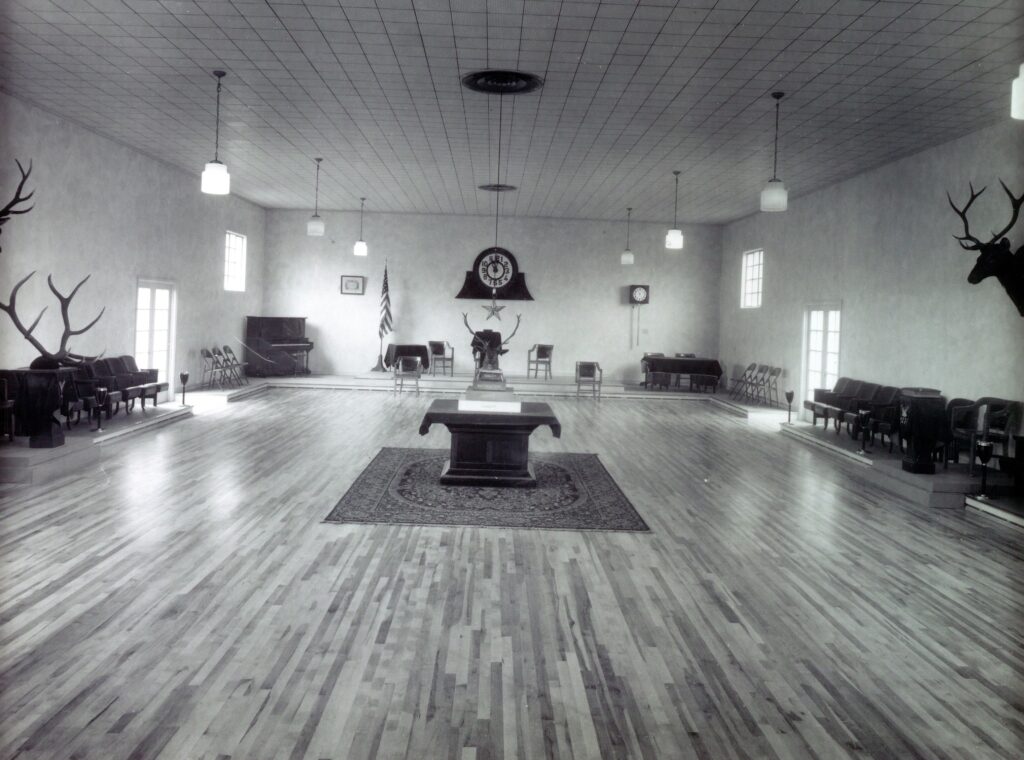
Susanville’s Elks Lodge Hall, 1948

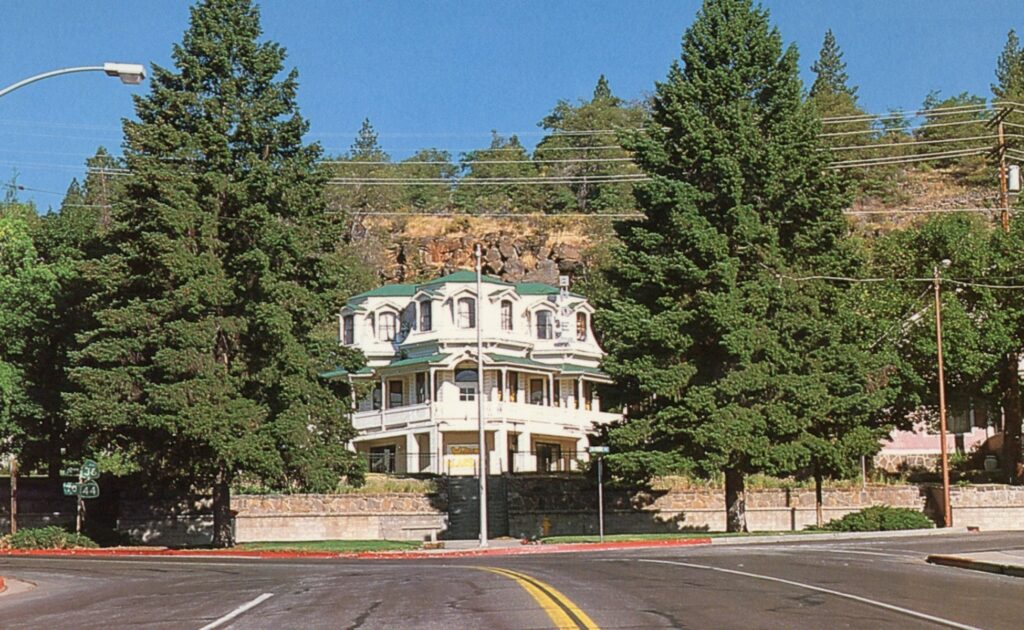
Fratneral organizations once social fabric of many communities, both large and small have been waning. In Susanville, it came as shock to many residents that iconic Elks Lodge that has graced the west end of Susanville will be up for sale. A dwindling membership, maintenance costs  among other things  is cited for cause.

Elks Lodge, Susanville, 1952

Way before the Elks organization, initial property ownership of this prime property is rather vague. It also happens, record wise, the earliest land transaction of Chinese in Lassen County.  On September 14, 1864  Chew Henry sold this lot in Susanville to fellow countryman Hoa for $266. How Chew Henry acquired it, is not known. Ditto, how Hoa disposed it.. In November 1865, Shong Lee sold it to Isaac Roop for $150. Eventually, Sarah Hosselkus bought the property. On March 22, 1884 she sold the lot J.G. Leonard for $450. Leonard in turn commissioned the structure that we know of Elks Lodge today.

Tim
 

An Open NCO Railroad Question

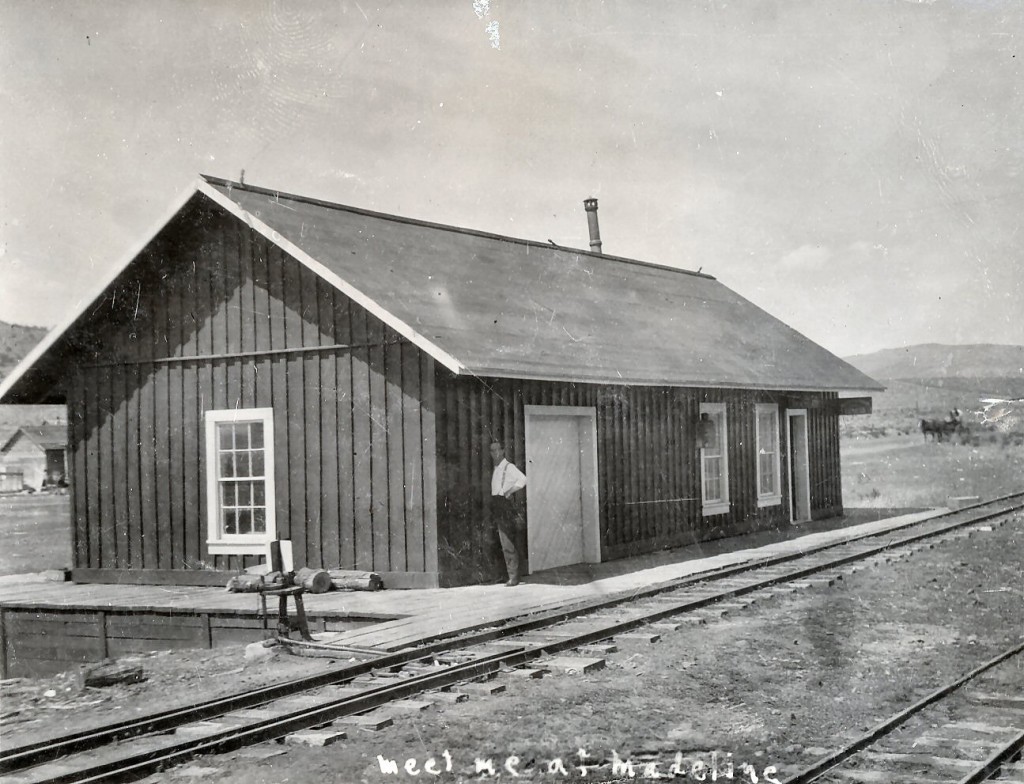
Madeline Depot
NCO Depot, Madeline 1910-Carole Dustrin

For those stuck in the winter doldrums I have a nagging question on my mind. When was the laat NCO train to depart from Wendel?  In 1925, the Southern Pacific acquired the NCO. In July 1927 that company began the standard gauging the NCO at Wendel.

It should be noted that in the summer of 1917 the NCO sold its southern portion of its line, a 64 mile segment, from Rayl (Herlong) to Reno. On January 30, 1918, the last NCO train to depart  from Reno occurred. In 1922, the NCO was granted to abandon sixteen miles between Rayl now known as Hackstaff  to Wendel. The last train on that segment happened on October 31, 1922. Why were these two events well documented, but not Wendel?

Tim

Barbershop’s of Yore

Pioneer Barber Shop, 1903. Sam Dotson, barber standing, seated in the chair is George Armstrong. Others left to right Harry Williams owner of the Pioneer, Jake Cohn, Dr. William E.Dozier, Fred Kingsbury and Frank Lane, bartender at the Pioneer—Joe Moelter

Times do change. Take the old fashion men’s barbershop of yesteryear. Today, in Susanville this type of institution no longer exists, the last one being Fred’s Barbershop in 2017(?). It is interesting to note, that these barbershops were located near a saloon. Maybe that was coincidental, since there were lots of bars back then, and locally they, too, have gone by the wayside.

Tim


Roxie Peconum, A Maidu Matriarch

Roxie Peconum, 1954

The Peconom family is one of the better known Maidu families. If you noticed that I highlighted the name in bold, there is a reason. The family name has been misspelled for years with a um instead of the proper om. Of course, the name spelling was brought to light, during the proposed name change  of the first branch of Willard Creek to Roxie Peconum Creek to commemorate Roxie Yoanna Peconum (1851-1958), well-known member of the Maidu tribe, who gathered roots and berries in the region.  However, some thought the name should be for the Peconom family, and not an individual family member. If it was to be the latter, the name should be Yoanna Creek for Roxie. Whatever the case may be, on February 11, 1993  U.S. Board of Geographic Names approved the name change to Roxie Peconum Creek.

Subscribe!

A Prattville Deed Restriction

Prattville, 1908–Sue Pratt

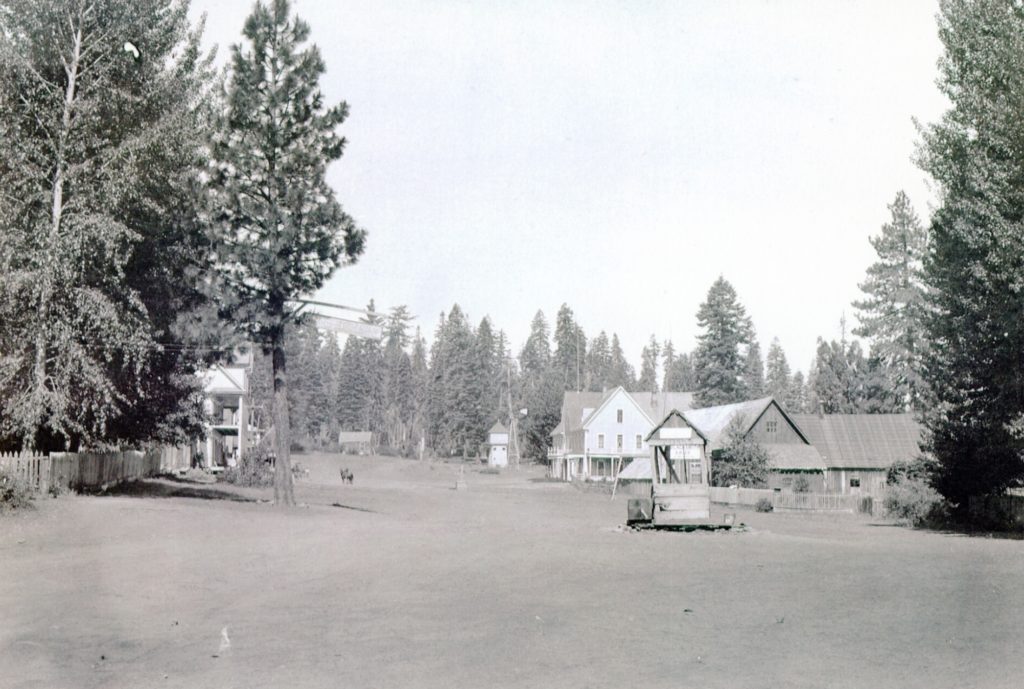
Prattville, for those who just tuned in was town in Plumas County, in what is now Lake Almanot. In 1914, the last remnants of it was wiped out in preparation to flood Big Meadows to create Lake Almanor.

In the early 1900s, deed restrictions were common practice . Common restrictions would prohibit the sale property based ethnicity, such Chinese and /or consumption/manufacture alcohol. On June 11, 1875 David Boyer purchased a lot in Prattville from the Pratt family. The deed stated: “to have and to hold the same one as it is used for mercantile or mechanical business or for dwelling house or lawful or legitimate purpose, except hotel, restaurant, boarding house of house of ill fame.” Since the Pratt family operated a hotel there, this would eliminate competition. Boyer would operate a saloon. By the end of year, Boyer sold out and moved to Susanville.

Tim

Those January Snowstorms

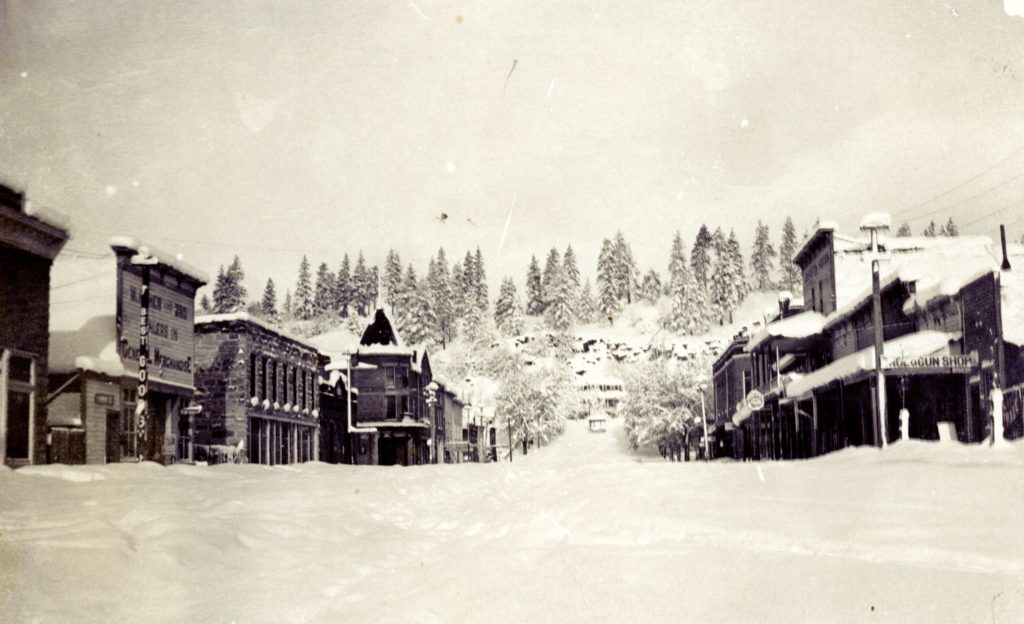
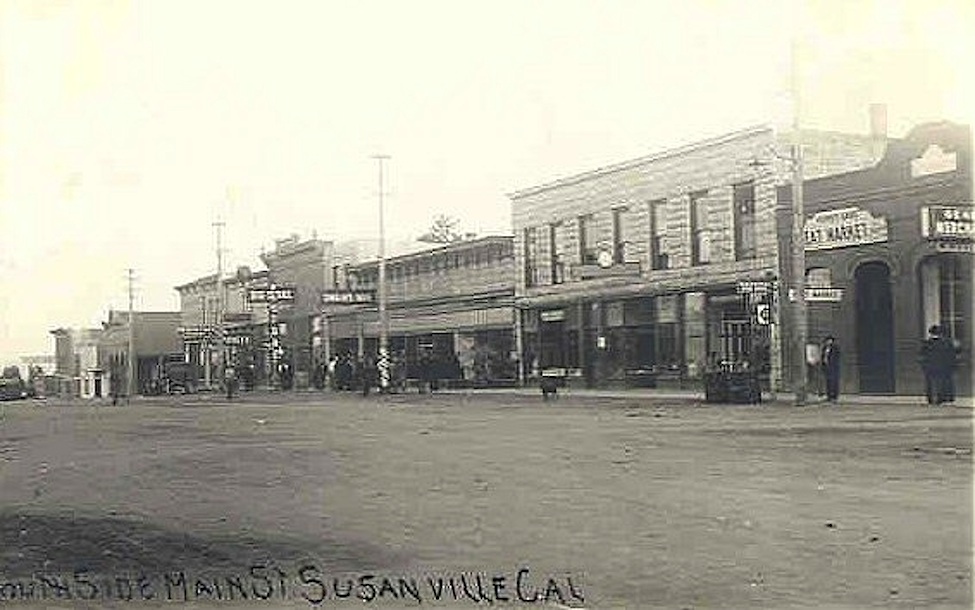
Main Street, Susanville, January, 1907

Typically, the largest snowstorms in this region occur in the month of January.  It was January 1914 that proved to be a record breaker with 93 inches of snowfall that month. It also happen to be a rainy month with  9 inches of rain. In all, the total precipitation for the month was 18.17 inches.

The weather conditions was problematic for the completion of the Fernley & Lassen Railroad to Westwood. Due to the weather whiplash of rain and snow, the soil became saturated and prone mud slides in the Susan River Canyon. Railroad officials, of course, had a lot to worry about, as the construction with the Red River Lumber Company had a completion date to Westwood by. March 1.

In a related railroad matter was the NCO train delays due to frequent wash outs of the track. The US Postal Service had a  contact with the NCO to deliver mail originating from the East. Since the NCO had a poor delivery record of the mail, the Postal Service  by mid-February ordered all mail would be re-routed via the Fernley & Lassen. Many residents of the Honey Lake Valley rejoiced after this announcement, as regular mail delivery would be six days week.

Tim

P.S. – It should noted the other spectrum, there would be dry Januarys in which no snowfall occurred that month. I do know from records searched those rare years occurred in 1893 and 1912. The latter was so mild that baseball games were routinely held.

Fruit Growers Camp 11

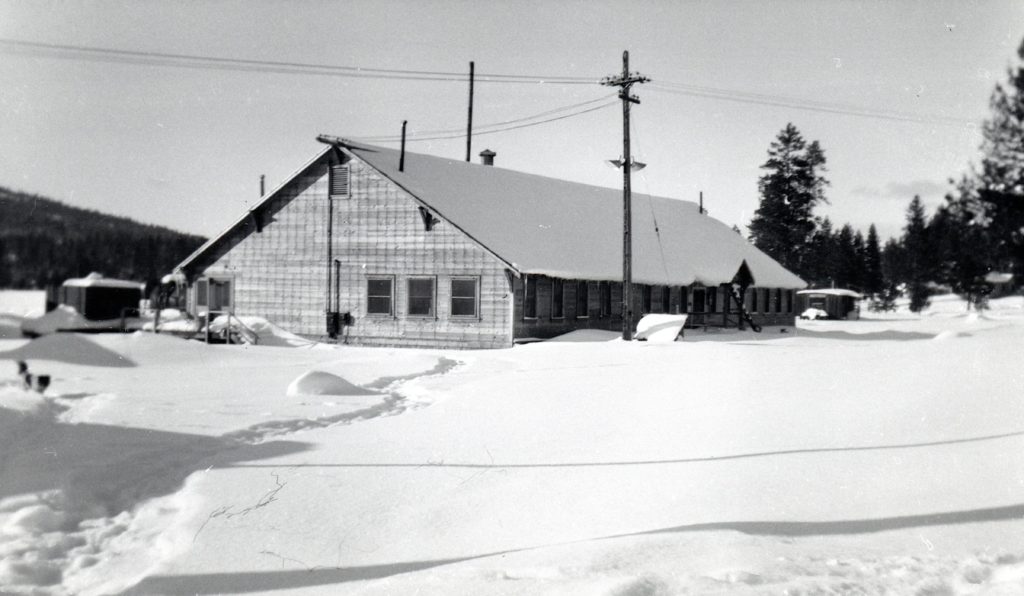
Camp 10, Cookhouse, December 15, 1950.

In 1929, Fruit Growers Supply Company consolidated all of its logging camps into one larger camp, known as Camp 10. It was located thirty-eight miles northwest of Susanville near the bank of Pine Creek. Ten years later, Fruit Growers considered leaving Camp 10 to establish Camp 11 on the east end of Champs Flat, about ten miles northeast. In the spring of 1940 that plan was put on hold.

In the early 1940s, Fruit Growers was awaiting a very important government decision on the Wage and Hour Law–whether or not an employee would be paid for travel time to the actual work site. Travel time between Camp 10 and the logging site was 1 to 1 1/2 hours each day. If the government mandated paid travel time, Camp 11 would be established, but not necessarily at Champs Flat. It would not be until 1948 when the government ruled that employees were not entitled to paid travel time, and the need for a new logging camp disappeared.

Never miss a story, click here to subscribe.

Main Street Fire, 2005

January 7, 2005

Yesterday, we explored the history of the Spalding Drug Company. When Spalding Drug closed it went through various ownerships and occupants. Looks can be deceiving, yet the building straddles separate property lots. Long time residents will recall that the former Spalding Drug was replaced with The Bootery. On east side, the smaller parcel was occupied by The Smart Shop.

Anyhow, its hard to believe how time quickly marches on. It was on this date, twenty years ago, that this building was destroyed by fire. It could have devastating for me. I had moved out of the second floor  of the building only seven months before the fire. My photographic archives were stored there.

Today, it still remains a vacant lot. There have been proposals, even at least to turn it green space, but as I understand it, the property owners are unwilling to sale.

Tim

Spalding Drug Company

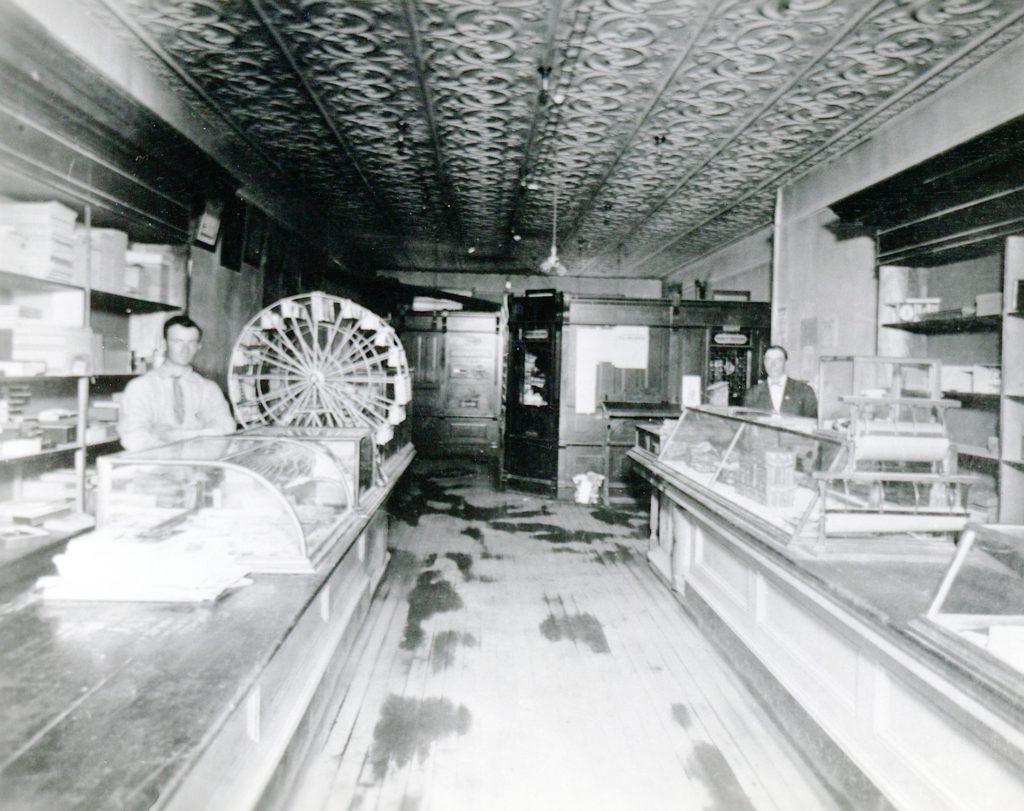
Interior of Spalding Drug, circa 1910. Courtesy of George McDow Jr.

Seasoned residents of the area will have fond memories of a one time iconic local institution the Spalding Drug Company. .It was established in 1865, by Zetus N. Spalding and his brother-in-law, A.C.Neale. Spalding was the pharmacist and Neale tended store and its customers.  The partnership did not last long and two years Spalding bought out Neale. In 1886, Spalding formed another partnership with his son, John Bridger Spalding who was only 19 years old.  In the 1890s, John B. to give the business a more cosmopolitan flair, he renamed it the City Pharmacy. In 1898, Zetus Spalding died an accidental drowning while fishing the Susan River. John B. restored name to the Spalding Drug Company.

South Side, 700 Block, Main Street, Susanville, 1913. The Williams/Spalding building is second from the right.

In 1906, J.B. Williams commenced work on a native stone building for his jewelry business. Spalding by coincidence was Williams neighbor. Spalding became intrigued and joined forces with Williams for construction of two-story native stone building to house both of their respective businesses.

Among other changes was in 1912,  when Spalding entered into partnership with his son, Wright and E.E. Bourne. In 1930, the Spaldings bought out Bourne. John B. Spalding passed away in 1934 and then store his operated by Wright’s family-his wife Ruth and son John. In 1967, the Spalding Drug Company closed its doors after a century in business. 

This, of course, is a brief outline. For an example, many will have fond memories of the soda fountain.

 Subscribe

A Susanville Triangle Update

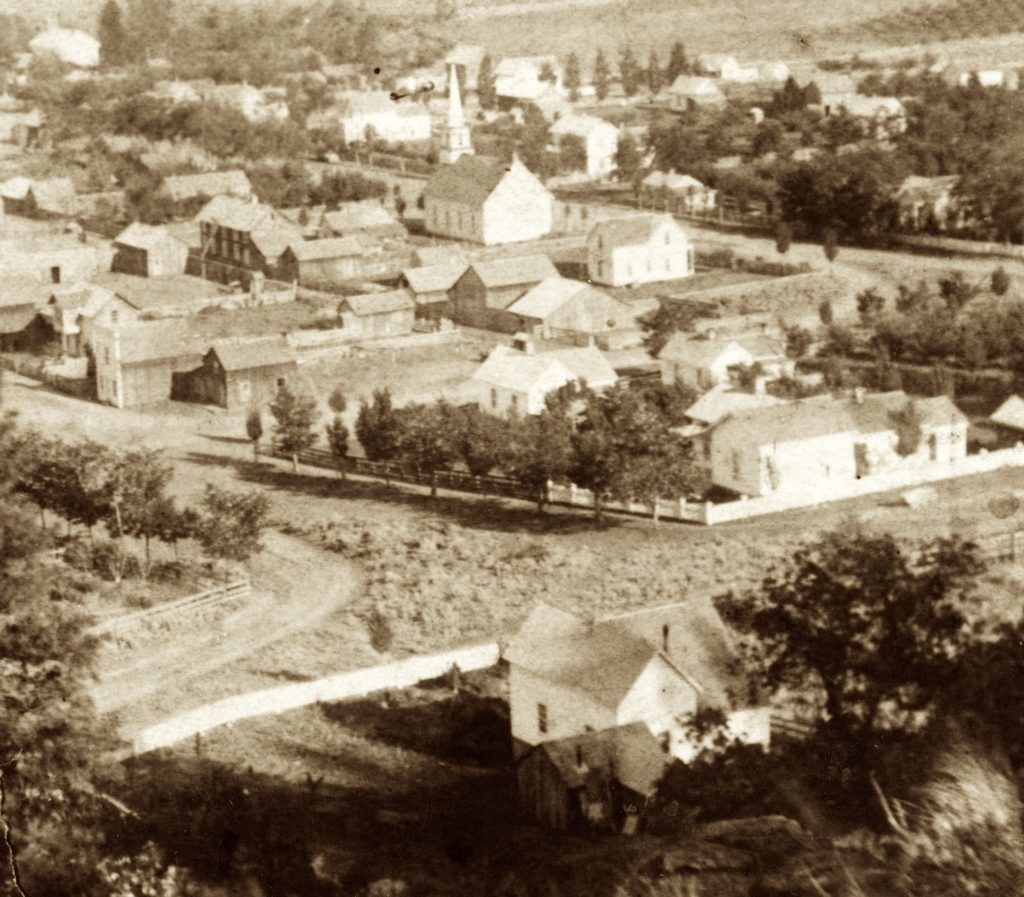
An 1886 view. Courtesy of Bud Lesser

I have addressed this unique property on the west end of Susanville’s Main Street, just below the Elk’s Lodge. While reviewing the Lassen Advocate of May 22, 1914, I came across this tidbit:

“J.A. Adams is circulating a petition for making of what he calls a ‘park’ at the head of Main Street in front of the J. Henry Swain’s residence, where the wagon-ways branch to north and west. A bit of landscape gardening in the triangle at that point might prove to be attractive, but those who remember the old bandstand abuses of twenty or more years ago, will doubt the merit of the proposal, as the town  can not afford to hire  a caretaker at present.”

A 1984 view—Matt Mattinson

Tim