Category Archives: History

Folsom Ranch Thanksgiving

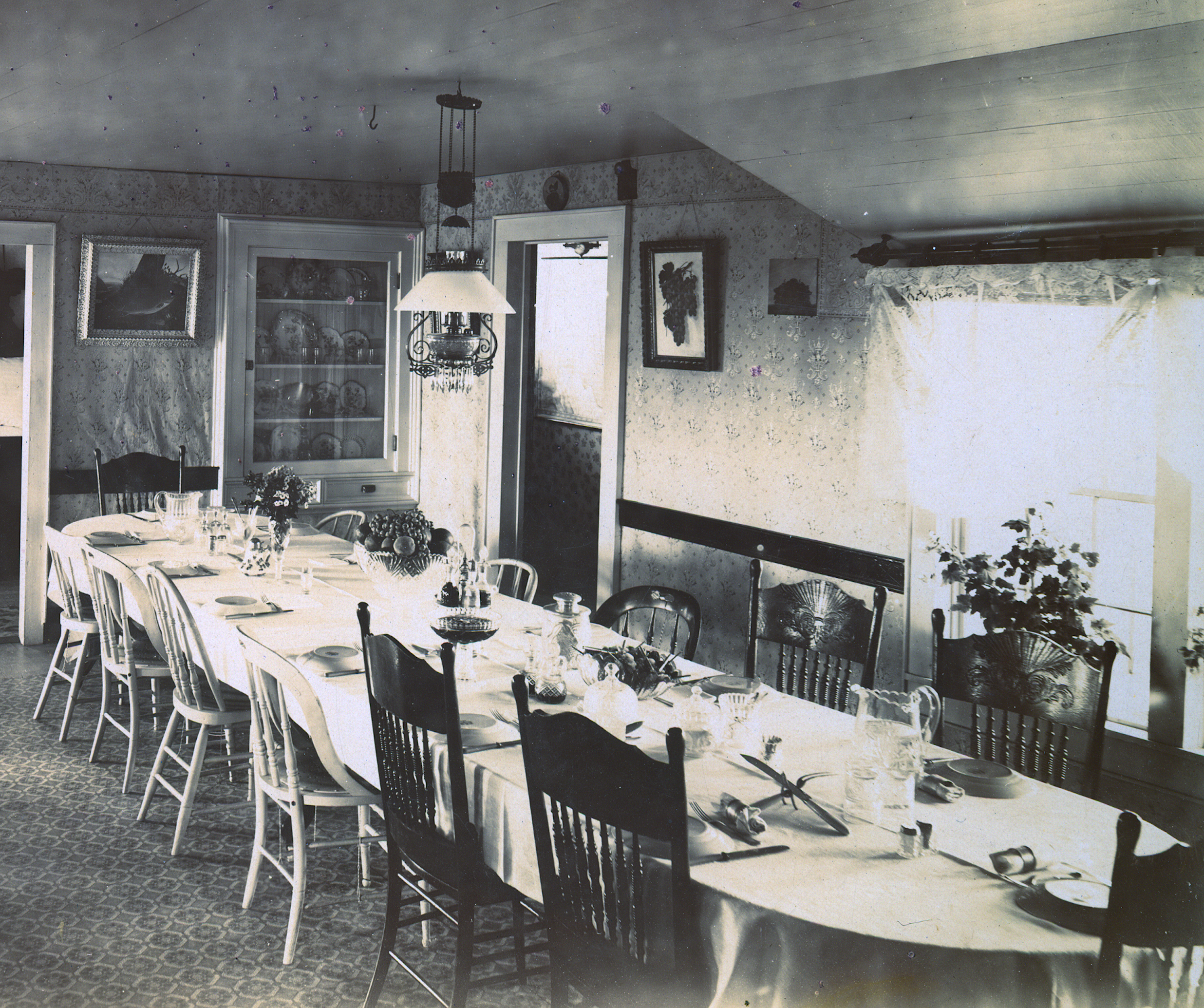
Dining Room, Folsom Ranch, Willow Creek Valley, circa 1900. Courtesy of Mary Dale Folsom

The Folsom Ranch is known to many with a number of names, which determines your age and/or relationship with the property. Folsom sold it to Thomas Hill and retired to Susanville on Mill Street, whose home graces the 2016 Lassen High Alumni Calendar. Hill sold to Walsh, who in turn sold to Barron and now it is the Willow Creek Wildlife Unit of the California Department of Fish & Game.

If you are a part of a family gathering today, you may want to do your own Thankslistening. It provides a perfect opportunity to not only ask the older generation questions, but to document it, too.  One can not take it for granted, they will be there for the next Thanksgiving.

Finally, I am so thankful to my wonderful friends for everything they have done for me during my time of crisis of the broken hip and recovery.
Never miss a story, Subscribe.

Lassen County – Johnstonville Updated

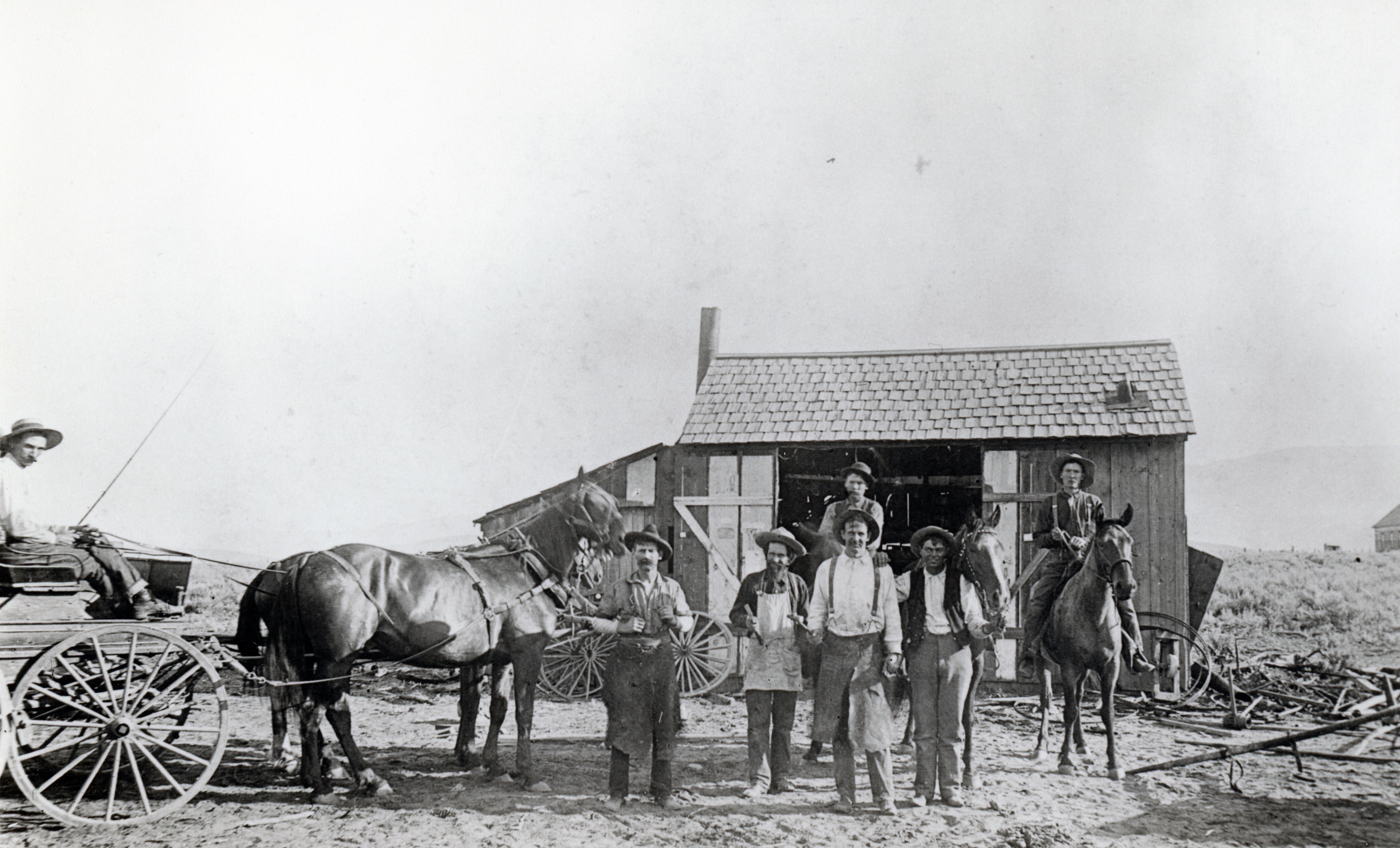
Johnstonville Blacksmith Shop
Johnstonville Blacksmith Shop, circa 1900. On the wagon, George Wright. Standing (Left to Right) Aaron “Dad” Hooks, owner of the blacksmith shop, Frank Elledge, Booth Elledge, and the others not identified.

In the early 1860s, it was called Toadtown. According to Farris & Smith (1882): “Tradition hath it that in the early settlement of the valley, whenever a heavy rain-storm was experienced, the ground was literally covered with diminutive toads.” Lisle Lester, a noted journalist, wrote in 1865:Toadtown is a mere bit of a hamlet, on the Susan River, notable for its name. I wondered why it was called Toadtown? Roseville would have been more appropriate for the banks of the river was fairly bordered with wild roses.” Johnstonville was named for Robert Johnston (1826-1898) who, in 1859, along with his brother-in-law, Eber G. Bangham, traded a cow and calf to William Dow for his property there. On December 7, 1864, the Lassen County Board of Supervisors ordered the Toadtown Voting Precinct be changed to Johnstonville.

The Johnstonville School was originally known as Susan River and that name was not changed until 1878. For a period time there was the Johnstonville Post Office that operated from 1902-1943.

It is never too late, subscribe today and enjoy tomorrow with daily notifications. You can also surprise someone with a gift subscription

Amedee School, Part I

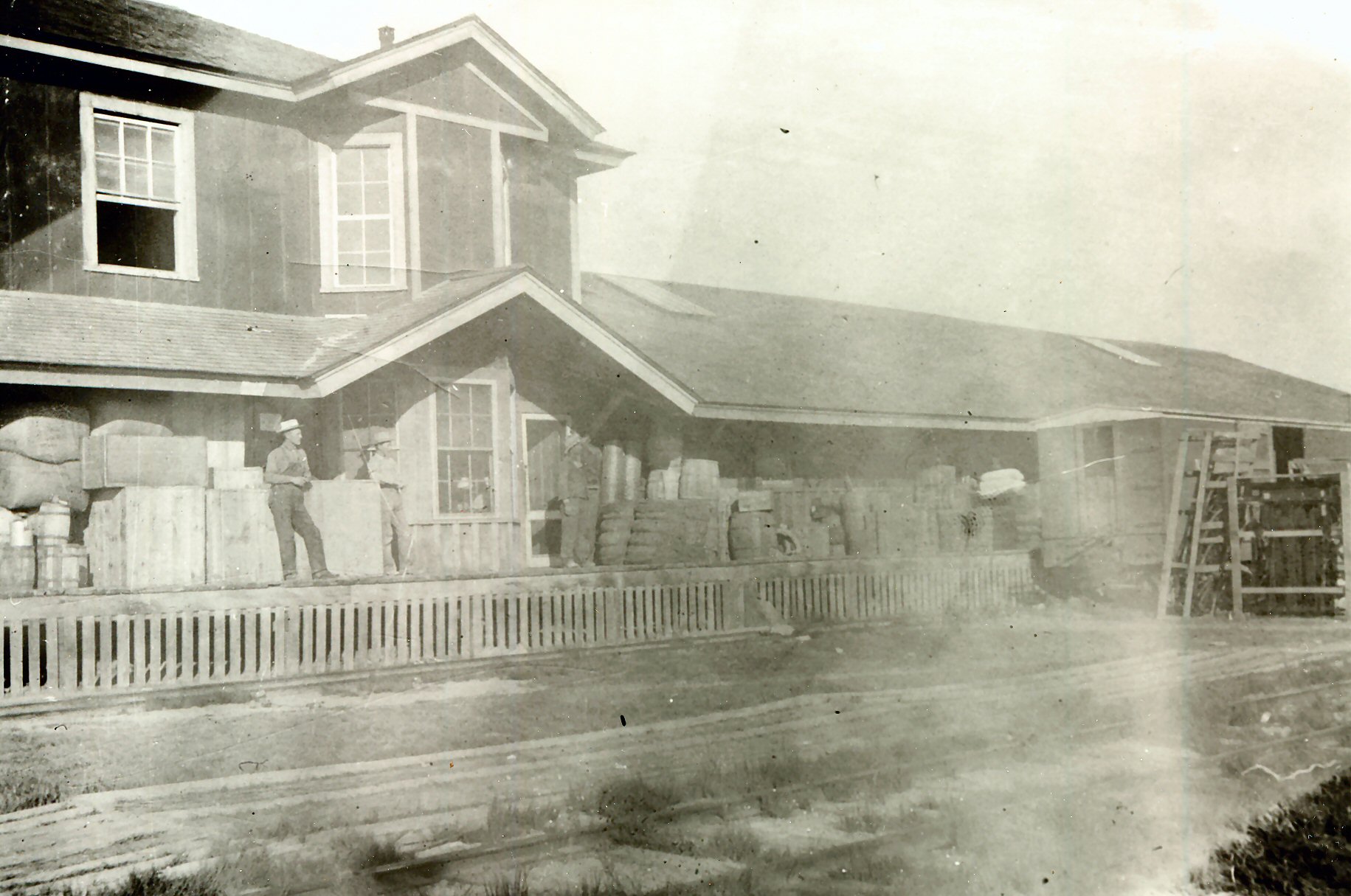
NCO Depot, Amedee, 1899.

In the spring of 1892, residents of Amedee petitioned the Lassen County Board of Supervisors to establish a school. The Board denied it. Not to be defeated, the residents opened a private school in September with an enrollment of eighteen students. The residents again petitioned the Board to approve a new district. The Board granted it on January 27,1893, and appointed L.W. Brubeck, E.C. Brown and C.D. Hemmenger as trustees. Continue reading Amedee School, Part I

Hilt, California

Hilt, California, 1972. Courtesy of Fruit Growers Supply Company

This lumber community, now gone, played an important role in Lassen County’s history. Hilt, Siskiyou County, California was located near the Oregon border. In 1907, two events occurred that had a profound impact on that community. The Northern California Lumber Company and the Fruit Growers Supply Company were both formed that year. Fruit Growers it should be noted was a purchasing co-operative of the citrus growers, and still is today. In this period, all citrus and vegetables were shipped in wooden boxes. Shortly after the Northern California Lumber Company was formed they purchased the Hilt Sugar Pine Company.  Continue reading Hilt, California

Robert J. Scott

Milford Si

In May 10, 1856 R.J. “Bob” Scott settled on what would become Milford. Two months later, Scott with several others participated on the first recorded boating on Honey Lake that claimed two lives.

The following year, Scott sold his claim to Peter Lassen, and took up another claim adjoining it. This transaction would cause confusion in 1859 after Lassen’s death. Thomas Fairchild and Fred Washburn mistakenly purchased it from Lassen’s Estate, which they thought they were buying Lassen’s original ranch, south of Susanville.

Just as the discovery of gold brought an influx of prospectors to the Honey Lake Valley, discoveries elsewhere, like a pendulum swings, created an exodus when gold was found elsewhere. In July 1858, Scott and with a number of Honey Lakers rushed to the gold mines of Fraser River in British Columbia. Scott never made it there. According to Fairfield’s History (1916) he states that fellow Honey Laker Matthew Craft killed Scott enroute. Fairfield does not elaborate. An examination of the Marysville Daily Appeal, which provided good coverage of Honey Lake news did not report it, or I could have missed it. One never knows when new material surfaces.

It should be noted that a majority of the Honey Lakers returned from Fraser River, no richer than when they left. It is interesting to note one of the big mines discovered there in 1859 was named the Neversweat.

Never miss a story, Subscribe.

Champs Flat – Lassen County

Champs Flat, 1984
Champs Flat, 1984

In 1873, the Champlin Brothers: George (1827-1903) and Lester (1848-1907), Tehama County stockmen, incorporated this area for summer range for sheep. George Champlin, a ‘49er, was associated with Leland Stanford, via Stanford’s attorney, Ariel Lathrop, who happened to be Stanford’s brother-in-law, with the Vina, Tehama County ranch. In May-June 1899, Champlin and his partner, John Boggs, sold their Lassen County property to Jane Lathrop Stanford for $8,000, who immediately transferred the property to the Stanford University.

Never miss a story, Subscribe.

Susanville, Oregon

Old stamp mill at Susanville, 1978. Courtesy of Tom Armstrong

Besides Susanville, California there is another Susanville, just up Highway 395 near John Day, Oregon.  However, it has seen more livelier times.

It was a mining camp dating back to the mid-1860s, though its post office was established in 1901 in a dubious manner. Its biggest claim to fame was in 1913 and the discovery of the Armstrong nugget, that weighed 80.4 ounces and was believed to the largest of its kind found in Oregon. The nugget is on display at US Bank in Baker City, Oregon. After the 1930s, prosperity there dwindled and in 1952 the post office was closed. Today, its only inhabitants are prospectors during the summer, and a few curious seekers.

Never miss a story, Subscribe.

Susanville – Riverside Hospital

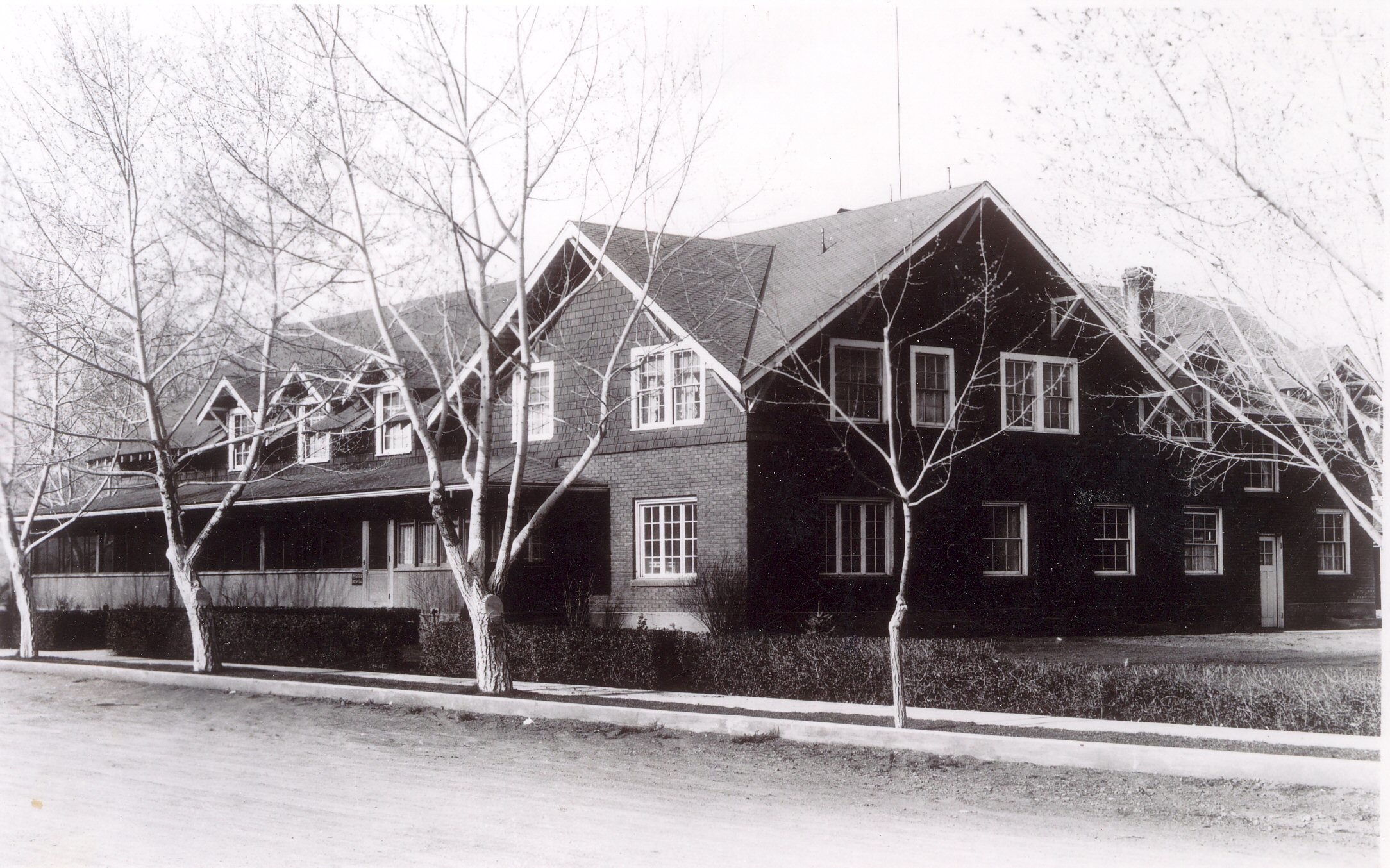
Riverside Hospital, courtesy of Betty Barry Deal

This hospital was located at 2005 River Street, Susanville. There was a time in the area’s past that there were two local institutions where one was born–Potter’s and Riverside.  My siblings were born at Potter’s, while I was born at Riverside, a few years ago. Rarely, did births occur at the Lassen County Hospital. During the 1950s, my Aunt Irene Purdy Trout worked at the latter, which they affectionally referred to as “County.” She recalled only one birth there for nearly a decade that she worked there.  That all changed in the early 1960s, when a new Lassen County Hospital was constructed next to the old one.  By that time, Ma Potter after some 30 plus years as a midwife was ready to retire and changes were on the horizon with Riverside and its aging facility in which it would be torn down in 1969.

It is never too late, subscribe today and enjoy tomorrow with daily notifications. You can also surprise someone with a gift subscription.