Category Archives: History

Pioneer Barbershop

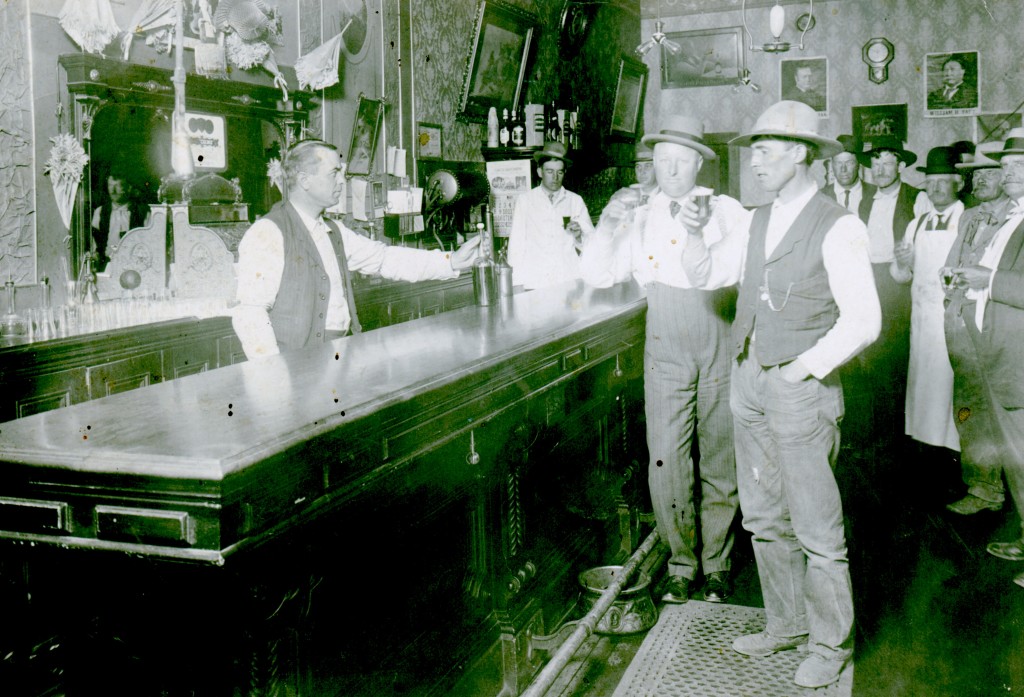
Pioneer Barber Shop 1903
The Pioneer Barbership, 1903. Pictured left to right: Harry Williams, owner of the Pioneer, Jake Cohn, Sam Dotson, barber, George Armstrong, the customer, Dr. W.E. Dozier, Fred Kingsbury and Frank Lane, bartender of the Pioneer. Courtesy of Joe Molter

For over a century a barbershop went hand-in-hand with the Pioneer Saloon.  Times change, the old fashioned barbershop is bordering upon extinction.

In Susanville, there is still Fred’s Barbershop at 20 North Lassen Street. It is a place that I not only patronize, but also stopped by from time to time to discuss the weather and any other topic that suits our fancy. Fred Borghi,  has been doing business there since October 1958, a local institution.

Never miss a story, click here.

Westwood’s Paint Job?

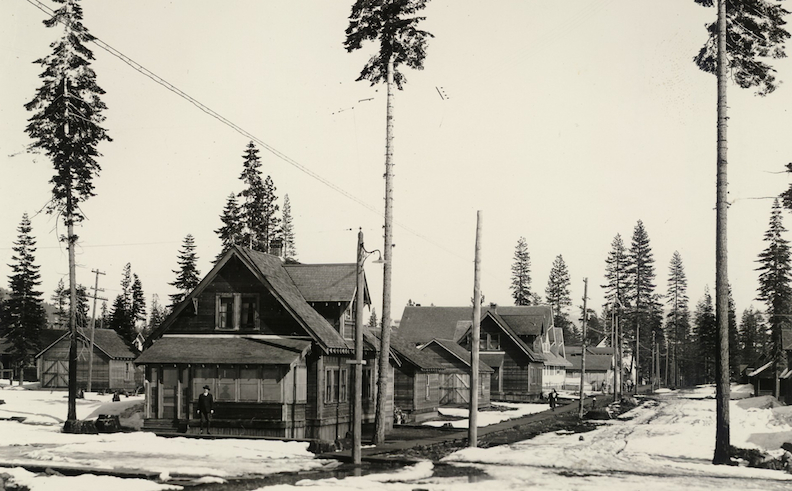
Fifth Street, Westwood, 1923

Company towns as a rule were a drab affair and Westwood was of no exception. After all paint cost money, and it was not a necessary expense.

In the 1930s, the Red River Lumber Company was in a major financial crisis.  When 1940 arrived, and not a moment to soon,  discussion of modernization of the lumber plant  was in earnest. It was not only their plans to make substantial upgrades to the plant, but the town, too. These improvements were necessary if they wanted to sell its operation, though not all family members of Red River’s Board of Directors were in agreement. However, the majority wanted to sell Westwood and get out from under it, so they were willing to figure out to make the improvements under the financial duress they were under.

The unpainted residential district did not help matters in making the place look nice for prospective buyers. It needed sprucing up. One item discussed was to paint the houses. Clinton Walker, a family board member, was against the proposal unless the rents were raised to cover the costs.

While, the concept was shot down, it was also discussed to sale the houses and lots to employees for cash, the value would be the equivalent of four years rent. There would be one deed restriction, that the houses could only be used for residential purposes. Should someone attempt a business in a home the company would have the right to repossess it.

Never miss a story click here.

Skedaddle Creek

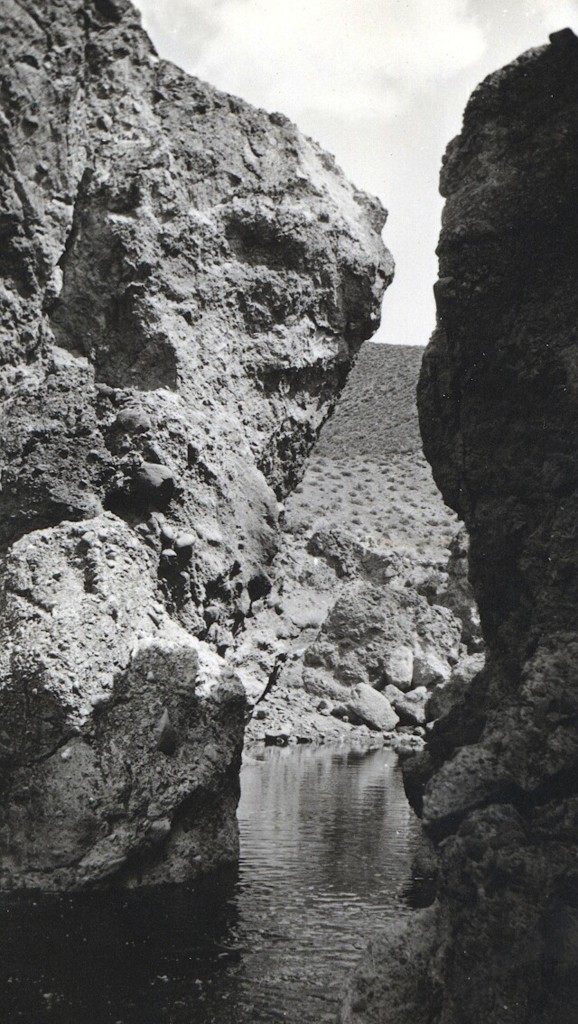
Skedaddle Creek, 1922. Carl R. Caudle Collection

This is an interesting stream which has a small drainage area of 32.1 square miles. In times of very wet years, it can be a raging to torrent. There were several proposals to dam the creek, which will be explored in a future column.

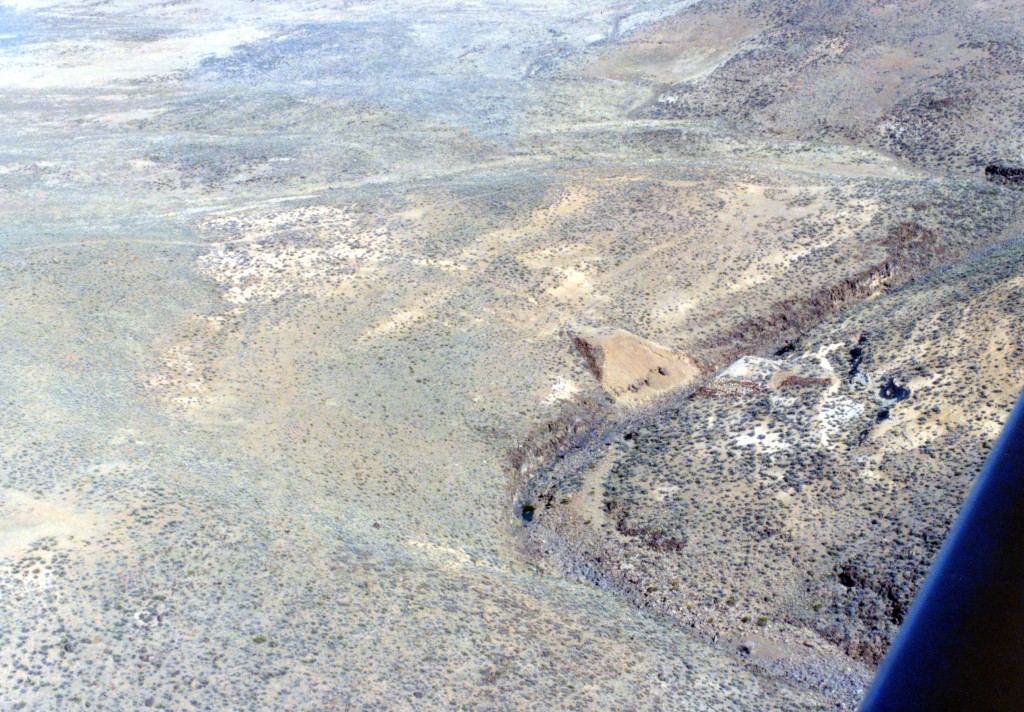
Skedaddle Dam, 1992. Courtesy of Ginger Martinez

In 1994, the abandoned Skedaddle dam found a new use. It was used as tee-off for an unusual golf tournament. The one-hole course ended at Chalk Bluffs.  This is one those tales, that needs no further details, but a good time was had by all.

Never miss a story, click here.

Lake School – Then and Now

Lake School
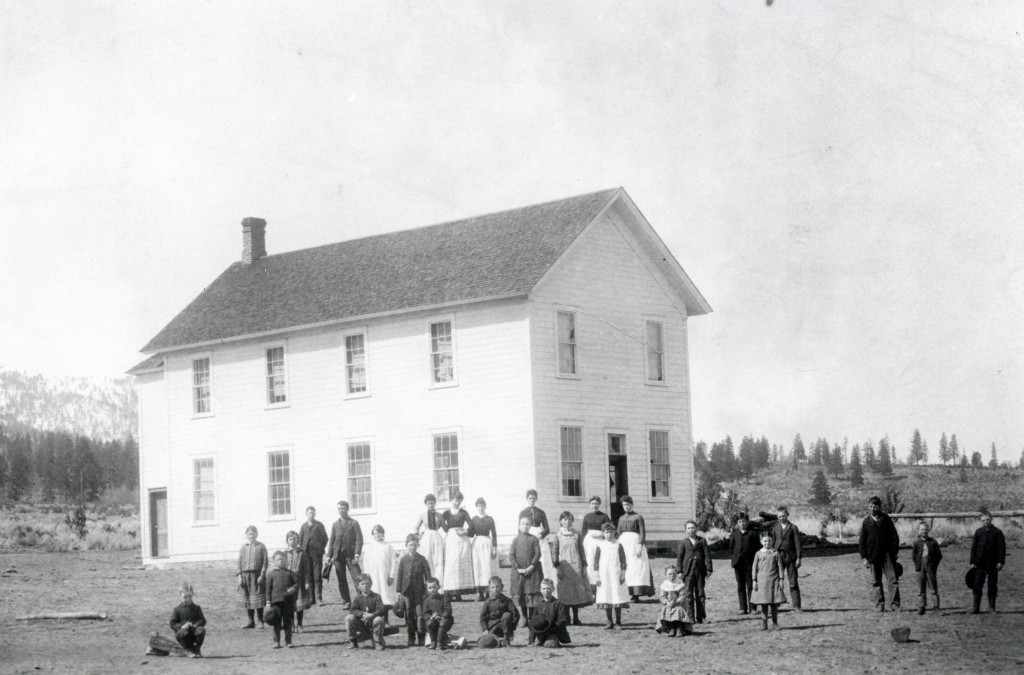
Lake School, 1886

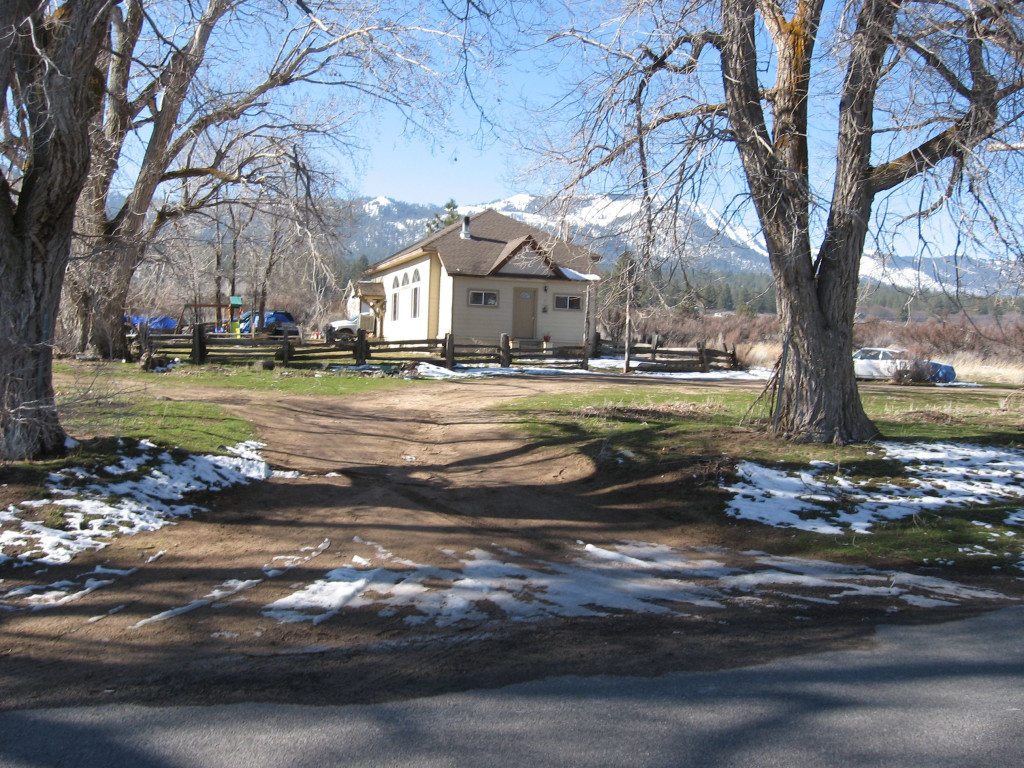
Built in 1877, the second story was used as a hall for the Independent Order of Good Templars. In 1935, Francis Wilbur, a local carpenter, was hired to remove the second story from the school. In 1971, the school closed and annexed to Janesville. In 1975, the Janesville District declared the Lake School as surplus property and it was deeded to George and Jane Bailey. The schoolhouse has since been converted into a private residence.

Lake School as a private residence, February 7, 2016.

Never miss a story click here.

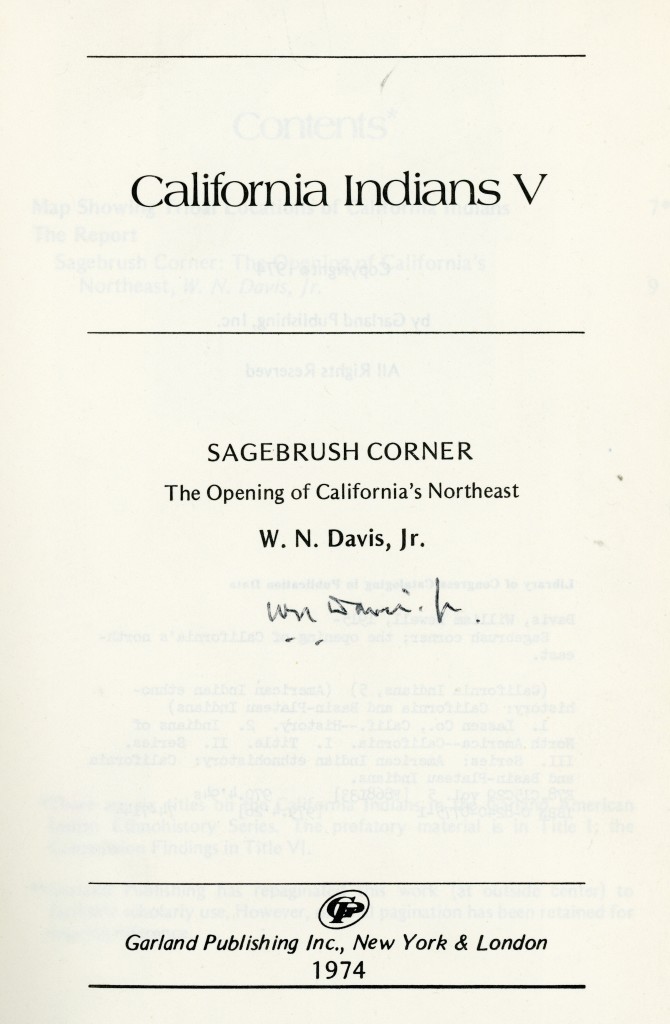
W.N. Davis, Jr.

While I am not an autograph hound, I do seek those whose work I admire.

One astute subscriber wanted to know more about Mr. Davis. Hardly, a household name around these parts, but he made major contribution to the early history of Lassen and Modoc Counties. After receiving his teaching degree in 1938, his first job was Bieber High School. He boarded with the Jack family and was fascinated by their and others accounts of the history. After all, Davis graduated from Fresno with a degree in history. During his short stay in Bieber he penned articles about the history of the region in the Big Valley Gazette, which would be the foundation for his thesis. It was published in 1974, but covered the early history of both Lassen and Modoc.

Davis would later have a long career with the California State Archives. I first met him back in the late 1970s, when he appeared in the Lassen County Clerk’s Office. The county archives stored in metal canisters, and in one instance, he pulled one out which gashed his forehead. Not an event he wanted to be remembered for, but we laughed about the incident for many years.

His research was meticulous. When he released paper that Susan River was not named for the town’s founder, but another Susan prior to Roop’s arrival—the Defenders of Roop—our version of a wackodoodle militia group similar to the recent Bundy Malheur Refuge group, were not pleased with Davis. Blasphemy they thought.

Never miss a story click here.

Susanville’s Loafer’s Society

Susanville's Gem Saloon, circa 1905. B.R. Zimmerman Collection
Susanville’s Gem Saloon, circa 1905. B.R. Zimmerman Collection

In the annals of Susanville’s history, it has witnessed a wide variety of fraternal and social organizations. One of the more unusual and short-lived was the Loafer’s Society.

Organized in 1878, the Society recruited men to sacrifice themselves for the good of the community, to consumer all the intoxicating beverages, so as to prevent others from falling prey to demon rum and other concoctions. They also distributed themselves about the entrances of churches and other public gatherings to provide examples to the young not to follow in their foot steps.

The Loafer’s Society only membership requirements were for men of good immoral character, an easy flow of profane and vulgar language and a large capacity for whiskey. They also, only met on Sundays.

Never miss a story, click here.

David Rosas

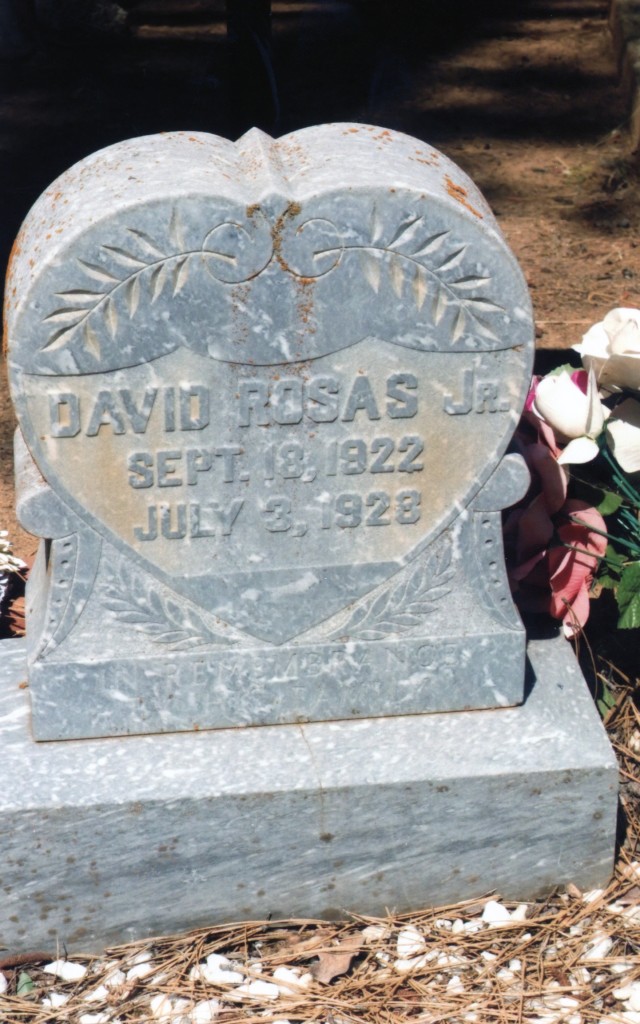
The grave of David Rosas, Westwood Cemetery, 2013.

Just as Red River Lumber Company’s large manufacturing plant, its millpond was larger than average. Actually it was huge, it had a surface area of nearly 320 acres, though some segments were not used too much, certain areas being to shallow. In contrast, McCloud’s millpond was only eight acres and Fruit Growers was 20 acres.

This odd man made lake could be hazardous to one’s health. During the early years, swimming was common, as well as fishing. Of course, small children were attracted to the water, and that is the story of seven-year-old David Rosas of Old Town. Several of his companions were playing in the water on July 4, 1928, when David ventured out too far, and the depth of the water changed dramatically. He, nor his companions knew how to swim. His friends went to get help, and when help arrived it was too late. The grieving family buried him later that day.

Never miss a story click here.

Janesville Hotel

The Janesville Hotel when it was owned by Justus R. Bailey, circa 1880.

The first hotel in Janesville was built in 1857 by Malcolm Bankhead, which was a two-story structure made of logs. In 1872, Dennis Tanner purchased it, and torn it down. He replaced it with a much substantial larger, two-story wooden frame building, that contained 22-rooms. The hotel had numerous owners over the years. In 1913, B.R. Holmes acquired it, made numerous upgrades and changed the name to the Diamond Mountain Inn. One of its most interesting owners were the Pollocks, as in the famed artist Jackson Pollock. The hotel was destroyed by fire in 1931.

Never miss a story, click here.

Lassen Mail and the Cook era

Cook RM398

In case you missed the first installment, you can find it here. The newspaper had two eras—the Tremain and Cooks. On March 16, 1911, Fred C. Sefton purchased the Lassen Weekly Mail from J.M. Tremain for $3,000 and the transition was in earnest. Sefton’s news coverage was far superior than Tremain.

A fire, too, again shaped the newspaper. On October 9, 1911 the printing office of the Lassen Weekly Mail was destroyed by fire. Sefton moved to a new location on South Gay Street in the rear of the Bank of Lassen County building, where it remained until 1934.  But that was not the only change on the horizon. In June 1913, Robert M. Cook purchased the newspaper. Cook, who was also attorney, worked in the newspaper trade in Philadelphia. But what he desired the most was to own a small town newspaper, and headed to San Francisco as a base for his quest.

It was a family affair operation, as his wife, Katherine and their two sons, Kenneth and Don were involved in the newspaper one way or another.  In 1918, a women’s page was added, with Katherine in charge of that department. In 1922, “Weekly” was dropped from the masthead, and now the paper simply known as the Lassen Mail.

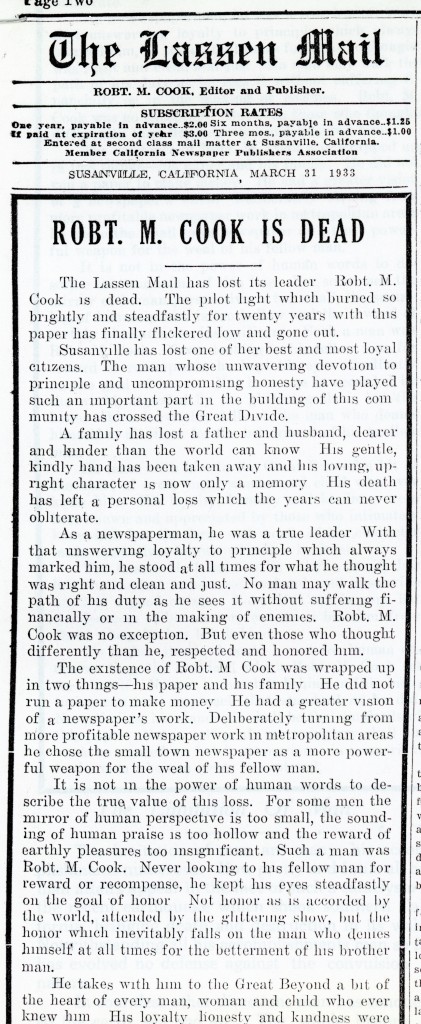
The good times would only last so long. On March 30, 1933, Robert M. Cook passed away after a couple of years of health issues. There was no question he was the guiding force behind the paper.  A year later the family leased the newspaper to D.J. Makepeace. The newspaper struggled and in the spring of 1937, Ross Draper publisher of the Lassen Advocate acquired it. Draper continued with Mail, until December 1938. At that time it was merged to be the Lassen Advocate-Mail. When 1940 arrived, the Mail was dropped from the title.

Never miss a story click, here and support this site.


Book of the Month – Sacred Heart Church

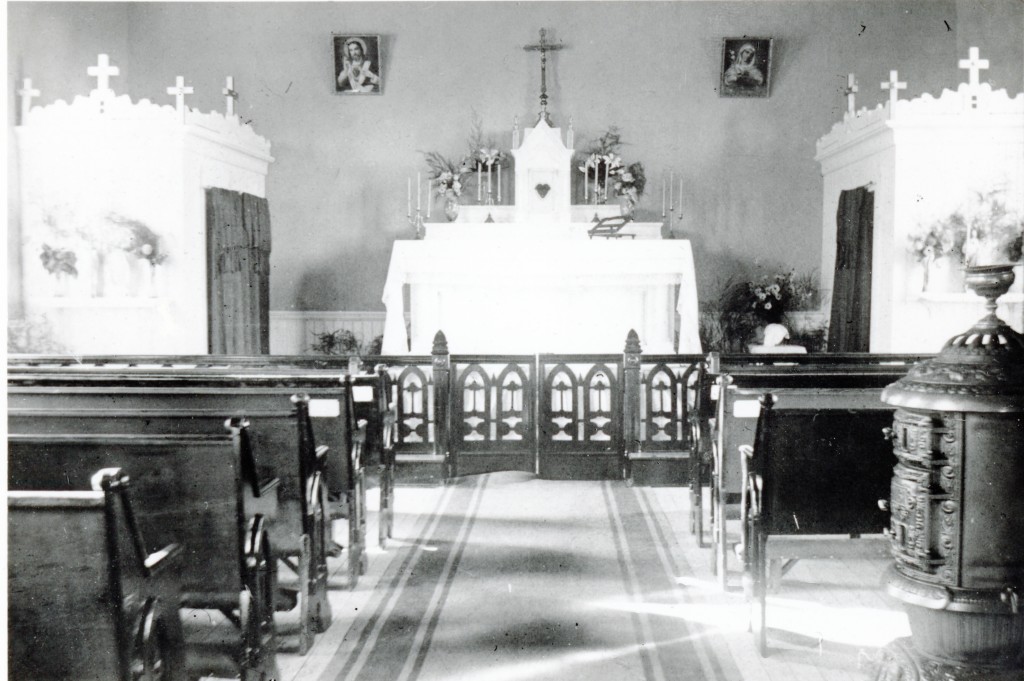
The original altar at Sacred Heart, circa 1910. Courtesy of Milton Mallery

Last month I inaugurated  a book-of-the-month, that featured Sagebrush Reflections. After all proceeds from book sales not only help support operations, but help finance future publications.

As Easter Sunday falls on March 27, I thought it is only fitting to feature my history of Susanville’s Sacred Heart Church.  While the work examines the church’s humble beginnings with the first Mass held in 1869, to when the parish was established in 1912. Yet interspersed along the way are many tidbits, how the church grew with the community. Take for instance the year the parish was formed, the growth was so rampant in Susanville that more commercial and residential buildings were constructed that year,  that in all the combined previous 15 years! Did you know that the church’s St. Patrick’s dinner is the oldest continuous event in the history of Susanville and 2016 marks its 99th!  All of this and more at a bargain price of $10.00. Order here.

Never miss a story, click here.