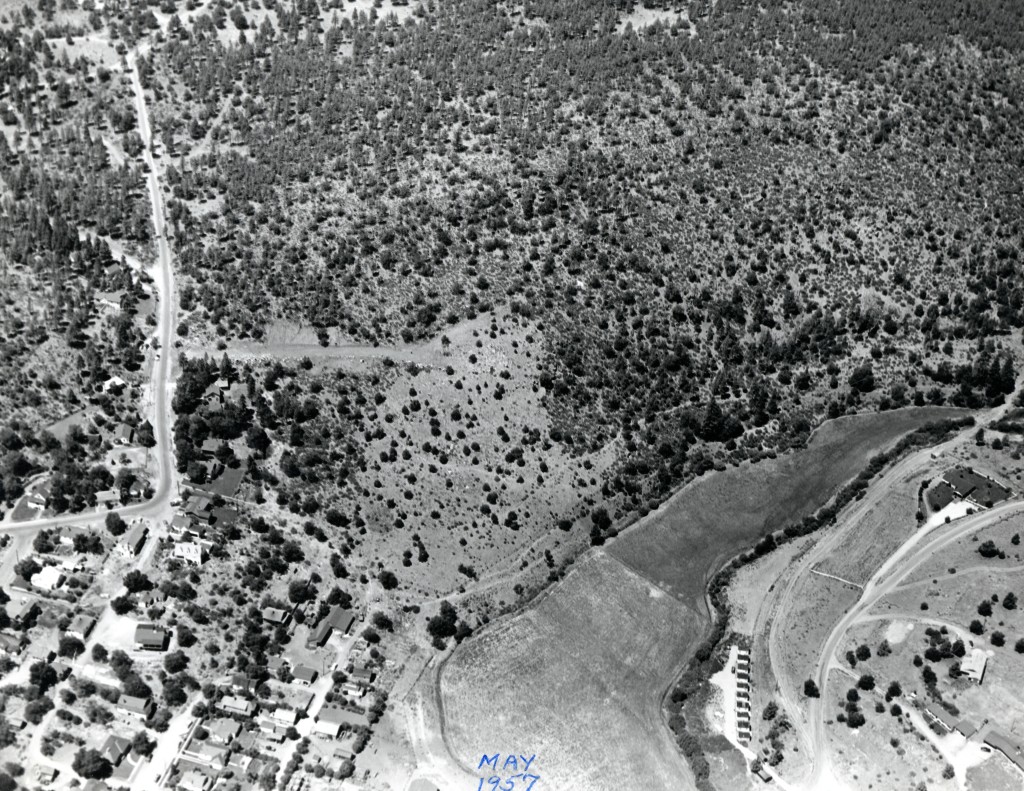
With the pending arrival of the railroad to Susanville in 1912, it started a frenzy of housing subdivisions. The first was Hill Long’s Long Addition. It was unique in many ways, it being one of the smallest and at that it was located inside the city limits. Continue reading Susanville’s Long’s Addition→
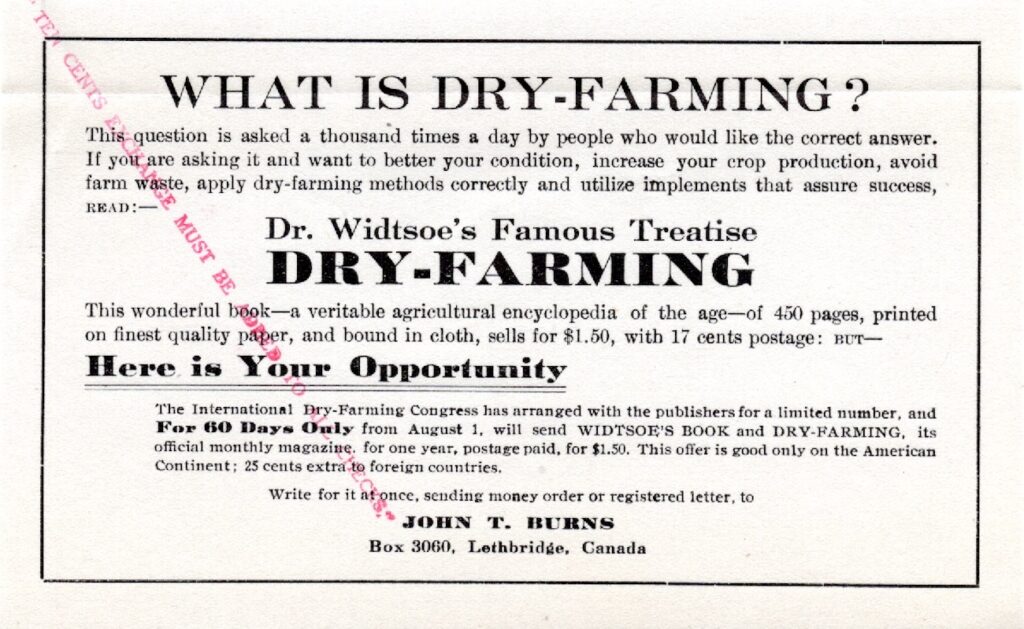
Dry farming had its origins in the Great Plains since many locales receive from eight to eighteen inches of precipitation annually. The movement grew and spread to the Aird regions of the American West. For land promoters Northeastern California provided a lucrative market for exploitation. Eastern Lassen County with abundant public land available to homesteaders, and proposed irrigation project was an ideal setting.
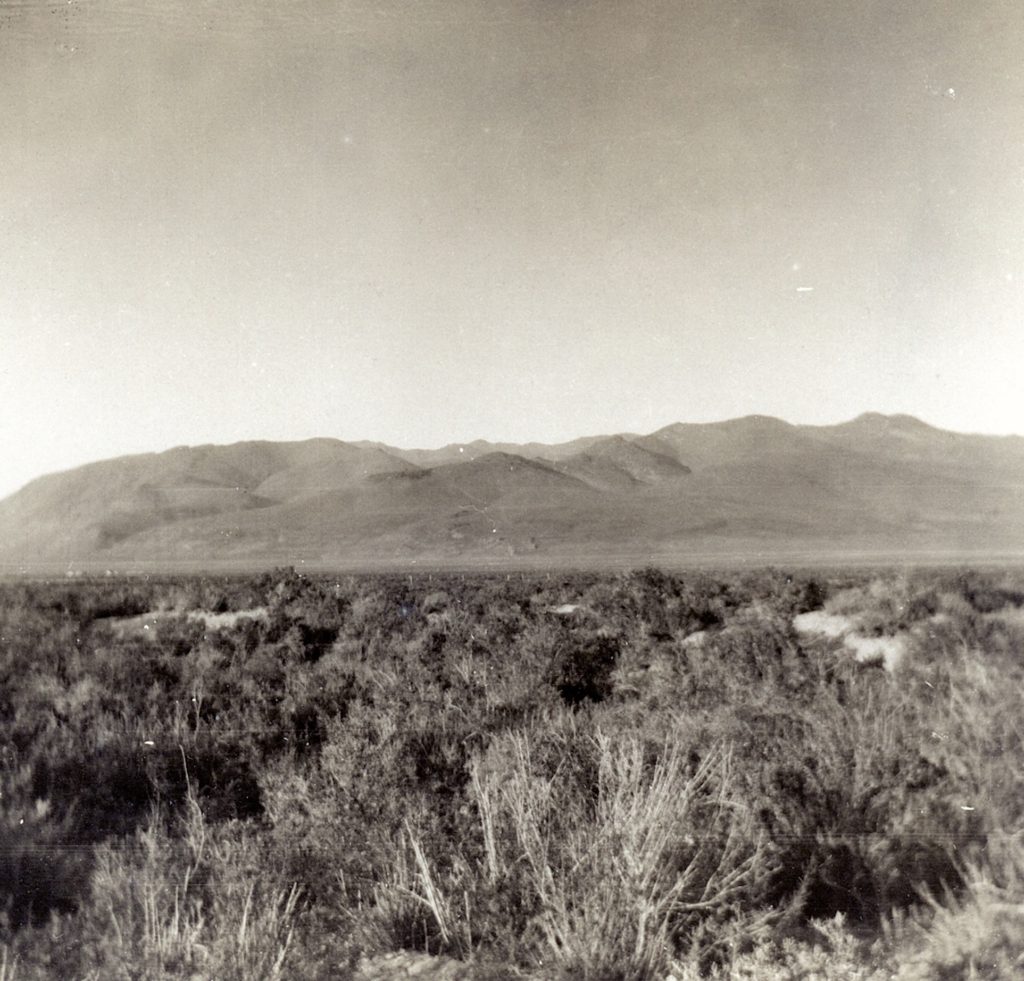
Skedaddle Mountain from Stacy, 1911—C.R. Caudle
By 1910, the region had exploded with desert homesteaders. An interesting segment of those were Scandinavians. The lure for them that one could actually own land was irrisitable Upon arrival there was a rude awakening to see vast sagebrush lands. Going back to the homeland was not an option. At least these hardy homesteaders had a benevolent Mother Nature on their side with way above normal precipitation. Things can quickly change and this was no exception. Two things happen in 1917, was the beginning of a severe drought, but a far greater impact was World War I. By the mid-1920s, eastern Lassen County had been depopulated.
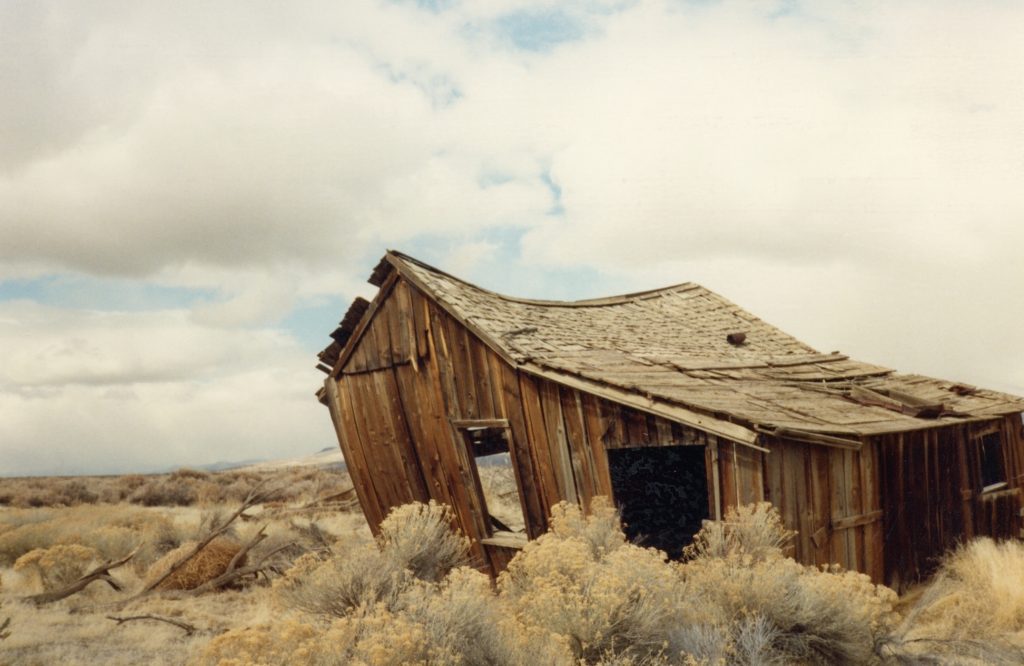
Abandoned homestead near Stacy, eastern Honey Lake Valley, 1987
As late of the mid-1980s numerous deserted homestead cabins were still standing, but that is no longer the case today.
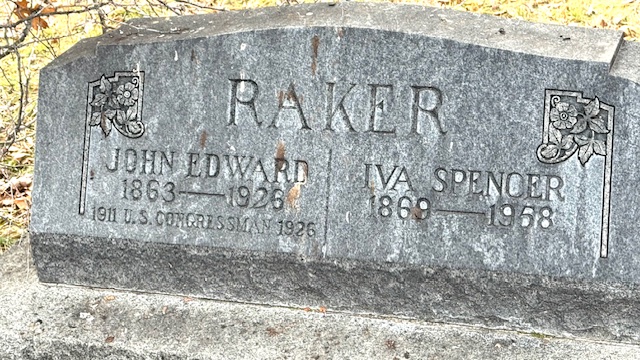
Grave of Congressman Raker, Susanville Cemetery, January 31, 2026-Courtesy of Jim Chapman
A week ago, we explored the 100th anniversary of Congressman John Raker’s funeral held in Susanville. Newspapers across California published memorial tributes. Below this what was the San Francisco Call had to say:
“John Raker, Good Bye: In John Raker’s first campaign for election to Congress he stated this creed:
‘My work will to be labor for enactment of laws that will keep this great government for its 95,000,000 people, and not favored a few-the interests and traits. The people should be permitted to have a full voice in this government of theirs. I stand for progressive legislation, but state and national to that end.’
“No man cay that John Raker did not literally obey the creed of his. He kept his word and was reelected again and again on the basis of his deeds at Washington. .
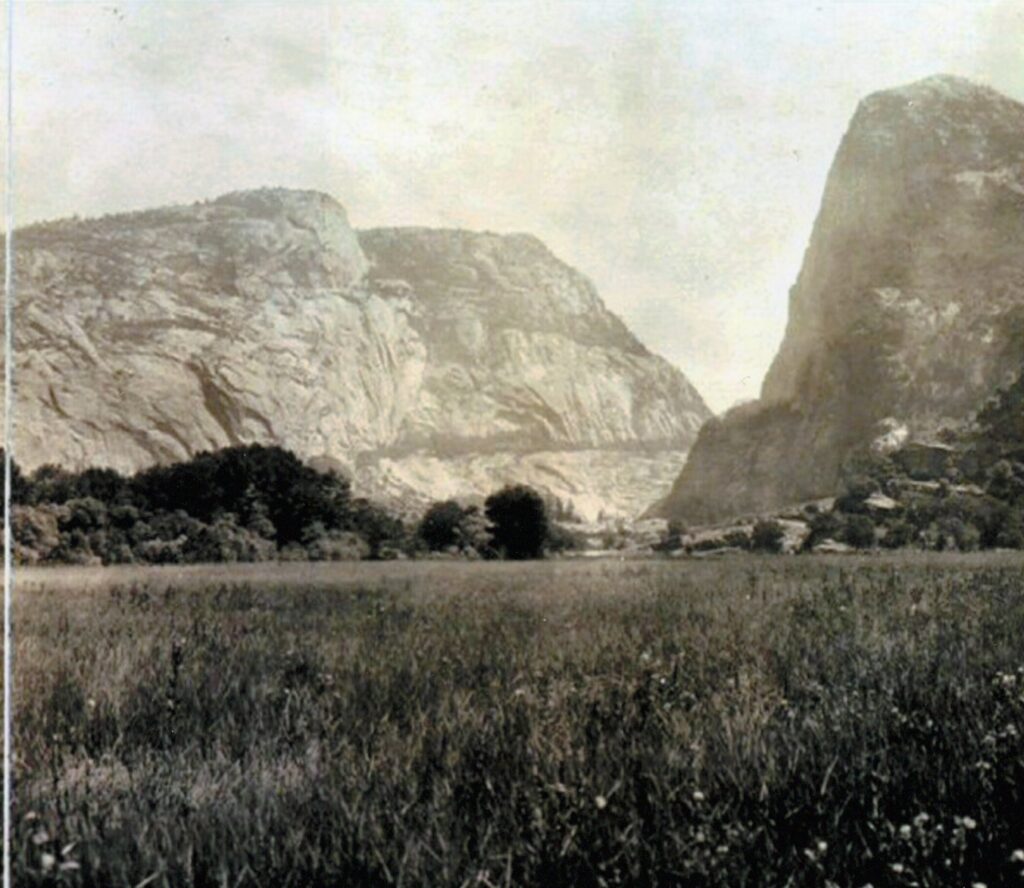
Hetch Hetchy Valley, 1911
“Hetch Hetchy is in great measure a monument to him, for which he was the man who introduced the measure that embodied the great Hetch Hetchy is being constructed. Into the Act the wrote provisions to insure Hetch Hechy to the people forever.”
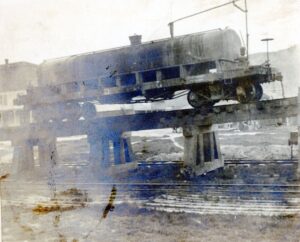
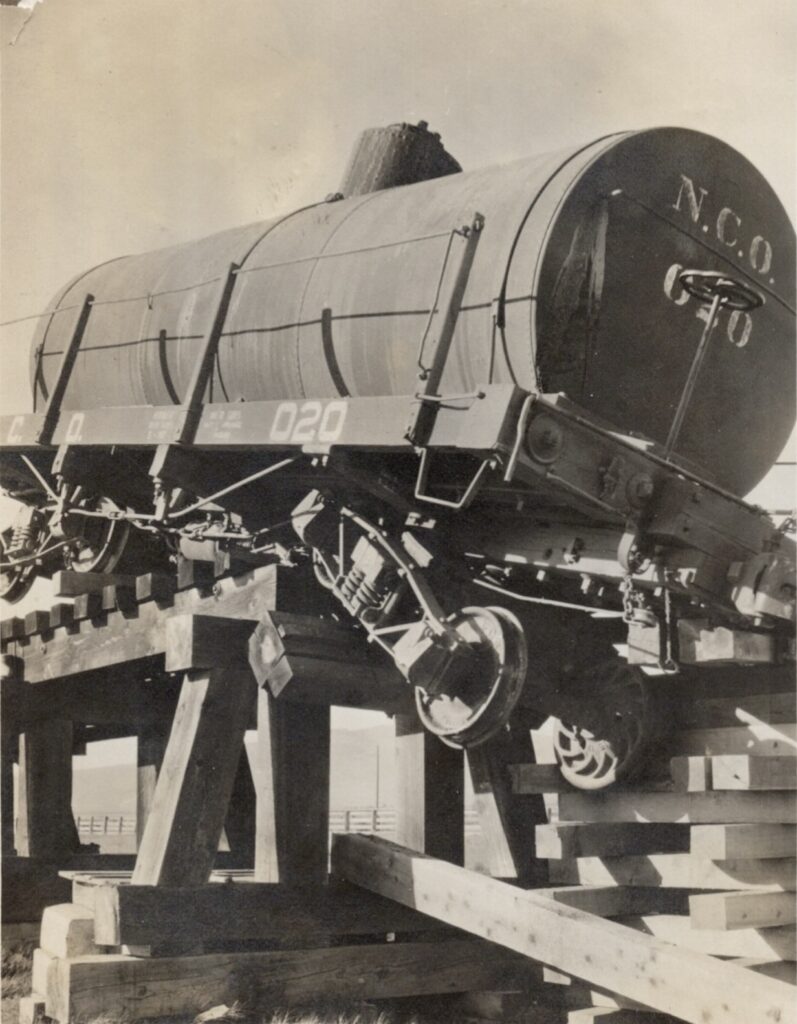
This is a difficult post, because I am ignorant on the topic. Sometimes for me, I need visuals, but even in this instance I am at a loss. There are some railroad people that subscribe, so may be they will come forward with information on the comment section.
Amedee, 1910 Courtesy of Marie Gould
The topic at hand, specifically the NCO railroad were highline gravity unloaders. I understand the concept, but the mechanics involved I am clueless. For instance what was the motor power to position these cars? Tom Armstrong noted there was one uploader at Madeline, two at Wendel, we have photographic evidence of one at Amedee.
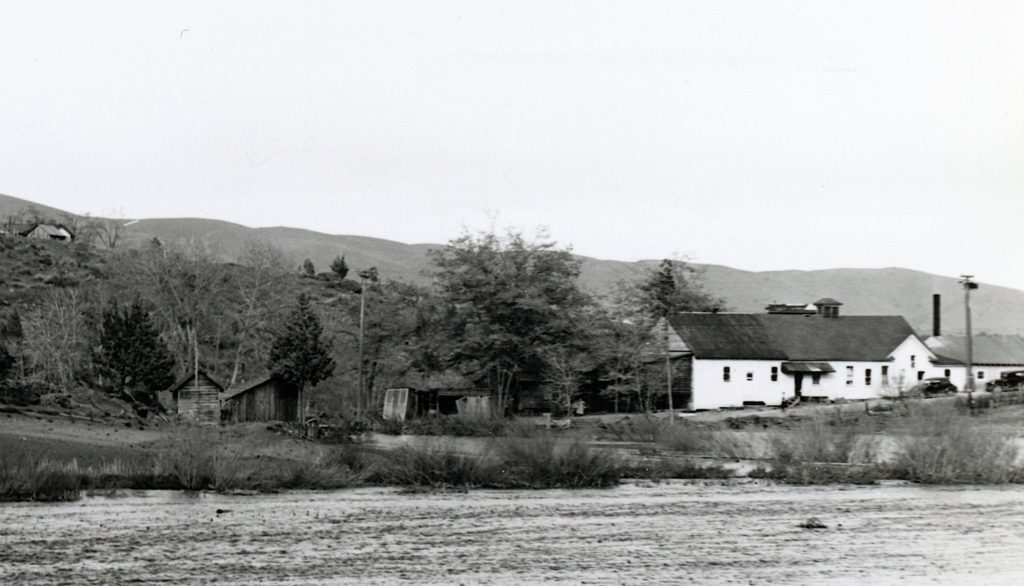
The creamery building and later Model Laundry, at 435 N. Roop Street, April 1938–Betty B. Deal
On March 5, 1903, Jules Alexander, John Borrette, Isaac Knoch, Sol Nathan and John Spalding formed the Susanville Creamery Company. It should be noted that these individuals were prominent Susanville merchants. By the end of the month, the newly formed company hired Herman Enhorning and Charles Odette to construct a creamery at the end of Roop Street, near Piute Creek for $1,925. By July the new creamery was in operation, W.T. Mitchell was at helm, he had previously managed to the Diamond Mountain Creamery.. There were problems. There were too many creameries in the area-the others being located at Johnstonville, Spoonville and Standish. Equally important, there was not enough dairy cattle and labor to support all four. In 1911, the Susanville Creamery shut down. It would later re-open and by 1916 it was permanently closed. Continue reading Susanville Creamery Company→
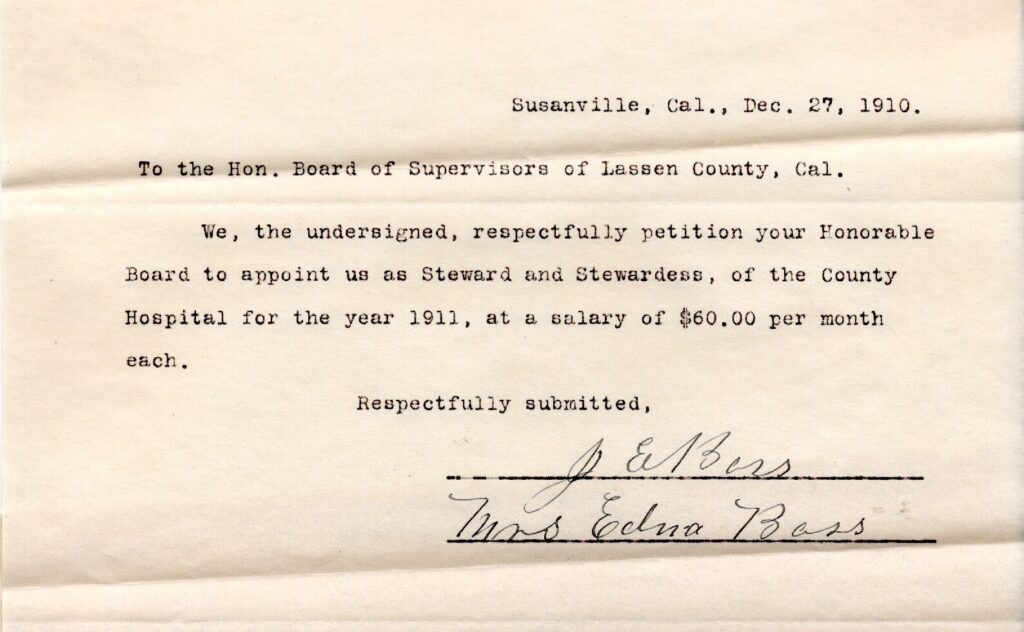
Health care has come a long since 1900. In 1884, Lassen County built a county hospital along Susan River, near the Susanville Cemetery. The board of supervisors were the de facto operators. The supervisors appointed a county physician whose duties included the management of the hospital. The supervisors hired the hospital staff, which consisted of a married couple whose title was Steward and Stewardess. Their duties were to take care of patients and maintain the facility. The above 1910 application of J.E. and Edna Bass for the county hospital position was typical. If one thinks about their bid $6o month each, that works out to $2.00 per day.
The original Lassen County Hospital also served as the poor house and old folks home, 1911. Courtesy of Alphozene Terril
It should be noted that the Lassen County hospital served as a quasi old folks home and often referred then as the poor house for those of indigent means.
A view looking at the former Ridenour property with the Sella dairy in the foreground, which was located at the lower end of Gold Run, 1950s. In 1924, it was the first. gold course in the area. Courtesy of Wendell V. Loughead
Here it is, the first day of February 2026 and. It has been over three weeks since the area received precipitation. There have been dry Januarys before. Some might enjoy this editorial that appeared in the Lassen Advocate of January 15, 1926.
“Winter May Come Yet. While a great deal has been said lately about the lack of water for the State of California there is still plenty of time left for real heavy snowfall.
According to some old residents of Lassen County there have many winters similar to the present one when the entire month of January was void of any storms and in February plenty of snowfall. About seven years ago over five feet fell on January 7th. While with a late snow it will not last as long as the early snow, but will mostly go off with the early spring weather and cause high water in the Sacramento Valley, still it will assure this county of water sufficient for its needs.
“A sudden drop in the barometer yesterday morning presaged the advent of a storm and according to present weather the storm will materialize. A light trace of snow fell yesterday afternoon. Just how severe this storm will be and how long it will last are for conjecture only.
“But regardless, it is too early to worry yet. Other points in California are advertising their sunny days. Lassen County might take a leaf from their book and advertise a mountain county where golf is played in January.. But with good weather that Lassen County has been enjoying has been probably taken and much needed repairs and other work afford on the farm.”
Of note, Susanville received a very wet slushy show near the end of January. Things did not improve in February the two-month total of precipitation was 5.48″
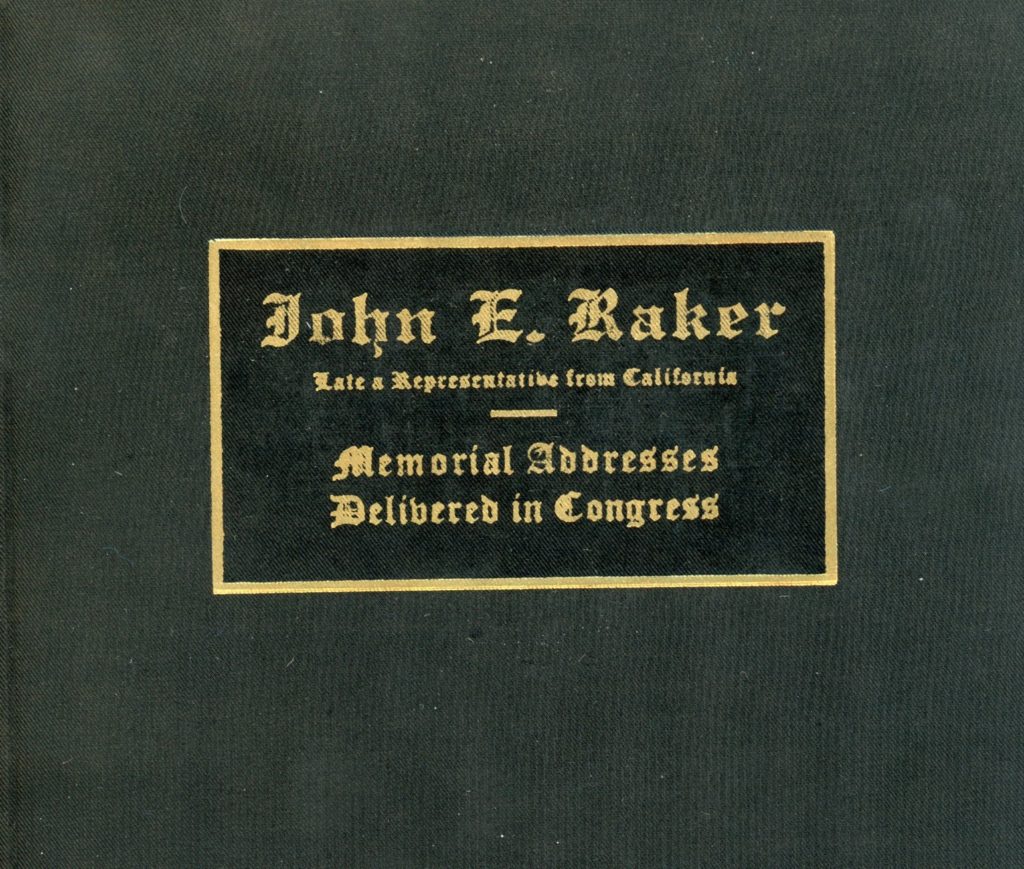
It is the 100th anniversary of Congressman Raker funeral, who represented the California First District since 1911.
John Edward Raker was born in Illinois in 1863, at the age of 10, came to Lassen County with his parents. In 1885, he passed the bar examine, and moved to Alturas to practice law. He eventually went into partnership with his father-in-law, E.V. Spencer. Raker went on to being elected Modoc County District Attorney and then Modoc County Superior Court Judge. In 1910 he decided to run for the California’s First Congressional District seat and won by a slim margin of 141 votes. Raker continued to serve as Congressman until his death on January 22, 1926 at Washington, D.C..
Raker was buried in the Spencer family plot in Susanville. The services were held on Sunday, January 31, 1926–an impressive. affair. The body arrived by train at noon at Susanville, which also consisted of a number of Congressmen, along with a contingent of forty-seven people from Alturas.
As the Lassen Mail noted: “The procession was an imposing one, as it slowly and solemnly wended its way along the slush covered streets. When the first automobile reached the Methodist Church, the line was still moving at the depot. The line of march was along Richmond Road to Weatherlow, north on Weatherlow to Main, up Main to Lassen and thence to the church.”
The night before the region was hit with a heavy snowstorm, making the roads a big slushy mess. Twenty-five members of McKea Post, American Legion, attended but it took them two and half hours to make the trip from Westwood. Had the weather been more favorable there would have been an even larger turnout.
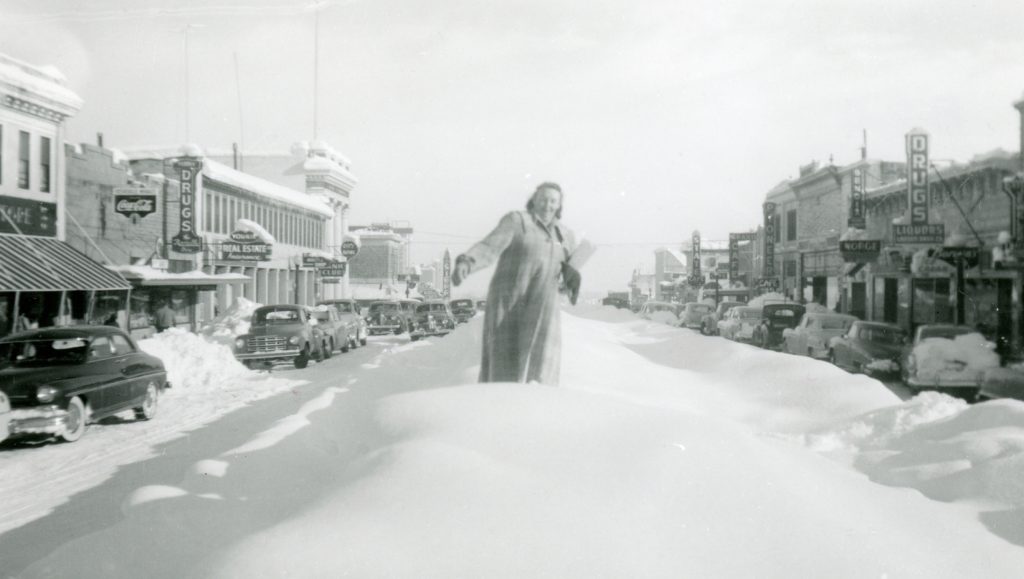
The big snow made its debut on January 12, 1952. Three days later Susanville was covered with a blanket of five feet of snow. On the other side the mountain, at Westwood eight feet had fallen. The storm was followed by unusually strong gusty winds. Not only did the winds disrupt electric power but drifting snow created highway blockades. These drifts ranged between seven and nine feet. They. were no match for regular snow removal equipment. Clearing them necessitated use of rotary snowplows. While they were efficient, it was a slow process. To clear a single highway lane of thirteen miles between Chester and Westwood took the rotary plow three days, working around the clock.
Elks Lodge, Susanville, 1952
The “big snow” showed how much life had changed. The residents were no longer self sufficient like the pioneers before them. Many relied grocery stores. After three days of the highway blockade, the grocery stores were depleted of their stock. In Susanville. a shipment of yeast was dropped by plane for the Sunrise Bakery so there would be a supply bread. Officials at Westwood and Chester made arrangements for an air drop of food and medical supplies. It was cancelled on January 18th, when the snowplows made it to Mineral. There a convoy of trucks laden with food, fuel and other supplies made its way along the one-lane highway. While the worst over, traffic was limited to emergency vehicles until two lanes were cleared. On January 31st balmy temperatures arrived in Susanville, with a morning low of 42 and a daytime high of 50.
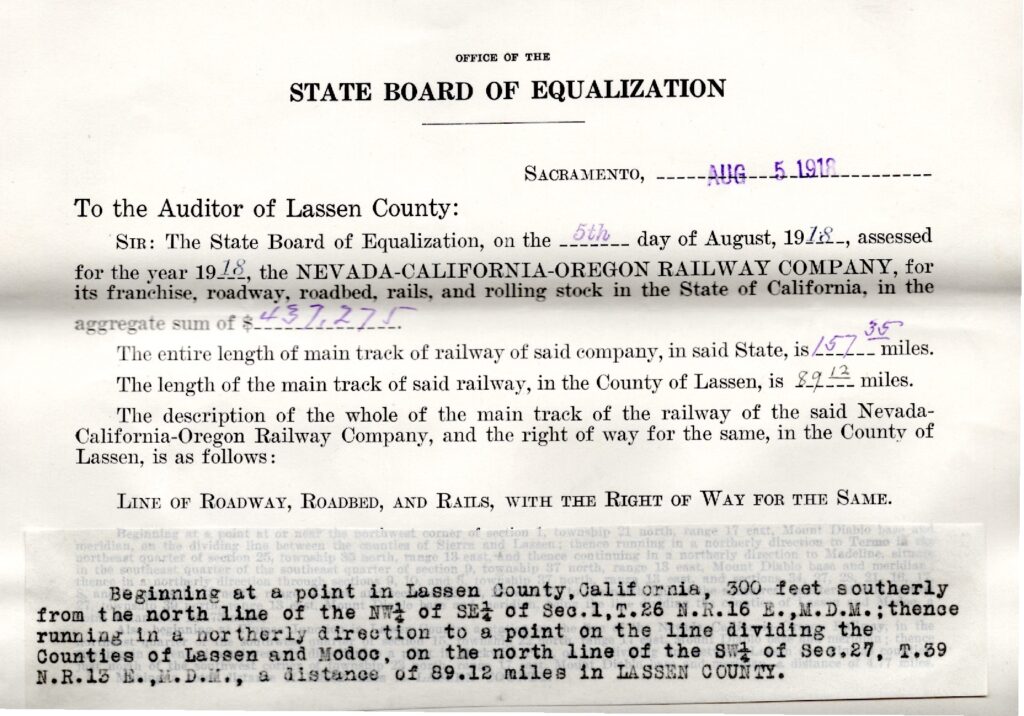
The State Board Equalization is a wealthy repository for information. When it came to taxing railroads, the Board compiled information about each railroad, and was broken down by trackage and the shared assessed value. The taxes collected would be distributed to counties to fund roads and schools. Here is some information of the 1918 reports for the NCO and Western Pacific.
The NCO had 89.13 miles of main railway track in Lassen County and 157.35 in the State of California. The assessed value in the county was valued at $247,664.
The Western Pacific had 44.44 miles on railroad in Lassen County and 417.5 miles in the State of California. The assessed value in the county was valued at $888,800.