Category Archives: History

Bird Flat School

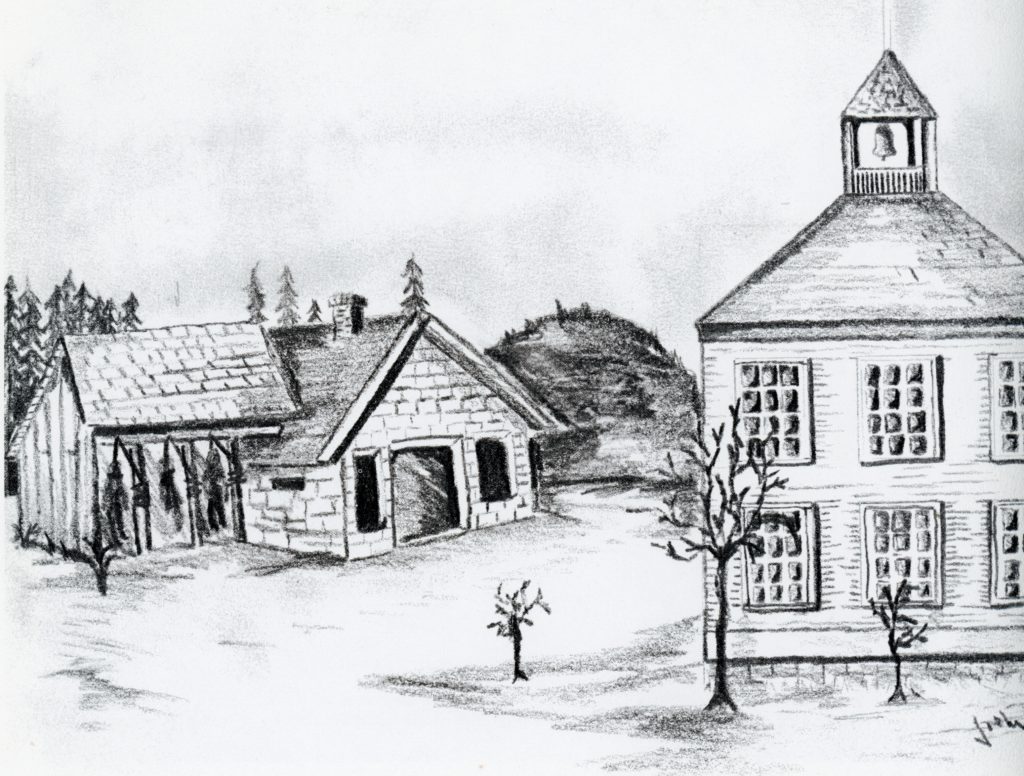
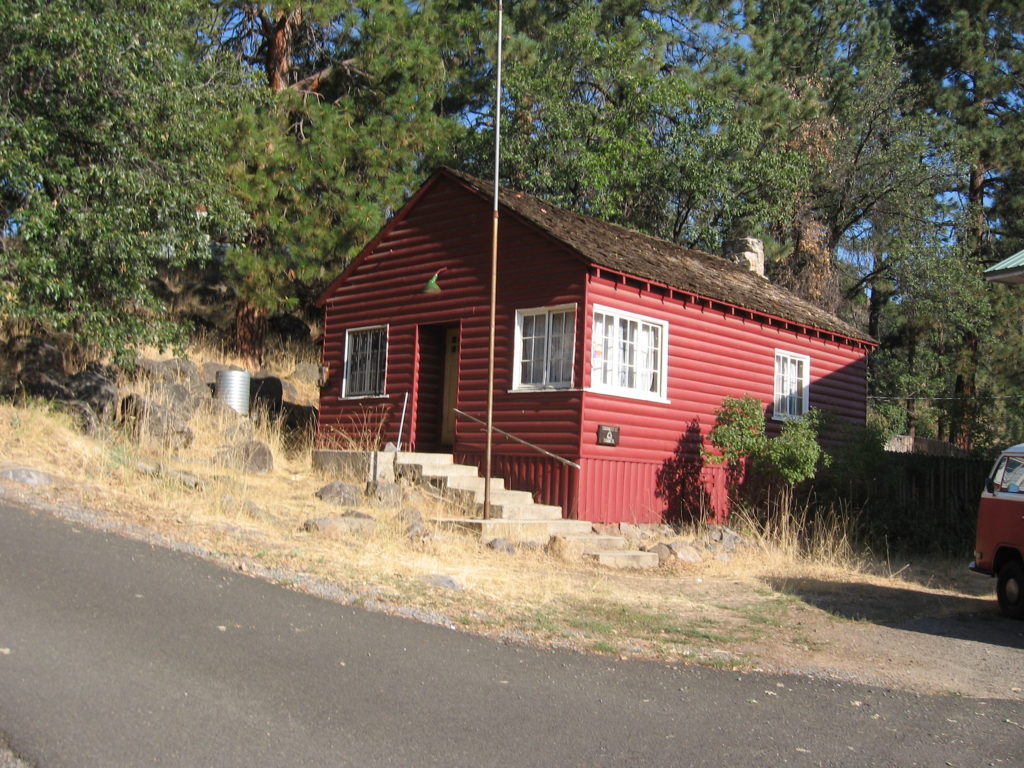
This rural Honey Lake Valley school was located approximately halfway between Milford and Doyle. It was established on January 7, 1896. That summer the residents built the schoolhouse. The school opened in the fall with fourteen students, Tillie Downing was its first instructor. From 1934 through 1938 the school was closed for lack of students. It re-opened in 1939. In 1959, it closed for the last time and annexed to Long Valley.   The schoolhouse, situated along Highway 395, has had many uses since its closure, presently it has since been converted into a private residence.

Subscribe!

Introducing Ebenezer C. Brown

E.C. Brown. Courtesy of Ted Johnson

Ebenezer Cooley “Ben” Brown lived an interesting, varied life. The Louisiana native wore many hats during his tenure in the Honey Lake Valley, a rancher, shop keeper, tugboat captain, to name a few.

Orphaned at an early age, in 1874 he left his native Louisiana for Baker City, Oregon to work on a ranch, save some money and further his education. His brother, Rutherford Brown had come to California in 1861, first working in mines, and later became an attorney. Ben followed in his brother’s footsteps, at least with the mining portion and for eight years prospected various places in the West, with not much success.  His brother, Rutherford came to his aid. In 1884, he purchased the Hamilton Ranch in the Honey Lake Valley from Pheobe Masten Hamilton Slater for $12,000. (The property is known today as the Fleming Unit of the Honey Lake Wildlife Area.) Continue reading Introducing Ebenezer C. Brown

Eagle Lake’s Highest Level

Gallatin Beach and Peak, 1916. Courtesy of Wyn Wachhorst

In the spring of 1917, Eagle Lake reached its highest level ever known at 5,125 feet. For the previous ten years the region had experienced one of its wettest known periods. Since the Anglo settlement of the 1850s the region had been void of any prolonged drought. There would be one and maybe two years of below normal precipitation years. Between 1875, when the Government Land Office provided the first accurate level of the lake, to 1917, the lake’s water level had risen fourteen feet.  At that time, the lake covered a surface area of 29,000 acre-feet. Between the Bly Tunnel and successive droughts in 1937, its surface area had been reduced to 16,000 acre-feet.

So after this wet winter we have experienced, the level of lake as of April 3, 2017 stood at 5095.78, and the level of the lake has risen nearly five feet since November 1, which  information was provided by Lassen County Surveyor Don Willis, who monitors the lake’s level every month.

Subscribe!

Buffalo Meadows Cemetery

Buffalo Meadows Cemetery, Smoke Creek, Nevada
Buffalo Meadows Cemetery, Smoke Creek Desert, Nevada, 1984

Those who know me well, are aware that I have a special affinity for cemeteries. The Buffalo Meadows Cemetery in the Smoke Creek Desert,  I know very little about, and I would certainly like to know more. According Asa M. Fairfield he noted that an immigrant girl by the name of Susan DeWitt died near the salt marsh and was buried near there. Fairfield went on that some thought that it was this Susan for whom the Susan River was named for.  If anyone can shed more information about this cemetery I would certainly like to hear from you.

Support by subscribing.

Chicken Nuggets

Vic Perry’s Store on Wheels, Standish, 1911. Courtesy of Alphozene Terril

This story has nothing to do with the kind of chicken nuggets people purchase at fast food outlets. Early on in my research career, I heard a lot of stories, some were true and others, not, but nonetheless they were good tales.

One particular tale was told to me many times, and that a particular incident occurred more frequently especially in the Gold Run and Richmond area. It was not unusual for a person who while prepping a chicken to eat, during the dressing stage, would find a small gold nugget stuck in the chicken’s craw. To add credence to this story, I came across the following tidbit:  Lassen Advocate,  March 25, 1897 – Vic Perry, the rustling poultry and egg denier, so reports say, recently killed and dressed a chicken for market, in the craw of which he found two dollars and seventeen cents worth of gold. We do not mention the matter as one that is particularly noticeable in this section, however remarkable it might be in other localities but simply present it as an ordinary every day sort of a fact.

Subscribe!

Washington School Photographs

Washington School first grade 1941-42.

Many, many years ago I received a box of Louise West’s papers. The box was delivered to my mother’s house, and since resurfaced among other things.  Louise West taught first grade at Susanville’s Washington School on Cottage Street for three decades spanning the 1940s, 1950s and 1960s. If anyone is interested in a particular year let me know, and I will do my best to scan and send along.  Please be patience, since I am assorting so many items at the moment.

The 1962 first grade class at Washington.

Subscribe!

Bank of America Pillars

The original bank being torn down.

Seasoned residents of the Susanville region will recall the spring of 1971, when the Bank of America building at Main and North Gay Street was demolished.  Many in the community had not recovered from the demolition of another iconic building the original Lassen High School, which was torn down in June 1968 for the current campus buildings.

Lassen High
Lassen Union High School

Subscribe!

Tommy Tucker Cave

Sacramento Bee, August 21, 1951

As a rule, I I avoid Native American sites due to their sensitivity. However, some sites are well known and are routinely visited by many, and that is the case of Tommy Tucker Cave, It was a significant archaeological site excavated by archaeologists from the University of California from 1949 to 1951. The cave is located 200 feet above the Honey Lake  Valley floor. It was named for Thomas “Tommy” Tucker (1895-1918), a Madiu from Big Meadows (Lake Almanor), and the second person from Lassen County to die in World War I. One can read Francis Riddell’s complete report here.

Subscribe!

Loomis Museum

Loomis Museum

B.F. Loomis is best known for his photography of the Lassen Peak eruptions. Loomis, was also an ardent supporter of Lassen Volcanic National Park.  On January 16, 1926, Loomis purchased 40-acres at nearby Reflection Lake, not to far from Manzanita Lake.  At this time, had not made a decision where to locate the headquarters,  and Loomis lobbied for Manzanita Lake, and even offered the parcel he purchased to the park for “administrative services.”

The decision did not deter Loomis’ support of the park. In 1927, he built a museum of native stone and reinforced concrete near Reflection Lake. The museum served two purposes. One, it allowed him to showcase his famed photographic collection of the Lassen Peak eruptions, previously on display at his hotel at nearby Viola. The second reason was it served as a memorial to his only child, Louisa Mae, who had died in 1920. The building was named in her honor as the Louisa Mae Loomis Memorial Museum.

On February 4, 1929, Loomis deeded the property to the park. On July 2, 1929, the park in consideration of the donation, granted Loomis a life estate to five acres that allowed him to continue to maintain the museum and gave him the privilege of building a residence and photographic studio.

Subscribe!

Lucky Land of Lassen

Cover page of the Lucky Land of Lassen pamphlet

In 1914, Lassen County sought a slogan for promotional purposes, especially with the Panama-Pacific Exposition to be held in San Francisco in 1915.  Thus, the Lucky Land of Lassen came to be, and would be used for several decades in promotional literature. After all the county was enjoying a good luck spell with the boom created by the Fernley & Lassen Railroad and the establishment of Red River Lumber Company’s lumber town of Westwood.

In future posts, we will explore some of the highlights of the Lucky Land of  Lassen brochure was widely distributed at the Panama-Pacific Exposition, which even had a Lassen County Day.  For example, in its description of Eagle Lake, it included one of the earliest  printed references of the ice caves.

Subscribe!