Category Archives: History

Heath Reservoir – Lassen County

heath-resvr

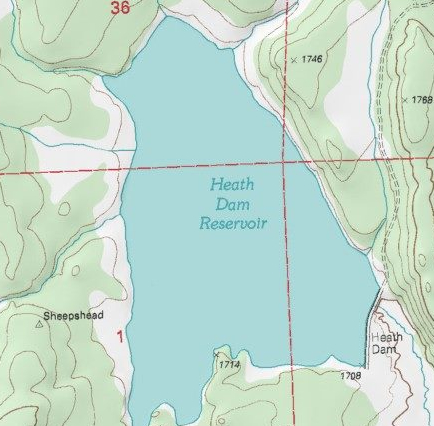
In the fall of 1905, Anton Gerig with a crew of eleven men, constructed the reservoir on Slate Creek, west of Grasshopper Valley and north of Eagle Lake. On April 12, 1934, Lena A. Soldate sold the Slate Creek Reservoir, along with considerable acreage in Grasshopper Valley, to George R. Heath for $26,000. On either May 7th or 8th 1938, spring floods caused the collapse of the dam at Slate Creek. California Department of Water Resources had repeatedly informed Heath that the Slate Creek Reservoir required a spillway, but their warning was ignored. During the aftermath of the dam failure, the State Engineer stated that had an adequate spillway been constructed at an estimated cost of $5,100 the dam would have withstood the spring flood. The dam was subsequently rebuilt and became known as Heath Reservoir.
Spread the word, encourage a friend to subscribe.

Lassen County Military History

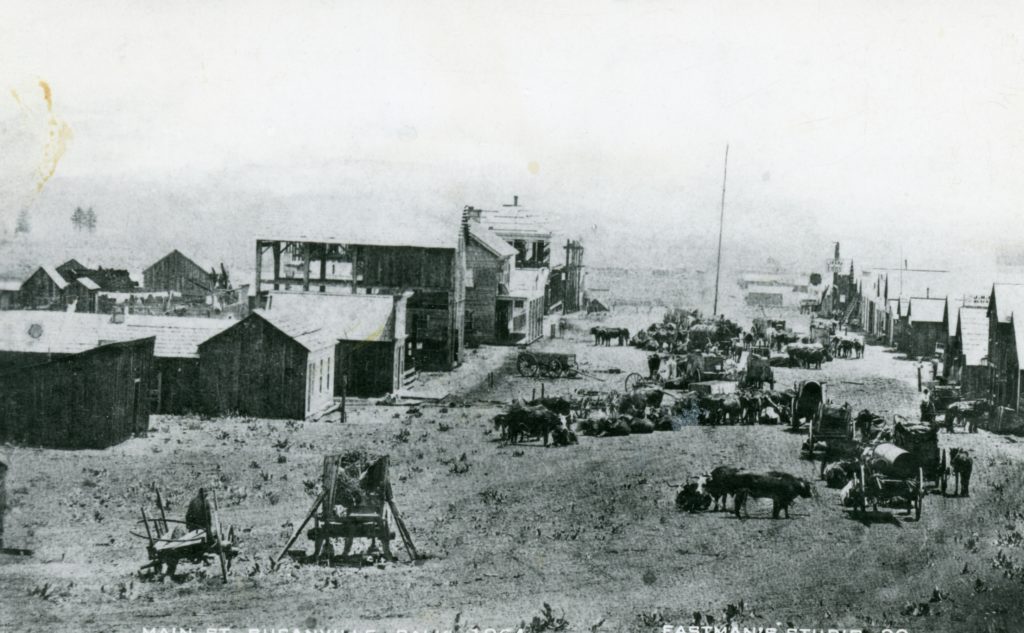
Main Street, Susanville, 1864.

In the 1850s, the Anglo settlers of the Honey Lake Valley routinely petitioned the U.S. Military for aide and protection. Many of those pleas went ignored. The Civil War changed that. In the future we will explore the various encampments, and some non-military sites such as Fort Janesville.

Today, we examine Camp Susan, the nearest appearance of a military encampment the town would experience.   In late August 1864, the 1st Nevada Territorial Infantry, a mobile military unit from Fort Churchill, under the command of Malachi R. Hassett, established a base camp near Susanville. Their mission was to scout the territory from Susanville, north to Surprise Valley and east to the Humboldt mines. In October 1864, the unit was ordered back to Fort Churchill. On September 12, 1864, Private Ebenezer Williams died at Camp Susan. Williams, a native of Wales, had just enlisted in February 1864.

Subscribe!

Susanville – Burma Road

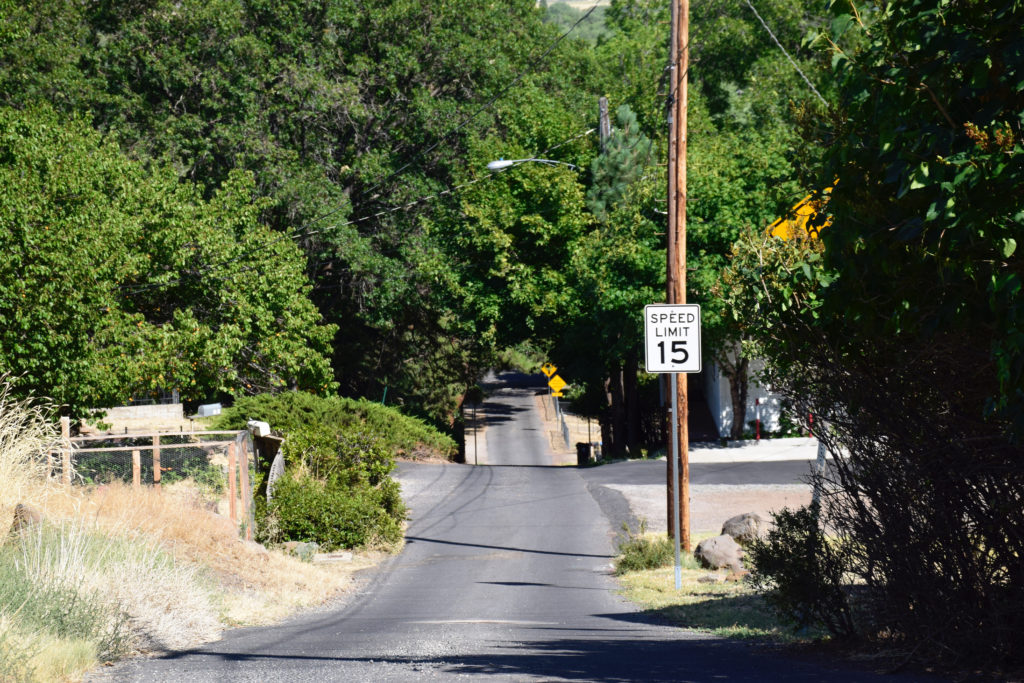
Burma Road, July 29, 2016. Annie Henriques Blank

One of the city’s most interesting streets, does in fact has an interesting story of how it came to be. It originally started as a alley behind North Street. One of its first residents was Bernie Dillinger who gave it the name of Burma. Back in the 1940s  as Bernie recalled “A rough, rocky, unpaved road.” Dillinger’s mailing address was 507 1/2 North Street. The 1/2 referred that he was located in the alley, and not fronting North Street.

Dillinger gave it the name Burma, for the famed road in Indochina of the same name. He was attempting to get the city’s attention, since the city did nothing to maintain and it never qualified for snow removal. This, of course, made it treacherous in the winter months, especially at that time Burma did not connect to Roop Street. Instead near the bottom of the hill it made a sharp turn and exited out onto Hill Street. With Dillinger’s due diligence the city finally started to maintain it, and even placed a street sign with the name of Burma Road.

Subscribe!

Amedee Geyser Newspaper


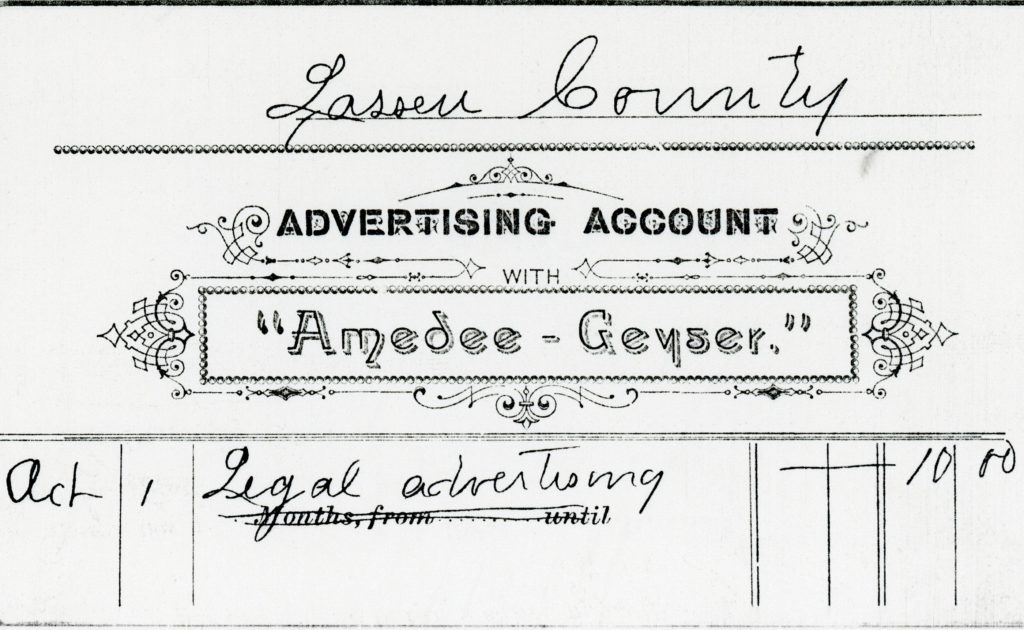
Invoice to Lassen County for the failed Amedee School Bond Election

One of the greatest assets for a frontier town, was to have its own newspaper. It was in fact, a defacto chamber of commerce extolling the virtues of the new upcoming community.

Amedee, the railroad town on the east side of Honey Lake, could even boast its own newspaper the Amedee Geyser. S.N. Griffith one of the original promoters of the town was able to entice 19-year old, Henry A. “Hal” Lemmon to relocate from nearby Sierra Valley where he was publishing the Mountain Mirror. On March 30, 1892 the Amedee Geyser made its debut. The four-page newspaper, common for the era, was quite informative from the exchanges published elsewhere.  There is only one known surviving copy, which is in private hands.

The good times at Amedee, and across the nation would not last long due to the financial panic of 1893. On September 28, 1893, Lemmon published the last issue with the following statement: “We have nothing to say–we have done the best we could. We shall continue residence in Amedee and when our patrons have more, we can give them a newspaper worth the subscription price, the paper will appear again. ”

Lemmon had hope to revive the newspaper the following month, but that did not transpire.  He moved on to bigger things and at the time of his death in 1947 he was President of the Sierra Pacific Power Company in Reno, Nevada.

Subscribe!

The Iron Horse Irony

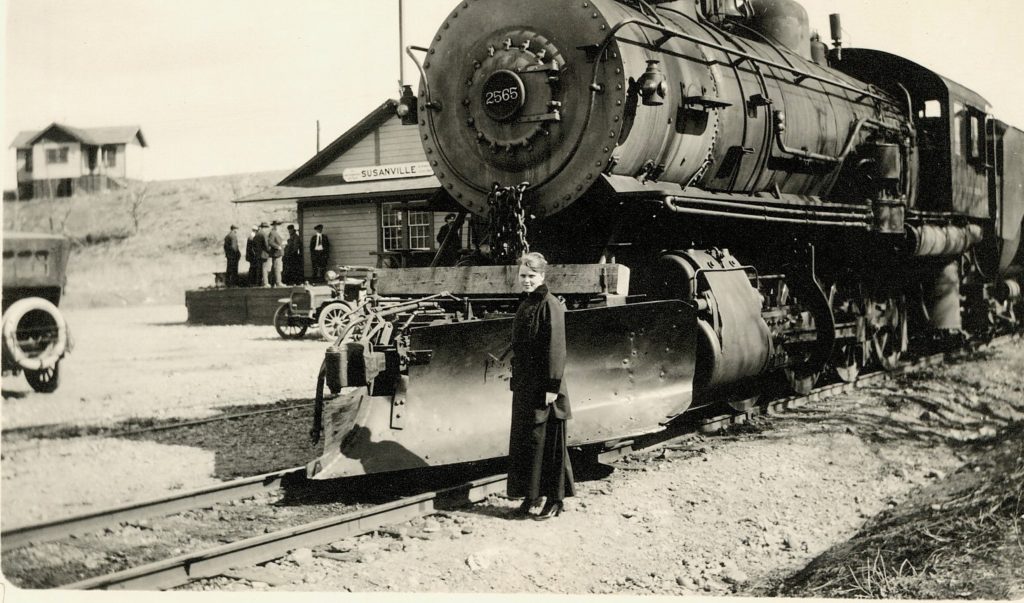
Leona Jackson posing in front a locomotive at the Susanville Depot, 1919.

When the Fernley & Lassen Railroad was built through a major segment of the Honey Lake Valley, the residents rejoiced. This was especially true for the agricultural community. One of the major crop exports was apples, and now there was an easy and efficient way to ship them.

Yet, on the other hand, no one knew what to expect when the Red River Lumber Company established its company town. Again, the agricultural community was a main benefactor. In a sense, the railroad was not needed to ship meats and produce out of the area, but to ship to Westwood, a new town that had to be fed. When the mills of Fruit Growers and Lassen Lumber were established in Susanville, that increased the demand for more local products.

Subscribe!

Indian Basket History

Indian Baskets549
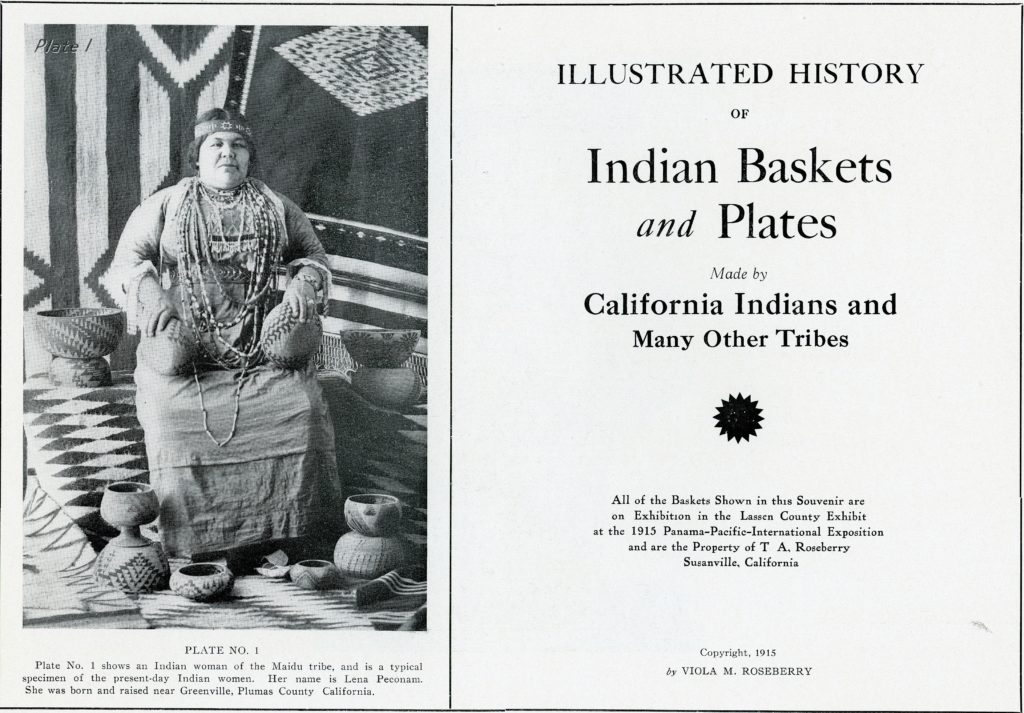
Cover page of Viola Roseberry’s book. Remember to click to enlarge the photograph.

Susanville resident Viola Roseberry (1860-1936) had a special fondness of Native American heritage and that of their basketry. She possessed a large basket collection. In 1915, the collection was displayed at the Panama-Pacific International Exposition held in San Francisco. To coincide with the exhibit she published a book, Illustrated History of Indian Baskets and Plates made by California Indians and Many Other Tribes. Book had a price of 50 cents.

The cover picture is of Lena Peconum who has numerous descendants in this area. Viola wrote stories behind the baskets, such as one Maidu woman Comanche, who at the time was believed to be the oldest Maidu weaver, approaching 100 years of age, and residing in Genesee Valley, Plumas County.

Support by subscribing.

Winter Weather Records

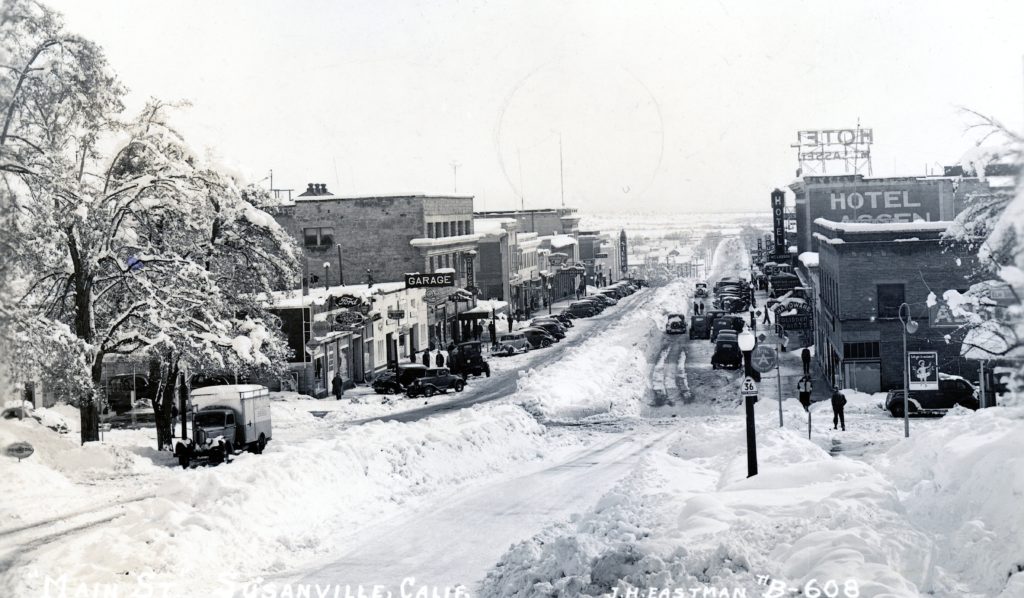
Main Street, Susanville, January 1938.

Lately, I have received inquiries how this winter’s precipitation figures compares with previous wetter than normal years. Of course, it is still too early, since a lot can happen in February and March. The winter of 1937-38 witnessed some of heaviest snowfalls. It was also one of the wettest on record with nearly 40 inches of precipitation! The spring runoff was tremendous and filled Honey Lake for the first time in twenty years. In certain ways, Honey Lake is a good indicator as to what occurs from one winter to the next.

By spring time, I will provide more, especially to see what we experience in the short term.  Stay tuned.

Subscribe! 

Papoose Meadows: The End of an Era

Cabin and water tank at Papoose, 2011.
Cabin and water tank at Papoose, 2011. Courtesy of Scott Grometer

In the mid-1880s when Albert Gallatin started purchasing property at Eagle Lake, his main intent was to use the region for summer grazing of sheep. He also owned a substantial ranch in Tehama County.  After his death in 1905, his widow, Malvena, scaled back the ranching operations, and most of it was leased to other operators. In 1946, Malvena sold all her Eagle Lake properties to the Lassen Lumber & Box Company.

In 1947, Papoose Meadows through a land exchange between the Lassen Lumber & Box Company and the Lassen National Forest became part of the public domain. Initially, Earl McKenzie had leased Papoose from Gallatin, which the forest service honored. In 1952, Lyman Willard succeeded McKenzie with the now forest service lease. The permit allowed for 470 head of cattle, though Willard did not own that many, so he shared the permit with Elwin and George Roney.  In 1966, Willard’s son-in-law and daughter, Bill and Jean Barton came to assist with the Willard operation. In addition, Wally and Billie Roney, like the Bartons, came into the fold of the operations.

It could also be called an omen when the barn at Papoose partially collapsed in 1995.  Within the next ten years relations with the forest service had become so strained that the Bartons and Roneys gave up the lease. In September 2013, the forest service demolished the cabin and water tower.

For a brief period there were riding stables at Papoose, that to be addressed in a future post.

Subscribe!