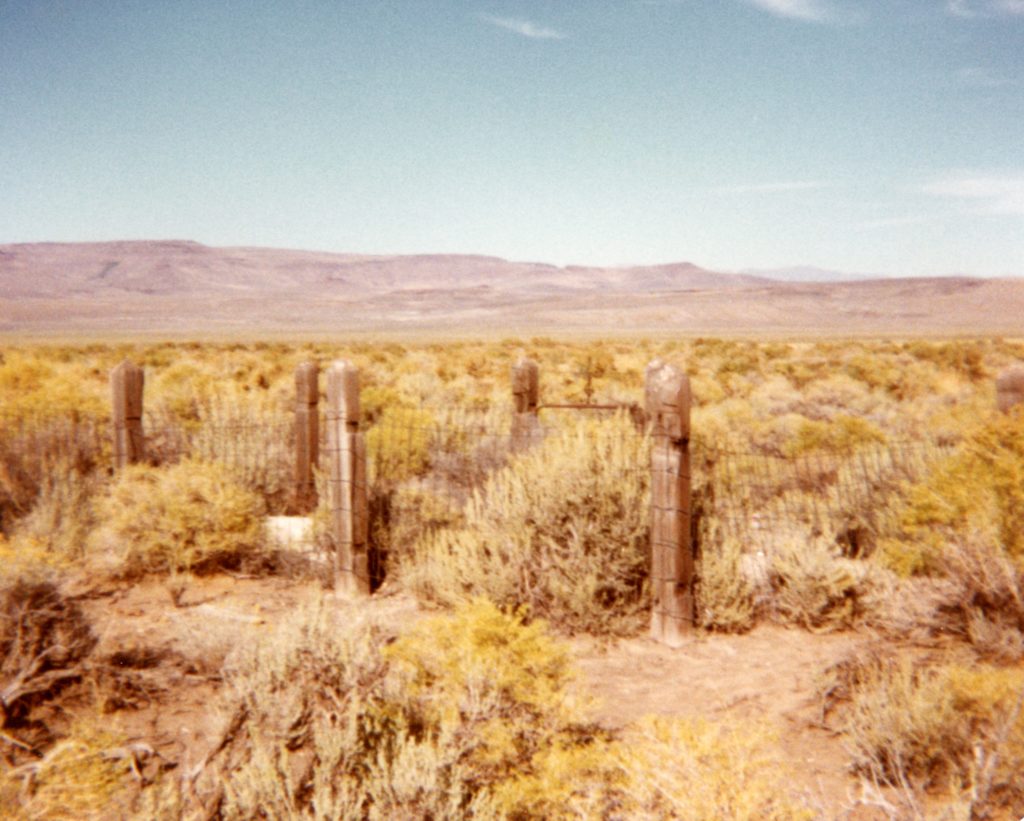
Buffalo Meadows Cemetery, Smoke Creek Desert, Nevada, 1984
Those who know me well, are aware that I have a special affinity for cemeteries. The Buffalo Meadows Cemetery in the Smoke Creek Desert, I know very little about, and I would certainly like to know more. According Asa M. Fairfield he noted that an immigrant girl by the name of Susan DeWitt died near the salt marsh and was buried near there. Fairfield went on that some thought that it was this Susan for whom the Susan River was named for. If anyone can shed more information about this cemetery I would certainly like to hear from you.
Vic Perry’s Store on Wheels, Standish, 1911. Courtesy of Alphozene Terril
This story has nothing to do with the kind of chicken nuggets people purchase at fast food outlets. Early on in my research career, I heard a lot of stories, some were true and others, not, but nonetheless they were good tales.
One particular tale was told to me many times, and that a particular incident occurred more frequently especially in the Gold Run and Richmond area. It was not unusual for a person who while prepping a chicken to eat, during the dressing stage, would find a small gold nugget stuck in the chicken’s craw. To add credence to this story, I came across the following tidbit: Lassen Advocate, March 25, 1897 – Vic Perry, the rustling poultry and egg denier, so reports say, recently killed and dressed a chicken for market, in the craw of which he found two dollars and seventeen cents worth of gold. We do not mention the matter as one that is particularly noticeable in this section, however remarkable it might be in other localities but simply present it as an ordinary every day sort of a fact.
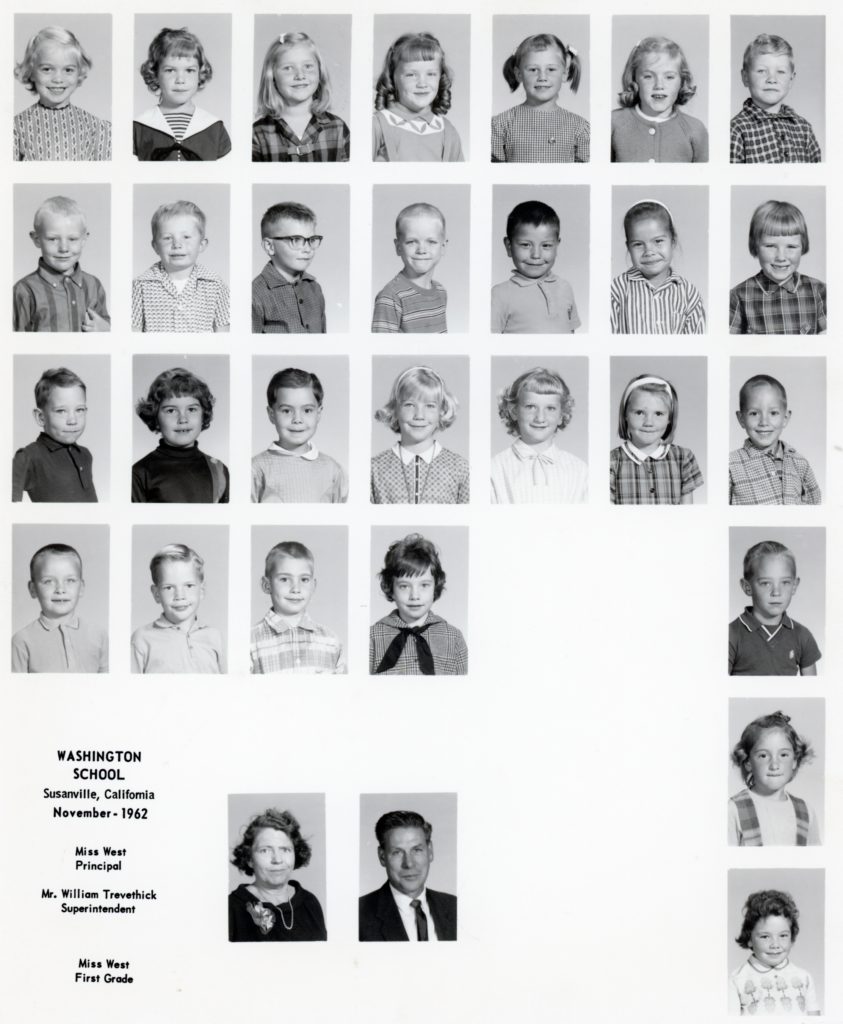
Many, many years ago I received a box of Louise West’s papers. The box was delivered to my mother’s house, and since resurfaced among other things. Louise West taught first grade at Susanville’s Washington School on Cottage Street for three decades spanning the 1940s, 1950s and 1960s. If anyone is interested in a particular year let me know, and I will do my best to scan and send along. Please be patience, since I am assorting so many items at the moment.
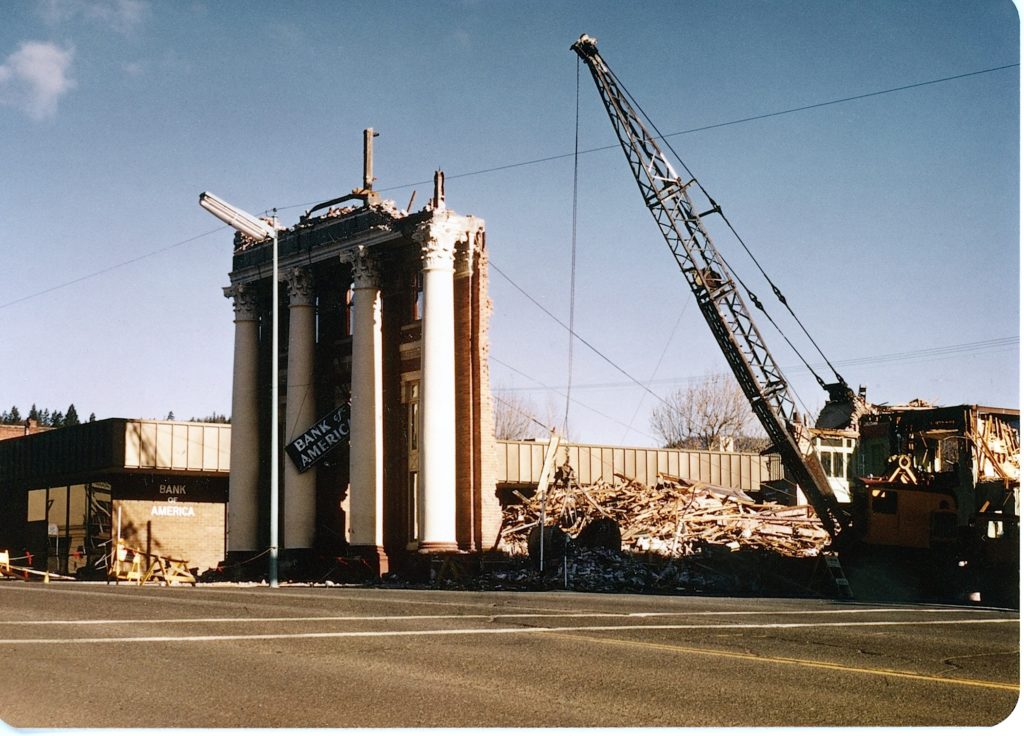
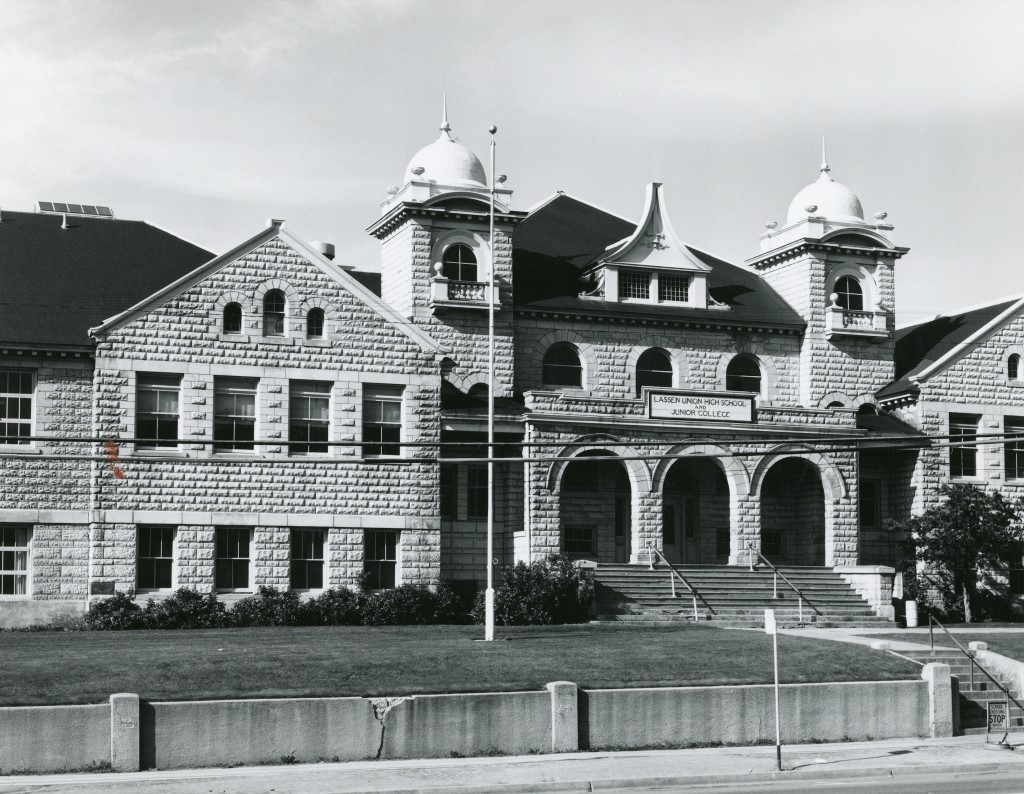
Seasoned residents of the Susanville region will recall the spring of 1971, when the Bank of America building at Main and North Gay Street was demolished. Many in the community had not recovered from the demolition of another iconic building the original Lassen High School, which was torn down in June 1968 for the current campus buildings.
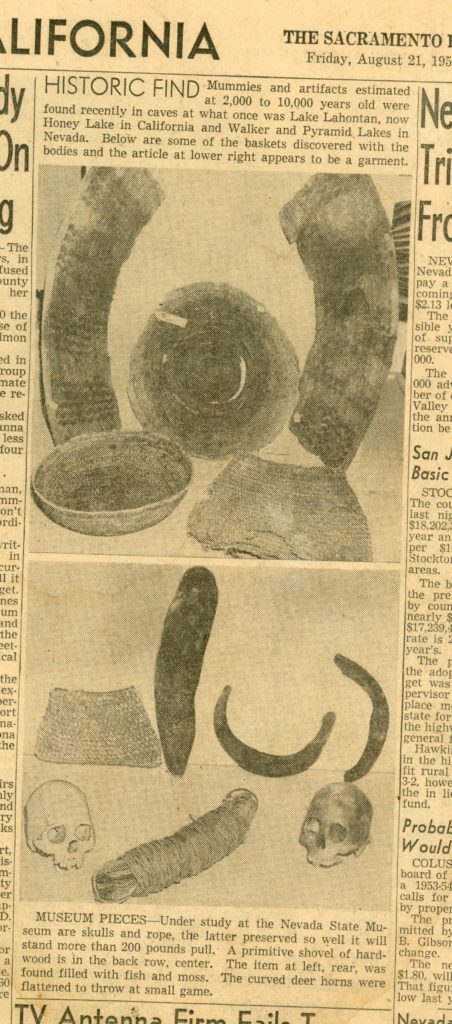
As a rule, I I avoid Native American sites due to their sensitivity. However, some sites are well known and are routinely visited by many, and that is the case of Tommy Tucker Cave, It was a significant archaeological site excavated by archaeologists from the University of California from 1949 to 1951. The cave is located 200 feet above the Honey Lake Valley floor. It was named for Thomas “Tommy” Tucker (1895-1918), a Madiu from Big Meadows (Lake Almanor), and the second person from Lassen County to die in World War I. One can read Francis Riddell’s complete report here.
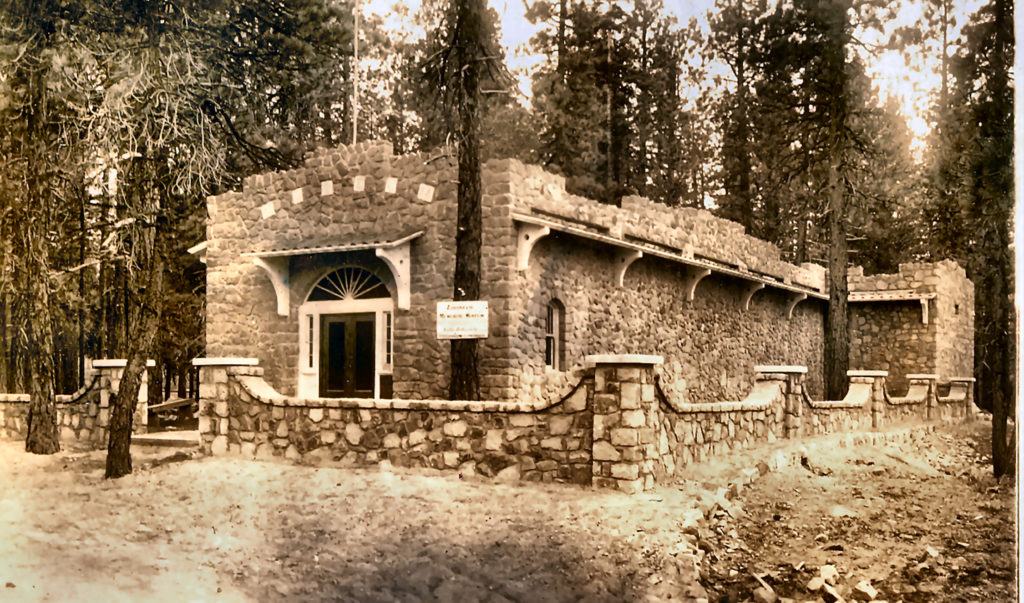
B.F. Loomis is best known for his photography of the Lassen Peak eruptions. Loomis, was also an ardent supporter of Lassen Volcanic National Park. On January 16, 1926, Loomis purchased 40-acres at nearby Reflection Lake, not to far from Manzanita Lake. At this time, had not made a decision where to locate the headquarters, and Loomis lobbied for Manzanita Lake, and even offered the parcel he purchased to the park for “administrative services.”
The decision did not deter Loomis’ support of the park. In 1927, he built a museum of native stone and reinforced concrete near Reflection Lake. The museum served two purposes. One, it allowed him to showcase his famed photographic collection of the Lassen Peak eruptions, previously on display at his hotel at nearby Viola. The second reason was it served as a memorial to his only child, Louisa Mae, who had died in 1920. The building was named in her honor as the Louisa Mae Loomis Memorial Museum.
On February 4, 1929, Loomis deeded the property to the park. On July 2, 1929, the park in consideration of the donation, granted Loomis a life estate to five acres that allowed him to continue to maintain the museum and gave him the privilege of building a residence and photographic studio.
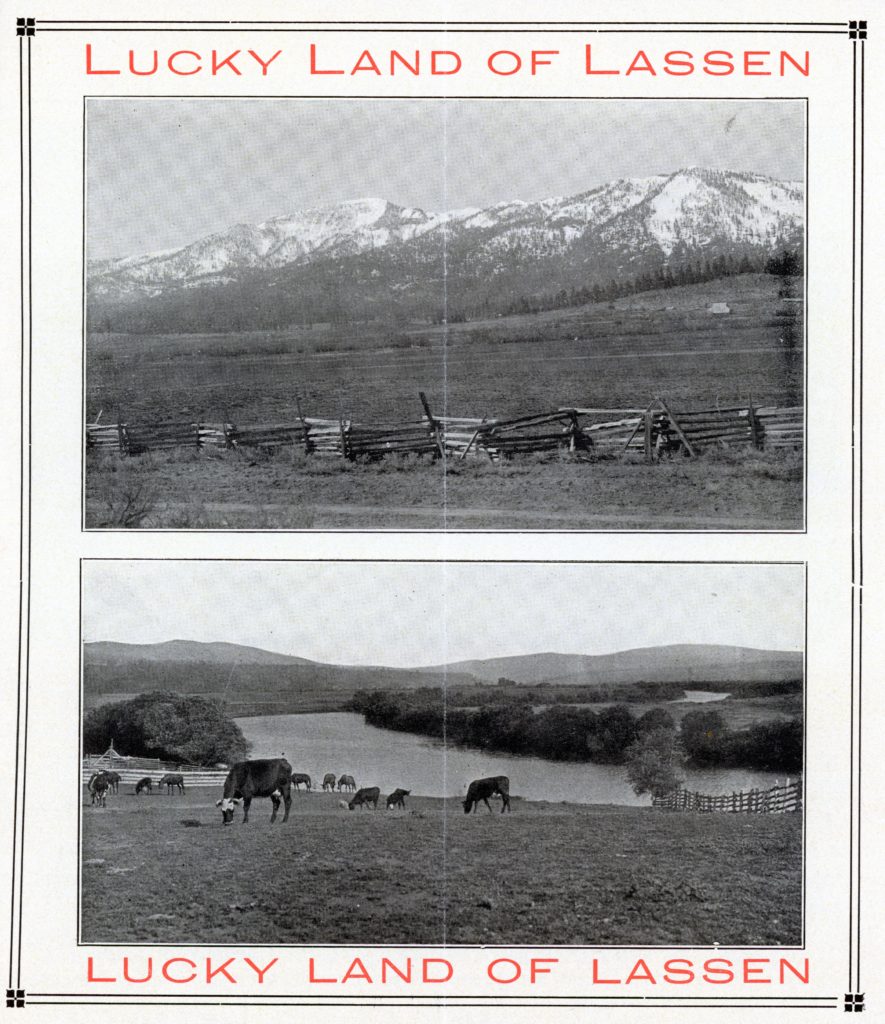
In 1914, Lassen County sought a slogan for promotional purposes, especially with the Panama-Pacific Exposition to be held in San Francisco in 1915. Thus, the Lucky Land of Lassen came to be, and would be used for several decades in promotional literature. After all the county was enjoying a good luck spell with the boom created by the Fernley & Lassen Railroad and the establishment of Red River Lumber Company’s lumber town of Westwood.
In future posts, we will explore some of the highlights of the Lucky Land of Lassen brochure was widely distributed at the Panama-Pacific Exposition, which even had a Lassen County Day. For example, in its description of Eagle Lake, it included one of the earliest printed references of the ice caves.
The wooden marker for Jesse Cole, Susanville Cemetery, November 1977.*
Those who have attended my cemetery tours, I tend to point out that there is a large percentage of unmarked graves. For many, it was a financial issue. A less expensive alternative to the traditional stone markers was wood. For whatever reason, wooden markers in this region were not widely used except for the Hayden Hill Cemetery. Of course, wooden markers do not hold up as well with the elements like stone, and eventually become so weathered that they are no longer legible. Or in the other extreme, a fire at Hayden Hill went through that town’s cemetery and destroyed all the wooden markers. There are only a handful of wooden markers in the Susanville Cemetery, and time has taken its toll on them, especially the Conkey graves of the 1860s. If would be a great project for someone who likes to do woodworking, to make replacements.
*On a final note, the other day I came across the following tidbit published in Susanville’s Mountain Review of January 1880 about Jesse Cole: “Hunters are slaying deer within a mile of town. Saturday, Jesse Cole found a herd of seven and killed all of them. The snow is so deep on the mountains that they cannot run far and are easy prey.”
Secret Valley is located approximately thirty-five miles northeast of Susanville. In the late 1880s, the region saw a surge in population with homesteaders arriving with the expectations of great things to happen by promoters of some reclamation projects. Thus, on May 6, 1890, the Secret Valley School was established.
During the late 1920s and early 1930s the school was known for its unusual schedule—it operated during the summer and was closed from November to February. The school closed in 1938. The last graduating class consisted of Emelia Diaz and Ida Nye. In 1940 the school district was annexed to Soldier Bridge.
Flood waters from breached earthen fill trestle, April 1938. Courtesy of Betty B. Deal
Construction of the line was stalled during the early 1930s, while Red River went through its financial reorganization. Finally, in July 1933, construction began at the west end near Hog Flat. A station was established where the Piute line connected with the Southern Pacific, and named Blair, after Kenneth Walker’s wife. At Hog Flat, Red River established logging camp #2. That summer Red River logged eight million board feet of timber and sold it to Fruit Growers. The following year the line was extended further east to Big Springs, and Camp #8 was established.
The year 1935 was a pivotal one for the Piute. Early in the year it was announced Red River would complete the line to Susanville—a distance of twelve miles from its terminus at Worley Ranch to the Fruit Growers plant. Continue reading Piute Logging Railroad – Part II→