Category Archives: History

Susanville Cemetery Relics

Shinn family plot, Susanville Cemetery, November 19, 2015

Over the years in the area surrounding and including the Susanville Cemetery various Native American artifacts have surfaced. In one particular instance the Lassen Advocate of 10 June 1881 reported the following: Indian Relics. In digging the ditch to lay pipe for conducting water to the cemetery, eighteen inches below the surface, Mr. Frost came upon four stone implements that were once used by Indians or some other race of people. One of the stones is evidently a mill for making flour from seeds or acorns, the other three were probably used for dressing skins. They have fallen into good hands, Mr. Frost is collecting these interesting relics of the past to be preserved.

Of particular note the grave of Mr. Frost will be included in September’s cemetery tour, as part of the centennial celebration of the Lassen County Courthouse.

Subscribe!

Roosevelt Pool Opens

Roosevelt Pool
Roosevelt Pool, circa 1940

It will not be too much longer when the new community pool, that replaced the Roosevelt, will open. Yet, it was on this date, April 17, 1938 that the Roosevelt Pool opened.

The Works Projects Administration (WPA) was part of President Roosevelt’s New Deal program to help stimulate economic recovery brought upon the Great Depression of the 1930s. For years Susanville residents desired a swimming pool. Frank O’Kelly spearheaded the movement and wanted to convert the Fruit Growers ranch (now Susanville Ranch Park) into a recreational facility complete with a golf course, swimming pool, picnic area and playground. Everyone liked the concept except for Fruit Growers who owned the property and were not interested in leasing or donating the property. O’Kelly undaunted by the setback persevered and it was decided to move forward with a community pool. The plans were submitted and the WPA approved it for a cost of $28,433.

Subscribe!

The other Eagle Lake Proposal

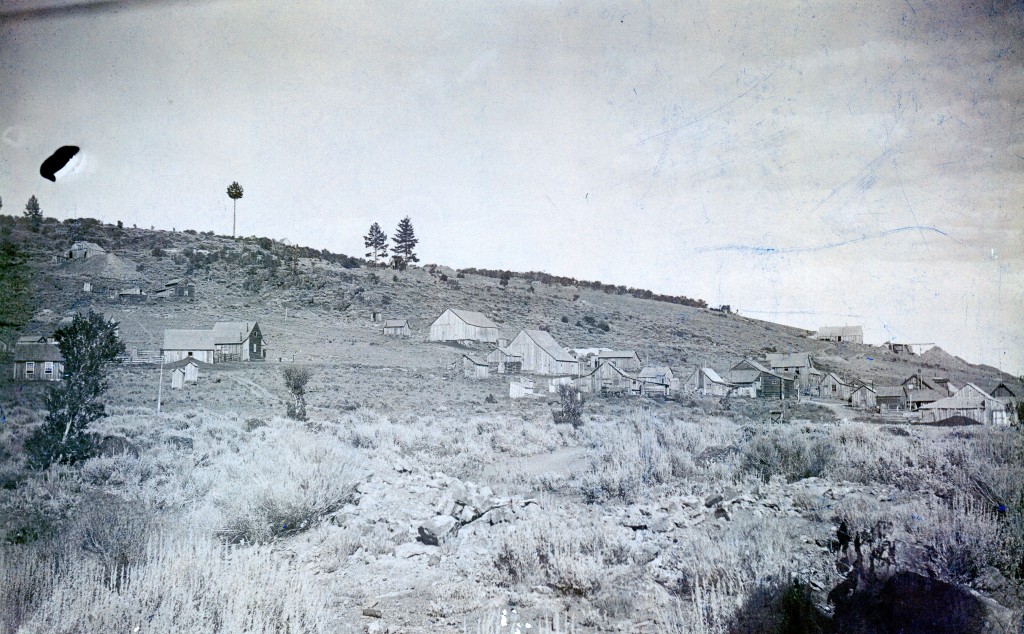
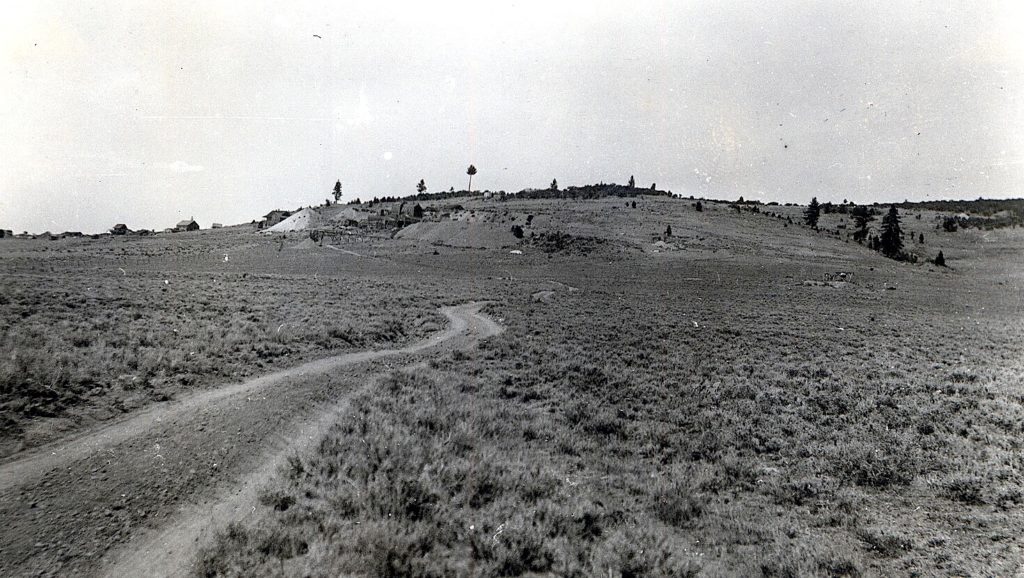
Hayden Hill, 1920.

Of what was one of the more unusual uses of Eagle Lake water was a proposal to use that resource in the mining operations at Hayden Hill, located some twenty-five miles north of the lake.

During the 1920s and 1930s, both the mining activity and the population at Hayden Hill declined. In 1934, Stratton & Stratton of Spokane, Washington consolidated the mine ownership. They had high hopes to revive the Hill. One of the main drawbacks that Hayden Hill suffered was the lack of water for milling. In 1938, Stratton & Stratton proposed to pipe water from Eagle Lake, at a rate of 2,500 gallons per minute. This scheme never came to fruition.

Subscribe!

Doyle, 1948

Courtesy of Marie H. Gould

Town of Doyle was surveyed and subdivided in 1911. However, there was plenty of activity there, since the Western Pacific Railroad had already established a station. So, the new town of Doyle was serviced, not by one, but two railroads, the other being the NCO. Yet, changes were on the horizon and Doyle like so many rural communities suffered from the effects of World War I. Many of its residents, and the regional homesteaders, never returned seeking new opportunities elsewhere.

In the 1940s, Doyle experienced a revival, due in part of the establishment of the nearby Sierra Ordnance Depot. In 1948, the Doyle Civic League proclaimed: “There is a boom on in Doyle.” The League cited among other things that the community boasted three grocery stores, three gas stations and two taverns with cafes.

Support by subscribing.

Providence Mine – Hayden Hill

Hayden Hill
Hayden Hill, 1894

Hayden Hill’s first mine,  was named the Providence. In the early 1870s, Hayden Hill was sometimes referred to as Providence. The following whimsical account is from the Mountain Tribune of Bieber, April 22, 1882 that explains how the name came to be: “While at Hayden Hill this week in search of information, we inquired of Ben Bradshaw which was the first claim located on the Hill and he informed me that the Providence was the oldest claim. Being curious to know why it was so named he said it was located and owned by ‘seven preachers and two white men.’ We record this fact for the benefit of the future historiographer of the Hill.”

Subscribe!

The Tax Man Cometh

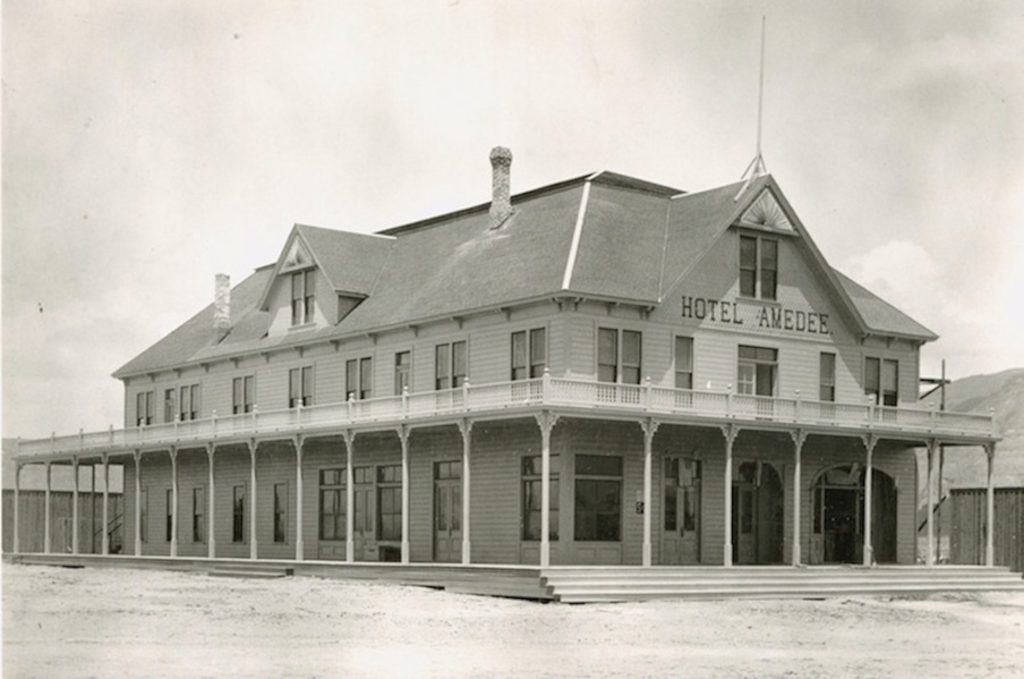
The Amedee Hotel in its prime.

As county property taxes are due today, throughout time there are those who protest the taxes and the valuation of their properties. Today, we examine one episode that involved Lewis W. Brubeck and his Amedee Hotel property.

S.N. Griffith had the hotel constructed in the spring of 1892, at a reported cost of $25,000. On August 26, 1892, Brubeck acquired the hotel for $5,000.  On July 10, 1899, Brubeck filed a protest over the hotel’s assessed value with Lassen County. In his affidavit, he stated not only had the property depreciated over the years, but the railroad’s intention to extend its line north, the property value would even be worth less. Brubeck informed the Assessor that he would take $2,000 cash for it, though the Assessor had it valued at $3,000. Brubeck’s appeal was rejected. In November 1900 he sold the property, though the record is not clear whether he received his asking price of $2,000.

Subscribe!

Bird Flat School

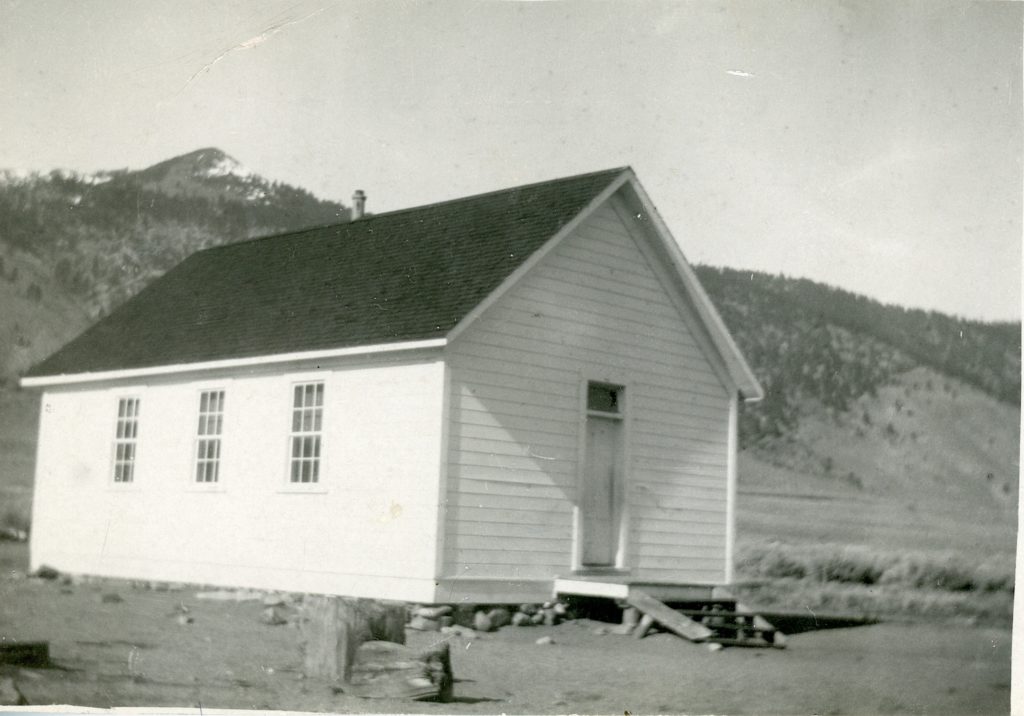
This rural Honey Lake Valley school was located approximately halfway between Milford and Doyle. It was established on January 7, 1896. That summer the residents built the schoolhouse. The school opened in the fall with fourteen students, Tillie Downing was its first instructor. From 1934 through 1938 the school was closed for lack of students. It re-opened in 1939. In 1959, it closed for the last time and annexed to Long Valley.   The schoolhouse, situated along Highway 395, has had many uses since its closure, presently it has since been converted into a private residence.

Subscribe!

Introducing Ebenezer C. Brown

E.C. Brown. Courtesy of Ted Johnson

Ebenezer Cooley “Ben” Brown lived an interesting, varied life. The Louisiana native wore many hats during his tenure in the Honey Lake Valley, a rancher, shop keeper, tugboat captain, to name a few.

Orphaned at an early age, in 1874 he left his native Louisiana for Baker City, Oregon to work on a ranch, save some money and further his education. His brother, Rutherford Brown had come to California in 1861, first working in mines, and later became an attorney. Ben followed in his brother’s footsteps, at least with the mining portion and for eight years prospected various places in the West, with not much success.  His brother, Rutherford came to his aid. In 1884, he purchased the Hamilton Ranch in the Honey Lake Valley from Pheobe Masten Hamilton Slater for $12,000. (The property is known today as the Fleming Unit of the Honey Lake Wildlife Area.) Continue reading Introducing Ebenezer C. Brown

Eagle Lake’s Highest Level

Gallatin Beach and Peak, 1916. Courtesy of Wyn Wachhorst

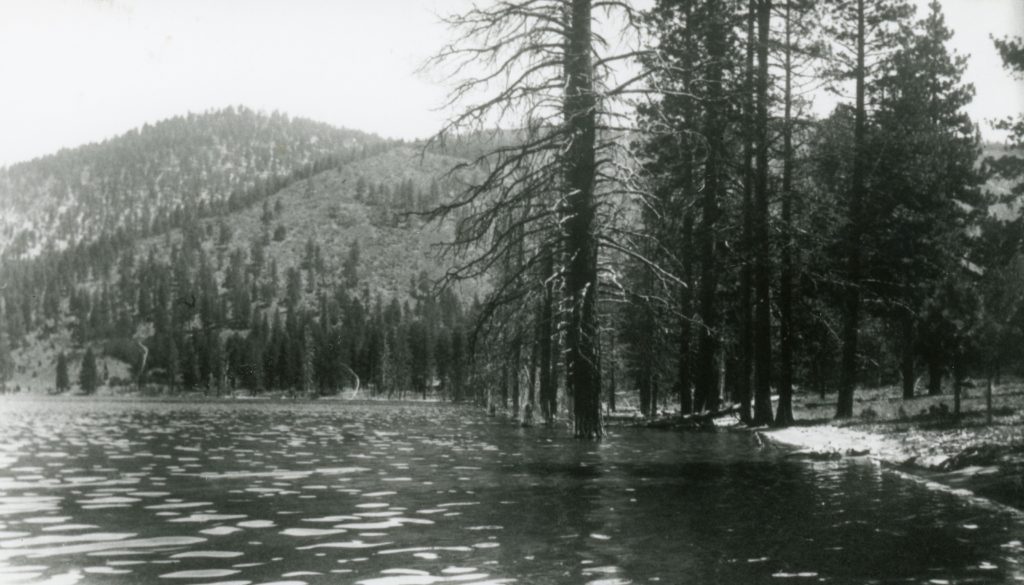
In the spring of 1917, Eagle Lake reached its highest level ever known at 5,125 feet. For the previous ten years the region had experienced one of its wettest known periods. Since the Anglo settlement of the 1850s the region had been void of any prolonged drought. There would be one and maybe two years of below normal precipitation years. Between 1875, when the Government Land Office provided the first accurate level of the lake, to 1917, the lake’s water level had risen fourteen feet.  At that time, the lake covered a surface area of 29,000 acre-feet. Between the Bly Tunnel and successive droughts in 1937, its surface area had been reduced to 16,000 acre-feet.

So after this wet winter we have experienced, the level of lake as of April 3, 2017 stood at 5095.78, and the level of the lake has risen nearly five feet since November 1, which  information was provided by Lassen County Surveyor Don Willis, who monitors the lake’s level every month.

Subscribe!