Today marks the 100th anniversary of Lassen Junior College Initially, it was a separate department of Lassen Union High School and classes were held at the high school. In 1941, a separate facility was created. In 1946, with increased enrollment a new college building was built to the west of the high school. In 1965, the college separated from the high school to be known as Lassen Community College. In 1970, groundbreaking ceremonies were held for the initial construction of the current campus on Highway 139. Each week will explore the many facets of its history.
Tim
P.S. – If you have a Lassen College story to share, please by all means to do so, to preserve its history.
Big Meadows Maidu Camp, 1887. Courtesy of the National Park Service
As I slowly compile a list of books pertaining to regional Native Americans this is my first recommendation. The Northern Maidu by Marie Potts. Marie (1895-1978) was born at Big Meadows, now Lake Almanor, Plumas County. She recounts her childhood and the ways of the Northern Maidu. I highly recommend this slim volume.
In 2022, KQED published an article about Marie’s life. You can read it here
While the Northern Maidu is out of print, it is widely available at used book outlets. Personally, I use Bookbinder.com.
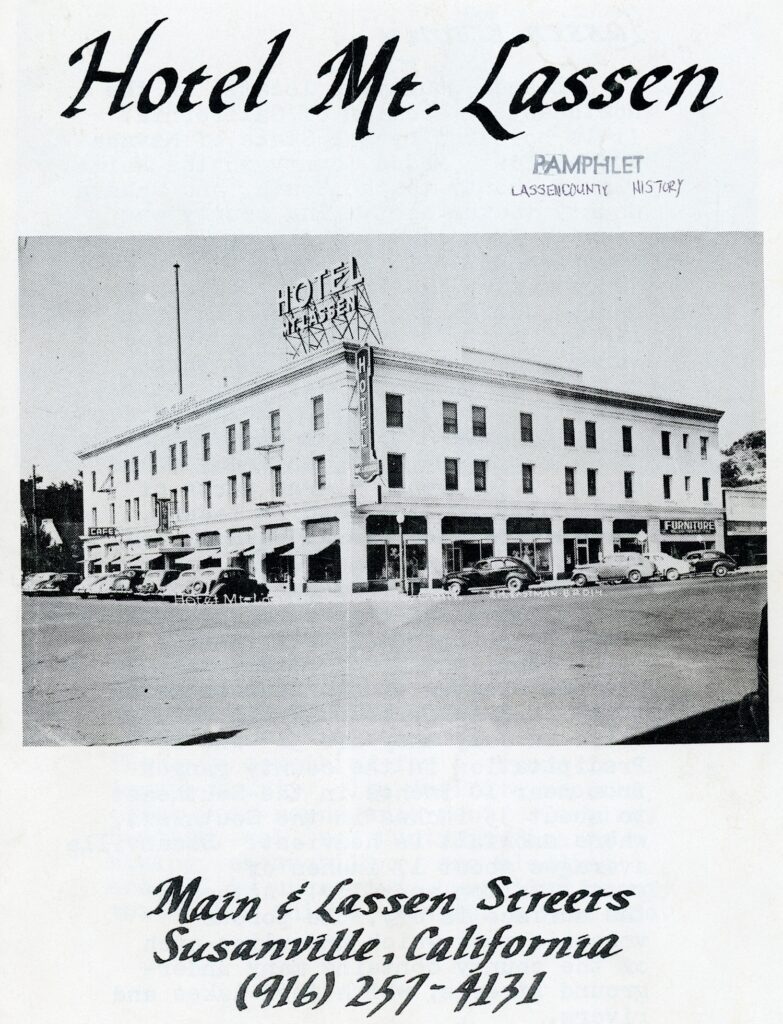
Yesterday’s feature was Go Exploring. Today’s illustration is the cover a 1981 brochure of Susanville’s Hotel Mt. Lassen. It is standard chamber of commerce propaganda. There is usual description of Lassen County weather. It was the last sentence on that topic that caught my attention: “Although the surface is dry, the porous volcanic rock which underlies much of the county contains many underground streams, which feed lakes and rivers.”
Thanks to the late Francis “Fritz” Riddell, a well known archeologist, we have an account of an underground stream and a bonus a petroglyph story as well. I am working on the finish touches so it should appear next week.
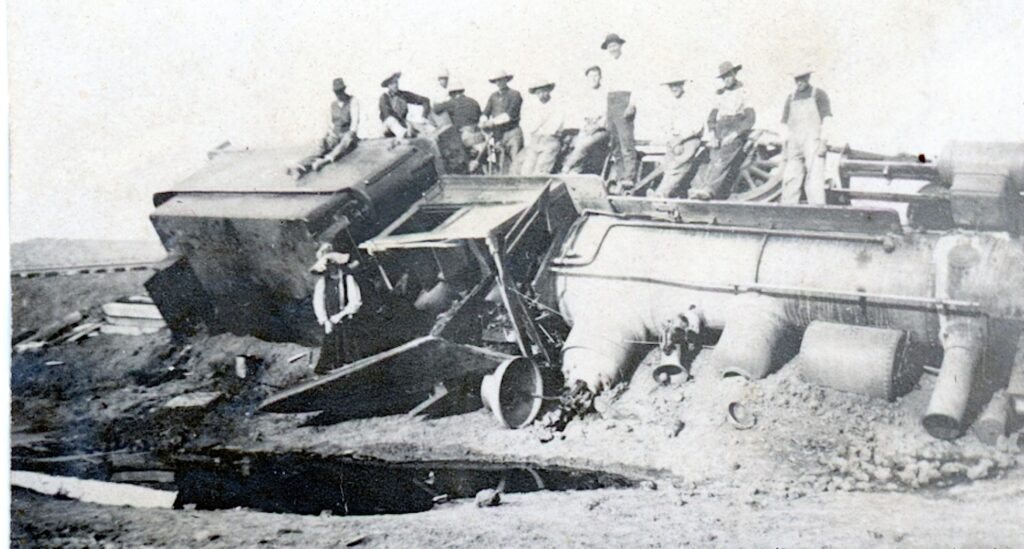
The Nevada-California-Oregon Railway, the nation’s longest narrow gauge railroad of the 20th century had an illustrious history, depending on your viewpoint. From 1884 to 1925, the NCO was owned by the Moran family, New York bankers. Originating from Reno, Nevada its goal was the final destination to The Dalles, Oregon on the Columbia River. It took the railroad 32 years just enter in Oregon, at Lakeview, the southern portion of that state, and it did not go any farther. In 1914, the new general manager, Ramsey Cox, remained optimistic of the NCO’s future and times were good. It did not last long. Three years later, the NCO sold a 63 mile segment from Hackstaff (Herlong) to Reno to the Western Pacific.
In 1921, the NCO attempted to abandon the railroad, but State Railroad Commission did not approve it. The NCO limped along, as its 159 mile railroad went from to nowhere to nowhere. Eventually, the NCO had a suitor in the name of Southern Pacific Railroad On April 30, 1925, an agreement was reached wherein the Southern Pacific acquired the NCO. It was not publicly disclosed as to the purchase, price. It was noted the transfer included stocks and bonds, but again no valuation. It was not until 1926, the Southern Pacific gained physical control of the NCO. In 1927, the railroad bed was converted to standard gauge, and the narrow gauge railroad was officially over. However, the Moran’s operated the NCO as a shell company and it finally ceased in the fall of 1929.
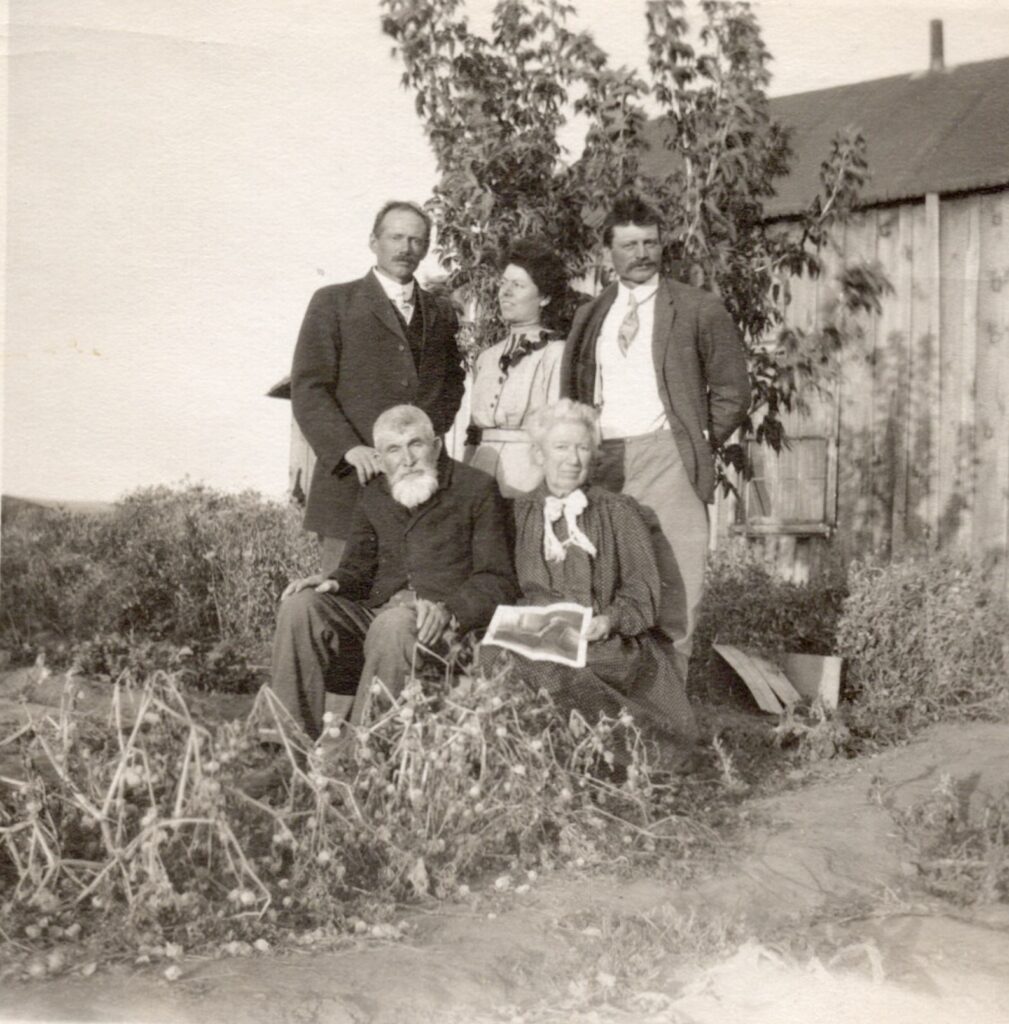
Caudle Famiily. Seated Alfred and Mary Caudle. Standing Carl, Mamie and Marvin Caudle Taken at Mamie Caudle’s homestead, June 1912.
In 1906, Marvin Caudle located on a homestead some ten miles east of Amedee. In time, his parents, brother and sister would locate there. This later became known as the community of Stacy. All five family members are buried in the nearby Honey Lake Cemetery.
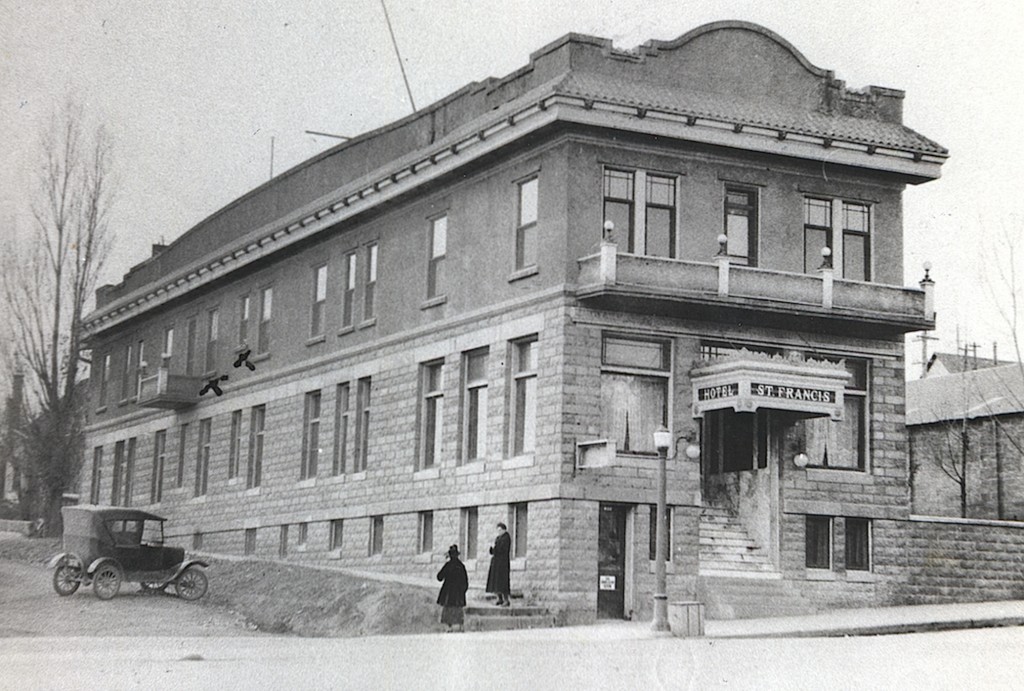
St. Francis Hotel, circa 1919. Courtesy of Art Almeda
For years, before the St. Francis was shuttered, the Round Up Room, the hotel’s bar, was a popular gathering place. When St. Francis opened it was denied a liquor license to operate a bar.
In the spring of 1914, St. Francis Hotel opened. Gus Steinhauser was hired as the manager. He applied for a liquor license from the City of Susanville. It did not go well. At the City of Council meeting of April 28, 1914, it was the first item on the agenda. Councilman Emerson made the motion to deny the license. Councilman Rankin seconded it and the application was denied.
The protest began. First was Isaac Knoch, followed by Steinhauser. Bot the gentleman stated a hotel bar was not your typical saloon. Steinhauser stated it would not pay him to open a dining room if he could not serve guests wines or liquors with the diner’s meals. It was an exercise in futility. At the conclusion, Councilman Rankin suggested to amend the liquor license ordinance to be limited to seven, and when those licenses lapsed, they could not be renewed. Eventually, the St. Francis prevailed and the liquor license issued.
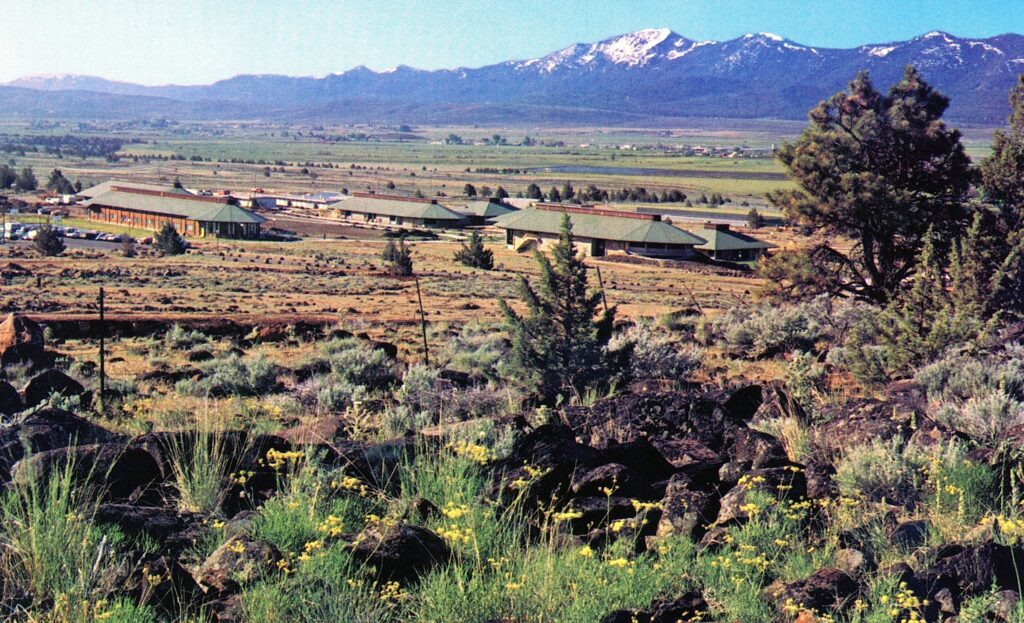
Lassen College campus adjacent to Highway 139 under construction
Over the next few weeks we will explore some Lassen College’s history as in May the institution will observe its centennial. Of course there will be features such as gunsmithing, forestry, Paul Bunyan Days, Willard Hill and groundbreaking for the new campus.
My family has had a long association with the college. My great aunt Olive Farwell Murrer was a member of the first graduating class of 1927. My Aunt Irene Bengoa Purdy Trout was a Lassen College graduate and later was elected a college board trustee. In the mid-1980s I taught a course in Research Techniques in Local History at the college. I also served on the college board from 2011-2020.
If you have a Lassen College story to share let me know.
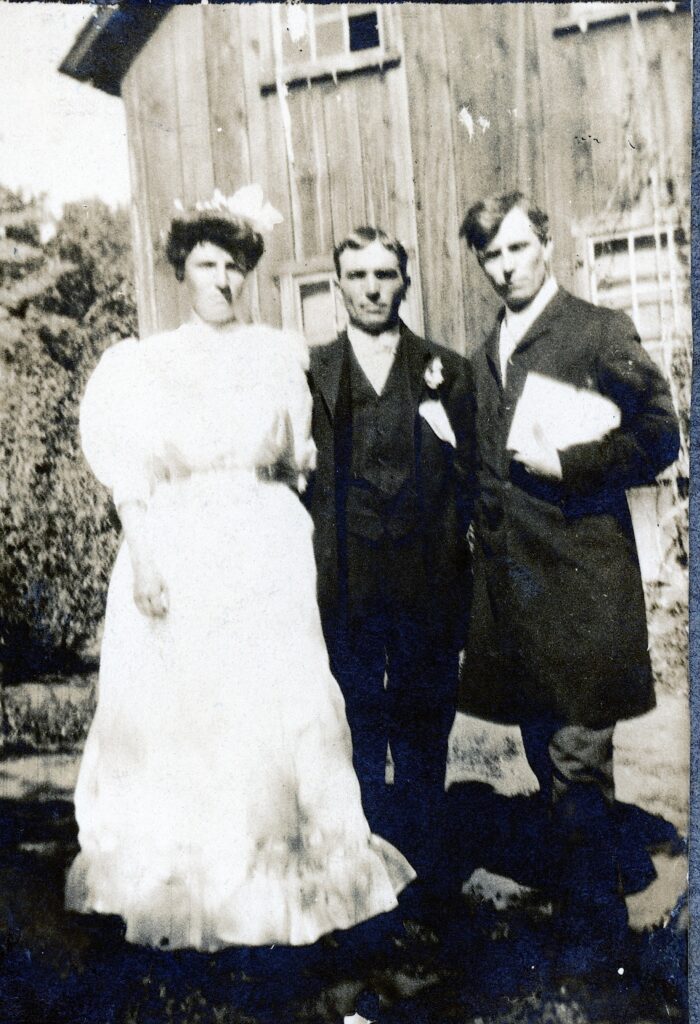
David and Theda (Williams) Fritter wedding portrait 1906.
Some years back, I received an unexpected call from the Eagle Lake Ranger District, Lassen National Forest. There are petroglyphs on the west side of Eagle Lake that are on the forest service land. Over century ago, two Eagle Lake residents, Dave Fritter and Charles Spalding etched their names along side of the petroglyphs. The forest service wanted who those two individuals were. I obliged.
There are petroglyphs on the east side of Eagle Lake. Personally, I have not observed them, but I have never done due diligence to locate them.
Closer to home, i.e. Susanville there are a handful of petroglyphs. Most on private property, but one site is owned by the City of Susanville.
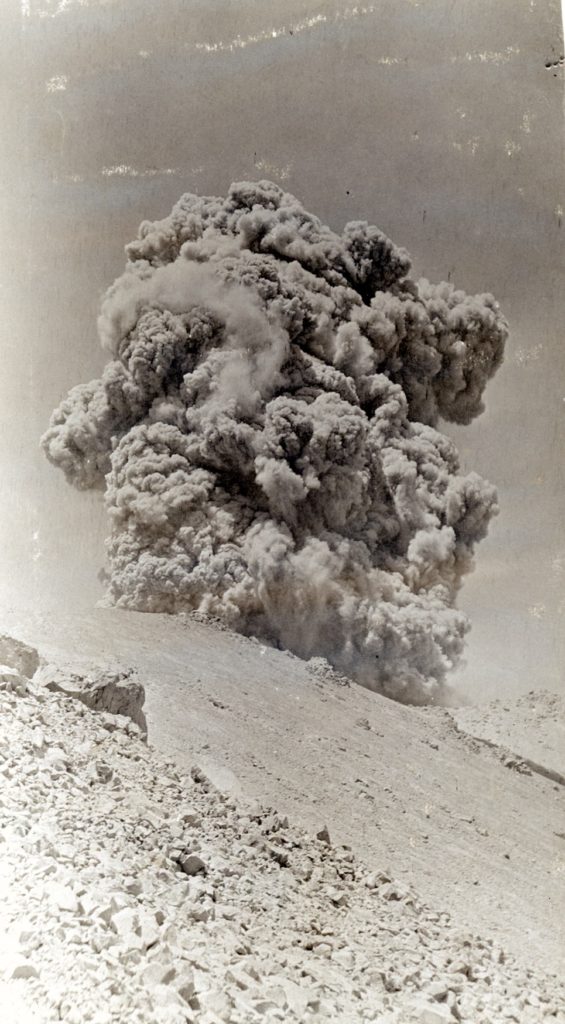
There was a lot hard work involved with the establishment of Lassen Volcanic National Park. If it was not for violent volcanic eruptions of Lassen Peak in 1914-15, the park might not have been established. In 1916, when President Woodrow Wilson signed the law to create Lassen, for the most part it was in name only. Congress only allowed an annual appropriation of $5,000 a year,. It should noted due World War I , Lassen never received a dime. To make matters worse the initial administration of Lassen was handled by Yosemite National Park officials.
Yet, Lassen Park advocates were a persistent bunch and they explored a variety of avenues. Take for instance in 1919, when former U.S. President Theodore Roosevelt died, consideration was given to rename Lassen after Roosevelt. Not only would it be a memorial in his honor, but it was considered a venue to overcome its financial dilemma with Congress. On the face it was a worthy idea, but it never happened. By the mid-1920s, Lassen overcame the appropriations barrier, barely.
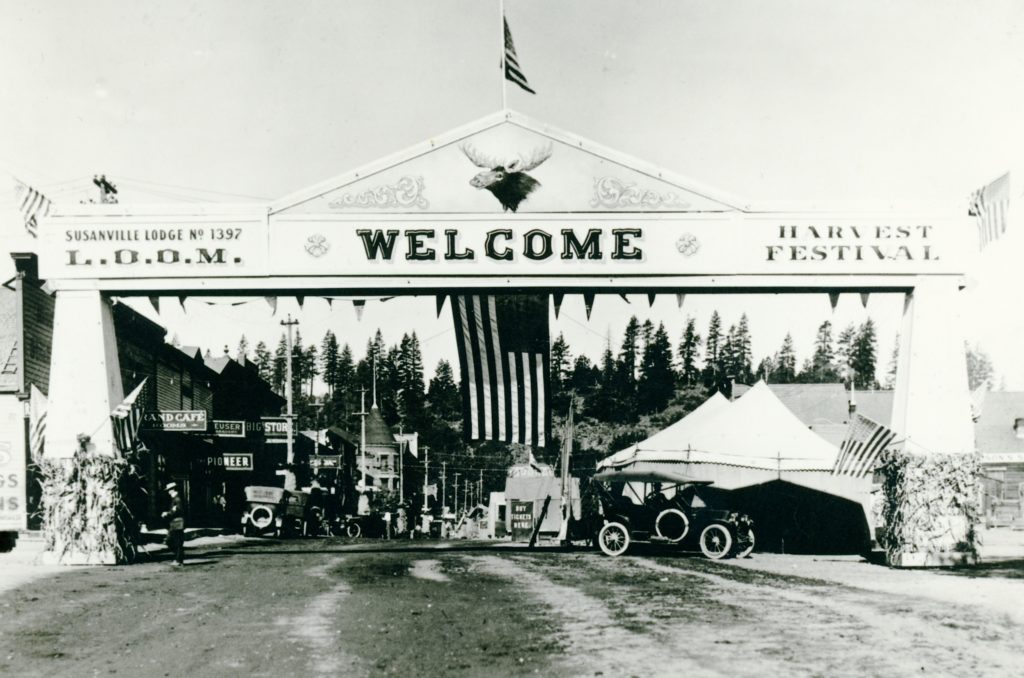
The arch was a temporary affair, and a windstorm two weeks later, blew it over.
Those who reside or have resided on the east slope of the Sierra Nevada know all too well that they are prone windstorms. Some areas worse than others.
On September 18, 1914, a particularly strong windstorm hit the region. One account reported that dust from Susanville’s Main Street was so bad, that occasionally one could not see buildings on other side of the street! Numerous reports of damage to Susanville businesses were reported, chief among them was large plate glass window that was recently installed in the Del Mar Building was shattered. Just over two weeks ago the local Moose Lodge sponsored a Harvest Festival and placed an arch at the intersection of Main and Gay. It was toppled.
Trees were uprooted and damage to fruit crops was extensive. A.H. Taylor, whose apple orchard on North Westherlow Street was a victim. He estimated 100 boxes worth of apples were blown off his trees.