Category Archives: History

Westwood’s Roller Skating Rink

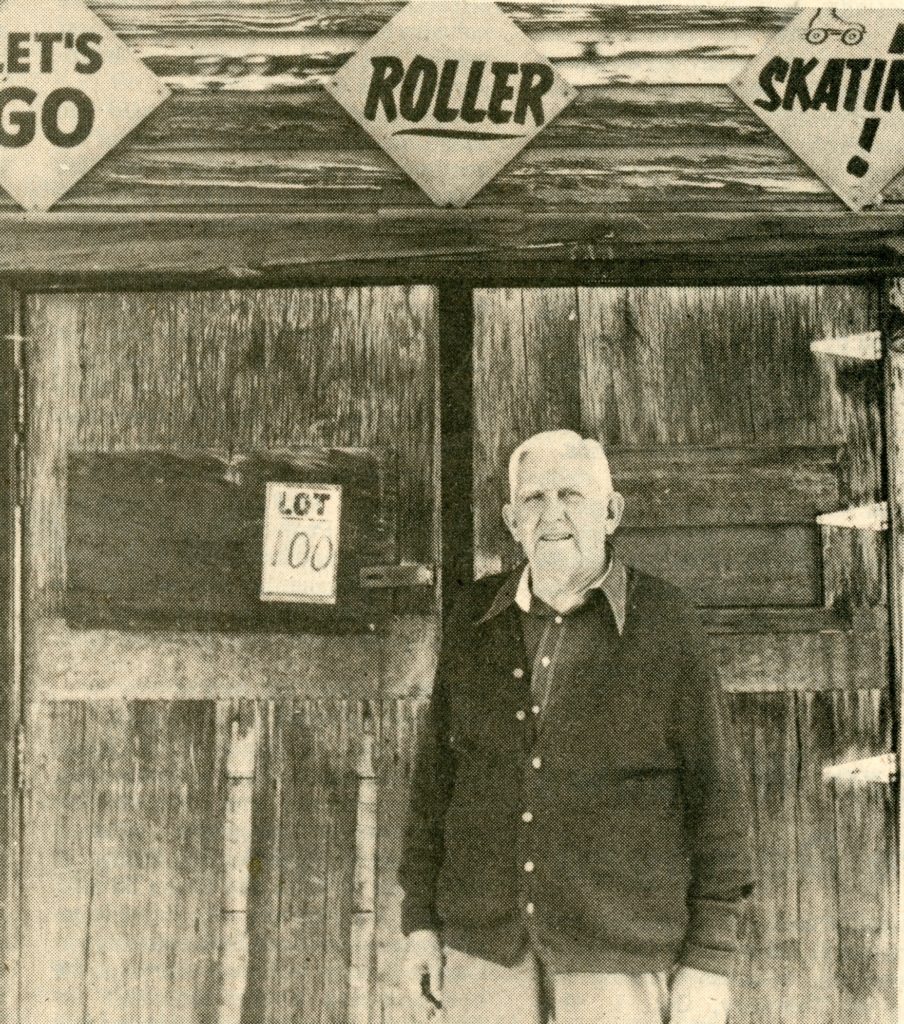
Charlie Munroe posing at the end of an era.

A long time fixture of Westwood was Charlie Monroe and his roller skating rink. Timing plays an important role in many events, being at the right time and right place makes a big difference. In the 1930s, Westwood’s Red River Lumber Company began divesting of  assets to lease out operations they had done in the past. It was an effort to economize.

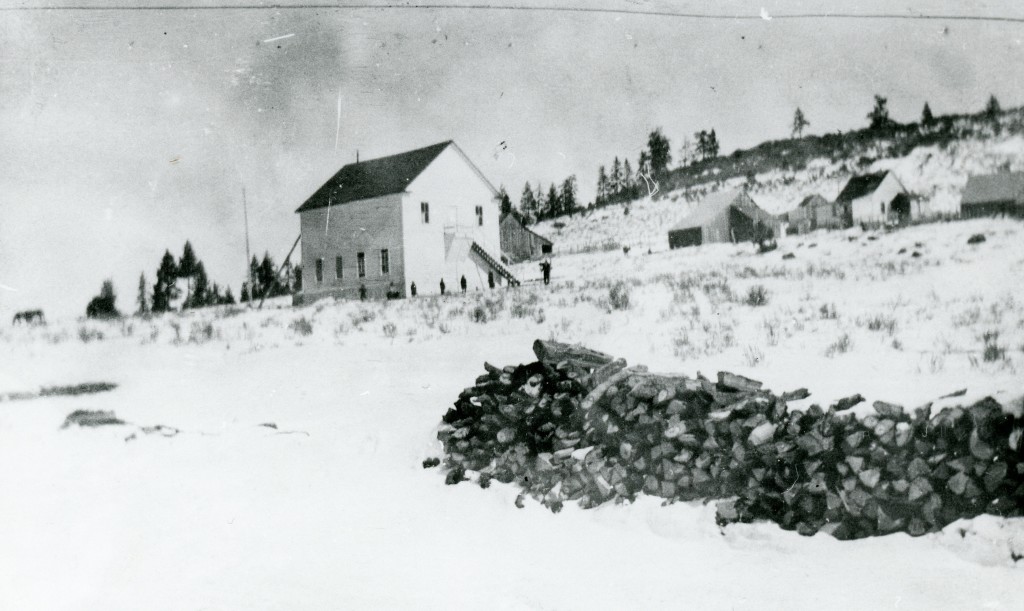
The Westwood Auditorium was built in 1920 at a cost of $20,000, the most expensive Red River public facility to date. It was used for multiple purposes. In 1937, Monroe leased the building from Red River. It was an oral agreement on day to day basis. Through successive ownership of Westwood, that agreement was honored. In the fall of 1976, Greater Westwood, Inc. owners of the property held a public auction, and the roller skating rink was one of them. It sold. After nearly forty years of operation the rink closed.

Subscribe!
The Ice Man

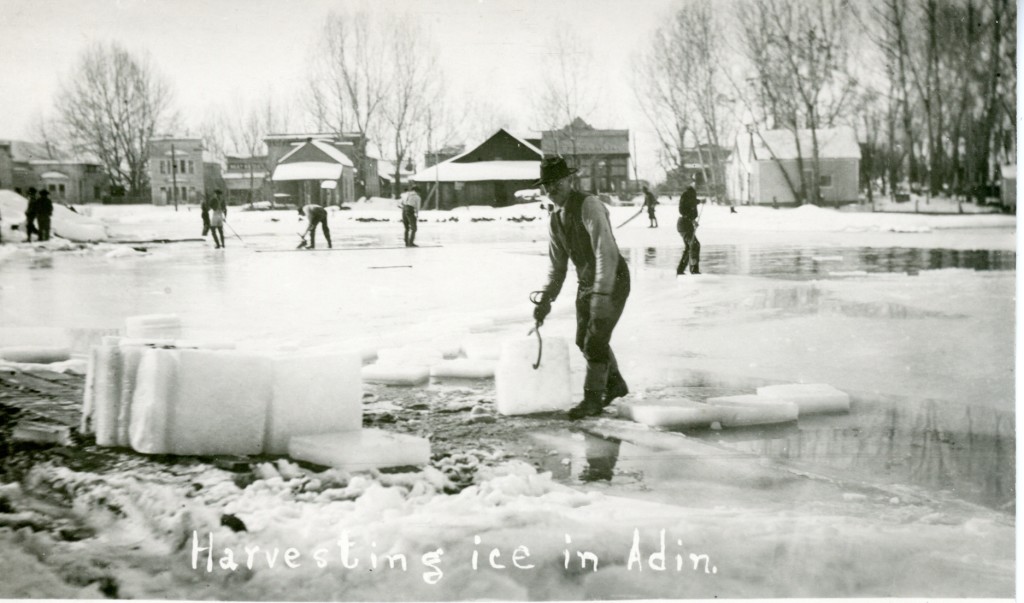
Ice Harvesting
Ice harvesting at Adin, 1911

Way before the days of refrigeration, one of the annual rituals in the region was the harvesting of ice. As anyone who has lived around these parts for any length time, winter can be finicky. Such was the case in January 1904 when the Susan River was frozen over, the ice being over eight inches think. It was imperative to harvest as much ice as possible before there would be a change in the weather.

Now enter Susanville’s sporting fraternity on a betting proposition in which considerable money was waged. The bet was whether Andy Buchler could cut twenty tons of ice in ten hours. Buchler surprised everyone by sawing twenty-two tons in eight hours!

Subscribe!

A Bit of Trivia

Westwood Depot

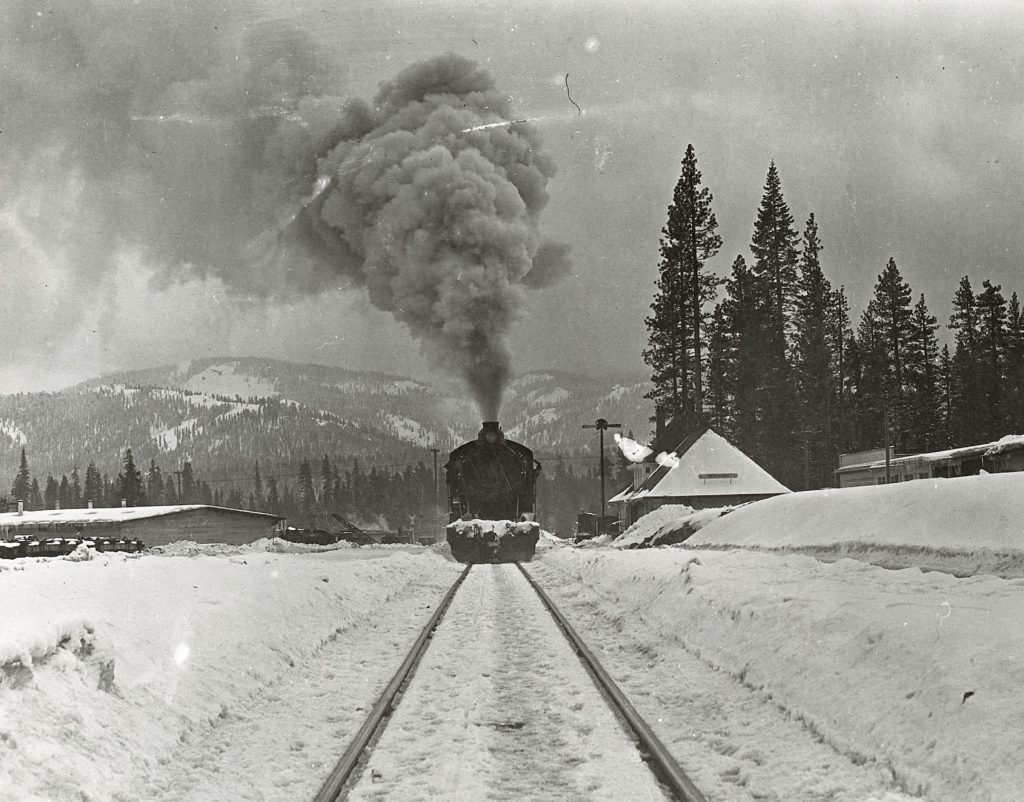
The December 1955 floods caused considerable damage to the railroad line between Susanville and Westwood. With the imminent closure of the lumber mill at Westwood, the Southern Pacific Railroad decided to close that segment, rather than spending significant amount of money when freight would decrease. Since they did not abandon the line at that time, if a person wanted to ship something by rail from Susanville to Westwood, or vice versa, Southern Pacific could only charge the freight costs between the two points. It was their problem to figure out how to deliver the freight and bear the additional cost. In 1976, Southern Pacific began the formal process to abandon that segment of the line, which we will explore in the near future.

Subscribe.

Susanville Post Office

The grave of Isaac N. Roop, Susanville Cemetery, circa 1966.
On March 17, 1859 the Susanville Post Office opened for business. At its helm was Isaac Roop who served as its first postmaster. When it opened, postal authorities assumed that it was in Utah Territory’s jurisdiction and the earliest postal cancels are marked, “Susanville, U.T.” In 1937, after nearly eighty years of being in existence, it finally got a home of its own. At that time, postal authorities purchased a lot on North Lassen Street from Stanley Wade for $6,750. Shortly thereafter construction began on the post office and opened its doors to the public on June 1, 1938.

Subscribe!

St. Patrick’s Dinner, 1976

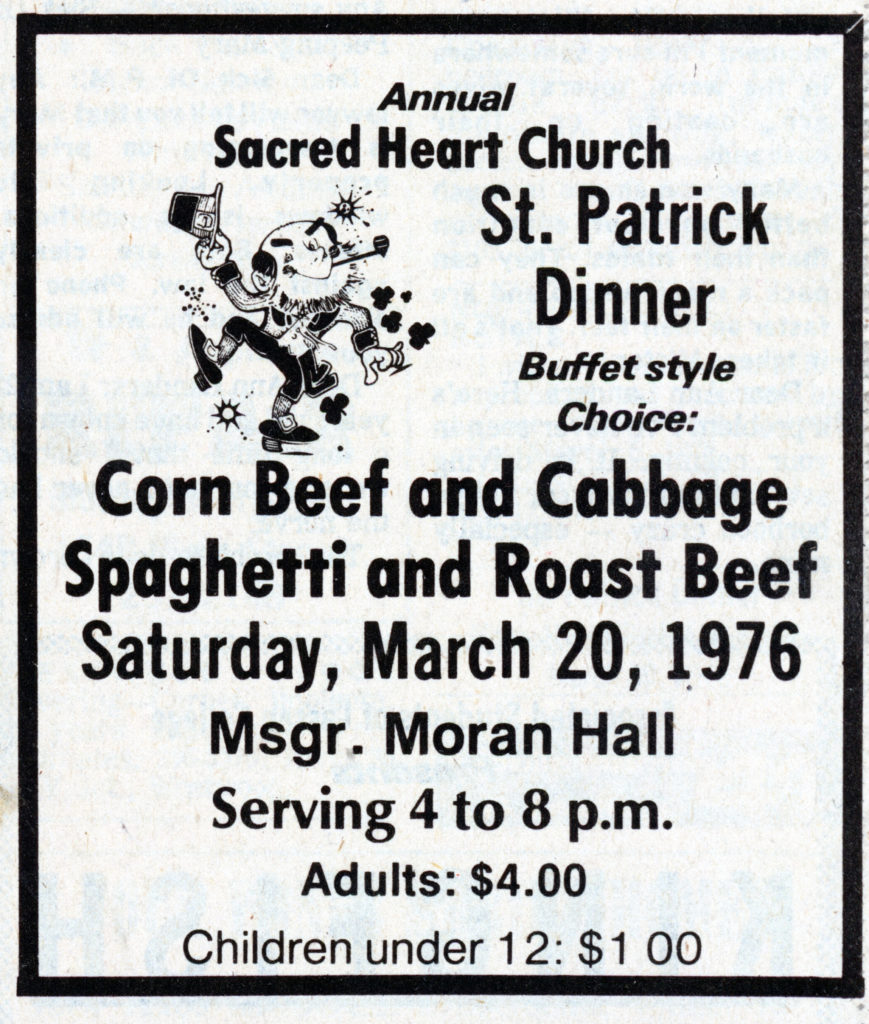
The church’s 1976 advertisement.

If you happen to be in Susanville tomorrow evening, stop by Monsignor Moran Hall on North Weatherlow Street for Sacred Heart Church’s St. Patrick’s Dinner, which they have held every year since 1917. The menu, of course, has evolved over the years. For decades the traditional corned beef and cabbage was never served. In 1974, Father William Storan was appointed the parish priest. In 1975, he requested that corned beef and cabbage be placed on the menu and that the church would slowly phase out spaghetti and roast beef.

Donate!

Red River’s Rumor Mill

Camp 38
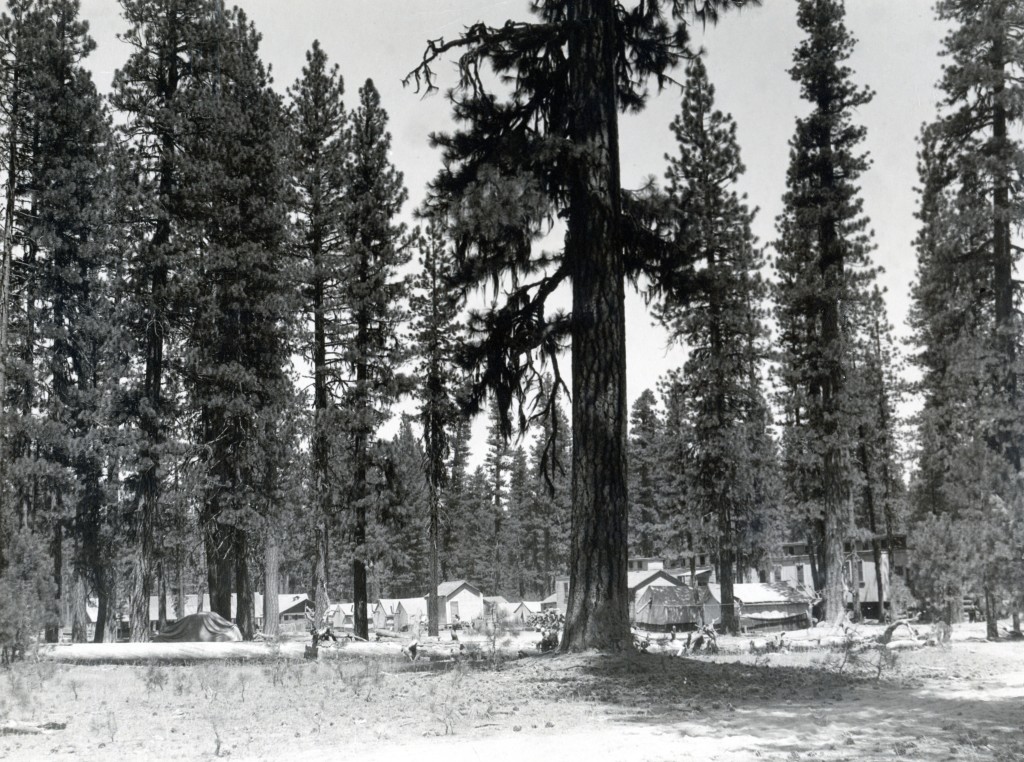
Camp 38, Red River Lumber Company, 1922. Courtesy of R.S. Pershing

While the Red River Lumber Company was well known for its mammoth sawmill at Westwood, the company generated its own rumor mill. With its extensive timber holdings in a five-county region speculation as to its next move was rampant.

This readily apparent with its logging operation on the east shore of Lake Almanor. By the time its railroad logging line reached Camp 38, halfway down the shoreline, tongues began wagging whether the line would extend into Indian Valley and connect with the railroad line serving Engel Mine. This would then give Red River access to the Western Pacific Railroad. It was a thought that company officials gave considerable thought. While it did not quite transpire it was part of the impetuous for the Western Pacific’s High line that became a reality in 1931.

Subscribe!

All Indian Basketball Tournament

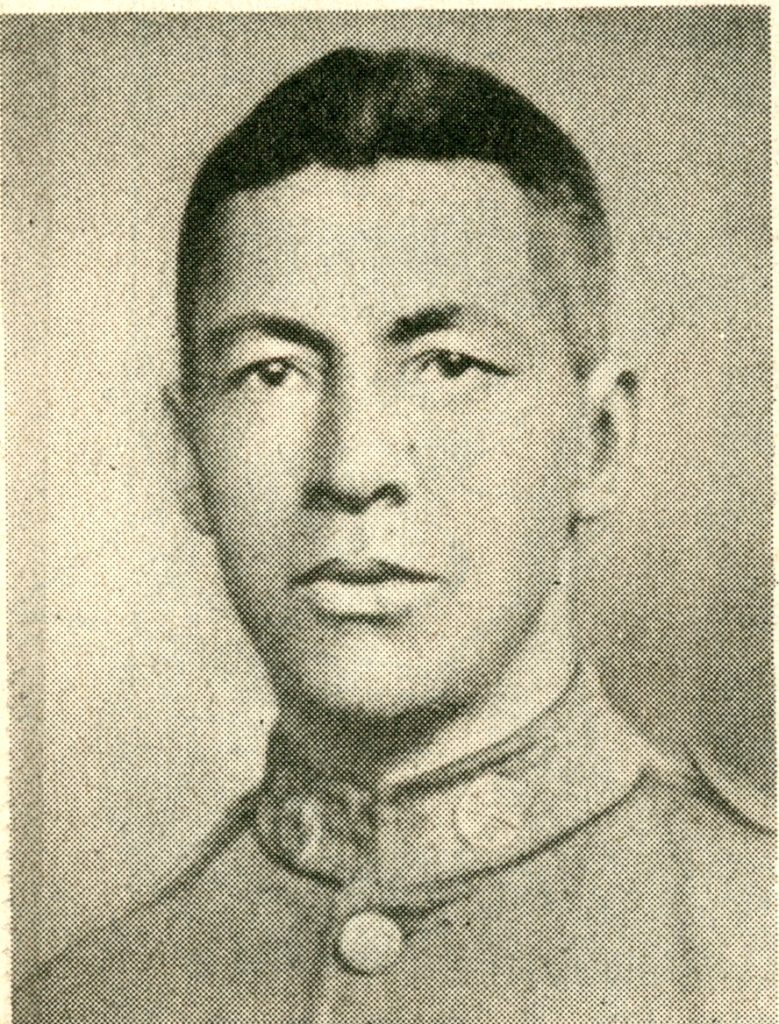
Thomas Tucker. Source: Lassen Advocate of March 10, 1976

In 1970, the Lassen County American Indian Organization held its first annual All Indian Basketball Tournament. In 1976 during the nation’s bicentennial a special championship trophy would be in the memory of Thomas Tucker, a Maidu. Tucker fought in World War I with Company L, 363 Infantry, 91 Division of the U.S. Army. He was killed in action on September 28, 1918 in France. Susanville’s American Legion Post 204 was named in his honor. Oh, and by they way, the Bridgeport Renegades won the tournament by crushing the North State Hawks of Redding, 100 to 53.

Subscribe!

Honey Lake Dumping Grounds

Eastern Honey Lake Valley, February 15, 2018

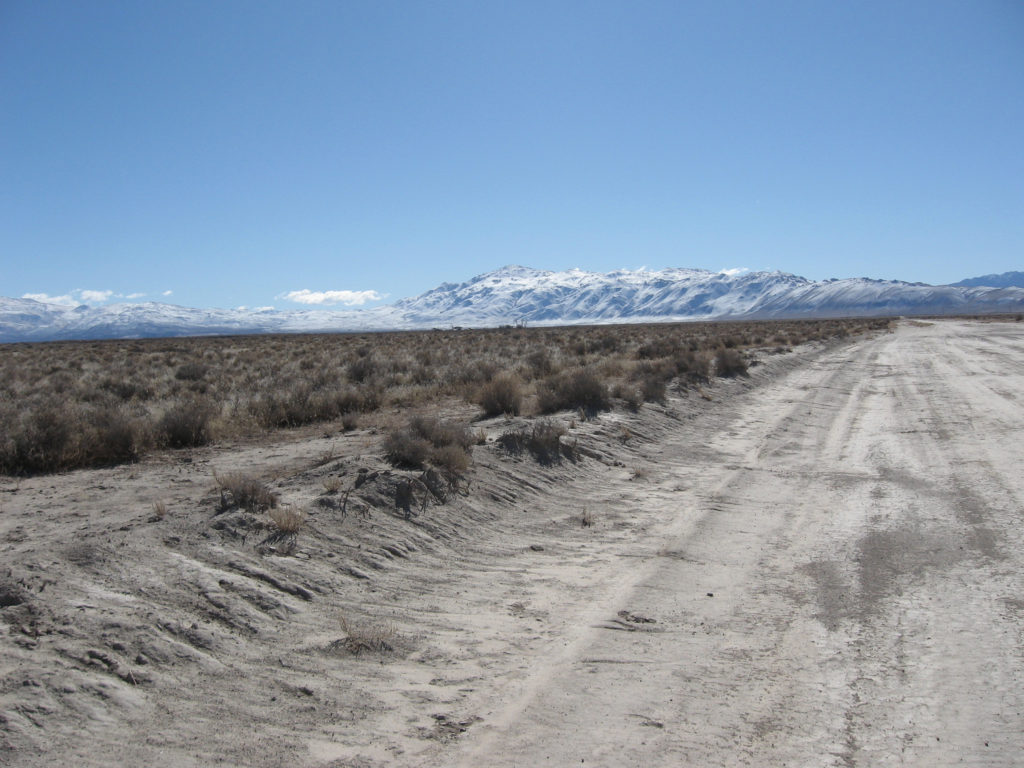
There have been a lot of things proposed for the Honey Lake Valley, some good and some well not so desirable. In the late 1960s, the City of San Francisco chose the Honey Lake Valley as ideal place to send their garbage. One reasons why Honey Lake Valley was that the garbage  could shipped by rail making it economical.

Of course the locals were not amused and opposition mounted. The debate lasted nearly a decade. In letter to Lassen Advocate’s Open Forum, an incensed Milford resident, Audrey Stevens wrote:

”Lassen County should be declared a disaster area with every citizen joining in a mass to protest the greedy senseless plan to buy 4,500 acres of land east of Herlong for $100,000 (our money) to be used as a dumping ground for San Francisco garbage, which includes rats, disease, smell and ugliness for as long as this earth survives.”

Subscribe.

Hayden Hill Update

Hayden Hill School, 1918. B. Dorsey Collection

A reader asked about the current status of Hayden Hill. When Lassen Gold shut down in 1997, they began their reclamation process. As a member of the Lassen County Planning Commission we are briefed from time to time as to the status. It should be duly noted that the Lassen County Planning Department is the lead agency in the reclamation process. It should also be duly noted that there is no public access to the site and the property is fenced.

Subscribe!

Lassen County Hospital, 1914

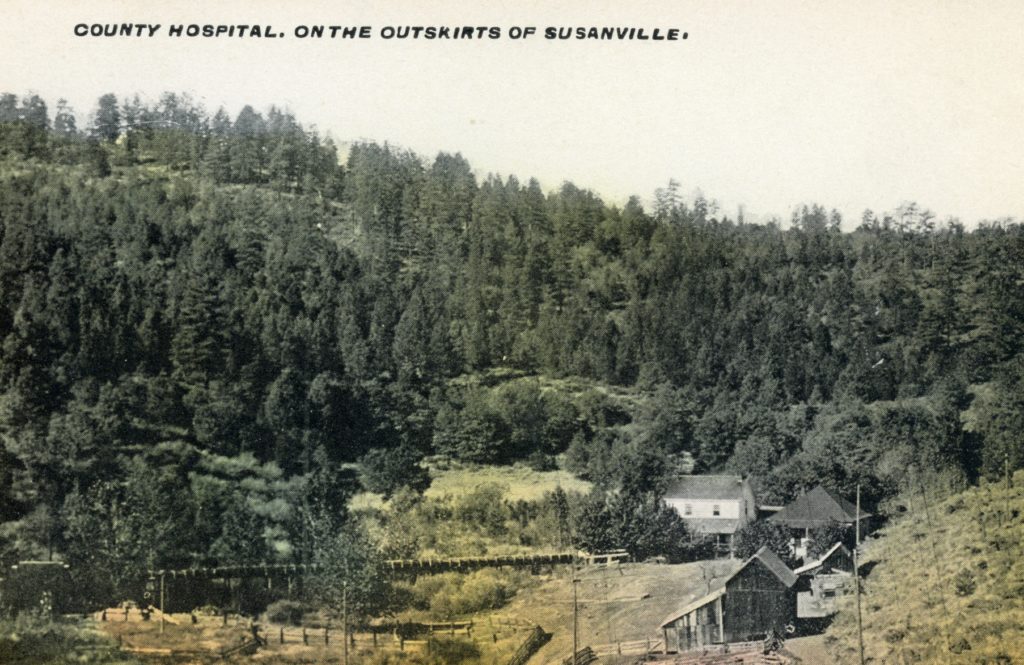
The original Lassen County Hospital.

Just as there was a movement in the early 1900s to build a new courthouse, the same issue was applied to the Lassen County Hospital. The two-story, twelve-room facility was built in 1883 for $620. It was located next to the Susan River and far enough away from the town proper should a quarantine be necessary.

In essence over time the hospital devolved into a poor folks home. In the campaign to build a new hospital the Lassen Weekly Mail reported the following conditions of the facility in 1914: “The operating room is on the first floor—at least they call it an operating room. It must make a doctor’s hair stand on end every time he enters it. Septicemia stares a surgeon in the face every time he performs even a minor operation. When your mind thinks of a operating room of a hospital the picture presented to the mind is an airy room with tiled floors, enameled walls and ceiling and every facility for cleanliness, but if you have any such picture in your mind when you visit the operating room of the Lassen County Hospital it will be rudely shattered. The room is small, has a wooden floor and the walls are papered the ceiling an ordinary wooden ceiling. The operating table is an improvised one and of course lacks all conveniences which a surgeon should have in order to do good work. The room is kept clean as possible, but you speak of cleanliness in the operating room of a hospital it does not mean the mere absence of dirt visible to the naked eye. It means that every possibility of germs or any foreign matter that could by any possibility infect the patient are removed. In no possible way could the operating room at the Lassen County Hospital be put in condition that a surgeon would even consider safe.” The following year the voters approved a bond measure for a new courthouse and hospital.

Subscribe!