Category Archives: History

The Eagle Lake Ditch

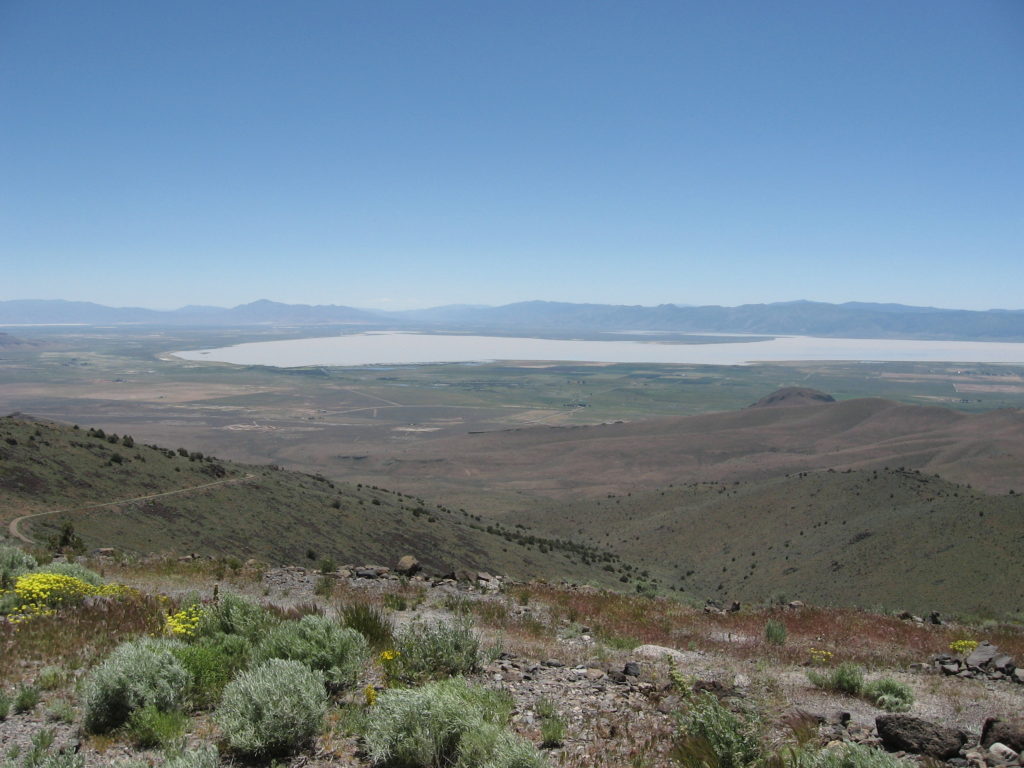
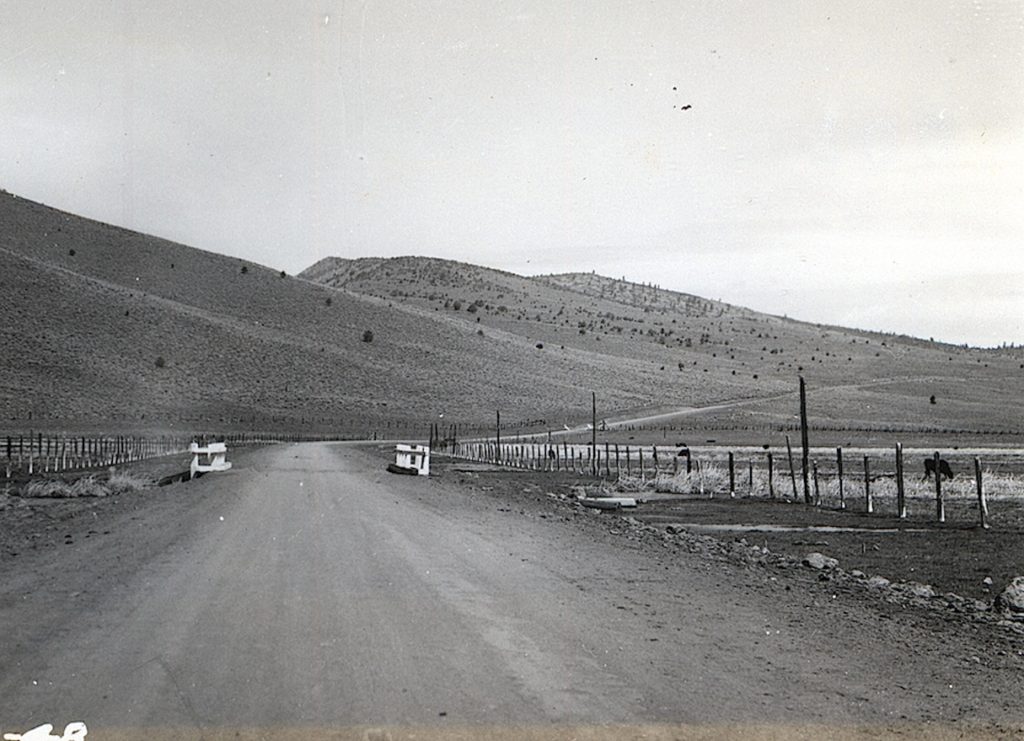
Eagle Lake Ditch, near Amedee, February 2018.

In 1891, the Eagle Lake Land & Irrigation Company became the latest entity to tap Eagle Lake to irrigate the sagebrush lands near Amedee. They had two propositions to do this. The long term was to finish Merrill’s tunnel. The second one involved a pumping plant to deliver the water. Like the predecessors they would utilize the channel of Willow Creek. At Belfast where Willow Creek enters the Honey Lake Valley the company constructed a twenty-one mile ditch to Amedee. In October 1892, with everything in place, water flowed from Eagle Lake to Amedee.  Water would briefly flow the following year. However, the company plagued with financial problems filed for bankruptcy. The pumping plant was dismantled in 1903.

Donate or Subscribe

Susanville – 710 Mill Street

The Lonkey residence, circa 1915. B.R. Zimmerman collection

In 1908, residents of Lassen County were surprised with the formation of the Hill Lonkey Land & Livestock. Two of the key figures were Nevada residents Thomas Hill and Camille Lonkey. They purchased the San Francisco Ranch (now Five Dot) and the Folsom Ranch (now Fish & Game) in the Willow Creek Valley. The partnership was brief and they dissolved the company two years later. Hill took possession of the Folsom place, and Lonkey the San Francisco Ranch. Continue reading Susanville – 710 Mill Street

Rails to Trails Opposition

Tunnel No. 1, Susan River Canyon, 1974.

In 1976, after twenty years of non-use the Southern Pacific Railroad filed for the abandonment of its rail line between Susanville and Westwood. The City of Susanville and the Lassen County Board of Supervisors opposed the measure. They feared the loss of a potential transportation corridor. The Lassen County Chamber of Commerce wanted to see it converted into a tourist line, similar to that of Mendocino County’s Skunk Train.

Fast forward two years later and both the city and county embraced the Bureau of Land Management’s proposal to acquire the abandon line for recreational purposes. Thus, the rails to trails program, became part of the local lexicon.

Donate and help support this site.

The Pioneer

For several years prior to 1912, the Pioneer had a biergarten next door. Courtesy of Philip S. Hall

In 1862, John Burkett opened a saloon at what would later become the address of 724 Main Street. He named his new enterprise the Humboldt Exchange. After all, at this time, a number of Honey Lakers were prospecting in Humboldt County, Nevada where there were a flurry of mining discoveries. The following year, he sold to George Heap and Joe Hale and they renamed it the Pioneer. The Pioneer, now the home of Lassen Ale Works, has operated in the same location all these years, though it has been through several buildings. The back bar, it should be noted is from its 1901 building. Of note, that building still exists and is located on the 900 block of Main Street.

Subscribe!

That’s a lot of schools!

Standish School, 1911. Courtesy of Esther McClelland

In 1920, in the Standish region there were five school districts—Bridgeport, Honey Lake, Poplar, Soldier Bridge and Standish. In the late 1940s, there was a movement to consolidate rural school districts. In 1951, the voters of Bridgeport, Soldier Bridge and Standish Districts agreed to consolidate and form Shaffer Union School District. It should be noted that Poplar School closed in 1935 due to a lack of students. In 1950, Honey Lake School was annexed to Standish.

Donate or Subscribe

The Wagner Act

Pioneer Barber Shop, 1903

On July 5, 1935, President Roosevelt signed into law the Wagner Act, one of the most significant labor laws of the 20th century. It’s main beneficiary was union organizers. The Lassen County workforce eagerly adopted it. By 1940, barbers, bartenders, culinary workers and more had their own union. Take for instance the barbers of Susanville, Westwood, Greenville, Quincy and Portola organized a Journeyman’s Barbers Industrial Union of the AFL. In 1941, they adopted a universal fee of sixty-five cents for haircuts.

Donate or Subscribe

Janesville versus Lassen

Main Street, Janesville, 1911. Courtesy of Betty Barry Deal

With the pending arrival of the Fernley & Lassen Railroad there was a movement to change many names of communities in the Honey Lake Valley.  It was deemed there were too many towns ending with “ville.” Some thought the suffix carried a stigma of a small village. While the movement to change the name of Susanville failed, Janesville did not fare so well. On July 2, 1914, the post office there was renamed Lassen. This did not set well with many of the town’s residents. A petition was sent to the Postmaster General to restore the name, but it was denied. It led to confusion since the town was known as Janesville, but its mail designation was Lassen . In 1923, the residents once again petition the postal authorities to restore the name.  It was granted and on September 22, 1923, the Lassen postal designation was dropped.

Donate

A Road With Many Names

The Loop Highway, 1930. Courtesy of Margaret A. Purdy

Readers may recall earlier this year as to Highway 36 many designations. This is also the case for the Loop Highway through Lassen Volcanic National Park. Work first began in 1925 and it would take nearly six years to complete at a cost of nearly $688,000. The Loop Highway is also designated as State Highway 89 through the park. A little bit of trivia, it is known in the park at US 1.

Subscribe or Donate