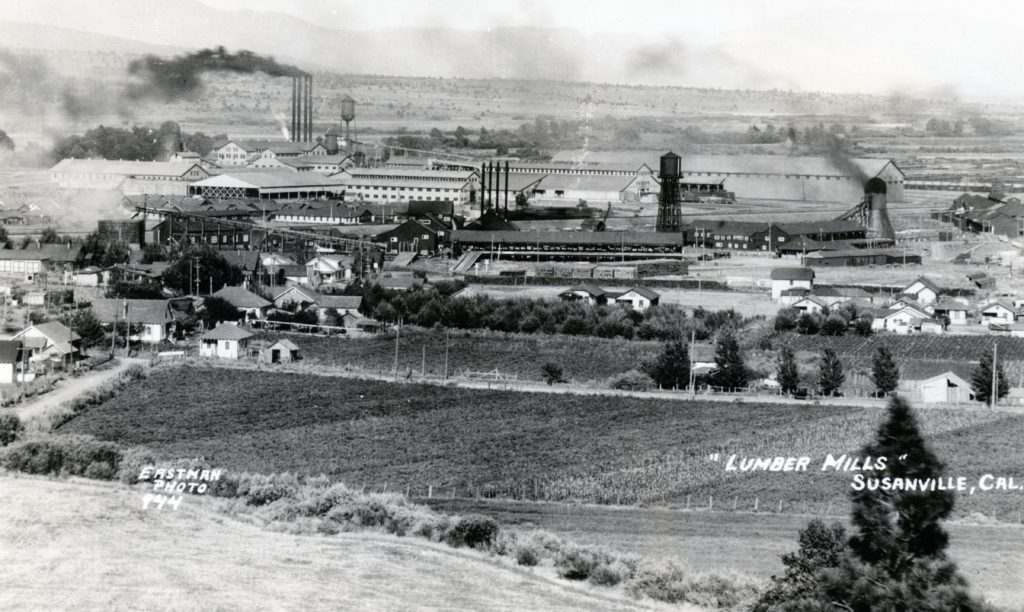
The lumber mills of the Fruit Growers Supply Company and Lassen Lumber & Box Company
Lassen County was spared from some of the painful effects of the nation’s Great Depression of the 1930s. The agricultural community was not as fortunate, for those who were members of the Baxter Creek & Tule Irrigation Districts, but that is another story. Continue reading When Lumber Was King→
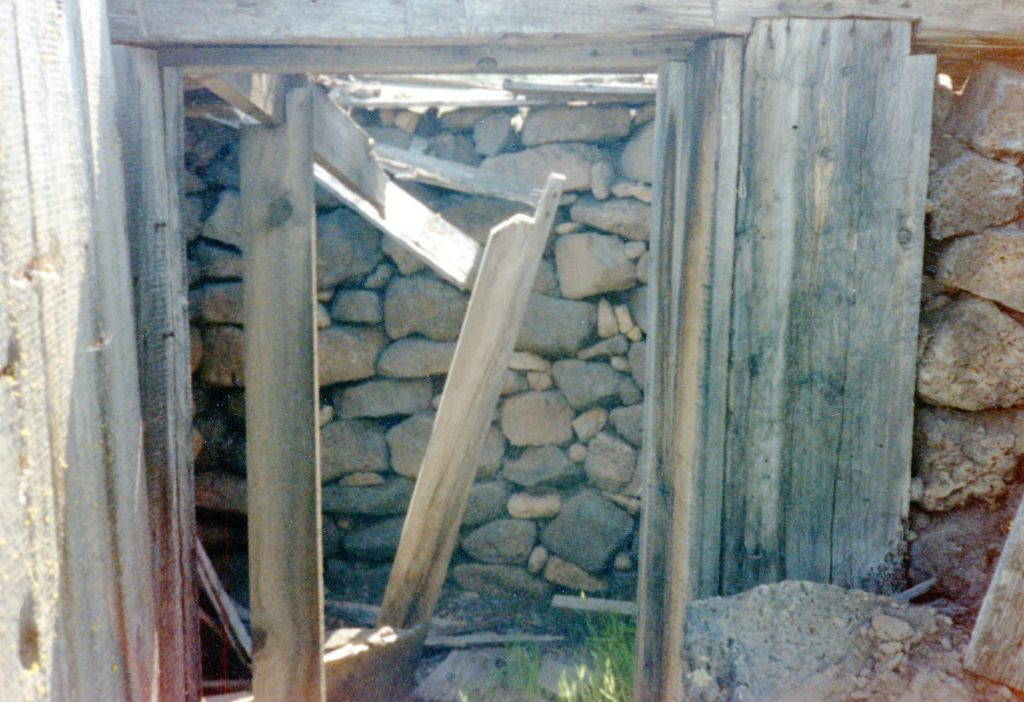
Since it is December, I am busy filing and/or cataloging items in anticipation for a fresh start with a new year approaching. I came across the above photograph on an old trip to Tunnel Works No. 2 of the Eagle Lake Land & Irrigation Company. While the short-lived company only existed from 1891-1894, it did accomplish a lot. While they knew it would take a very long time to complete the tunnel that Merrill had begun a decade earlier, they had a vision to provide necessary funds. They installed a pumping plant to pump water out of the lake, and sent water to the east side of the Honey Lake Valley. Thus, they were able to sell water for the 1893 irrigation season, while work continued on the tunnel. However, by the fall of 1893 with nation’s financial panic in full force, they were unable to sustain operations and went bankrupt.
While some are aware that on September 10, 1912, marked the cutting down of the first ceremonial tree by Clinton Walker and W.B. Carlin on what would be site of Westwood. On the surface, it seemed like a jubilant occasion. However, unbeknowst to the outside world was the Walker family feud, and the location of Westwood, was one of many issues at hand. Patriarch T.B. Walker was caught in a dilemma. After all, it was his dream that the California operations were to be run entirely on their own, hoping they would achieve the same success he did when he founded the Red River Lumber Company in Minnesota. While tempers flared an ambitious building program was implemented. On July1, 1913 some 450 buildings had constructed in this new town in the wilderness.
In 1891, Congress made revisions to land acts, one of which was the foundation for the creation of national forests. It would take considerable time before it had a ripple effect locally. In 1905 witnessed the creation of the Diamond Mountain Forest Reserve by Congress. Initially, it had little impact on the region, as the government was still tweaking the process. In time, the first two biggest impacts were (1) forest lands were removed from the federal land patent process and (2) the agricultural community, i.e., livestock operators were in for a rude awakening when not only grazing permits were implemented, but fees too! In an interesting turn of events, it was the livestock operators from Tehama County, that fell the brunt of the forest reserve, since these properties they had used for years for summer grazing, that found mutual ground. In a co-operative effort the forest reserve and Tehama stockmen, help build a telephone line. This aided the stockmen who could connect with their tenders, and for the forest reserve it was their earliest method for fire reporting.
A footnote: In 1907, the Diamond Mountain Forest Reserve, with boundary changes became the Lassen National Forest. The headquaters was located at Red Bluff.
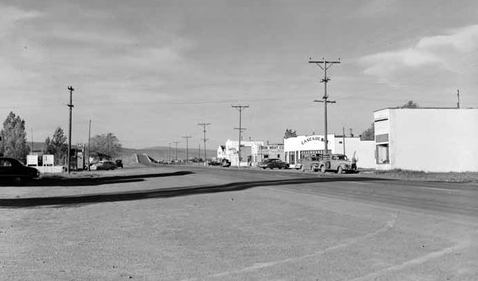
The town came into existence in 1931 when it became the connecting point of the Great Northern and Western Pacific Railroads. The first name proposed was Big Valley City by Byron S. Greenwood, the promoter of the new town. When the Postal Department received Greenwood’s petition for a post office for the town, they denied the name. The Department had adopted a policy against three word names. The Great Northern designated their new station as Bieber, though the town of Bieber was located two miles northeast. It was suggested to call it West Bieber, but that name did not find acceptance and finally the name Nubieber was chosen. On July 4,1931, a patriotic celebration was held. Mrs. A.W. Peterson, President of the Ladies Pioneer Club, gave a brief speech and then introduced Miss Vivian Goddard who christened the townsite of Nubieber by breaking a bottle of wine over the entrance sign. Nubieber, like so many speculative railroad communities, never reached the expectations of its promoters. In 1940, Greenwood traded all his unsold lots, (the vast majority of the town that encompassed 250-acres), along with his adjoining 630-acre ranch, to E.L. Robertson of San Francisco, for a 60-room apartment building in San Francisco.
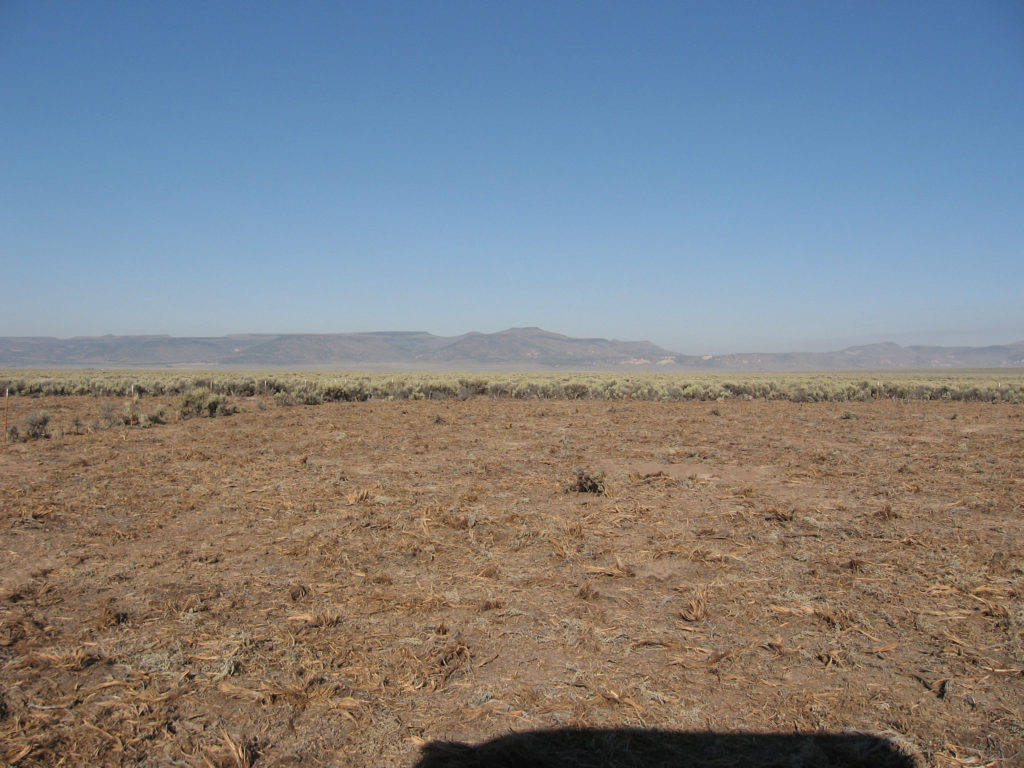
A recently cleared homesite in Long Valley, August 2017.
Located in far northern Washoe County, in Long Valley was the lonely outpost of Vya. Like so many desert communities, it thrived briefly during the early 1900s during the dry farming experience. When the Vya post office opened on September 29, 1910, it was named for Vya Wimer—the only child of Roy and Artie. While folklore has it, she was the first Anglo child born there, in reality she was born on December 22, 1904 at Lake City, in neighboring Surprise Valley. A number of hardy souls struggled to eke out a living there, and in 1941 thirty people were still living there.
There is somewhat of a resurgence there, of a new kind of desert homesteader. These folks are determined to live off the grid, content with the remoteness of the country.
Remains of the 1934 fire that destroyed the ranch house.
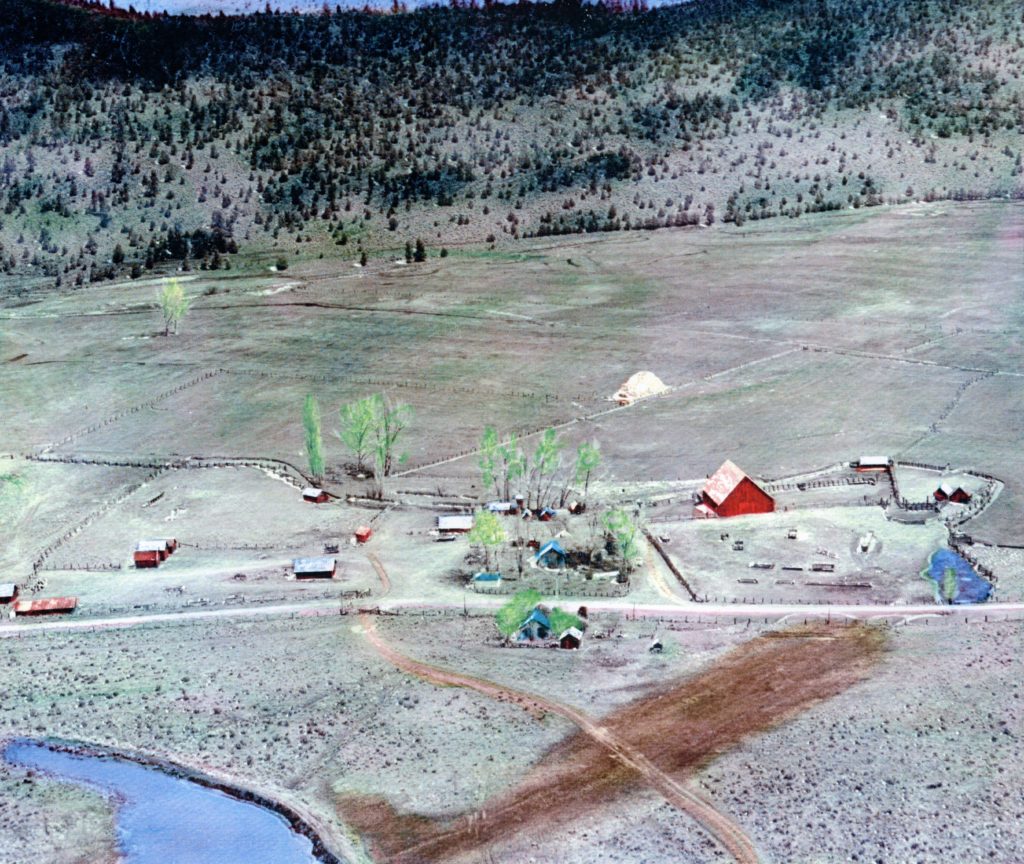
Located in the Willow Creek Valley, north of Susanville, the Murrer Ranch dates back to 1865. 1870, when gold was discovered at Hayden Hill, causing an influx of travel to the north, it became an impromptu stage-stop. The ranch played an early role in the development of Leon Bly’s Eagle Lake project, since the tunnel outlet adjoined Murrer’s Upper Ranch. Like so many family enterprises it had its moments. There was a moment that it did not seem that the it would not make it past the third generation, which is always a major hurdle.
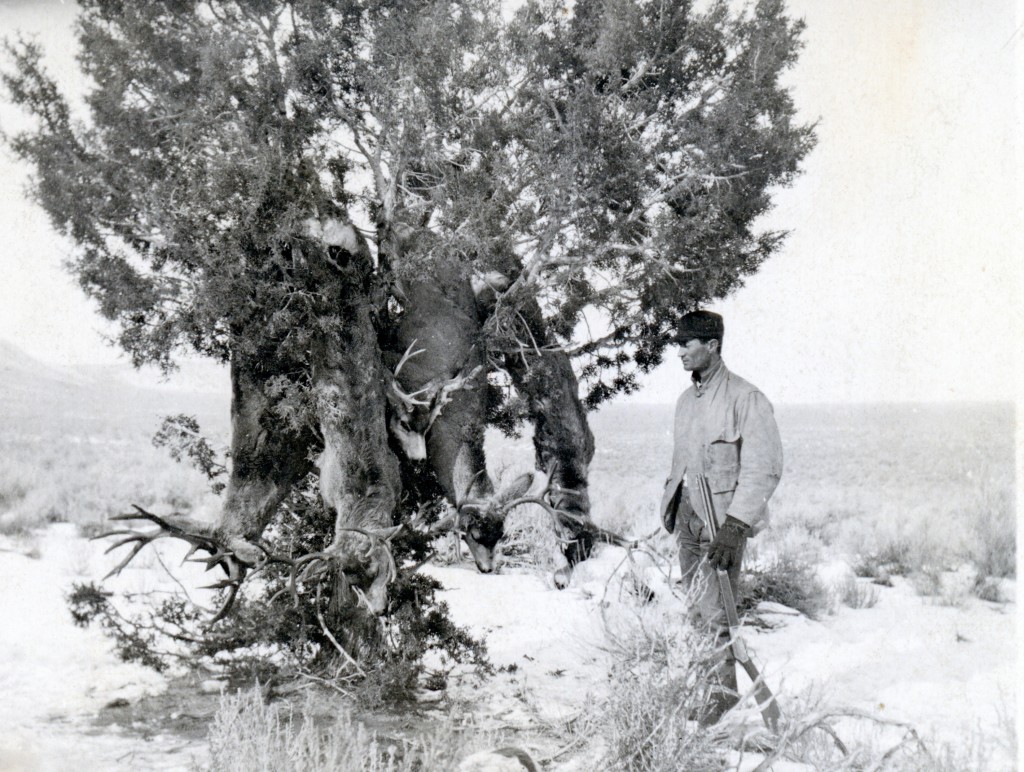
A successful deer hunt near Skedaddle, 1906. Courtesy of Marge C. Foster
It was on November 29, 1883 that Charles E. Jones reported that he had killed two gray wolves on Skedaddle Mountain that he stated each weighed approximate 150 pounds. According to Jones he stated the wolves had been a “terror” to the sheepmen there. In 1890, A.J. Hall reported seeing a lone gray wolf on the mountain. In the course of time, with increased livestock operations, the wolf population witnessed a steady decline. It was in 1924 that the last gray wolf in California was killed near Skedaddle Mountain. Fast forward to January 2012, a lone gray wolf from Oregon dubbed OR7 made its first appearance in nearly a century to the north Skedaddle, in the Madeline Plains. Reaction, of course, is mixed depending on one’s perspective.
On a related footnote, the last big horn sheep killed on Skedaddle Mountain happened in 1883.
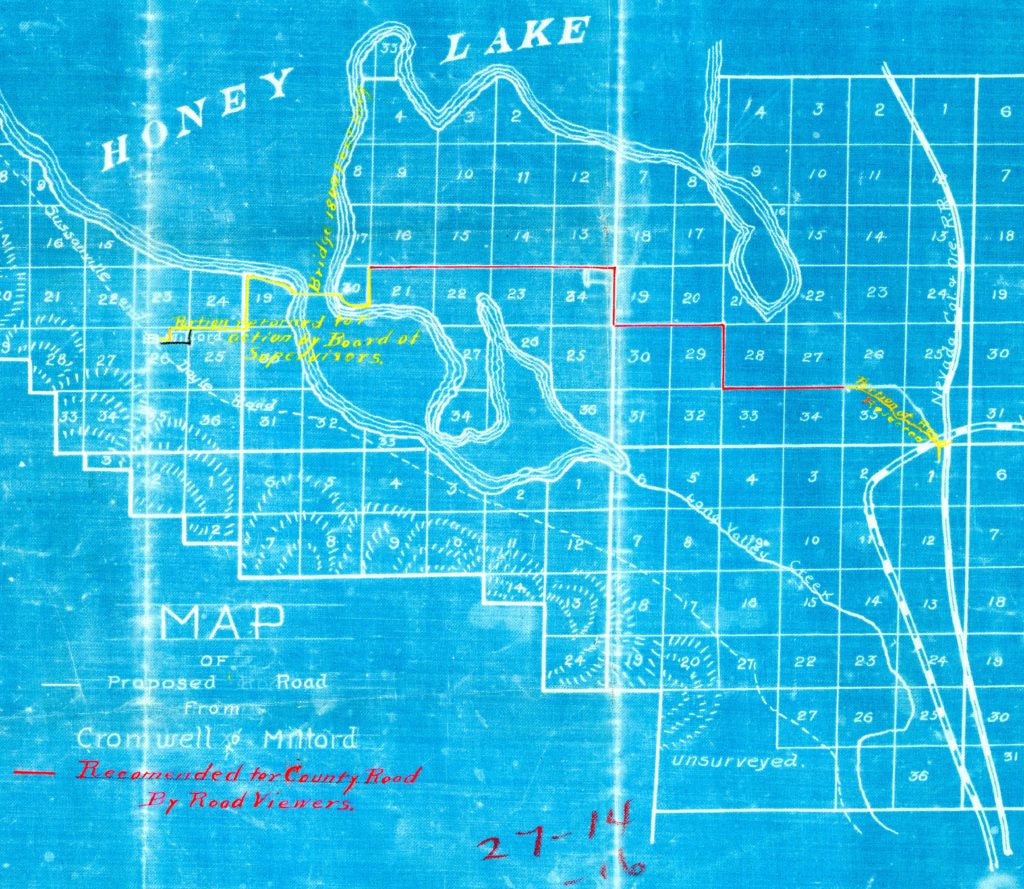
Earlier this year I wrote about the proposed town of Cromwell, the current location of Herlong. In the spring of 1912, Fred Cromwell, the promoter approached the Lassen County Board of Supervisors to construct a new road from Milford, with a 1800 foot bridge across Honey Lake to his new town. The Board took the matter under advisement with a wait and see approach to see what would materialize of the development. It was a good call, because by the end of the year the proposed community of Cromwell was abandoned.
Well this is an accidental back up plan. I had originally intended the new bridge construction over the Lake Almanor spillway this summer. I took a photograph at the view point, but alas, it became a forest through the trees moment.
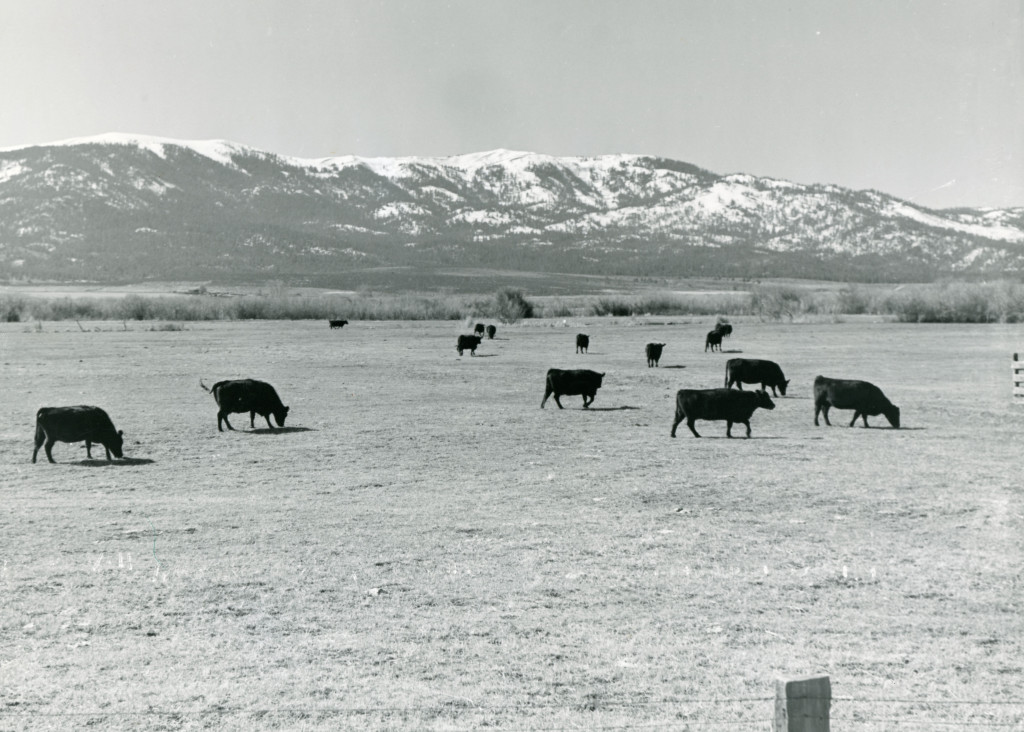
This ranch established in 1860s, is one of a handful that still remains in the family.