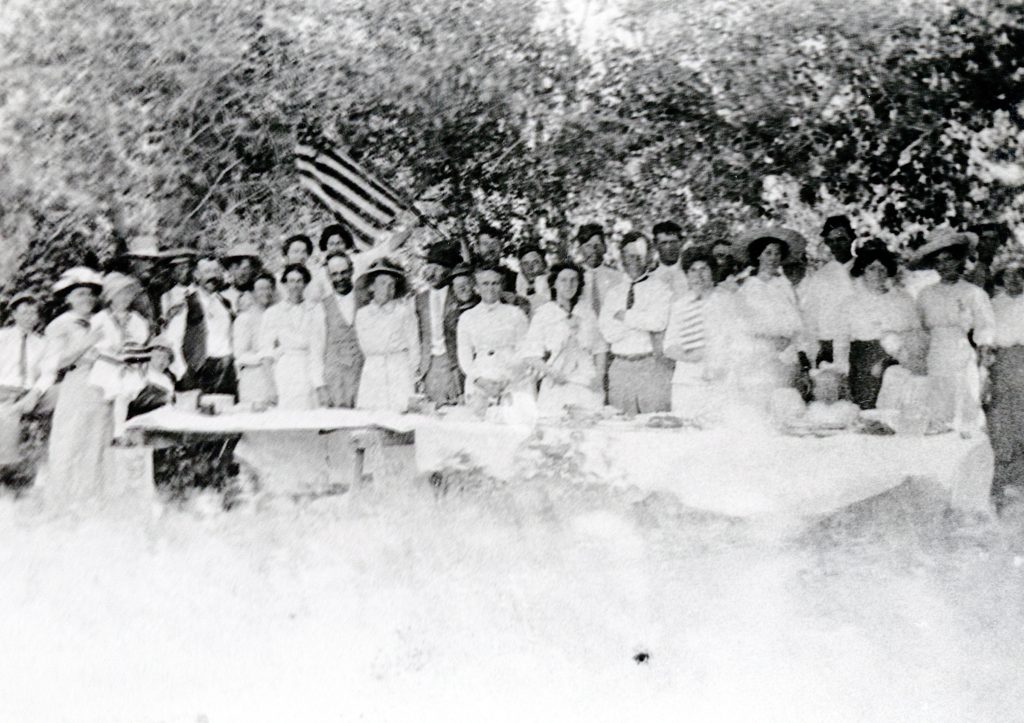
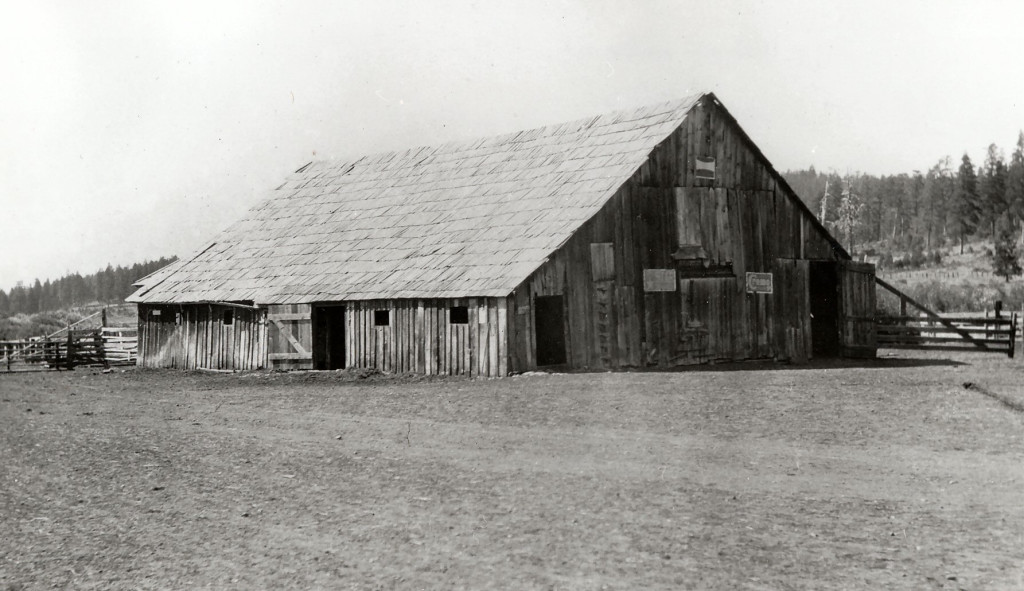
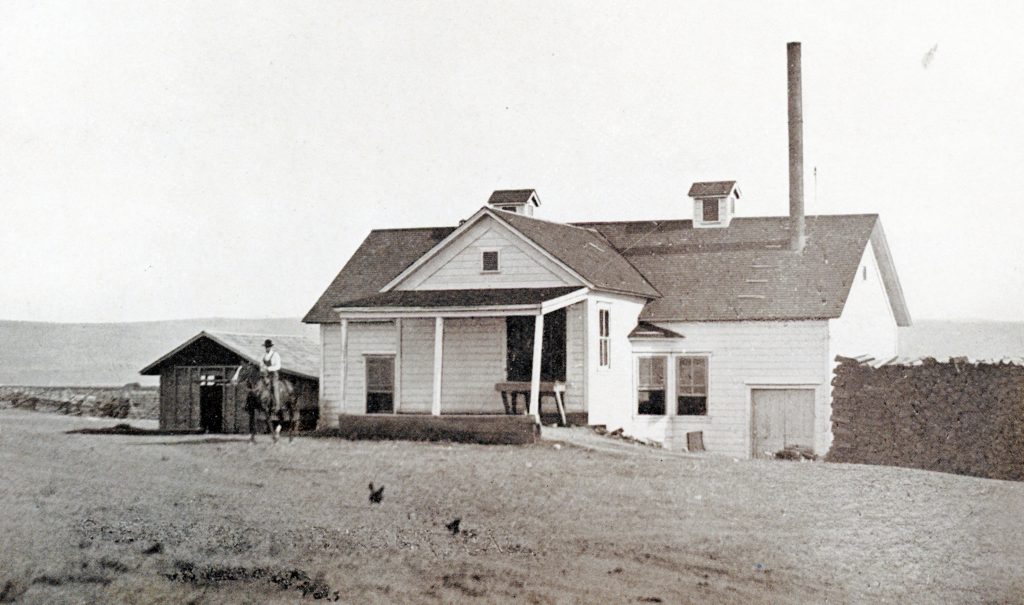
Smoke Creek Picnic, 1915. Courtesy of Fred Nuckolls
Sheepshead, Nevada was a stage stop in the Smoke Creek Desert dating back to the 1870s. It was so named as a big horn sheep’s head was nailed to a cottonwood tree there. It should be noted that the last big horn sheep in that vicinity was killed on Skedaddle Mountain in 1881. Sheepshead was a popular gathering place for the residents of Smoke Creek, due to the creek flowing through, along with the cottonwood trees, made for an ideal setting.
The east slope of Fort Sage Mountain is now covered with cheat grass. June 7, 2018
If there was one positive aspect due to the lack of railroads in the region, was it delayed the appearance of invasive non-native plant species. The Russian Thistle, best known too many as the iconic “tumbling tumbleweed” did not make its appearance in Lassen County until 1914. The first plants were spotted along the Fernley & Lassen Railroad right-of-way. For the next two years, major efforts were undertaken to eradicate it, but it was a lost cause. The tumbleweed was followed next by an even more hazardous plant cheat grass. After the 2017 fire that spread from Doyle to almost Pyramid Lake, in many of the burned areas is covered with a thick growth of cheat grass, thereby choking out native plants.
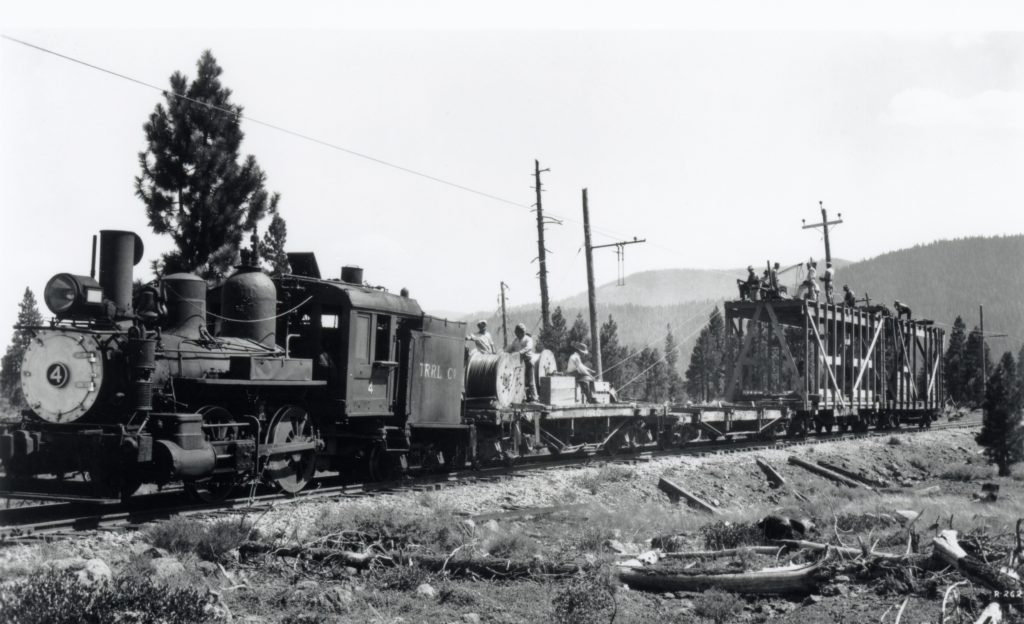
The Almanor branch, 1924. Courtesy of Minnesota Historical Society
In 1921, the Red River Lumber Company needed to expand its logging operations having logged over most of the surrounding territory around Westwood and the northeastern section of Lake Almanor. A second main line would be constructed from Red River Junction (Clear Creek) running to the west to Chester. One of the biggest obstacles to build the nine-mile segment was the crossing at Bailey Creek. There a wooden trestle of some 550 feet in length and fifty feet high required nearly 300,000 board feet of timbers, that took nearly a year to complete.
Over time this line extended way past Chester to Deer Creek. Like, Red River’s other main line that extended along the east shore of Lake Almanor, led to speculation and rumors. Would Red River extend its line down Deer Creek to connect with the Sacramento Valley, was a question on a lot of minds. By the time the logging line reached Deer Creek, Red River was faced with so many financial issues, that it was not feasible.
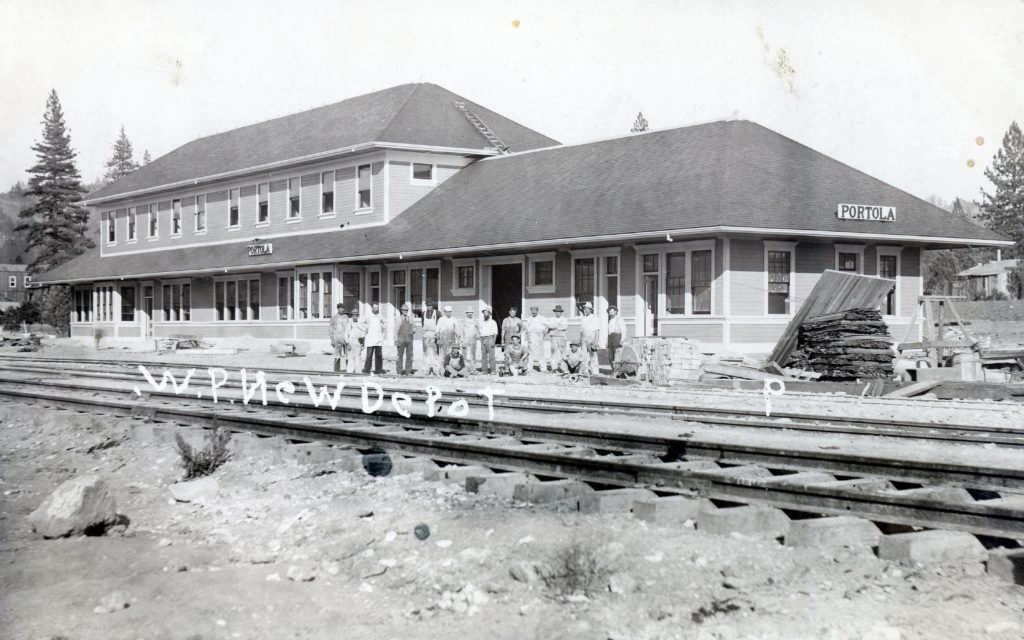
The Portola Depot. Notice the rails had been recently laid, no ballast.
During the construction of the Western Pacific Railroad, and with the rails reaching California, the big question was where the division point would be. There were two small stations, that sought that destination—Rayl, now the site of Herlong and Omira, just a short distance south of Doyle. While those two places were never serious contenders the battle was between Doyle and Portola. Each had their unique assets, but it was Portola that would claim victor.
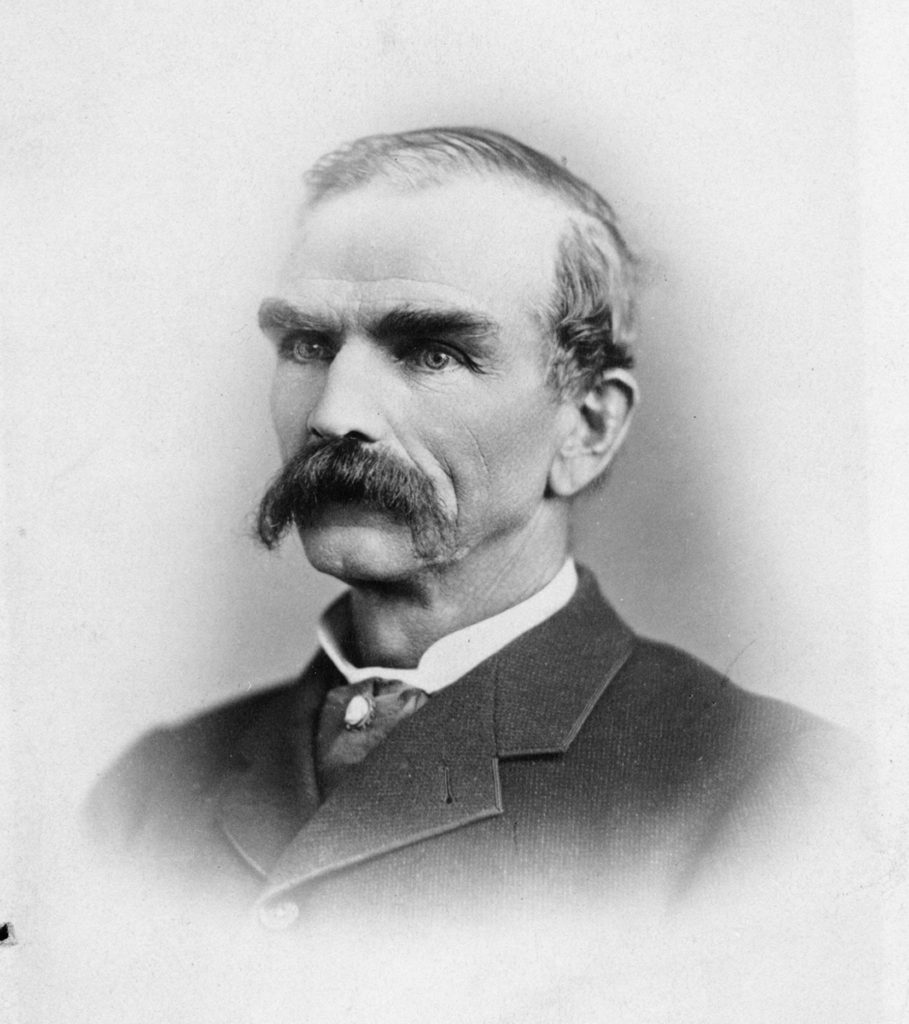
A native of Maine, Edward Russell Drake came to California in 1850. After nearly a decade roaming around the Golden State he located in northern Plumas County where he spent his time prospecting and trapping. In the spring of 1884, Drake was overcome with health problems and spent an extended stay at Gilroy Hot Springs. In 1885, when he returned he relocated at Thomas Malgin’s abandoned homestead at the far end of Warner Valley, which included Hot Springs Creek. Over time he assembled ownership of 400 acres. Drake made many improvements to the property and the place became commonly known as Drake’s Springs. In 1890, with the assistance of Russell Whitcomb, built the the first lodge, that stood until it was crushed in the heavy snows of 1937-38. In 1900, Drake sold out to Susanville school teacher for Alex Sifford for $6,000. In 1914, the place was renamed Drakesbad. Drake, it should be noted passed away in 1904 at Chico, California at the age of 73.
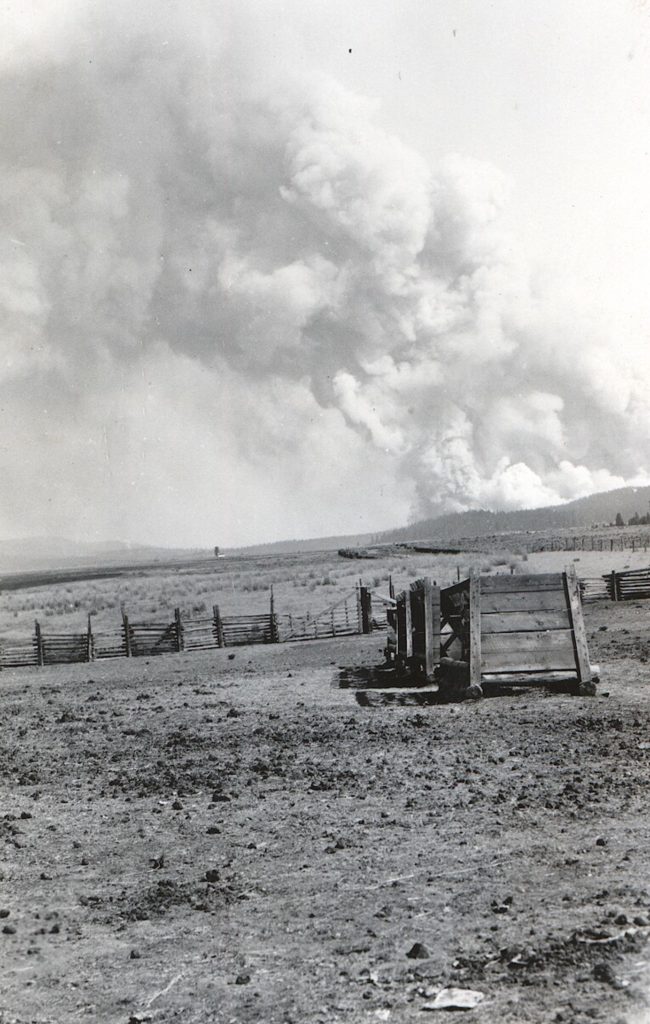
The fire as seen from Willow Creek Valley. Courtesy of Lola L. Tanner
On Sunday, August 26, 1926, Charles Hurlbut, a Lassen County Road department employee had made a working camp on Rice Canyon Road. In the afternoon, he built a campfire, and left it unattended to gather more wood. In the interim, an erratic gust a wind blew threw, sending embers from the campfire onto nearby dry bronco grass. A wildfire quickly erupted. There was nothing Hurlbut could do, but to drive frantically to Susanville to enlist aid. Some sixty men were recruited to fight the fire. Half of the fire crew consisted of employees of the Red River Lumber Company, as the company owned a tremendous amount of timber in the district. From Susanville the fire was a spectacular sight for its residents, as most of the Antelope Mountain went up in flames. One interesting facet in battling the fire was the use of backfiring. Charley Carpenter, a prospector, had a cabin at Miner’s Spring on Antelope Grade. Carpenter seeing the fire raging towards his place, lit a fire in the approaching direction, and it was enough to divert it from destroying his home. In all, some 22,000 acres were burned, making it one of the largest fires of the era.
The firefighters were able to keep the fire away from the ranches at the lower end of the valley. However, one ranch, belonging to Bob Wilson was not so fortunate. Wilson lost his house, his barn containing seventy-five tons of hay and some two hundred chickens. For the Red River Lumber Company their loss was substantial too, an estimated fifteen million board feet of timber, and to the lesser extent the former Conklin holdings at Jacks Valley.
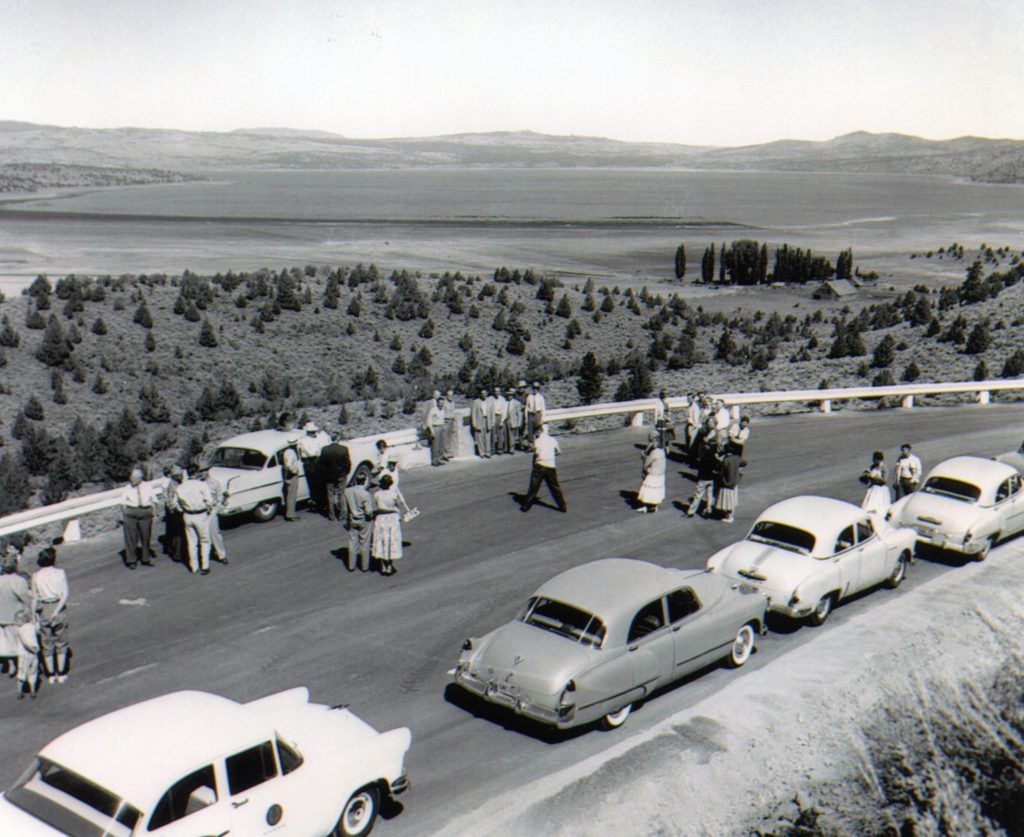
Sunday, August 26, 1956 was a historic day in transportation circles. At Colley Point, overlooking Eagle Lake, witnessed the dedication of Lassen-Modoc Joint Highway #14. The project began in 1929, with the goal of a highway from Susanville to the Oregon border near Malin. Over the span of time, sixteen different public and private entities were involved with the construction of the highway. At center stage during the ceremony, a great deal of credit was given to Pete Gerig, one of the original directors who was committed to see it from beginning to end. In December 1959, the route became State Highway 139.
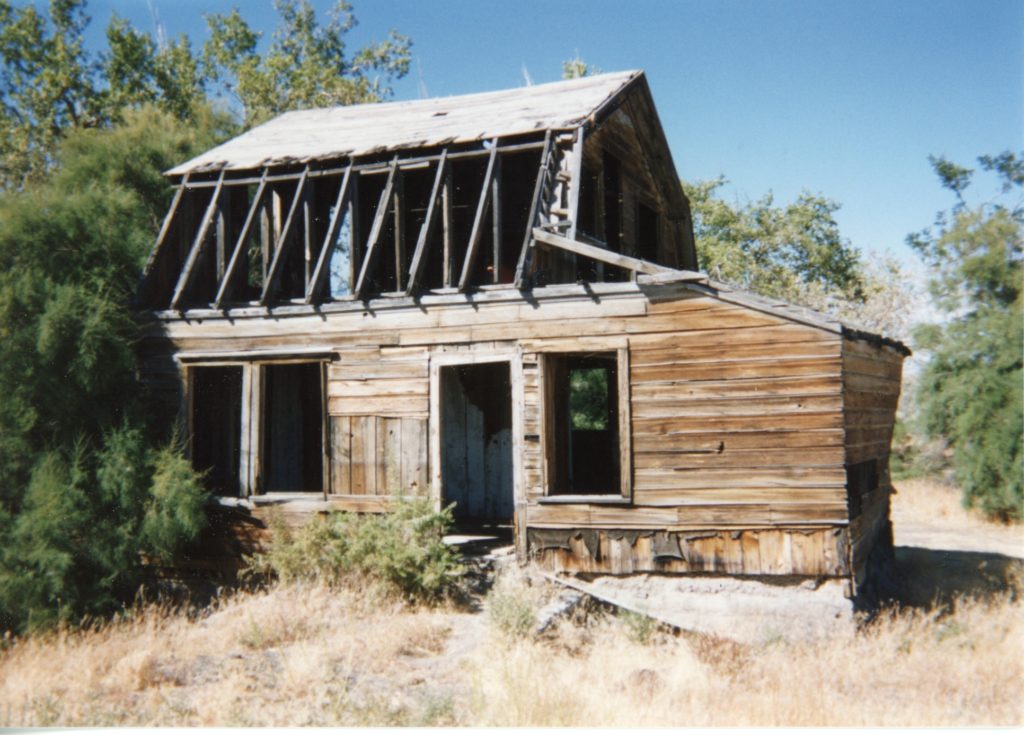
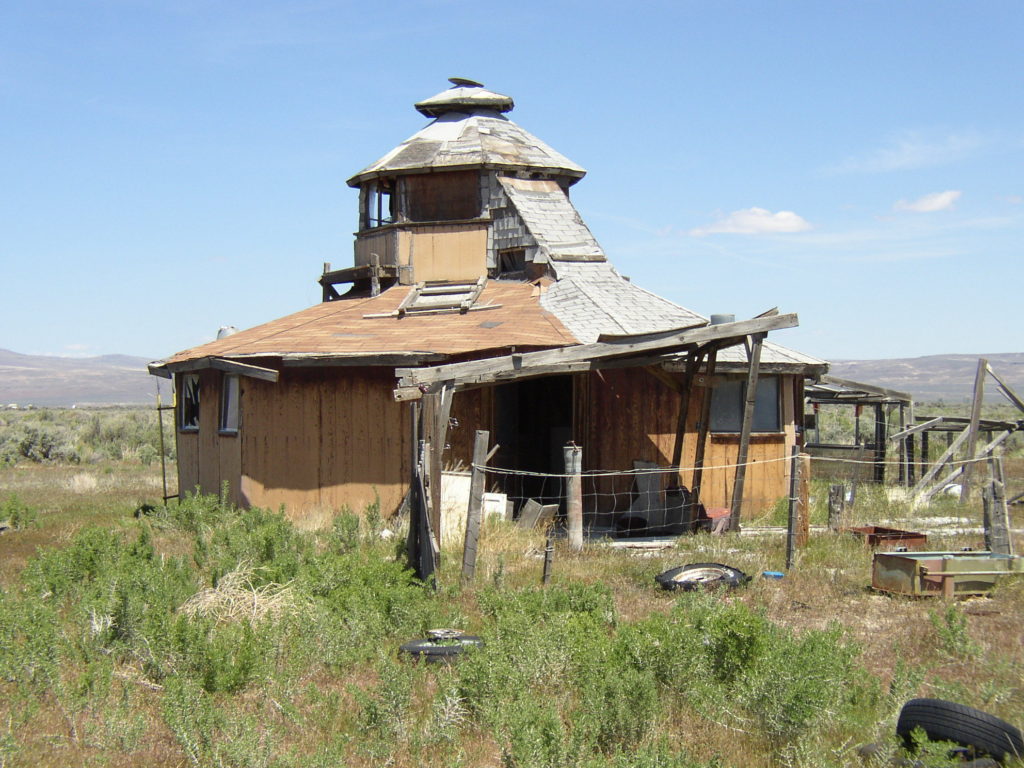
One the joys about exploring out in the desert, is you just never know what you might find. Of course, it is always interesting to see the construction style of abandoned homesteads. In addition, it is always evolving, so you never know what you might see. An expedition out by Stacy earlier this year, we saw a new two-story log home under construction. It really looks out of place among the sagebrush. Nearby, we missed the following “homestead.”
An abandoned residence near Stacy, 2018. Courtesy of Larry Plaster
In 1861, Carlton Goodrich settled at Mountain Meadows and would become one of the largest property owners there, as his ranch totaled over 7,000 acres. He located his ranch house just west where the highway crosses Goodrich Creek, approximately across from where the old chimney stands. It became known as Mountain House and was a popular stop for weary travelers. In April 1875, Sylvester Daniels paid Goodrich a visit while touring the region and wrote, “I love these mountain folks. No aristocracy among them.” When Goodrich died in 1886, due to estate issues and the subsequent sale to John Crouch, the popular establishment closed. When the Red River Lumber Company established its Westwood operation, they transformed the old Goodrich ranch into a dairy.
In 1907, the Standish Creamery had a daily output of 650 pounds butter. It was only running at half capacity, labor or the lack thereof being the culprit. As one observer wrote: “One does not wisley undertake the ownership of a herd of a hundred dairy cows, no matter how profitable he knows it to be, with the likelihood staring him in the face of waking up any morning and finding his milkers all gone, converted overnight into cowboys, astride their horses and galloping away.”