Category Archives: History

“Piutes Would Manage The Forests”

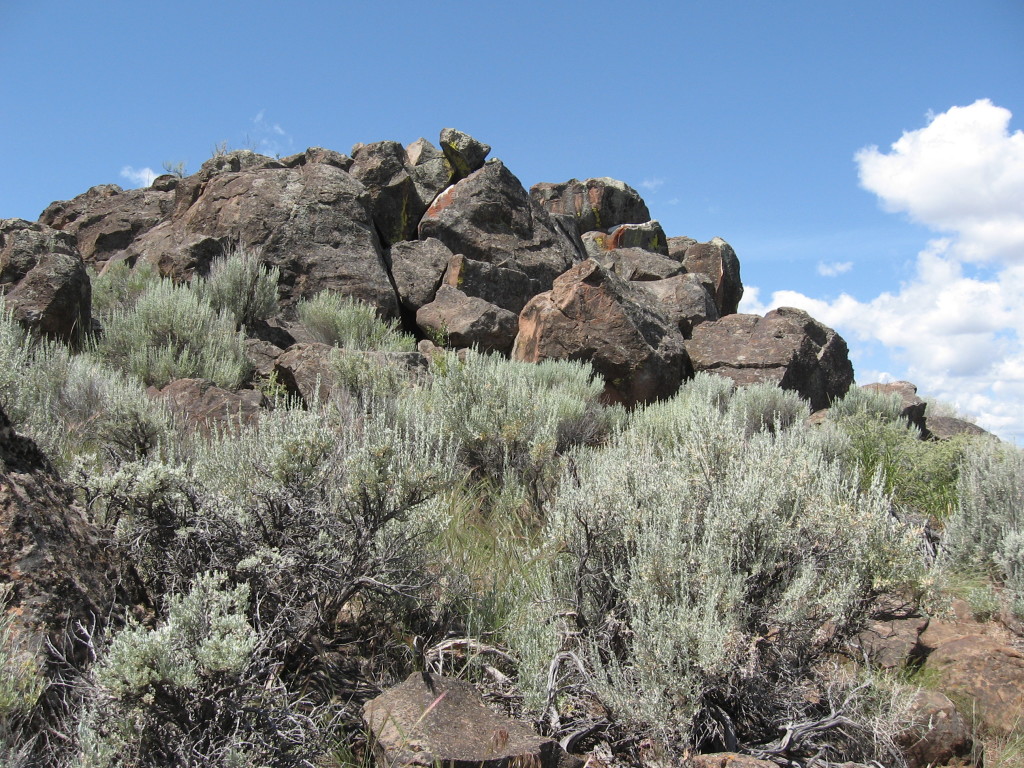
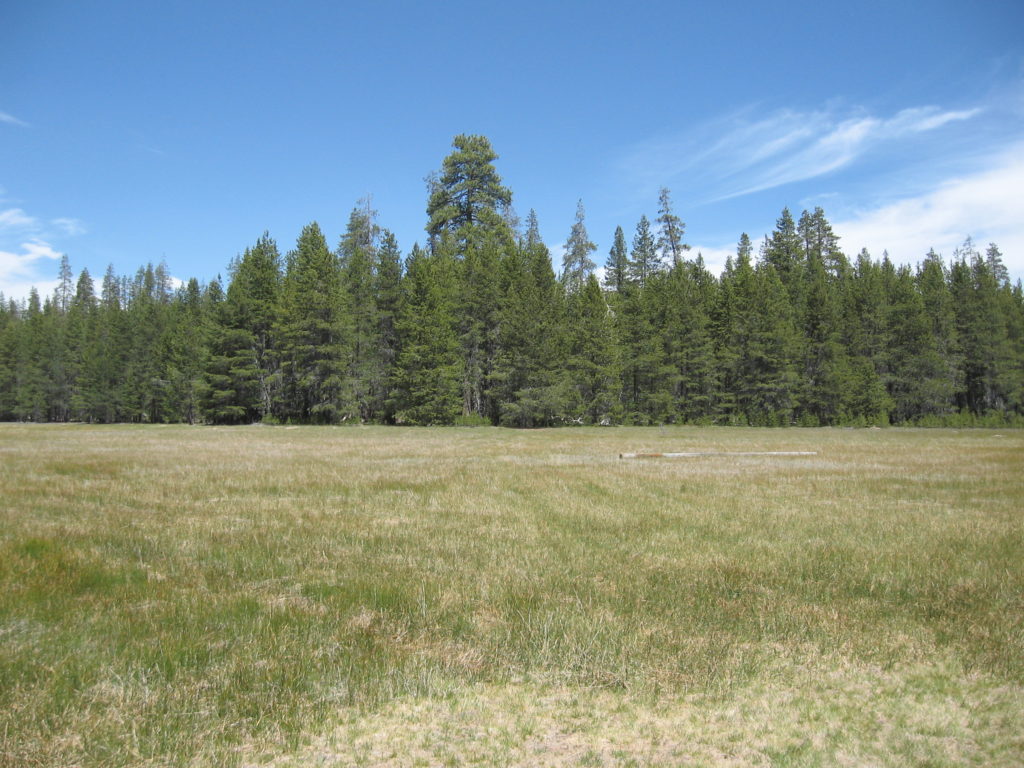
A forest scene near Long Lake, June 4, 2020

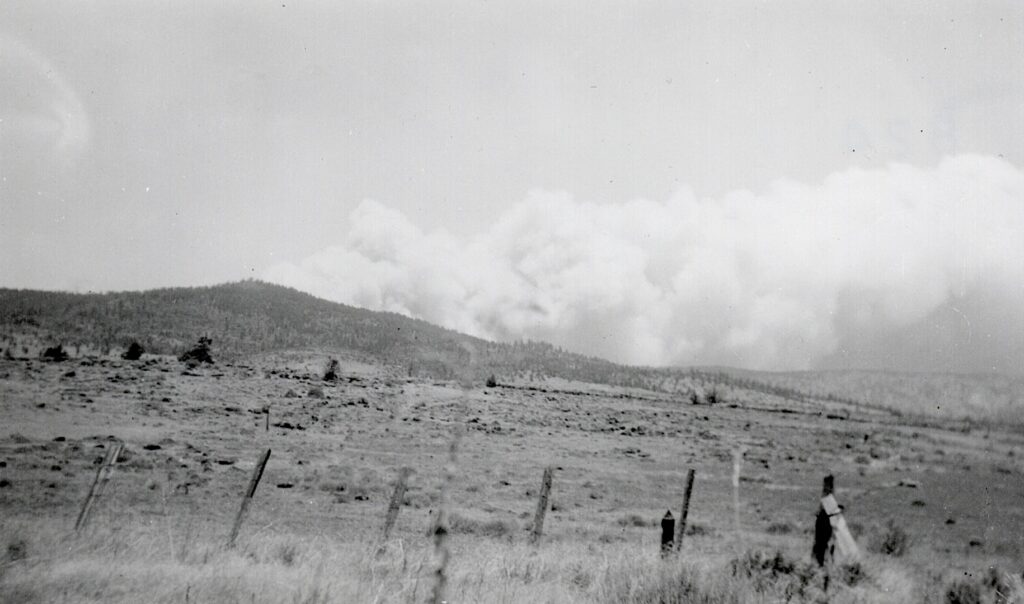
The above title was from the headline of the Lassen Mail. It was misleading, since the local Paiute tribe would not be involved in managing the forest It would be a chamber of commerce committee called the Piute Conservationists to undertake the task. It began at the October 1931 meeting of the Lassen County Chamber of Commerce that was largely devoted to fire prevention and suppression. The organization stressed that light burns be conducted in the spring and fall. They drafted a resolution to be sent to Congress about this issue. The following was the opening statement.

“Whereas the United States Forest Service in adopting policy of fire prevention and suppression at all seasons of the year has not assisted nature, but prevented it from fire proofing the forests and because of the fact that the natural elimination of debris by decay is too slow to keep pace with the rapid accumulation of highly inflammable rubbish., time will prove, and is proving, that the accumulated mass is go great that no human means can cope with the terrible force of a present day fire under unfavorable conditions.”

While group commended the forest service for its fire prevention and suppression during the summer months, it deemed that it should became year round process and not seasonal. Before the group adopted of the resolution, it consulted with  W.G. Durbin, supervisor of the Lassen National Forest. Durbin stated it was commendable  but there are two areas the resolution failed to include. Of course, Durbin noted who was going to pay for year round fire prevention and suppression. He noted as to light burning private timber company do not attempt it. Durbin did note that in the fall of 1930, on the Lassen, 310 light burns were done though they were concentrated with debris associated with fire lanes.

To Support, Please Donate or Subscribe
 

Tuesday Tidbit – A Patriotic Gesture

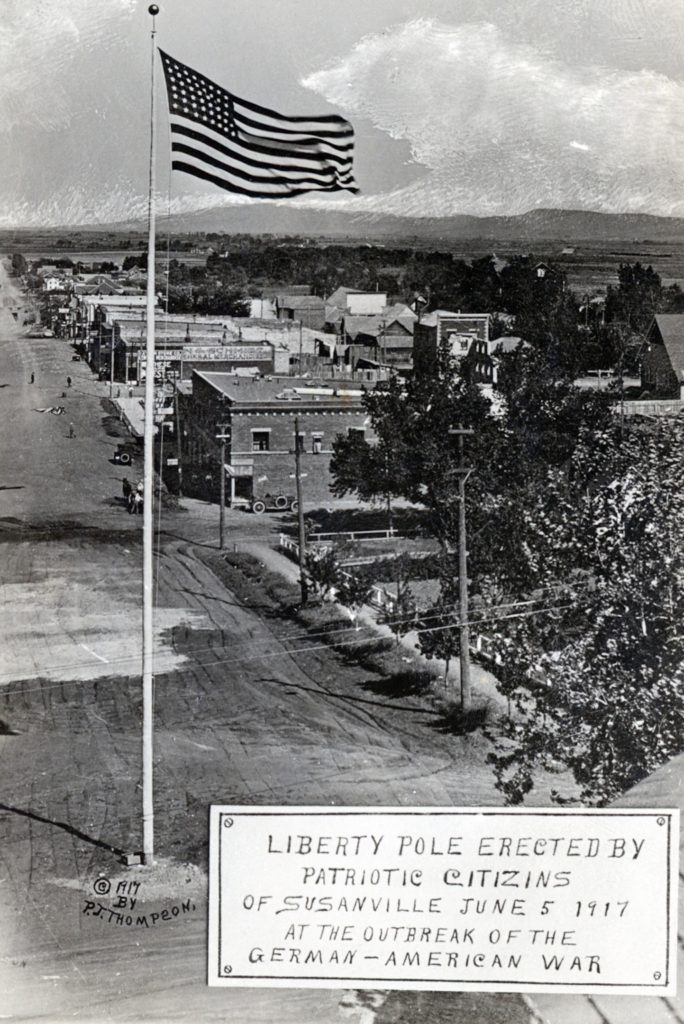
Susanville’s Liberty Pole, 1917

On Tuesday, June 5, 1917, the citizens erected a 60 foot flag pole at the west end of Susanville’s Main Street. Local photographer, P.J. Thompson commemorated the event and produced a line post cards.  He sold them at 10 cents each, which quickly sold out. He donated the proceeds, $25., to Red Cross Fund, which was a crucial relief aid organization during World War I.

Tim

Bloody Springs, Lassen County

1933 U.S.G.S Topographical Map-Illustration submitted

Never heard of it, well you are not alone. One would think that this descriptive landmark would be noteworthy. There is no recognized geographic name by the United States Board of Geographic Names or the United States Geological Survey. As a matter of fact, of all years that I had done extensive research of the region. only two people made an inquiry. Supposedly, Indians attacked an emigrant train while traveling on the Lassen Trail south of the present day Bieber and north of Little Valley.

In my book the Lassen County Almanac: An Historical Encyclopedia I included a reference to it. After all, I figure with the Almanac people could consult it, and me leave alone for other pursuits. In theory, it sounded good, but reality it did not happen. Anyhow, here is the entry:

Bloody Springs. – While no documentation of the event has been located, it is purported that the Indians massacred a group of emigrants on the Lassen Trail at this site.

While I could write a dissertation on this topic as to why there is no documentation of a non-event, I am not going to waste my time. However, a treasure hunter compiled a colorful glorified account. You can read it here.

Support by subscribing.


Glenn Wemple Remembers Lassen College

Glenn Wemple’s I Remember Lassen College

It is only fitting to the end series on Lassen College’s history during its centennial that to acknowledge Glenn Wemple’s contribution to that institution For those not familiar Glenn served on Lassen College board from 1957 to 1987. It should be noted when he was first elected he was as trustee of Lassen Union High School, that oversaw Lassen Junior College.  In 1965 the college separated from the high school, and Glenn was one of transition that he became a college trustee.

In 2012, Wingspan Press published Glenn’ memoirs I Remember Lassen College. It is a candid account how Lassen College came to be. Unfortunately, I am not sure of its availability. Margie’s Book Nook in Susanville kept in stock, so one might inquire with the store as to the status.

Tim

The Belfast Petroglyphs, 1916

The Belfast petroglyphs looking towards the sunrise chamber, June 2, 2015

Note: The following article is the earliest known published account of the Belfast petroglyphs. There is interest among readers about this topic that I think many will enjoy.

Lassen Advocate, January 5, 1917 – Visited “Lookout Rock” Mr. and Mrs. F.P. Cady, Miss Miriam Colcord, County Librarian and Mr. Bates manager of Indian affairs as their guests, recently motored out to Belfast and spent a delightful day picnicking and examining the Indian hieroglyphics. The date was December 17 and the day was beautiful. It was ‘A Perfect Day,” as balmy as thought it was spring., so warm in fact, that of the gentlemen of the party found greater comfort with coats removed while enjoying lunch under a tree and exploring the interesting relics.

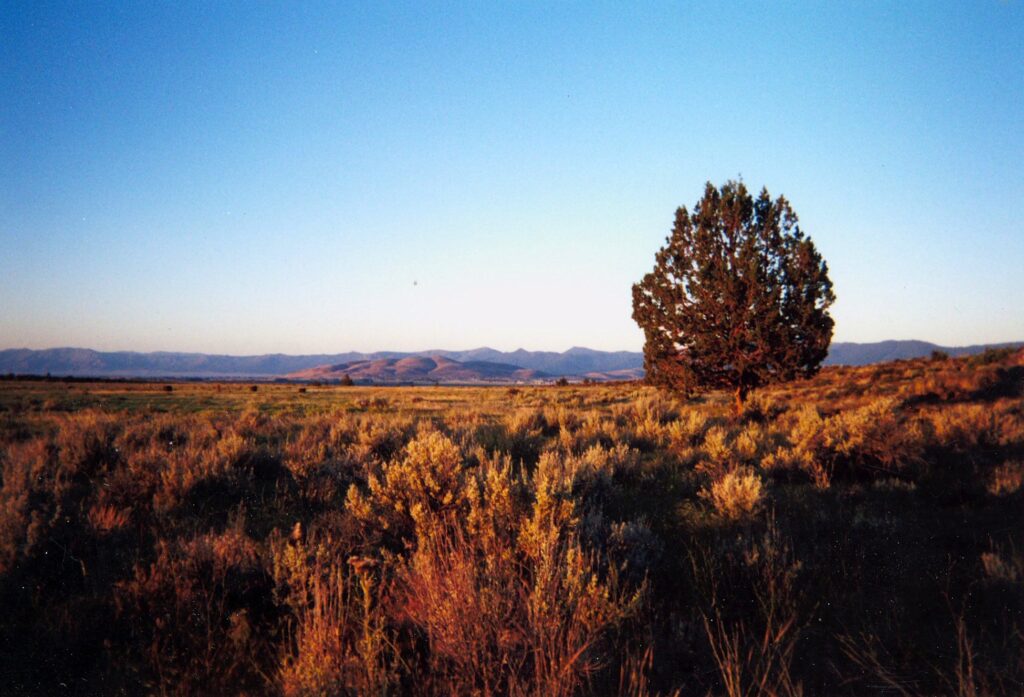
A sunrise view from Belfast

“These strange markings of hieroglyphics are found carved in rock, some of them painted, evidently with the same pigment, which has stood for ages on similar work in other parts of the world. After examine the markings, Mr. Bates stated that in New Mexico and Arizona he had seen what seemed to be same thing.  The place seemed to have been in ancient times a lookout or information station and has variously named by those as Lookout rock, and Council rock.

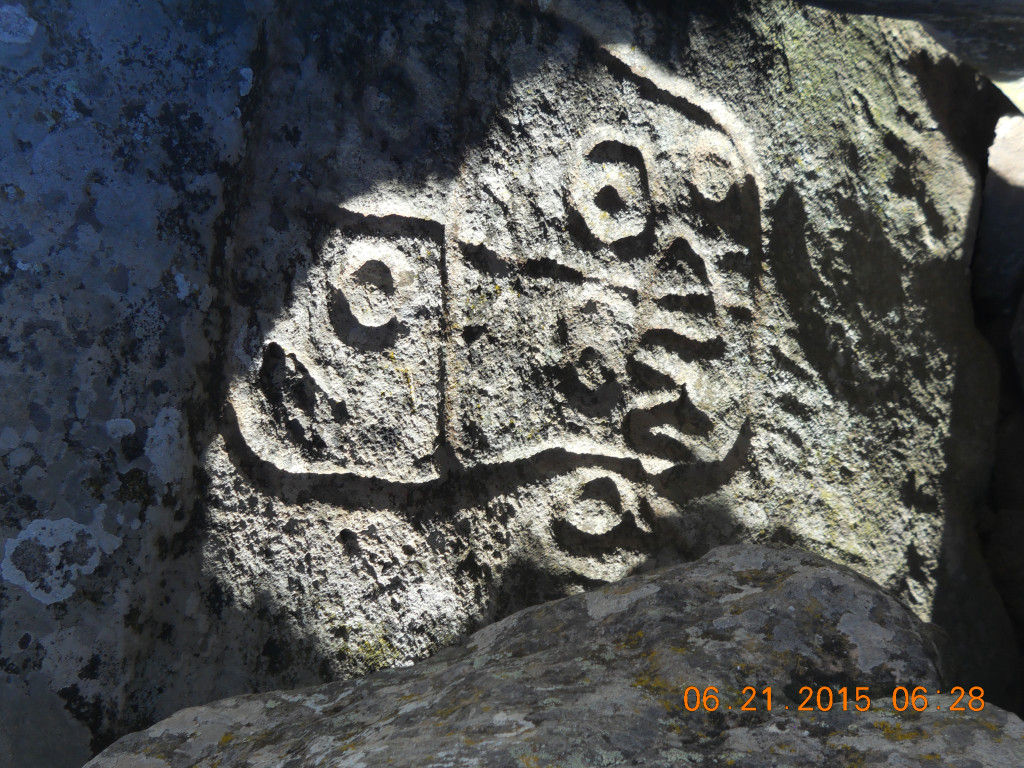
Another view in the Sunrise Chamber. Belfast

“The oldest Indians in this section have been questioned in regard to this place and the hieroglyphics, and it appears that nothing in their most ancient traditions of this tribe gives reference to them. Which leaves the inference that the time at which this work was done antedates any record of white people or any Indian tradition. In character these hieroglyphics are made up of circles and straight lines with very. little variation of that shape, but seem to have come down through the ages unchanged and unchangeable. The rocks bearing the markings are to size of boulders and therefore probably safe from curio hunters. It is doubtful if very many in this section are aware of the proximity of this extremely interesting spot, which doubtless will in time become one of the points of interest here.”

To Support, Please Donate or Subscribe


Susanville Bans Fireworks

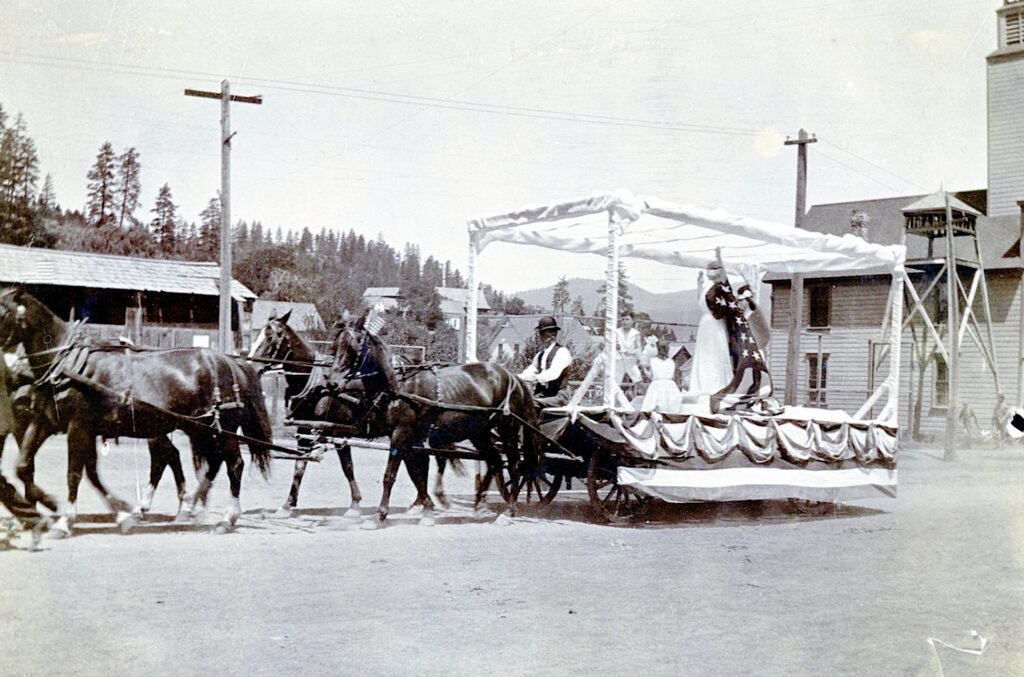
4th of July Parade,Susanville, 1906-Lola Tanner

Note:  This is a perennial post, because it has merit and in my opinion they should be banned permanently. The following appeared in the New York Times, July 3, 2024 “Fireworks sparked 916 wildfires in the state in 2021, the most recent year for which full data is available, and those fires caused more than $3.2 million in property damage, according to CalFire. The year before that, in the state’s worst fire season on record, fireworks caused more than 2,000 fires and $8 million in property damage, along with injuries to 11 people and one death. Lest, we do not forget the firestorms this January in Los Angeles. 

It is not just a California phenomenon. A study published last year in the journal PLoS One found that more than 11,000 wildfires nationwide were caused by fireworks between 1980 and 2016 — and that two-thirds of those blazes occurred in the two-week period around July 4. “In fact, more fires began on July 4 than on any other day of the year, it found.”

In Susanville’s early years as an incorporated city, it was remarkable what the council did. One of their actions, I still support today, and that is the prohibition of fireworks. The first time they banned fireworks was in 1906, following the aftermath of the San Francisco earthquake and fire. It was also a nod to the insurance companies who suffered tremendous loss from that event. It was their belief, as well as many other communities, that this preventive measure would reduce the risk of fires.

In 1912, the City once again banned fireworks. The Lassen Advocate applauded the city and wrote: 21 June 1912 – “No Fireworks on the Fourth. We desire to congratulate our Board of Town Trustees on their action in placing the ban on all kinds of fireworks on July 2, 3, and 4. This action has been taken by large and progressive cities for years past, and we are greatly pleased to note that the smaller places are falling into line. Fireworks do no good and may do a world of harm. Fires may be started that will blot out blocks of cities or towns; little boys and girls all over the United States have lost fingers, hands, eyes and in many instances, their lives from the dangerous pinwheel and firecrackers. Let them yell all they will, let them spend their money for ice cream, candy—anything on earth but the fireworks.”

In 1916, the Monticola Club appeared before the Susanville City Council asking for a ban of fireworks for the 4th of July. The City said  no. The council assured that the utmost care would be done, but they were not going to deprive children of the festivities.

In 1926, due to the tinder dry conditions,  the City banned fireworks for fire, health and safety reasons. 

Subscribe


A Doyle Depot Proposition

Doyle, with the Western Pacific Depot, 1915—Sue Whitten

For nearly decade Doyle was serviced by two railroads-the NCO and the Western Pacific. Passengers switching  trains from one to the other was problematic. In August 1914, the Reno Journal reported that a meeting of the respective railroad officials was held at Doyle. The outcome of the said meeting it was told that a new depot would be jointly built by the two companies. That was not the last word. In September, the State Railroad Commission held a meeting in Doyle, which residents were opposed the depot merger. The Commission ruled in favor of the residents and the depot issue dropped.

In a couple of years the issue would be moot. In 1917, the NCO sold its trackage from Hackstaff (Herlong) to Reno, thus the NCO would no longer serve Doyle.

Tim


The People’s Church of Westwood

People's Church
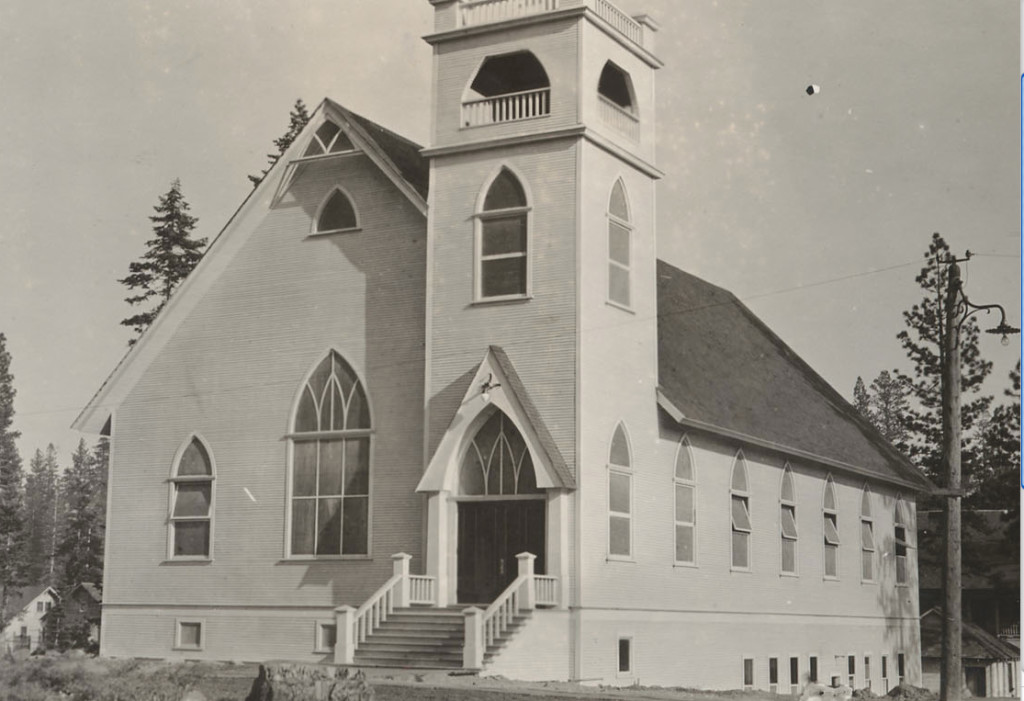
People’s Church, circa 1919.

When the Red River Lumber Company started their construction of Westwood in 1913, there was a lot of thought that went into it. A neglected matter was a church. In the spring of 1917, Fletcher Walker, Resident Manager,  brought up the topic that Westwood was in need of a house of worship with his father, T.B. (Red River’s founder, who resided in Minnesota) and wrote: “We have come to a time when it seems inadvisable to put off further the building of a working church. The Sunday school had 255 last Sunday and the condition of the school in one of the old cook houses is such that the congestion prevents efficient work.”

Fletcher informed his father that a committee had organized to solicit donations. The committee discussed plans for a building, not only its seating capacity but that it should have a full basement to provide for a library, kitchen/dining rooms, and other rooms for sociable functions such as Y.M.C.A. meetings. After considerable debate it was determined that ideally the church should seat 600 churchgoers.

Once the committee agreed to the building’s size, they were able to calculate the cost. They estimated a price tag of $8,700—with lumber the most expensive item at $4,000. Fletcher thought Red River should donate the lumber to such a worthy cause. To finance the remaining balance, the committee had already secured $3,000 in pledges.

In conclusion Fletcher wrote, “We could have the Red River Lumber Co. build the church and direct the work along lines that were best for the Company, keeping in mind that we are against the I.W.W. and politicians as well as the Assessor, etc. That the labor market is a laborer’s market and that we must make Westwood attractive if we are to keep a crew without paying excessive wages. So from my viewpoint I think we should go ahead and build it and let the people use their money on the extra running connected with it.”

By the summer of 1917 the project moved forward with Red River donating the lumber and labor. The site selected was at 500 Cedar Street, which the Rev. R.G. Green described as a rock pile strewn with empty beer and whiskey bottles. By November 1917 the new church was completed.

Initially, it was a church with no name. Since it would serve the needs of variety denominations it was named The People’s Church. On Sunday May 19, 1918 dedication ceremonies were held with Dr. John Wilson, District Superintendent of the California-Nevada Methodist Conference officiating.

Support

The Old Fruit Growers Barn

FGS barn
The old Fruit Growers barn, June 2, 2015- Photograph by Annie Henriques

Well, can you believe it, it has been ten years to the date that the old barn at the east entrance to Susanville was destroyed by fire. It was built in 1920/21 for the Fruit Growers Supply Company, who were in the midst of constructing their new sawmill/box factory nearby. Continue reading The Old Fruit Growers Barn