Category Archives: History

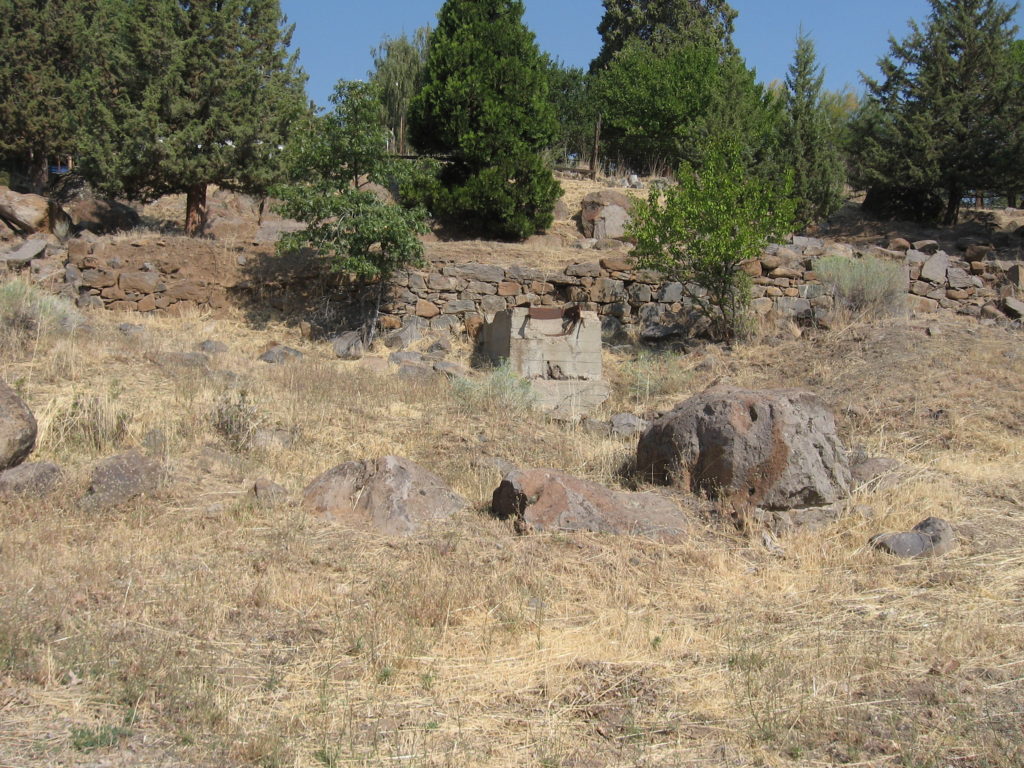
Inspiration Point, 1892

May 18, 2016 tour. Courtesy of Martin Balding

Susanville’s Inspiration Point is one of my favorite local spots. It also a place I like to take first time visitors to, so to get a better idea of the layout of the region, as there is so much to see. It has been awhile since I did an Inspiration Point tour, so may be this fall.

The following description is from the Lassen Advocate of March 31, 1892, that I thought some might enjoy:

“A Beautiful View. Any clear, bright day, when the atmospheric conditions are favorable, a lovely view may be obtained of the upper end of the Honey Lake Valley, from the bluff at the back of Susanville. With the unaided eye one my see steam arising from the Hot Springs on the shores of Honey Lake, fifteen or twenty miles distant and plainly distinguish familiar objects and residences more than half that distance. Amedee might be seen but for an intervening spur of the mountains to the east. The view from the bluff is well worth seeing. In no other way may one obtain such a comprehensive idea of the extent of the western or upper end of Honey Lake Valley while the beauty of the scene will more than repay climbing of the hill.”

Subscribe

Amedee’s First Family—The Brubecks

The Hotel Amedee in its prime.

More changes were on the horizon. Amedee was receiving a great deal of press in the numerous west coast newspapers. Besides the railroad, Amedee became the focal point of numerous reclamation projects to reclaim the vast sagebrush plain of the eastern Honey Lake Valley into a major agricultural hub. The railroad, of course, saw the potential. In January 1892, the railroad’s general manager, Erasmus Gest made a deal with developer Silas N. Griffith. In the contract it was stipulated, that not only a town plot be subdivided, but a grand hotel be built within six months. Gest had only purchased the proposed townsite from Brubeck, a few days before meeting Griffith for a bargain price of $150.  On June 3, 1892 a grand opening celebration of three-story Hotel Amedee was held. Once Griffith was relieved from his contract, he began his search for potential buyers of the hotel. He did have to look far, and in September 1892, Brubeck purchased the hotel that had many amenities including twenty-seven guest rooms. While the 1893 national financial crisis did put a damper on things at Amedee, it was the most important rail shipping point for Northeastern California.

The good times would not last forever. In 1898, the railroad made it known that it would extend its line north to the Madeline Plains. When that occurred Amedee would lose its prominence as the terminus and there would be an exodus. In June 1900 the extension was completed. During the town’s hey day in the early 1890s it boasted a population of between 300 to 400 inhabitants. The population of the town at the dawn of the new century had dwindled to 49. To back up a little. In 1898, Brubeck placed the hotel for sale, with an asking price of $2,000 cash. For the longest time there were no takers. In the fall of November 1900 Brubeck purchased a 1,700 acre ranch in Contra Costa County and moved his family there. It was not until April 1901 that Brubeck finally found a buyer, namely Arthur P. Holland of Oakland, California. The transaction included the entire Brubeck holdings of the Hotel Amedee, bath house, rights to the hot springs, and approximately 100 acres. Holland planned to make the place into health resort and for Brubeck, a chapter closed and a new one had begun.

Never miss a story, click here to subscribe.

Amedee’s First Family—The Brubecks

Lewis W. Brubeck Family. Standing (left to right) Pete, Phil and Will. Front Row (left to right) Edwin, Louisa, Lewis, Mabel and Edna. Courtesy of Leslie R. Brubeck

In 1873, at the age of twenty-one Philip Brubeck gave his son, Lewis a horse. Shortly afterwards, Lewis left his native Indiana and headed to California. His first stop was the Honey Lake Valley. He decided to stay for awhile and took up a homestead near the Mapes Ranch east of present day Litchfield. He became acquainted with his neighbors, especially the Grass household. On February 4, 1877 at Janesville Lewis married Louisa Grass, who was also a native of Indiana.

Like so many, Lewis was thinking the grass must be greener on the other side of the fence. In 1881, he purchased 151 acres from E.C. McKenney of Reno for $350. The property was located on the east shore of Honey Lake, and consisted what was designated at the time as Lower Hot Springs. No one had resided there since the Pearson Massacre of 1868. The first order of business was lumber for a house and fence posts for property improvements. This presented a challenge as the nearest sawmills were located a considerable distance away on the west side of the Honey Lake Valley. At Milford he had a  raft constructed to float the lumber across Honey Lake to his new home. 

Life was fairly uneventful there during the 1880s, though by the end of the decade Lewis and Louisa now had five children—William Andrew, Edna, Philip, Peter Howard and Mabel. In August 1890 the Brubeck family experienced a dramatic change in their lives. Located ten miles to the south was Leigan the terminus of the Nevada and California Railroad. Within a matter of months, the railroad extended its line north to Brubeck’s to become the new terminus named Amedee. 

The first item of business for Brubeck was to move his house next to the railroad. Thus, he began the transition from rancher to an innkeeper. He was overwhelmed with business. In December 1890, Brubeck’s new Pioneer Hotel opened for business. The second floor contained eight guest rooms. On the first floor, there was a ladies parlor, two dining rooms, bar and the kitchen to feed the guests. He took advantage of the hot springs, and built a small bath house. Business was brisk. Brubeck expanded his horizons by opening a livery stable. Amedee was on the verge of becoming a “boom town.”  Brubeck’s dining rooms were serving over 200 people day. He ended up using his livery stable as an overflow to his hotel.

This Amedee business partnership lasted less than a month. Courtesy of Tom Armstrong

To be continued tomorrow.

Pland-Evans

In 1935 Pland-Evans extended the operating hours of the soda fountain in the Big Store to 11:00 p.m.

Pland-Evans was certainly not a household name to many, unless you happen to reside in Westwood during the 1930s and early 1940s. This San Francisco company were “operators of industrial subsistence facilities.” When the Red River Lumber Company during the 1930s went through its re-organization phase they leased their commercial facilities such as the Big Store and the Westwood Club to Pland-Evans. Pland-Evans operated these facilities in Westwood, as well as the Walker Mine in Plumas County until 1942. At that time they were succeeded by H.S. Anderson Company.

Never miss a story, click here to subscribe.

The Tanner Slough Initiative

Colony Dam and the Baxter Creek Siphon, Susan River, 1938

In the never ending quest for search for water in the Honey Lake Valley for irrigation a multitude of avenues were explored. A late entry was that of the Tanner Slough Irrigation Association that was formed in the late 1930s. This association was composed of the ranchers of the Tule District, the lower end of the Susan River and the various sloughs before they empty into Honey Lake. Those ranches included—Theodore, Mapes, DeWitt, Bailey, Fleming, McClelland, Gibson, Tanner and Dill.

They were able to impound 2,600 acre feet of water in Willow Creek Valley, and also flood waters of Horse Lake. The spring floods of 1938 caused considerable damage throughout the region. The Colony Dam on the Susan River near Standish was a casualty. The Colony Dam did not impound a great deal of water. One of its key components was a point of diversion of water to downstream users.

On April 20, 1938 the Tanner Slough Irrigation Association sent a letter to the California Governor Merriam seeking funds to repair and reconstruction of the Colony Dam. The flood damaged some 10,000 acres of land belonging to members of the Association. Not only delayed getting crops planted, but when summer arrives they might not be able to divert irrigation due to the damage of the dam, and the sloughs. They sought $3,500. In their plea, they wrote, ”We know of no other place to make an appeal for aid and assistance. You are about our last hope.” Their request was denied.

Never miss a story, click here to subscribe.

The Weather Report, October 1899

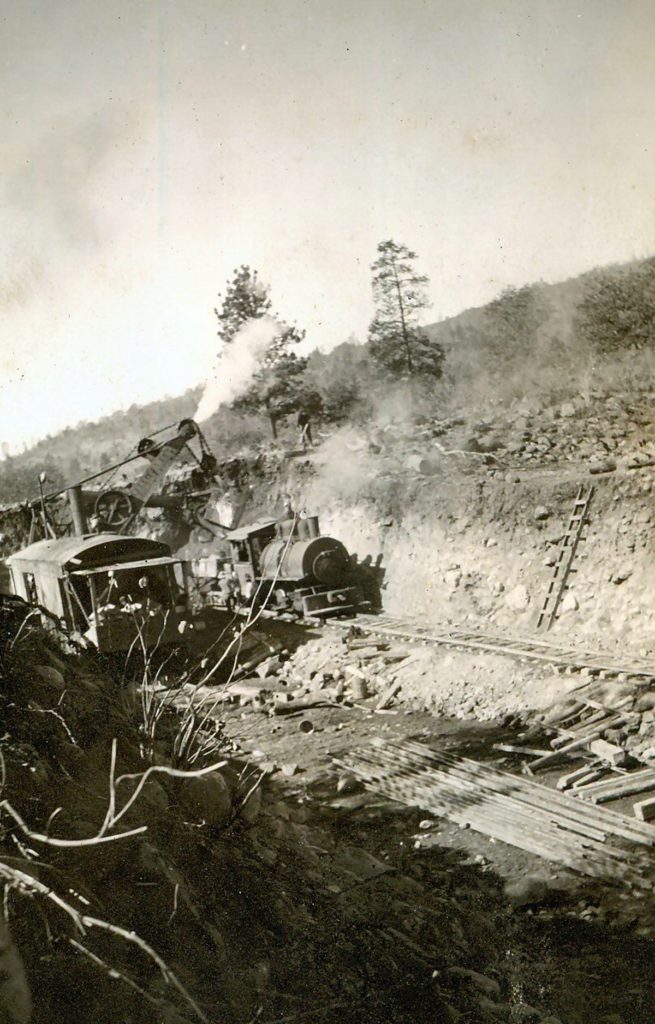
Construction of the Fernley & Lassen Railroad, west of Susanville, January 1914. Courtesy of B.R. Zimmerman Collection

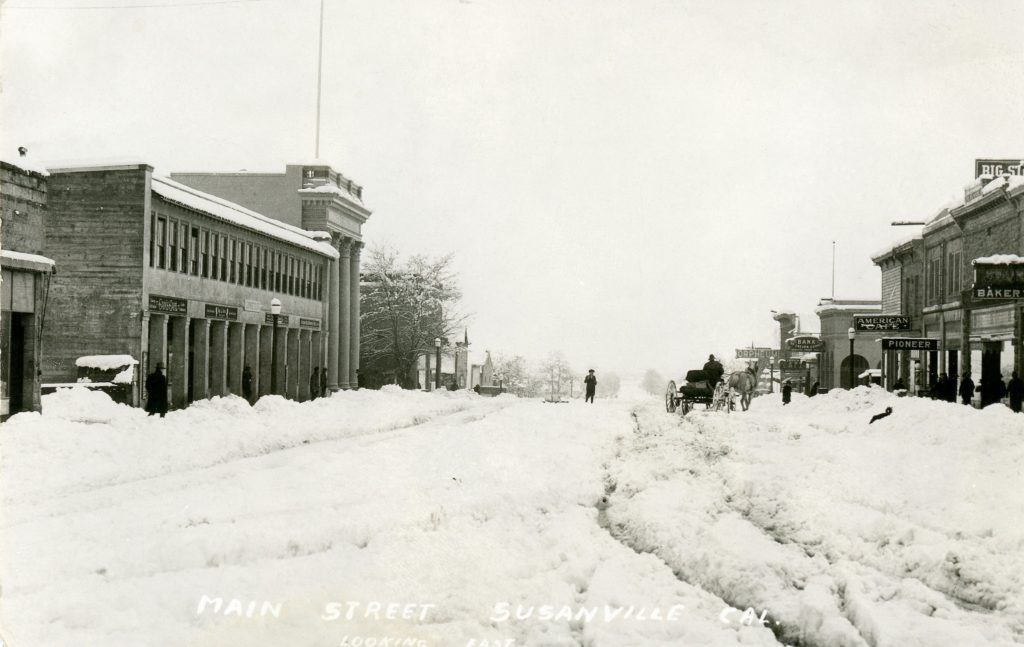
While fall in this country can experience some nicest weather of the year, there are instances, well it is not so pleasant. The first snow of the 1899-1900 season occurred on the night of October 10. The amounts varied, Susanville had two inches, while Willow Creek Valley, just a trace and Milford with four inches of snow. On Friday, October 13, it snowed all day and into the night and in its aftermath Susanville was blanketed with fifteen inches of very heavy, wet snow. On a bright note, at least for the wood cutters, the cold snowy weather kept them busy filling orders.

Never miss a story, click here to subscribe.

An Eagle Lake CCC Camp?

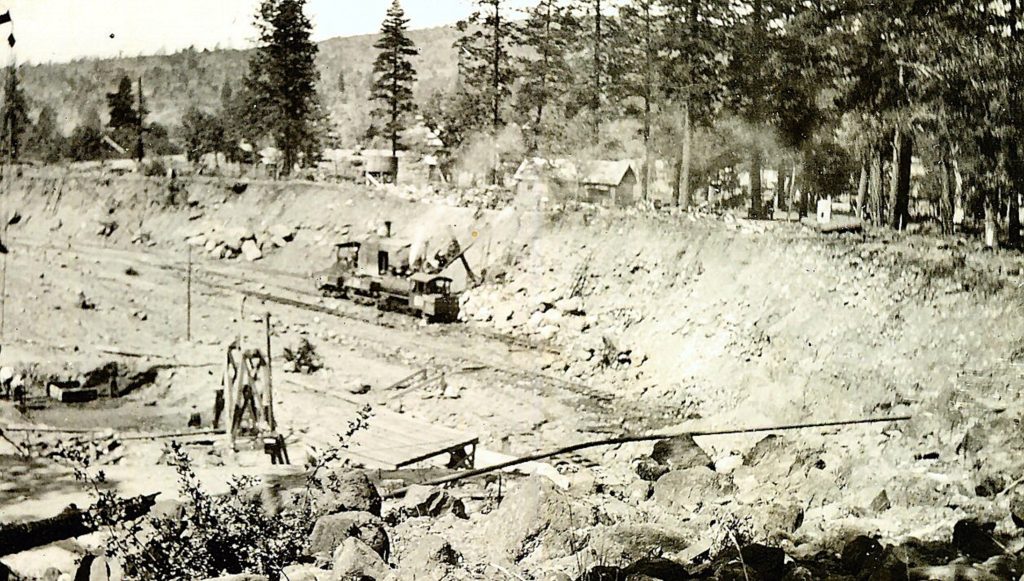
The outlet construction camp of the Bly Tunnel, 1922. Courtesy of Lola L. Tanner

In 1935, Lassen County officials requested a third Civilian Conservation Corp Camp (CCC). This would function a bit differently.  What they sought was a CCC Camp at Eagle Lake to assist with the beleaguered Bly Tunnel and the Tule and Baxter Creek Irrigation Districts. It was their contention after all that a CCC camp could provide work on the tunnel that was necessary to prevent further bankruptcies of the farmers and ranchers involved with the districts. The camp could also provide much needed labor for the canal and siphon system in the Honey Lake Valley that distributed the water. The county’s request was denied, but government officials were somewhat sympathetic and stated some limited manpower might be available from time to time from the Secret Valley CCC camp.

Never miss a story, click here to subscribe.

P.S. – For Lassen County residents, today, one can receive a free flu shot at a drive through clinic at the Lassen County Fairgrounds.

Pike’s Point Revisited

South shore of Eagle Lake, October 8, 1941 – Hank Martinez

Some may recall awhile back about this topic. A little update, since I have since received a better photograph showing the point during the low water era, which as you can tell provides a better understanding. For those you may have just tuned in Pikes Point is located at the south shore of Eagle Lake and most people know the location as the Eagle Lake Marina. The photograph shows all of Gallatin Beach to Eagle’s Next, prior that developments existence.

Donate

A Four County Community College?

Lassen College
Lassen College on the Lassen Union High School campus.

In 1965, Lassen Community College severed its ties with Lassen Union High School. The college then began the process to locate and build a campus of their own.

During that process college officials decided to expand its territory with neighboring counties of Modoc, Plumas and eastern Sierra. After all, for nearly forty-three years residents of those counties took advantage of the opportunities made available to them at Lassen College.

On June 4, 1968 the voters of those counties, as well as Lassen, would decide if it was to be a four county community college. A college spokesman stated, “We want quality education in this mountain area at a reasonable cost.” The ballot measure ran into trouble with Plumas County, whose residents planned to annex to Peralta College in Alameda County. The major hurdle was the tax issue to fund the costs to build a new campus. While the Lassen voters approved the measure, the neighbors did not.

Never miss a story, click here to subscribe.

Susanville’s Population Problem

A 1937 promotional feature of the Lassen Mail newspaper.

Nearly since time immemorial Susanville boosters grappled with the town’s population figures. This became quite problematic when the town incorporated in 1900, due to its small boundaries. At that time the western boundary was Inspiration Point, Piute Creek to the north, Susan River to the south and Weatherlow Street was the town’s eastern boundary. 

One of the issues the City of Susanville grappled since it was incorporated was its population.  To lure business and families, the larger number of inhabitants was an enticing inducement, and still is to this day. After the lumber mills arrived by the early 1920s, there were numerous subdivisions to the east of the City. The City tried its darndest to annex, but large property owners like the Red River Lumber Company which owned the Milwood Tract was a force to be reckoned with and defeated many annexation measures. All the Susanville boosters could do, is at least advertise a Greater Susanville. It should be duly it would take nearly a half of a century before City was able to annex adjoining properties.


However, this concept was not limited to any certain era. For instance in the 1990s, when the City annexed the State Prisons, those incarcerated became city residents. Those 8,000 inmates were reflected on the City Limit signs noting it now had a population of 17,000. As one city official informed me at the time to include the inmate population in the sign, was for marketing purposes hoping to influence more businesses and perspective residents to take a second a look. 

Subscribe