Category Archives: History

Janesville Electrified

Janesville Oddfellows Hall—Courtesyof Howard & Gladys Scott

For whatever unknown reason the residents of Janesville were reluctant to embrace electricity, unlike their Standish neighbors. In the fall of 1929 there were a handful of Janesville residents who campaigned the citizens to sign up for electricity so a power line could be constructed from Standish. By November 1929, sixteen people had signed up, but to make the project a reality required twenty sign ups. The organizers were stymied by the reluctance of the Janesville Masonic and Oddfellow Halls to sign up. After all, it was thought these two buildings held many public functions, and they would be better served with electricity. In 1930, a power line was extended to Janesville for the initial subscribers.

Subscribe

Brubeck Spring – Lassen County

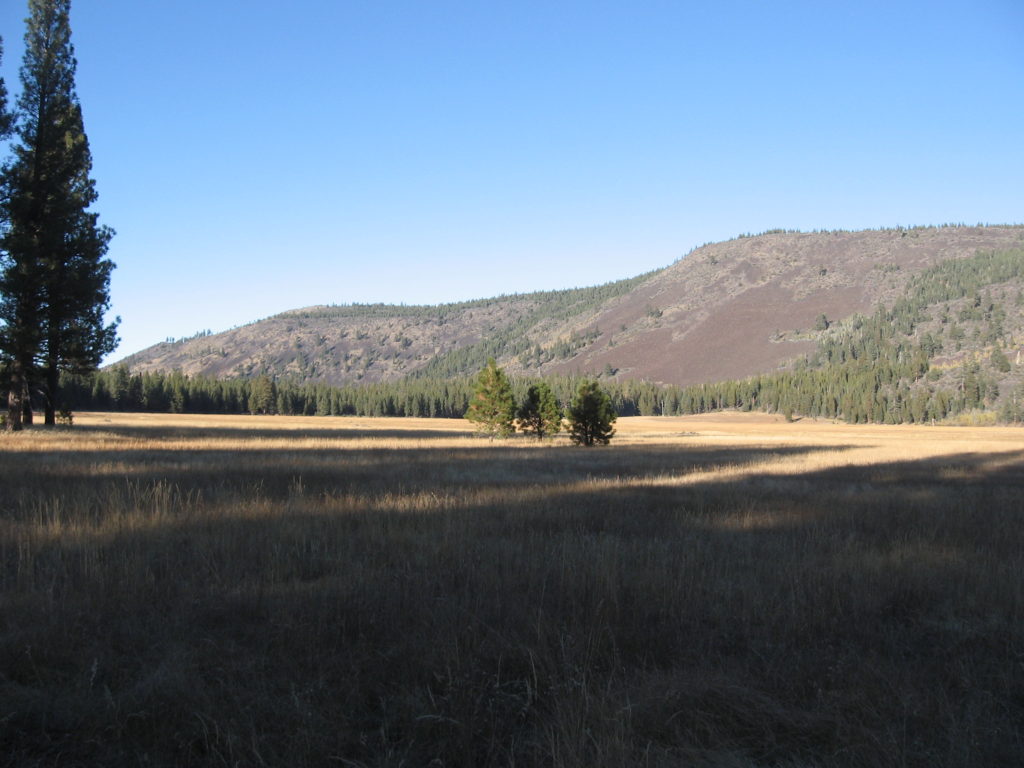
Approaching Brubeck Spring, Septrember 23, 1979

Located on the north side of Skedaddle Mountain, it was so named for Lewis Brubeck (1852-1925), who in 1881 established a ranch on the east shore of Honey Lake, that would later become the railroad town of Amedee. In 1888, Brubeck purchased the property that the this spring is located on from Robert Elwood for $200. On February 8, 1899 Brubeck sold the property that consisted of 441 acres to Nevada sheepmen Flanigan & Dunn for $1,500. By the way, depending upon your age or your musical taste,  Brubeck’s grandson was the acclaimed jazz musician, Dave Brubeck.

Never miss a story, click here to subscribe.

Pacific Gas & Electric Railroad

Pit One under construction, 1921 — Courtesy of Lola L. Tanner

In 1919, Pacific Gas & Electric (PG&E) announced they were going to spend $100 million building five dams and power plants along the Pit River in eastern Shasta County. PG&E contracted with the McCloud River Railroad to construct and operate the line starting from Bartle. Work began in 1920 connect with Pit One, near Fall River Mills. Pit 3 is probably the best known dam for its creation of Lake Britton—named after PG&E General Manager, John Britton. With the completion of Pit 4, activity of the line greatly diminished since its sole purpose was for construction of the dams to haul equipment and material. By 1929, the line was suspended and in 1934, the rails were removed.

Construction near Pit One, 1921—Courtesy of Lola L. Tanner

Never miss a story, click here to subscribe.

Susanville’s Main Street snow berms

Main Street, Susanville, 1922.

Prior to 1922, there was no snow removal in Susanville. There were several factors at play. One most people were not dependent on an automobile for transportation, there were still an abundant of horse drawn sleighs to navigate any deep snow. On the other hand, Susanville had experienced a major transformation with paved streets, curbs, gutters and sidewalks. This was paid for with a special tax assessment with the property owners, many of whom were not happy with the situation. The citizens demanded some form of snow removal.

The city had a slight problem to comply with the request of its inhabitants—they had no equipment. Luckily, the county road department came to the city’s aid and plowed Main Street pushing the snow to the center of the street. In 1933, the city turned over Main Street to the State Highway Department, who continues with the same snow plowing practices.

Main Street, Susanville, 1952.

The Good Times of 1922

Susanville Main Street, 1924.

Lassen County was in the midst of prosperous times during the 1920s, and 1922 was a prime example. For instance, over 300,000,000 board feet of lumber was cut that year, making Lassen County the biggest producer of lumber in California. This had a ripple effect in the agricultural community. The lumber mills purchased $2,000,000 worth of local farm products to feed their employees.

The railroads flourished too. For the Southern Pacific over 1600 carloads of lumber were shipped by rail on any given month. Passenger train traffic was up going from three to six cars and even included a dining car.

Among other things to celebrate was the Lassen National Forest moved its headquarters from Red Bluff to Susanville. A county fair was held, the first time in fifteen years. The Bly Tunnel project was approaching completion that would be a major boost to the agricultural community. To assist that group the Lassen County Farm Bureau was formed.

Never miss a story, click here to subscribe.

Our Finicky Winter Weather

Main Street, Susanville, January, 1907

January is usually the month that the largest snowfalls occur, but not always. Last year the month was a dud, but February and March made up for it. On Wednesday, January 11, 1899 Susanville had received thirty-three inches of snowfall since the first of the month. Nothing too remarkable, until a look back at the previous winter that was more than the entire snowfall for that winter. So we will have to just wait and see what Mother Nature has in store for us.

Never miss a story, click here to subscribe.

The creation of the Lassen County Free Library

The Lassen County Library bookplate used several local iconic features representing the pioneer era.

In 1915, when the Lassen County Board of Supervisors agreed to create a County Free Library it was a new territory for them to undertake. On September 7, 1915 they entered into a contract with the County of Sacramento to organize the Lassen County Free Library system. It was a one year contract at $960. One of the first stipulations was Sacramento would hire a librarian for Lassen County at a salary of $80 per month. When the contract expired on October 31, 1916, the Lassen County Free Library was fully functional.

Never miss a story, click here to subscribe.

Lassen National Forest Ranger Stations

Butte Lake Ranger Station

Just as one-room schools could be found every where in another era, the same held true for ranger stations. Records for schools can be found through county archives. One of the problems researching activities on the Lassen National Forest is the lack of archives. A portion of this can be attributed to the fact that its headquarters has moved so many times. During such moves, there is a tendency to discard documents, at the time that seemed no longer relevant.

Fortunately, documents such as Harvey Abbey’s diary as a Forest Ranger from 1905-1920 sheds an interesting glimpse of the early years on Lassen. This, plus records in my files, should make for an interesting series.

If you happen or know someone who has information on this topic, I would appreciate hearing from you.

Support

Lassen COUNTY FARM BUREAU COOKBOOK

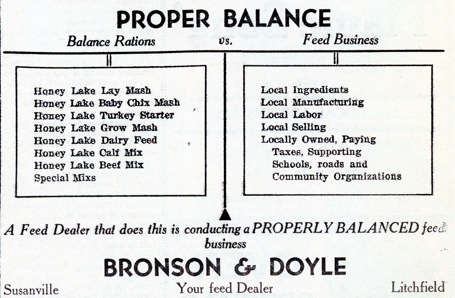
The first local cookbook published was in 1915 by the Monticola Club which was very well received. The second one, I am not so sure of, since I have seen only one copy and I never come across references. In November 1927, the Lassen County Farm Bureau released a 144 page cookbook. The recipes cover most everything imaginable from that era. Those recipes were contributed by members of the farm bureau and every nook and cranny in the county was represented.

Never miss a story, click here to subscribe.

Wendel Hot Springs

Wendel Hot Springs, circa 1940.

Eons ago, Richard Peterson of the University of Hawaii at Manoa contacted me in regards to published locally material on hot or mineral springs. Sadly, I informed him, that with exception of some stories of the Amedee Hot Springs during its heyday that such material was non-existent.

However, not to dissapoint him, I did some research to send along. As to Wendel Hot Springs, I informed that since 1856 some one has always tried to use these springs, initially for a steam bath. When James A. Wood had a homestead there in 1870s and 1880s he used the springs to heat his home. When the NCO Railroad arrived in 1899, they tried to use the water for the locomotive boilers, but quickly gave it up, as the minerals in the water clogged the boilers. I did mention that in the 1970s about Phil Gutman and the Hobo Wells Hyrdoponics company to grow tomatoes, but that is a story in itself.

Never miss a story, click here to subscribe.