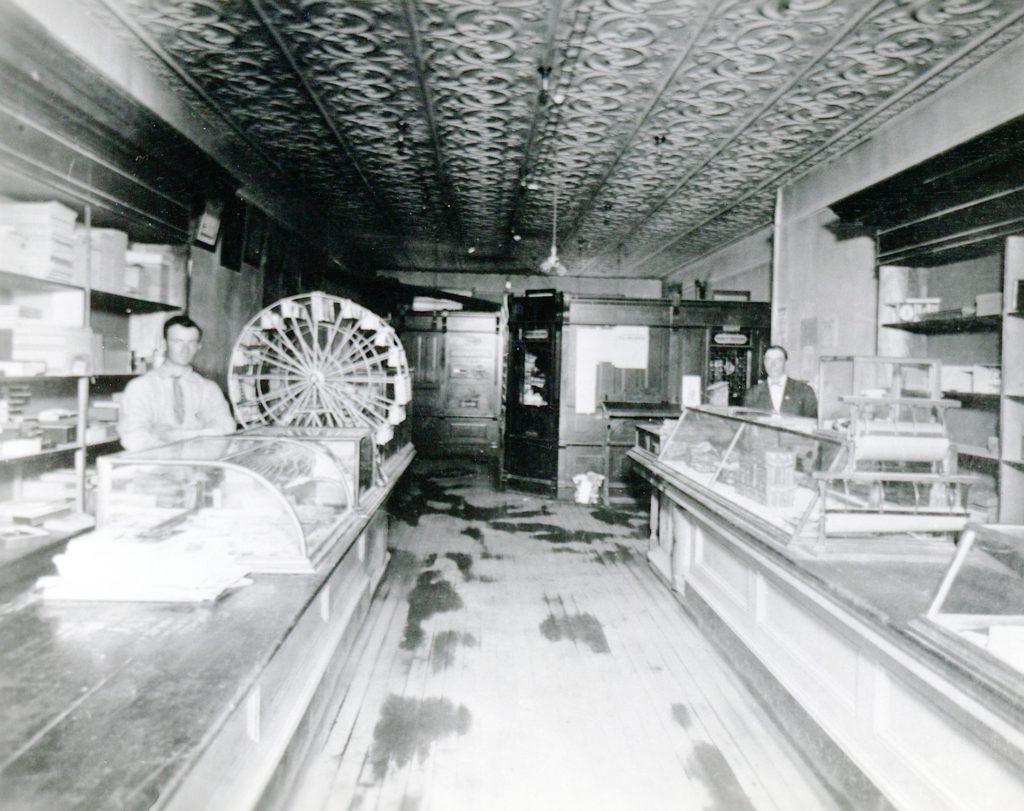
Interior of Spalding Drug, circa 1910. Courtesy of George McDow Jr.
Seasoned residents of the area will have fond memories of a one time inconic local instutition, Spalding Drug. It was established in 1865, by Zetus N. Spalding. In the 1890s, his son, John B. Splading took over the business. To give it a more cosmopolitan flair, he renamed it the City Pharmacy. The basic operation remained the same. Members of the Spalding were avid sportsmen and it was reflected in the merchandise they stocked. Not only was there a wide selection of fishing tackle, but guns and ammunition as well. By the time, City Pharmacy moved into its new stone building on the 700 block of Main Street, the name reverted back to Spalding Drug.
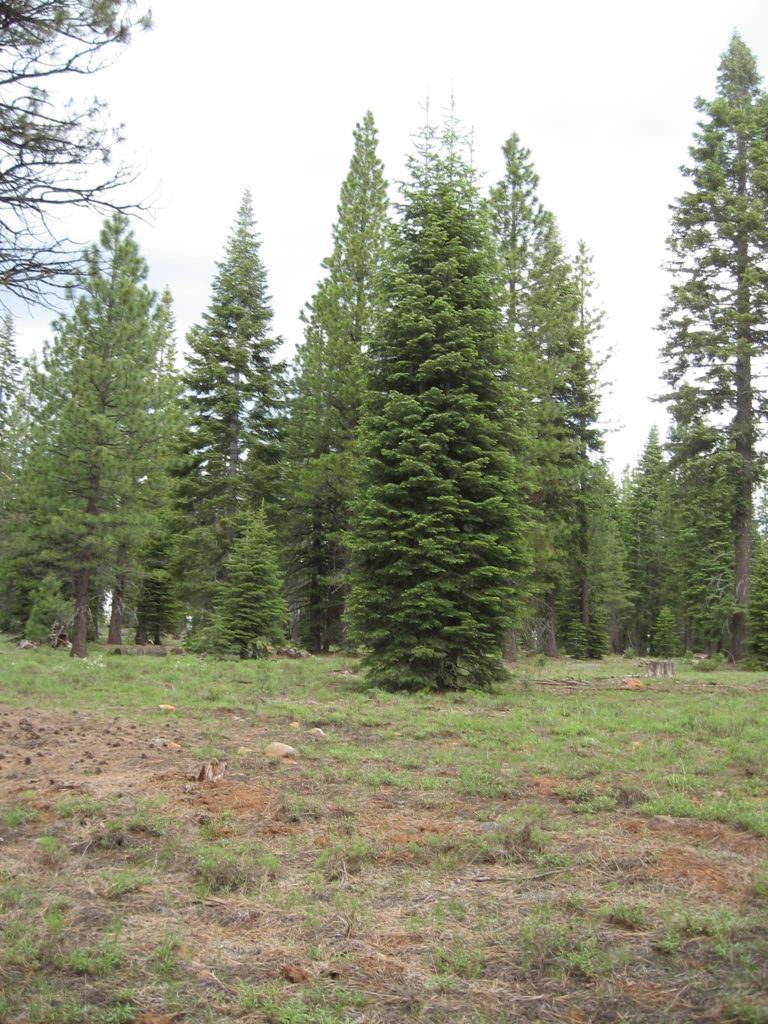
An interesting silver tip near McCoy Flat Reservoir, June 15, 2019
In December 1936, the Lassen National Forest issued a statement that 15,000 Christmas trees had been cut. The majority of the harvest were shipped to metropolitan areas for sell to “city dwellers.” The forest service stated, “The cutting serves to thin crowded stands and to stimulate growth of the remaining trees.” The most popular tree cut were “silver tip” fir.
Elk, with the Wingfield residence in the background. Courtesy of Alphozene Terrill
On May 23, 1910, Goldfield Nevada millionaire, George Wingfield purchased the 320-acre Clint DeForest ranch about eight miles south of Susanville. Besides an elaborate summer home, he created a wildlife preserve. During the fall of 1910, Wingfield had eighty acres fenced off for a elk and deer park, where he imported the elk from is not known. In 1914, he purchased four buffalo to add to his preserve. This was a popular local attraction to see the buffalo and elk. To round out the “exotic” species were numerous peacocks that roamed the grounds.
In July 1923, Wingfield sold the property to Lassen Lumber & Box Company. The buffalo were shipped to Wingfield Park in Reno, that were on display there for many years. Subsequent owners did not maintain the fenced enclosure, allowing the elk to escape the preserve. In the winter months the elk could be found foraging on nearby Bald Mountain and sightings of the elk were reported in Willow Creek Valley, north of Susanville. Of course, hunters delighted in this new game to pursue. It was sometime in the late 1930s or 1940s, when the last elk was killed.
Where the buffalo and elk roam at Wingfield Ranch. Courtesy of Lola L. Tanner
Rager Reservoir is a small body of water located in the eastern Madeline Plains (Section 24, T. 36 N. R. 15E). It was built in the early 1900s by Thomas Rager, a resident of the Madeline Plains. A native of Illinois, Rager first came to the region in 1879 working as a cowboy for the Smoke Creek Ranch. By the 1890s, he set out of his own on the Madeline Plains where the lived the rest of his life and passed away in 1925.
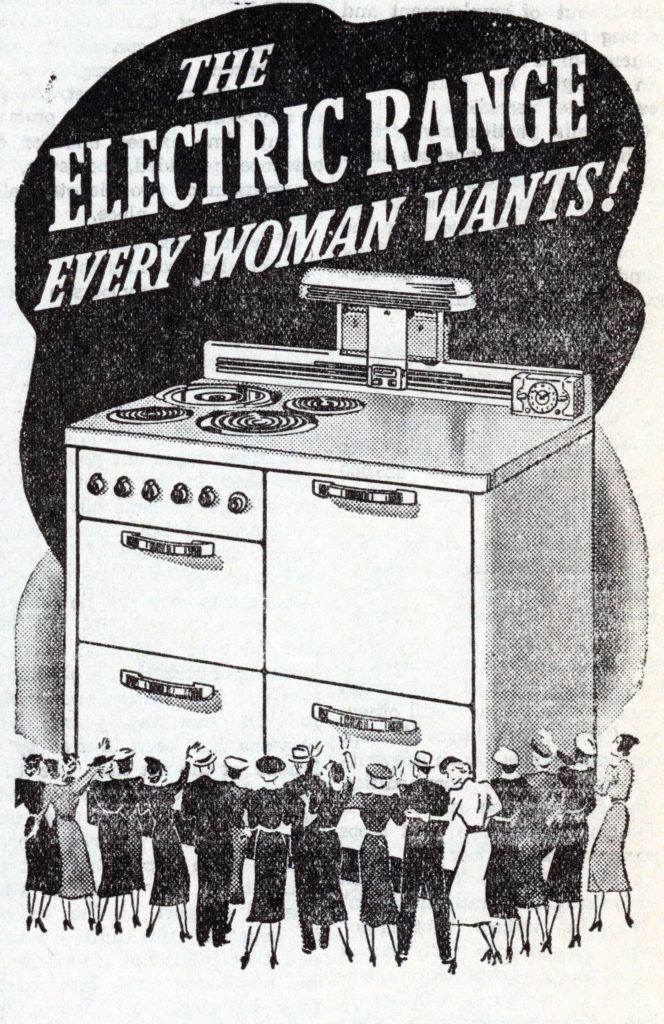
California Pacific Utilities of Susanville ad for electric stoves, 1938
Here is a safe non-political topic to discuss at your Thanksgiving dinner. During the 1920s and 1930s, the way people lived was revolutionized with all things—electricity. Local electric companies pushed for people to buy electric stoves, stating they were clean, no smoke like a wood stove, and economical among other things. In 1937, on the West Coast just before Thanksgiving, turkey prices plummeted to eight cents a pound. Why? The current gobblers were too large for the modern electric stove.
P.S. – First of all, I am so thankful/grateful for all those who provide moral and physical support (the latter taking me to the doctor, running errands) etc it means so much to mean. In additional, I consider my fortunate for the beautiful natural surroundings where I live. After all, I spent three weeks, where the main view is ceilings, so it really changes one’s viewpoint.
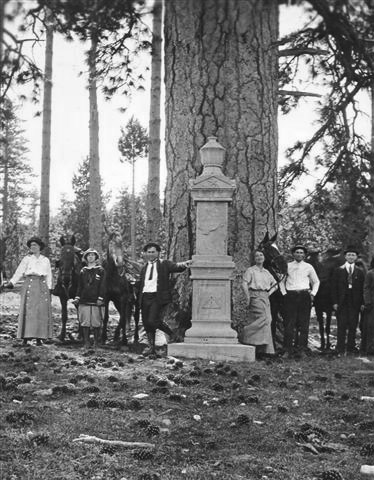
Lassen’s grave has been a popular gathering spot over the years.
It was 160 years ago on this date that a belated funeral service for Peter Lassen was held. It should be duly noted that Lassen met an untimely death on April 25, 1859 in the Black Rock Desert some 125 miles east of Susanville. In November his remains were brought back for burial in the Honey Lake Valley and placed near the majestic Ponderosa pine tree where he camped there in 1855.
Lassen’s funeral was chronicled in the Territorial Enterprise newspaper of Virginia City. The paper noted: “The remains of Peter Lassen, the old pioneer, were buried with Masonic honors, Sunday November 27, on his own ranch at Honey Lake. The attendance upon that occasion, was a very large one for that place.”
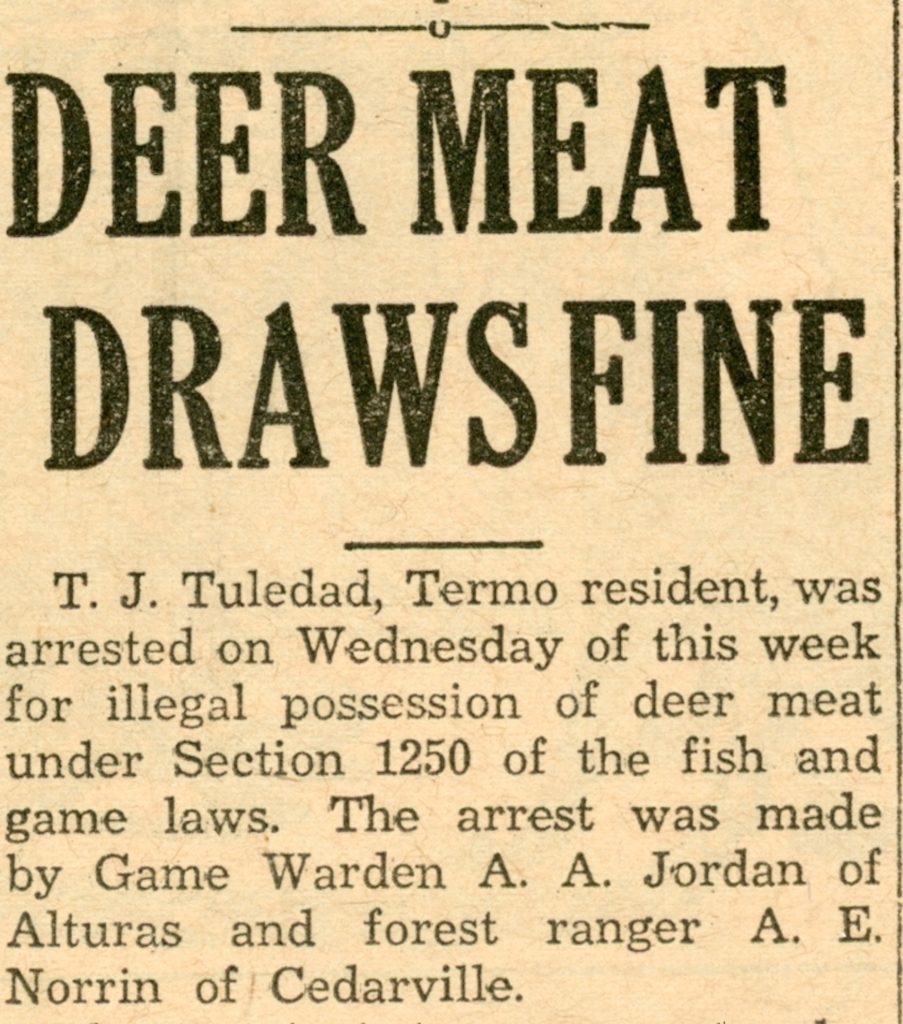
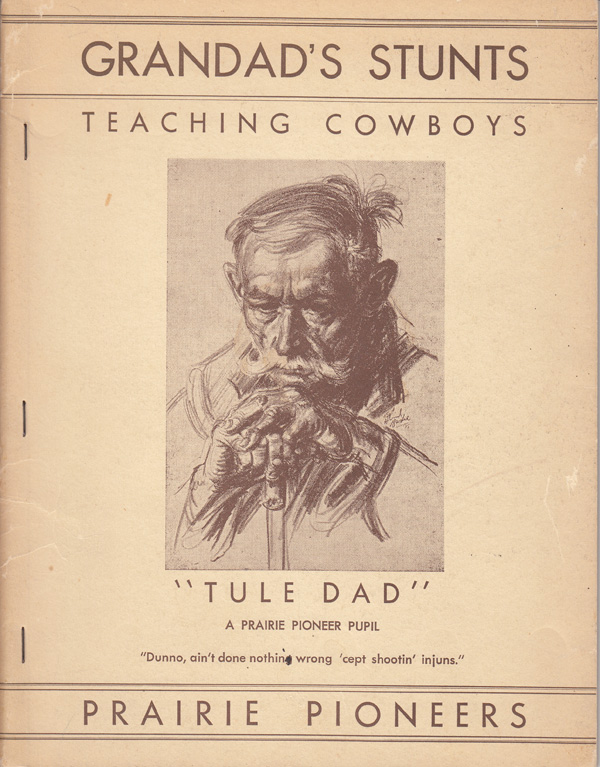
It is one thing to come across the surname of Tuledad, but it is another when one with the last name resided in proximity of Tuledad Canyon, east of the Madeline Plains.
As the newspaper indicates, T.J. Tuledad was a resident of Termo when he was charged with illegal possession of deer meat. When he appeared before Justice of Peace, George Wood, in the Madeline Township, he pled guilty as charged. His sentence was a $50 fine or ten days in jail. Tuledad opted for the bastille in Susanville.
Tuledad Canyon is a somewhat remote place east of the Madeline Plains, but back in another time, there was even a stage stop there. It was named after Samuel King Matney (1783-1887), a native of Tennessee, who came to California prior to the gold rush of ’49. Matney settled along the Sacramento River and raised hogs in the tules, and received the nickname of Tule Dad. After roaming around in Arizona as a scout for the Army, he returned to California and settled in Surprise Valley, Modoc County. Matney then moved south into Lassen County, next to the Nevada boundary, and the place became known as TuleDad. Matney never acquired title to the property and moved back to Modoc and to Jess Valley where he died and was buried under a juniper tree. In the 1870s, the mail route to Surprise Valley went through this canyon and a station was established where Matney had originally located. In July 1878 a correspondent for the Lassen Advocate wrote: “. . Arriving at Tuley Dad we were refreshed with some water. This is the old stage station kept by H.P. Newton; being assured by him that we were on the ‘right road’ my partner was now composed and quite at ease, after my reassurance that I would get him to Eagleville on time.”
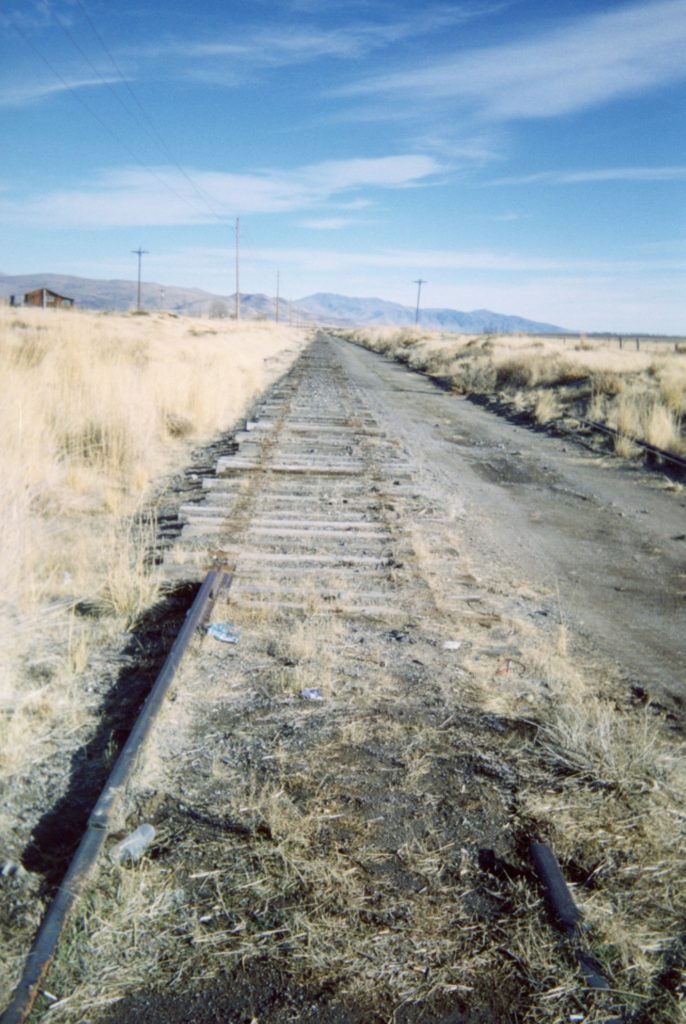
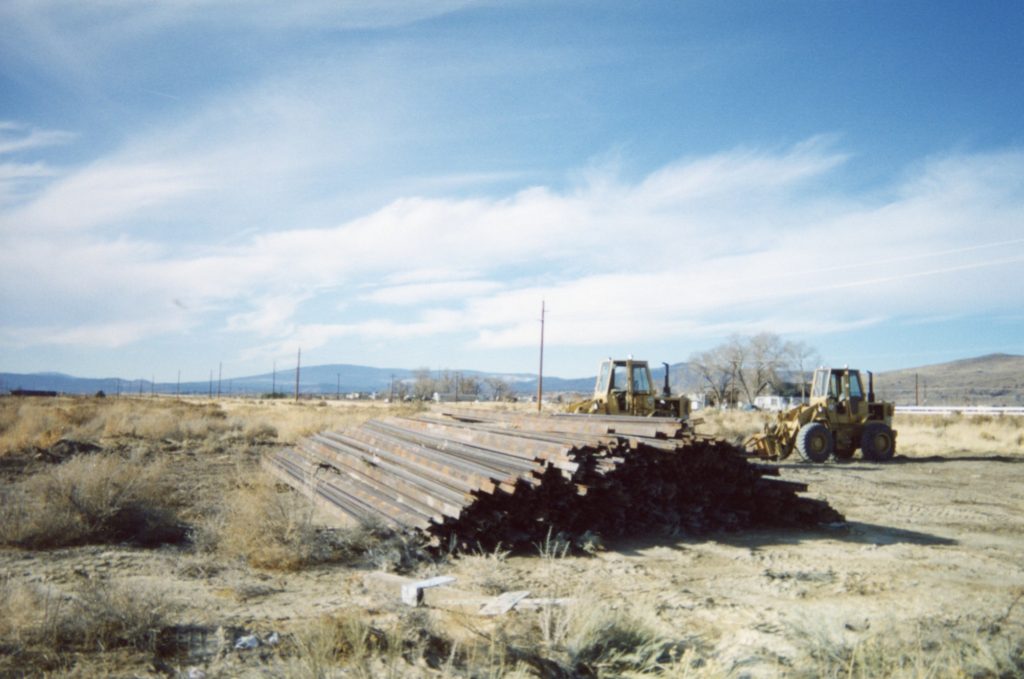
There is a bitter irony with ripping up this railroad line. The 124 mile railroad was built in a span of two years. To dismantle it took decades. In the fall of 2006, without any fanfare the segment of the railroad between Susanville and Wendel was ripped up.
Rails piled up at the defunct Leavitt Station, November 24, 2006
In January 1908, the Rev. N.M. Parsons of the Methodist Church spearheaded a prohibition movement in Susanville in an effort to clean up the community. The issue had been informally discussed since the early 1880s, when there was a local chapter of the Women’s Christian Temperance Union. Parsons began his campaign by focusing on the social ills caused by alcohol. He circulated petitions to have the issue placed on the next municipal election ballot, scheduled for April 13. The Town Trustees accepted Parsons’ petitions and would place the matter before the voters. There was one stipulation: it would bean advisory measure as to whether saloons should be banned.
It was a widely debated topic. The city’s 1908 budget was $3,498. There were two main revenue sources. One was property tax assessment and it generated $1,815. The other was the liquor licenses which provided $1,424 to the town’s treasury.
Once those figures were revealed, Parsons; ballot measure was doomed. After all, if the City lost the money generated from liquor licenses, the only alternartive to make up for the loss would be to increase property taxes. That appeared to be the voter’s consensus. The issue generated the highest voter turnout to date with 157 votes cast. The results: 110 votes to remain “wet” and 47 “dry.”