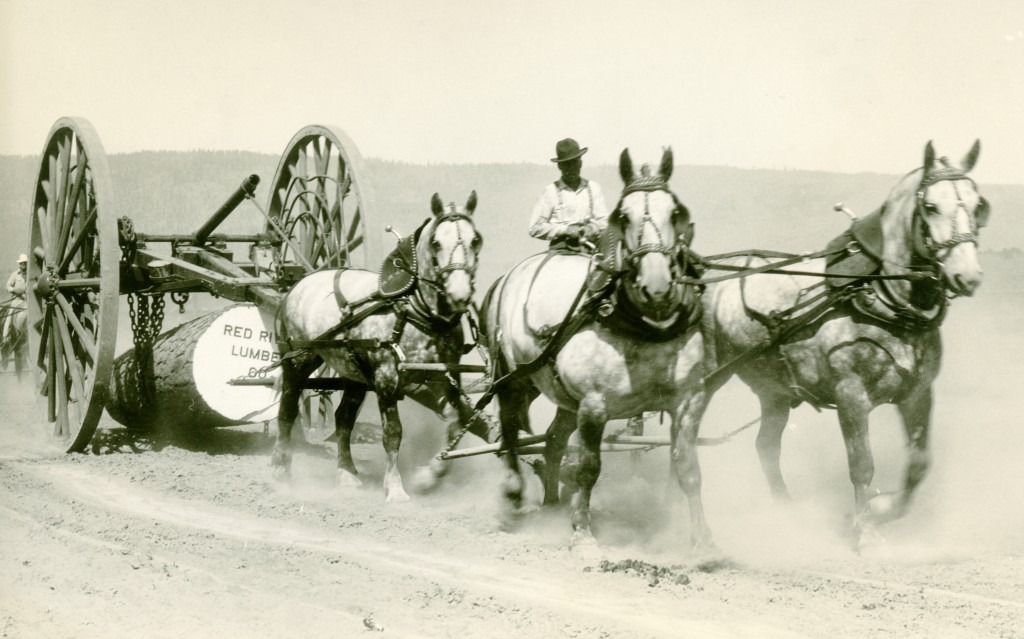
Frank Phelps at Soda Springs with a one log load, 1949—Leroy Purdy
In 1948, James and Leroy Purdy formed Purdy Brothers Logging Company. During their early years of operation they did extensive logging around theTruckee region. Since today, marks my father’s birthday (Leroy) I just waned to share two pictures taken in 1949 while they were logging at Soda Springs. After all, one does not see that many photographs of one log loads!
Bailey Creek at the popular picnic area of yore, October 8, 2020
Bailey Creek is located on the north flank of Fredonyer Mountain and flows out into the Madeline Plains. It was originally known as Bayley Creek, for George H. Bayley, a stockman of the Likely region of Modoc County. For a number of decades it was the location of the Old Timers Picnic, which consisted mainly of past and present residents of the Madeline Plains.
In 1899, George Bayley constructed a reservoir upstream. That was original intention for the visit there last fall, but a new locked gate prevented us from going there. It just so happens the reservoir along with 280 acres is for sale.
George Wingfield (1876-1959) for whom Wingfield Road is named for, was very prominent in the affairs of Nevada. He made his fortune in the early 1900s in the Goldfield, Nevada mines. By 1907 he had an estimated worth of $25 million. What distinguish Wingfield from his counterparts who met with incredible wealth from Nevada mines, is Wingfield remained in Nevada and made considerable investments in the state. He was also a formidable power player in Nevada politics. Wingfield also established a banking empire in Nevada, though he would nearly loose everything in the Great Depression. Wingfield would make a second comeback with the Getchell mine near Winnemucca.
In 1910, Wingfield purchased the Clint DeForest property at the base of Diamond Mountain for a summer home. It is known today as Mountain Meadows Ranch. It was an elaborate estate complete with a wildlife preserve. What is interesting when one considers the amount of money spent developing the property, and enormous cost of yearly maintenance, he did not spend that much time there. In 1923, Wingfield sold the property to the Lassen Lumber & Box Company.
This particular photograph for some reason I have a fondness for. The right foreground is the Arnold Planing Mill that was destroyed by fire in 1914. Further down the road to the left is Sacred Heart Church, built in 1892. The church was moved in 1909 to the corner of Nevada and Union Streets. When the church was built there was some local criticism about the location, especially, though not seen in this picture, but to the far right was Chinatown. It is interesting to note, when the church was moved, it was located in Susanville’s original town of the 1870s.
The Great Western Power Company encountered numerous problems with the construction of their dam that would create Lake Almanor. The first dam they started to construct they were forced to abandon. A new dam site was selected and by the summer of 1913 work was fully underway. However, due to financial constraints, the dam’s height was greatly reduced, which meant the new reservoir would only be half the size.
On Christmas Eve, 1913, Mother Nature intervened. An estimated five feet of snow had fallen at Big Meadows, the location of the new reservoir. In January a warm rainstorm struck the region. The snow quickly melted and the reservoir began filling up prematurely. This caught the Baccala family, whose ranch was located along Bailey Creek, off guard. Their place flooded, stranding nearly a hundred head of cattle, and an automobile, among other personal effects. Further down, towards present Prattville, was Great Western Power’s headquarters, Nevis, which was was the former Meadow View Hotel. The surrounding area flooded, creating an island. Relief came somewhat in the form of snow. Did it ever snow! Some areas of Big Meadows reported nearly twenty-feet by mid-February.
Proximity of the Pearson Massacre Site—-Larry Plaster
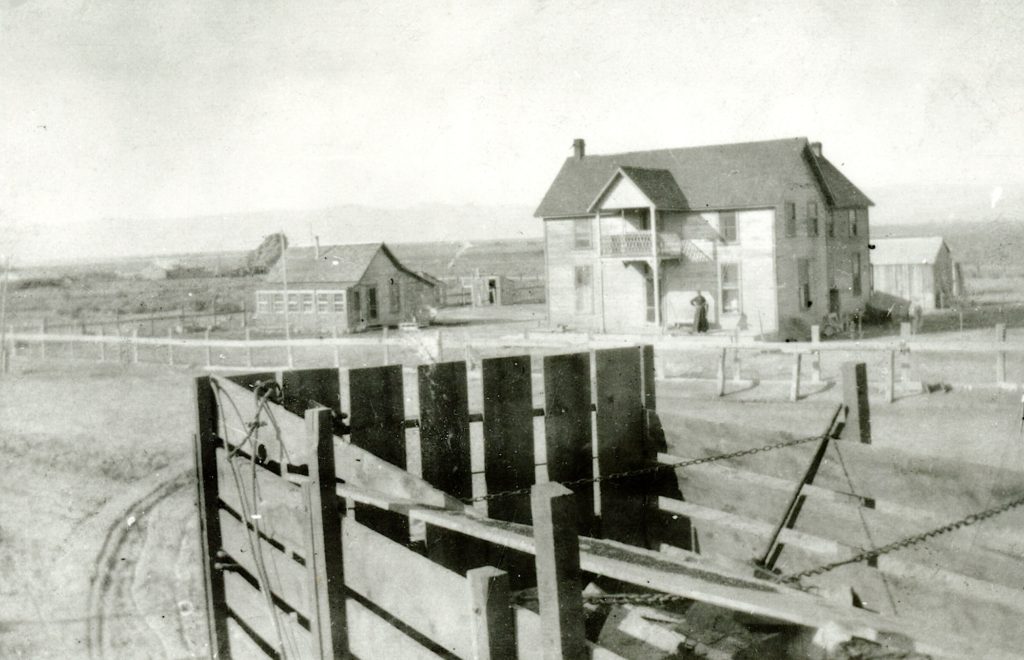
Thomas Pearson and John Sutherland were dairy farmers at Red Rock, located north of Reno. In 1867 they took up a claim on the east side of Honey Lake, then known as Lower Hot Springs (Amedee). It seemed like an ideal location for their purposes since snowfall was minimal during the winter months.
In the middle of April 1868 Pearson and Sutherland were eager to return to their old home at Red Rock. The relationship with the Indians had become quite tense. During the winter two Indians had been killed near their place and during March, their neighbor J.L. Crow of Upper Hot Springs (Wendel) had horses driven away by the Indians. Then there was an entirely unrelated issue caused from an unusually wet winter. The waters of Honey Lake were rising so rapidly they feared their cabin would soon be inudated.
On the morning of April 17, 1868 John Sutherland and Henry Bereman herded the livestock towards Red Rock. Pearson, in the meantime, went to the Hamilton Ranch (Fleming Unit, Fish &Game), seven miles away to obtain some assistance. Pearson’s wife, Maria, and daughter, Hattie, remained at the cabin to finish packing. Pearson succeeded in a borrowing a man, Samuel Cooper, and a wagon to assist in the move.
It was in the afternoon that Pearson and Cooper had the wagons loaded and proceeded on their journey. The ground the wagons were traveling upon was soft and moist. They had barely gone a mile before one of the wagons became stuck. It was then the Pearson family and Samuel Cooper were massacred by the Indians.
John Wollenburg, an employee of the Hamilton Ranch, had been in the vicinity herding sheep. Wollenburg was alerted by gun shots and the women screaming. He rushed to his tent only to discover his guns had been stolen. The Indians had spotted Wollenburg and began to pursue him, but Wollenburg was fortunate enough to have a good distance from the Indians and escaped by running eight miles to the Sharp ranch to get help.
When Wollenburg arrived at the Sharp ranch only, Mrs. Lurana Sharp was there. She rushed to the neighbors seeking assistance. A group of men were assembled and went to investigate what Wollenburg had stated. It was evening when they arrived at Wollenburg’s tent, where they found Cooper’s body. With night fall approaching, men fearful of an attack, returned to their homes. The next morning, they set out again and found the bodies of the Pearson family. They brought the victims to Susanville where Samuel Cooper was buried. The remains of the Pearson family were shipped to Sacramento for burial by their relatives.
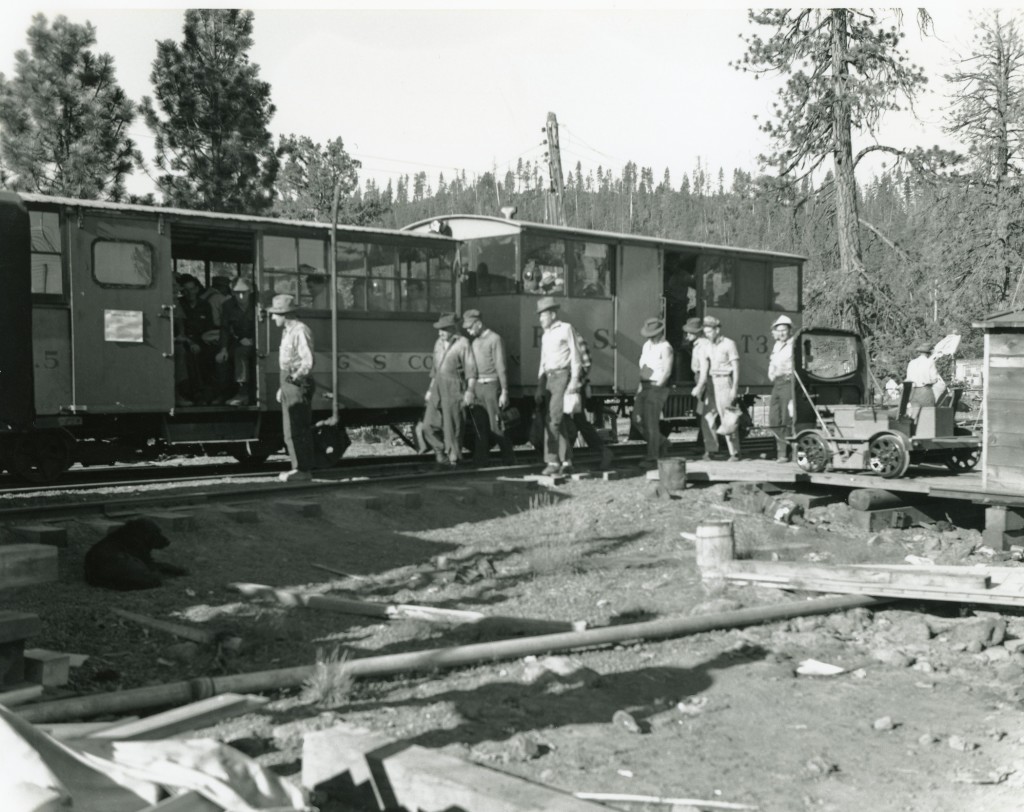
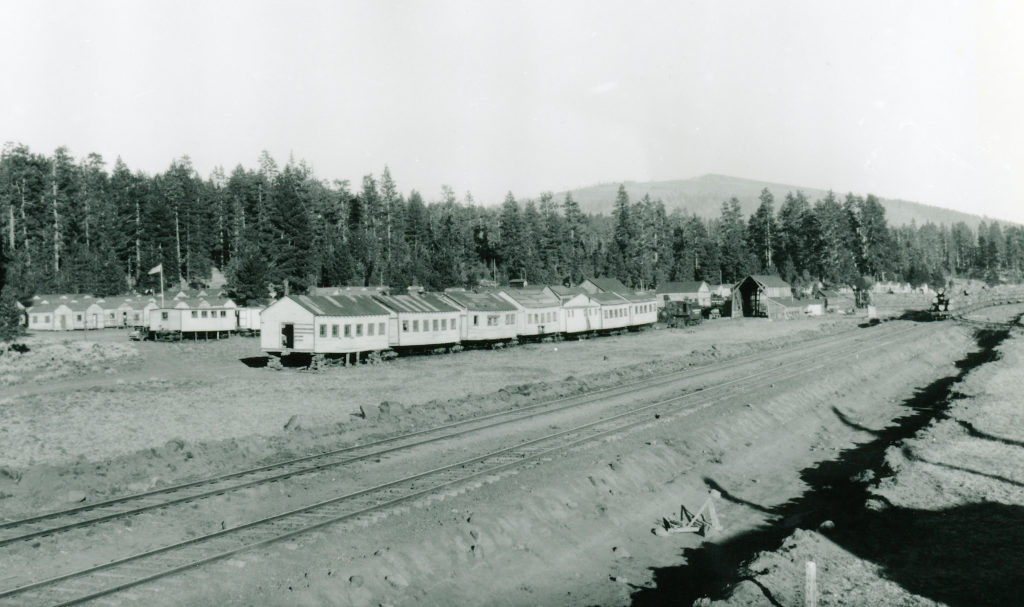
One of the things that impressed me about Fruit Growers Supply Company was they valued their employees and went the extra mile in taking care of them. What the company had learned early one, was how costly labor turn over could be. By providing the employees a bit higher wage, extra amenities, paid off in the long run, with a loyal and stable workforce.
The company’s logging camps were exceptional, besides the living conditions, even provided recreational activities. In 1922, motion pictures were offered at Camps B and C. In 1923, at Camp C a 500-seat outdoor arena was the site of professional boxing and wrestling matches. On June 23, 1923 at the inaugural wrestling match pitted Susanville wrestler Bill Mohler against Paul Kinney of Omaha, Nebraska.
One of the items that caught my attention about this particular photograph was the clarity of the skies. Notice that both lumber mills—-Fruit Growers and Lassen Lumber—were idle and not belching large copious s amounts of black smoke. In addition, look at the background behind the mills, as that area remained untouched from development.
The Highland School was a short-lived district, that was referred by the name where the school was located—-Termo. It is interesting to note that Don Garate’s book Termo to Madeline does not even refer to the school by its official name.
Information on the school is rather scant. When the petition was submitted on November 6, 1914 it contained the following signatures—Martha Cox, Elvira Smith, Mrs. C.C. Brack, Margaretta Drees,Wm. Boydston, Mrs. J.A.Shoaf, Mrs. W.H.Brown, and E.B. Coffin. Collectively, they had sixteen children. Which they met the criteria of at least having ten children. They also resided anywhere between six and thirteen miles from the nearest school. Thus, they met the second criteria of being more than two miles from the nearest school house.
The school district was approved on January 5, 1915. Its existence was brief, and in 1925 the Highland School was annexed to Ravendale. The following year, the school’s fixtures were transferred to the Madeline School only to be destroyed by a fire in 1927.
Spread the word, and encourage a friend to subscribe