Category Archives: History

Twenty Miles From A Match

The map from the book indicating the region.

Twenty Miles From a Match by Sarah Olds was first published in 1978 by the Bristlecone Press of the University of Nevada. It is still in print today, which speaks volumes as to this entertaining book.

In 1908, Sarah Olds packed up her family of five children, along with her ailing husband and settled on a desert homestead north of Reno. It is a remarkable tale Sarah wrote about her shear determination to make a go it. It was her husband’s nephew, Hiram “Hi” West who planted the seeds of homesteading and more particularly that of Tule Mountain, some thirty-five miles north of Reno. Of course, Hi, would benefit if the Olds family settled there, as he would have nieghbors.

Sarah wrote, “After my homesteading talk with Hi, I didn’t let the idea get out of my mind. He told me Tule Mountain was the greatest game country ever laid out of doors. There were droves of deer, literally thousands of sage hen, coveys of mountain and valley quail, doves galore, some cottontail and of course, the much despised jack rabbit. All this added fuel to the homesteading scheme which was fast developing in my mind. My biggest problem was in getting A.J. [her husband] interested enough to file papers on a homestead. I could just hear him saying, ‘Why old lady, you’re crazy. It simply can’t be done.’”

Thus, the stage was set for a twenty year experience of homesteading.

Support

Tule/Pyramid School

Tule Mountain School-Left to Right: Teacher from Winnemucca Ranch, Leslis Olds, Albert Olds, Jennie Guichu, Martha Olds and Steve Guichi—Caudle Collection

This is an introduction to tomorrow’s post. The Pyramid School District in Washoe County was for a simple way to describe its location was between Constantia and Pyramid Lake. Tule Mountain a natural dividing barrier separating the two families that had children—Benoist and Olds.

When A.J. & Sarah Olds took up a homestead there with a brood of five young children, a school was going to be a necessity. However, the nearest the school was on the other side of Tule Mountain at the Benoist Ranch and Mrs. Benoist was not going to budge about relocating the school.

I can not do the story justice as to how Benoist and Olds came to terms. Sarah Olds in her book Twenty Miles From A Match provides such an entertaining account. Tomorrow, I will provide an introduction to this delightful book.

Support

Eagle Lake Ice Caves

Ice Caves
The ice caves was featured on the cover of Susanville’s weekly TV guide, August, 1965

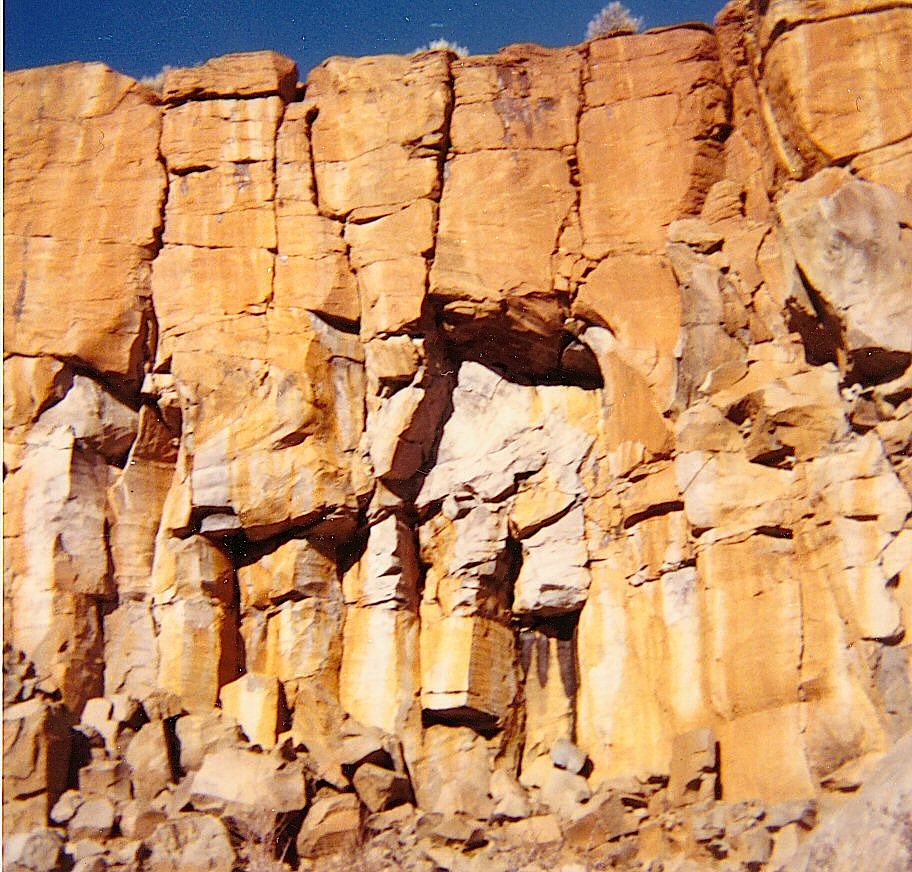
Exploring lava beds, which there is plenty around Northeastern California, there is no telling what a person might find. The Brockman Flat Lava Beds on the west side of Eagle Lake is no exception.

In the early 1950s the Chico State Biological field study set up operations at Spaulding Tract, Eagle Lake. It was in the summer of 1951, that several students explored the lava beds to the south of Spauldings and made their initial discovery of a ice/lava cave. Continue reading Eagle Lake Ice Caves

Lassen Peak’s Fake Eruption

Fake
The 1931 Fake Eruption of Lassen Peak. Courtesy of the Plumas County Museum

Lassen Volcanic National Park was established in 1916, without much fanfare. Congress appropriated a bare bones budget and initially Yosemite National Park oversaw Lassen.  In 1922, L.W. Collins became Lassen Park’s first superintendent. By the late 1920s, numerous improvements were made at Lassen, one of the biggest was the park highway completed in 1931.

To celebrate that event and others  Collins decided to hold a park dedication extravaganza. On July 25, 1931 Lassen Volcanic National Park held its dedication. Park Superintendent L.W. Collins had big plans, which were widely criticized. To highlight the dedication Collins wanted to create a fake eruption to resemble the volcanic eruptions of 1914-15 that made national headlines and led to the creation of the park. Continue reading Lassen Peak’s Fake Eruption

Logging the Peninsula

Red River logging map—Moss VanBlaircom

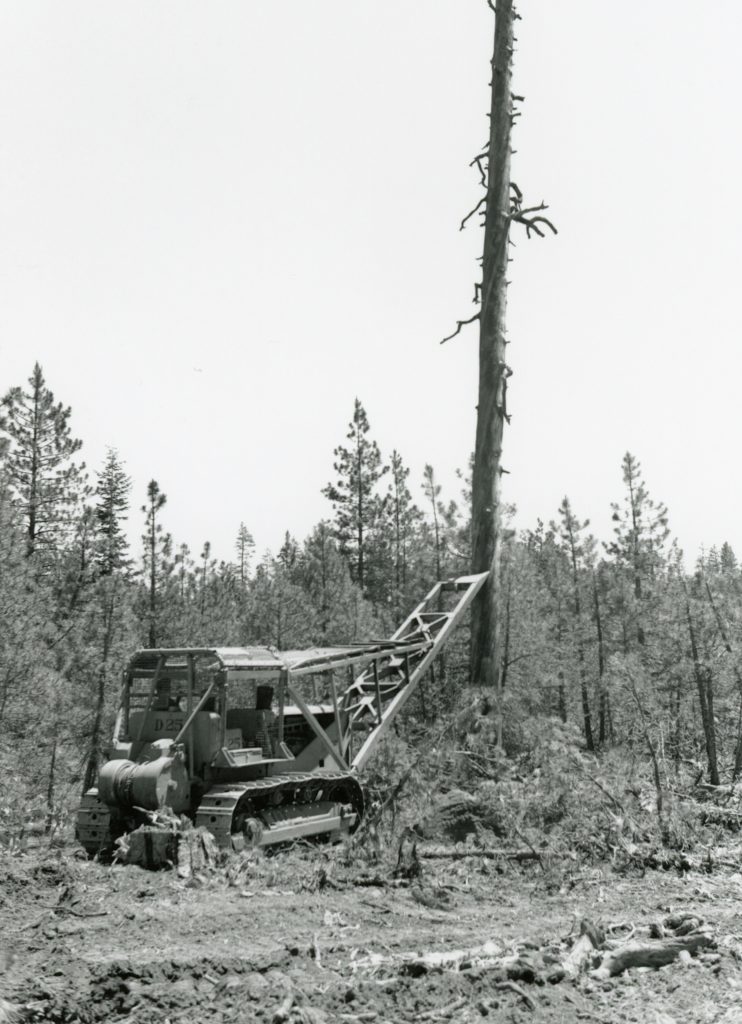
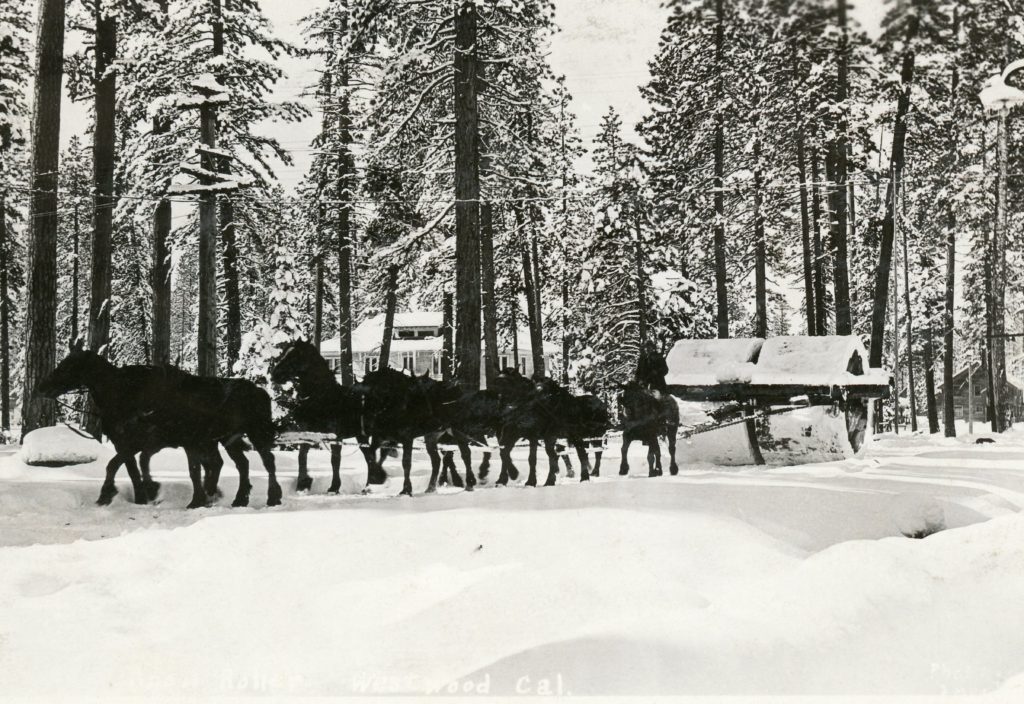
In 1916, after the Red River Lumber Company met its initial contractual obligation with Great Western Power Company to harvest timber for the Lake Almanor reservoir site, they began logging their lands to the west of Westwood.* Red River focused harvesting all the timber between Westwood and Chester, which included the Lake Almanor peninsula. In 1920/21 Red River had logging spurs going in north/south direction—the northerly one along Bailey Creek, the other south to the Peninsula. The latter, Red River established a sole logging camp No. 29.  The peninsula was unique, especially towards the lower end was forested with fir—not pine. The fir at that time was considered to have no value whatsoever, even to use as fuel for the locomotives. By 1922, Red River’s mission accomplished for that area met, and their main line rails made it to its intended destination on the south side of Chester.

*Red River received a reprieve from Great Western, since that company scaled back the initial flooding of the reservoir site by half.

Support

Koken For Assessor

Koken’s politcal hand out card

This is an accidental post, if there ever was one. Last December while in the garage to work on the Triumph, this came out of the owner’s manual. How it found its way there I do not know. Several months later  while researching a 1926 topic, is when I stumbled across where Elmer Koken was a candidate for Lassen County Assessor.

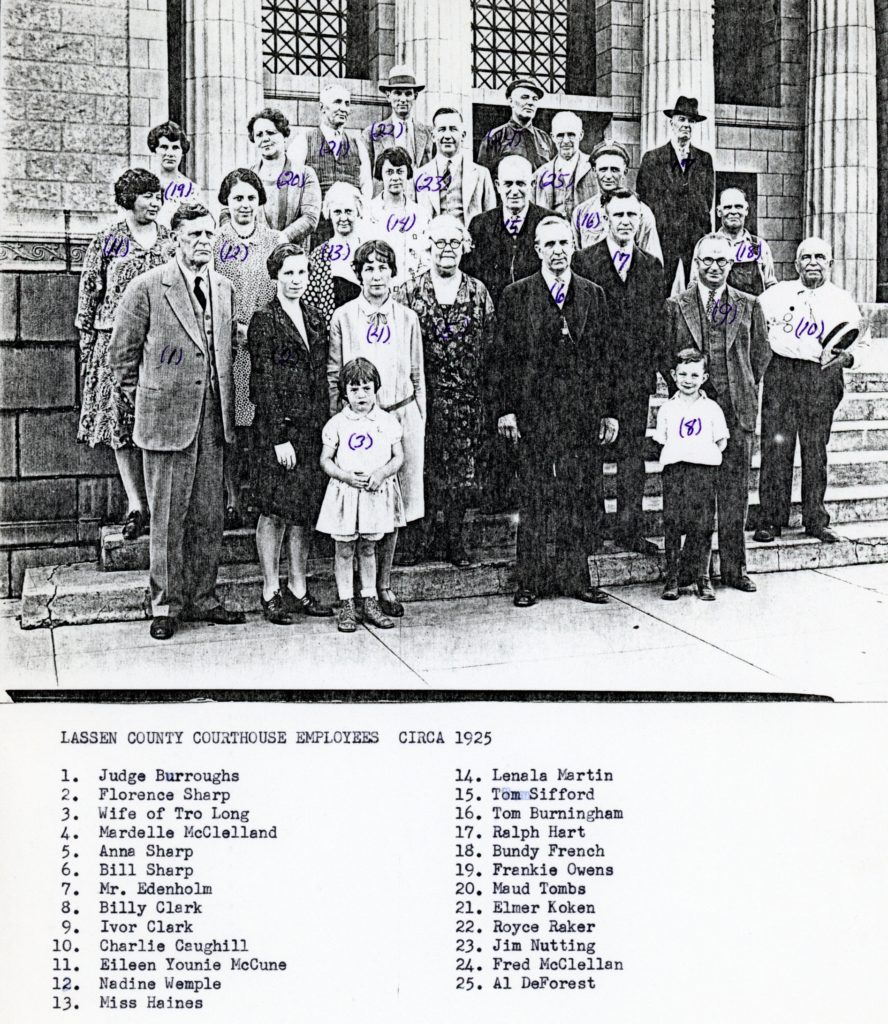
In 1891, Koken came to the Honey Lake Valley from over the mountain from Taylorsville. He was involved in many activities  and at one time managed the Standish Creamery. He entered politics in 1922 and was elected District Three, Lassen County Board of Supervisors. Four years later, he set his sights higher, instead of running for re-election as Supervisor, in March 1926 he took out papers to run for Lassen County Assessor. He was soon followed by Milford resident, Lyman Stiles. Next to enter the race was Frank Wemple. During the primary, the race was whittled down to two—Koken and Wemple. In the general election, Frank Wemple was victor, who would be re-elected to four additional terms. While Koken lost the election, he eventually found employment with Lassen County as its first Purchasing Agent.

Tim


Post Camp, Lassen County

Observation Peak. June 2001

Post Camp, was located on the south side of Observation Peak, NW 1/4 Section 9, T. 33 N. R. 16  E. The camp was established in the late 1870s, by George D. Winters of the Smoke Creek Ranch, who would later acquire the Shinn Ranch Located there were large stands of juniper and mountain mahogany used to make fence posts for both the Shinn and Smoke Creek Ranches. The place remained in public domain for a number of years.

In 1894, James “Juniper Jim” Rousell, also spelled as Russell arrived on the Madeline Plains, where he would live the rest of his life. In the late 1890s, he settled at Post Camp. According to folklore has it that he said the only way a person could survive there was to supplement their diet with juniper berries. In 1904, he acquired title to the property and sold it in 1912, to Virgile Galleron.

It should be noted that Rousell was married to Sarah Ellen McMurphy, a well known family of the era in the Honey Lake Valley.  They had six children, but the couple divorced in 1906. It should be noted they are both buried together in the Susanville Cemetery.

Tim

Lassen County Fair Week

Big Wheel competition, Lassen County Fair, 1923..

It is that time of year and well personally, I have never adjusted to having the county fair in July. The first fair in 1878 was held in October. In 1922, when the fair became an annual event it was usually held in September. Then after World War II it changed to the third week in August. Like so many events they evolve over the years.

The Main Street Fair Pavilion , 1922

Tim


Lassen College Camels

1940 Camel
1940 Lassen College yearbook cover

In about a month, fall semester will start at Lassen Community College. So a little bit of Lassen College history. By 1930s, schools were adopting mascots. In 1937, the college adopted the “Camel.” Its selection was attributed to the forestry students. An interesting choice, that puzzled future alumni.

Shortly, after World War II a discussion was held whether the camel was an appropriate mascot, since it was so far removed from its natural habitat. It was decided to select a mascot of a local nature and the “Cougar,” was selected to replace the camel.

 Subscribe.


Hog Fire – One Year Later

Hog Fire on the evening of July 18, 2020 as seen from the Hulsman Ranch—-Courtesy of Hulsman Ranch

It was a year ago, on Saturday afternoon July 18, 2020 a fire was reported in the vicinity of Hog Flat Reservoir. By Sunday the fire quickly spread over 5,000 acres. For the next few days the smoke was horrendous. The fire damaged a fire optic line and that it turn many lost cellphone and internet service. Once repaired, two days later the Hat Creek Transmission line was damaged, and the area went without power.

Initially, it appeared the fire was heading east towards the Lake Forest Estates subdivision, which mandatory evacuation was imposed. Conditions changed, the fire then headed south towards Devils Corral, causing more mandatory evacuations along the Highway 36 corridor. The fire ultimately jumped Highway 36, and prompting initial fears that it would head up Cheney Creek, but that did not happen.

Map of the Hog Fire.

By the end of the month, the fire was contained to 9,564 acres. Cause of the fire, never determined.

Spread the word, and encourage a friend to subscribe