Category Archives: History

Milford School, Lassen County

The 1865 school petition, saved from my dumpster diving expertise.

In 1864, during the creation of Lassen County there were six original school districts, Milford would become seventh the following year. On February 28, 1865, Milford residents petitioned the Lassen County Board of Supervisors for a school district of their own. After all, the Lake School, was some twelve miles to the north and the Long Valley School nearly twenty miles to the south. The board obliged.

The second Milford School—-Milford Community Association

One of the unique traits of Milford, is that its original and replacement school houses still stand—though since converted in private residences, and they are side by side. The first schoolhouse was built in the summer of 1865 by Ezra P. Soule and Henry C. Stockton for $500. As Milford continued to grow, so did its student population. In 1883, the voters there dealt with a contentious issue to pass a special tax for $160 to construct an addition—it narrowly passed. The school population just kept growing and the original school, even with an addition was not enough. Back to the polls. On May 12, 1888, the school district voters approved  $1,400 bond measure for a new school house, that served the community for nearly eight decades.

Milford School, 1957. Courtesy of Milford Community Association

While the Milford School experienced many ups and downs, like any institution, times were changing. Long gone were the horse and buggy days, replaced  with paved highways and automobiles that resulted in the population decline of rural communities and Milford was of no exception. In 1965, the upper grade students at Milford were transferred to Herlong Elementary. The following year, the school struggled and only taught grades one through three. The following year it closed and was annexed to Janesville Elementary School District.

Support

Associated Colonies of New York

Honey Lake Valley, 1898–Betty B. Deal

In 1891, William E. Smythe was involved with the National Irrigation Congress, which opened doors to him. Smythe’s interest was irrigation/reclamation issues of the American West. He then formed the Associated Colonies as a venue to promote his vision. This colony movement was based a lot on the Puritanical beliefs of New England. In 1895, they founded a colony at New Plymouth, Idaho.

Smythe was intrigued with the Honey Lake Valley and its many failed irrigation projects. In 1897, he planned for a colony there to be known as Standish. He was even able to secure Edward Purser’s Susan River Irrigation System, which included the reservoirs of McCoy, Hog and Leavitt. It would be an interesting experiment that we will explore in future installments.

Tim

Canyon Dam, Plumas County

Canyon Dam, 1952

Canyon Dam at Lake Almanor was mostly obliterated during the Dixie Fire of 2021. Like many small enclaves it evolved over the years. Canyon Dam first came into existence in 1910, as headquarters of Great Western Power Company in preparation of constructing a dam to flood Big Meadows and create Lake Almanor.  Great Western also referred to it as Nevis, but by the summer of 1914, Plumas County Board of Supervisors adopted the name of Canyon Dam for the locale. The Canyon Dam Post Office was established on May 28, 1940 with Emmett W. Bishop as first postmaster. It was discontinued on September 14, 1944 and re-established on June 16, 1952.

Tim


The Varied Bear Dance Locations

The final part of the Bear Dance ritual at Bass Hill, circa 1900.

The spring ritual of the Mountain Maidu Bear Dance, locally, has been held at a variety of locations. In the earliest times, it would be held near a stream, for water was an important element in the conclusion of the dance.

One of the earliest sites was near Baxter Creek at Bass Hill referred to as the village of Yoskopin, also known as Lone Pine. This would be the late 1890s, early 1900s. There is a citation that the dance was held along Paiute Creek, just north of Susanville, from 1910 into the 1920s. That location was near the present day intersection of Chestnut and Parkdale. What is odd with its close proximity to Susanville, a town. with two newspapers,  that they never chronicled it.

Sacramento Bee, June 9, 1975

In the late 1920s, Kitty Joaquin sponsored the event at her place near Janesville. She continued the same until 1953. There are accounts that in the 1940s and early 1950s that it was occasionally held at the Susanville Rancheria. By the late 1950s, it appeared the ceremony was on the brink of being abandoned. However, in 1962 Gladys Mankins sponsored the ceremony at her place on Janesville Grade. In 1975,  that event made headline news with the appearance of California Governor Jerry Brown. Mankins continued with the tradition up to 1986. In 1989, it was revived and has been held ever since on forest service property at Willard Creek.

Subscribe

Susanville’s Railroad Advocate—E.V. Spencer

E.V. Spencer—Ivajean Wheeler

Ephraim Van Buren Spencer (1836 -1904) was a staunch advocate to have Susanville serviced by a railroad. Without one, the town in his opinion would be just another “Sleepy Hollow.”

The first glimmer of hope came in 1880 with the establishment of the Nevada & Oregon Railroad at Reno. The fledging railroad struggled in its early years. A dramatic change occurred in 1884 when the railroad was acquired by the Moran Brothers—New York bankers. The following year the railroad went through a name change first as the Nevada & California and eventually the Nevada-California-Oregon.

With Morans at the helm, Spencer saw hope and the residents of Susanville raised $500 to send Spencer to New York to meet with the Morans. The meeting went well, but the Morans stated they had no funds to extend the line. Spencer felt confident that the Morans would eventually build north to Susanville,

In March 1887, Spencer and the community of Susanville were blindsided when the railroad announced it would build a 47 mile extension from Junction (Hallelujah) House to Brubeck’s on the east shore of Honey Lake. Spencer hastily arranged a meeting with Daniel Moran and Edgar Heriot, the latter the railroad’s general manager. Spencer urged them to reconsider, and a route through Susanville would be more profitable. One of the railroad’s concerns was a route out of Susanville to the north. In June concerned Susanville residents met to come up with a plan to convince the railroad to change its mind. Not only did they offer to survey the route, but obtain the necessary rights-of-way, a donation of a depot site in Susanville and more. It was all in vain, due to an unusual circumstance. The NCO fired Heriot, and was replaced a temperamental Erasmus Gest. Gest could care less about the Susanville proposal. He was determined to build the railroad line with the most direct route to Oregon, thus the railroad built on the east side of Honey Lake.

Not be undaunted, Spencer would make one last final attempt with the railroad. In 1899, when the NCO extended its line northward, as construction was stalled during the 1890s, Spencer proposed a feeder line from Hot Springs Station (Wendel) to Susanville. When he contacted the Morans the answer was no. However, Susanville residents could construct the feeder line at an estimated cost of $100,000. That was not going to happen, since community could not even raise $450 to build a public hall.

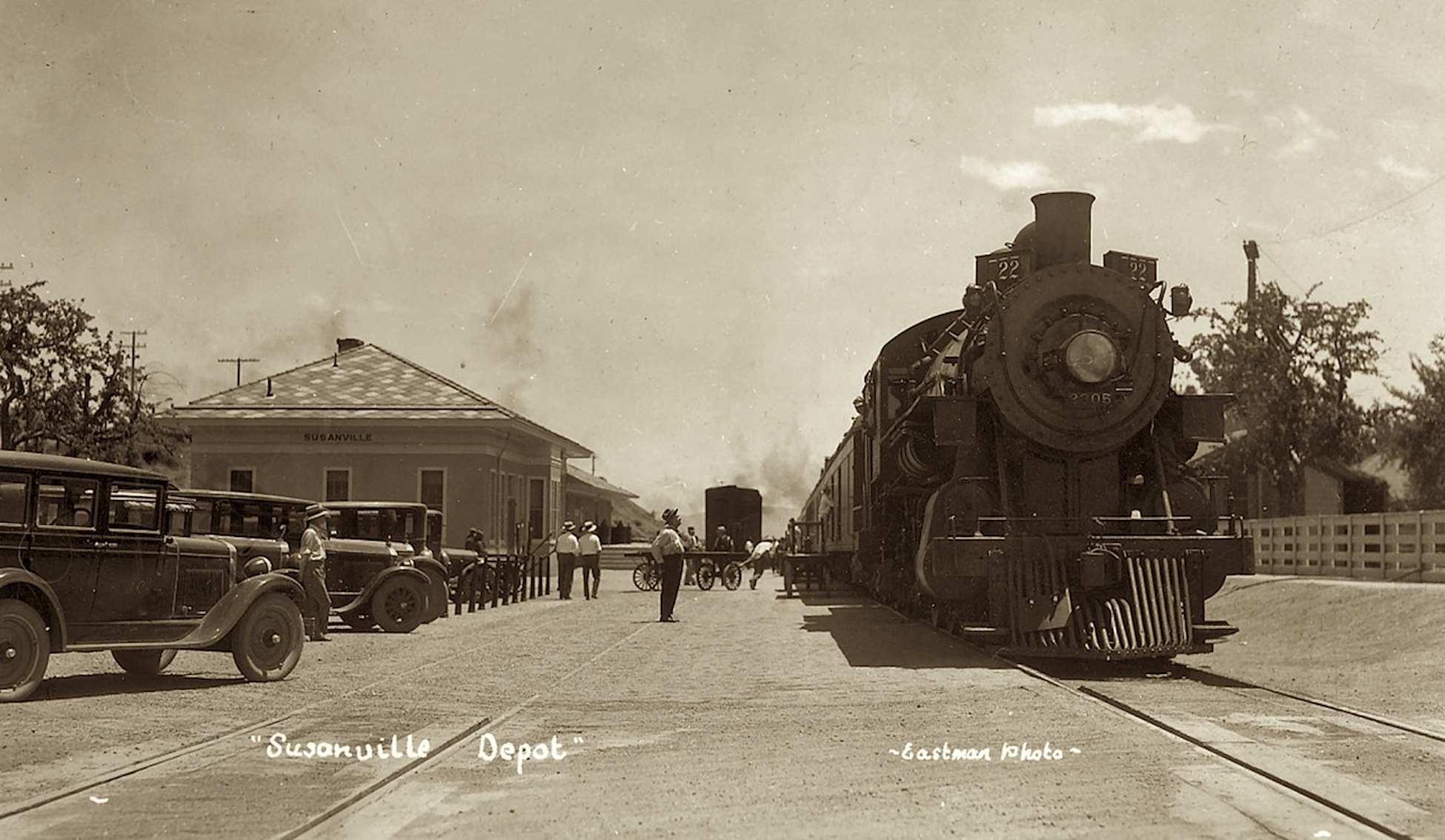
Nearly eight years after Spencer’s death in 1913, the Fernley & Lassen Railroad arrived in Susanville. The town went through a major transformation and it was no longer a Sleepy Hollow.

Donate

Cows with Guns

Tanner Ranch, 1934.

Some people know I have a special affinity for New Zealand. Of course there are a variety of Lassen connections with the land of the kiwis. One of the best photographers of the Lassen region of the 1870s, Herman Brince died in Auckland in 1881. Then there is case of Dr. J.G. Leonard, hardly a household name here or there. It should be noted that in 1884 Leonard had constructed one of Susanville’s most iconic buildings, known today as the Elk’s Lodge. Leonard’s descendants reside in New Zealand. The Asher family were among the prominent Jewish families of Susanville, though they later left that town to help establish Hollywood and Asher descendants, too, reside in New Zealand. In addition, even a Shinn descendant is a New Zealand resident.

So what does this bizarre topic with Cows with Guns have to do with New Zealand. Not only do I read the New Zealand Herald, but I listen to a New Zealand radio station. Recently, that station played a medley by Dana Lyons  entitled Cows with Guns. It is on youtube and click here to listen.  The lyrics with the puns are great, and I am sure Lassen County’s ranching community will enjoy. With that in mind, enjoy your Labor Day..

Never miss a story, click here to subscribe.

An interesting fire protection method

Fruit Growers Sheep

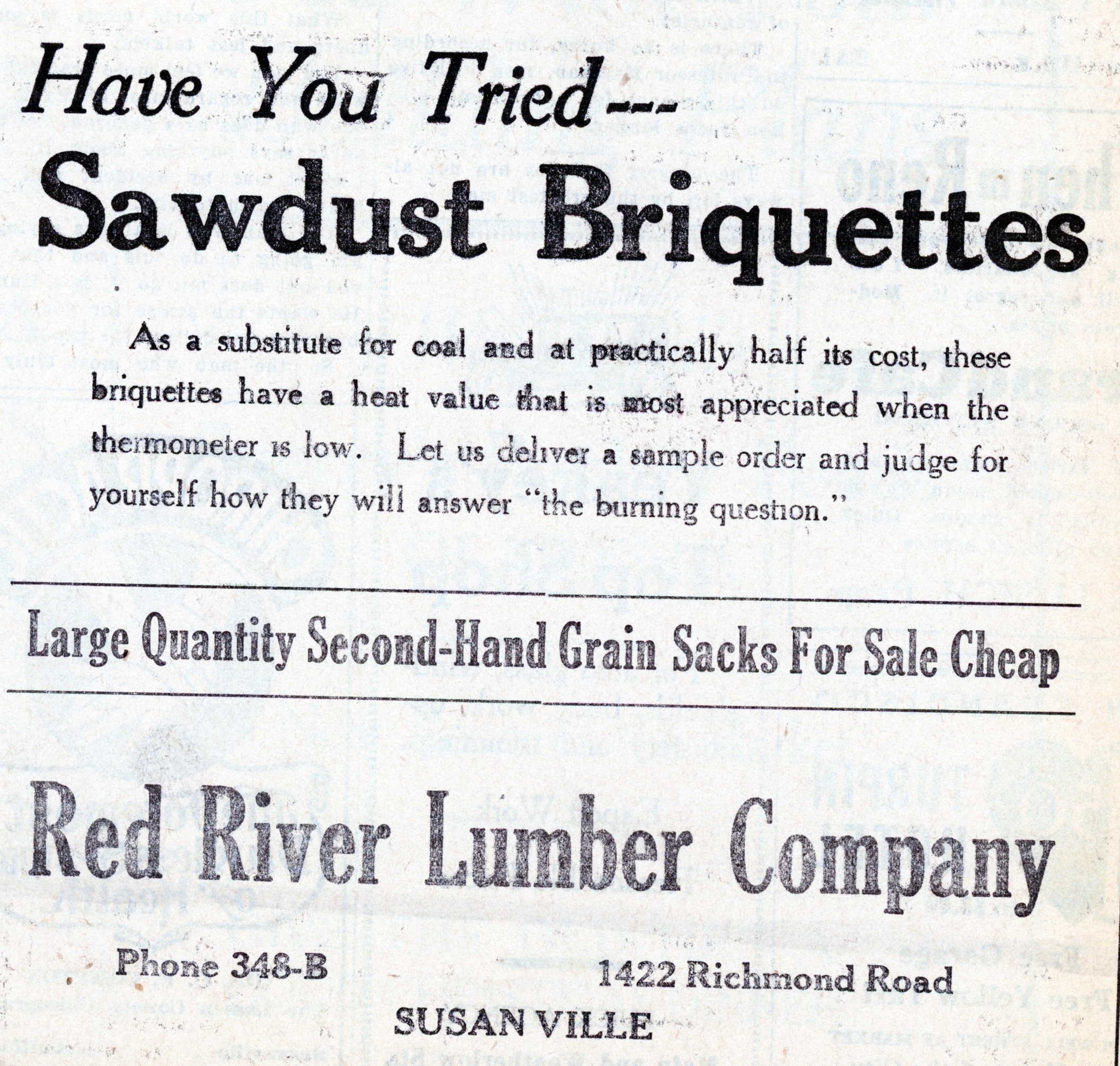
The old English proverb necessity is the mother invention was widely adopted locally. For years Fruit Growers searched for an effective way to reduce grass around its millsite for fire protection. During the 1920s, Fruit Growers planted potatoes.  In 1937, someone came up with the brilliant idea to bring in a band sheep to graze the mill property. Problem solved and they called the new addition to their workforce “Lassen Lawnmowers.”

Support this site and Subscribe today!

The Strange Case of Boody & Wales

The cover page of the coroner’s inquest of Boody& Wales

On the night of June 6, 1864, Lassen County’s first homicide, and its oldest unsolved murder, that resulted in the deaths of Jacob Boody and Philip Wales near Milford occurred.  A strange case indeed.*

The two men were neighbors, who resided halfway between Janesville and Milford. In April 1864, Boody took a wagon to be repaired by Wales. A dispute arose, as Wales would not allow Boody to pick up the wagon until he was paid. The matter eventually resolved and the two were amicable.

At around 9 p.m. on June 6, Wales and his wife, Elizabeth, had gone to bed. Shortly thereafter, Wales heard noises coming from the barn and went to investigate. As soon as he got to the front gate of his house, he was shot in chest and collapsed. His wife, alerted their twelve year old son, George, and they brought Philip’s body into the house, and he died. George went to the neighbors, going through the grain field, but found no one on the first attempt.

When the neighbors did arrive around 11 p.m. they found Jacob Boody’s body in the road, not far from the Wales’ home. He had been shot several times in the back, and once in the leg. A Colt revolver was found several feet from Boody’s body.

The next morning seven men were impaneled to serve as a jury in the Coroner’s Inquest. Eight people testified. The jury came back with a verdict that the two men died from wounds inflicted by pistol and gun shots in the hands of unknown parties.

*There had been other murders prior to this, but this was the first one that fell over jurisdiction of the newly created Lassen County.

Donate

It Only Took 40 Years

Bly Tunnel, 1922

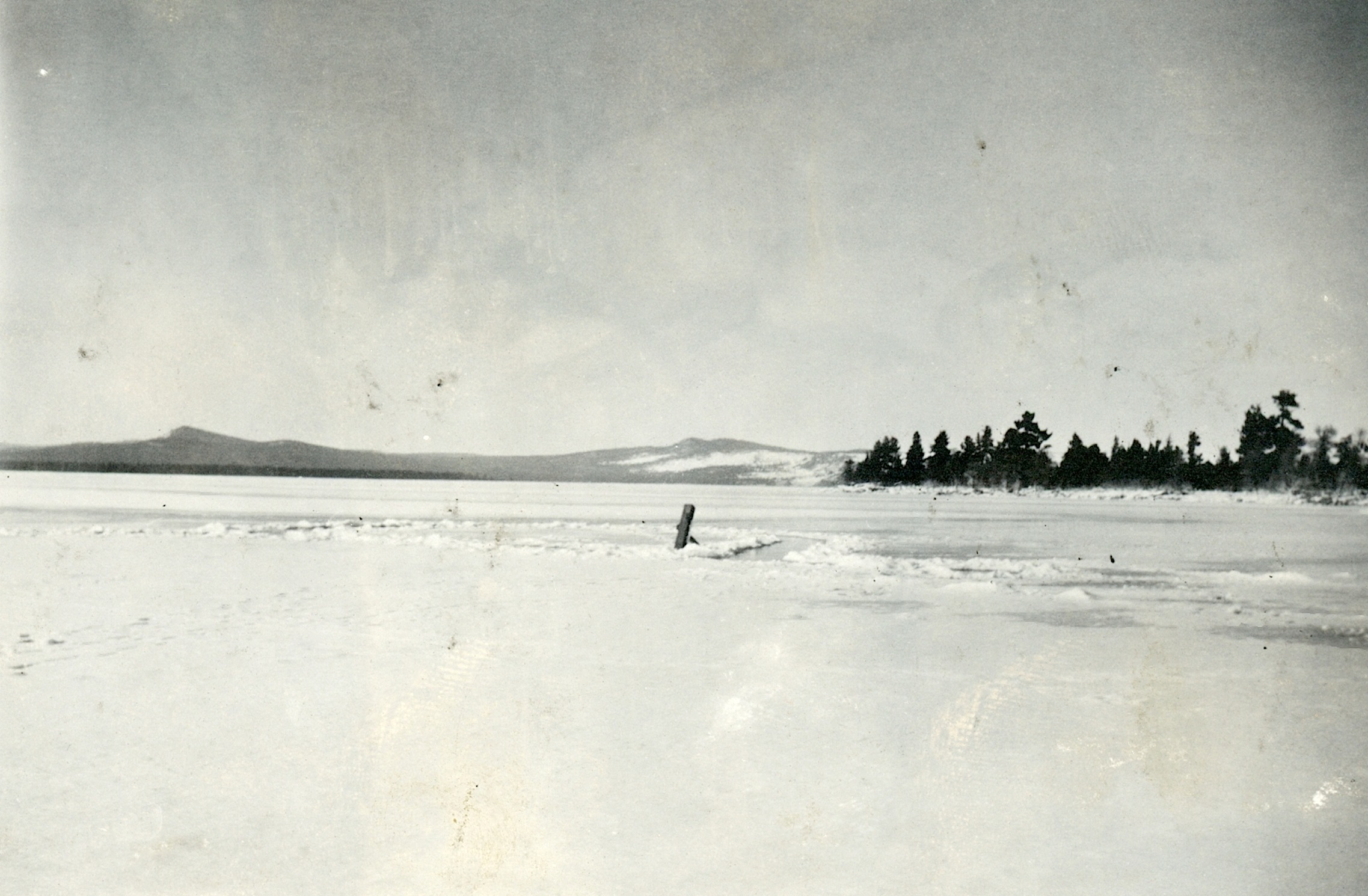
Before we explore how long it took to close the Bly Tunnel, I hope whoever reads this, closely examine the above photograph. The tunnel was in its early stages of construction. If one looks closely, you can see the lake level has already dropped, though it would be another two years before water flowed through the tunnel.

By the late 1960s, no one really paid that much attention to the abandoned Bly Tunnel at Eagle Lake. By 1970, the level of lake kept rising, threatening some lake shore improvements. In November 1971, D. Dean Bibles, District Manager of the Susanville Bureau of Land Management (BLM) announced that it would take action to revoke the Bly Tunnel right-of-way which was on BLM lands. Bibles noted that there were would be public hearings on the process. He noted there were some that wanted to keep the tunnel open to stabilize the lake level. There was the other camp, that wanted to permanently seal the tunnel to allow the lake level fluctuate naturally.

On February 6, 1973, BLM gained control of the Bly Tunnel for lack of non-use and water rights. The following year, BLM declared the tunnel a safety hazard. At that time, the BLM had the tailing piles used to make a temporary plug of the inlet, which greatly reduced water flow into the tunnel.

In 1981, Murrer Ranch filed a quiet title action over the granted right-of-way for a canal for distribute the water from the tunnel. After all, this is was first water connection from the tunnel. The following year, Murrer’s neighbor, Barron Ranch also filed a quiet title action, thus rendering project as done. In 1986, BLM had a permanent concrete plug constructed at the inlet.

The outlet as it appeared in 2012. Courtesy of Barbara White

However, water still flowed through the tunnel. In 2011, a valve inside the tunnel to regulate flow was finally shut and the water stopped flowing. While the tunnel was originally somewhat functional for a period of eleven years, it took BLM forty years to close it.

Subscribe

The End of the Line

Wendel Depot. Courtesy of Aldah Riesenman

On September 1, 1929 the Nevada-California-Oregon Railroad’s existence came to an end, when it finally ceased to exist and was entirely absorbed by the Southern Pacific. Its demise was slow, and for its owners it must have been a strange process. Its decline dated back to 1914, the last year the railroad made a profit. What was started like a death knell came in 1917, when the NCO sold its trackage rights from Hackstaff (now Herlong) to Reno to the Western Pacific Railroad. Without its connection to Reno, it became a very isolated feeder line to the Southern Pacific Railroad.

In 1925, the Moran family, owners of the NCO, reached an agreement with the Southern Pacific to sell the line. It was a slow process. It would take nearly a year before the Southern Pacific acquired the trackage rights. In 1927, starting at Wendel, the Southern Pacific began to broad gauge the NCO’s narrow gauge line north. One would have thought NCO would have dissolved, but NCO was a peculiar outfit. What really gets confusing is its financial statement. In 1928 the NCO showed an operating revenue of $510,478.37 and a net expenses, including taxes, of $848,262,25.

Support