Category Archives: History

Flanigan—The Grandiose Ghost Town of Honey Lake Valley

Flanigan, 1976
Flanigan, 1976, courtesy of Christopher Moody

Many years ago, I wrote a weekly historical column for the Lassen County Times. At that time, I contacted Eric Moody, who was researching Flanigan, and I asked him to write an article. He obliged and here it is.

Flanigan was to be the most important community in eastern and southern Honey Lake Valley, a major rail center, situated in the midst of a rich agricultural area, boasting hundreds, perhaps thousands of inhabitants.

At least that was the grandiose dream of Flanigan’s founders. In reality, the small town located five miles inside Nevada at the intersection of the Southern Pacific and Western Pacific tracks never boasted a population more than fifty and never became a center for much of anything.

The place did exist, though, for seventy years, 1909 to 1969, and its history isn’t as lacking in interest as its meager population would seem to indicate.

Flanigan first appeared in late 1909, when the Western Pacific Railroad built its main line through eastern Honey Lake Valley.  By January of 1910 a Western Pacific station was in operation there. The station disappeared the next year, but in 1912-1913 the Southern Pacific built a branch line from Fernley, Nevada to Susanville and Westwood, and the new line passed that of the Western Pacific at Flanigan. Southern Pacific buildings were set up late in 1912, and the next year a station established.

With this, the time seemed ripe for promotion of the site. Two Oakland speculators, C.A. Ross and George Warnken, had a townsite laid out on land they owned just west of the Flanigan railroad intersection. Their projected community, taking the same name as the station, was to have thirty blocks with 900 lots, a school and a library.

Promotion of the new town began, with the principal “pitchman” being Paul Butler, a one-armed dynamo who had been hired by Ross and Warnken to be their agent at Flanigan. Scores of curious visitors were ushered around eastern Honey Lake Valley, and over 200 town lots were sold. By 1914 Flanigan boasted a post office, a general store, and a spacious forty room hotel—built and operated by Paul Butler, who confidently predicted that Flanigan was going to become a major rail center—another Roseville, or at least another Sparks.

Cabins on A Street, Flanigan, 1976–Christopher Moody

Unfortunately, Flanigan didn’t develop much more. Butler continued his promotional work into the mid-1920’s—even trying to drill for oil and developing a bog lime, or marl, deposit nearby, but even he finally gave up. In 1924 he sold his store to Orlando Gasperoni, then a Southern Pacific section foreman at Flanigan, and in 1926 the practically unused hotel was sold for its lumber and torn down.

Flanigan went on living, but its existence was quiet and relatively uneventful. There were some further attempts to drill for oil or gas and the marl deposit continued to be worked. The Bonham School (formerly located at the Bonham Ranch) opened its doors at Flanigan in 1929, and dances, which drew people from all over the area, were held in the school building. In 1934 Orlando Gasperoni sold the store to William and Gertrude Milne, who had come to Flanigan four years earlier when she had been hired to teach school.

The Milne Store, 1950s. Courtesy of Dorothy Carnahan.

It was not until the late 1950s that things at Flanigan really began to change—for the worse. In 1959 the Southern Pacific pulled out its section crews, and shortly after that the Western Pacific did the same. In 1961 the post office shut down. It had been located in the store, which had closed its doors in the middle 1950s.

Flanigan remained alive only because of the school, where a commuting teacher taught a handful of students, and Mrs. Milne’s continued residence at her home which was attached to the closed store.

The year 1969 saw the end of Flanigan. Early on the morning of January 2, while Mrs. Milne was away visiting at the Fish Springs Ranch, the store with her attached home, burned to the ground. And that summer the school, the last one-room school in Washoe County, was closed because of a lack of students. Mrs. Milne moved to Sutcliffe over at Pyramid Lake.

Today, there is not much to Flanigan to tell visitors that it was once the “coming city”, the projected metropolis of eastern Honey Lake Valley.

Support


Tramp Sheepmen

A band of sheep near Pittville, circa 1920

Not surprising, by the early 1900s changes were taking place on livestock grazing on public lands. With the establishment of Forest Reserves later to become National Forests would require grazing permits. This forced itinerant sheep men, many who were Basque, towards the Great Basin were they were able graze freely.

These herders became known as “tramp sheepmen.” These individuals would take their band of sheep and move them to place to place in search of feed and water. This practice would soon come to end. First, is was financial, in the 1920s when wool prices plummeted. In 1934, with the implementation of the Taylor Grazing Act, required grazing permits on all public lands and the itinerant sheepman was no more.

On a final note, is that of Adam Laxalt, who is in the news, of late, as a candidate  forU.S.  Senator in Nevada. His great grandfather, Dominique Laxalt was a true tramp sheepman of the Madeline Plains. As mentioned with the economic, political, as well as a drought, things did not work out well on the Madeline Plains for Dominique by the late 1920s who moved his family to Carson City, and started a new chapter in his life.

Subscribe

The Controversial Fire Truck Ban

North Lassen Street, Susanville, showing City Fire & Hall, circa 1930

In 1922, saw the City of Susanville’s reorganized fire department, complete with a new fire engine. Initially, they would respond to fires outside the city limits. That changed on November 30, 1926 and the City prohibited the fire department from leaving the city  limits. There were a few exceptions. The City would provide fire suppression for the lumber mills, the county hospital and the two public schools in the unincorporated areas. The reason for aiding the  mills was not that they were the largest employers, but they had their own fire departments. Those mills could reciprocate with fire assistance inside the City if needed.

The reason for the City’s abrupt decisions not to provide fire assistance outside its boundaries came from fire underwriters, who informed the City that they would have to raise fire premium rates for the City if they continued to provide aid outside the City limits. It was their contention that the City did not have sufficient equipment to protect the property outside the City, and a fire then occurred inside the City; there would be no means to fight it. The City informed its neighbors in unincorporated areas that once they equipped themselves, the City would provide mutual aid.

Support

Lassen County Courthouse, 1921

Lassen County Courthouse, 1921

While the Lassen County Courthouse slogs away with its interior restoration/renovation process, this unique photograph was taken by Jervie Eastman in June 1921. It shows how the exterior has been dramatically altered. On a side note, Eastman was visiting Susanville and briefly opened shop when he had taken numerous views of Susanville. He was fined by the City of Susanville for not having a peddlers license. More about Eastman at another time.

The courthouse was designed by noted architect George Sellon. During his career he would design eleven California county courthouses. For Lassen he had a grand Colonnaded Portico entrance—that has been altered. The surface area, including steps were covered with red tile. Some time in the between 1952 and 1957 the north and south entrances were removed.

Tim

A Susan River Tragedy

Susan River, circa 1914

Dr. Zetus N. Spalding (1819-1898) was a Civil War physician and was best known to generations of Lassen County residents of being the founder of the iconic Spalding Drug Store, that institution had spanned a little over 100 years. He served as Lassen County Superintendent of Schools from 1871 to 1879. In the late 1860s, he was elected twice as County Coroner. For many years, he also held a non-elected position as County Physician, who provided aid to the indigent and incarcerated.

His favorite pastime was that of fishing the Susan River. One Tuesday morning in May 1898, he went fishing as usual, left in the morning and but this time failed to return home in the afternoon.  By evening, a group of some thirty men assembled and went in search of him along the banks of the Susan River where they found his body near the old Bremner dam about a quarter mile upstream from Hobo Camp.

His, John B. Spalding took over Spalding Drug. He was an avid outdoorsman. Many may not be aware, but the store up until World War II carried a full line of fishing poles, tackle, along guns and ammunition.

Support

Standish Ground Breaking Ceremony

The Standish townsite prior to clearing the sagerbrush, January 1898

A lot of planning went into Standish Colony, and the selection of the townsite was no exception.  Some of the initial work in late 1897, early 1898 was conducted by H.R.T. Coffin and Tom Barham. They had a vague idea where it might be located. Their task was to poll the area residents about a prohibition clause that would be included in the deeds. It was simple that no intoxicating liquors be manufactured or sold, and if a person violated the clause the property would revert back to the Associated Colonies.

It was Albert Halen, the civil engineer for the colony to make the final decision for the location. He selected a 240-acre site, where the Susanville-Datura stage line dissected through the middle of the townsite—known today as U.S. Highway 395 North. On February 5,1898 various members of the Standish Colony gathered at the future townsite. William E. Smythe, one of the founders of the Associated Colonies did the ceremonial cutting the sagebrush there.

In June 1898, the Associated Colonies published a small booklet “The Standish Colony in the Highlands of California. It contained this description:  “The village site of Standish is located on high ground and enjoys fine, natural drainage. The sagebrush has been cleared and the streets and parks laid out in accordance with the beautiful Plymouth plan. The Colony homes will command views of splendid mountain pictures in all directions—to the east, beyond the blue sheen of Honey Lake, the towering Hot Springs Mountains,; to the north, brown heights of Shafer’s Peak and the picturesque defile which Willow Creek flows down to the valley and lake; to the south, Diamond Mountain and its sisters clothed in dark forests crowned with snow; to the west, the higher Sierras with that great Sentinel of the north—Lassen Butte—holding eternal vigil over the Sacramento Valley, on one side, and Honey Lake Valley, on the other.”

Subscribe

Lassen High’s First Principal Unexpected Departure

While sifting through my Lassen County Schools file, I came across something that caught my attention. It was a telegraph envelope addressed to J.B. Spalding, a Lassen County High School Trustee. Someone wrote on the envelope “Please Preserve.” The above illustration was the content of the telegram from Lassen County Superintendent of Schools, J.F. Dixon.

It should be noted that Professor Frank C. Schofield was hired as the first Principal/Instructor for the Lassen County High School in the fall of 1903. A second instructor, George Barton assisted. In an 1906 account spoke highly of Schofield: “Under his efficient management rapid progress has been made in all departments, and the attendance has largely increased, the number of pupils registered the first year having been but forty, which in the second year sixty names appeared on the roll.” Among other items, Schofield oversaw the construction of the high school.

W.H. Weeks rendering of the new high school.

In June 1910, Professor Schofield surprised the community that he was leaving for Palo Alto, California to take year sabbatical from teaching. Was the above undated telegram the impetus?  We may never know. Schofield never returned to Lassen and spent the rest of his educational career in Palo Alto where he died in 1935.

Support

A Former Lake Almanor Hazard

Lake Almanor, 1930

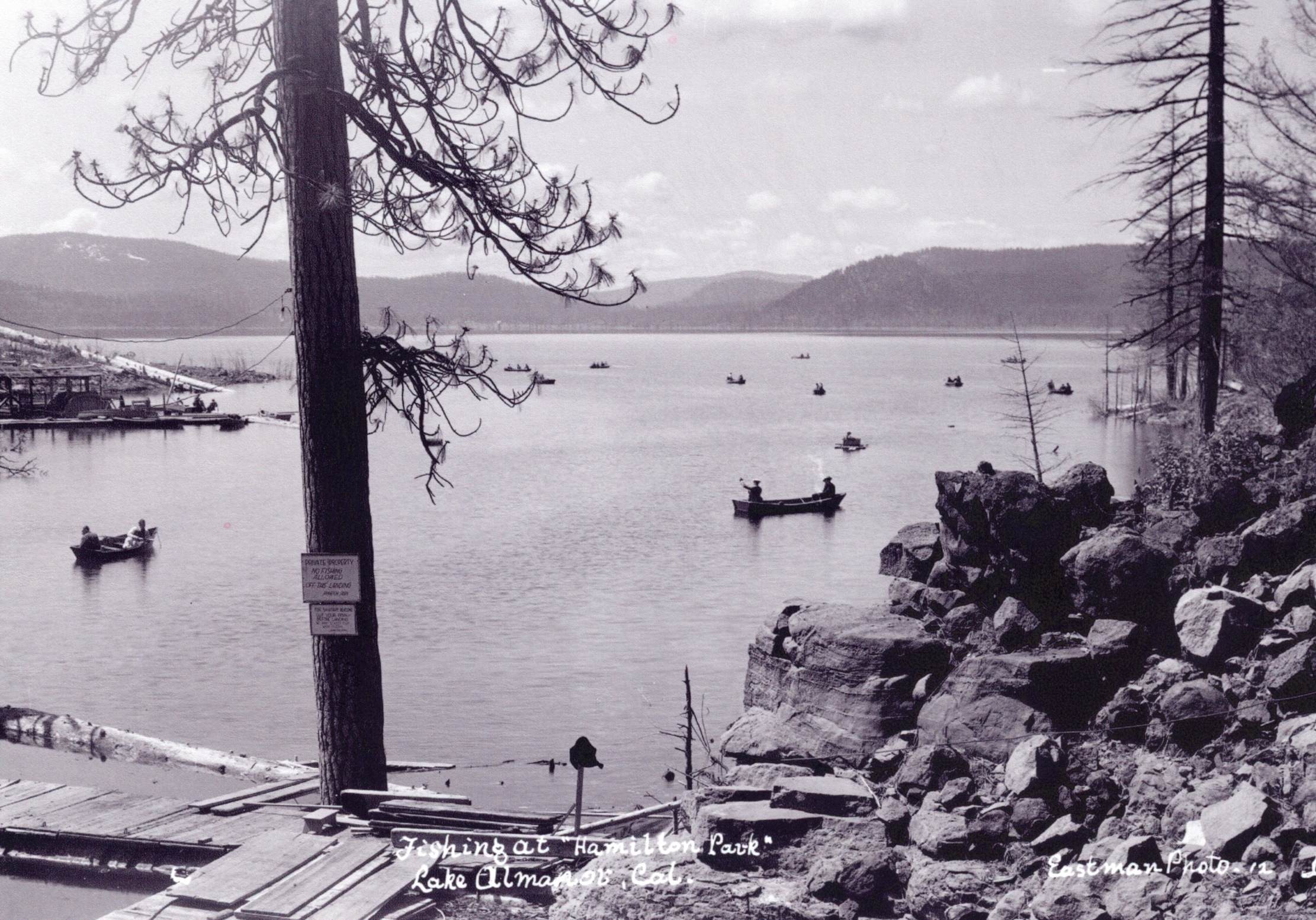
Seasoned residents and visitors to Lake Almanor will recall that body of water was plagued with snags—dead standing trees submerged by the lake. The trees were mostly lodgepole pine that had no commercial value to the Red River Lumber Company when it initially logged the basin. Another issue, especially along the shoreline was  the remnants of tree stumps left over from harvesting trees.

In 1954 the California Department of Fish & Game estimated it would cost $1.6 million to remove the snags and stumps. California Assemblywoman Pauline Davis, who liked the idea of the snag removal, would not seek state funds to do it, as the lake was privately owned.

As the development of the subdivisions on the peninsula and east shore continued so did the issue of snag removal. In the fall of 1959, PG&E did a pilot test to remove the snags and stumps. After it was completed, it would assess the results, and should it appear feasible from a cost standpoint, it would move forward with the program to include additional segments of the lake.

To the delight of many, PG&E continued with the snag removal program, and in 1961 work was accelerated. Cattermole and Tretheway Construction Company were awarded the contract for removal snags, stumps and driftwood. At its peak the company had five barges, employing over fifty men. One of the more problematic regions of the lake was the one known as Gould Swamp to the east of Chester. A huge pile of snags was created on the Chester boat landing road. Farrell Hamilton, foreman for the company, reported that the pile consisted of nearly six million board feet of timber. It measured some 1,100 feet long, by 60 feet wide and 20 feet high. To dispose of this mammoth wodpile, the company intended to have one large bonfire and it did in late October 1963. As one forest service employee noted, it “really made quite a blaze.”

Donate

Stacy Depot, Lassen County

Stacy Depot—C.R. Caudle

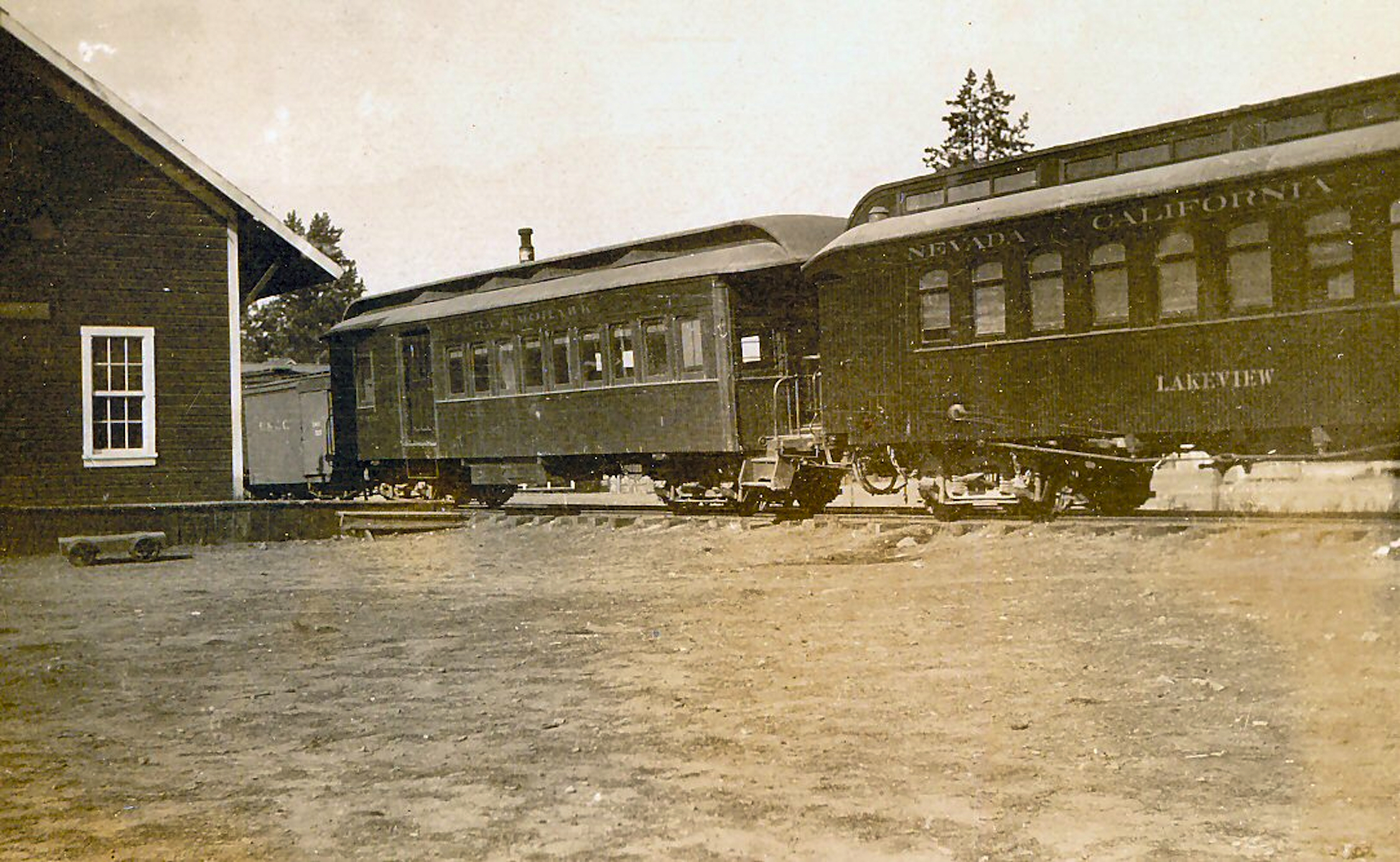
Stacy was a small community in the eastern Honey Lake Valley located between Amedee and the Nevada Stateline. It came into existence when the Fernley & Lassen Railroad was constructed through there in 1912. There were high hopes in the region with the completion of the Standish Water Company’s pumping plant on Honey Lake. It was the company’s intent to irrigate some 4,000 acres for sugar beet production. Its a complicated story.

Stacy Depot
Stacy Depot. The town was named for Stacy Yoakum Spoon, wife of Grover Franklin Spoon, one of the town’s developers and its first postmaster.

This is another depot, where I have not been able to locate much information. There was a nearby stock corral for loading sheep. In 1940, there was siding that could handle 113 cars.

Tim

The Demise of the Paul Bunyan Lumber Company

Paul Bunyan Lumber Company, 1953. Courtesy of Fred Lendman

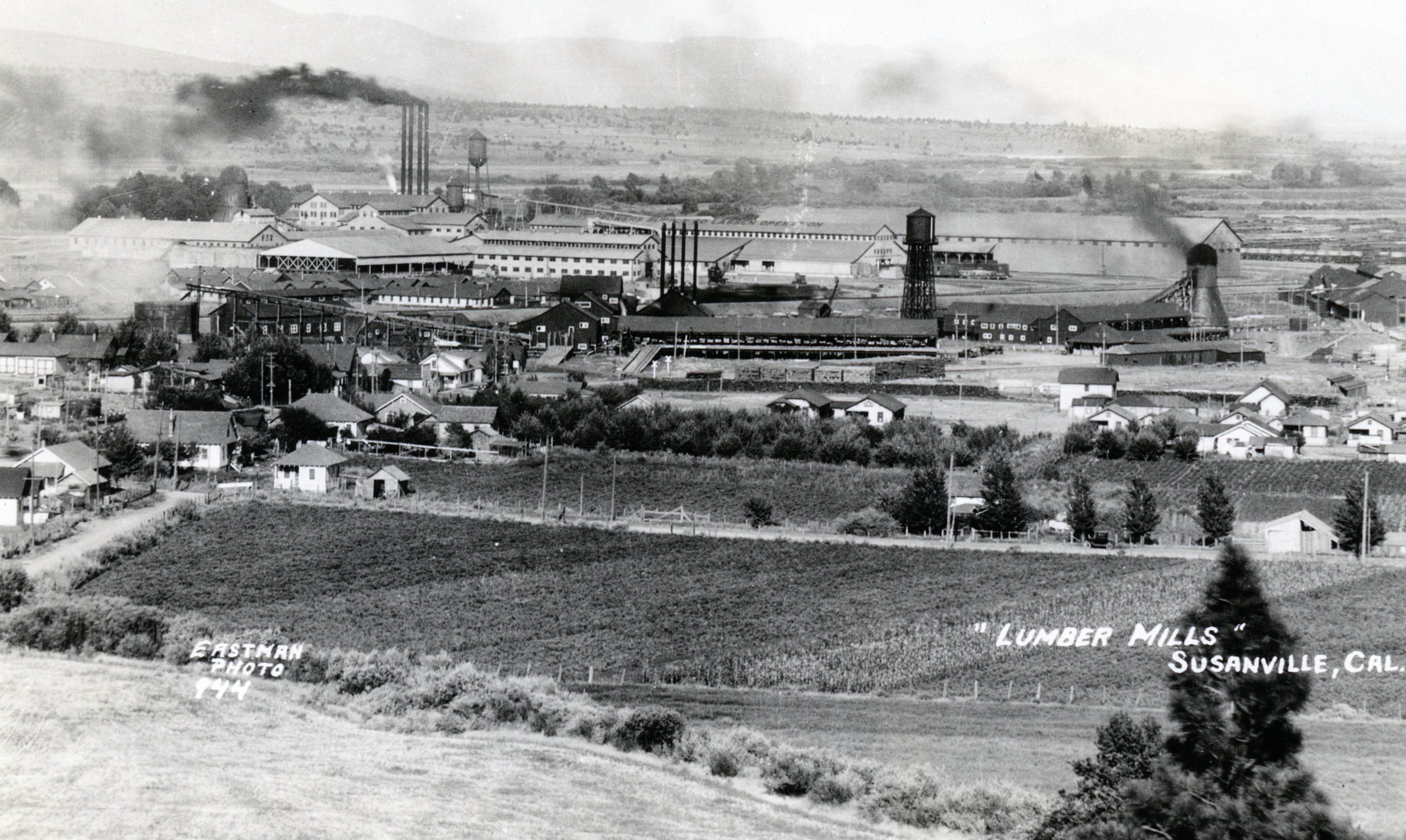
On May 15, 1967, Kenneth R. Walker, president of the Paul Bunyan Lumber Company announced the pending closure of its Susanville mill. Walker cited the lack of available of timber for the closure. The mill closed in August and the liquidation process began.

In 1945, when Red River Lumber Company was in its initial dissolution process, Kenneth wanted to remain in the business. At that time, Red River owned what was referred to as the “Cedar Mill” in Susanville. Kenneth took over that mill and named his new venture the Paul Bunyan Lumber Company.

In conclusion, Walker provided two interesting facts about the mill. He stated that when the last board is shipped, the mill would have processed 650 million board feet of lumber during its operations. In addition, the company’s total payroll during that time amounted to $20 million.

Support