Ask Tim

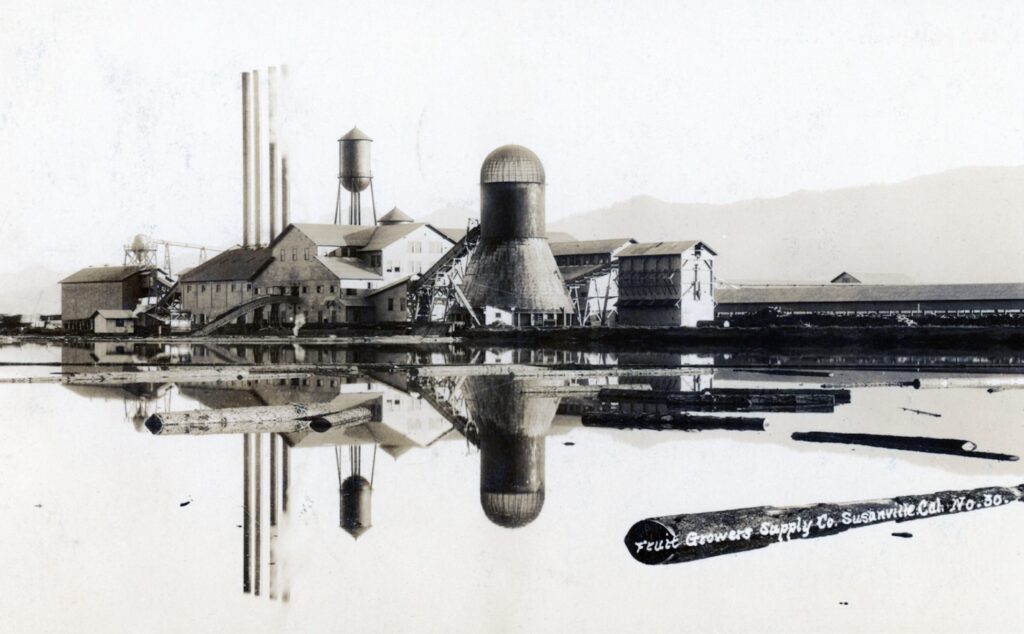
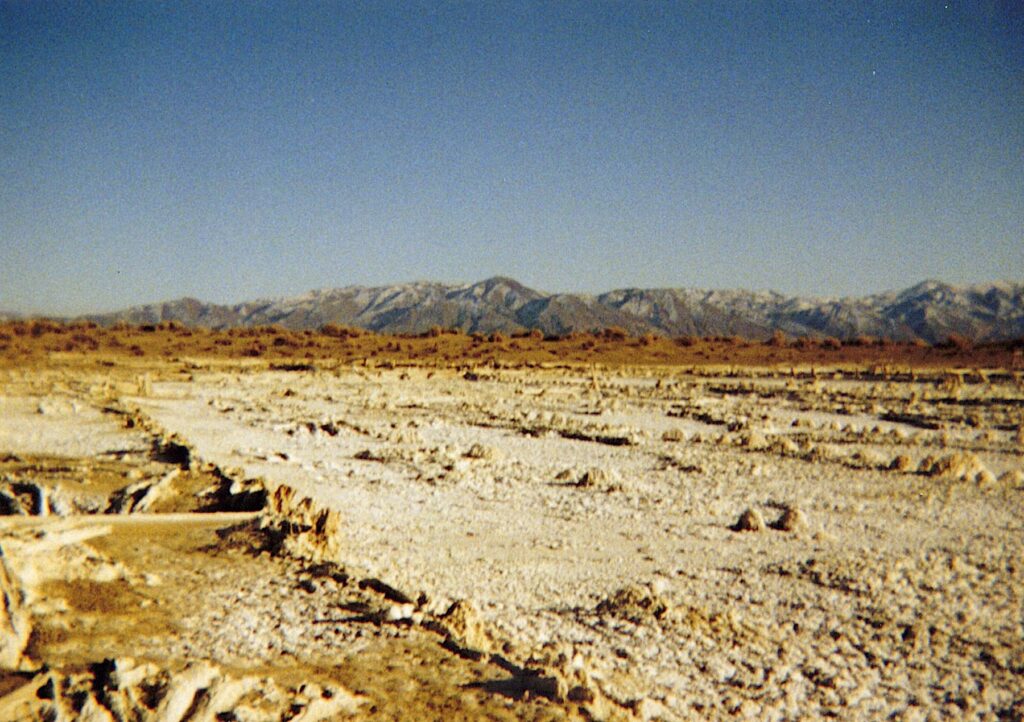
Honey Lake Regatta, 1987

On a quarterly basis, I ask you the reader, if there is something you would like to learn more about or maybe its something you heard, but question its validity. So here is an opportunity to participate. I will do my best to answer any questions. It should be noted, it may take awhile for the answer to appear as a post. The primary reason, many of the daily posts are done nearly a month in advance. So by the time you read this I am already working on posts for the middle of November, or at least I should be. Whatever the case may be, I look forward to hearing from you. Of course, it should be noted that paid subscribers requests receive priority. In addition, you can always send a request at any time.

Tim

Nataqua versus Mahala

A gathering of Maidu women at Johnstonville, 1900

On April 26, 1856, twenty settlers in the Honey Lake Valley gathered at Isaac Roop’s Trading Post and held a “mass convention” to establish a territory of their own. They named their new republic Nataqua.  It was purported that the name was a Paiute word for woman. That claim is rather dubious. Nataqua Territory was a short lived affair, and it was soon replaced  with the Sierra Nevada Territory.

Locally, the Anglos used term Mahala for designation of Native American women. A number of these women worked as domestics such cleaning and washing. Willow Creek Valley resident Abe Tunison for instance wrote in his diary on May 28, 1877 “A Mahala was here and washed.”

During the late 1800s’ the term squaw was used infrequently and usually derogatory manner, i.e, there are many newspaper citations  of a “drunken squaw.”

Tim


Lassen County Farm Bureau Reports

Sunflower demonstration on the A.F. Babcock Ranch, Bieber, 1923. This appeared in one of those reports.

The records salvaged from dumpster dives cover a wide variety of topics. One of those were the Lassen County Horticultural Reports filed annually dating back to the late 1880s. This would later be superseded with the Lassen County Farm Advisor Reports. In the 1920s, nearly every Lassen County agricultural community had a farm bureau. It was the farm advisor’s many duties ro assist each one of the bureaus and would compile all the data collected in an annual report. These reports were meticulous in the information they provide. In certain instances, they included photographs of various demonstrations and/or experiments, such as today’s featured photograph.

Tim

A Mystery Solved

Robbers Creek, 1918, I do not think its near Susanville.

A few years back, I published this photograph. However, I could never figure out the location. Now, I know. It is crossing of Robbers Creek to the north of Westwood. Since this is some twenty miles away from Susanville, in my opinion, I do not consider that near. The photographer named Engel, who I admire his work. took some winter scenes at Westwood in1918, and instead of giving the location of that lumber town, Engel, as he did in the above photograph affixed the label “near Susanville.”  I will be including a Westwood photograph by Engel in the 2025 Calendar.

Main Street, Susanville, 1918.

Here is a Engel photograph of Susanville.

Tim

The Standish Creamery – A Refresher

Standish Creamery—Dorothy Story

In the past, I have written snippets about the Standish Creamery, so now a complete version. In 1898, Standish was founded as a utopian community based on the belief of Myles Standish. In beginning all worked well. By 1901, the Associated Colonies of New York, backers of Standish filed for bankruptcy. With that entity removed it allowed the community to grow without the former’s restrictions.

In 1901, Buntingville merchant Mike Phillips relocated from the west side of the Honey Lake Valley to Standish. One of his many enterprises at Standish was the establishment of a creamery. In 1904, Phillips for unknown reasons sold his various businesses there and moved to Reno. Susanville businessman, Charlie Emerson bought the creamery

In 1916, Emerson boasted that his creamery had the only pasteurized milk in Lassen County. It should be duly noted that California State Law required all milk to be pasteurized.

In 1929, the creamery was destroyed by fire and not rebuilt.

Subscribe


The Pollard Memorial Dedication

Benjamin Pollard’s memorial, October 5, 2024-Courtesy of Martin Blaauw

In February I received a request from Mark Hakvoort of Hollands Kroon, in the Netherlands. Their goal is to remember the
aircraft and crews perished there during World War II. You can learn more from their website here 

Hakvoort wrote: “We are searching for the grave of the USAAF pilot and his family at the Lassen Cemetery. B.A. Pollard was killed in action on 9 April 1944 in the Wadden Sea. His aircraft crashed / ditched in the cold sea water. The body of Pollard was washed ashore near the village of Hippolytischoef. His plane was the P-51B Mustang code 43-6761 C3-R. In the war he was buried at the “Zandburen Cemetery”. After the war his body was moved to the US assembly cemetery in Margraten. And later again moved back to the USA and re-buried at the Lassen Cemetery in Susanville. [in 1949]”

We were fortunate enough to locate several Pollard’s relatives. As a matter of fact, he has a niece still residing in Susanville.

The Dutch veterans assembled. for Pollard’s remembrance, October 5, 2024–Courtesy Martin Blaauw

On October 5, 2024, the Dutch held remembrance for Pollard. About 50 people attended, Ten Dutch veterans saluted to show their respect for the fallen comrade. The Mayor Mrs Rian van Dam and the USAAF representative  Colonel Juris Jansons unveiled the remembrance post. There was a  wreath laying ceremony, followed  by the playing United States national anthem.

A job well done.

Tim

Benjamin Ashby Pollard, 1921-1944
Grave of Benjamin Pollard, VFW Section, Lassen Cemetery, March 16, 2024

The Origins of Lassen High School

E.W. Hayden,1846-1929–Gilbert L.Morrill

In the spring of 1902, E.W. Hayden, editor/publisher of the Lassen Advocate raised the issue for the need of a high school. Hayden proposed a district high school, rather than a county one. Hayden felt that all the school districts in the county would not support a high school.

In the fall of 1902, Hayden again revived the issue for a high school. This time he succeeded in generating more interest. In September, John Spalding and Franklin Ward circulated petitions to have the matter placed on the ballot for the November election. On October 2, 1902, those petitions were presented to the Lassen County Board of Supervisors and they approved the ballot measure.

Proponents were worried that the voter’s might confuse the issue as a bond measure. Yet, funding for a high school still had to be addressed. It was proposed that the property tax be increased by one cent per $100 assessed value. This tax would generate $3,700 a year-more than sufficient to operate a high school.

As the ballot proposition called for the creation of a county high school, there was Hayden’s concern that it might not pass, especially with the voters far removed from Susanville. Surprisingly many of the outlying school districts were supportive of the measure. After all, the nearest high school available was Reno, Nevada.

On November 4, 1902, the voters of Lassen County went to the polls. Th voters approved the creation of the Lassen County High School by a large majority with 637 votes in favor and 295 opposed.

Never miss a story, Subscribe


Susanville’s Hangman Tree-The Real Deal

Main Street, Susanville, 1864.

There was a sliver truth in yesterday’s article about the town’s infamous hangman’s tree.

On April 17, 1868, Thomas Pearson, his wife, daughter Hattie and Samuel Cooper were massacred by the Indians on the eastern shore of Honey Lake. This episode created a great deal of tension between the settlers and the Indians. Expedition parties were organized to find the guilty parties. who were believed to be members of the Pit River tribe. The Indians who did dastardly deed, however could not be found.

Proximity of the Pearson Massacre Site—-Larry Plaster

In September 1868, Captain Munson of Fort Bidwell still conducted expeditions, but like the previous ones, found no clues. That changed when he arrived in Big Valley, where we met with the Pit River tribe. The tribe turned over to Munson’s custody three suspected Indians.

Later that month, Munson. arrived in Susanville with the three Indians for civil authorities to conduct a trial. The hearing was held at night. The Indians were acquitted and they were released from custody. The Sage Brush newspaper reported “. . . that no evidence of appearing to establish their guilt.” Yet, a number of citizens who had gathered outside the courtroom believed the Indians were guilty. They became a vigilante mob. They escorted the Indians up Main Street to North Pine Street, where they were hanged “. . . from the limbs of a patriarchal oak.”

The saga of the Hangman’s tree was born. As folklore would have it, the tree was used for other occasions, but actually it was not. Again, it has been written the tree was cut down as recently as the 1960s, when in fact it was cut down in January 1892.

Support by subscribing.

Susanville’s Hangman’s Tree-The Folklore

Main Street, Susanville, 1885. Courtesy of Betty Barry Deal

A reader remembered a long time ago when visiting the local history museum that there was a reference that Susanville had two hanging trees. and that they were a deterrent for visitors to engage in criminal activity. The Lassen County Historical Society even contributed to the folklore.

In its 1963 Bulletin entitled Susanville there is a short article by Robert H. Amesbury called the “Hangman’s Tree. Here is that story: “The large oak tree located in the front yard of the residence at 60 North Pine Street is alleged to have been used used by the law enforcement in early days of Susanville as an execution tree.

“Here were hanged several horse thieves and other wrong doers. Since the main road west from Susanville went up Pine Street at that time, this tree served as a constant reminder to travelers of the fate awaiting law breakers in this territory.”

Tomorrow we will explore what really transpired.

Tim

Hayden Hill’s Tumultuous Past

Hayden Hill-Lassen County Historical Society

Hayden Hill, located some fifty-five miles north of Susanville, was Lassen County’s largest mining community. Unlike its counterparts in California and Nevada, it was small in comparison. Like so many mining communities, Hayden Hill went through numerous boom and bust cycles.

Of course, in 1870 when word spread of the gold discovery miners flocked hoping to find a new “Comstock.” By the mid-1870s things had fizzled on the “Hill” as locals referred to it. In 1878, several major discoveries and the prospectors returned. For the next eight years it was Hayden Hill’s most prosperous times. It was followed by a downturn, then brief uptick, and continued that way. By 1909, Hayden Hill witnessed prosperity that it had not seen since the late 1870s. In 1910, a devastating fire wiped out a major portion of the town and it never fully recovered.

Hayden Hill. 2018.

When Lassen Gold Mining revived operations during the early  1990s at Hayden Hill, the miners and their families did not reside there, many opting for Adin the nearest community. When Lassen Gold shut down in 1997, the open pit operation scared the landscape forever and its such a mess the entire “hill’ is fenced off.

Support


Exploring Lassen County's Past