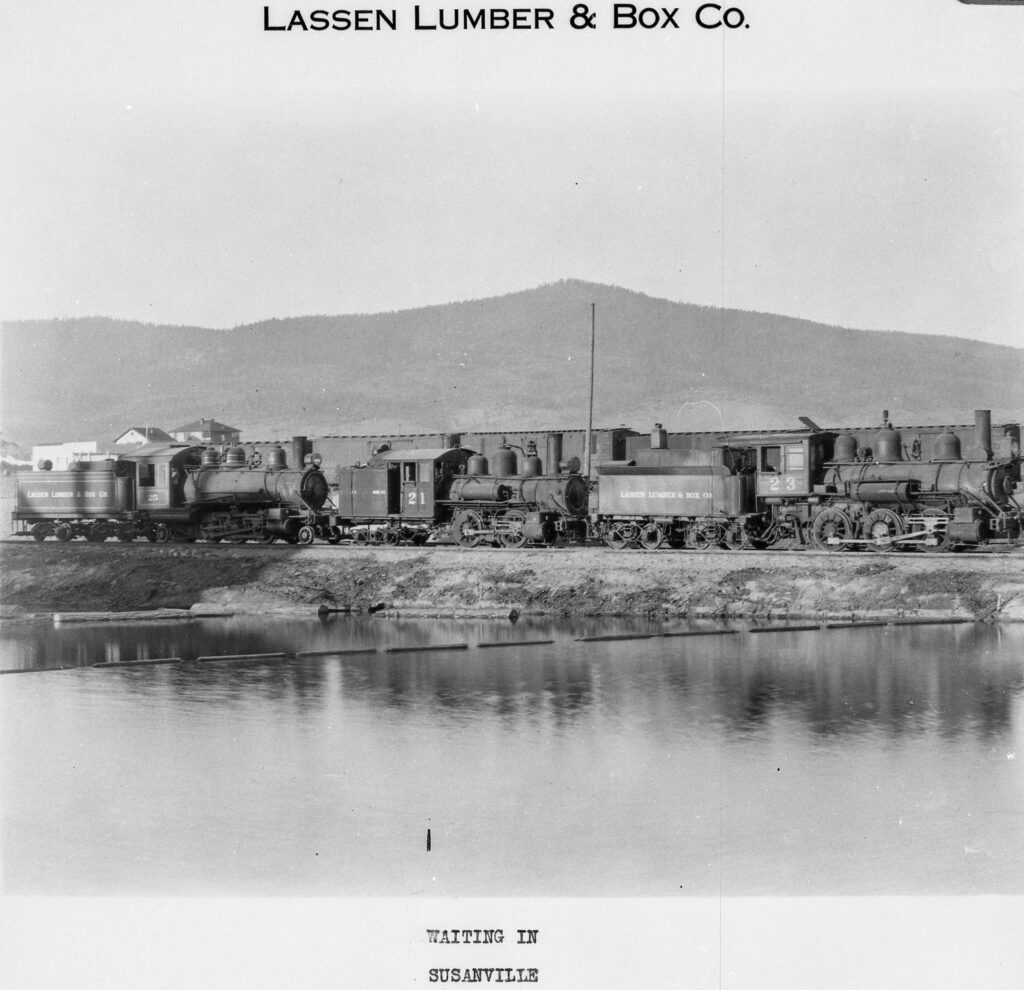
The three locomotives lined up at Lassen Lumber & Box Company’s mill, 1923
In 1923, Susanville’s Lassen Lumber & Box Company hired a professional photograph to produce large leather bound photograph albums showcasing their entire operation. This was a common practice then. The purpose to attract investors.
Lassen Lumber was a much smaller operation as compared to its neighbors Fruit Growers and Red River. Due to its small size, Lassen Lumber only had three railroad locomotives, which are showcased in the above photograph.
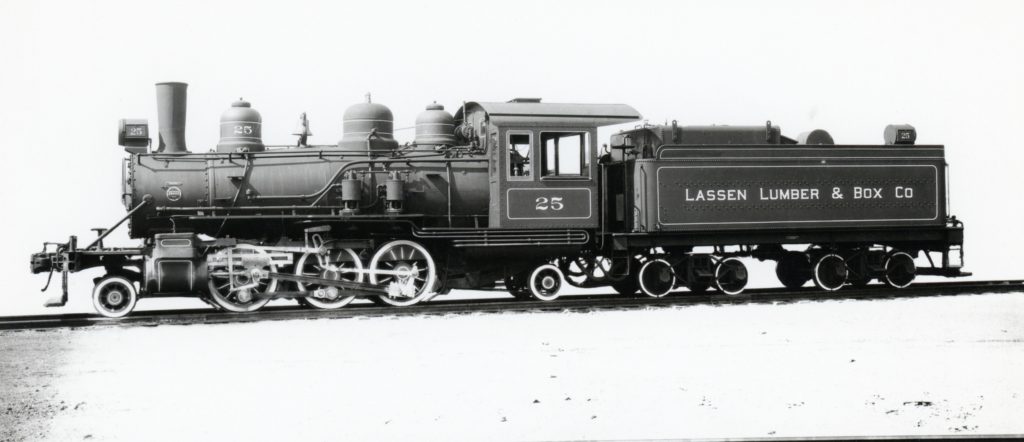
Lassen Lumber & Box Company No. 25—-Tom Armstrong
Lassen Lumber’s railroad logging operations was short lived and ceased at the end of the 1929 logging season. The No 25, depicted above, was sold to Red River. In 1938, Red River sold it to Modesto & Empire Traction Company. What became of the other two locomotives, I do not know.
There is a certain segment of population that will be traveling on the highways, byways, lest we forget freeways for the Thanksgiving holiday. A century ago, the California Highway system was still in its infancy. It took nearly twelve years to construct Highway 36 from Red Bluff to Susanville.
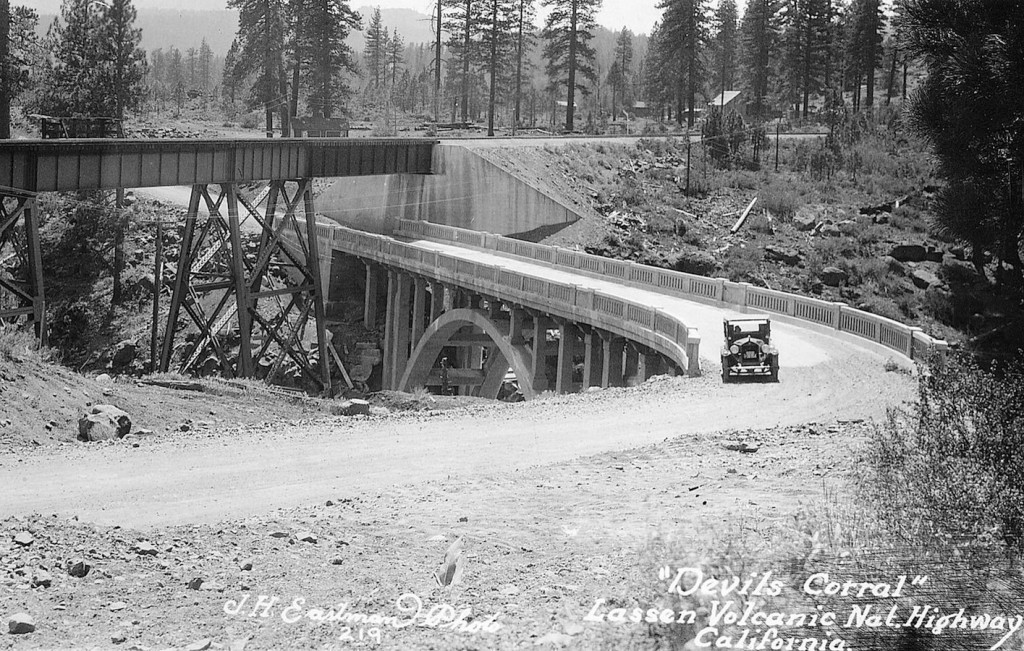
One of the major accomplishments occurred on November 25, 1923 with the dedication of the Devils Corral Bridge over the Susan River, some six miles west of Susanville. The $45,000 concrete span made travel a lot easier. In 1966, it was replaced with current bridge.
In 1985, the Neversweat Chapter #1863, E Clampus Vitus restored the Viewland monument.
Viewland is the low summit between Mud Flat and the Honey Lake Valley. From this vantage point, emigrants in the 1850s, who had finally traversed the Nevada desert, obtained their first view of the Honey Lake Valley and the Sierra Nevada Mountains. The Nevada-California-Oregon Railroad established a station there named Murray, but when the line was broad gauged by the Southern Pacific Railroad it became their Viewland. The siding was important for sheep growers who, after shearing, would haul the wool there to be shipped out by rail.
Spread the word, and encourage a friend to subscribe.
Like so many words and/or phrases evolve over the years, and one such one is mentor. Many educational institutions are of the belief that a mentor is of a person that is experienced and a trusted advisor. I think that is bunk and misleading.
Personally, in my historical research I never had a living mentor. On the other hand I was very fortunate to have a very supportive network of people who nurtured in my endeavors.
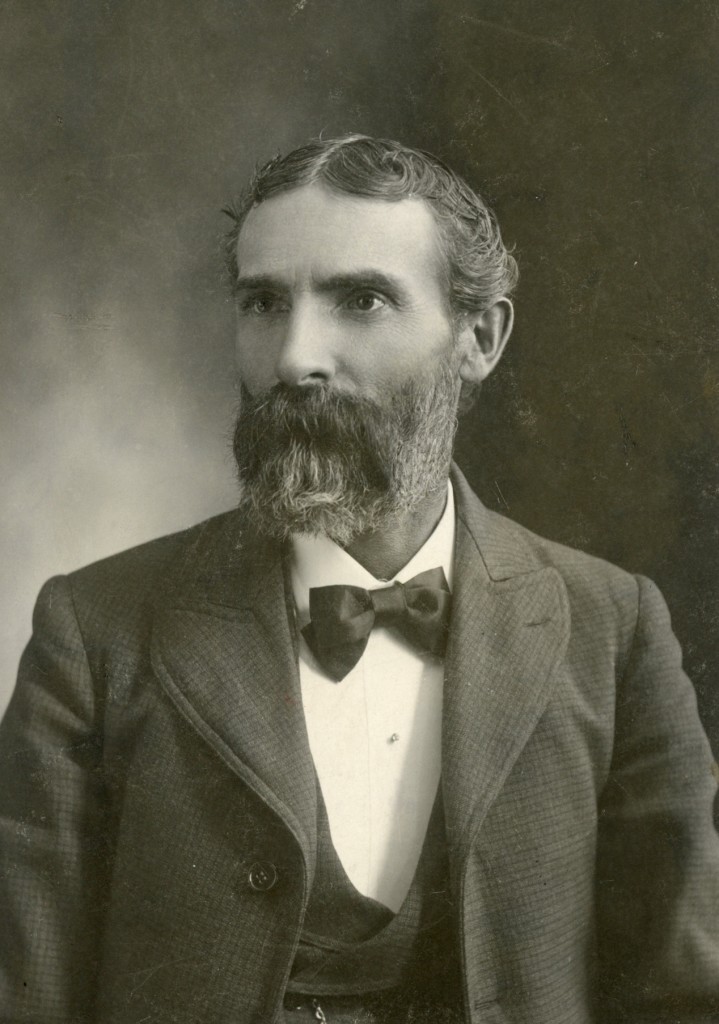
In certain ways, Asa M. Fairfield (1854-1926) I considered a mentor. He is best known as the author Fairfield’s Pioneer History of Lassen County. He was also a highly respected grade school teacher. I, too, was teacher and briefly taught at Lassen College. My students were engaged and classes in many instances extended to well past 11 p.m.–thanks in part of my oldest student Phil Hall.
A news release when I taught at Lassen College.
Anyhow, I am impressed with Fairfield’s impeccable research of more than a century ago. Since so many pioneers of the area had moved from the area, Fairfield did track them down, and had a vigorous letter campaign. I, too, followed that route, corresponded with numerous second generation pioneers. During that era, I amassed volumes of handwritten correspondence with many who were born in the 1880s and 1890s. Priceless. It should be noted that my first 25 years of research was a done pre-internet. While the internet is a handy tool, I still rely upon primary source documents.
Fairfield and I are also share a a common bond, we were both disappointed with our book sales!
Main Street, 1894. You can see the condition of the house—Ivor Lanigar
While the Susanville Elks Lodge has owned its iconic building for 100 years, construction began in 1884 making the landmark building 140 years old.
A side view of the Swain’s residence, 1913—Frances Swain
On March 22, 1884, J.G. Leonard purchased the vacant lot at the west end of Main Street from Sarah Hosselkus for $450. Leonard, a dentist originally studied to become an architect, and designed this unique structure. All, the rooms , with the exception of the kitchen/dining were octagonal in shape. In November 1884, Leonard hired Charles Odette to construct it. In February 1885, Leonard moved into the house, though it was not finished. However, when C.H. Lawrence filed a Mechanic’s.Lien for lumber sold ($1,463.77) it stated the house was completed on March 10, 1885.
Anyhow, Susanville, then a small town was not large enough to support a full-time dentist. That prompted Leonard to ride the circuit, practicing his profession in the outlying regions of Lassen, with extended trips to Modoc and Plumas Counties. Leonard went bankrupt due to cost to construct the house. It did not help matters, as many of his patients paid in trade rather than cash. In 1890, William Greehn who Leonard owed$2,800 was awarded the house in the bankruptcy proceedings. It became one of Greehn’s many property rentals. The rent $15 a month.
On April 11, 1908 Greehn’s Estate sold the house to Joel Swain for an undisclosed amount. Swain, who owned s popular saloon finally finished the house. Swain died in 1918. In 1922, his widow sold the residence to the Antler’s Club, an off shoot of the Elks organization. In 1924 the local Elks groups received their charter and it has been their home ever since. Like so many organizations they go through peaks and valleys. This year happens to be a low point for the local Elks Lodge. It is my understanding due the building’s upkeep has caused financial burnden for the lodge and they proposed to put it for sale.
Invoice to Lassen County for the failed Amedee School Bond Election
One of the greatest assets for a frontier town, was to have its own newspaper. It was in fact, a defacto chamber of commerce extolling the virtues of the new upcoming community.
Amedee, the railroad town on the east side of Honey Lake, could even boast its own newspaper the Amedee Geyser. S.N. Griffith one of the original promoters of the town was able to entice 19-year old, Henry A. “Hal” Lemmon to relocate from nearby Sierra Valley where he was publishing the Mountain Mirror. On March 30, 1892 the Amedee Geyser made its debut. The four-page newspaper, common for the era, was quite informative from the exchanges published elsewhere. There is only one known surviving copy, which is in private hands.
The good times at Amedee, and across the nation would not last long due to the financial panic of 1893. On September 28, 1893, Lemmon published the last issue with the following statement: “We have nothing to say–we have done the best we could. We shall continue residence in Amedee and when our patrons have more, we can give them a newspaper worth the subscription price, the paper will appear again. ”
Lemmon had hope to revive the newspaper the following month, but that did not transpire. He moved on to bigger things and at the time of his death in 1947 he was President of the Sierra Pacific Power Company in Reno, Nevada.
Note: This originally appeared in 2015 . While no new information has changed in the text. The one change is the addition of the above photograph.
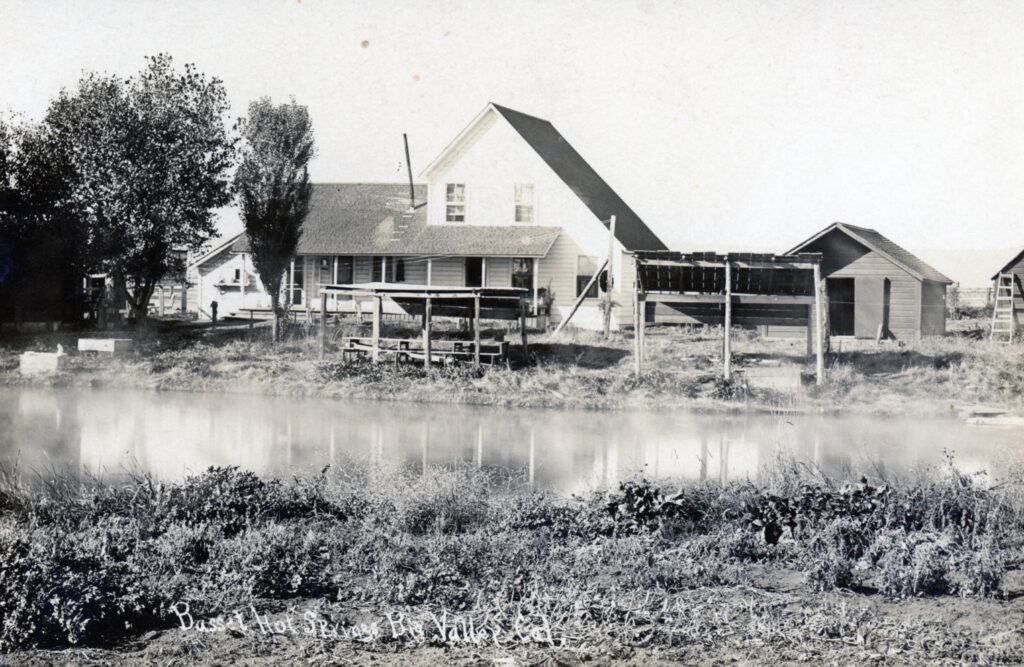
In the late 1870s, Isaac Wilson Bassett developed the hot springs near Bieber, first by excavating a swimming hole where water was diverted because the springs were too hot. Later a bathhouse was constructed that contained wooden tubs. If the water became too cool, a wooden spigot could be turned into the tubs to add additional hot water so that optimum temperature was maintained in the pool. As Frances A. Gassaway recalled, “For twenty-five cents, one could go into the plunge and bathe. For a dime more one could be furnished a swimsuit. It was quite a treat to go to the springs.” In 1928, under Barney Fillingim’s management, the wooden pool was replaced with a concrete swimming pool. The Bassett family continued to operate the springs until 1945 when it was sold to Gerald and Birdie Packwood for $17,500. The Packwoods continued operations for a short period of time. Due to health regulations, maintenance, and insurance the Packwood’s deemed it too costly to operate and the facility was closed.
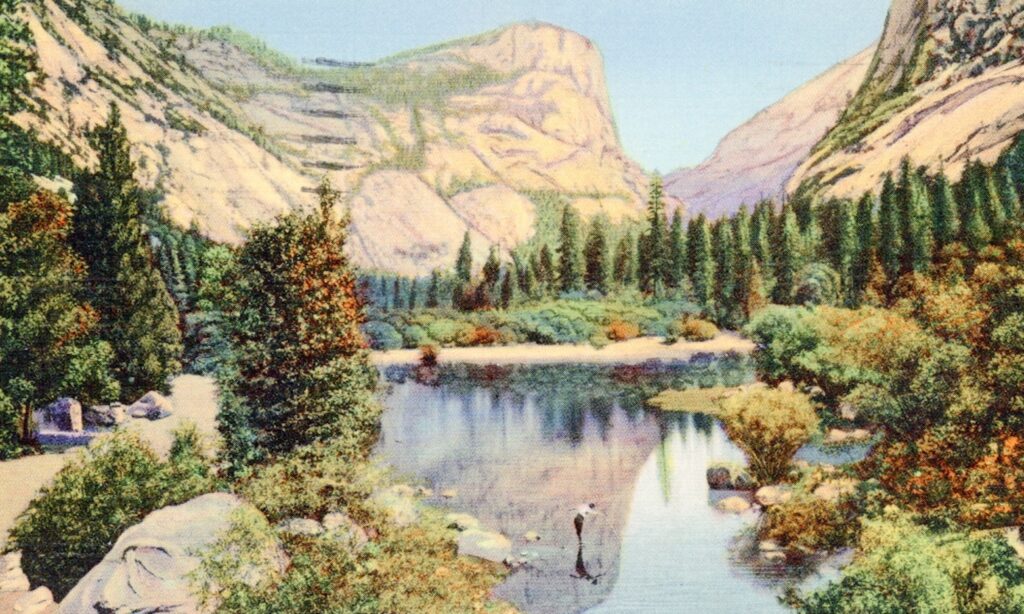
A 1936 Yosemite Park postcard featuring Mirror Lake-David B. Martin
This is some trivia that are many are not aware of. While these national parks are uniquely different, for a time they were joined at the hip, In 1916, President Wilson signed a bill that created Lassen Volcanic National Park. It was California Congressman John Raker that lobbied with due diligence to create the park. While Congressman Raker’s bill passed and signed by Wilson, it was in name only. One of the drawbacks of the bill was the lack of funding. Congress, in its bill, only allowed $5,000 annual funding for the park. Due to its lack facilities, remoteness etc., for administrative purposes Yosemite National Park was placed in charge as the overseer of Lassen. The arrangement lasted nearly a decade.
Tim
P.S. As sacrilegious as may be sound, this California native has not been to Yosemite
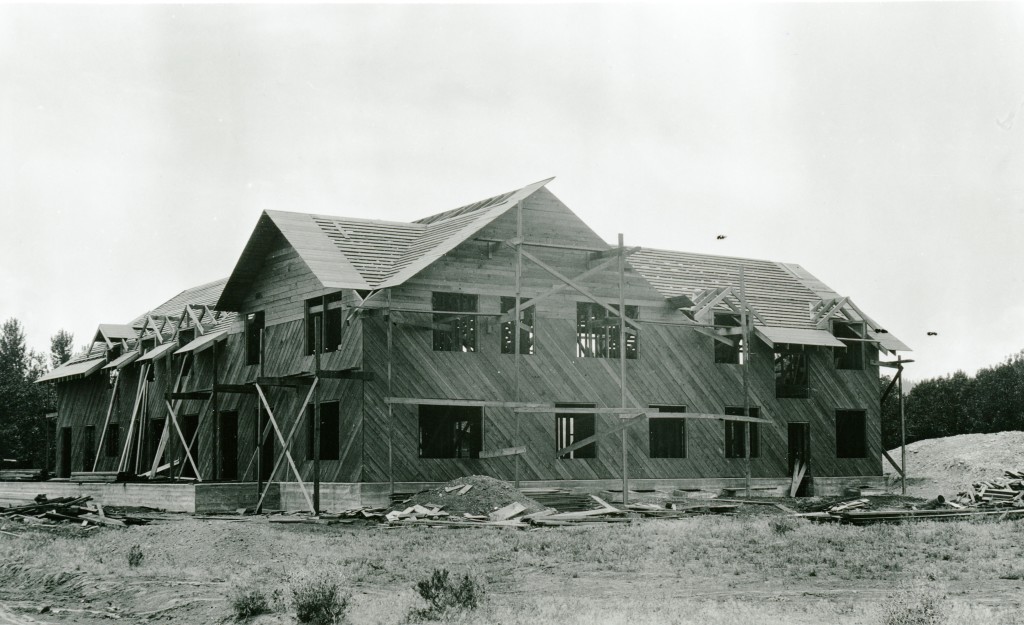
Construction of Riverside Hospital, Susanville, 1920. Courtesy of Ed Standard
Today, of course, is Tuesday. Some times I post a Tuesday Tidbit and sometimes I do not. When I first started this site, I posted a story seven days week, year and after year. In February 2020, I scaled back to six days a week, selecting Tuesday as the dark day. It just happens this Tuesday is also Odometer Day, that is my customary annual day off.
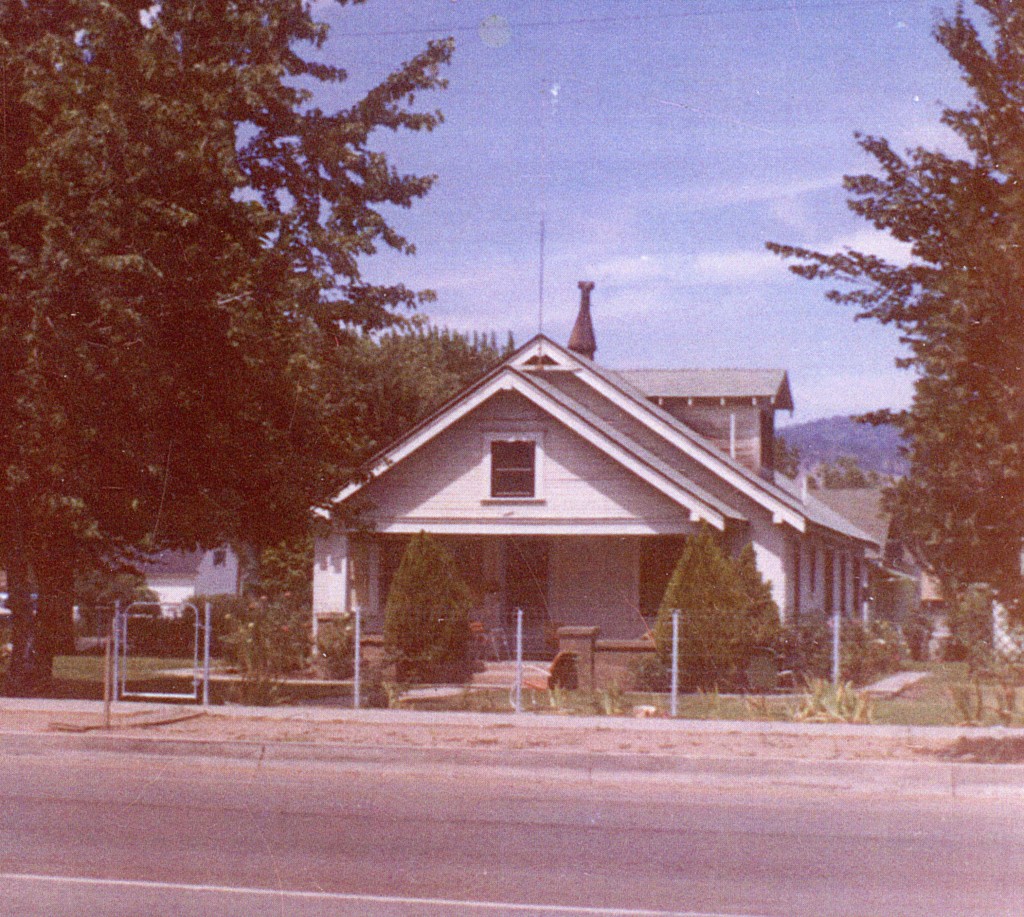
Potter’s Maternity Home
For those not familiar with Odometer Day, it is a reference to my birthday. While my three siblings were born at Ma Potters Paternity Home, I chose to be different and made my debut at Riverside Hospital, and that structure was torn down in 1969.
In 1889, the first ring-necked pheasant were introduced to California. The plantings continued throughout of 1890s, but on limited basis. By 1900, the California Fish & Game stated the birds were too costly. In 1905, the Fish & Game established the Hayward Game Farm to raise the pheasants.
In early years, distribution of the pheasants was limited, maybe one-fifth of California counties. In October 1909, Fish & Game released a dozen of the pheasants in the Honey Lake Valley, about three miles of Janesville and an another dozen near Wendel. Subsequent plantings were sporadic. From 1909 to 1918 124 birds released in the Honey Lake Valley. In 1925 Fish & Game established a game farm to raise pheasant, and plantings were done a regular basis. From 1926 to 1946 3,767 pheasants were planted in Big and Honey Lake Valleys.
Some random notes. Occasionally, the Lassen County Board of Supervisors cancelled pheasant season in the 1920s and 1930s. In 1929, the Westwood Rod & Gun Club had 800 pheasants planted on various ranches in the Honey Lake Valley. Finally, in the 1930s, Fish & Game paid my grandfather, John Tanner to plant grain for the pheasants. This practice discontinued with establishment of the Honey Lake Wildlife Refuge in the early 1940s.