Spalding Drug Company

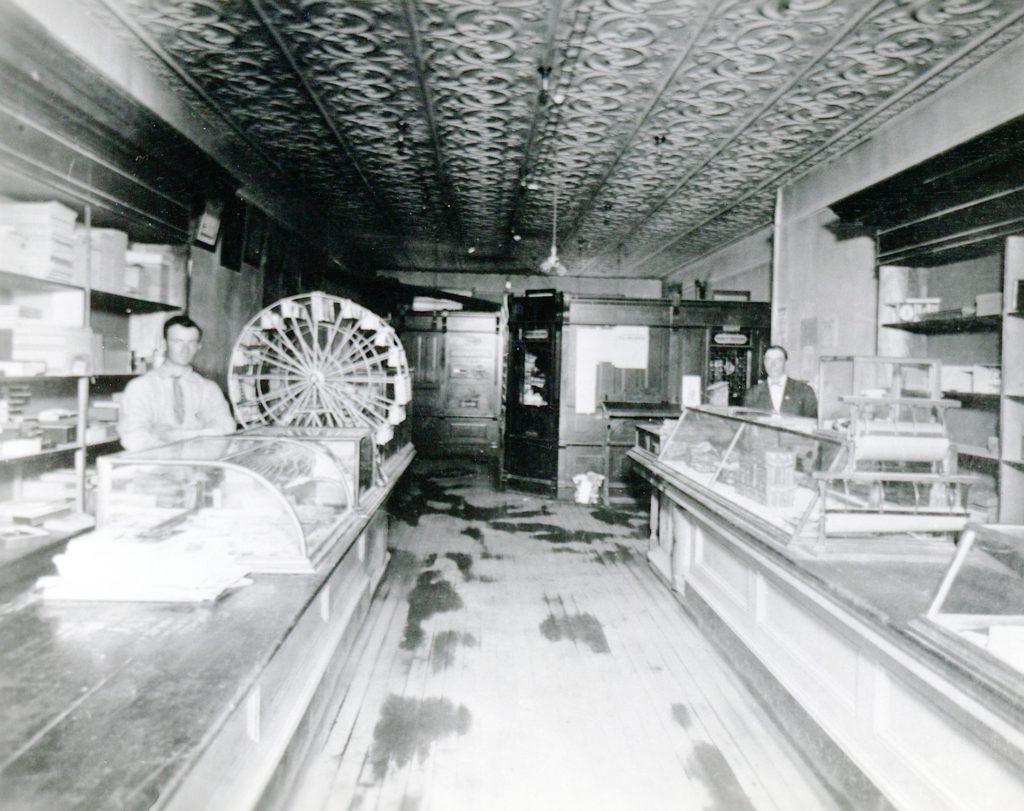
Interior of Spalding Drug, circa 1910. Courtesy of George McDow Jr.

Seasoned residents of the area will have fond memories of a one time iconic local institution the Spalding Drug Company. .It was established in 1865, by Zetus N. Spalding and his brother-in-law, A.C.Neale. Spalding was the pharmacist and Neale tended store and its customers.  The partnership did not last long and two years Spalding bought out Neale. In 1886, Spalding formed another partnership with his son, John Bridger Spalding who was only 19 years old.  In the 1890s, John B. to give the business a more cosmopolitan flair, he renamed it the City Pharmacy. In 1898, Zetus Spalding died an accidental drowning while fishing the Susan River. John B. restored name to the Spalding Drug Company.
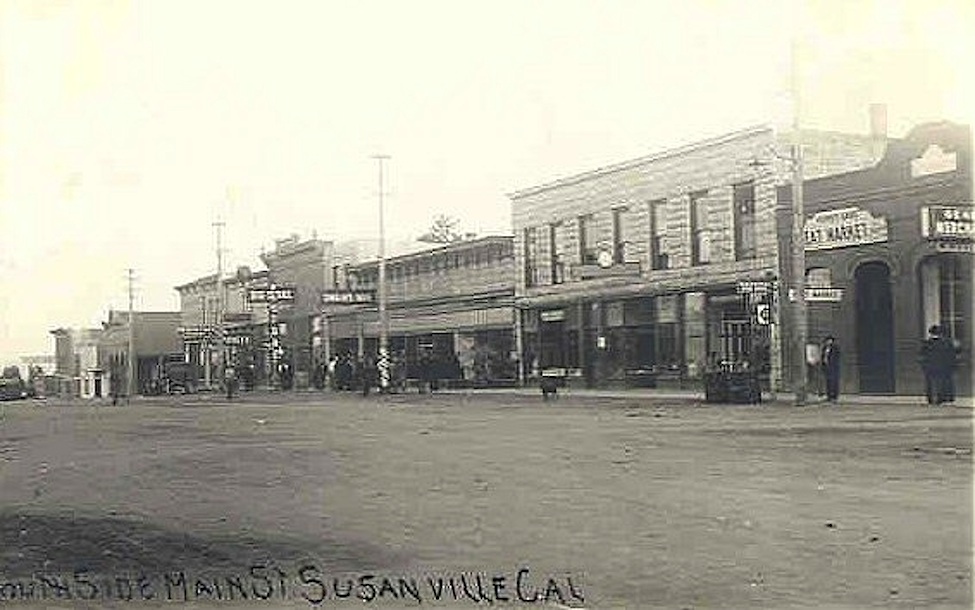
South Side, 700 Block, Main Street, Susanville, 1913. The Williams/Spalding building is second from the right.

In 1906, J.B. Williams commenced work on a native stone building for his jewelry business. Spalding by coincidence was Williams neighbor. Spalding became intrigued and joined forces with Williams for construction of two-story native stone building to house both of their respective businesses.

Among other changes was in 1912,  when Spalding entered into partnership with his son, Wright and E.E. Bourne. In 1930, the Spaldings bought out Bourne. John B. Spalding passed away in 1934 and then store his operated by Wright’s family-his wife Ruth and son John. In 1967, the Spalding Drug Company closed its doors after a century in business. 

This, of course, is a brief outline. For an example, many will have fond memories of the soda fountain.
 Subscribe

A Susanville Triangle Update

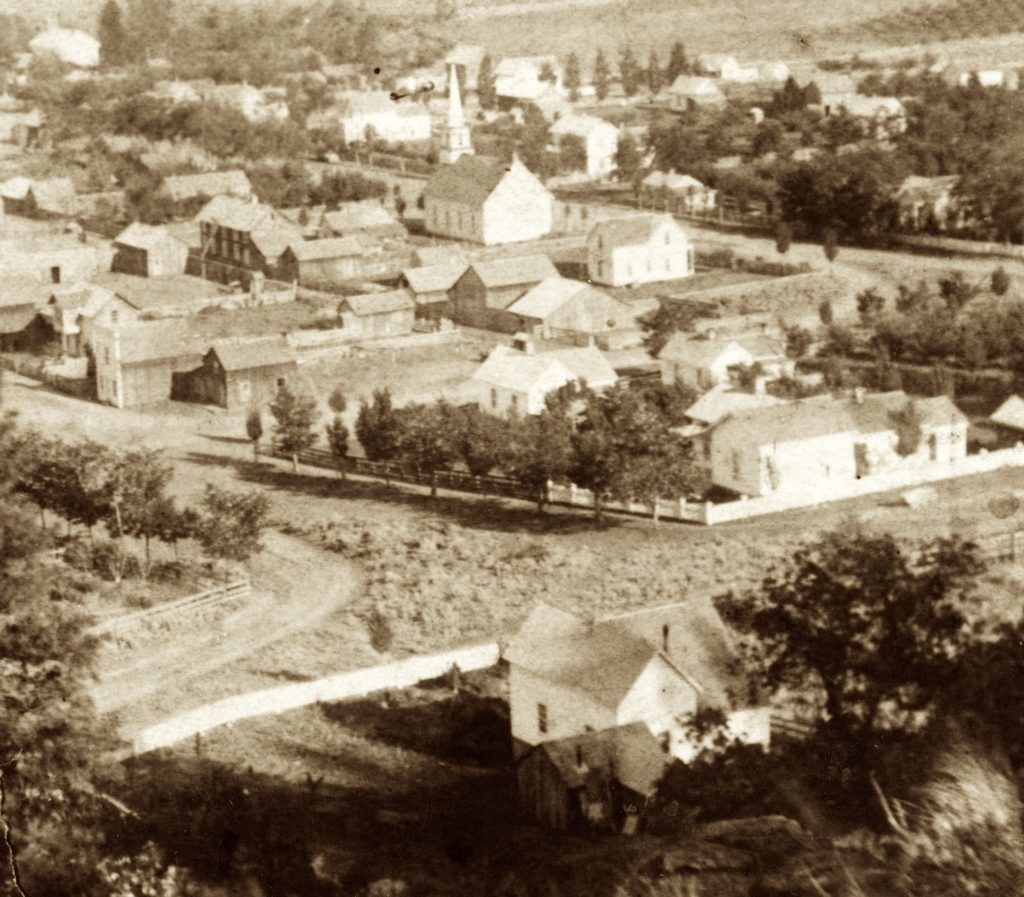
An 1886 view. Courtesy of Bud Lesser

I have addressed this unique property on the west end of Susanville’s Main Street, just below the Elk’s Lodge. While reviewing the Lassen Advocate of May 22, 1914, I came across this tidbit:

“J.A. Adams is circulating a petition for making of what he calls a ‘park’ at the head of Main Street in front of the J. Henry Swain’s residence, where the wagon-ways branch to north and west. A bit of landscape gardening in the triangle at that point might prove to be attractive, but those who remember the old bandstand abuses of twenty or more years ago, will doubt the merit of the proposal, as the town  can not afford to hire  a caretaker at present.”

A 1984 view—Matt Mattinson

Tim

Before Amedee There Was Liegan

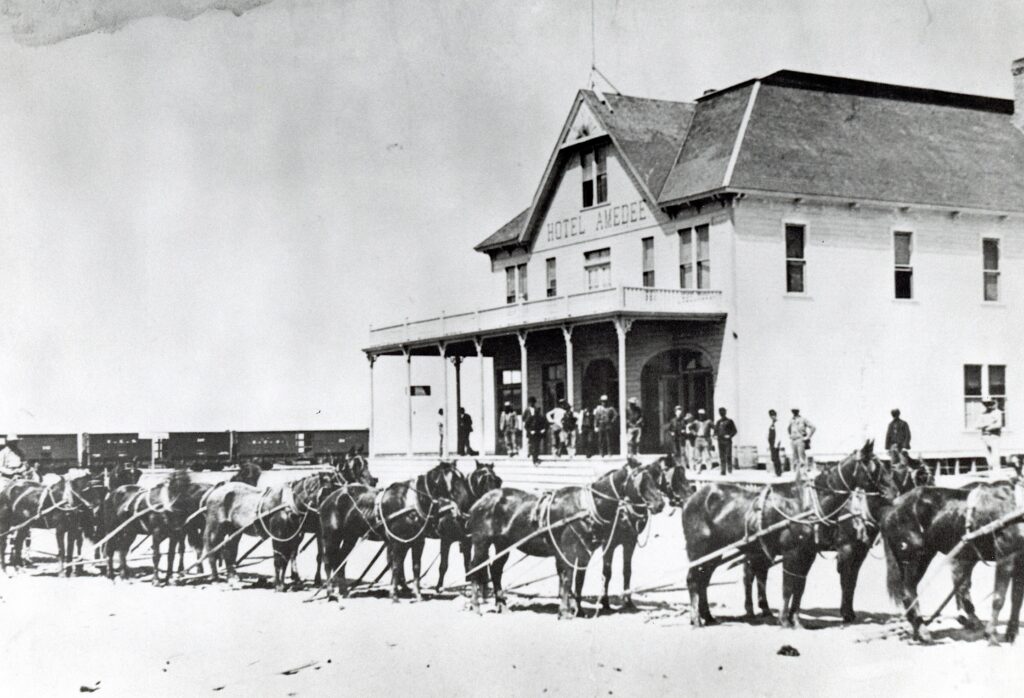
Amedee, 1890s—Grant & Lena Trumbull

In June 1891, E.W. Hayden, editor and publisher of Susanville’s Lassen Advocate made a trip to Amedee, the Nevada-California-Oregon  Railway’s (NCO) new terminus. In his mind, he was prepared to see another wide spot in the road like its predecessor, Liegan, located some ten miles to the south. Liegan was the terminus of the NCO from September 1888 to November1890. It was a remote, desolate location. There is scant documentation about this station. Hayden, before writing about the bustling activity at Amedee, provided this rare glimpse about Liegan.

“Then one is surprised, for most of us expected to see Liegan repeated, that is, a small freight house, a bale of hay, a sack of grain, a post, perhaps several posts to hitch horses to, three of four barrels of water hauled out from Doyle for drinking and domestic uses and a place in which to take meals, and which in the matter construction and value was not up to the average Honey Lake henhouse.

”This about what was comprised in Liegan, the first. Later it was much improved, but Amedee at first sight would cause ‘Old Josh Whitcomb’ to say ‘Well I be goll durned.’”

Then there a published story in which four men from Surprise Valley took the stage to Liegan bound for Reno. After nearly a week being stranded there , the men started out on foot to follow the railroad tracks to Reno. As the story goes “A week at Liegan is enough to drive almost anyone wild.”

Subscribe


It is a New Year

Coyote Corral, June 15, 2019

Here it is the first day, of the first month of 2025. That is my profound statement. No revelations or grandiose goals. Actually, I wrote this brief post back in October, and a lack of inspiration.

However, today’s illustration I thought would refreshing since it is going be awhile when nature is green again in all its splendor. This corral is located north of McCoy Flat Reservoir and is a somewhat relic of past. They were once  a scene of bustling activity in the fall, when livestock would be rounded up to relocated to lower elevation for the winter.

The regular programming will resume tomorrow.

Tim

Tuesday Tidbit-Just Because

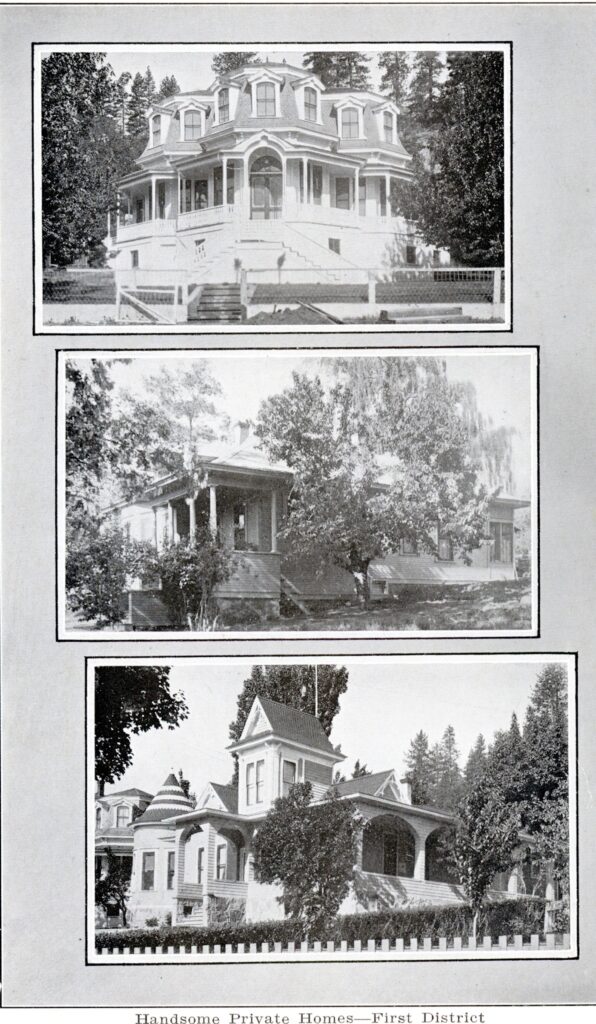
Susanville homes, 1908

The Southern Pacific Railway in the early 1900s initiated promotion brochures, especially in the areas where it was expanding operations.  These glossy booklets were subsided by city and/or county governments. This became the foundation of Sunset Magazine.

The above illustration appeared in 1908 edition of Lassen County that was published by Sunset. The three houses depicted still are in existence, though they have been  remodeled through years. The new owner of the house depicted at the bottom  relies on the internet search, like Zillow to find the history of the house. They inquired if the information was correct. Consider the source. This year I experienced way too many internet sleuths, who wanted me to their verify findings, especially the ones who paid search fee  and then expect me to do such work for free.  I am not going down those rabbit holes. A final note as to my rant of the North Pine Street house. The house appeared in a 1878 photograph at an auction site, but it was too pricey for my budget.

Have a safe and sane Happy New Years Eve-Tim

A 1924 Recap of Events

Susanville Main Street, 1924.

Something a bit different but some highlights of happenings a 100 years ago during 1924.

January– After two years since the Susanville City Hall was destroyed by fire, the City of Susanville has a new quasi city/fire hall. The centennial in 2024 went ignored!

February – Great excitement was on the horizon with interested homesteaders flocking to area with the completion of Leon Bly’s Eagle Lake tunnel to supply water for irrigation to the Honey Lake Valley for reclamation.

March – Residents rejoiced when on Tuesday evening March 26, it began to snow. Up to 18 inches was recorded on Fredonyer Summit, but by Wednesday afternoon it had all melted. It had been a dry winter. It would followed by a dry summer. The next recorded precipitation would not occur until September 15.

April – News was received that the petiton for an Elks Lodge in Susanville was approved.

Courtesy of Alyce Bangham

May – The golfing craze continues. The Susanville Country Club organized and later in the year they negotiated the purchase of the former Wingfield Ranch south of Susanville.

June – A forest fire broke out at Chester Flat, the first fire of the season. It was a harbinger of things to come as it would be the worst fire season to date in California history.

July – Work commenced on the first children’s playground and park in Susanville on the north side of Fruit Growers’ Story Club and adjacent to Riverside Drive.

August – It was announced that the Nataqua Parlor of Native Daughters will sponsor an Old Timers Day in conjunction with the Lassen County Fair. It was deemed those to be eligible to have settled here by 1866 and a luncheon held in their honor.

Hat Creek No. 1
Hat Creek Powerhouse No. 1, 1921. Courtesy of Lola L. Tanner

September – Work commenced on Red River Lumber Company’s Hat Creek power line.

October – Janesville has a bear problem. A. Degiovanni and Boyd Davis had trapped three cinnamon bears, the largest weighing 300 pounds. The bears had been feasting on the local apple orchards.

November – Lassen Electric Company made arrangements with Fruit Growers and Lassen Lumber & Box to provide it with back up power when needed.

December – For the first time ever the employees of the Susanville Post Office were given Christmas Day off.

Tim


2024 Most Searched Post

Mapes Ranch, circa 1900–Madelyn Mapes Dahlstrom

This was a quite surprise, the feature of Interesting Saga of the Mapes Ranch that was published in 2022 was the most searched of all articles for 2024.

Its been nearly a half a century since the Mapes family sold their well known ranch located east of Litchfield to the Five Dot Land & Cattle Company. Like the Dodge Ranch on the Madeline Plains, the Mapes Ranch still retains its name, even though no longer owed by the family.

Mapes Ranch
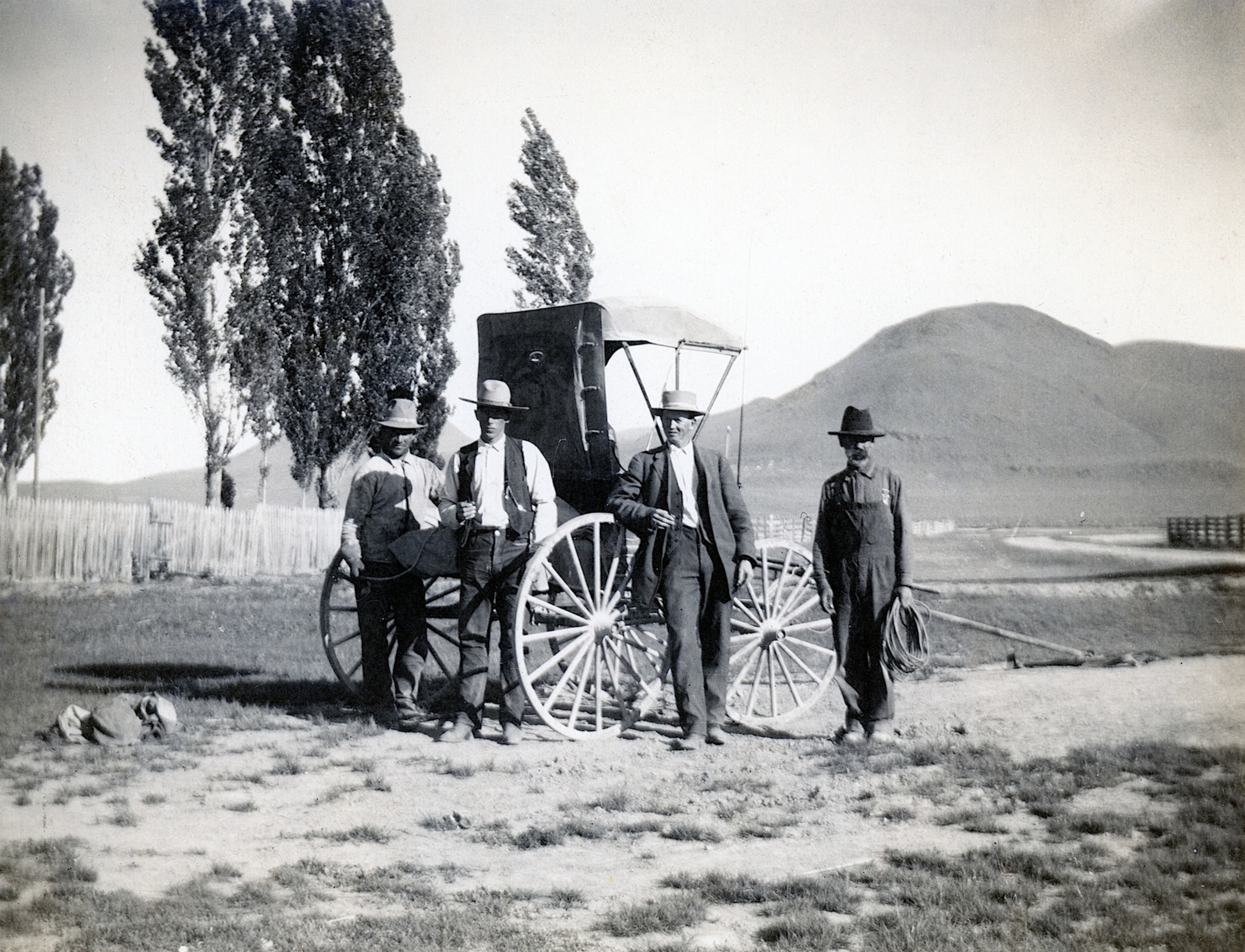
Mapes Ranch, with Shaffer Mountain in the background, 1906. Left to Right: James Riley, John Conlan, James Mapes and Charlie the blacksmith. Courtesy of Madelyn Mapes Dahlstrom

The ranch’s early history is interesting, once owned by the Shaffer Brothers in the 1860s—hence the origin of the name Shaffer Mountain. For a time it was owned by John D. Kelley and Hiram Winchell.  Dissolving their partnership was a bitter dispute that required litigation in the Lassen County Superior Court. On June 30, 1885 the ranch was sold at public auction. It was purchased by Sierra Valley rancher, George W.  Mapes for$11,000. The sale included all the livestock and farming equipment.

George hired his brother, Ira C. Mapes to manage the ranch. George was involved in a variety. of affairs including the Washoe County Bank. When the 1893 financial crisis hit, to protect his interest he transferred the Honey Lake property to Ira. It would take years for the economy to recover and in the meantime Ira passed away. Ira’s family refused to deed back the ranch to George. End of story.

Tim

Those Monickers Explained

Col. Ben H. Leavitt-Betty Bary Deal

It was some what prevalent in the late 1800s, that titles were bestowed to individuals–after all San Francisco had Emperor Norton.

Take case that Susanville’s namesake, Susan Roop Arnold (1841-1921). She came there in 1862, and in 1864 she married Alex Arnold. While she kept a low profile,  it was her benevolence to others of the community that she was affectionally known as “Aunt Susie.” At Janesville, there was “Uncle Johnny” Baxter (1812-1880), whom Baxter Creek is named for and shared same traits of Susan Arnold.

The title Colonel is a perplexing one. In 1864, Benjamin Leavitt (1835-1915) who settled in the Honey Lake Valley. Through years someone applied Colonel to  his name and it stuck. Captain William Weatherlow, (1814-1864 ) a self-proclaimed Indian fighter, was not affiliated any military institution. The same with Captain C.A. Merrill (1838-1901) who spent his life attempting to tap Eagle Lake  as a supply of irrigation a reclamation project he had dreamed. Oddly enough yours truly has been called Captain and even Doctor, though the latter appellation is an amusing tale.

Tim

Old Fashioned Rabbit Drives

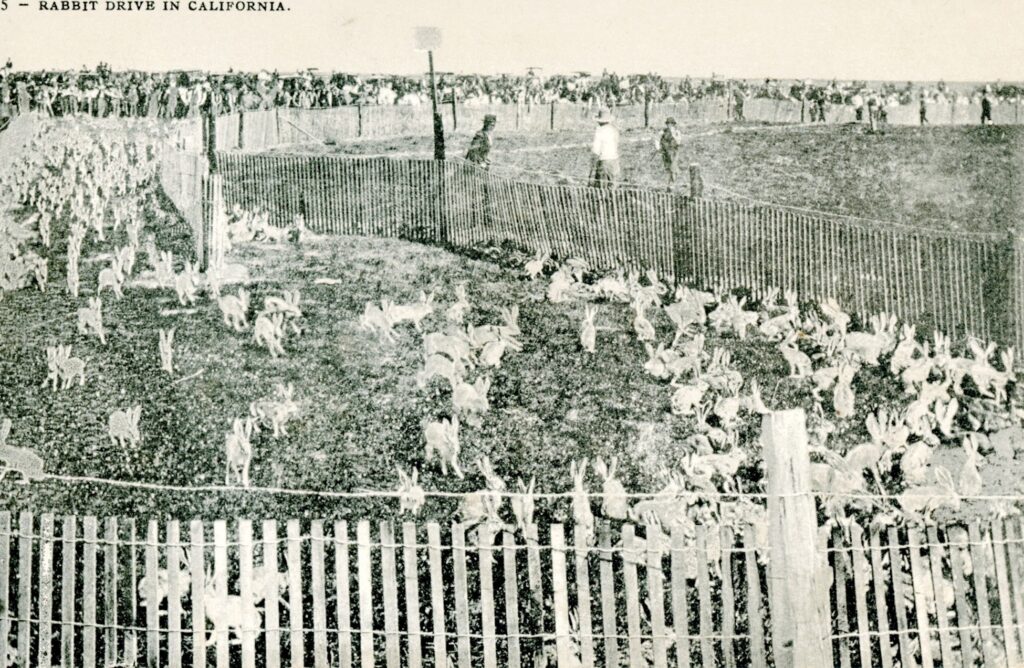
! 1908 California Rabbit Drive postcard-David B. Martin

While I have addressed this topic before, a reader sent the above 1908 postcard. He was wondering if this ws how the Russian immigrants of the Madeline Plains conducted their rabbit drives.  There were several methods, many with common theme or driving the rabbits into a fence enclosure. The rabbits were either clubbed or shot to death.

In 1920, the residents of the Madeline Plains requested aid from their Congressman John E. Raker, to help them with the jack rabbit problem. A study sent to Raker reported: “As soon as the crops are up and making good progress the rabbits begin work on them. The heaviest damage is done in August. One rancher reported losing 100 acres of wheat last summer. They take this crop in preference to oats and rye. It was reported that 70 tons of rabbit meat [to make tamales] had been shipped to the San Francisco market. It appears that the animals cannot be killed fast enough in this region to furnish relief to the ranches.”

A coyote scalp receipt

One of the reasons for the proliferation of jack rabbits was that in 1891 California passed a bounty on coyotes at five dollars each. Thus, one of the rabbits predators was eliminated.

On March 10, 1932 a rabbit drive was held at Milford and an observer wrote: “Blooey! and another jack rabbit bit the dust! In fact 1200 rabbits pulled this little trick as some 30 marksmen armed with shotguns blazed away continuously all day in a big rabbit drive. The drive was one of the most successful ever held in the valley. The drive started at the Harwood ranch and covered about a two-mile area. With the termination of the drive, a lunch was served to the hunters by various ladies of the community.

“Smoking gun barrels and black and blue arms were quite apparent throughout the day. Those participating were thoroughly pleased with the results and voted the occasion as most enjoyable form of hunter’s sport.”

Support


Susanville – Smith Hotel

Smith Hotel, circa 1880. Courtesy of Verna M. Wood

The Smith Hotel, I have found intriguing in the sense of the lack of records. Yet, it was one of the more substantial buildings in Susanville during its day.

The founder, Jacob Smith, a German immigrant whose true spelling of his last name was Schmitt, arrived in Susanville, in the fall of 1864.  Records about his early activities conflict.  According to Fairfield’s history, Smith operated a brewery from 1865 to 1872.  Yet in December 1868 the Lassen Advocate reported that Smith and Doctor R.F. Moody were partners in a drug store. Moody filled the prescriptions and Smith sold them. The Advocate in April 1869 reported that Smith sold his drug store to Dr. Z.N. Spalding and had returned to brewing beer.

In the summer of 1877, Smith hired Henry Tunison to construct his “fire-proof” three-story hotel on the south side of the 800 block of Susanville’s Main Street.  However, only the first floor was made of stone. It was never revealed how much structure cost, but in October 1877 Tunison filed Mechanics Lien for $628.25 against Smith for the construction work.

So much of fire-proof,  as it was destroyed in the big fire of 1882. Some records state that Smith, along with his wife, Sophia, remained in the hotel business and others he continued as a brewer. Dick Harrison, a great-grandson was under the impression that Sophia operated a boarding house, but not a full-fledged hotel.

Tim


Exploring Lassen County's Past