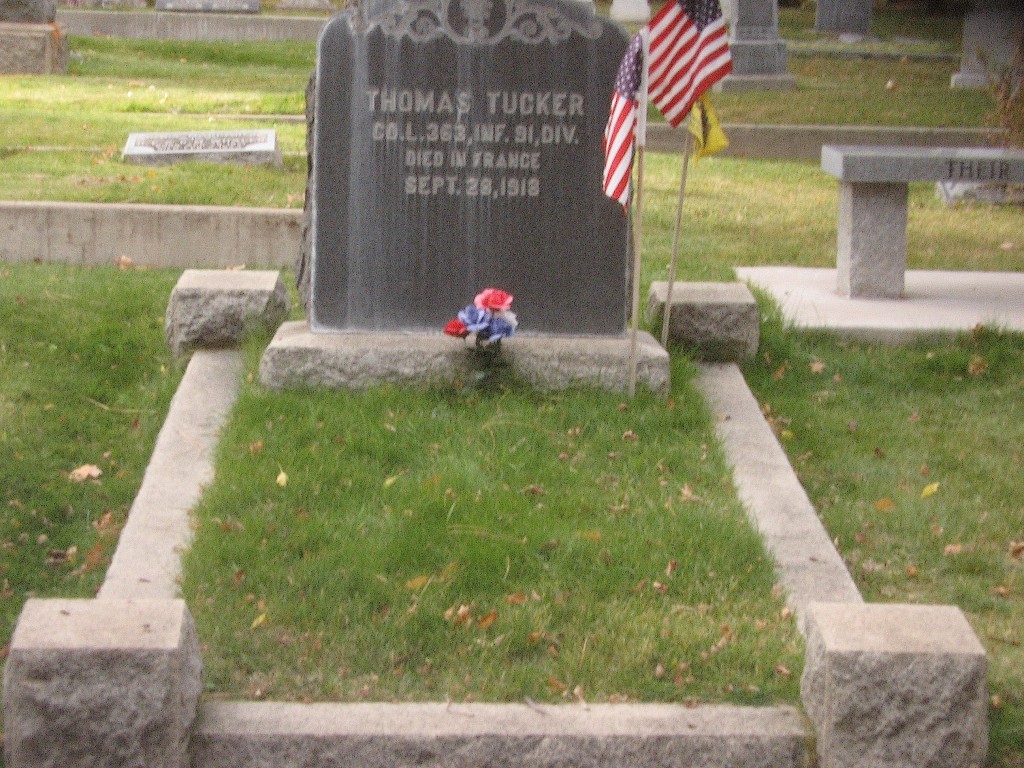
Thomas Tucker’s headstone prior to cleaning, November 2014.
Thomas Tucker, a Maidu born at Big Meadows (now Lake Almanor) in 1895 and moved to Susanville at an early age, where he was raised by his aunt and uncle Cap and Emma DeHaven. He first attended the Greenville Indian School, where he excelled in his studies. He was noted for his gifted vocals in singing, as well as his athletic abilities. When the U.S. entered World War I, he enlisted. On the fateful day September 28, 1918 he was killed in action in France, becoming the first casualty from Susanville in the War. His comrades held him in high esteem and when the local American Legion Chapter was formed in 1920, it was named in his honor, Thomas Tucker Post No. 204. In 1940, a tree was planted in his memory at the Lassen County Courthouse, and a small marker placed with his name. Continue reading Thomas Tucker→
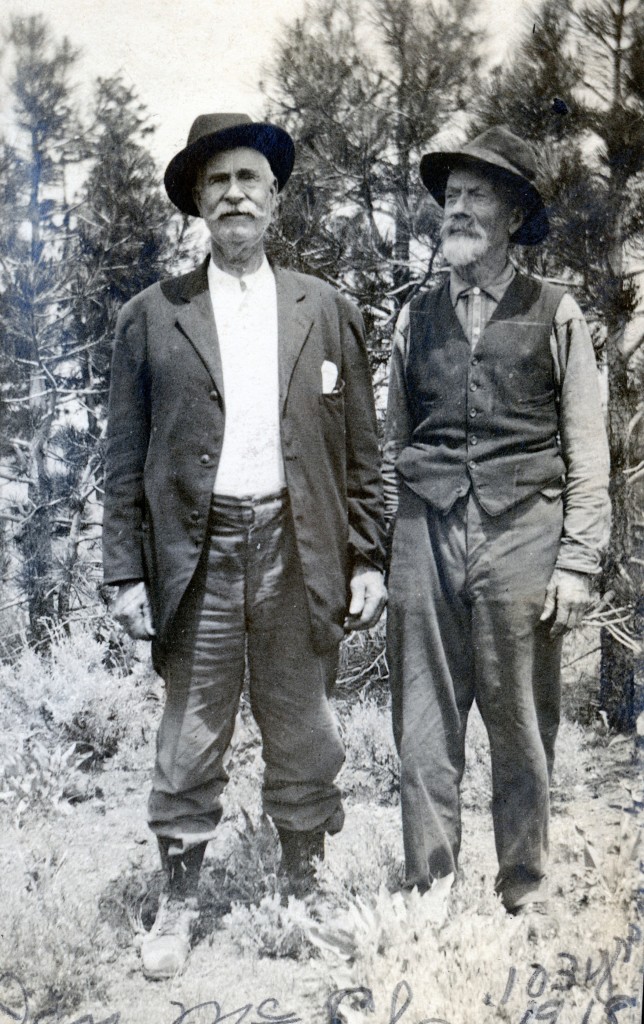
Dan McClane (left) and J.S. Underwood, Juniper Mine superintendent, 1918 at Hayden Hill, 1918. B. Dorsey Collection
In the late spring of 1916, two men, Clarence Williams and Dan McClane set off on horseback on a prospecting trip. It does not appear on the face that remarkable, until you examine the ages of two men–Williams, 36 and McClane 101. That is correct a hundred year old man prospecting on horseback. The duo left the Williams Ranch in Willow Creek Valley, now owned by Five Dot and first ventured to look at the abandoned mines of adjacent Round Valley. From there they went all the way to the top of Green’s Peak looking for the fabled “Grabel’s hole.” The Grabel was a rich lode, that falls into the category of the lost mine tales. They then ventured down to Rongstock Canyon, back up and over to Papoose Meadows and numerous crooks and crannies along the way. Then back over Gallatin Peak and back to Willow Creek Valley. In all, Williams estimated they traveled nearly forty miles that day. McClane it should be noted came to Lassen County in 1872, where he mined there for over forty years.
McClane’s advice for longevity, “Don’t worry about anything, don’t think about getting old, eat plenty of food, but not too much, take regular sleep four times a week and work like the devil at all times.” McClane died at the age of 105 in 1920.
It was not Orville Stoy’s original intention to establish Hallelujah Junction. Stoy was involved in building a dance hall at Standish and before it was finished burned to the ground. Discouraged he moved to Long Valley and took up an 80-acre homestead. Since there was no gas station between Doyle and the Nevada State line, he established one there. With the repeal of prohibition in 1933, provided Stoy an incentive to expand his outpost. By 1940, a bar, restaurant and motel had been constructed. There was even the “Hallelujah International Airport” that consisted of a couple of airplane hangers and a runway that was an abandoned stretch of Highway 70. In 1973, the State of California purchased Hallelujah Junction. It was obliterated for the construction of the four-lane freeway from there to the Nevada State line.
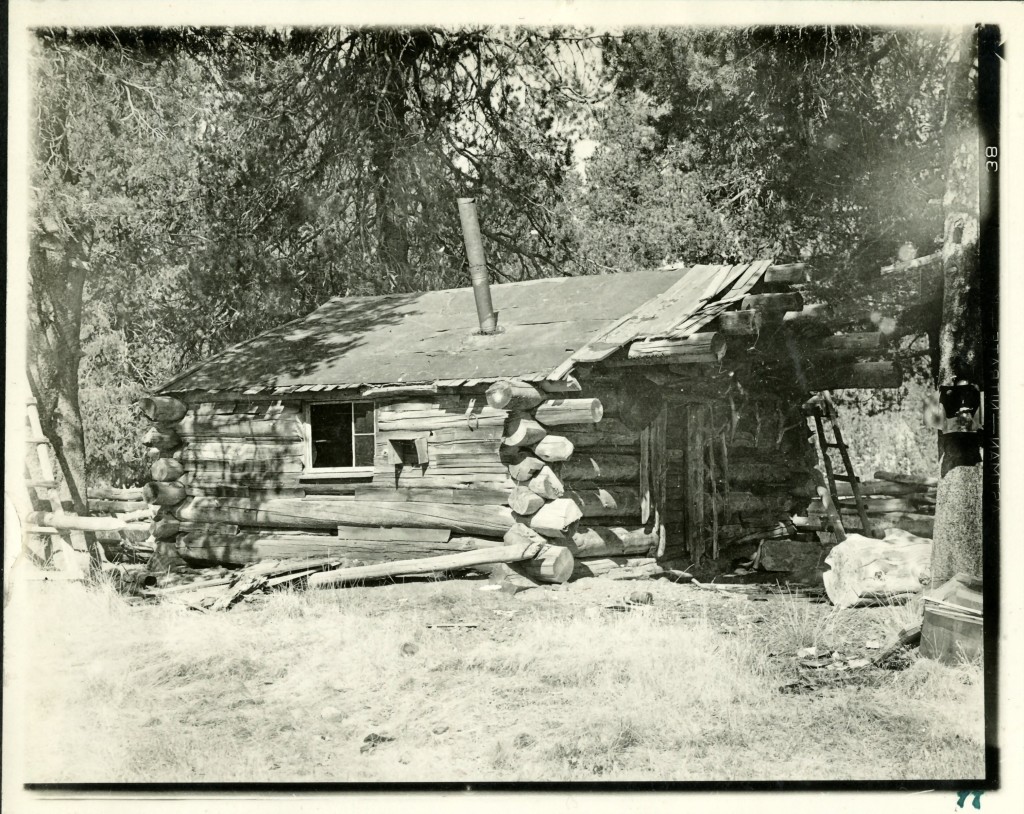
Logan’s cabin as it appeared in 1930. Courtesy of National Park Service
On the evening of November 11, 1885, Griffin Logan, foreman for J.S. Cone’s sheep operations, was murdered at his camp in the vicinity of Badger Flat, located in the northern section of Lassen Volcanic National Park, by Vincente Olivas, aka Mexican Ben. Olivas worked as a sheepherder for Cone, went crazy, and shot Logan for no apparent reason. He then threatened to kill four more men there, but his pistol repeatedly misfired, thus their lives were spared. The fate of Olivas took a strange turn of events. He turned himself in to the authorities. A trial was held in Susanville, where he was found guilty of Logan’s murder. His attorney filed a motion for a new trial and his sentencing was postponed until January 26, 1886. Housed at the Lassen County Jail with Olivas was inmate Holden Dick. Dick had been arrested and convicted for the gruesome murder of Samuel Shaw on the Madeline Plains. Dick was sentenced to death, but no date was set, as his case was being appealed to the State Supreme Court. Sometime in the middle of the night of January 23,1886, a vigilante mob broke into the jail and removed Dick and Olivas to a nearby woodshed and lynched them.
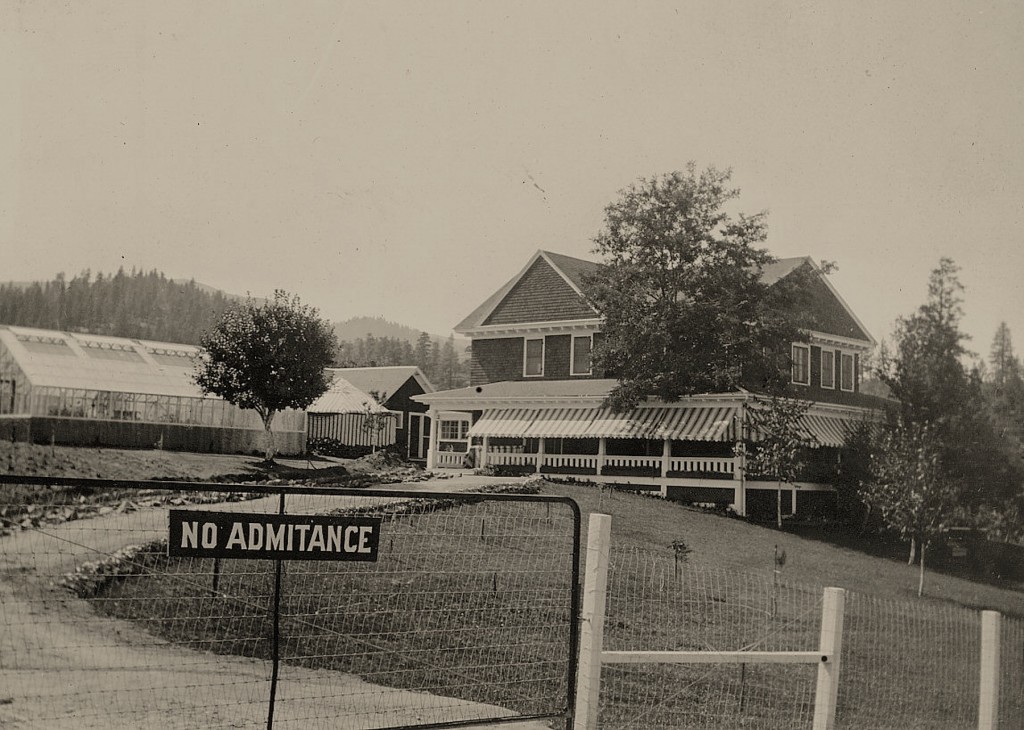
Susanville Country Club, 1931. Courtesy of Fred and Alyce Bangham
In the spring of 1924 witnessed the development of Susanville’s first golf course. It was an outstanding success that gave birth to the Susanville Country Club. For the new organization the timing was exquisite. It just happened that in the summer of 1924, the Lassen Lumber & Box Company purchased George Wingfield’s summer home some eight miles south of Susanville along the base of Diamond Mountain. Equally important one of the lumber company’s executives, A.G. Breitwieser was a big proponent of golf.
In the fall of 1924, not only had the local “duffers” outgrown the first golf course, that a golden opportunity came there way. The Lassen Lumber & Box offered the Wingfield property to the Susanville Country Club at a bargain price of $20,000. It was reported that Wingfield had spent $335,000 to develop the property.
To finance the purchase the club offered an exclusive 100 resident membership and 50 non-resident. The cost $250. that, however, included a lot to build a personal cottage. In addition, there was a a five dollar monthly dues. This was not a deterrent and within a few short weeks, the club had a full charter membership.
In the fall of 1931, L.R. Cady and Frank Coffin purchased the property, thus ending a chapter in the Susanville Country Club.
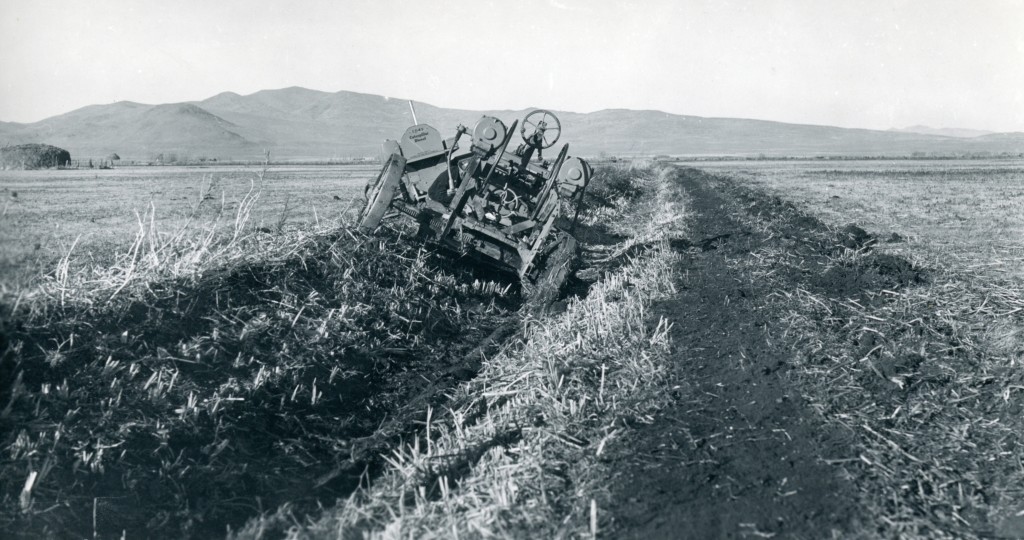
A slight problem cleaning the irrigation ditch on Tanner Ranch, 1936.
Progress is being made on the Pioneer Brand book. I thought a sample entry beginning with my own family and that of the brand of Lola L. Tanner that appears on the wall of that local institution. My grandmother Tanner would have had a royal fit, if she knew about it, she being a tee-toler.
Lola, was the eldest child and only daughter of Ed and Mary Murrer. Born 11 September 1899 at the family ranch in Willow Creek Valley, she had her first dream dashed in a hurry. In 1924, a debonair ranch hand Jim Scott, came a courting Lola. It was a whirlwind romance and they were married the following year. Only after a few months of matrimony, Scott forged his father-in-law’s name on a bank note for $500 and skipped town. He did not get far, and was arrested in Reno, Nevada. The marriage was annulled, and Scott repaid the money. However, this was his modus operandi for decades to come.
In 1927, Lola married Honey Lake Valley native, John Tanner. Like, Lola, his initial dreams were dashed early when his father, William, died in 1890, when John was only seven years old. His mother Jane, remarried to Charles Adams, an abusive type, so John along with brothers, William and Charley sought refuge with the Ravenscroft family and later at the Gibson Ranch. It should be noted that John’s father, William, had settled at Soldier Bridge in 1870 and registered his brand as the 20. That brand would be modified to the 30.
John and Lola made their first home near Standish, that John and his brother, William had established in 1915. In 1928, an opportunity arose where the Capezolli’s desired to trade their ranch with Tanners, and a deal was struck. Over the years, the Tanner’s expanded and bought the adjoining Hartson, Stamplfi and Whitehead ranches. While John and Lola have passed away many years ago, their three daughters: Joyce Cunha, Mary Rea and Ardene Purdy still own the ranch.
Diamond Mountain, circa 1940. Courtesy of Margaret A. Purdy
In the works in progress of future topics is that of the mining activities of Diamond Mountain. After all it was in 1855 with the discovery of gold at Hills Creek, along the base of the mountain, that was responsible for the initial influx of the Anglo settlers. During those early years one of the main routes to and from the Honey Lake Valley was via Gold Run. To refresh one’s memory you may want to go back and review the Gold Run Road Company. The route also received extensive use in the 1920s to the Engel’s Copper Mine on the other side of mountain near Taylorsville. That, too, will be featured in the future. In addition, the Wild Horse Mines of the Smoke Creek Desert will be featured as it is intertwined with the mining at Diamond Mountain. Finally, this topic was discussed on the Inspiration Point Tour. Stay tuned!
Never miss a story, click to support and subscribe here.
Today, I decided to take the day off, the first one this year. With Memorial Day Weekend approaching I have lots to do between now and then. More to follow in a future post. In the meantime, you can always use the search feature in the far right corner and explore 500 plus previous posts.
For those who missed the tour, some have expressed an interest in a second one. With that in mind, a second tour will be conducted this summer on a Saturday morning. Tentatively, I am looking at July 9 or July 30.
You can read about the preview and topics discussed here.
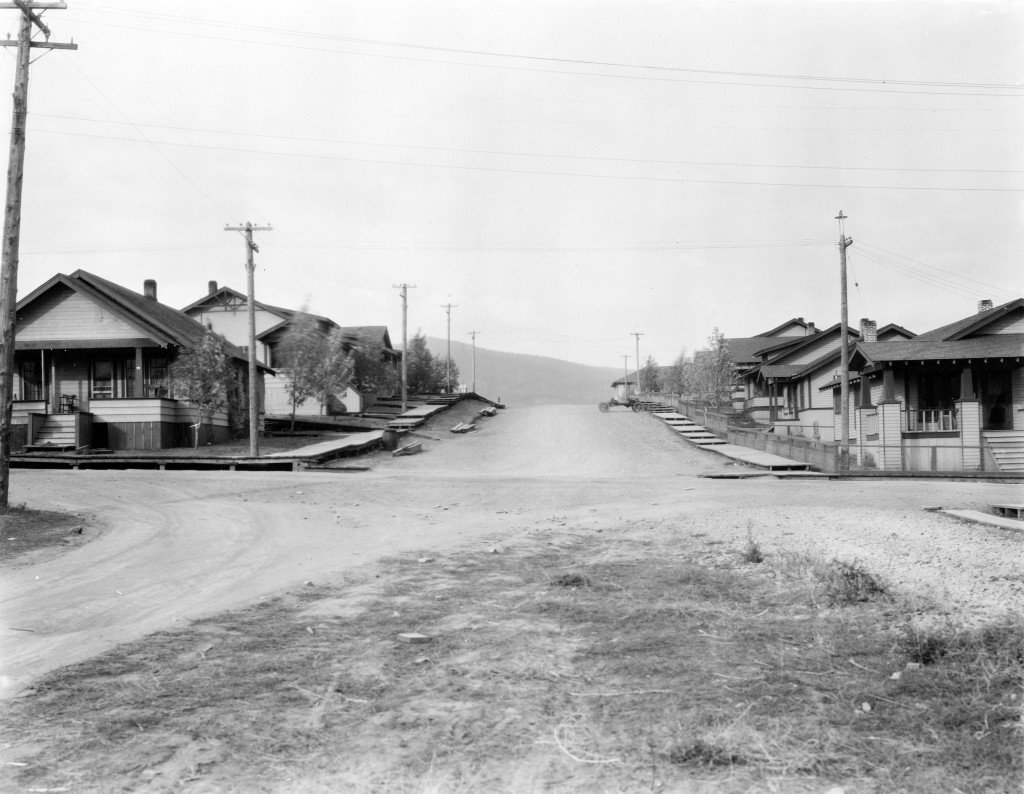
When Lassen Townsite’s unveiled its massive subdivision to the south of Susanville, there was a task of naming all the streets. The streets on the northside of the railroad tracks were named after investors such as Knoch, Pardee and Minckler. The streets to the south of the railroad tracks were named after California counties. When the Lassen Lumber & Box Company established its plant in 1918, they constructed their employee housing on the south side of the railroad tracks, it being adjacent to their mill.