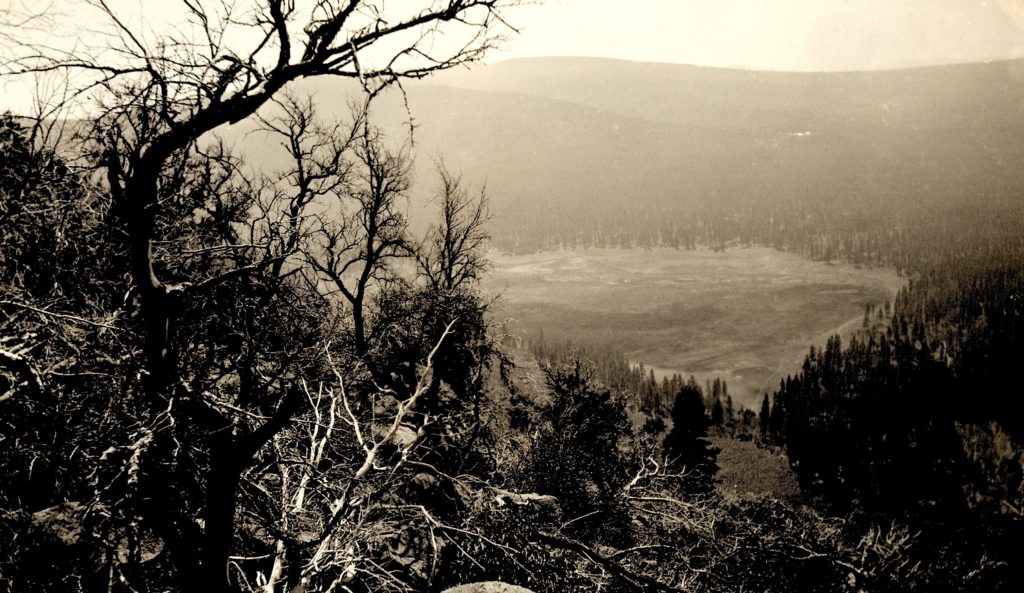
A 1923 view of Papoose Meadows. Courtesy of Lola Murrer Tanner
On September 21, 2016, I ventured to Papoose Meadows near Eagle Lake. It had been a long time since I had been there. This excursion was a bit different than most, and resulted in the proverbial “Pandora Box” of so many issues. So not only in the near future, there were will be a few posts about the history of Papoose Meadows, but an interesting perspective about Leon Bly, whose Eagle Lake’s irrigation project had a major impact on the region. Stay tuned, as there is some interesting new material to be revealed.
Well, we certainly covered a wide variety of topics in 2016. This year we will continue to do the same. Recently, I unearthed new material relating to Leon Bly and his failed Eagle Lake project. I also look forward to visiting some obscure historical sites to photograph and share them with everyone. So sit back, and relax in knowing there is plenty in store for 2017. Don’t forget you can always go back and examine prior posts, which there are some 700+.
I also hope, that some of the readers will step up to the plate to subscribe. While there is a following of some 9,000 readers a month, less than 100 actually subscribe and/or donate. So, I hope a few will surprise me with a contribution, after there are various costs to maintain the site, such as host/server and domain fees.
When Westwood was established, its Catholic community was a part of the Sacred Heart Parish—it had only been created in 1912 and covered the territory of Lassen and Modoc counties. The first pastor was Father P.J. O’Reilly. There seems to be some confusion as to when the first Mass was celebrated in Westwood. On December 12, 1913, it was reported in the Lassen Weekly Mail: “Father P.J. O’Reilly made the trip to Westwood to attend to spiritual wants of the Catholic Church in the new lumber town.” However, under the heading of Remarks in the Parish Death Register, Father O’Reilly wrote, “Mass was celebrated in Westwood for the first time by Rev. P.J. O’Reilly on 19 April 1914 in the school house situated near the present fire department. Mass is now said in the school situated on the hill facing Delwood Street.” Father also wrote, “The first Catholic funeral that was held in Westwood was on July 24, 1914. The internment was made in the new cemetery, portion of which viz the North East section is devoted to the use of the Catholics who die in and around Westwood for Catholics only. This cemetery is 3 1/2 miles from Westwood.” That internment was for Jose Alvarez, a 22 year-old millworker who died from typhoid fever. Continue reading Our Lady of the Snows→
An 1886 view and the developing triangle. Courtesy of Bud Lesser
Not quite like the Bermuda Triangle, but it is an interesting piece of real estate, that really belongs to no one. Actually, the owner is the federal government, due to Roop’s carelessness. The Lassen County Assessor does not even recognize its existence.
The property in question, is located at the west end of Susanville’s Main Street, which people are familiar is the triangle piece of property in front of the Elk’s Lodge, with the diverging Pine Streets going in different directions, creating kind of like a “fork in the road.” Located there is the community Christmas Tree, and in previous years numerous Christmas displays were placed there.
By the 1890s the local newspapers wrote editorials criticizing that it was an ugly patch of unkept property at the head of Main Street. Relief came in 1902, when the Mountain Echo Band constructed a bandstand there. Four years later, the bandstand had been neglected and received community scorn for it being an eyesore.
The evolution of this plot will continue in future posts. This post is dedicated to Carole Dustin, Senior Assessment GIS Cadastral Drafter of the Lassen County Assessor’s Office who is retiring after 43 years. Carole, of her many duties was the draftsman for assessor parcel maps all these years, but never had to deal with this parcel!
The historic photographs are always popular and a bargain at $13.00
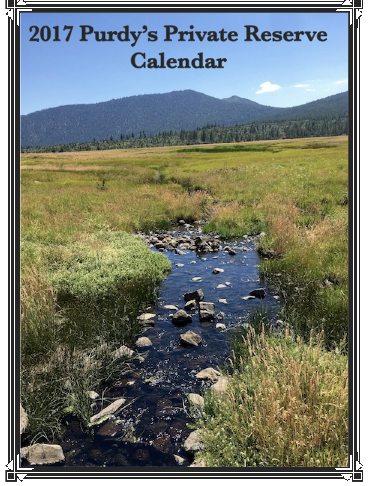
We are just days away from the new year. Do you have the popular reincarnation of the Lassen High School’s Graphic Arts calendar containing vintage photographs of the region? You can still purchase them locally at Margie’s Book Nook. Out of the area, you can order them online here.
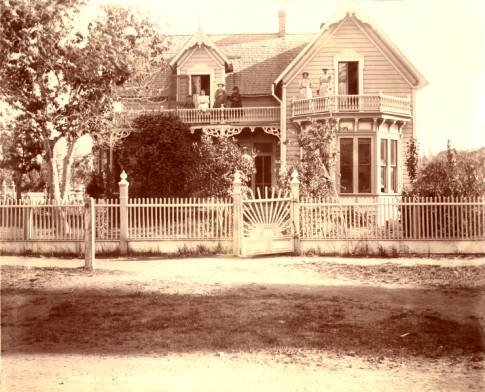
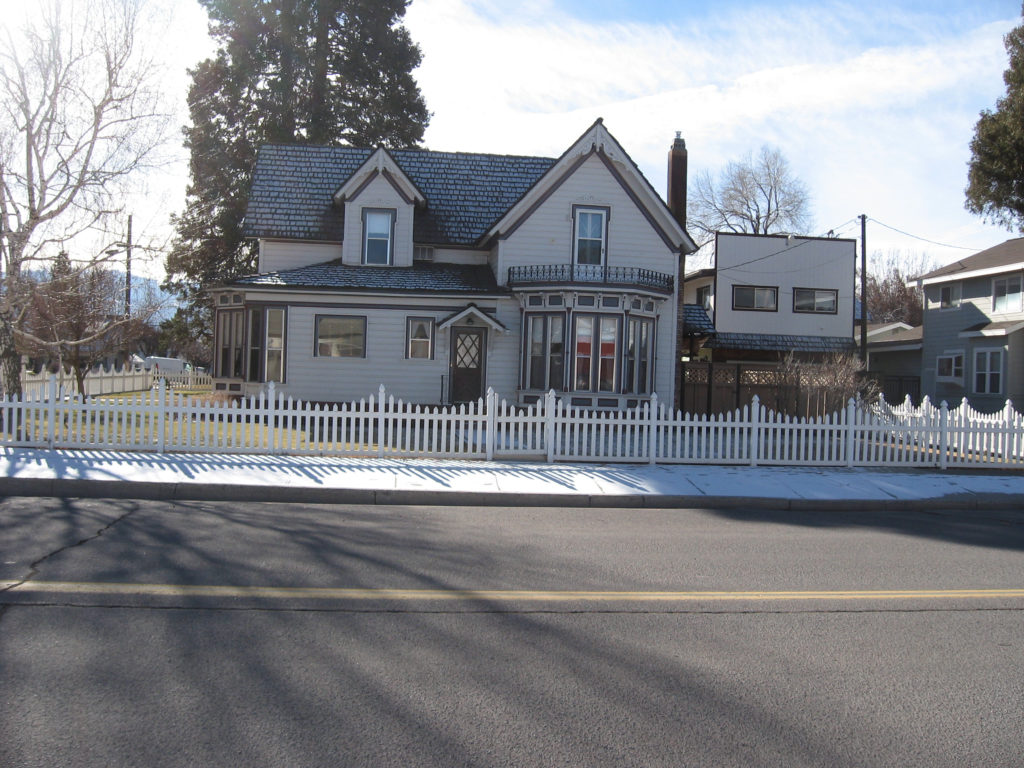
Built in 1877, by Henry Tunison, this home is located at 734 Cottage Street, Susanville. After his death in 1882, it was purchased by William Greehn, a Susanville merchant. His family resided there until his death in 1906. His estate rented the house for a number of years.
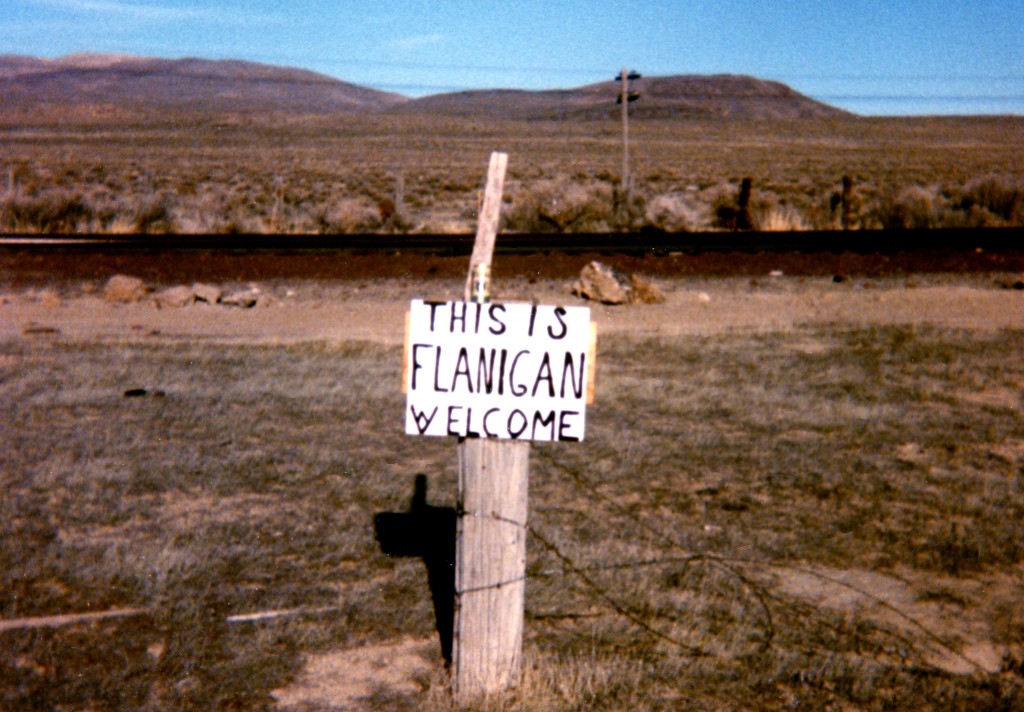
One of the side effects of a new railroad was real estate promotion and/or speculation some might say. When the Fernley & Lassen Railroad was being constructed during 1912-13, it witnessed some new towns along its railroad line in the Honey Lake Valley–Stacy, Litchfield and Leavitt. Of course, exisiting railroad communities such as Flanigan, Amedee and Wendel benefitted from the new railroad. In 1913, a town to be named Review was proposed along the Fernley & Lassen Railroad between Flanigan and Stacy, but it was never developed.
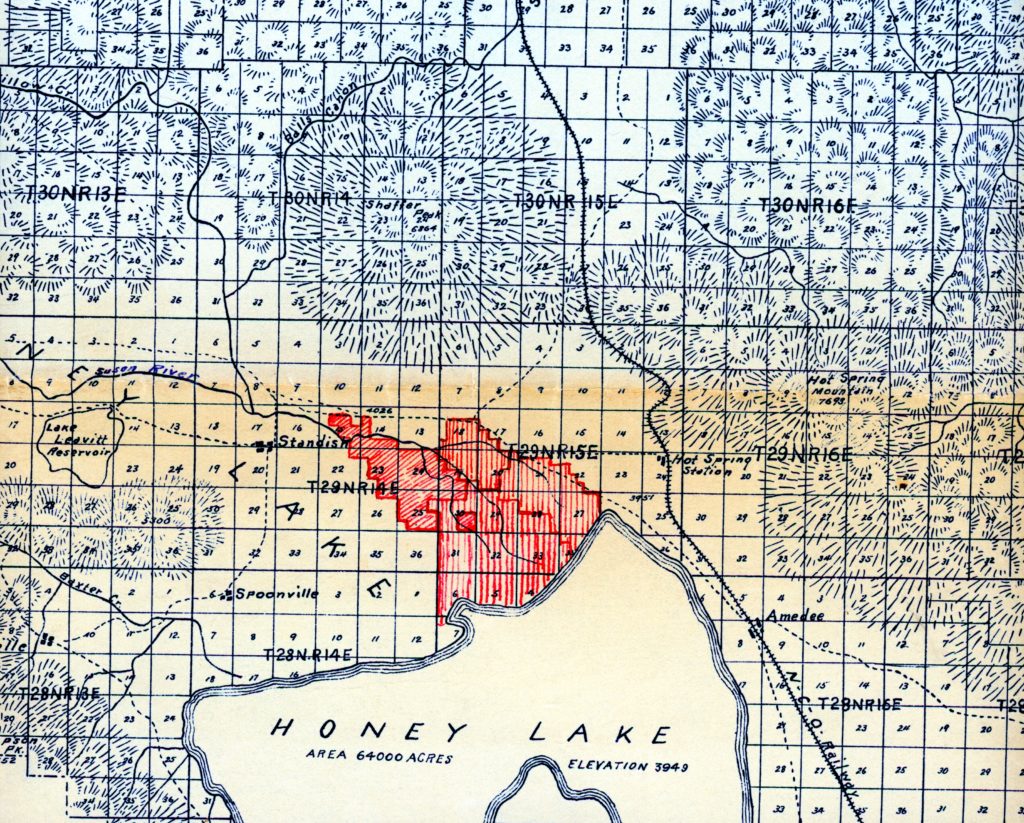
From time to time, I make a reference to the Tule District, which is the lower end of the Susan River of the Honey Lake Valley. Recently, I came across the above map, which is the kind of visual that makes it easier for many .
One of the attributes of the district, is water wars. Two of the biggest were one that involved the Colony Dam just below where Willow Creek enters the Susan River near Standish. The other is the “granddaddy of all,” Fleming vs. Bennett. In the course of time, it involved every water user in the Susan River watershed, and also that of Baxter Creek. The adjudicated decree is the basis for the current allocation of water today.
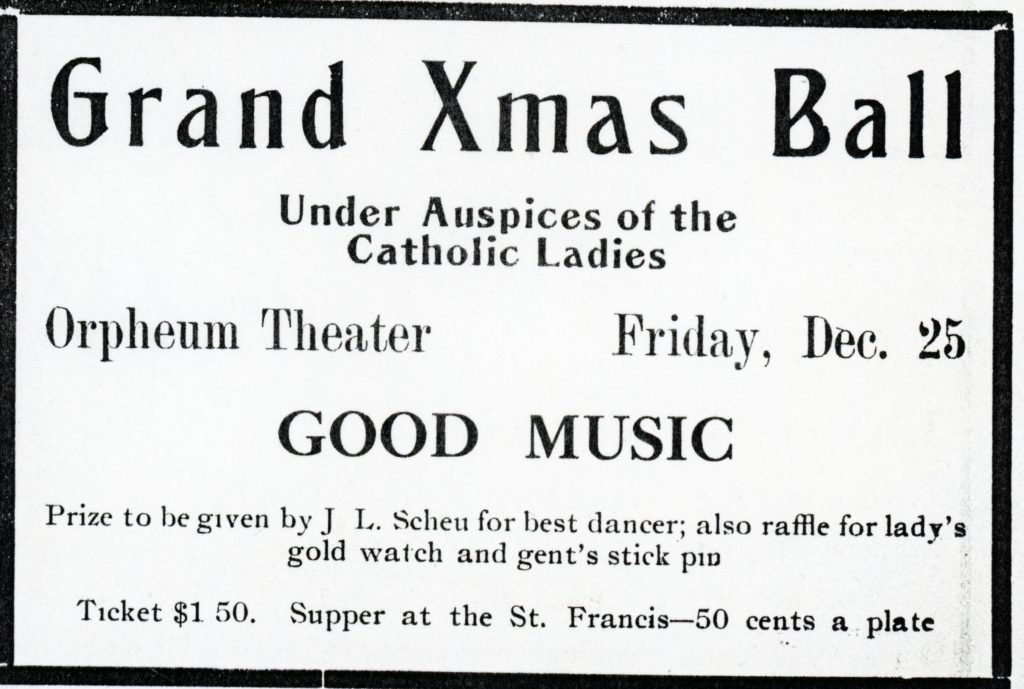
The Ladies of the Sacred Heart were an energetic bunch during the early days of the parish. One of their most popular annual events were Christmas dances. The first one was held in December 1910, and was not only well attended, but was a successful fund raiser–as usual the proceeds were used to make improvements to the church. However the next year, when Deputy Sheriff William L. Blake was killed in the line of duty in November 1911, the proceeds of the Christmas dance went to aid his widow Minnie instead. Continue reading The Christmas Ball→