June Preview

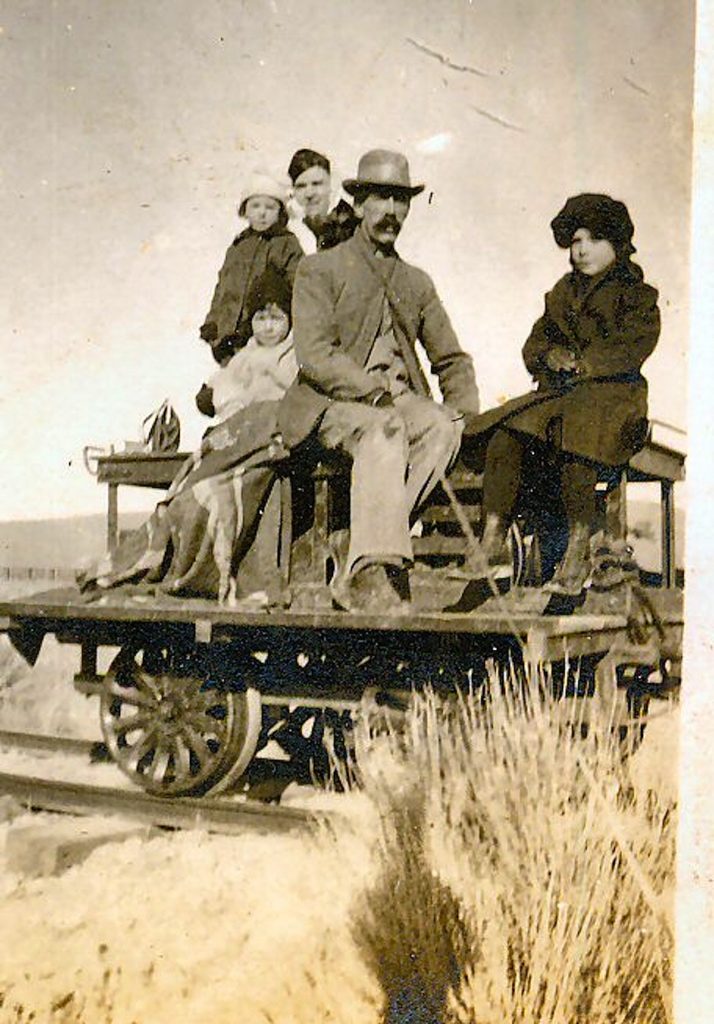
Drakesbad, circa 1930. Courtesy of the Sifford Collection

As usual a most interesting lineup of stories for the month. Tomorrow, we start with the 1976 account of the spotting of Eagle Lake’s own Loch Ness monster and end the month with the interesting transformation of the Zarbock homestead in eastern Honey Lake Valley. In between there is the tale of Lake Earl versus Lake Almanor to Finn Barry’s Colony Ranch. Of course, there is the annual Summer Solstice Tour.

Stay tuned.

Memorial Day

The grave of Daniel Cramer, who was wounded in the battle of Gettysburg.
How Memorial Day is celebrated locally has changed over the years. In the early 1900s, a service was held at the Methodist Church. Then a procession led by school children, followed by members of the Benton Post of the Grand Army of the Republic (Union Civil War veterans). At the cemetery the children would assist in the decorating graves. Actually, it was the G.A.R. that started the movement to decorate graves and for many decades it was known as Decoration Day.

Donate!

It can happen anywhere

Fruit Growers log train, Pine Creek Valley, 1940.

“Dishes rattled, stove pipes were disjointed, cabinets and beds danced to a merry tune Sunday night [March 9, 1930]” from an earthquake according to the reported call  of the caretaker at Camp 7 of the Fruit Growers Supply Company.   Camp 7, it should be duly noted was located at Bridge Creek Springs, located between McCoy Flat Reservoir and Pine Creek Valley.

The whole region is earthquake country, though not as volatile as other places, one never knows where they may occur.

Subscribe!

Uniform Holiday Act

Diamond Crest Cemetery

Say What? In 1968 this Act was approved by Congress which moved certain holidays from when traditionally observed, to a Monday to create three-day weekends. One of the victims was Memorial Day in my opinion. Prior to this everyone observed Memorial Day on May 30, with the ritual of going to the cemeteries placing flowers, etc. Over time, people began to spread out going to the cemeteries over a three week period, if it all. And that is my two-cents worth!

Those Little Things

Amedee Hotel Door Room Number

One just never knows what will rise to the surface. This brass marker was used to indicate the room number at the Amedee Hotel.  The hotel had twenty-seven guest rooms, a bar and billiard room, two dining rooms and two kitchens.  The expansive second floor balcony afforded not only views of the Honey Lake Valley, but that of Lassen Peak.

Donate!

An Eagle Lake Breakfast

The dining room at the Gallatin House, circa 1918. Courtesy of Wyn Wachhorst

In the 1980s, the forest service considered Gallatin House at Eagle Lake surplus property and wanted to demolish it. More about this later. Anyhow, the property is now part of of Camp Ronald McDonald at Eagle Lake. This Saturday and Sunday they will be holding their 25th Annual Memorial Day Pancake Breakfast from 7 a.m. to 11 a.m. It only cost five dollars for all you can eat breakfast. Proceeds benefit Lassen County Kids Camper Scholarship Fund.

Subscribe

Loomis Museum

Loomis Museum

In 1914-15, B.F. Loomis became a widely known  photographer for his stunning photographs of the Lassen Peak volcanic eruptions.  Loomis was fortunate since he operated a hotel at nearby Viola, a short distance from the peak. Loomis would become an ardent supporter of Lassen Volcanic National Park. In 1926, Loomis purchased 40-acres near Reflection Lake, which at that time was not inside the park. In 1927, he built a museum of native stone and reinforced concrete. The museum served two purposes.  One, it allowed him to showcase his famed photographic collection of the Lassen Peak eruptions, previously on display at his hotel at Viola. The second it served as a memorial to his only child Louise Mae, who died in 1920. In 1929, he donated the property to the park, which in turn the park gave him a life estate to the museum property.  So if you find yourself at the north end of the park, stop by and check out the museum.

Donate or Subscribe

The Mad Trapper visits Lassen County

The 1989 publication

When the Mad Trapper arrived in Lassen County he used an alias. It would not be the first or last time, and even when he died it took authorities some time to put together his identity.

On May 21, 1921, Charles Johnson was loitering about the Sierra Packing House slaughterhouse, just north of Susanville.  The next minute he was gone, and so was a saddle horse that belonged to the  packing house.  Sheriff Church enlisted the aid of Henry Baughman, a noted tracker. Three days later, when Johnson was near Hayden Hill, he had caught wind that the authorities were looking for him. He turned the horse loose and sought refuge in a cabin, but Church and Baughman found and arrested him. There would be total of three jury trials to convict him for horse stealing, the first two the jury could not reach a verdict. He was sentenced to seven years in prison, but would only serve a year.

Subscribe or Donate

The Mad Trapper from Rat River

The first of two book by Dick North.

Albert Johnson, better known as the Mad Trapper of Rat River, of Canada’s Northwestern Territorties is a compelling story.  In the bitter winter of 1931-32 Johnson eluded the Royal Canadian Mounted Police for forty-eight days in a running battle that ranged over 150 miles north of the Arctic Circle, in temperatures that averaged forty below zero. He was finally killed in shot out on February 17, 1932 on the Eagle River, Yukon Territory.

So, dear reader, you are probably wondering why I am writing about an incident in Canada. Before Johnson became known as the Mad Trapper, he had a little foray in Lassen County before moving north. That incident we will examine tomorrow.

Subscribe or Donate

What a Reputation

The NCO train near Amedee, January 1916. Courtesy of Marie H. Gould

The poor little Nevada-California-Oregon Railroad had a troubled beginning that would stay with it. The N-C-O for those not familiar was narrow gauge line that ran from Reno, Nevada to Lakeview, Oregon. It was initially known as the Nevada & Oregon and later the Nevada & California, before it finally incorporated all three states in its name in 1888.

These initials, N-C-O became a target for criticism for the railroad’s poor service. The railroad received such dreadful titles as the Narrow-Crooked & Ornery, Northern California Outrage, Never Comes Over and the Nevada-California-Occassional. J.M. Tremain, editor of Susanville’s Lassen Weekly Mail, called the N-C-O a Tri-weekly: “It goes to Reno one week and tries to return the next.”

Subscribe or Donate

Exploring Lassen County's Past