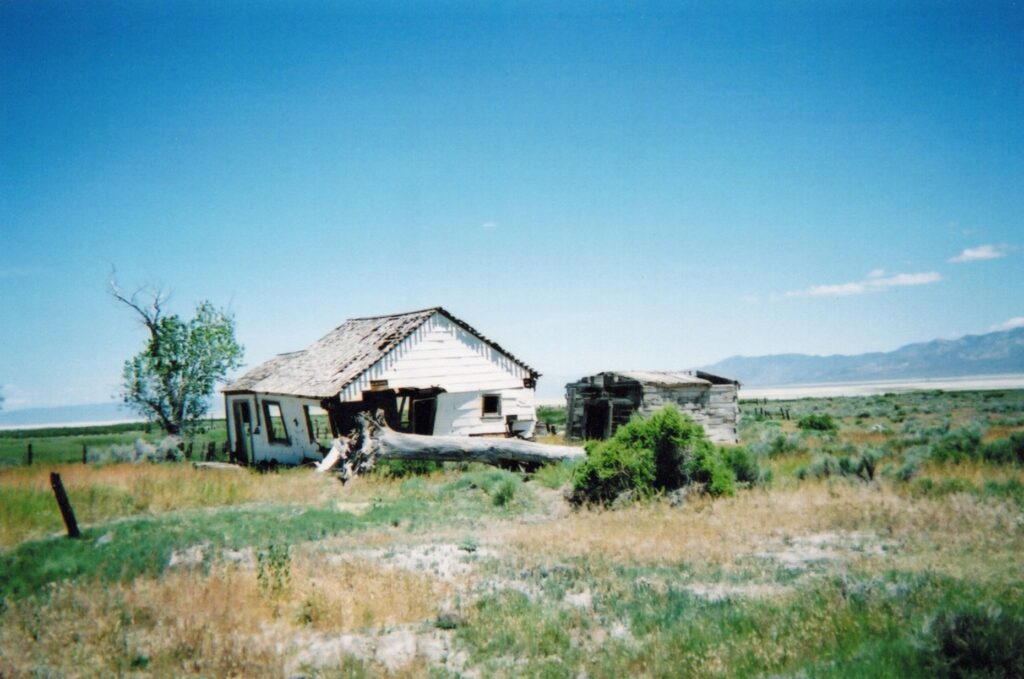
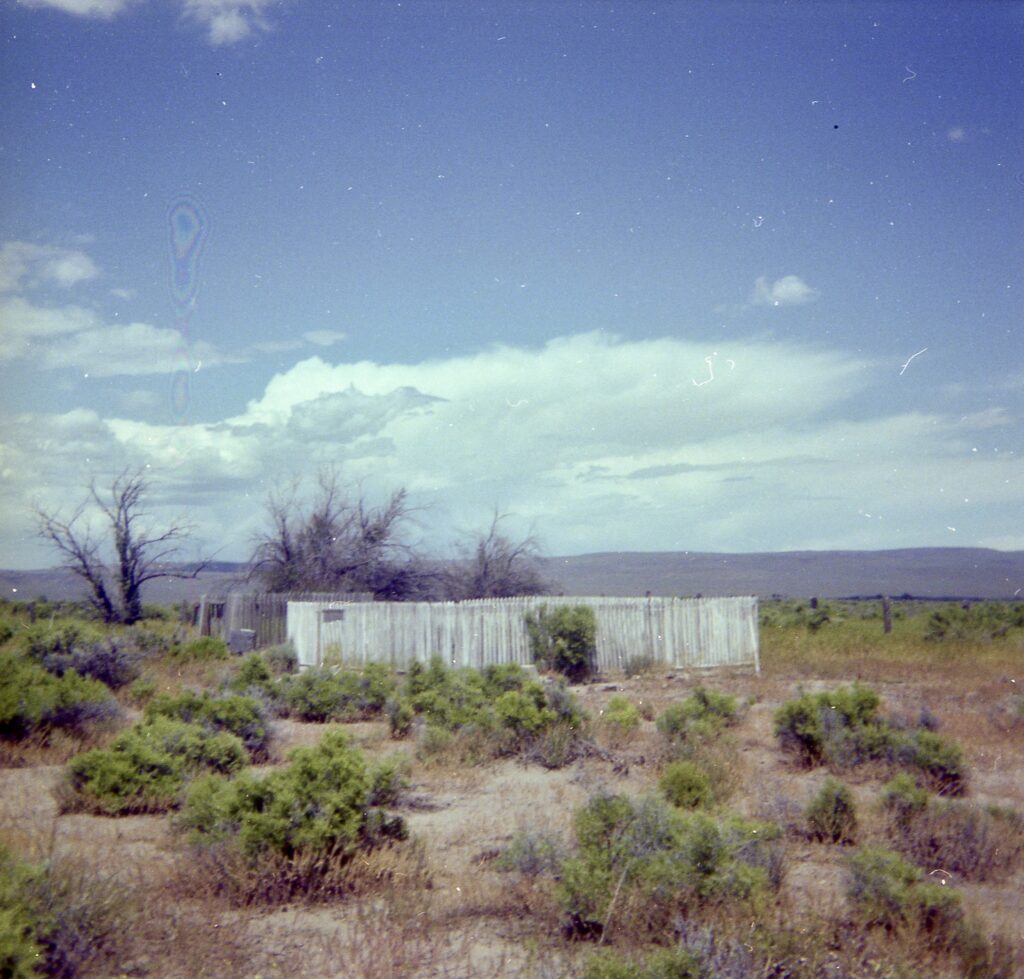
The Bonham Ranch was an important stage stop of the lower Smoke Creek Desert starting in the 1880s. The abandoned ranch has seen better days, as the photograph suggest. I just happen to take this picture on an impromptu stop of the last BLM desert tours in 2004. See related story Edward Laird.
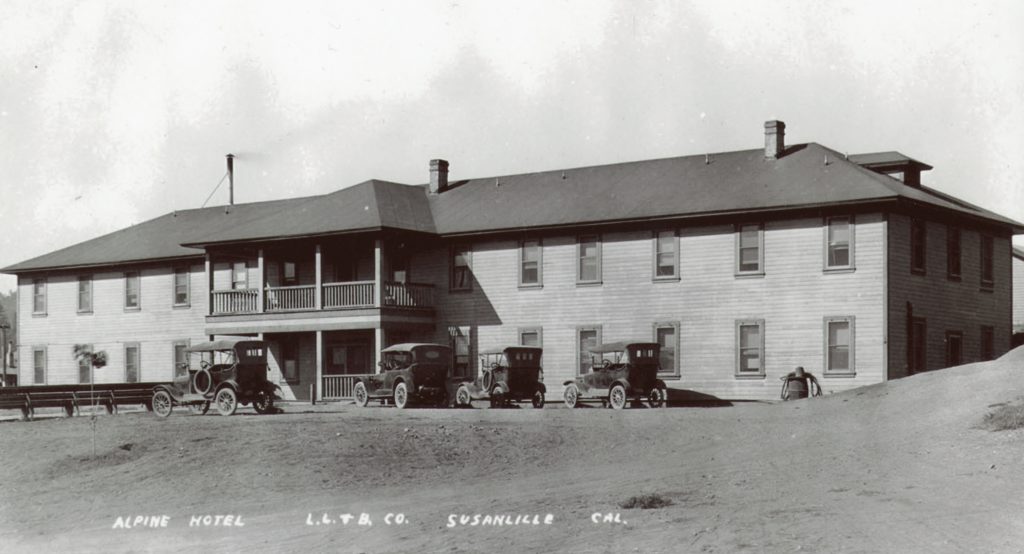
Alpine Hotel was a dormitory for the employees of the Lassen Lumber & Box Company and later served as a dormitory for Lassen College’s early forestry students.
Once upon a time, Lassen College had a very popular forestry program. This was back in the day, with three large lumber mills in Susanville, another one in Westwood, along with the Lassen National Forest provided a lot of job opportunities. It was because of these factors that there was need for some vocational training in this field, and especially for the community. Continue reading Lassen College’s Forestry Program→
In today’s hipster vernacular the “in” word is repurposed. In days of yore before we became a disposal society not much was discarded. When Lassen County was in the midst of building a new courthouse in 1916-17, the county deemed the old courthouse as surplus property.
In November 1916, the county advertised for bids for the sale of the old courthouse in anticipation of moving into the new facility. Plenty of people inspected the building. The county did not know when the building would be available. In January 1917, the county received two bids for the structure, but they were rejected. The county decided to hold an auction, in fact two.
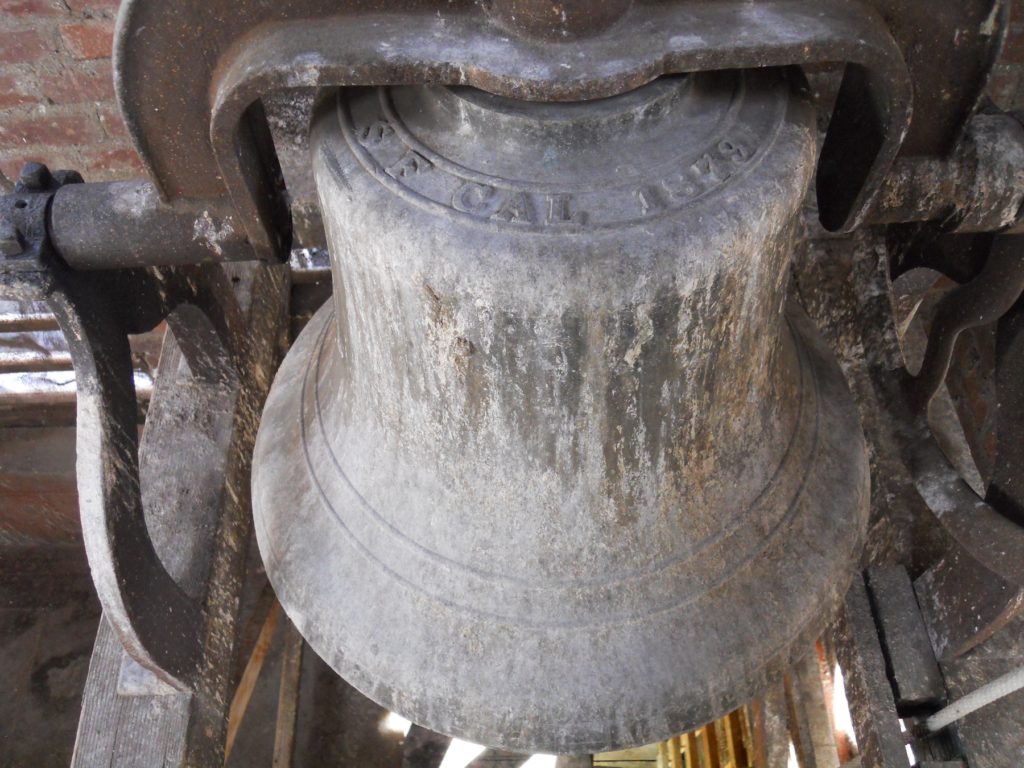
The Methodist Church bell, 2017 Courtesy of Martin Balding
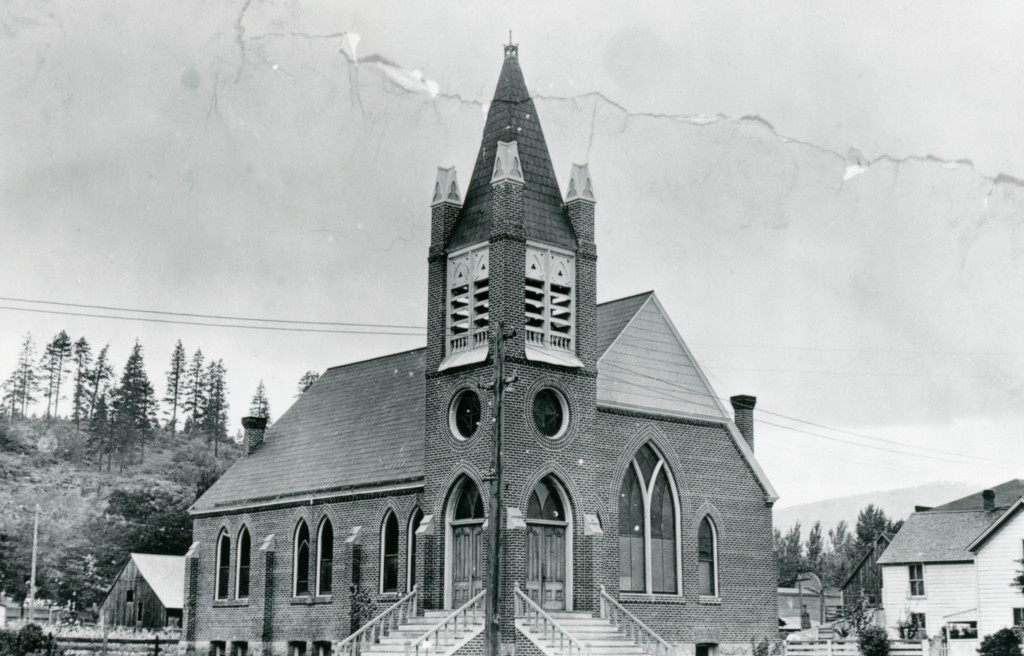
The first one held was on April 11, 1917. It included the bell from the old courthouse that used to call court into session. It was purchased by Rev. J.H. Westervelt of the Methodist Church. The church was destroyed in a 1915 fire, and they needed a replacement bell.
The installation of the bell was chronicled in the Lassen Advocate of October 19, 1917: “The bell purchased last spring for the Methodist Church was placed in the tower of the edifice last week and for the first time in many a day ‘the sound of the church-going bell’ of this the oldest church in town, brought against its hearers the indescribable feeling of Sabbath peace and quiet that means so much to village life the world over.”
It should be noted, the bell is still used to this day to call the faithful to worship. I can attest that the bell has a wonderful tone.
Well, the title does seem morbid, I can and will explain. However, for me, with Memorial Day approaching it is cemetery season. As I take cue from late radio host Paul Harvey, I going parley the rest of the story. This a two-fold approach. There will be an on line article, with follow up story that will be sent only to subscribers. After all, not only do I know where the bodies are buried, but the stories behind them.
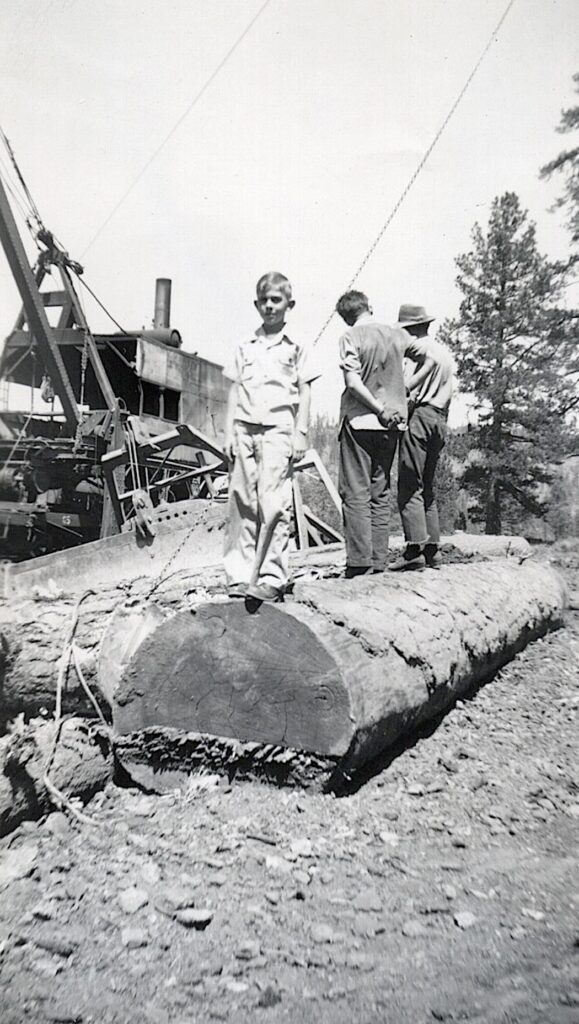
The inaugural story will debut on May 24. It will depict a 1949 logging photograph. The follow up story that will be sent subscribers, about how that photograph relates to Philip Hall and his tenure as a Lassen Museum volunteer, though the vernacular has upgraded to docent. The next installment is titled the Dark Side of Susanville’s Eastman’s Studios. Stay tuned.
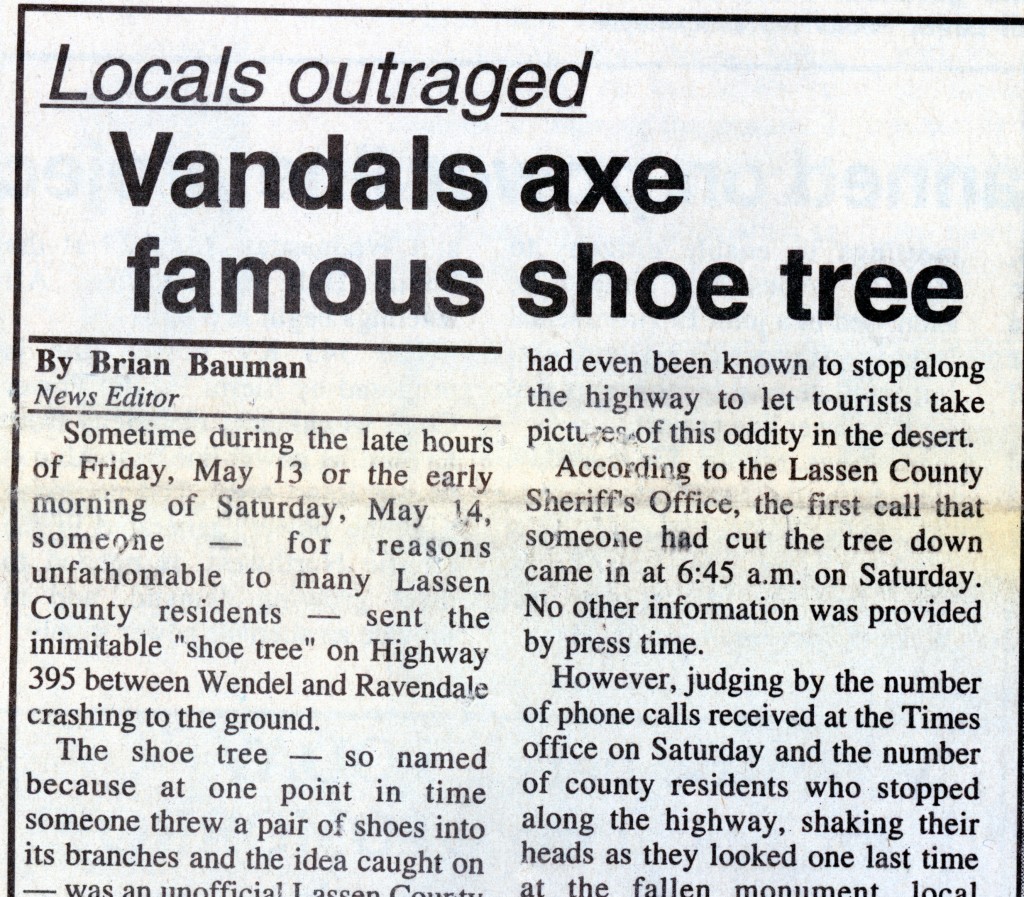
A most unusual phenomenon that can be found throughout the region and no longer just in Lassen County. The original shoe tree was located at Mud Flat, along Highway 395. In the 1930s, Jud Foster, of the California Highway Department, planted numerous cottonwood trees across Mud Flat. It was hoped that these trees would absorb and stabilize the roadbed so that it would not become so muddy. Only one tree survived and it grew to maturity. In 1979, when the highway was widened, officials considered removing the tree, but later reconsidered. Instead, the highway department made an impromptu turn out next to the tree. This turn out along a desolate stretch of road, where there are no trees, became a popular stop for travelers. Shortly thereafter, someone tossed a pair of shoes onto a tree limb. Slowly, through time, more and more shoes were found dangling from the tree. In the early hours of May 14, 1994, an unknown person(s) cut down the tree.
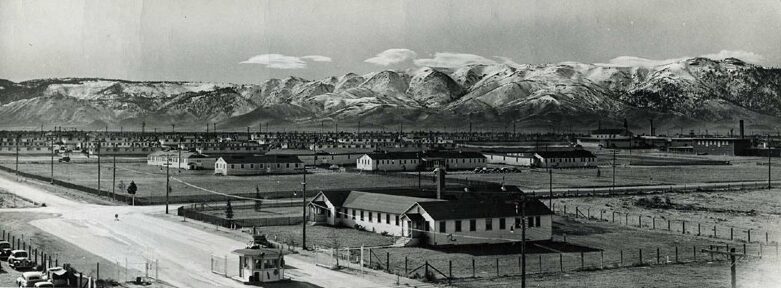
On January 26, 1942, U.S. Representative Harry L. Englebright announced that the War Department had approved the establishment of the Sierra Ordnance Depot. It would be located at Hackstaff, forty miles southeast of Susanville. Hackstaff was a very small station on the Western Pacific Railroad. The ordnance depot, on the other hand, would cover an estimated 25,000 acres sagebrush lands on the eastern side of the Honey Lake Valley. Englebright informed Susanville residents that $20 million had been approved to construct the depot. It would involve the construction of some 1,000 “igloos” for ammunition storage, besides the facilities associated with the depot. Construction would begin immediately.
It was projected that as many as 5,000 people could be involved with the initial construction and operations. A new infrastructure would have to be constructed to accommodate this huge influx of population. Susanvile and the Honey Lake Valley would be heavily impacted by this development, with such issues as housing, schools and roads. The initial reaction was mixed, though Susanville’s business community was more supportive of the project than the agricultural community.
At the February 9, 1942 Susanville City Council meeting, Jack Hill of the Shell Oil Company, informed them of expected problems with the construction of the depot. He said that Susanville would be the initial employment headquarters. The city would shortly be flooded with people seeing employment. Since time was f the essence, Hill suggested that icy become involved in established tent and trailor courts to handle the increase population. After all, with building supplies in demand, this would provide an alternative housing method. Hill warned both the city and county to be prepared for the criminal element, i.e., camp followers found at such construction projects. He said, “You are going to have a very high percentage of non-desirable people arriving with those whose livelihood is made in every conceivable means outside the law. You can combat them if the community is prepared to stop them before they get started. The fastest and easiest way to stop them is to make their activities unprofitable.”
To prepare for the criminal element, a group of local law enforcement officials-the County Sheriff, District Attorney and Chief of Police, paid a visit to Hermiston, Oregon, where a munitions depot had recently been established. Hill was 100 percent correct in his warning. In June 1942, the crime wave swept Susanville and the environs of the Honey Lake Valley. During June 1941, there had had been 31 arrests inside the city. A year later, it has escalated to 103 for the same period. The majority of these offenses were for drunk and disorderly conduct. On one day, June 27, 1942, a record sixteen people were booked into the city jail-a facility that had only 400 square feet of room to house inmates! Over at the county jail just blocks away the situation was just as grim. One alternative solution to alleviate overcrowding the two jails was from the implementation of a special fee. If one had the extra cash, he could pay a fine three times of the existing fine and would not be incarcerated, though it only pertained to misdemeanor offenses.
In days of yore, nearly a century before Herlong Junction came into existence the region was first settled by Captain John Byrd. For years the region was known as Bird Flat, and there were was even the Bird Flat School District.
Prior to Herlong Junction there was no need for road going to the east, because there was no there, there. Even when the railroads came existence, attempts were made to make something as in 1892’s proposed Honey Lake City. In 1912, there was a short lived town of Cromwell. There was a proposed Cromwell-Milford Road, that would require a bridge across Honey Lake, thus far north of present day Herlong Junction.
Not much would happen in the region until 1942 when the Sierra Army Depot was established and created the town of Herlong. To get to the depot two access roads were built from Highway 395. It was the northern access road that would became known as Herlong Junction. It should be noted the ranchers in that district was against the depot. When the construction crews arrive they things got worse.
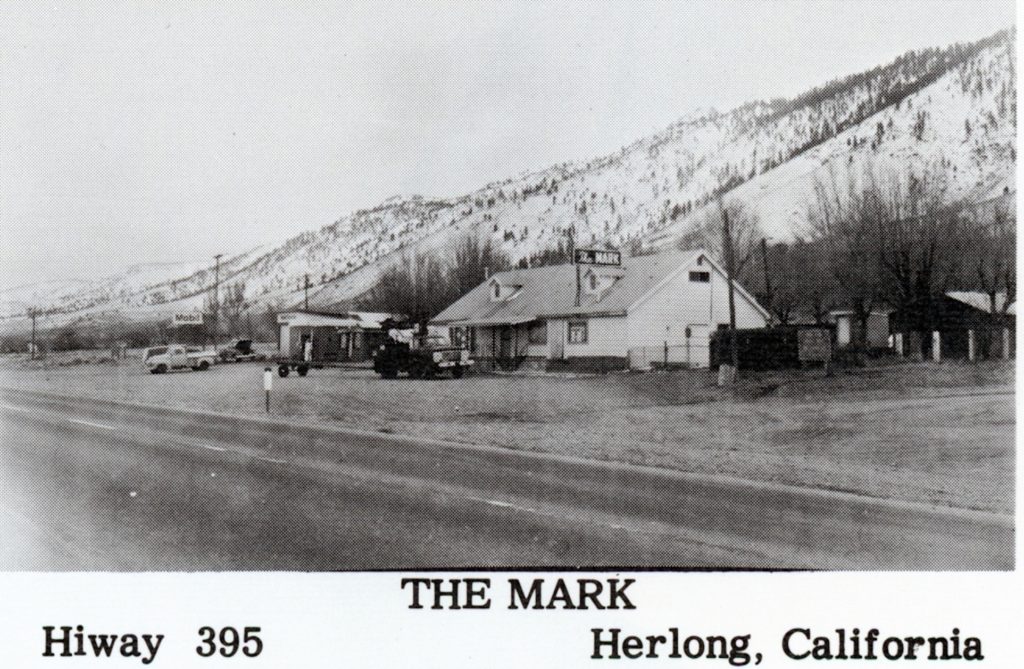
The Mark advertisement, Lassen College yearbook 1970-71—Jim Chapman
There was one Bird Flat resident that saw an opportunity, Zoe Clayburg. When her husband, Tom, died in 1917 from tuberculosis, , she inherited a forty-acre parcel that would became known as Herlong Junction. On February 6, 1948 she sold a small parcel to Ray and Connie Langley. The Langleys had a restaurant at Milford, and they moved their building to the Clayburg property. In time that establishment evolved to the present day The Mark. From time to time, Zoe would sell off parcels. She passed away in 1970, and is buried in the Milford Cemetery beside her husband Tom.
In 1910, A.J. Matthews arrived in Susanville as part of a small group of men to form a local telephone company. They would be successful. In 1915, Mathews married native daughter Lena Cahlan and would be life-long resident of Susanville. Mathews was a firm believer in civic engagement. He was involved in so many different activities on the local and state level.
Mathews also served on the Lassen Union High School/Lassen Junior College Board—the two were intertwined until the college separated in 1965.
In January 1935, Mathews addressed the Susanville Rotary Club concerning the schools reorganization plans, specifically that of the college. Mathews stated, “We should capitalize on the fact we have the only junior college in northern California north of Chico.”
Later in 1935, the college board of trustees, met with Mr. J.C. Beswick from the State Department of Education, in charge of Trade and Industrial Education. It was met with enthusiasm by all parties, including the lumber mills and related fields. On September 19, 1935, a Technical Institute course in forestry at Lassen College was offered, with Gale M. Whitchurch in charge. Initially, enrollments fluctuated between 12 and 23. It was a major turning point in the college’s history that attracted students from around the state to attend Lassen and of a necessity for the college to thrive would have to offer courses to attract students from out of the region.
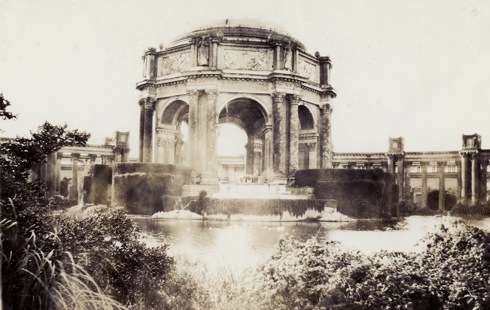
Palaceof Fine Arts, San Francisco, 1921–Lola L. Tanner
“I, Hiram W. Johnson, governor of California, do hereby designate Saturday, 24 day of October [1914] as Pioneer Mother’s Day, to be observed as a tribute to the women of the days of ’49, and in furtherance of the work of building a monument which shall grace the Panama Pacific International Exposition and remain an enduring testimonial to honor a grateful state pays their memory.
“It is proposed to raise a fund of $25,000 for the very worthy project, and I wish to join in asking a generous response from all California, in order that the sum may on that day be adequate.”
To fulfill Johnson’s goal, the Pioneer Mother Monument Association was organized. That association delegated the Native Daughters of Golden West to raise the money. It should be noted that the monument, a bronze statue, had been in a planning stages for some time. Prior Johnson’s proclamation, Charles Grafly had been commissioned to do the bronze statute. Graftly proposal met with controversy. You can read more about it here.
The statue located near the Palace of Fine Arts did not garner that much attention. After the exposition it was neglected. In the 1930s, it was restored and relocated to Golden State Park.
Notes of Note: 1. Governor Johnson asked the women of California to pay for the monument in their honor. 2. In 1914, President Woodrow Wilson proclaimed the the 2nd Sunday in May as Mother’s Day.