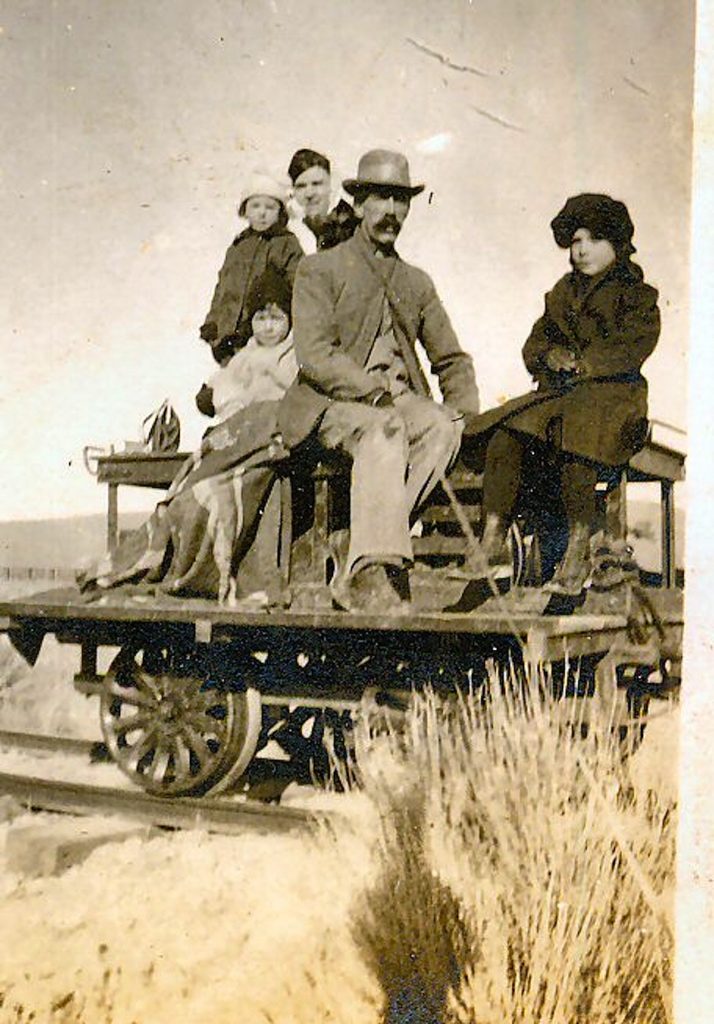
The A.C. Herring family on a NCO speeder at Amedee, circa 1909.
This was something I had always wanted to do, was ride on an old fashioned railroad speeder. They were so named, as I understand, that they were faster than a handcar. Speeders were used to examine maintenance of the railroad track. You might have seen the modern version were pickup trucks that have flanged wheels that can be lowered onto the rail, and I think that would be fun too.
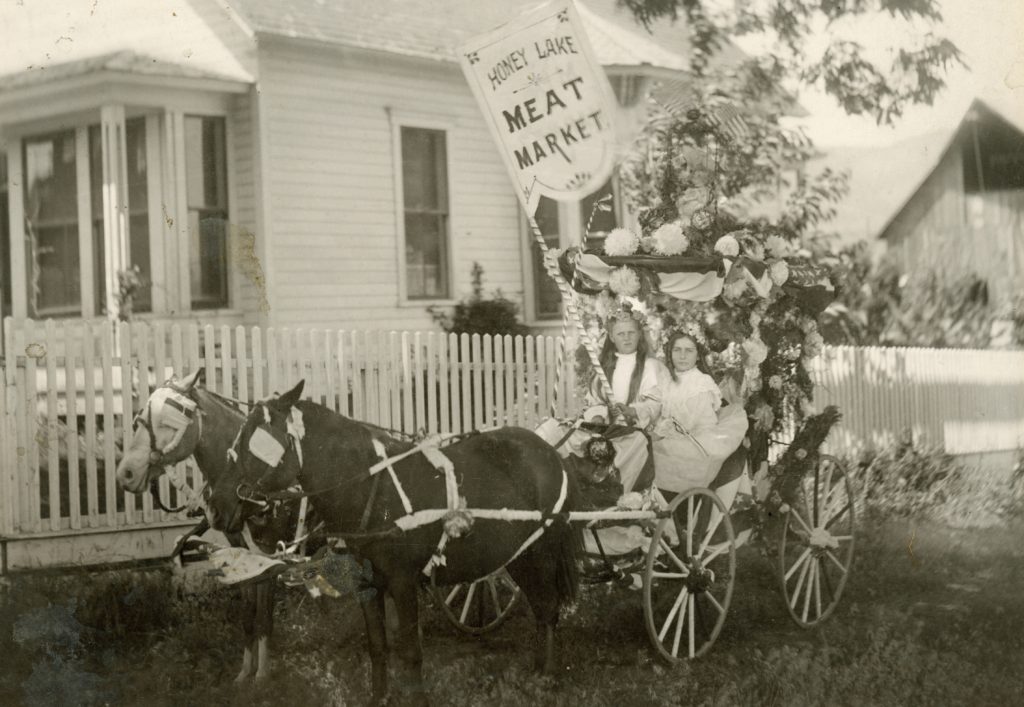
A 1906 4th of July parade entry. Courtesy of Leona Byars
Today’s featured photograph is that of Fred Bagin’s Honey Lake Meat Market 1906 parade entry, taken at 815 Cottage Street, Susanville. At the helm is his step-daughter, Leona Jackson and her companion Mary Fern Long. Bagin was an interesting person who had as many careers as he did wives.
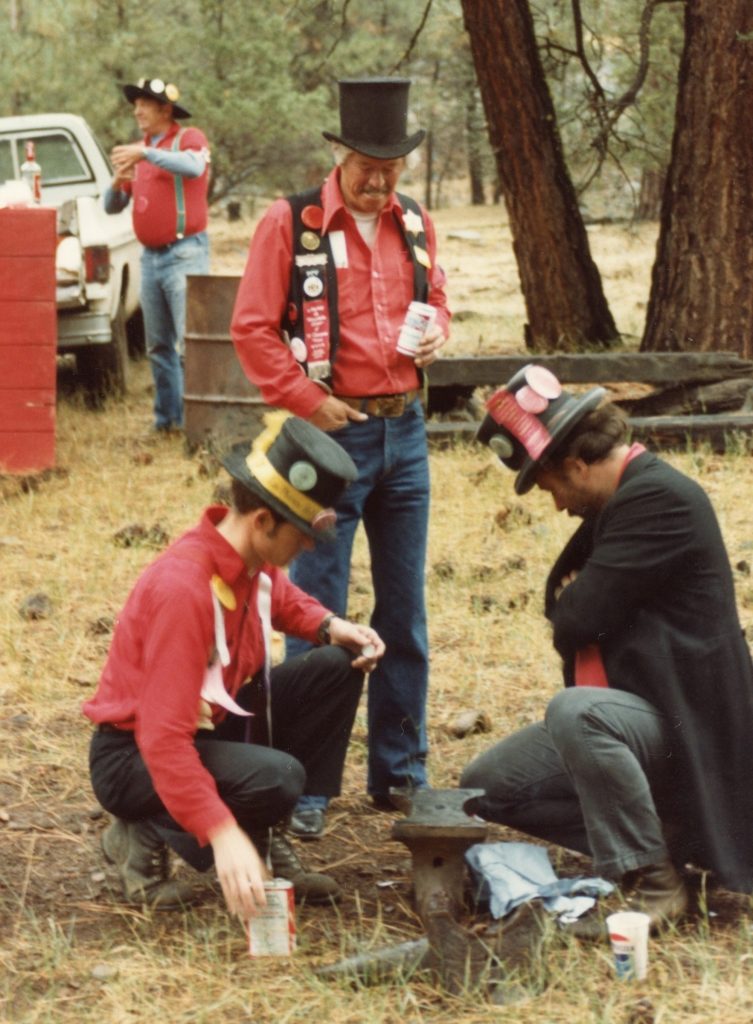
Prepping the anvils, Desmond Meadows, September 18, 1982.
A common highlight of 4th of July festivities in the early 1900s was the firing of anvils. Two anvils are used, one for a base and the other place on top. The base anvil has a small cavity where black powder is placed with a fuse. Depending on the kind of charge, depends how high the top anvil will shoot up. More importantly, is for the the fired anvil to come crashing down on the base anvil creating a spectacular sound. You can see examples of this on You Tube.
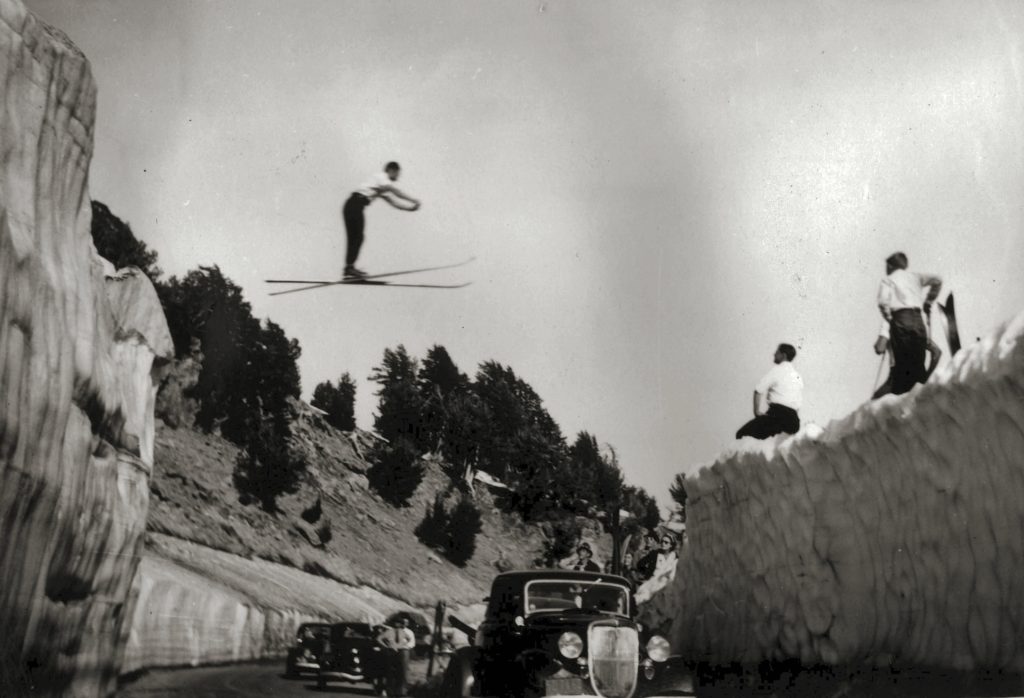
1937 Ski Jump across the park highway. Courtesy of the National Park Service
In 1936, the Mt. Lassen Ski Club created a mid-summer ski tournament. It was held at Lake Helen during the Fourth of July weekend, although depending on conditions, it was sometimes held a bit earlier or later than the patriotic date. The club introduced a new event, known as the Inferno Race. This was no ordinary race, and definitely not one for novice skiers. The course was interesting and required a great deal of stamina just to reach the starting point, the summit of Lassen Peak, a climb of 2,200 feet. Usually only a dozen or more skiers participated in this slalom race, which had four gates, and two turns and one jump across the park highway. The event continued through 1941, but conditions created by World War II brought an abrupt halt, and this particular event was never resurrected.
Anyone who has spent any time in Northeastern California, knows that its weather can be finicky. An interesting example of weather extremes was the year 1876. On March 25, 1876 there was eight feet of snow at Round Valley, just a short distance north of Susanville, yet that town was clear of snow. When July arrived, it turned hot, the highest temperature that month was 108 in Susanville.
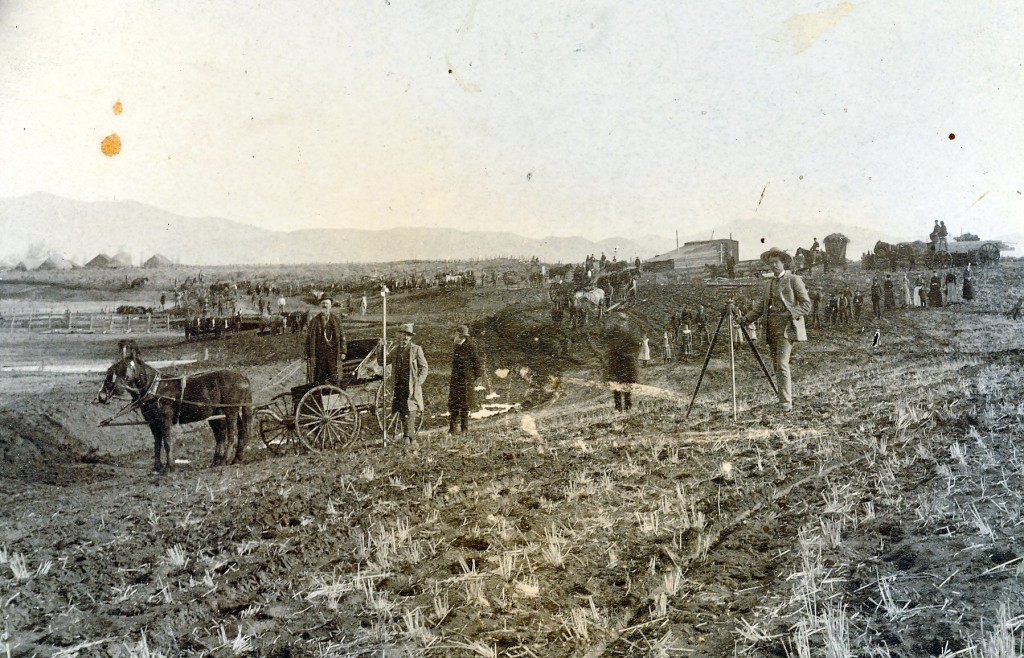
Survey crew to enlarge the Buggytown ditch near Johnstonville, 1889. Courtesy of Betty Barry Deal
Originally known as Batcheldor & Adams ditch which portions were constructed in 1858. It later became known as Buggytown ditch, for the area just west of Leavitt Lake in the 1870s. It was so named as one of the first settlers possessed a buggy when such luxuries were rare on the frontier. The ditch/canal is what feeds into Leavitt Lake.
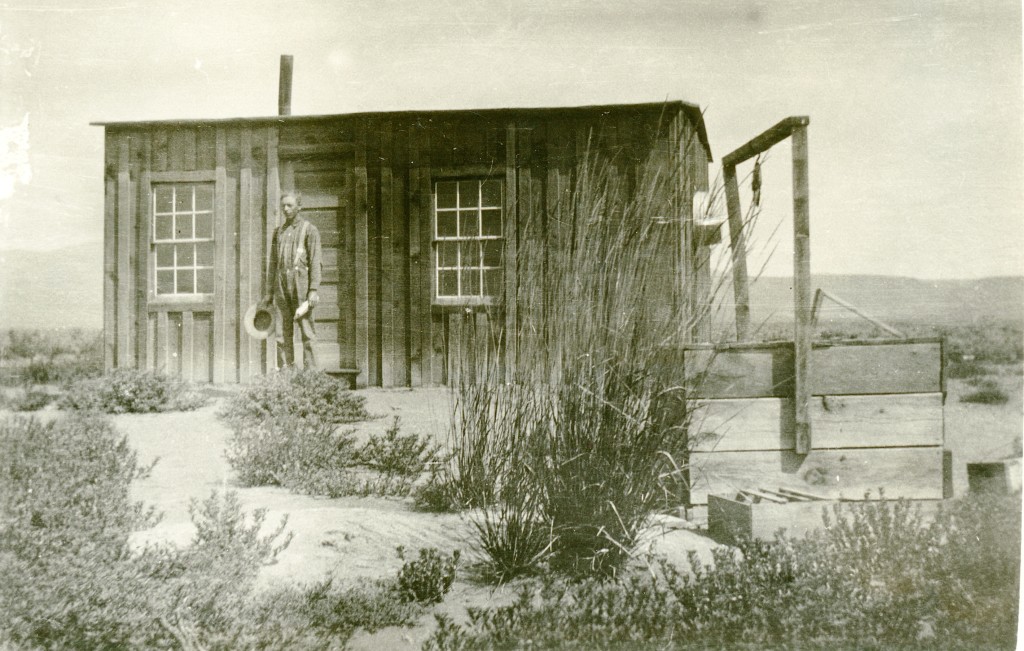
It has been awhile since I have done one of these topics. In 1915 Frederick Zarbock filed on a 160 acres of desert land in the eastern Honey Lake Valley, near Stacy. Zarbock, like so many others were lured, that between the dry farming experience, along with assured water supply from the Standish Water Company, the sagebrush plain would be transformed into productive agricultural land. Zarbock would never see the final result as he was drafted to serve in World War I and when he was discharged returned to Minnesota. Somewhat surprising, while his old cabin is no longer there, the sagebrush did not reclaim his old homestead.
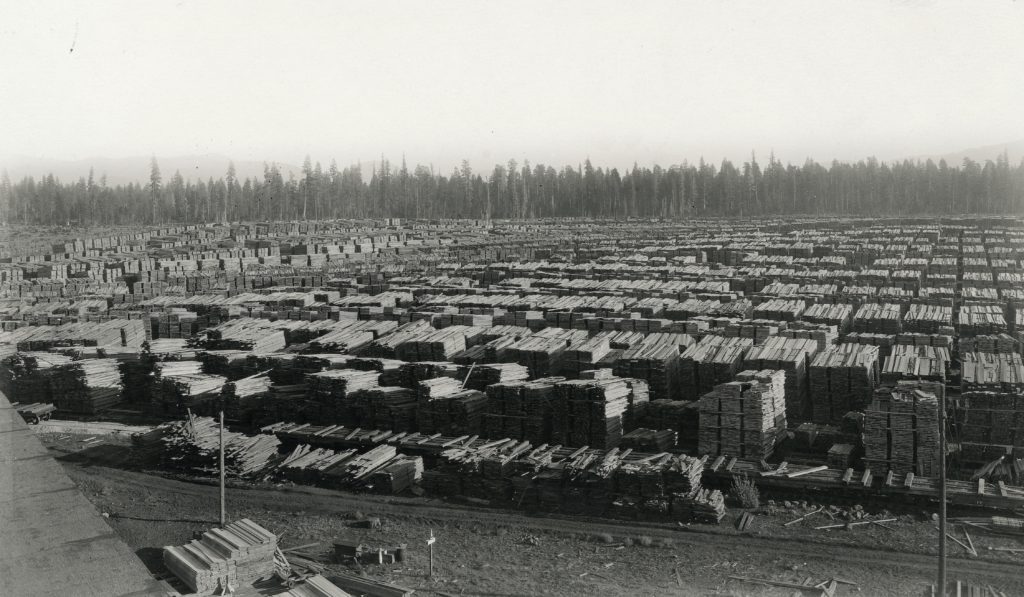
North Lumber Yard, Red River Lumber Company, 1923. Courtesy of R.S. Pershing
As we explore Lassen’s lumber industry’s past, there are references to the volume of a million board feet (mbf). During the 1920s, the lumber mills of Lassen County had an average annual output of 250 million board feet of lumber.
George Cone, who worked in the Lumber Division of Fruit Growers provided this definition using that mill’s output for the 1922 season at 62 million board feet. If it was placed on a single freight train, that train would extend eighteen miles. And since it took 6,000 board feet of lumber to build an ordinary house in those days, Cone figured that the 1922 output could build 60,000 houses. According to Cone, with an average household consisting of five persons, this production could provide the housing needs of 300,000 people!
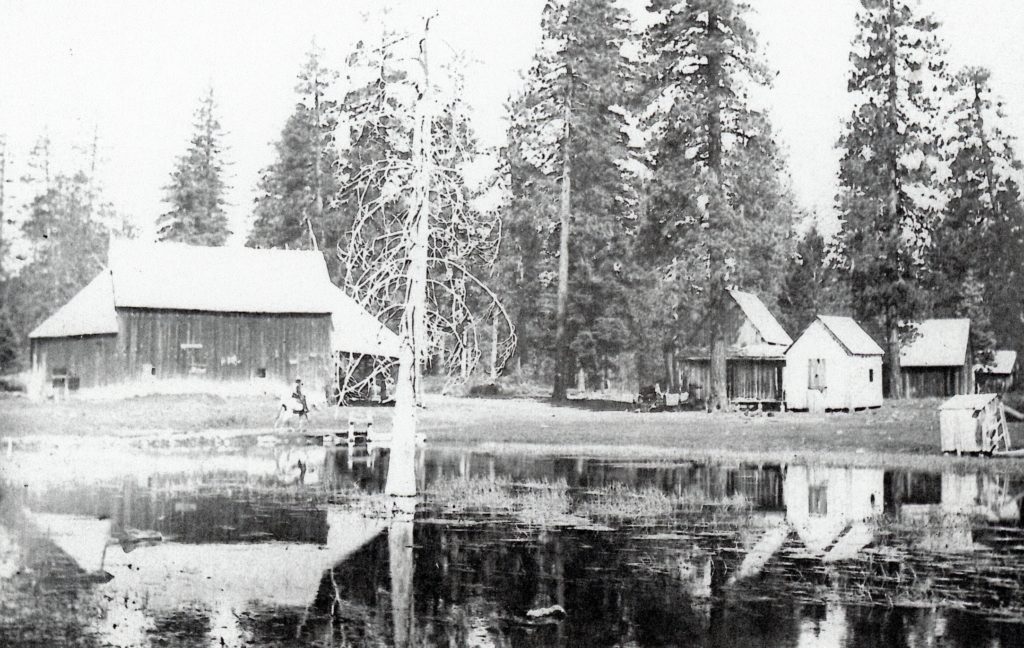
Clear Creek is one of the area’s idyllic settings. In the early 1900s, when Clinton Walker was cruising the timber in the region for the Red River Lumber Company, he spent many a summer camped at Clear Creek, as a “home base.” Clinton’s daughter, Harriet, recalled many pleasant memories as a child camping there. Harriet stated at times they all got tired of eating fish caught from the springs. Then one day, her father surprised everyone when he returned to camp with a “mountain calf.” I had never heard of such a creature and asked what was a mountain calf. Harriet whispered “Bambi.”
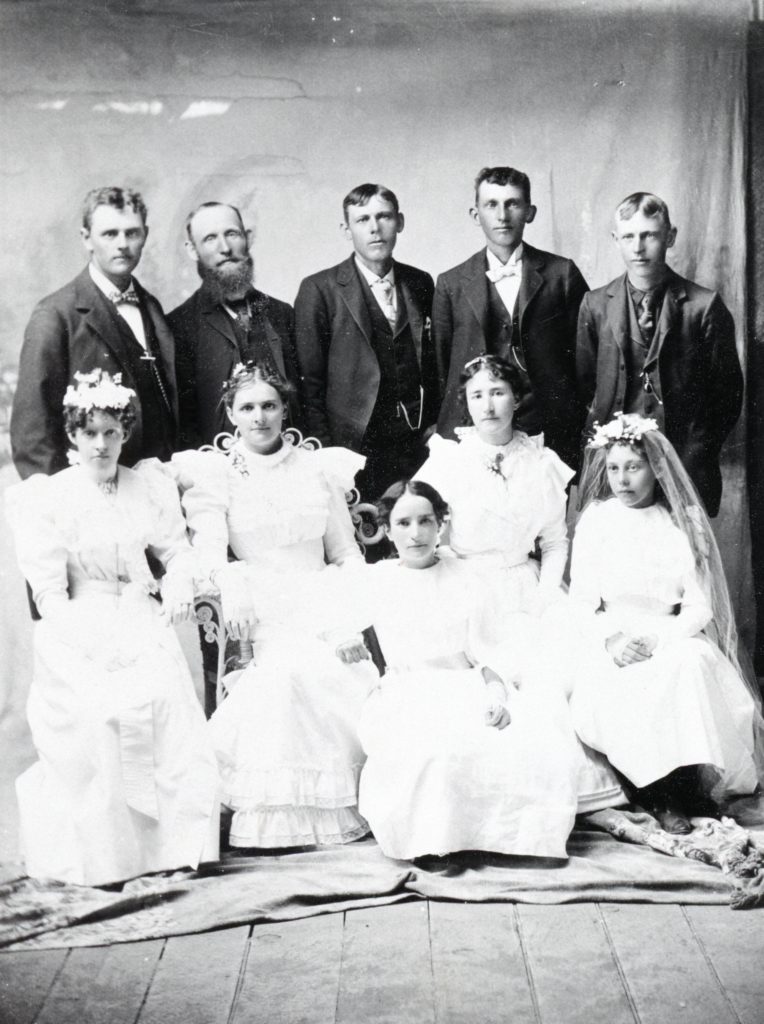
First Confirmation, 1898. Courtesy of Milton Mallery
One hundred twenty years ago today was a red letter day in the annals of the history of Susanville’s Sacred Heart Church. The occassion was the arrival of Bishop Thomas Grace. The first order of business was the concencration of the church as the Church of the Sacred Heart. It should be noted that the construction of the church began in 1892, and was not completed until 1894. At the same time Bishop Grace administered First Communion and Confirmation.