Answer to One of Your Questions

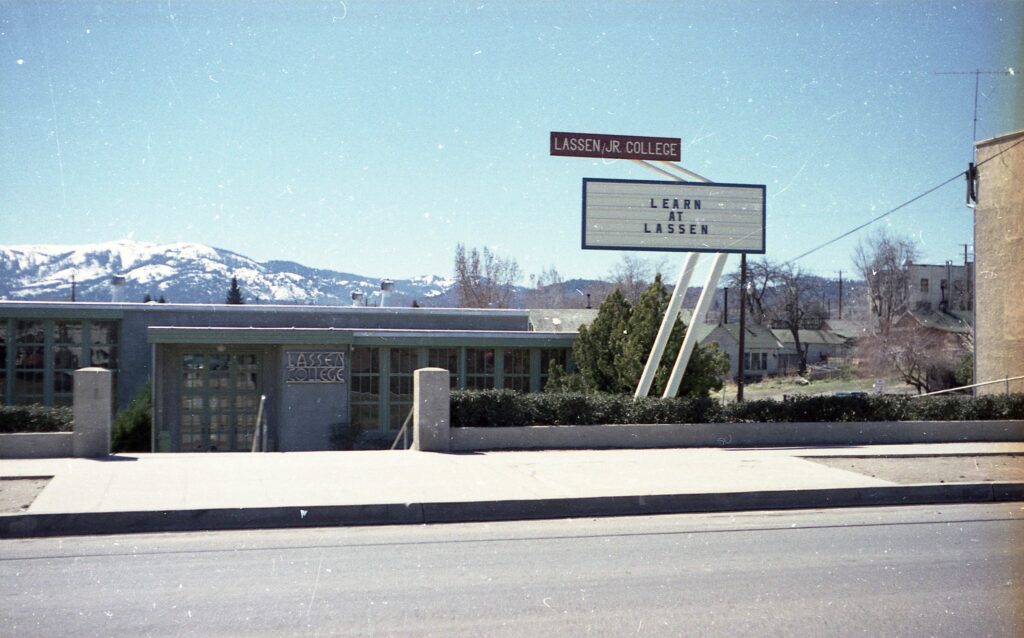
Lassen College, 1960 – A dumpster dive photograph

The July, Ask Tim post only generated two inquiries. May be it is so-called dog days of summer. Here is the first question and I am working on the next, stay tuned.

Lassen College Graduation Photographs. Were there any pictures taken of the last Jr, college graduation in the quonset-hut on the Lassen High School property?  

It has been my experience that historical documents and photographs of Lassen College’ are rarer than the proverbial “hen’s teeth.” It should be noted that I served on the Lassen College board  from 2011-2020. Towards the end of my tenure, it was relayed to me by college personnel that there was secret cache of old college annuals and photographs that had been discovered. I was not privileged to examine those records. In May of this year marked the 100th anniversary of the college’s founding, but the administration ignored this historic milestone. If anything surfaces, I will let everyone know.

Tim
A Lake Almanor Postcard

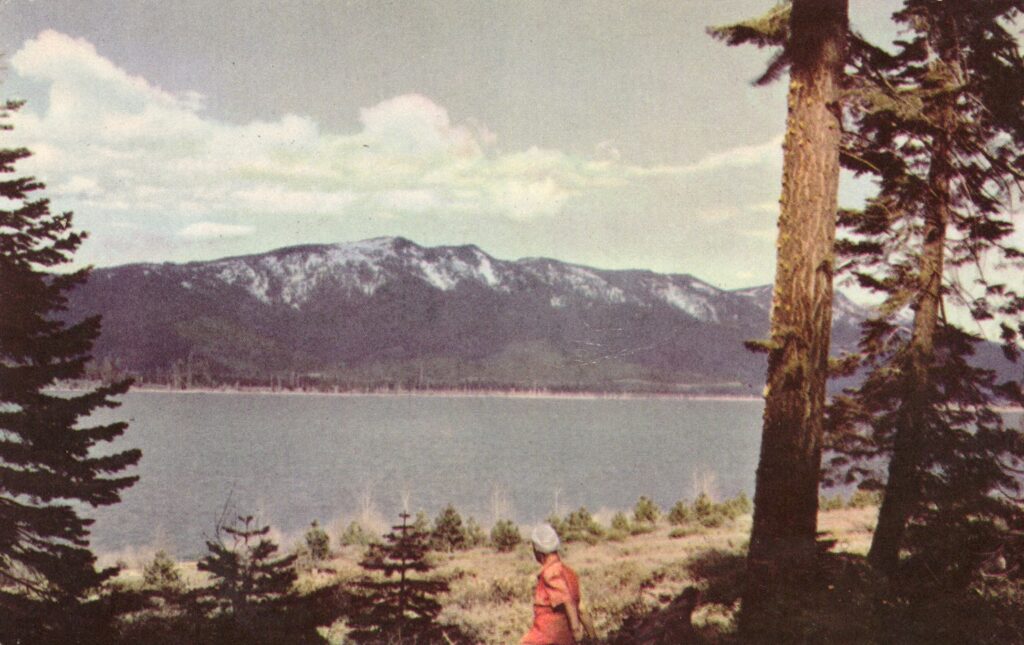
Lake Almanor postcard

Awhile back when rummaging around for calendar photographs I came across this vintage circa 1960 Lake Almanor postcard. It was a mass produced by the Union Oil Company in a series “Natural Color Scenes of the West..”  On reverse of the card at bottom, was an advertisement ” Tour the West with Union 76 Gasoline.” Since it was not a common one  available locally, I thought that some might be interested.

Tim


Some Sierra Theater History

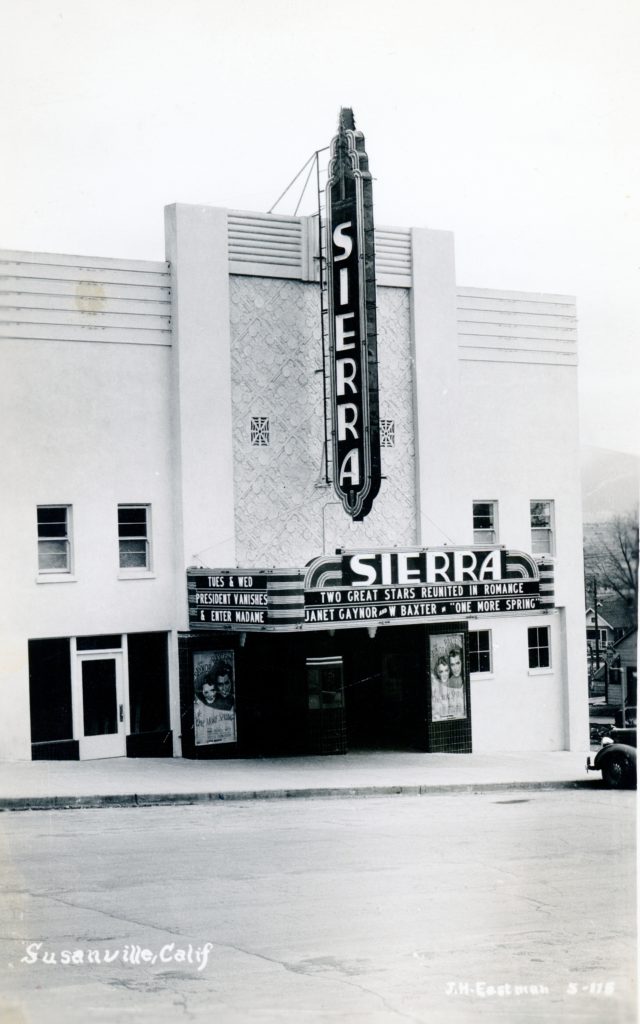
Sierra Theater

On August 7, 1934 during a special session of the Susanville City Council they condemned the Liberty Theater, after state inspectors stated it was unsafe. Two day’s later the theater would close, and it was only fitting the film shown that day was “The Party’s Over.” It should be noted that the Liberty was built in 1921 and in 1924 it was purchased by T & D Enterprises.

In late September, demolition began on the Liberty Theater and it was announced a new theater would be built on the site of the old one, to be named Sierra Theater. Construction on the concrete re-inforced theater began in October, and the owners noted it was earthquake proof, the first of its kind in Susanville. On Friday, March 8, 1935 a grand opening was held for $75,000 theater. The first showing was appropriately a film named, “The Whole Town’s Talking.”

Fast forward to August 2024, when Sierra Theater closed its door for financial reasons. The Susanville Symphony had its eye on the building for a performing arts center. Negotiations for funding to purchase the property began between the Symphony and the City of Susanville, but they fell apart. Then in late July 2025, the Susanville Performing Arts Center was organized as a non-profit to undertake the task of the acquisition. In the meantime, the theater has been reopened for the summer.

Support

Another Landmark Gone

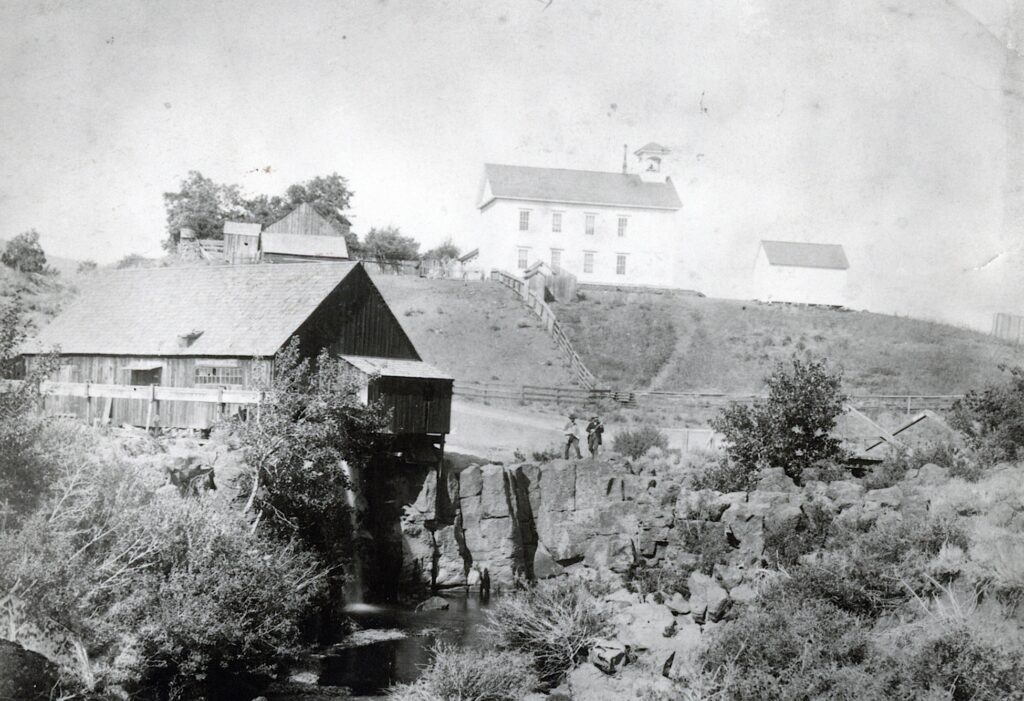
Arnold Planing Mill, 1878-Courtesy of Marge Hansen

Some man made landmarks stand the test of time, others do not. The other category usually consist of one three factors: 1) Demolish in order to  modernize 2) Abandoned and deteriorate and 3) Fire, whether accidental or arson.

Arnold Planing Mill, circa 1905. Courtesy of Philip S. Hall

Built in 1873, the Arnold Planing Mil was the first of its kind in Susanville. Located adjacent to the Richmond Road, and perched upon a small cliff on the Susan River, it ws a favorite scene for photographers. On August 6, 1914, at approximately two in the morning, the residents of Susanville were awakened from their slumber by alarm of fire. The Arnold mill had caught fire. Due to the mill’s location on the edge of the fire district, little could be done to save it or the adjoining lumber yard. It was a severe blow to Leroy Arnold, the owner. His loss estimated at $10,000, and was not covered by insurance. The cause was never determined, but it was believed a hobo had slept there. He built a fire for a meal, and never extinguished it.

Subscribe


B-24 Liberator Plane Crashes Near NuBieber

A B-24 Liberator plane

On August 4, 1943, a B-24 Liberator plane crashed near NuBieber, killing all nine on aboard. Not only was this the worst aviation disaster in Lassen County, but it was the largest single fatality accident, too. Details of the crash are scant due to the government’s censure of such events during World War II. According to the Big Valley Gazette, there were over 100 people who witnessed the event, thus the paper quipped over 100 different versions of the event. Some stated that plane exploded high in the air; others said happened just before it crash to the ground. The bodies and the wreckage were scattered over a mile from the crash site. The flight originated at Pocatello, Idaho, with a destination of Chico, California. Those wo lost their lives were: John H. Ballard, Joseph F. Caccavale, Joseph P. DeFrancisci, Elvin L. Griffith, Burton C. Hermann, Robert G. Larsen, Kenneth J. Lovelace, Louis J. Marie and Bruce E. Wright.

Subscribe

The Eruption That Was Not

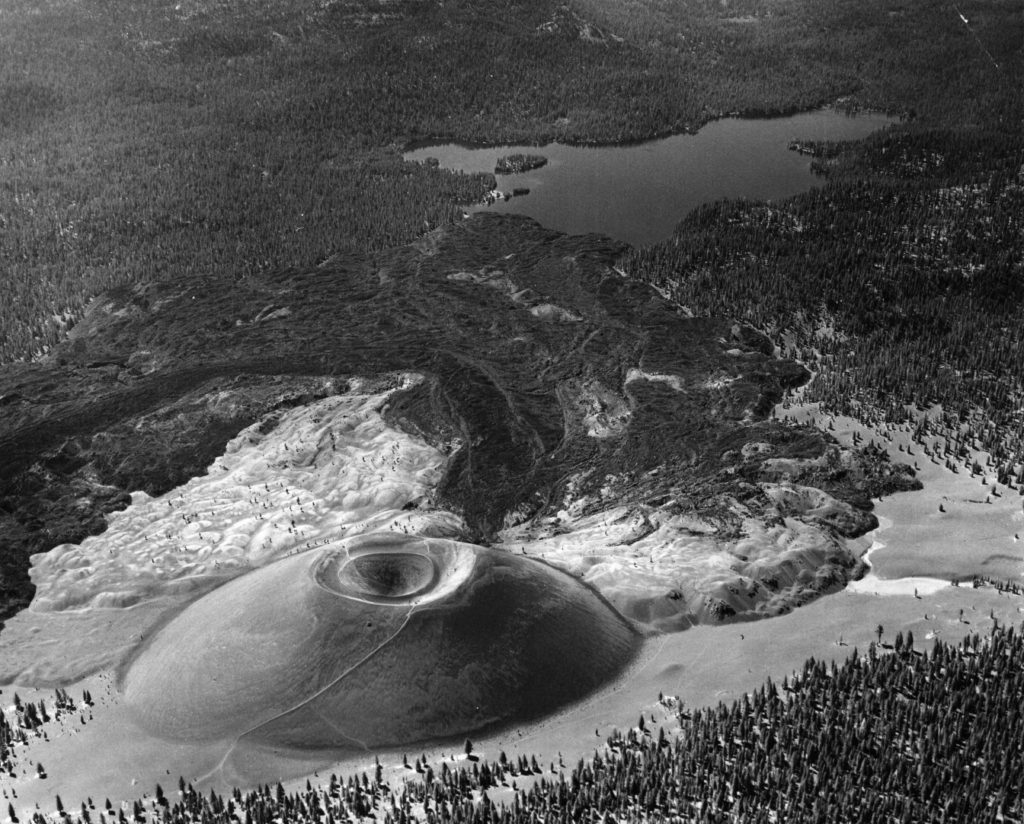
Cinder Cone, 1967–National Park Service

In the winter of 1850-51 it was reported that Cider Cone, located ten miles east of Lassen Peak had erupted.

Enter,  San Francisco physician Harvey W. Harkness, who had a keen interest in scientific matters. In the summer of 1874, he visited Plumas County. While there he heard the story of a recent volcanic eruption located in far northern portion of the county known as Cinder Cone. Since he was already in the territory, he decided to examine Cinder Cone. In the fall, Harkness addressed the California Academy of Sciences and told of his observations. He informed the Academy that the eruption was indeed of recent origin. After his presentation, he came on contact with with four men who had seen the eruption from afar. One of these men was Oliver Wozencraft, who lived near Red Bluff during the winter of 1850-51. He informed Harkness that he saw a great fire east of Lassen that continued for many nights but never changed its position.

After Harkness’ findings were published, it served as a reminder to many  that a volcanic eruption could be impending. It was not for decades that Harkness’ theory was challenged. The whole issue was resolved in the 1990s by the United States Geological Survey, which determined that Cinder Cone’s last eruption occurred sometime around 1666 and not 1850.

Support

Sacred Heart’s Parish Rectory

The Rectory

When Susanville’s Sacred Heart Parish was established in 1912, it had a church, but it did not provide housing for a priest. When Father O’Reilly arrived to take care of the pastoral duties, he boarded initially at the Emerson Hotel. When that hotel was destroyed by fire, he purchased a small cottage.

In October 1922, Father Patrick J. McCarthy became O’Reilly’s successor. McCarthy spent his first three weeks sleeping in the organ loft of the church.  It turned out to be unseasonably cold, and as many an old time parishioner recalled  that church was cold and drafty. As a result McCarthy came down with pneumonia, and required hospitalization. Once discharged from the hospital, efforts were underway to build a rectory next to the church. Within in a month’s time it was completed with lumber donated by Fruit Growers and Lassen Lumber and parishioners volunteered to construct it.

Never miss a story, subscribe and support, click here.

Eagle Lake’s Colley Point

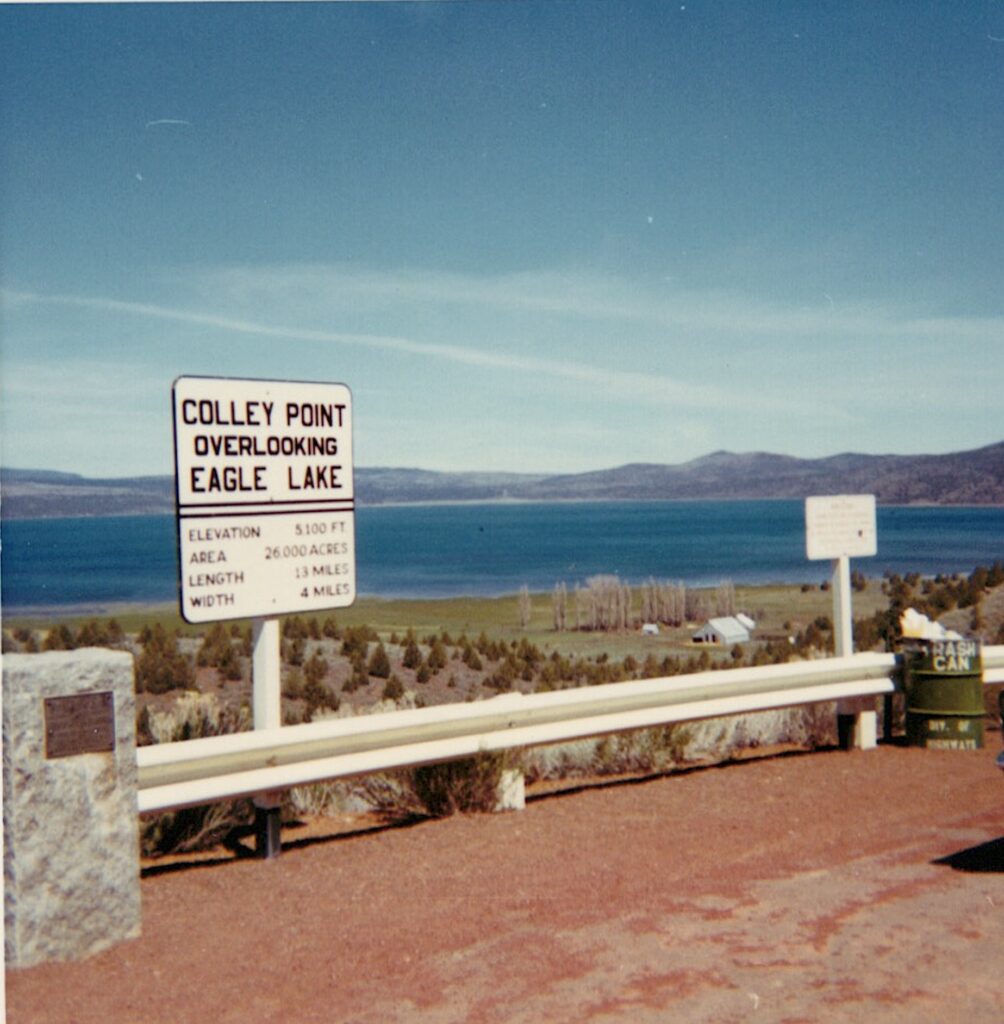
Colley Point, Eagle Lake-Sponsored by Martin Balding

It should be noted that  this is not  a natural feature of the lake, like Troxel Point. It is man-made modest overlook on Highway 139, above the old Stone Ranch. In 1929, the Lassen-Modoc Joint Highway District No. 14 was formed to construct a highway from Susanville to Big Valley and the ultimate goal to the Oregon border. Due to lack of funding the highway was constructed in segments. In 1930, W.C. Colley was hired to construct the 8.37 mile segment leaving Willow Creek Valley to the Stone Ranch at Eagle Lake at a cost of $165.598.

It was only fitting that the first segment of highway, would be the last to be completed. In 1956, the last phase to necessary to complete Joint Highway District No. 14 was paving of the road between between Willow Creek Valley to the Stone Ranch. On this section of road, at Colley Point, overlooking Eagle Lake, a plaque was erected as part of the dedication ceremonies held on August 26, 1956. In December 1959, Joint Highway No. 14 was designated as State Highway Route 139.

Mt. Lassen – A Great Booster

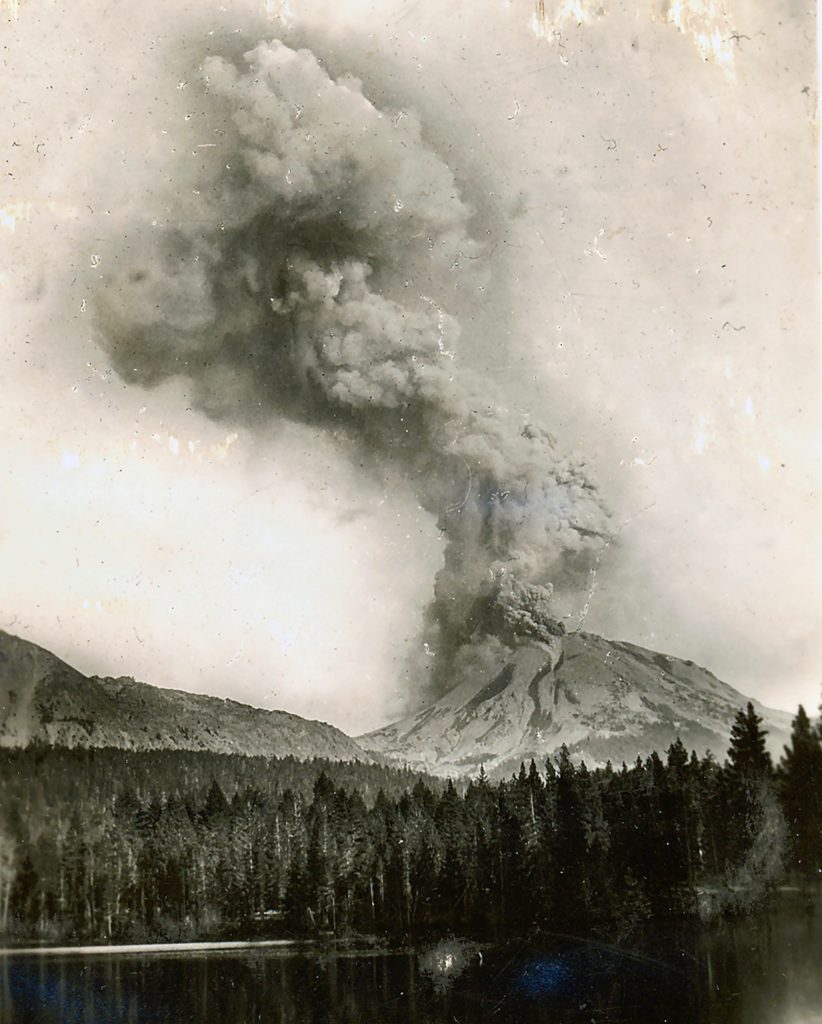
1917 eruption of Lassen Peak.

There was no question that when Mt. Lassen aka Lassen Peak started its volcanic eruptions in 1914, it provided  bountiful promotion for the region, that was relatively unknown to the outside world. As news reporters swarmed the area, they also wrote the region, a bonanza of free publicity.

The Bank of Lassen County was aware of this phenomenon and is reflected in a 1924 advertisement copy of the bank that stated:

Thanks To Mt. Lassen – When Mt. Lassen smokes, word is flashed to the newspapers over the world, which means that the thoughts of everyone everywhere is, for the moment, turned this part of California.

Thus Mt. Lassen gives us some very good publicity, free, and helps in making this entire section better.

However, many of the every-day happenings in this Lucky Land of Lassen, may well interest the world-developments in the field of industry; our farm prospects, the possibilities of the irrigated districts; beet growers; dairying; and many other opportunities, not to mention our great lumber industry.

Tim


A Hayden Hill Mine Tragedy

Hayden Hill, 1920.

On July 30, 1925, Frank Ross, 32, and Douglas Woodin, 15, were victims of a mine explosion at the Buckskin Mine at Hayden Hill. It was believed that Ross miscalculated his placement of dynamite, resulting in the explosion severely injured his face. Woodin on hearing the explosion gone down the mine shaft to investigate. Woodin was overcome by the noxious fumes and perished. The mine was owned by H.C. Watson, the cheese man of Big Valley.

Tim


Exploring Lassen County's Past