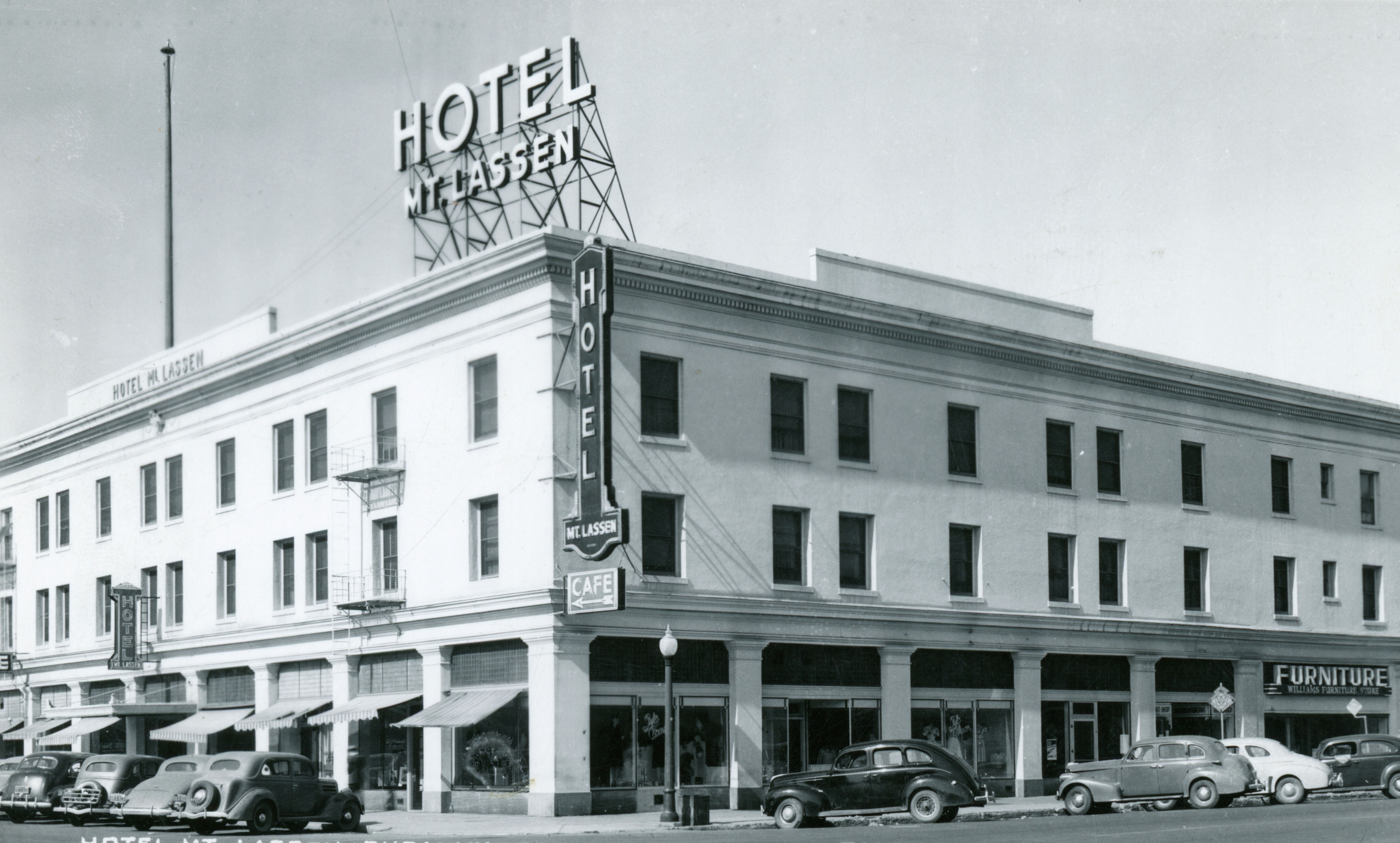
The real estate firm of Engel & Volker has listed the Hotel Mt. Lassen for sale, which has been vacant for a long time. Asking price $3.4 million. For the curious you can see the listing here .
Tim
The real estate firm of Engel & Volker has listed the Hotel Mt. Lassen for sale, which has been vacant for a long time. Asking price $3.4 million. For the curious you can see the listing here .
Tim

Since the topic of cannabis is on the ballot in Lassen County, I thought some historical perspective might be of interest.
The headlines news on the front page of the Lassen Mail of November 23,1928 “Dope Plant Grown In Susanville.” The discovery was made by Sheriff Jim Leavitt, when investigating a dance at the Brunswick Pool Hall across from the Susanville Depot. Leavitt confiscated ten kegs of whiskey and ten pounds of marijuana. In addition, the owners of the Brunswick, Emma and Pete Ovalle were arrested on a narcotics charge for the possession of marijuana, besides the alcohol charges.
Marijuana was something new to the residents. The local press described it as a Mexican tobacco that is smoked like a cigarette, and said it has an exhilarating and soothing effect for the smoker and can also make on feel “goofy.”
The next day, officials conducted another search of the premises surrounding the Brunswick Pool Hall. They found marijuana being grown along the Susan River. It was determined that the marijuana grown there did not contain the elements of other varieties found in tropical climates. In addition, it was asserted that even if one smoke a ton of marijuana grown locally, it would not produce any kind of “kick.” Due to those circumstances, the narcotics charge against the Ovalles was dropped. As to the illegal alcohol possession they pled guilty and paid the $300 fine.
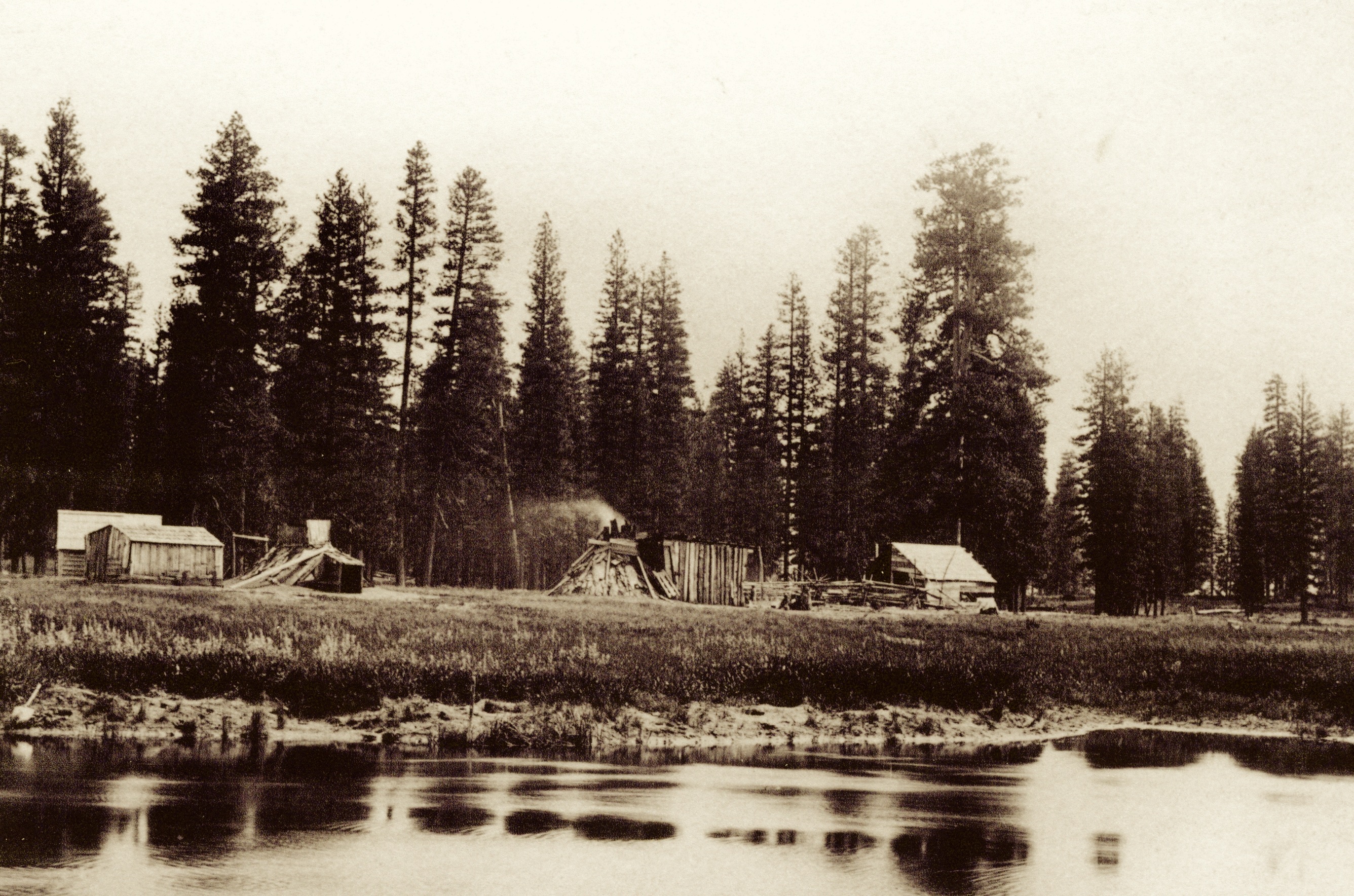
In 1887, Congress passed the General Allotment Act also known as the Dawes Act. It is a complicated story., however, for Indians not on tribal reservations they were entitled land allotments up to 160 acres.
In the early 1900s, when the Great Western Power Company began its aggressive campaign to purchase the lands of Big Meadows, Plumas County into a reservoir site to be known as Lake Almanor. Some of the purchases were not friendly and Great Western Power sued to obtain ownership. The company sued six Maidu Indians—Jennie Meadows, Ellen Jenkins, John Jenkins, Hester Jenkins, Robert Shafer and Jim Lincoln—to seek condemnation of their government allotted lands. On November 22, 1902, a court trial was held and the Maidu were awarded a judgment, giving them the assessed value along with an additional $1,600 in compensation. At the conclusion of the trial, Great Western paid cash to the Maidu, who according to one report the Maidu “went home rejoicing.” There was a good reason, too. In 1908, it was disclosed that those six Maidu had never owned the lands Great Western sought condemnation!
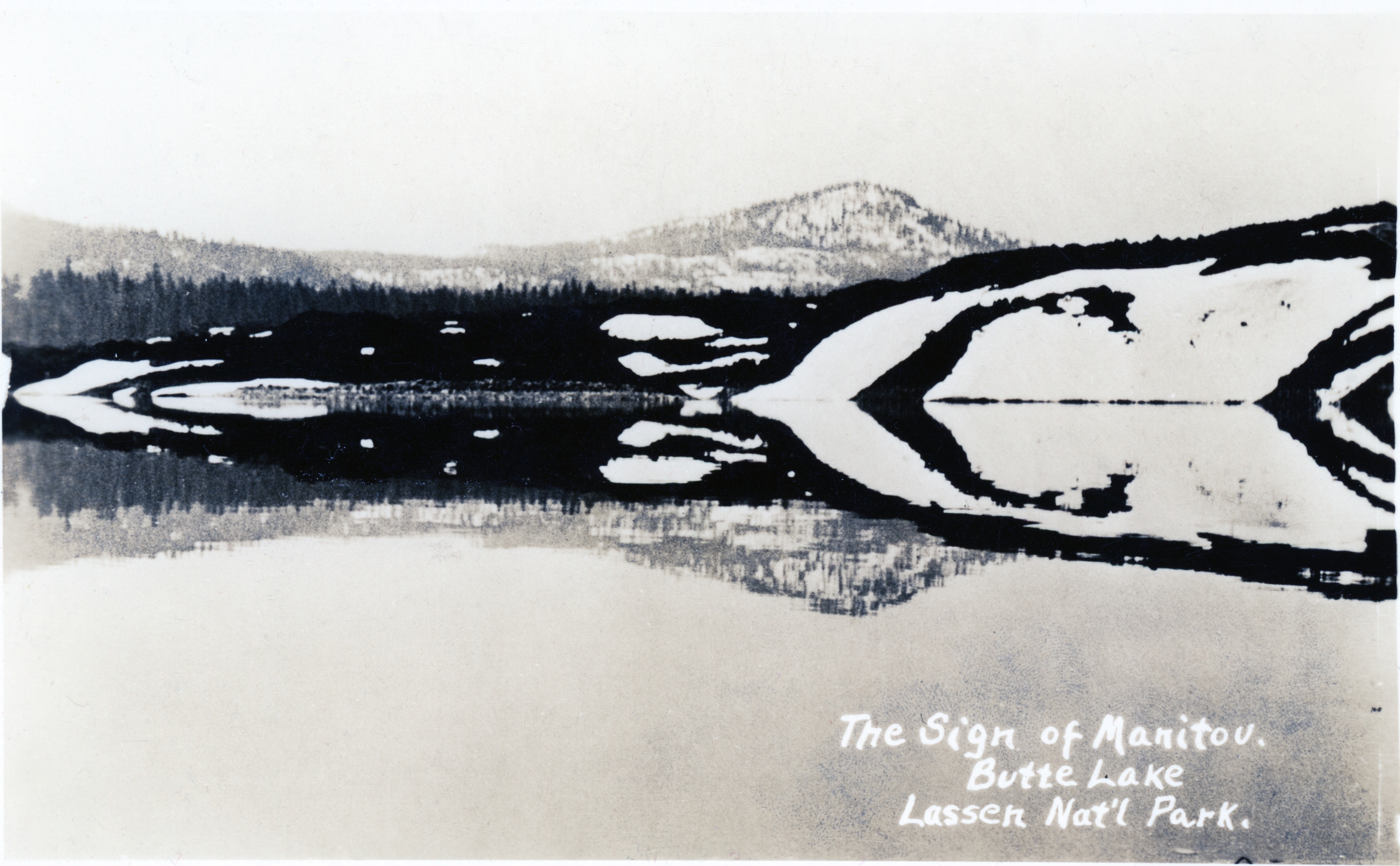
When Lassen Volcanic National Park was created in 1916, its boundaries were much smaller than they are today. In the mid-1920s when the park wanted to extend its boundaries, taking in adjoining national forest land, the Lassen National Forest objected. It was their opinion, they could do a superior job of handling the natural resources that could be best utilized in the public’s interest, than the park.
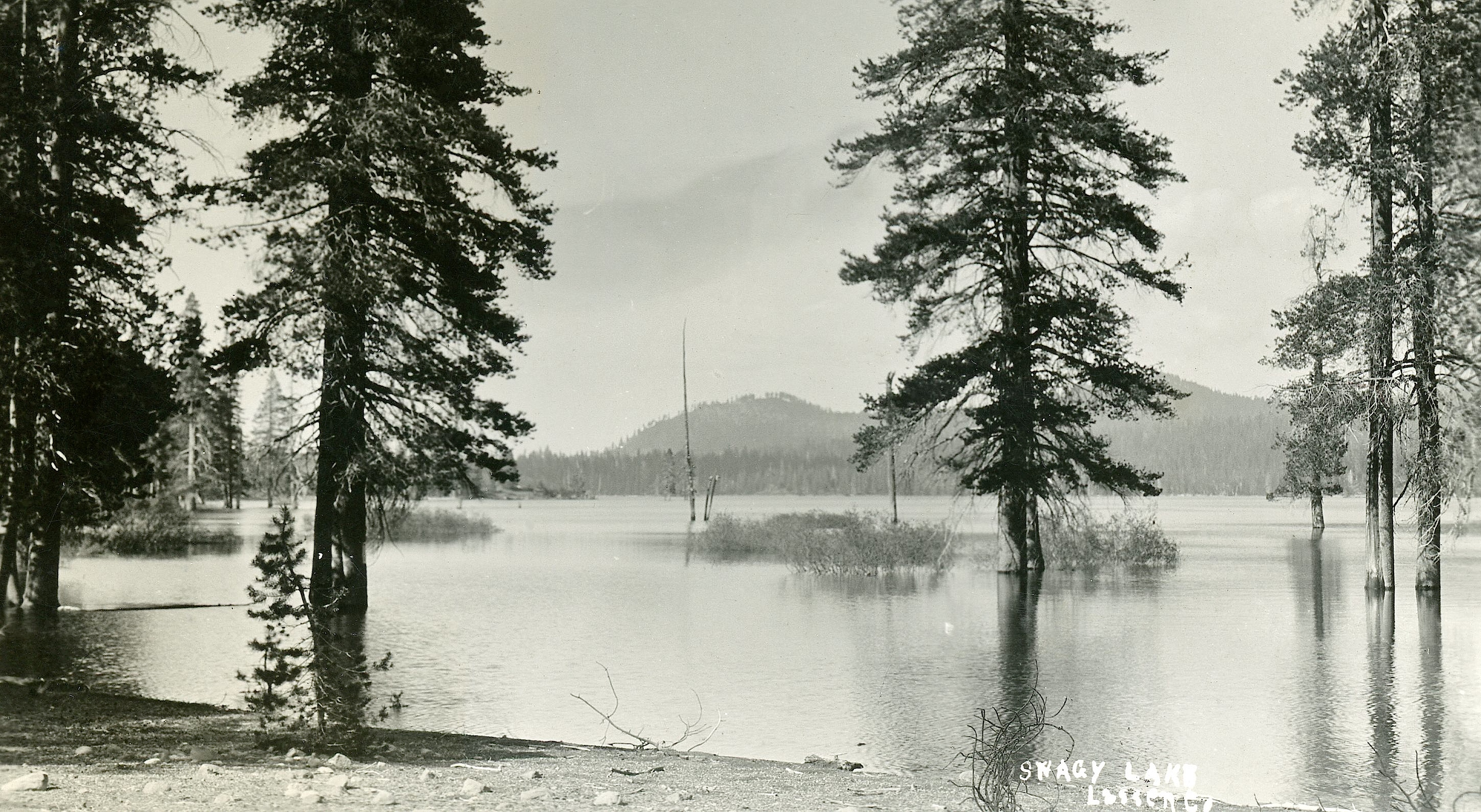
One proposal in 1913 could have had a significant impact to Butte and Snag Lakes.. Jonathan Stark of the forest service viewed the two lakes as reservoir possibilities. It was his belief, though some scientific work would need to substantiate it, that Butte and Snag Lakes were connected by an underground stream. It was his idea to place a ten-foot dam at the outlet of Butte Lake. The ten-foot rise of the levels of Butte and Snag Lakes could impound a million gallons of water that could be utilized for irrigation downstream.
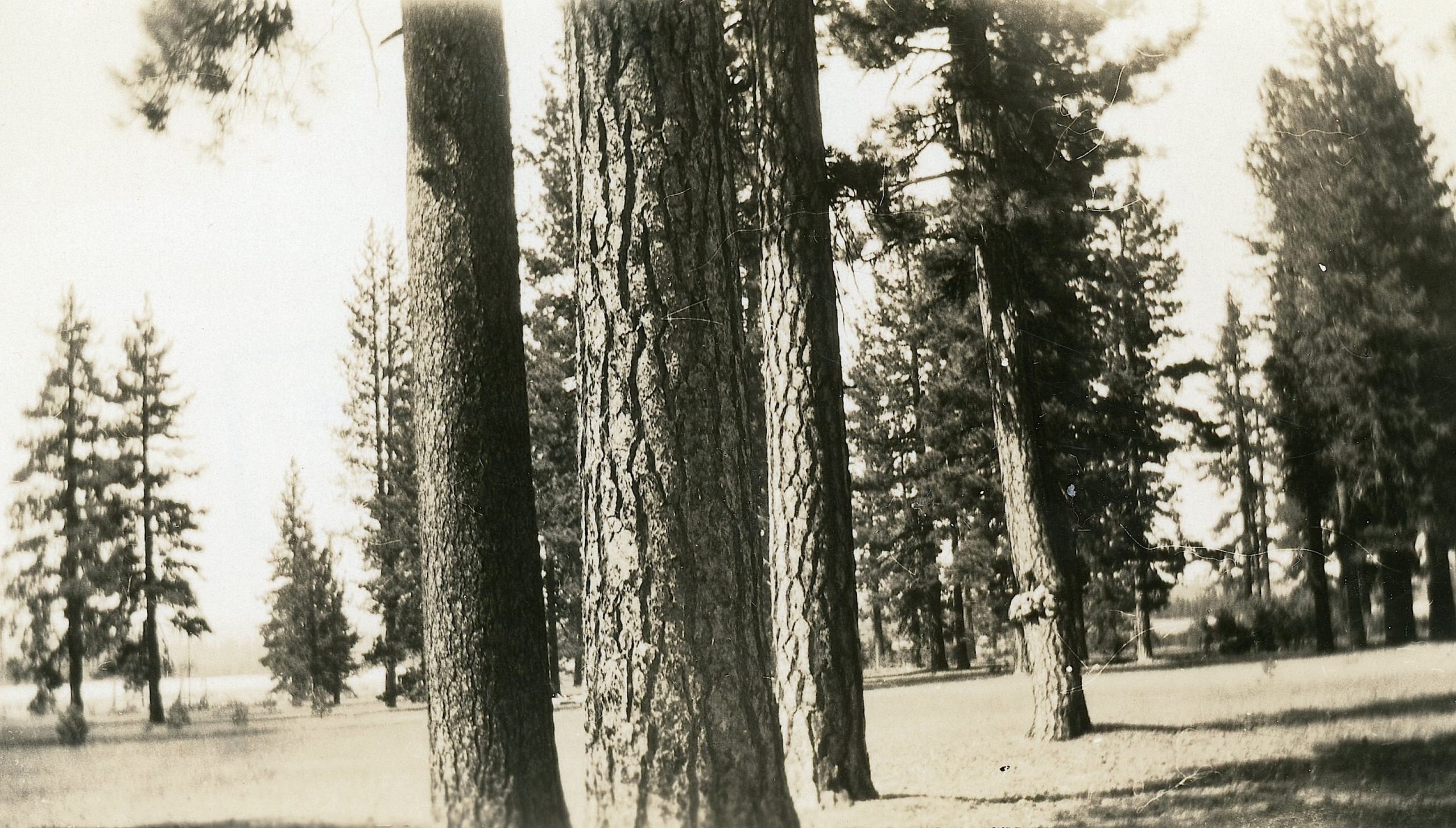
In 1944, when the Red River Lumber Company sold Westwood and its Burney Tract, the company still owned a large quantity of timberland in Northern California, besides other properties across the nation. The dissolution process would take years, and like many family affairs some members of the Walker family went their separate ways.
In January 1948, the Walker heirs announced they formed a co-operative company, Shasta Forests to manage their timber holdings. Seasoned residents referred to it as Shafco. In 1969, it went through a reorganization process and a new entity evolved as Red River Forest, which continues to this day. It should be noted that the property is managed by W.M. Beatty & Associates, who have had a long affiliation with the Red River heirs.
Tim
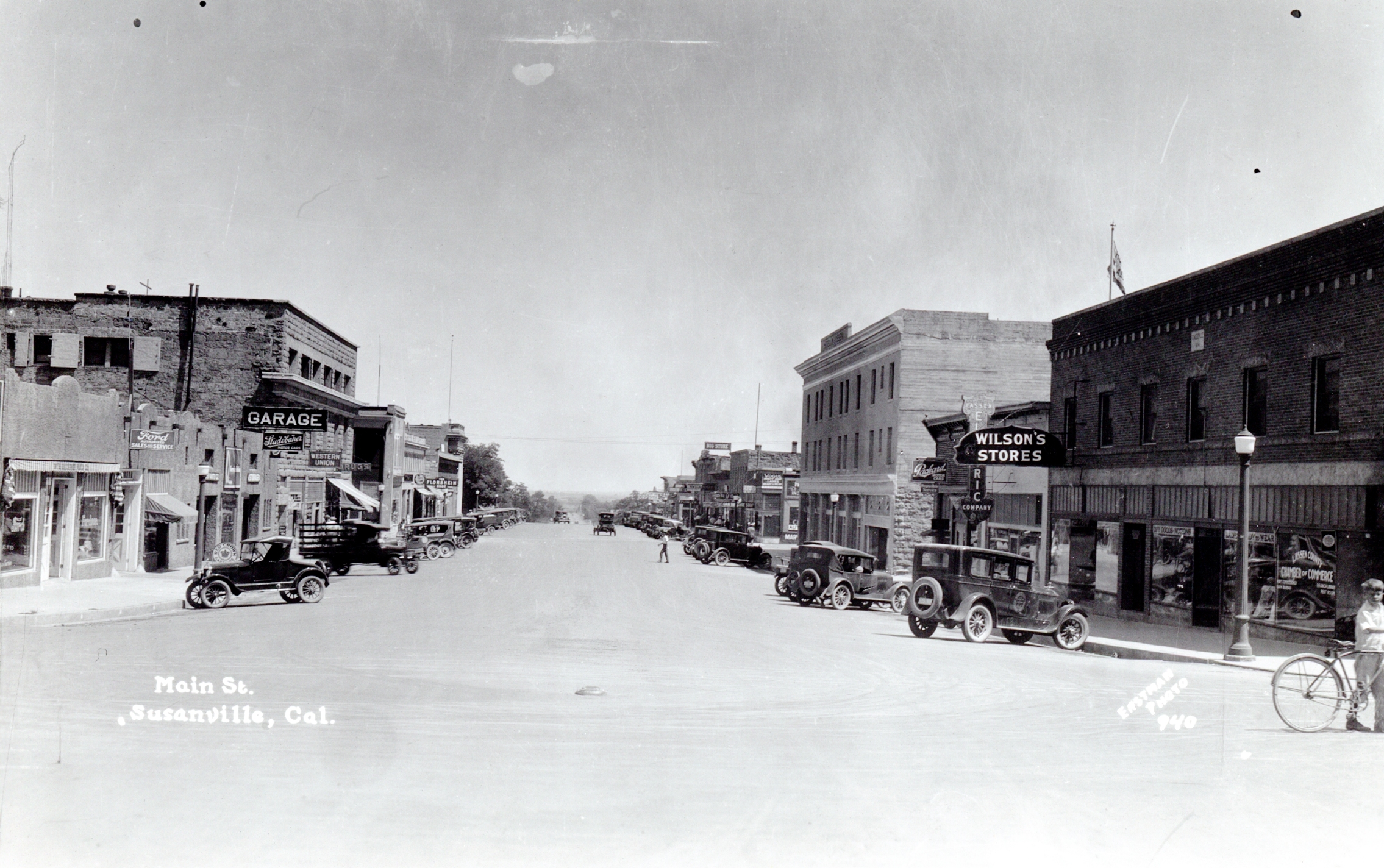
From time to time there is some local banter about Michael Shulman’s book Local Dollars, Local Sense. The gist of it if everyone invested just one percent of their money locally, it would greatly enhance the local economy.
A century ago, that was certainly the case locally. At the same time, this is when chain stores were opening in Susanville. Some held the opinion that these stores were a “menace” since their profits did not remain in the community. It should be noted the town’s two banks, Lassen Industrial Bank and the Bank of Lassen County were local institutions—they had a vested interest in the area’s economic prosperity.
It is also noteworthy how the citizens, raised funds as incentives to have the Lassen Lumber & Box Company and Fruit Growers Supply Company establish their lumber mills in Susanville. For Lassen Lumber the citizen’s offer was a 40-acre mill site, with water rights and $8,000 cash. For Fruit Growers 243 residents pledged a cash bonus of $41,130. Both investments paid off handsomely for the community.
Tim
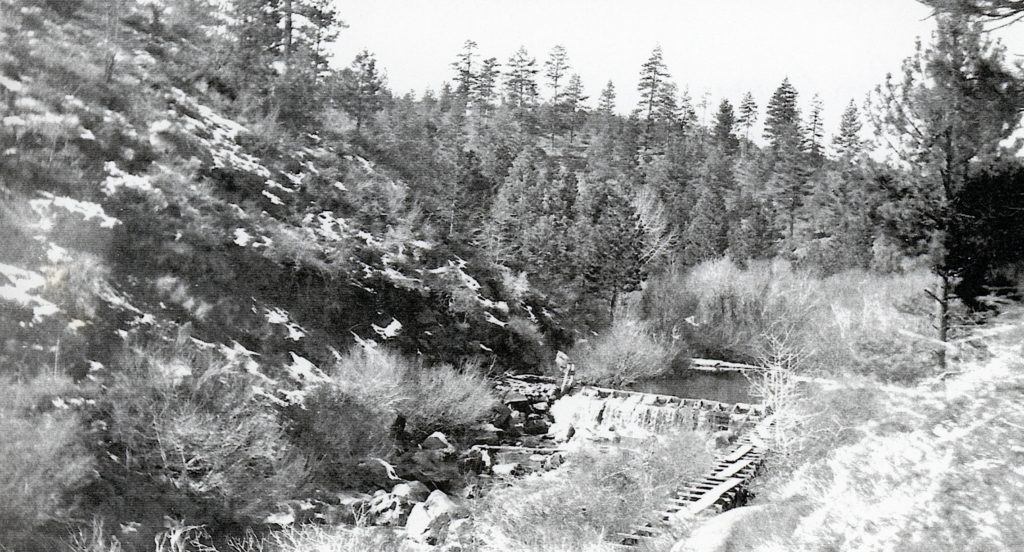
Susanville’s first electric power plant was located at Bremner Dam on the Susan River, about a mile from town. It was destroyed by fire in 1894. In 1895, James Branham revived the power plant and it was located further downstream. Just below Hobo Camp he built a dam and on the north side of the canyon he built a flume to convey water to the power plant about a half-mile away. The plant operated until 1910, when it was closed and a new plant was built at Bunnell’s.
T.A. “Ab” Ramsey saw the potential in the dam. In 1888, he purchased a 737 acre ranch just south of Susanville, along Richmond Road. Many know by its current owner, Les Allen. Ramsey had an irrigation ditch starting at Branham Dam and extending to his ranch, which is still known today as Ramsey Ditch.
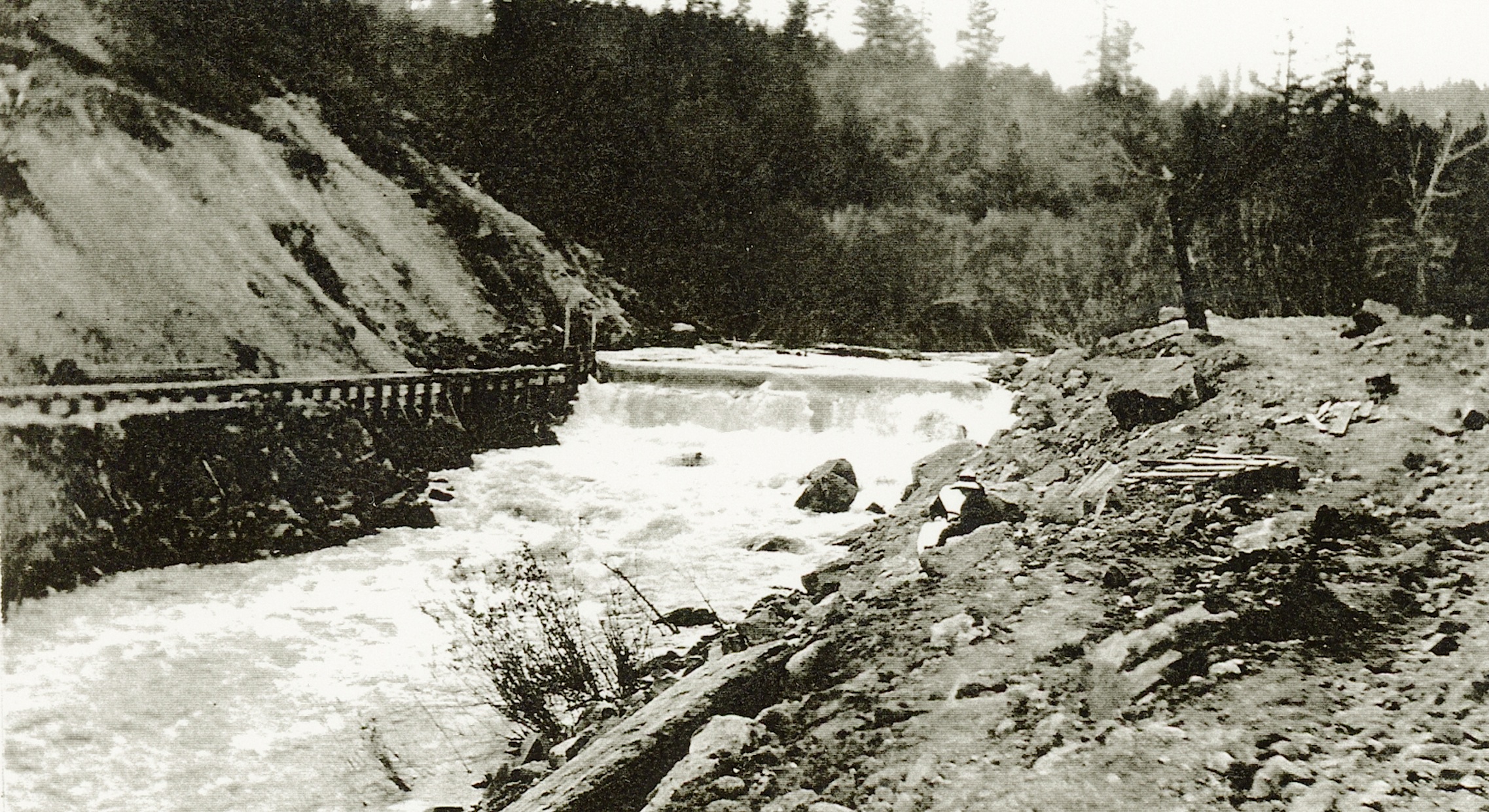
In 1898, the dam caught the attention of civil engineer Albert Halen, who was working for the development of the Standish Colony. The colony had acquired the Susan River Irrigation System. He proposed to heighten the dam and extend the Ramsey Ditch all the way to Bald Mountain. That did not happen. In 1906, the Lassen-Willow Creek Water Company made the same proposal. Ditto, it did not happen.
In February 1928, a lawsuit was filed concerning the water rights to Ramsey Ditch. Several weeks later, unknown parties dynamited Branham Dam leading to its destruction.
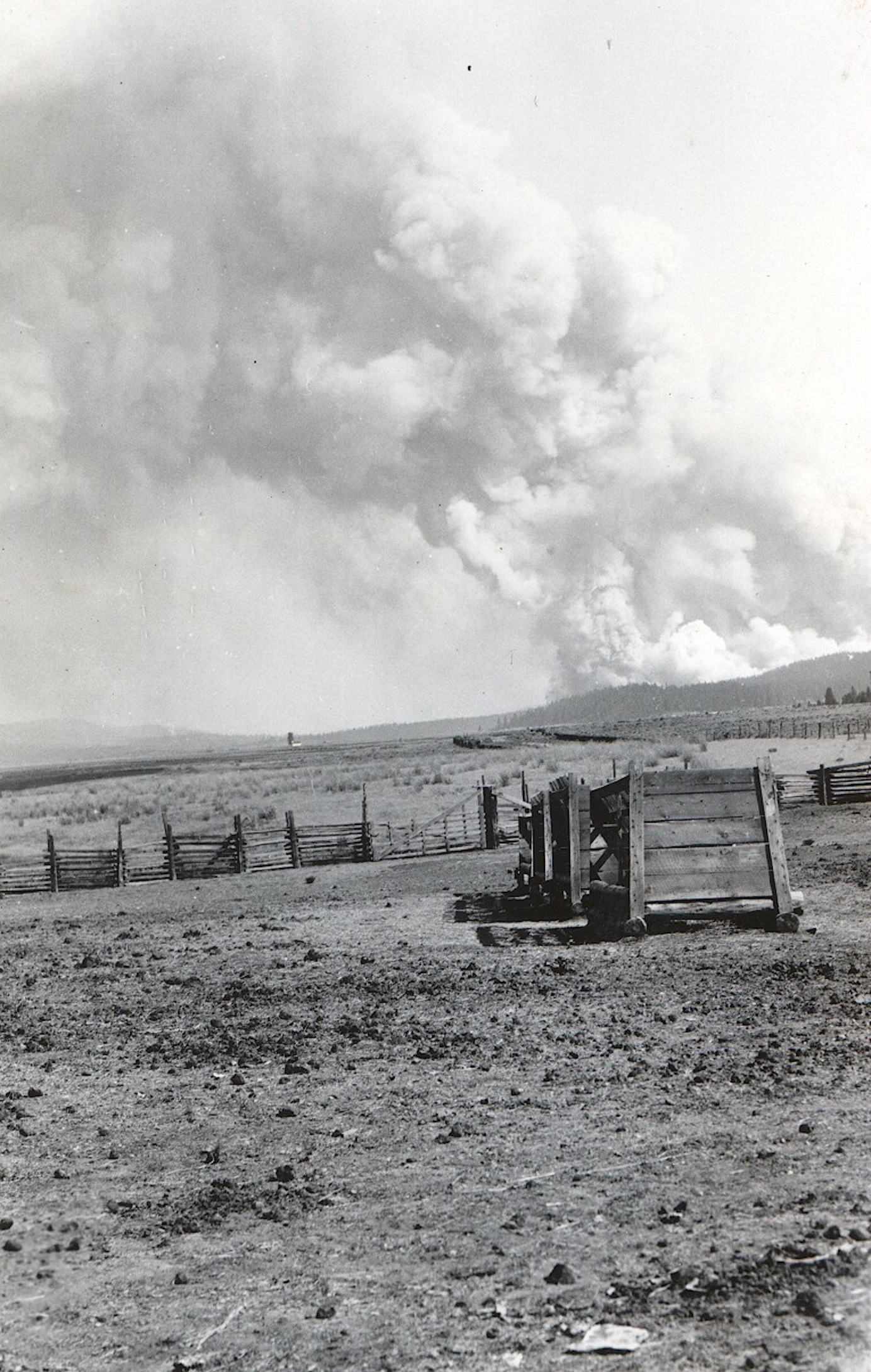
The 1928 fire season was different than most. In July witnessed the largest fire on the Lassen National Forest at Mill Creek near Mineral. It consumed nearly 11,000 acres, most of which was cut over lands of the old Sierra Lumber Company. Most of the other fires on the Lassen were two to ten acres in size. Other areas in California did not fare so well.
This was, however, when the area experienced its first large range fire. A fire broke out near Horse Lake and then extended all the way to Secret Valley consuming some 128,000 acres. While no structures were lost, considerable damage to fences was an issue. The area was used for sheep range by R.T. Jenkins and the Jauregui Brothers.
Tim
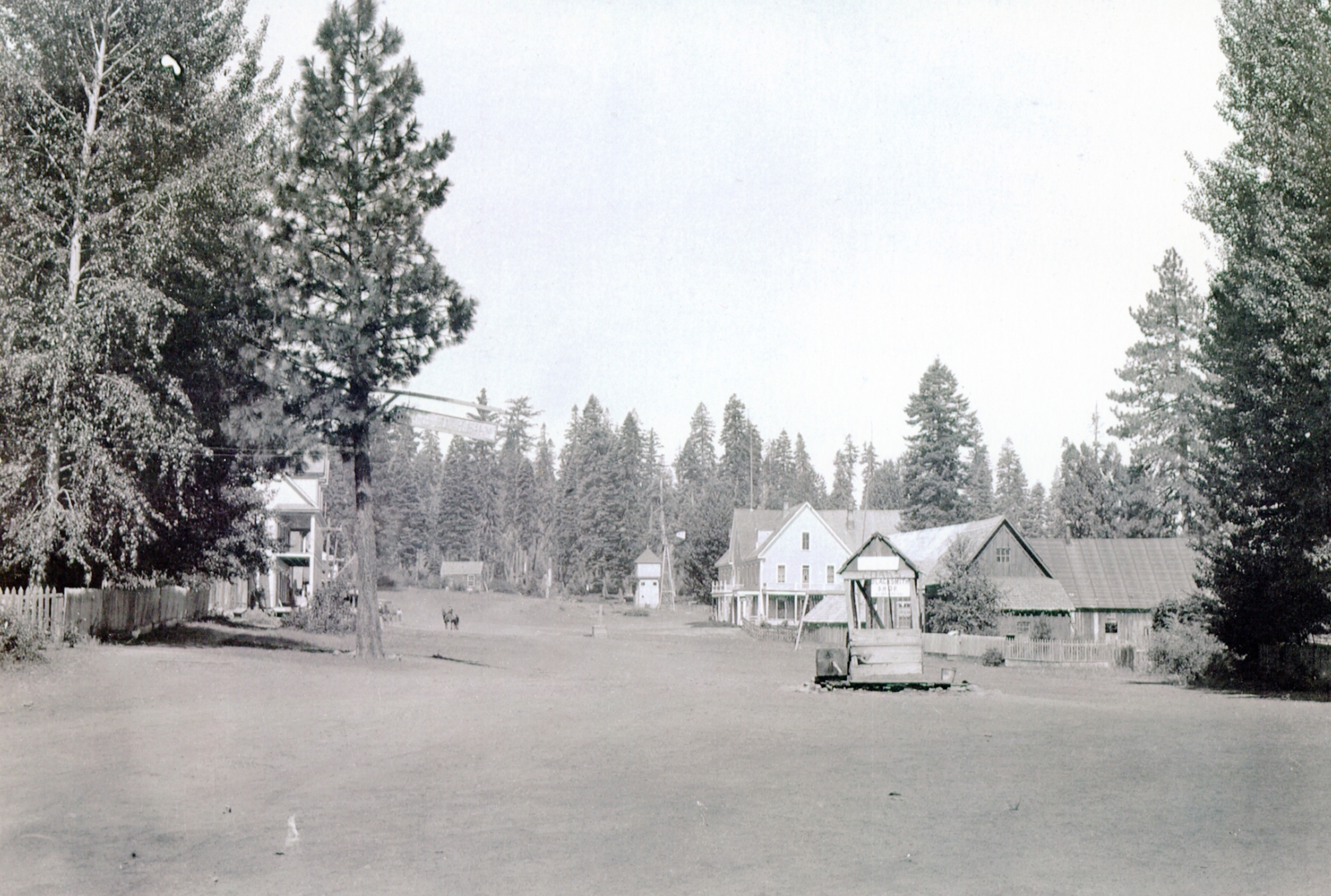
In 1861, James Lee settled on the west side of Big Meadows, not too far from where the original town of Prattville would be established, He died on June 17, 1864 and buried on his property. This, in time, became the Prattville Cemetery.
In 1914, Great Western Power Company transformed a portion of Big Meadows into Lake Almanor. In 1926, Great Western was in the process to heighten its dam, where by Lake Almanor would double in size. Thus, Great Western had to mitigate some of the areas impacted by the increased size of Lake Almanor, such as the construction of the Chester Causeway and the Prattville Cemetery would need to be moved to higher ground.
In October 1926, Great Western hired Greenville resident Kenneth Murray to exhume the bodies, some 101, and move them 300 yards to the west. A.D. Greig of the Susanville Marble Works was in charge of relocating the thirty-five monuments in the cemetery.
On a final Pacific Gas & Electric Company, the successor of Great Western, donated the Prattville Cemetery to the Chester Cemetery District in 1962.

On a quarterly basis, I ask you the reader, if there is something you would like to learn more about or maybe its something you heard, but question its validity. So here is an opportunity to participate. I will do my best to answer any questions. It should be noted, it may take awhile for the answer to appear as a post. The primary reason, many of the daily posts are done nearly a month in advance. So by the time you read this I am already working on posts for the middle of November, or at least I should be. Whatever the case may be, I look forward to hearing from you. Of course, it should be noted that paid subscribers requests receive priority. In addition, you can always send a request at any time.
Tim