Tag Archives: Weather

Constantia Snowstorm

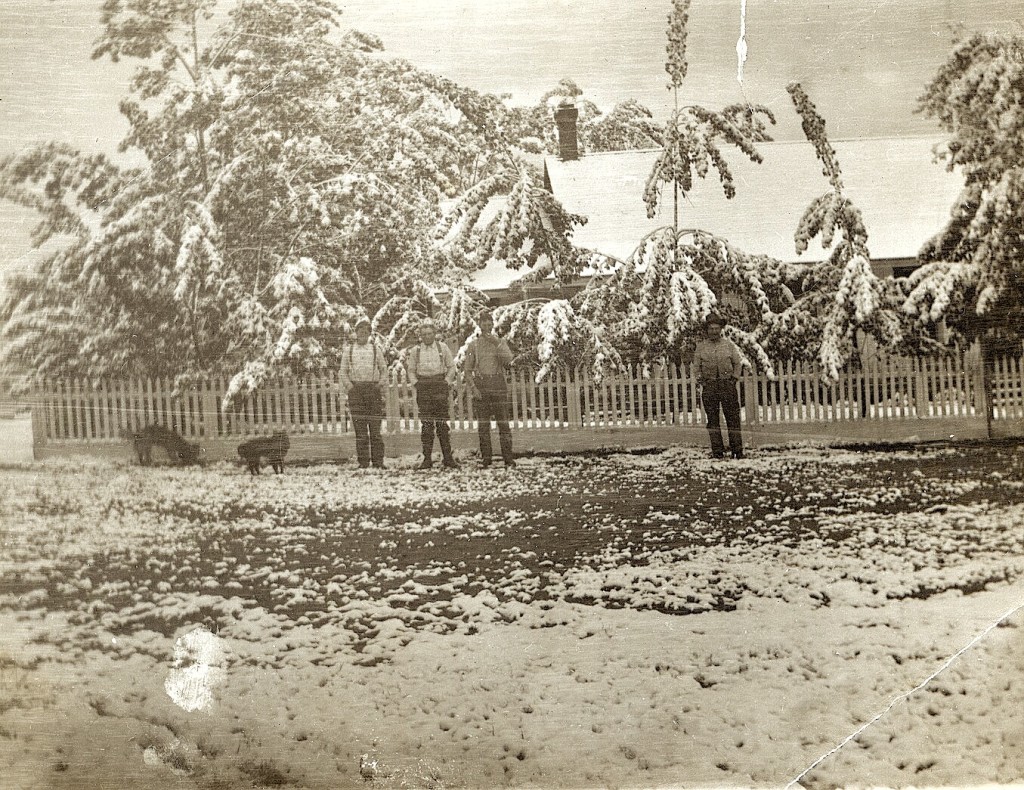
Constantia, June 21, 1907

For the first day of summer, I thought I would share this picture of Constantia taken on June 21, 1907. Unfortunately, I do not possess any other documentation and no reference made in the newspaper, other that it was unseasonably cold. I went through my various notes of Phil Hall, who provided me with the photograph. His parents at that time resided at Constantia. However, anyone who has resided around these parts, have experienced numerous strange weather events. In a related matter, Claude Wemple told me in a 1978 interview that Milford received four inches of snow on July 4, 1902.
Subscribe or Donate

Spring Runoff 1930

Gallatin Beach
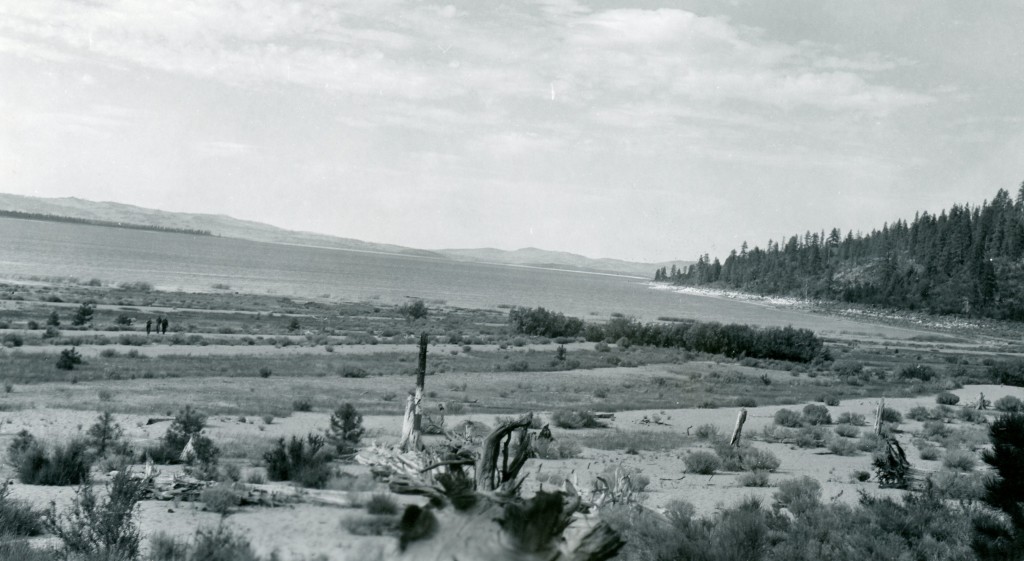
Gallatin Beach, Eagle Lake, 1940.

In early March, 1930 a jubilant Jim Fritter of Eagle Lake had proclaimed that Eagle Lake had already risen by two feet.  He speculated that the lake level would rise an additional three feet. This was good news for the farmers of the Honey Lake Valley, since there would be Eagle Lake water flowing through Bly Tunnel. Elsewhere it was reported that 13.3 inches of precipitation had been measured so far that winter, with December being very wet.

Fast forward to April  2018, when Eagle Lake saw an increase of 2 inches for that month.

Donate or Subscribe.

The Ice Man

Ice Harvesting
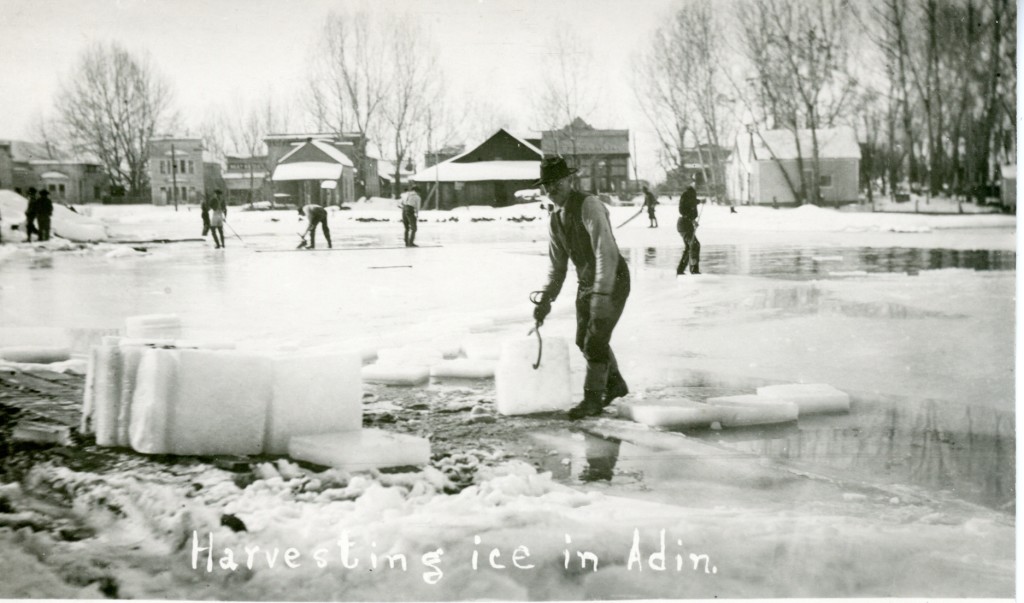
Ice harvesting at Adin, 1911

Way before the days of refrigeration, one of the annual rituals in the region was the harvesting of ice. As anyone who has lived around these parts for any length time, winter can be finicky. Such was the case in January 1904 when the Susan River was frozen over, the ice being over eight inches think. It was imperative to harvest as much ice as possible before there would be a change in the weather.

Now enter Susanville’s sporting fraternity on a betting proposition in which considerable money was waged. The bet was whether Andy Buchler could cut twenty tons of ice in ten hours. Buchler surprised everyone by sawing twenty-two tons in eight hours!

Subscribe!

More snow berms

The intersection of Cottage and Lassen Streets, January 2005.
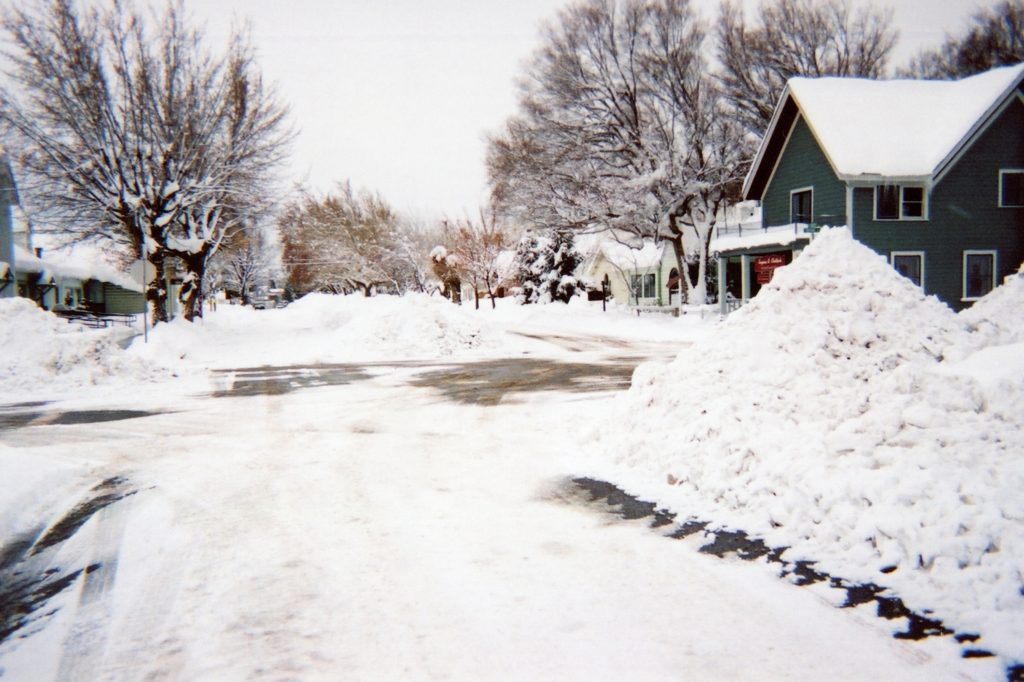
Today’s post will be rather brief, since so many folks attention is focused on a singular event. Why, I do not understand all the hype that goes with that. Anyhow, if you recall last Sunday, I wrote about snow berms and Main Street. This is just one of those tidbits to leave behind a record when the City of Susanville changed their snow removal policy. It was the winter of 2004-05 was the last year the city plowed the snow to the center of street creating berms. The current practice is to plow the snow to the gutter. While the streets maybe clear, it is a challenge to reach the sidewalk without injury.

Donate!

Red River’s Snow Roller

Red River’s snow roller in action. Courtesy of Calvin Sharp
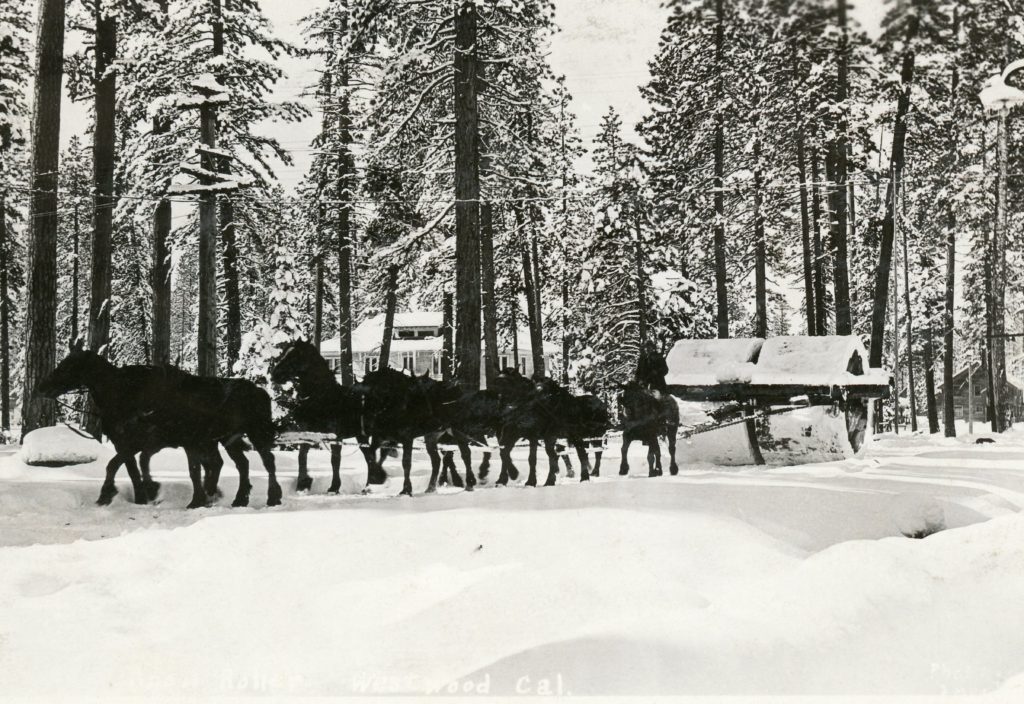
On January 2, 1916, it began to snow, and snow and snow for nearly three weeks. At Westwood it was reported that they fourteen feet of snow. Resident Manager, Fletcher Walker called it a “blue snow.” From this particular snowstorm, standard snow removal techniques of Westwood streets were no match to combat the deep snow. Someone came up with ingenuous idea to build a snow roller to compact the snow. The Westwood correspondent to the “Lassen Weekly Mail,” observed, “The immense snow roller is in successful operation on the streets. It leaves a compressed trail wide enough for teams to pass. Eight to twelve horses have been used to haul it through the streets and the affair makes an interesting ensemble.”

Subscribe!

Lake Almanor Cloud Seeding

Lake Almanor, 1926.
From time to time discussions have been held whether the cloud seeding in the Lake Almanor Basin area by Pacific Gas & Electric Company affects the areas to the east. In 1979, Lassen County officials thought the cloud seeding was part of the drought problem in southern Lassen County. In October 1979, Henry LaPlante of PG&E stated that the company has been treating selected storm systems for more than 25 years. He said the intent of the seeding was to increase the high elevation snowpack. Furthermore, LaPlatnte wrote, “There is no scientific evidence which indicates that cloud seeding activities in our Almanor area reduces the amount of precipitation in any other area.

Donate!

Dry Decembers

Main Street, Susanville, January 1938.
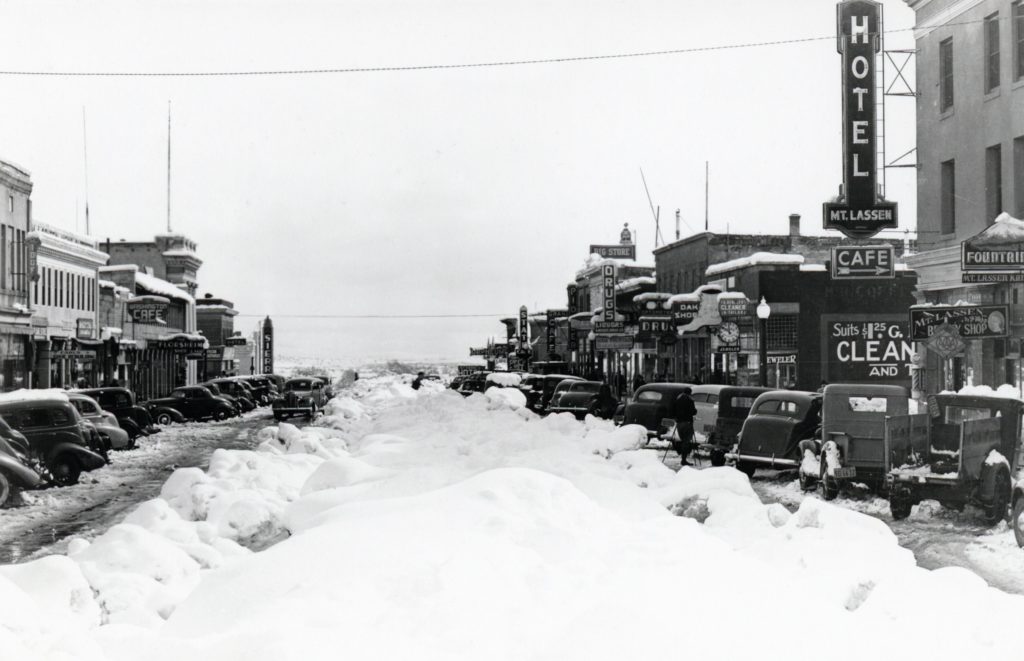
Are dry Decembers a prelude to a dry winter? Record snowfalls occur in January, and some times the preceding December was drier than normal and some times not. I will share a bit wisdom. As a young naive lad, I once asked my Uncle Bob Rea what his winter prediction. His reply, “I will tell you in March.”

Subscribe!

Winter Weather Records

Main Street, Susanville, January 1938.

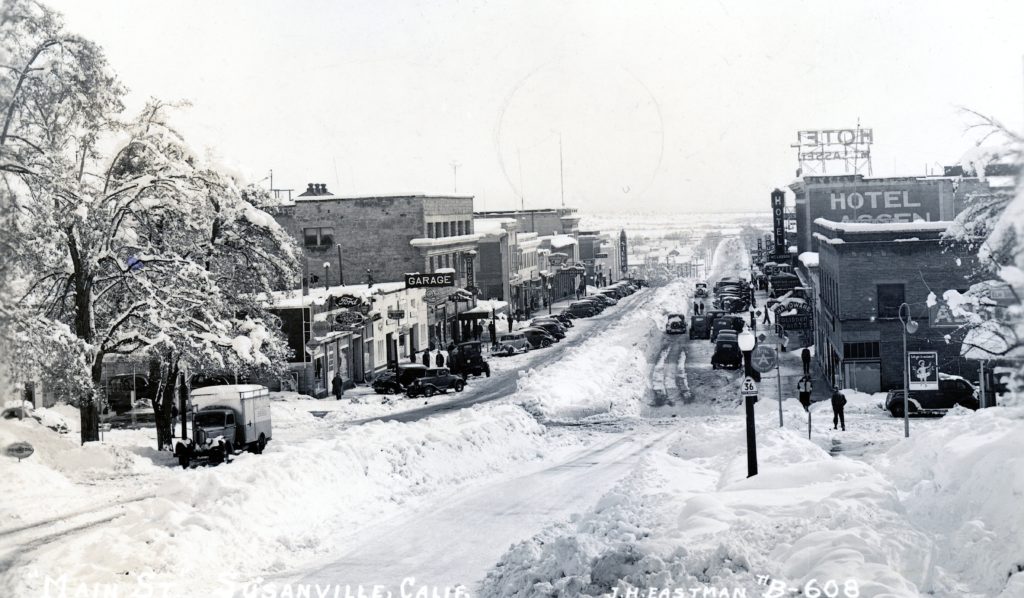
Lately, I have received inquiries how this winter’s precipitation figures compares with previous wetter than normal years. Of course, it is still too early, since a lot can happen in February and March. The winter of 1937-38 witnessed some of heaviest snowfalls. It was also one of the wettest on record with nearly 40 inches of precipitation! The spring runoff was tremendous and filled Honey Lake for the first time in twenty years. In certain ways, Honey Lake is a good indicator as to what occurs from one winter to the next.

By spring time, I will provide more, especially to see what we experience in the short term.  Stay tuned.

Subscribe! 

The Floods of 1955

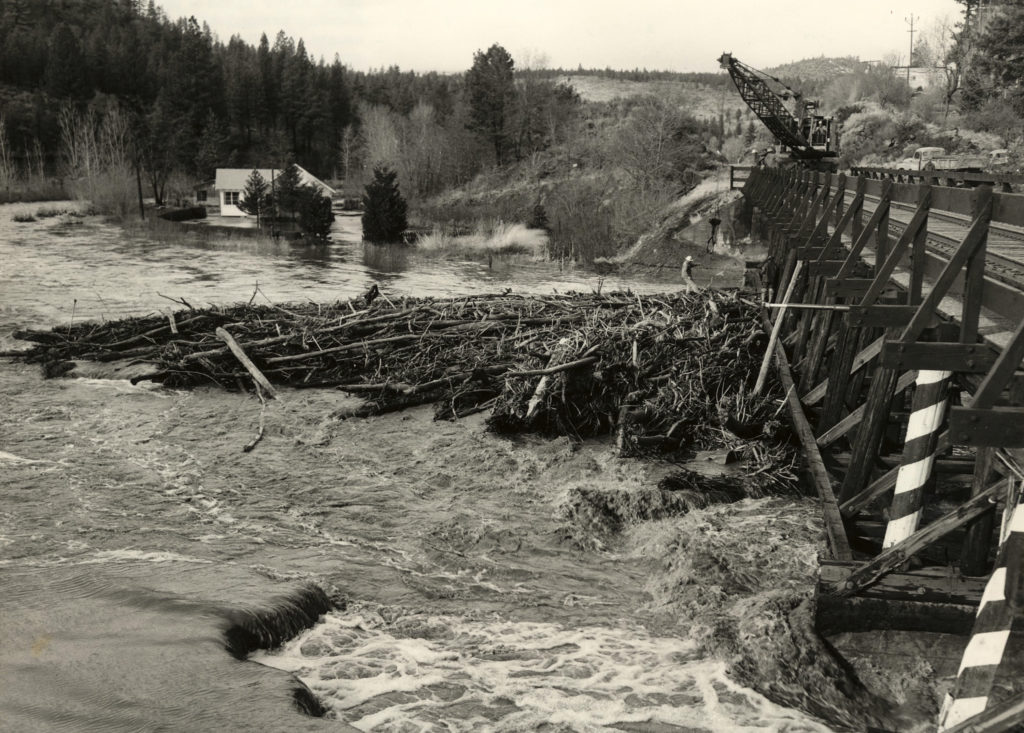
Southern Pacific's railroad trestle at South Lassen Street, December 1955.
Southern Pacific’s railroad trestle at South Lassen Street, December 1955.

The floods of December 1955, locally and throughout California was a notable event to say the least. It began with warm rains on December 15th and by December 20th, 4.41 inches had fallen in Susanville. The snow elevation remained high, and on December 20th there was  21 inches of snow on Fredonyer summit.  The rain continued turning the Susan River into a raging menace. Conditions worsened as the river brought assorted debris with the floodwaters. The debris became a major obstruction when it collided with the Southern Pacific’s railroad trestle at Susanville’s Lassen Street. On December 23rd Marvin D. Coltran, a member of Southern Pacific’s bridge gang fell into the water there. Efforts were made to reach him, but the river’s swift current swept him away. Continue reading The Floods of 1955

A Janesville Windstorm

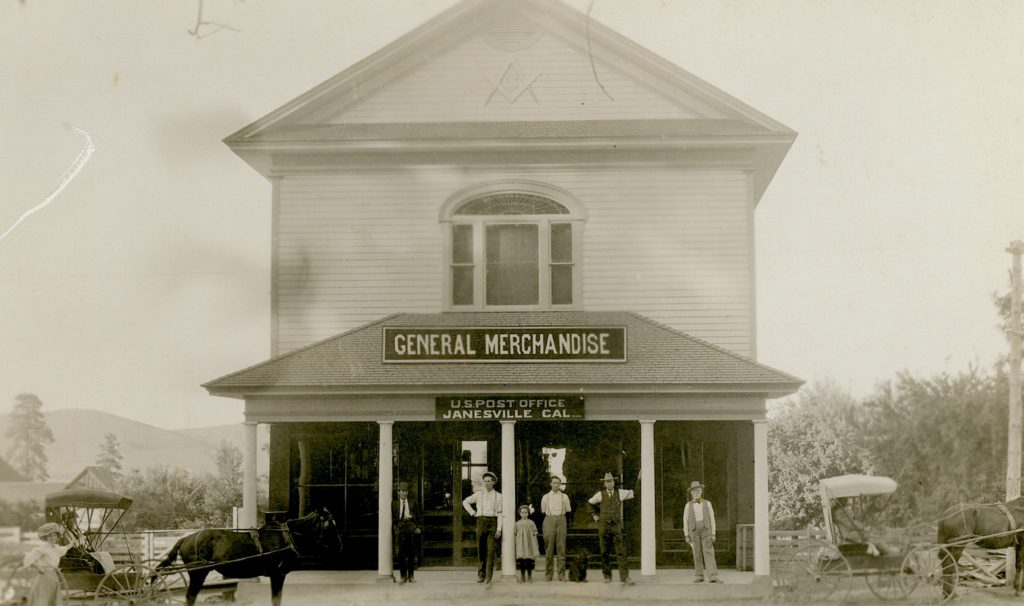
Janesville Masonic Hall,circa 1912.

The residents of Janesville became giddy when the news broke in late August, 1910 that their local masonic lodge was to build a new hall, next to the Janesville Hotel. By September plans were underway to hold a dance in the new hall scheduled for November 4.

By early October, the skeletal two-story frame of the building had been erected. Then on Monday, October 3rd, Charlie Wilbur, the contractor told this crew to stop work, due to the poor weather conditions, especially the high gusty winds. Then out of nowhere, gust hit the structure practically demolishing it.  The next day Wilbur’s crew were busy picking up the pieces and work resumed on the building. However, the celebratory dance scheduled in November had to be postponed for another time.

Support by subscribing