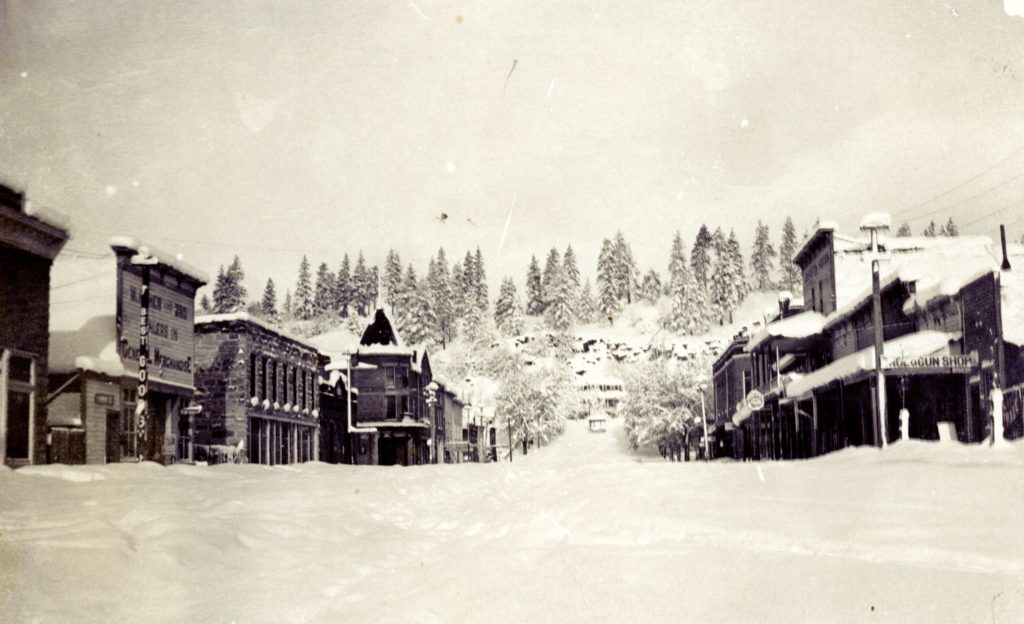
At the conclusion of November 1931, Robert M. Cook, editor and publisher of the Lassen Mail embraced the early winter weather conditions. Cook reported that it had been cold and snowy all month, even a light snowfall on Thanksgiving. On November 22, the morning was a brisk nine degrees. Because of the cold temperatures and heavier than usual snowfall in the mountains, Cook thought that was the ideal scenario—the. solid frozen snowpack would be ideal next spring/summer to insure water for irrigation.
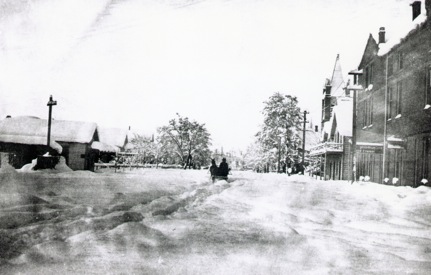
This is an interesting postcard I came across. Unfortunately, the postal cancel stamp was uneven, so most of the date does not show. The author, Carolyn, who sent the card to Miss Sophie Schoenheit of San Jose wrote: “I took this scene in Susanville when the snow was five feet deep.”
The snow obliterates most of the building depicted, so I cannot figure out which residence it is/was. However, I wonder if it might be the Taylor/Compton house on North Weatherlow Street. Whatever the case may be, we could use a lot of snowstorms depicted in the photograph, because this area, as well a wide swath of the West really needs this kind of moisture.
One of the most driest was the winters was that of 1923-24. It also occurred during a twenty year drought from 1917-1937. Susanville received less than five inches of precipitation during 1923-24. It was so dry that winter that in the middle of March, a one-inch snow fall at Susanville caused great excitement. There was even a greater commotion in Westwood when eighteen inches of snow fell. It disappeared in a matter of hours. That was the extent of precipitation for the winter. Continue reading The Dry Winter of 1923-24→
The Great Western Power Company encountered numerous problems with the construction of their dam that would create Lake Almanor. The first dam they started to construct they were forced to abandon. A new dam site was selected and by the summer of 1913 work was fully underway. However, due to financial constraints, the dam’s height was greatly reduced, which meant the new reservoir would only be half the size.
On Christmas Eve, 1913, Mother Nature intervened. An estimated five feet of snow had fallen at Big Meadows, the location of the new reservoir. In January a warm rainstorm struck the region. The snow quickly melted and the reservoir began filling up prematurely. This caught the Baccala family, whose ranch was located along Bailey Creek, off guard. Their place flooded, stranding nearly a hundred head of cattle, and an automobile, among other personal effects. Further down, towards present Prattville, was Great Western Power’s headquarters, Nevis, which was was the former Meadow View Hotel. The surrounding area flooded, creating an island. Relief came somewhat in the form of snow. Did it ever snow! Some areas of Big Meadows reported nearly twenty-feet by mid-February.
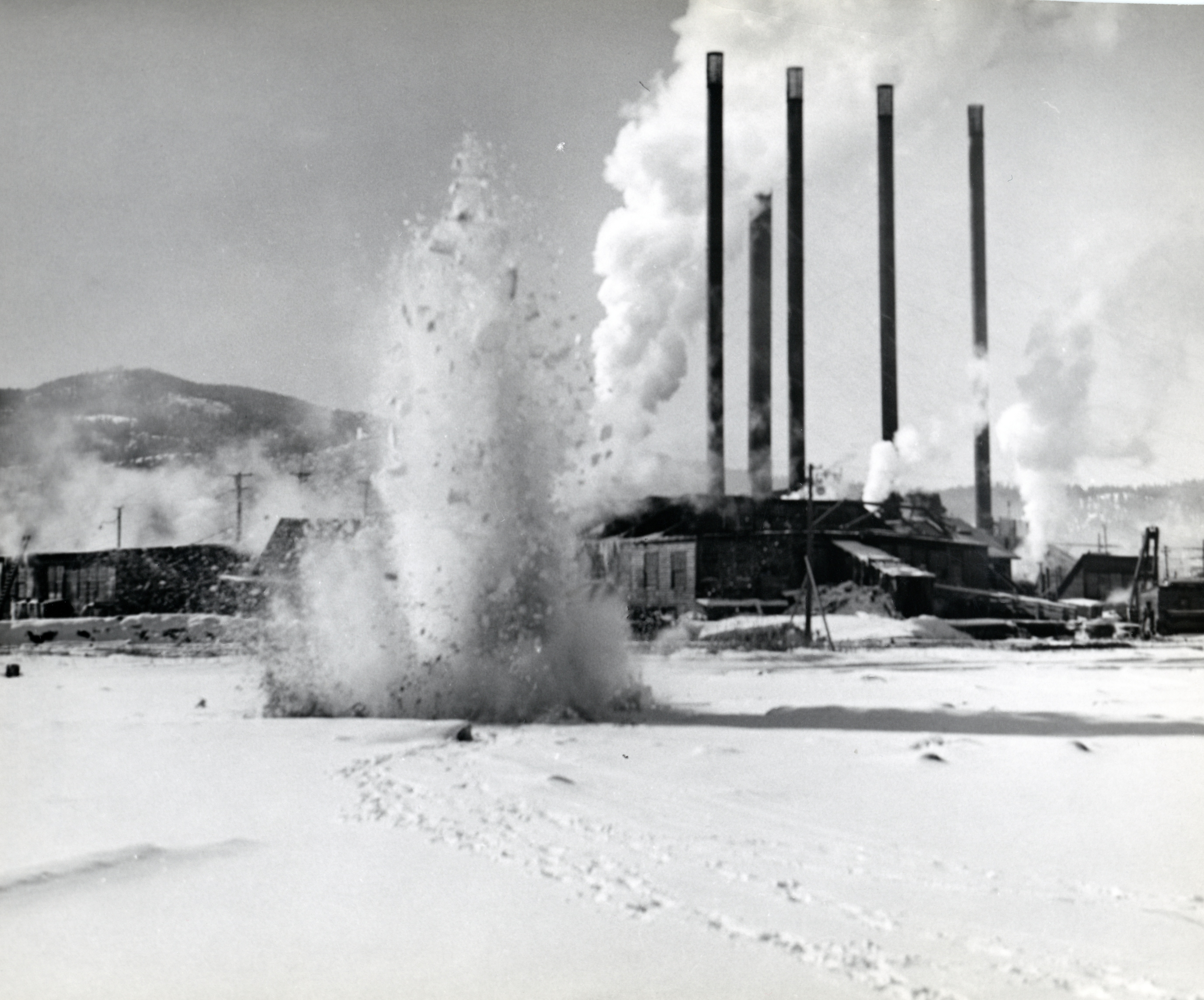
Dynamiting the Westwood millpond, January 27, 1949. Courtesy of Fruit Growers Supply Company
It has been some time since this region has experienced prolonged sub zero temperatures, which is fine with me. When it does get that cold things happen. In January 1949, the temperatures plummeted to nearly thirty degrees below zero at Westwood. The millpond froze. When the Red River Lumber Company designed the facility, they placed piping from the powerhouse that forced steam air directly into the millpond near the sawmill. This system was no match for Mother Nature. To keep the mill operating it was necessary to use dynamite to blast loose the logs in the millpond. Continue reading How Cold?→
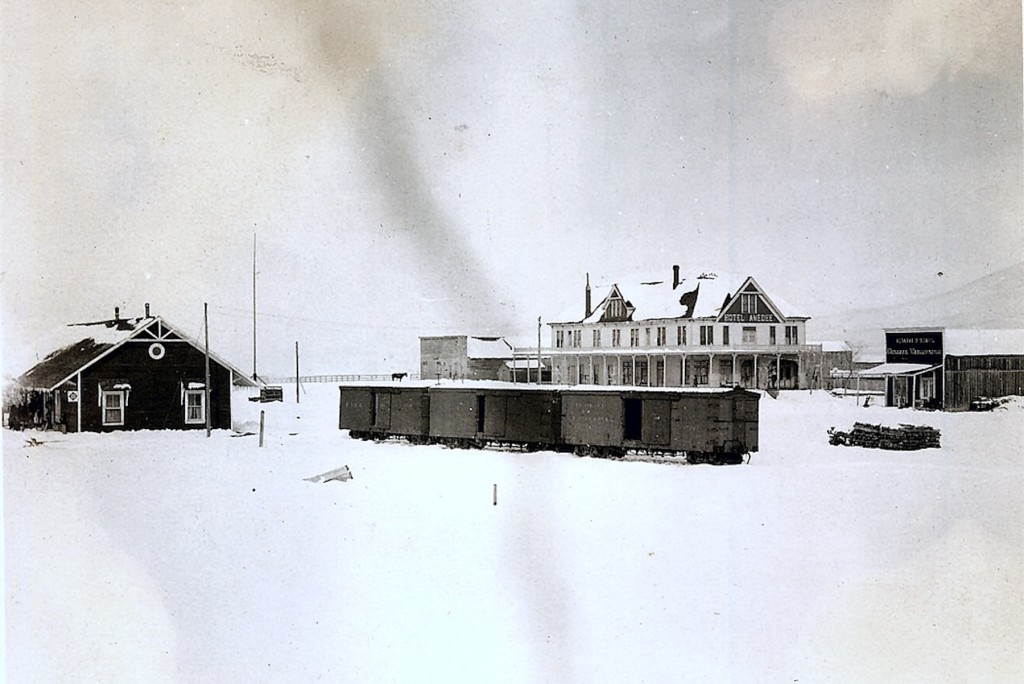
Amedee, January, 1916 courtesy of Marie Herring Gould
During this pandemic winter I will attempt to at least send along a brief Tuesday post. This picture was the very first one I posted back in February 2015 when I was learning how to do such, and that learning curve continues to this day.
Times were very quiet for Amedee and eastern Lassen County, and Modoc too, due to a heavy January 1916 snowstorm that left those residents isolated. The snow blockade created a twenty-one day shut down of the NCO trains. The lack of outside communications with no mail, newspapers etc made for a trying time.
I hope everyone will enjoy the next three months of these Tuesday Tidbit installments.
View of Richmond Road January 1916 from Winchester Hill. Susanville received four feet of snow in January, followed by below zero temperatures. After that it was the beginning of a twenty-year drought, with Honey Lake going dry in 1919, and not filling up until the spring of 1938.
On October 2, 1916 Susanville received its first snowfall for the season, just enough to blanket the town. On the other hand it was reported there were seven inches of snow on Fredonyer Summit. After the storm passed through the temperature plummeted to 22 degrees. As one observer noted, while not cold enough to begin ice harvesting season, no one had to tend to their vegetable garden.
Is a early snowstorm a harbinger for a long cold, snowy winter? Not exactly. Many years, it turns out, when there is an early snowfall, usually is just the opposite and tends to be drier than normal winter. In this case, the winter of 1916-17 marked the beginning of a twenty-year drought.
Spread the word, and encourage a friend to subscribe
South Lassen Street, Susanville, March 1907 – Courtesy of Gil Morrill
There were several topics in the local news for March 1924. One was a constant raiding of bootleg joints during prohibition. Then, Lassen County issued a quarantine, not for humans, but livestock due to an outbreak of Hoof and Mouth disease in other parts of the State.
It was on March 24, 1924 that a snowstorm dumped 18 inches of snow in Susanville and a similar amount in Westwood. It melted rapidly. Such storms are not uncommon. What made this event remarkable, was it was the only storm for the winter of 1923-24, one of the driest since Anglo settlement.
Note: I am not sure what Big Valley received, because a portion of those archives are off site and currently not easy for me to access.
Spread the word, and encourage a friend to subscribe
January is usually the month that the largest snowfalls occur, but not always. Last year the month was a dud, but February and March made up for it. On Wednesday, January 11, 1899 Susanville had received thirty-three inches of snowfall since the first of the month. Nothing too remarkable, until a look back at the previous winter that was more than the entire snowfall for that winter. So we will have to just wait and see what Mother Nature has in store for us.
Construction of the Fernley & Lassen Railroad, west of Susanville, January 1914. Courtesy of B.R. Zimmerman Collection
While fall in this country can experience some nicest weather of the year, there are instances, well it is not so pleasant. The first snow of the 1899-1900 season occurred on the night of October 10. The amounts varied, Susanville had two inches, while Willow Creek Valley, just a trace and Milford with four inches of snow. On Friday, October 13, it snowed all day and into the night and in its aftermath Susanville was blanketed with fifteen inches of very heavy, wet snow. On a bright note, at least for the wood cutters, the cold snowy weather kept them busy filling orders.
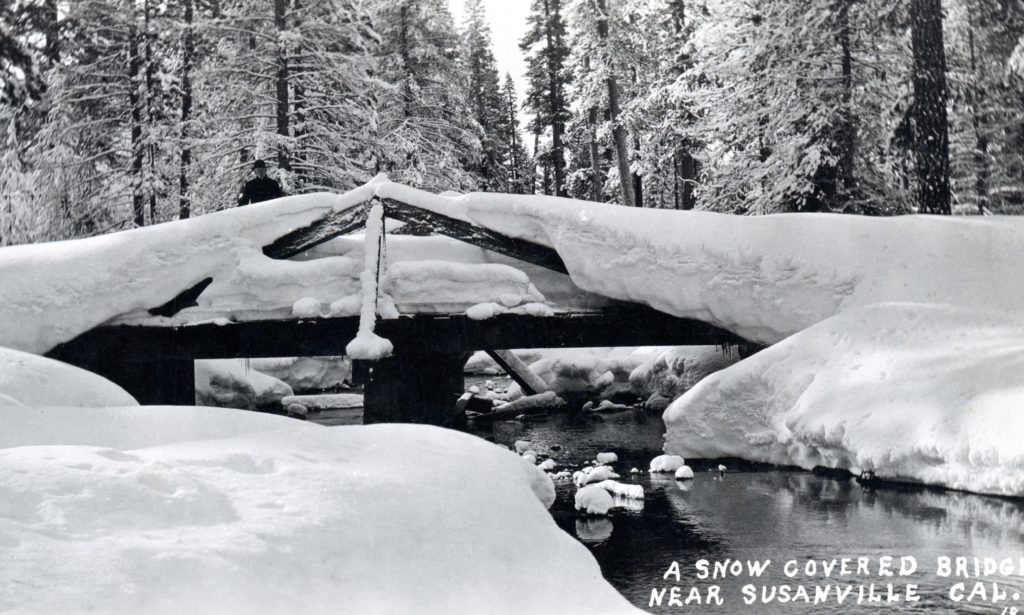 At the conclusion of November 1931, Robert M. Cook, editor and publisher of the Lassen Mail embraced the early winter weather conditions. Cook reported that it had been cold and snowy all month, even a light snowfall on Thanksgiving. On November 22, the morning was a brisk nine degrees. Because of the cold temperatures and heavier than usual snowfall in the mountains, Cook thought that was the ideal scenario—the. solid frozen snowpack would be ideal next spring/summer to insure water for irrigation.