Tag Archives: Susanville

Susanville – 600 Nevada Street

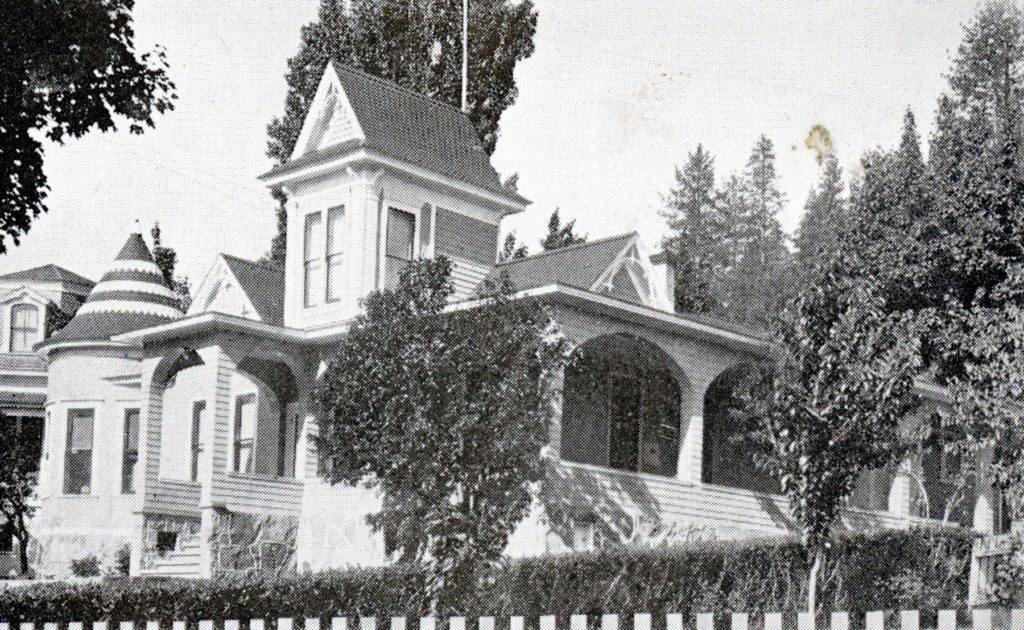
600 Nevada Street, Susanville, circa 1911. Courtesy of Dick & Helen Harrison

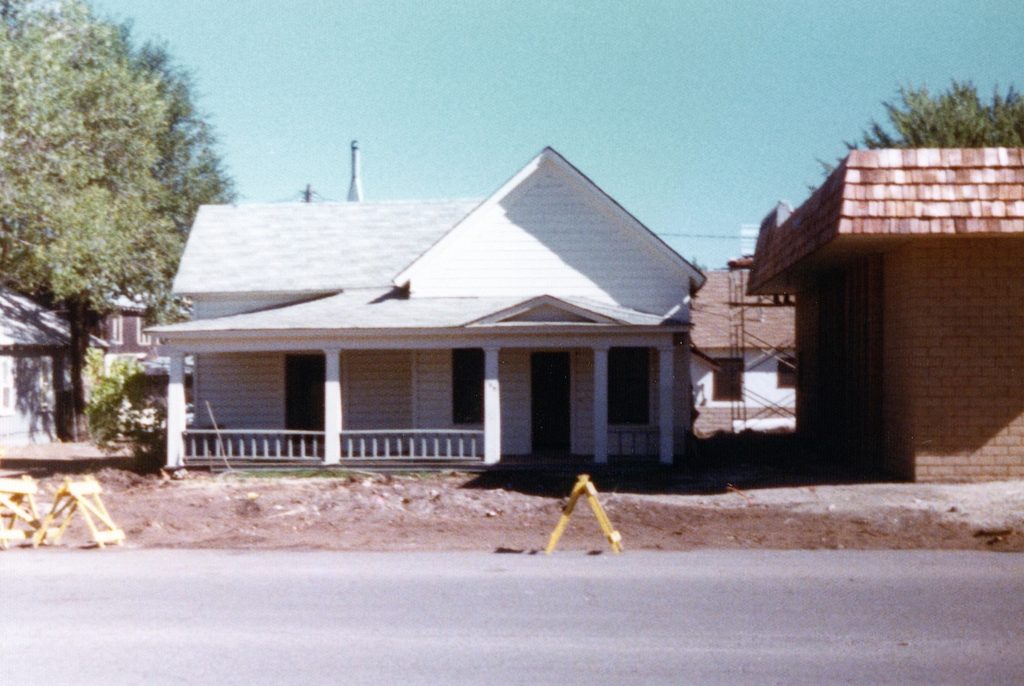
subscriber wanted to know what happened to the house located at 600 Nevada Street. It is somewhat an amusing tale. The house was built in 1895, and for many years it was the home of Elizabeth Bagin. In 1941, the residence was converted into apartments. In 2005, the last tenants to occupy the building were refugees from Hurricane Katrina. The City of Susanville had already acquired the building by then. In 2008, the building was placed on the City/County historic landmark register. The city would spend the next several years as to what to do with the structure. In the spring of 2014, the city had the building demolished.

Subscribe or Donate

A new courthouse complex?

A rendering of the proposed complex.

In 1975, when the Lassen County Public Works Department proposed a new building on the north side of the courthouse that was shot down, the department did not give up. In the spring of 1976, a proposed Lassen County Master Plan was unveiled. A site of 10 acres had already been selected adjoining North Mesa Street.  Construction would be done in phases with the ultimate goal of a county courthouse complex.

On September 7, 1976, the county board of supervisors approved the purchase of the Mesa Street property from the Paul Bunyan Lumber Company for $45,000. There was opposition  with over 100 people in attendance against the measure. Susanville attorney, Joseph B. Harvey representing the Lassen County Tax Payers Association presented a petition signed by 889 registered voters opposing the purchase and that the matter be put to vote.

While the county went ahead with the purchase, no county complex would be constructed there.

Subscribe or Donate

Cady Springs

Cady Springs Overflow, Susan River Canyon, October 1972.

In 1880, San Joaquin County native, Frank Cady, purchased a ranch in Big Valley, Lassen County. Nine years later he relocated to Susanville. In 1896, an opportunity arose for Cady to purchase the Susanville Water Works from Harry Cain who was going through a messy divorce with the former Stella Stiles.

At that time, the water supply came from Big Springs three miles west of Susanville in the Susan River Canyon.  In 1900, Cady had three-quarters of mile of pipe laid from the water tanks going westward, with the goal of replacing the open ditch with pipe.  In 1930, when Cady sold the water works to the Republic Electric Power Company, only three-eights of mile of the ditch was still open near the springs, that eventually became known as Cady Springs.

Subscribe!

A Riverside Hospital Story

Riverside Hospital, courtesy of Betty Barry Deal

In the early 1960s, Lassen County was busy in building a new hospital adjacent to the one constructed in 1916. Once, opened the new facility would have a major impact on two healthcare facility—Potter’s Maternity Home and Riverside Hospital. “Ma” Potter took the opportunity to retire. The fate of Riverside Hospital was another matter. Irene Bengoa Purdy, a registered nurse, proposed to Dr. Fred Davis, Jr., they and others should purchase it and convert it into a convalescent hospital. Irene could not muster support to accomplish her proposal. In 1969, Riverside Hospital was torn down and replaced with the current convalescent hospital.

Donate or Subscribe.

Potter’s Maternity Home

Potter's Maternity Home
Pottter’s Maternity Home

Ruth “Ma” Potter (1886-1965) was a Susanville institution of sorts. In the early 1930s, the Utah native, opened a maternity home at 1603 Main Street, the current location of Rite Aid. She continued on until 1963, when she finally retired. It should be noted that her home was moved to South Street in 1966 to make way for United California Bank. There is a plaque in the sidewalk at Rite Aid marking the site.

During the time when Potter’s was in operation, one was either born there or at Riverside Hospital, the latter no longer exists. While my three siblings were born at Potter’s, I decided to be different or difficult, whatever the case may be, and was born at Riverside Hospital.

Yet, on the other hand, it would be fun to have a reunion of sorts of all those who were born at Potter’s. Let me know what you think?

Subscribe!

1938 Flooding & Arnold Field

The flooded culvert, 1938. Courtesy of Margaret Purdy

On this rainy day, it seems to be an appropriate topic. What is known today as Arnold Field at Lassen High School was originally a agricultural field, prone to flooding from the adjacent Susan River. After the spring floods of 1938, it was decided to construct a levee along the river to prevent future flooding. Once this was accomplished, the high school made more improvements including a new athletic field. In 1939, it was dedicated Arnold Field, a tribute to Med Arnold. Med was not just a member of the first graduating class of 1907, but was a coach for the school’s sports teams for many years.

Donate or Subscribe

Riverside Park, Susanville

Story Club, 1924. Courtesy of Lola L. Tanner

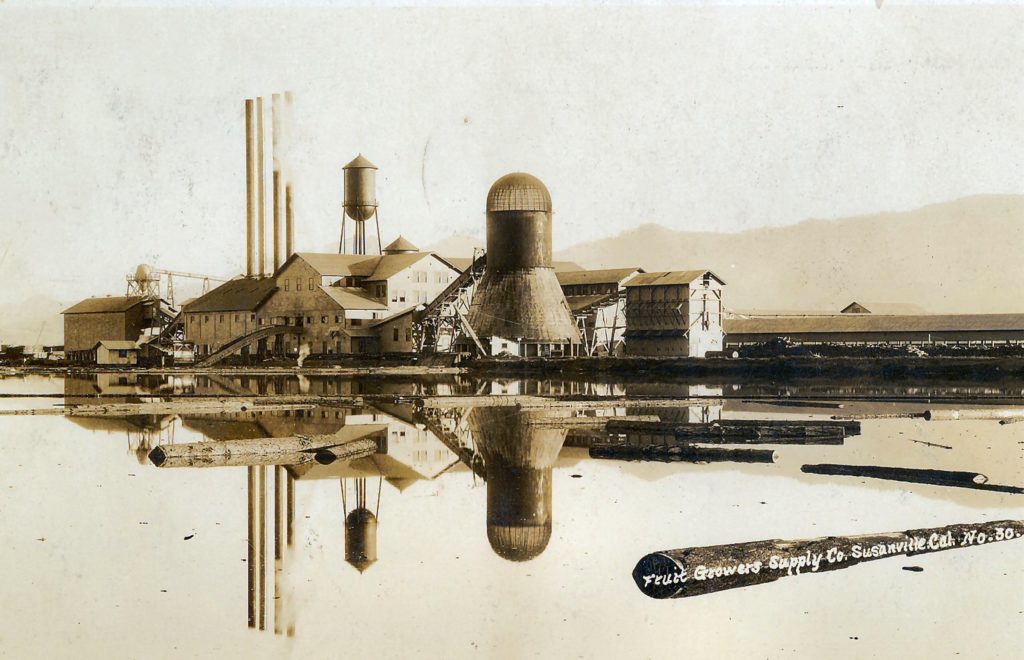
The background behind Riverside Park is unique. Prior to the park’s creation, it was home to the Fruit Growers Supply Company’s Story Club, a recreational center for its employees. It was destroyed by fire in 1944. Instead of replacing the structure, Fruit Growers converted the parcel into a park for its employees, and the public, too.

In 1963, Fruit Growers sold its mill properties, which included the park, to Eagle Lake Lumber Company. The City of Susanville, it should be noted took care of the park’s maintenance.  In 1976, A.A. “Red” Emerson, president of Sierra Pacific Industries, of which the Eagle Lumber Company was a division, offered the park to the City for $23,000. It had recently been appraised at $45,000. The City accepted the offer and by end of the year the deal consummated.

Subscribe!

Susanville Water Works

An expensive water bill for the time.

Initially, Susanville’s water supply came from Piute Creek and wells. In 1864, Luther Spencer claimed Big Springs (Cady) three miles west of town in the Susan River Canyon for a water supply for the community. Spencer’s good intentions never came to fruition.

In 1869, a group of Susanville residents formed the Susanville Water Works with the same proposal as Spencer. Their first priority was to survey a ditch, which they did. Then they went to the community to raise funds for the construction of the ditch and found none. Finally, with due diligence in 1872 construction began on the ditch. It was a modest effort fraught with problems, but it functioned without much change for the remainder of that century.

Subscribe!

815 Cottage Street, Susanville

815 Cottage Street, Susanville, circa 1925.

This house was built in 1893, as a wedding present. Susanville merchant Alfred Jackson had it constructed for his bride-to-be Rose Murrer. In the stone mantle he had the letter “R” carved into it. Unfortunately, their happy marriage was cut short, when he died in a deer hunting accident in 1895. In 1914, when Rose’s mother, Franceska Neuhaus constructed the St. Francis Hotel behind her home, she planted an elaborate flower garden for guests of the hotel to enjoy. Rose remained at her home until the early 1940s, when she moved to Reno, to reside with her only child Leona Byars.

Subscribe!

815 Cottage Street, Susanville, February 3, 2018

Amedee Lime Kilns

Amedee Lime Kiln
Amedee Lime Kiln, 1975
Amedee Lime Kiln, February 15, 2018

In the early 1890s, when the railroad town of Amedee came into prominence, led to many interesting developments. One of these was the discovery of lime deposits, then a key ingredient used in cement. In 1893, a lime kiln was constructed on the hillside above Amedee. However, due to the nation’s economic depression and the NCO Railroad’s refusal to lower freight rates the enterprise abandoned.

In 1913, with another railroad at Amedee and a surging economy, Susanville businessmen fired up the abandoned lime kilns. After over a year in operation, this they discovered was not the most prudent business investment, and once again the kilns were abandoned.

If you don’t succeed the first time, try again and again. In the 1920s, Janesville resident William B. Hail operated the lime kilns. In 1927, he used the lime for construction of the Bigelow Apartments in Susanville. After that it they were finally abandoned once and for all. Hail stated it was due to the poor quality of the lime.

Support this site and Subscribe today!