Tag Archives: Susanville

The Big Snow of 1952

Main Street, Susanville, 1952.

The big snow made its debut on January 12, 1952. Three days later Susanville was covered with a blanket of five feet of snow. On the other side the mountain, at Westwood eight feet had fallen. The storm was followed by unusually strong gusty winds. Not only did the winds disrupt electric power but drifting snow created highway blockades. These drifts ranged between seven and nine feet. They. were no match for regular snow removal equipment. Clearing them necessitated use of rotary snowplows. While they were efficient, it was a slow process. To clear a single highway lane of thirteen miles between Chester and Westwood took the rotary plow three days, working around the clock.

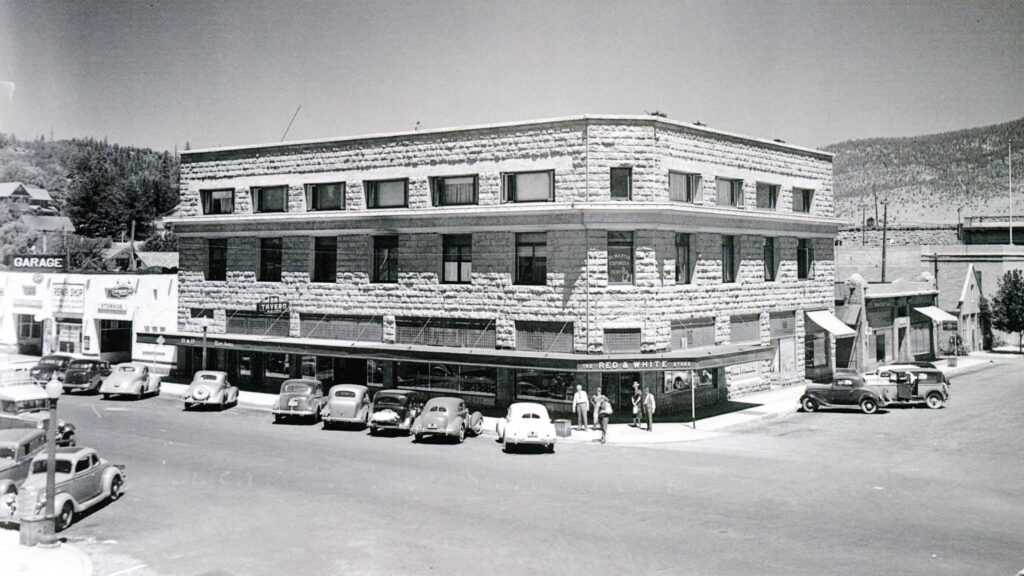
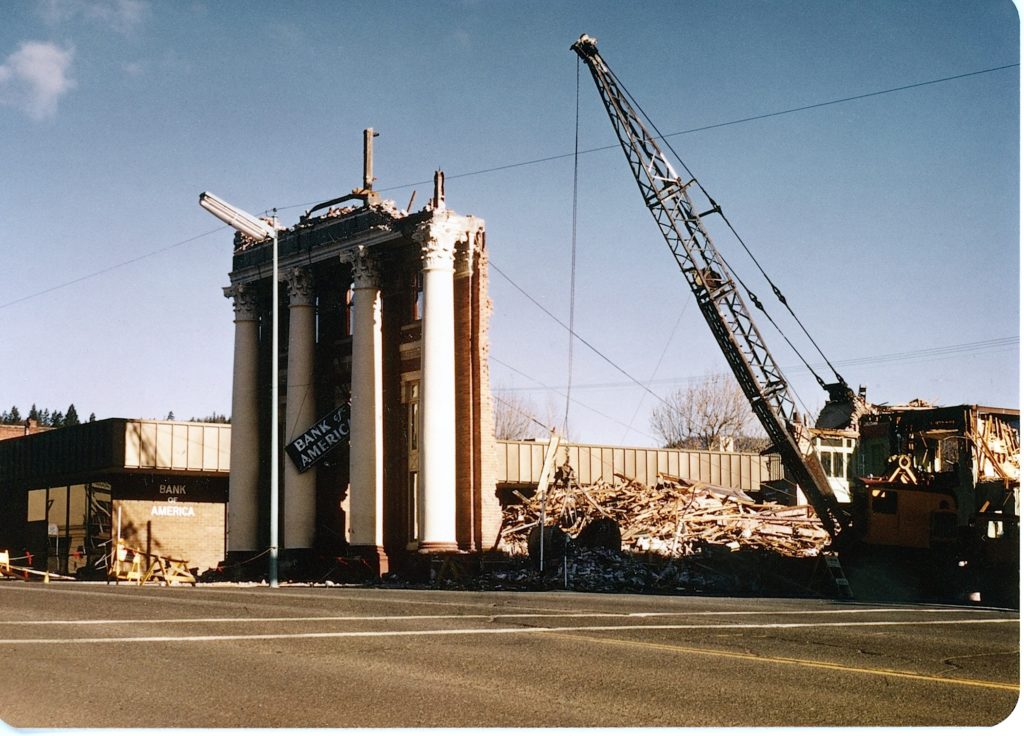
Elks Lodge, Susanville, 1952

The “big snow” showed how much life had changed. The residents were no longer self sufficient like the pioneers before them. Many relied grocery stores. After three days of the highway blockade, the grocery stores were depleted of their stock. In Susanville. a shipment of yeast was dropped by plane for the Sunrise Bakery so there would be a supply bread. Officials at Westwood and Chester made arrangements for an air drop of food and medical supplies. It was cancelled on January 18th, when the snowplows made it to Mineral. There a convoy of trucks laden with food, fuel and other supplies made its way along the one-lane highway. While the worst over, traffic was limited to emergency vehicles until two lanes were cleared. On January 31st balmy temperatures arrived in Susanville, with a morning low of 42 and a daytime high of 50.

Support

The Harvest Festival Arch

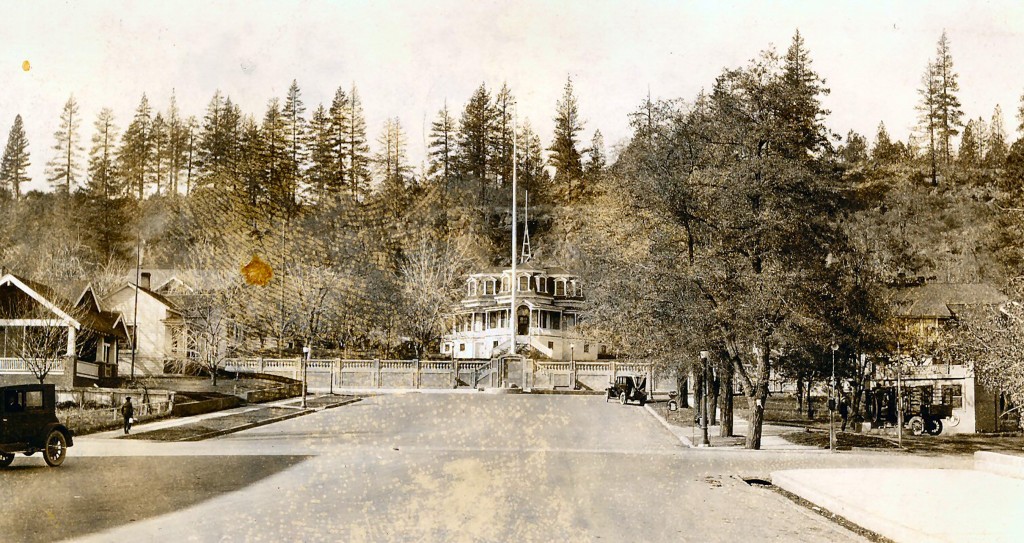
The Harvest Festival Arch, 1914

While we have explored the Harvest Festival of 1914, this post is with the emphasis about the arch constructed during the festivities. As noted, the four day event was a sponsored the local Moose Lodge. It is interesting to note that it coincided with California’s Admission Day, September 9.

The arch was a temporary affair, and a windstorm two weeks later, blew it over.

Some community arches, like Reno, were to be permanent. This was not case of the Moose Lodge arch located at Main and Gay Streets. The lodge duly noted that its arch was a temporary, but no one knew when it was to be dismantled. Mother Nature intervened. On September 18, 1914, a particularly strong windstorm hit the region. It did considerable damage and toppled the arch.

Tim

Keep Susanville Clean

The citation to clean up the Lassen County Courthouse grounds

When the town was incorporated in 1900, the major impetus was for fire protection. One concern was that citizens would either pile up rubbish at the nearest vacant lot or in the alternative to avoid the city’s wrath and possible fine, one could easily find a convenient location outside the confines of the city limits.This in itself poised a fire risk, but also health hazard.

It was not until 1920 that a city dump was created. On March 20, 1921, the City awarded a franchise to Frank Gerig, who offered twice weekly garbage collection at a monthly fee of fifty cents per address.

Tim

Sterno & Prohibition

Richmond Road store-keeper. A. Farris and his monthly report of sale of canned heat..

Sterno was developed around 1900 for use in catering to keep chafing dishes warm. The product sold in little cans received the nickname of “canned heat.” It was popular with soldiers during World War I to heat their meals.

Then came along Prohibition. One of the ingredients of canned heat is methyl alcohol, than can be deadly if ingested. This did not stop individuals straining canned heat with a cheesecloth to extract the alcohol. It was not only a nation wide crisis, but a local one as well. In March 1926 the deaths of John Murphy and Pete Nelson were attributed to the consumption of canned heat. It took local officials over a year to curb the usage of this product. In the fall of 1927 both the City of Susanville and the County of Lassen passed ordinances requiring that dealers of canned heat obtain a special license to sell it. The license cost dealers $50 per quarter. It was presumed that by making the special license so high, it would eliminate the product from the shelves. It worked and canned heat was no long a problem locally.

Subscribe

Camp Susan

Main Street, Susanville, 1864.

Today, we examine Camp Susan, the nearest appearance of a military encampment the town would experience and to say it was short-lived would be understatement.  In late August 1864, the 1st Nevada Territorial Infantry, a mobile military unit from Fort Churchill, under the command of Malachi R. Hassett, established a base camp near Susanville. Their mission was to scout the territory from Susanville, north to Surprise Valley and east to the Humboldt mines. In October 1864, the unit was ordered back to Fort Churchill.

There was a noteworthy at the camp. On September 12, 1864, Private Ebenezer Williams died at Camp Susan. Williams, a native of Wales, had just enlisted in February 1864. My records do not indicate a cause of death or burial.

Tim

Susanville’s Union Street

Deforest Freight team, Union Street circa 1912

During the Civil War of the 1860s, communities in support of the North, applied Union to street names, squares, etc. Susanville was a perfect textbook example.

Typical of the era, map makers were one dimensional. Susanville’s original plat, shows Union Street extending beyond Cottage and connecting Weatherlow Street at the Richmond Road bridge.  There were two problems. First the proposed street would dissect the block that was home to the Susanville School District. The other was the physical restraint of the hillside for Union to connect with Weatherlow. During the messy title problems of the 1870s, caused by  the town’s founder, to rectify this particular situation, that segment of Union to Weatherlow was abandoned.

Support

Susanville’s Richmond Road Bridge

Richmond Road Bridge, 1899- This bridge was replaced in 1915.Mary Dale Folsom

It is a Tuesday and only a few more to go before we start a new year. The crossing of Susan River from Susanville was  necessary for commerce. It should be noted on the north side of the bridge is where South Weatherlow Street ends. On the south side bridge is the beginning of Richmond Road.

Tim

Wm. J. Young – Lassen’s First Photographer

Gay Street
Looking north on Gay Street, Susanville, circa 1864. Courtesy of Gil Morrill

In 1862, William J. Young opened a photography studio, the first of its kind in Susanville. It was. located on the north side of Main Street’s 600 block.  In the same year, he was elected Justice of Peace, Honey Lake Township, Plumas County. Little is known about his photographic work. If the fall of 1863, he sold the business to a man by the name of Townsend, first name unknown. By 1865, Young had moved to the Idaho Territory with its mining bonanza underway.

In the fall of 1869, Young did make appearance in Susanville. This time with a stereopticon show. The local newspaper stated Young lack the skills of a good “orator” and that he should stick with photography.

Tim

A Centennial of Residential Mail Service

Shasta Street, Susanville, 1923

In July 1925, United States Postal Inspectors paid Susanville a visit. They deemed that residential mail service should be implemented.  There was work to be done. At least, in 1923, Susanville had implemented a housing number system. The postal service would provide residents free of charge mail boxes or the other option they would cut a mail slot in the front door. In November 1925, Postmaster C.D. Mathews ordered the installation of street signs.

On December 1, 1925 residential mail delivery was instituted. E.F. Unruh had the route that included the areas associated with the Fruit Growers Supply Company and Lassen Lumber & Box Company. He made his deliveries on a bicycle. R.C. Connor had the Halltown and Milwood districts and was provided an auto to make his deliveries. Herman Liidner had the incorporated city limits and he did his deliveries on foot.

Support