Tag Archives: Susanville

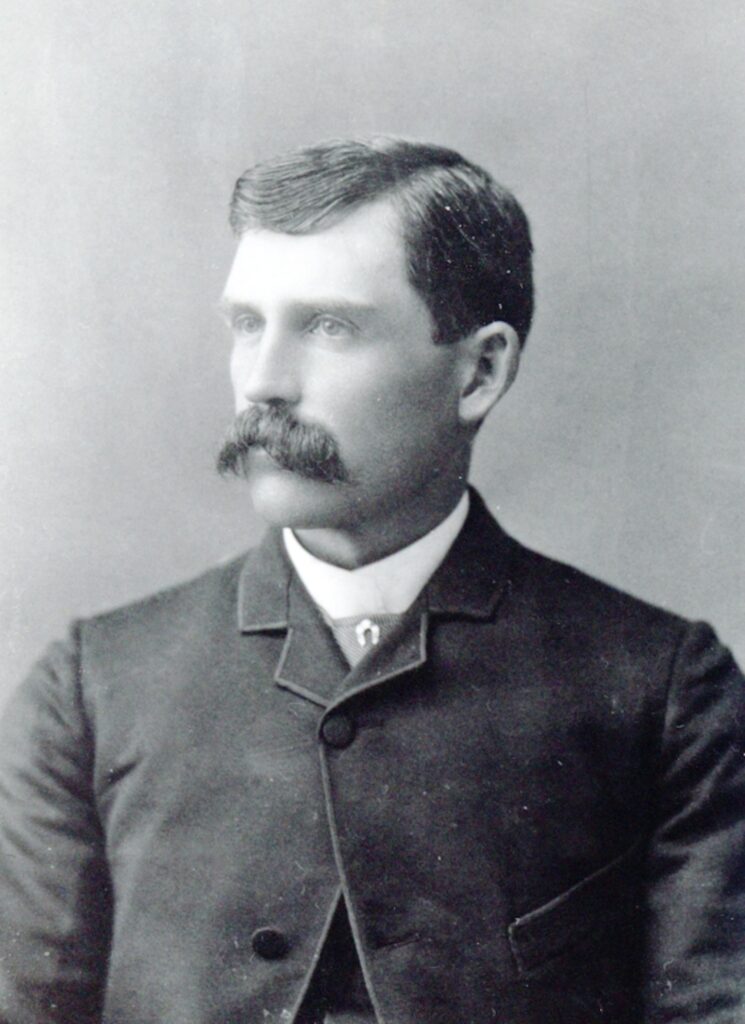
Susanville’s First Cop—W.H.Edwards

W.H. Edwards—Betty B. Deal

A native of Vermont, William Herbert “Herb” Edwards came to Susanville in 1868 with his parents at the age of 13. As a young man, in 1886, he ventured out on his own to Los Angeles. While there he worked briefly for the Los Angeles Police Department. After that he opened a butcher shop. In1887 he contracted tuberculosis. Due to his poor health he returned to Susanville to recover. In 1888, he married a young Milford woman. by the name of Marion True.

The young couple made their home in Susanville, where he opened a butcher shop. In the summer of 1900 there was a strong movement to incorporate Susanville. In August five city trustees (known today as council members); a city clerk; a city treasurer and a town marshal were elected. Edwards was that marshal making him the town’s first law enforcement officer. It was a two-year term and he won re-election in 1902. He did not run again and in 1904, he carried on with his own private business activities, though at times he did stints as the town’s nightwatchman.

By 1911, the effects of tuberculosis had so damaged his lungs, that he became an invalid. He passed away in 1914 and is buried in the Susanville Cemetery.
Support by subscribing.

A Fruit Growers Overview

Fruit Growers, 1921–Ed Standard

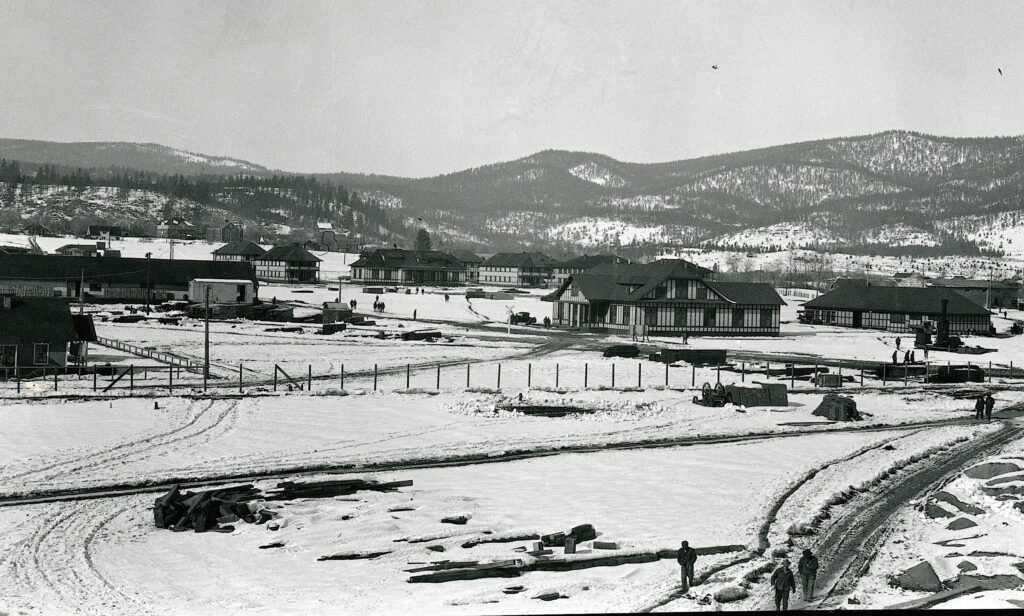
This is something a little bit on the lighter side. Personally, I happen to like this view of Fruit Growers Supply Company of its office/residential section, prior to the construction of its famed three-story Story Club. From the angle it was taken, and probably from the mill’s smokestacks, there is no indication in the background  that Susanville exists. Today, the site is best known as Riverside Park.

Tim

Some Early Susanville Water Works History

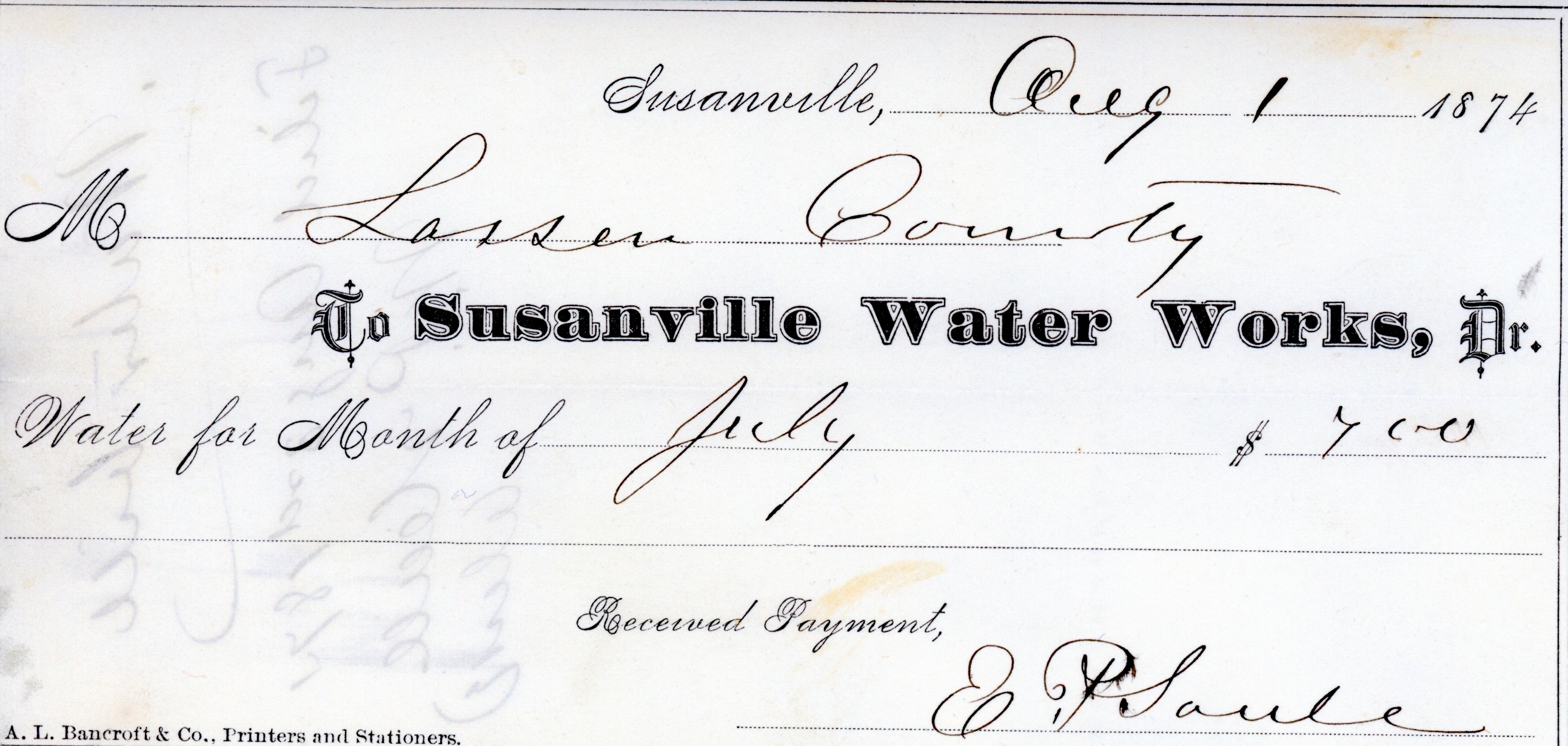
An expensive water bill for the time.

In 1928, it was announced that Minneapolis firm W.B. Foshay Company was in negotiations to by Susanville’s municipal water company. This, of course, brought up the usual debate that the City should own it. The town’s water supply was a hot topic. What is interesting, the Lassen Mail published an account on the origins of the water supply. The newspaper did not cite an author or source. However, I found it of interest, and thought others would too.

”The first attempt of supplying the settlement with water was made by Governor Roop, who constructed a rude system by laying pipes from Piute Creek to a tank located near the center of population. The ‘pipes’ were the trunks of trees bored out after the fashion then employed in the mining operations and in other settlements of the state. Those who needed the water went to to the tank and took what they needed. For this service they paid a small rental—when the governor thought about collecting it, or unless the user gave him a hard luck story and begged off.”

Tim

Thirty Years Ago—The Grand Cafe

Excavation of the State Building, next to the Grand Cafe., May 1935. Courtesy of Helen Sargent

It was on August 7, 1993 when the Neversweats Chapter #1863, E Clampus Vitus had a plaque dedication of Susanville’s iconic Grand Cafe. While it has been shuttered for many years, rumor on the street that it will re-open later this year.

The plaque states: “Established in 1909, the Grand was first operated by Kwan Wong In 1912, the Grand moved to this location and in 1921 Sam Vucanovich and Steve Sargent became the new owners. The original building collapsed in 1934 from construction next door and the Grand reopened in this building in 1935 with Steve Sargent at the helm, accompanied by his wife Helen. For over seventy years the Sargent family has been dedicated to serving the public’s needs.”

Tim

Emerson’s Memorable Birthday

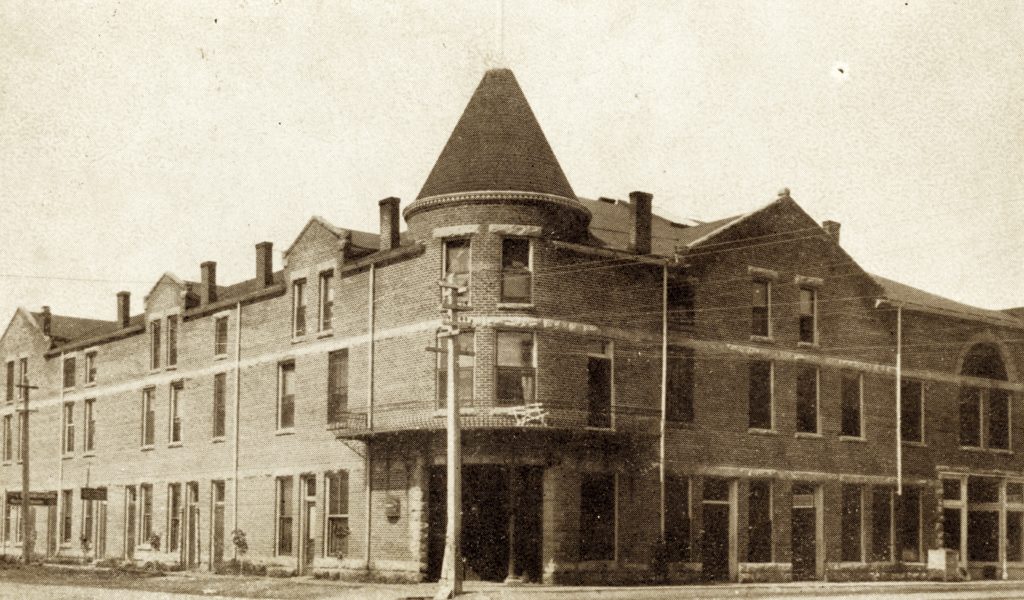
The Emerson Hotel located at Main & Lassen Streets, the current site of the Hotel Mt. Lassen.

Susanville native, Charles “Charlie” Emerson was born on August 5, 1868. He was one of the rags to riches story. A year after his birth, his father deserted his family. Slowly, but surely the budding entrepreneur ventured in the business world, and was doing quite well.

In 1900, Emerson announced he was going to build the town’s premiere commercial establishment—a three story brick hotel. Completed in 1901, it became the town’s social hub. In 1913, the hotel’s neighbor to the west, the Blue Goose Saloon caught fire. It should be noted the Blue Goose had the town’s first neon sign, which shorted out and caused the fire. The hotel received minimal damage. Emerson purchased the burned out lot, and built an annex to his hotel. There is an issue about the annex, but that will have to wait for another day.

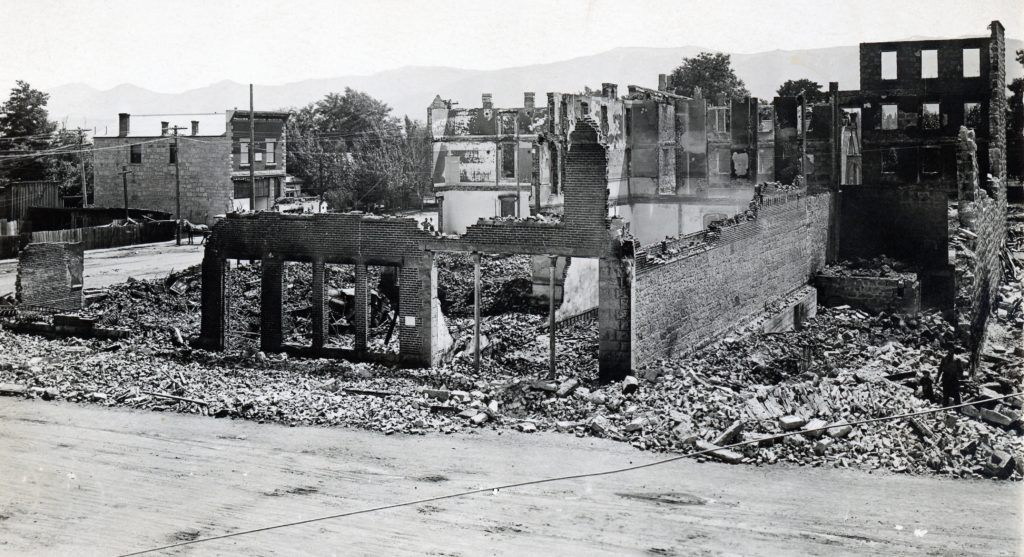
The Emerson Hotel ruins. Courtesy of Vivian Hansen

Back to Emerson’s birthday. Shortly after midnight on August 5, 1915, a fire was discovered in Emerson’s warehouse on Cottage Street, adjacent to the Methodist Church. The fire spread rapidly due to west winds, sending embers across the alley and igniting the Emerson Hotel, located on the corner of Main and South Lassen Streets. Two adjacent buildings facing on Lassen Street–the Hyer Hotel and the Methodist Church–also caught on fire.  When it was realized that it was futile to try and save the buildings, all efforts were focused on keeping it contained. The losses were staggering, estimated at over $250,000. Emerson never fully recovered.

Years later, Emerson’s daughter Mae Ables, recalled  the tragic event: “I was home for summer vacation from college when the hotel burned on my father’s birthday and stood with his arm around me in the middle of the street and watched it go with all our worldly possessions and Dad’s business records of years destroyed.”

Never miss a story, click here to subscribe.

Those Rowdy Camp Followers

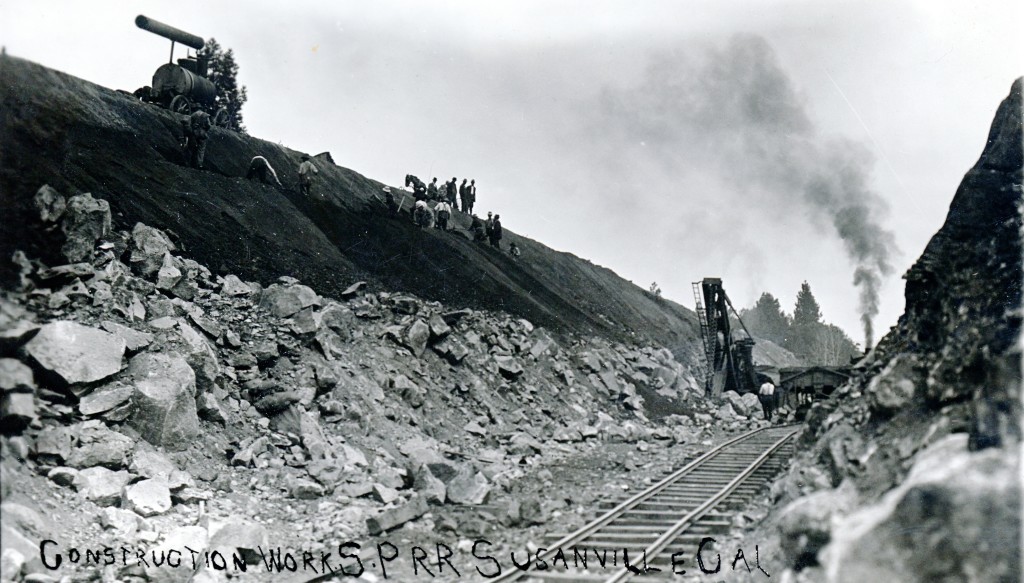
Construction of Miller's cut near Susanville 1913. B.R. Zimmerman collection
Construction of Miller’s cut near Susanville 1913. B.R. Zimmerman collection

Daily life got crazy in Susanville when the railroad arrived in 1913. Numerous discussions were held to make the town “dry.” It was the belief of some that if there was a ban on alcohol, that it would rid the town of certain elements. The City was not so keen  on the other hand, as it received most of its operating revenue from liquor licenses. Continue reading Those Rowdy Camp Followers

Those Summer Cloudbursts

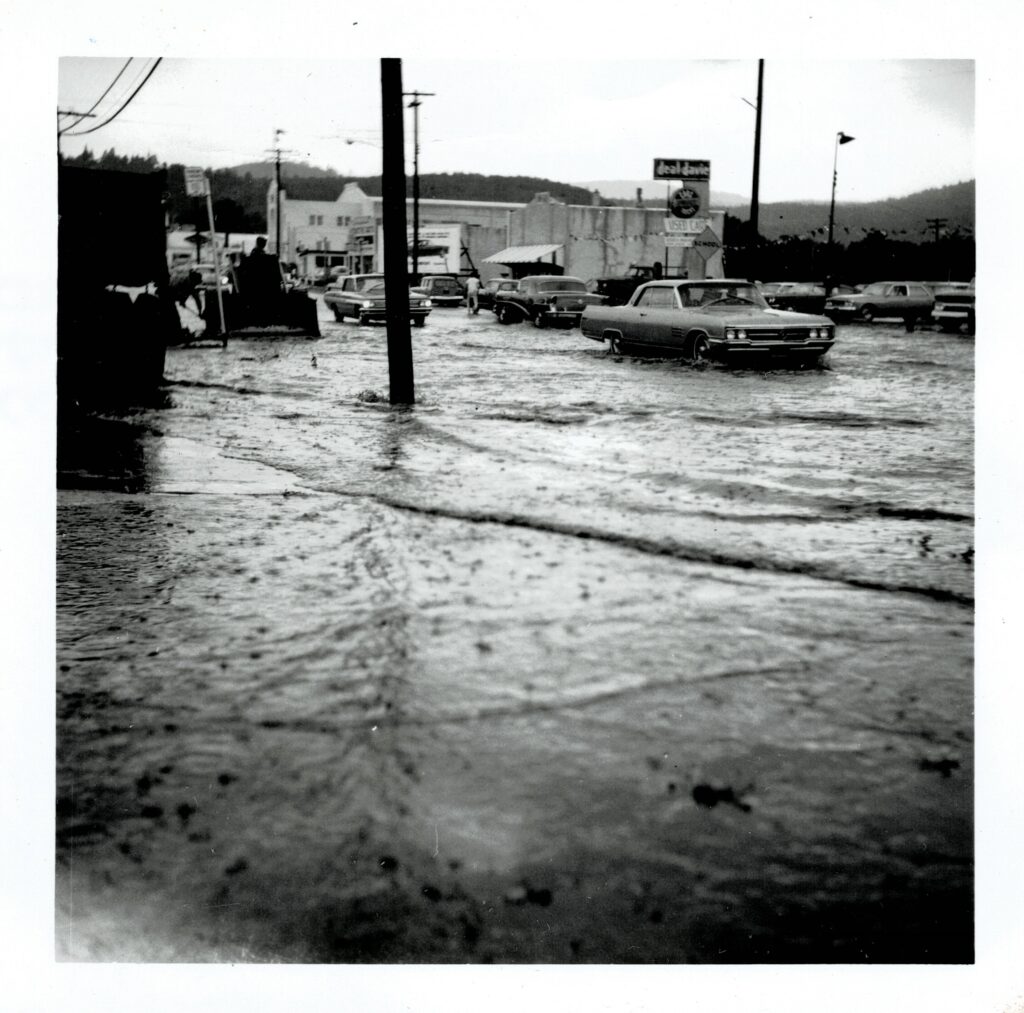
Main Street near Grand Avenue, Susanville, July 16, 1963—Calvin Farris

Some years these cloudbursts are more frequent than others, just like every winter is different. A particular cloudburst of July 16, 1963 was recorded by Susanville resident George Farris. On that afternoon, as Farris duly noted three inches of rain fell upon Susanville in a one hour period. Thankfully, George was a good record keeper. Up until 1969, weather records were duly noted, high, low and precipitation at the Lassen County Courthouse. When George’s son, Calvin, sent me the scanned photograph, I went to those weather county weather logs, only to find that whoever was on duty to record the same, there was a two week gap. However, on July 28, 1963, the Lassen Advocate newspaper reported George’s findings and published the above photogaph.

Tim

Susanville’s First Political Stance

Main Street, 1901
South side of the 700 block of Susanville’s Main Street, 1901

In 1891, Congress passed the Forest Reserve Act, the beginning of today’s national forest. It was a slow process to create individual forest reserves and even to change name to national forests.

At the December 29, 1902, the City Council (known as trustees then) meeting they took their first political stance and passed its first resolution, after all the city had only been existence less than two years. At issue was the federal government’s establishment of the Lassen Butte and Diamond Mountain Forest Reserves. The council, as was in the case of many municipalities and counties where large tracts of public timberlands were located, opposed the reserves for fear they would be detrimental in the case of future economic needs. The resolution stated in part: “Whereas the establishment of said Forest Reserves will be fatal to the prosperity of this Town; in that they are calculated: 1, to defer the investment of capital in this vicinity for the manufacture of lumber and other products; 2, to prevent the building of any railroad to connect this place with markets of the county; 3, to cause the surrender of all title lands within their limits to the Government, thereby greatly reducing the assessable property and public revenue there from.” 

Never miss a story, click here.

Tuesday Tidbit – Hudson’s Gas Station

Hudson’s Service Station, 504 Main Street, Susanville, California.

Some one wanted to know if I had a photograph of the gas station located at Main and South Roop Street, Susanville. Well, here it is. I remember it, but it had been closed for a long time. The site is now a vacant lot.

Back in 1950s and 1960s there gas stations galore, then referred to as service stations. Back in the day, at the same time, there were plenty of bars, too.

Tim

Susanville Country Club

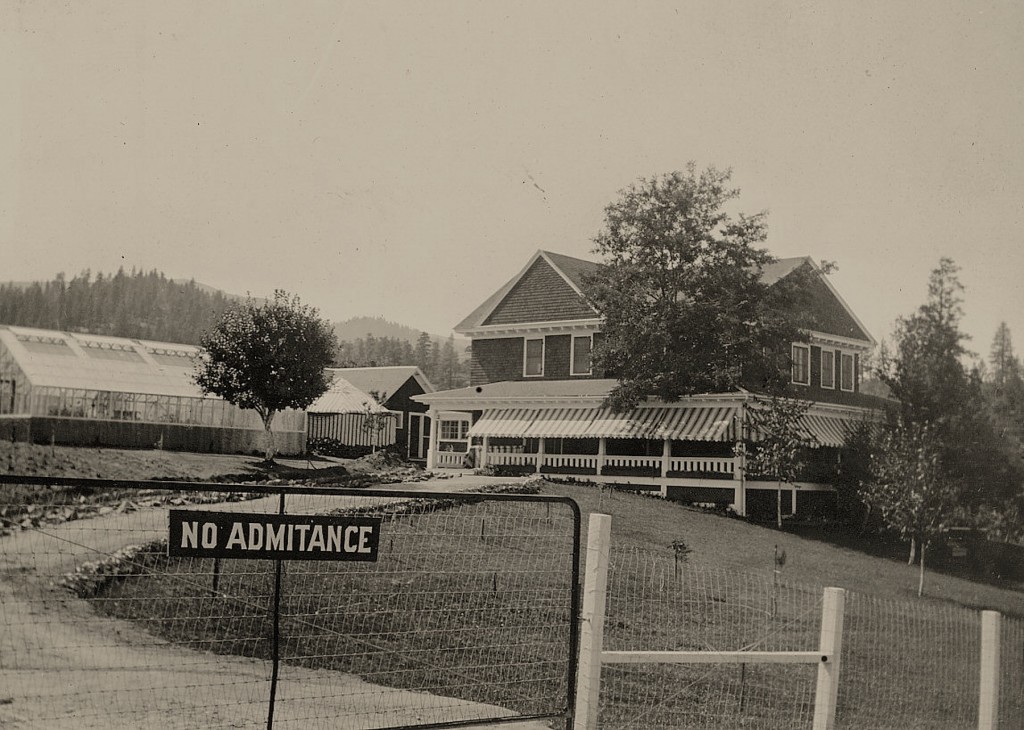
Susanville Country Club, 1931. Courtesy of Fred and Alyce Bangham

In the spring of 1924 witnessed the development of Susanville’s first golf course. It was an outstanding success that gave birth to the Susanville Country Club.  For the new organization the timing was exquisite. It just happened that in the summer of 1924, the Lassen Lumber & Box Company purchased George Wingfield’s summer home some eight miles south of Susanville along the base of Diamond Mountain. Equally important one of the lumber company’s executives, A.G. Breitwieser was a big proponent of golf.

In the fall of 1924, not only had the local “duffers” outgrown the first golf course, that a golden opportunity came there way. The Lassen Lumber & Box offered the Wingfield property to the Susanville Country Club at a bargain price of $20,000.  It was reported that Wingfield had spent $335,000 to develop the property.

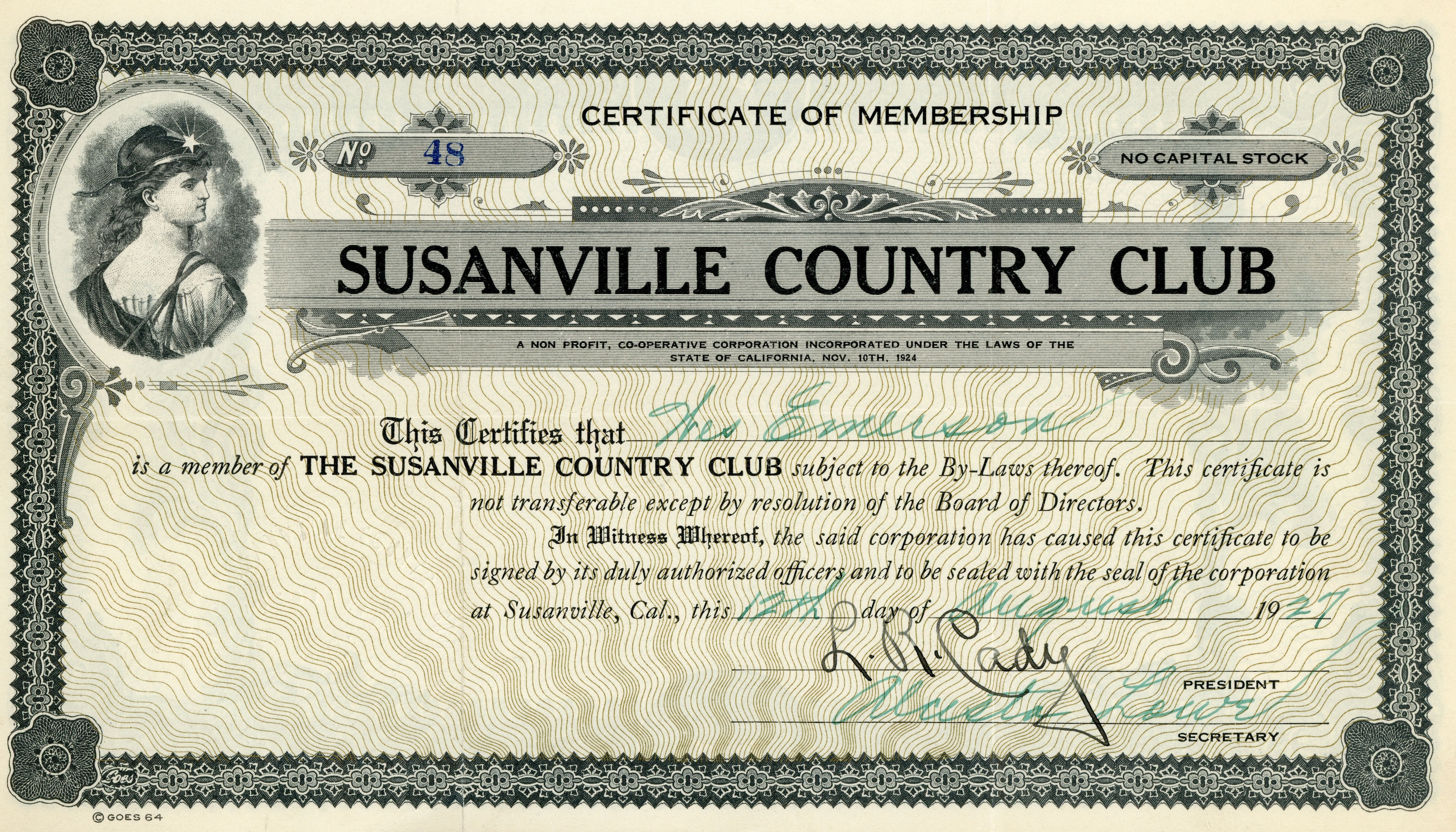
Stock Certificate issued to Wes Emerson

The club sold stock to finance the purchase. In addition, the club offered an exclusive 100 resident membership and 50 non-resident.  The cost $250. that, however, included a lot to build a personal cottage. In addition, there was a a five dollar monthly dues. This was not a deterrent and within a few short weeks, the club had a full charter membership.

The good times did not last that long. In the fall of 1931, L.R. Cady and Frank Coffin purchased the property, thus ending a chapter in the Susanville Country Club.

Never miss a story, click here.