Tag Archives: Susanville

An Early Research Endeavor

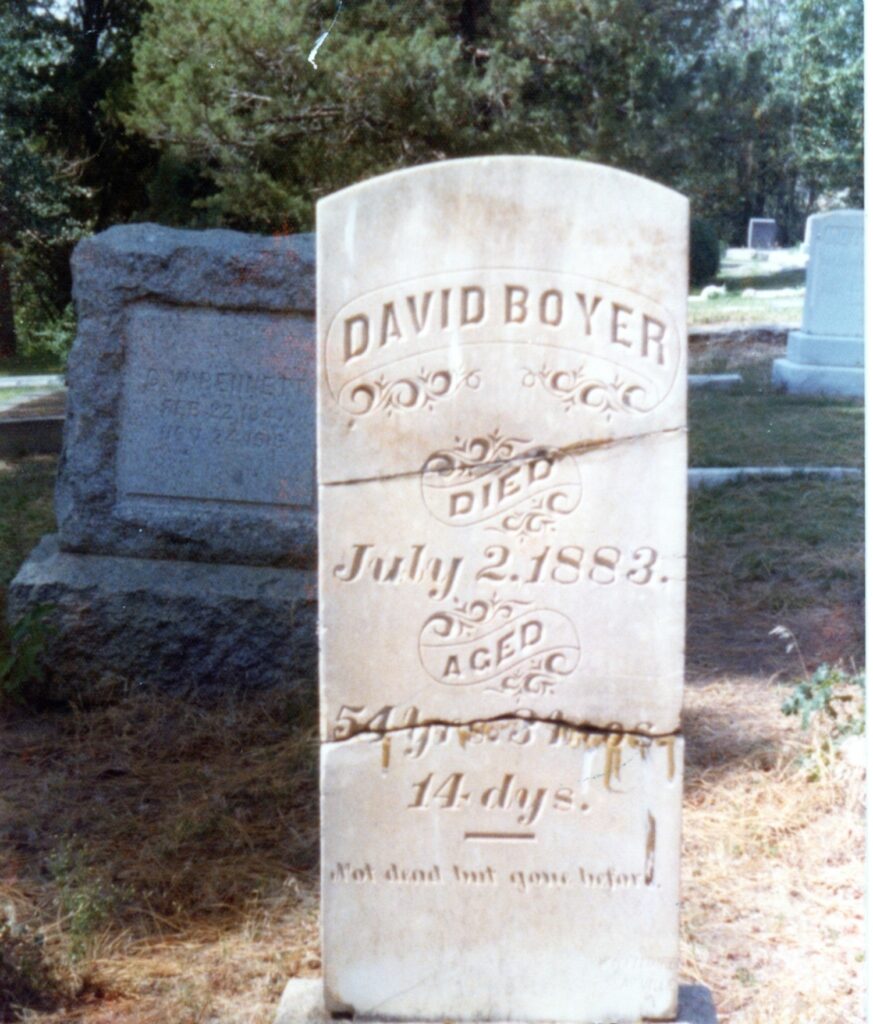
The grave of David Boyer, Susanville Cemetery, 1978

One of my favorite No Trespassing Signs was the Baccala’s at Soldiers Meadows, Plumas County.  It succinctly though I might not remember it verbatim, but it you get the drift: “If we see hanging you see around  hanging today, you will be hanging tomorrow,” and poster was illustrated with a hangman’s noose.

When I began my research I was at “hanging” a lot at the Lassen County Courthouse. Needless to say, while they did the courthouse staff did not threaten my fate to the gallows, they put me work instead. From to time to time either County Clerk or County Recorder would receive a letter from individual doing genealogy.  They would give me the letter to answer.

One of those early request came from Callie Quint seeking information about her grandfather David Boyer who died in 1883 at Mountain Meadows and buried at Susanville. Boyer, a Pennsylvania native, migrated to California in search elusive of proverbial pot of gold. Like so many others before and after him it was elusive and resulted in a hardscrabble existence. In 1875, he briefly operated a saloon at Prattville, Plumas County. The town catered to tourist trade that escaped the heat of the Sacramento Valley in the  summer to what is now known as Lake Almanor. Boyer feeling pinched, pulled up stakes that winter and moved to Susanville. He soon learned the grass was not greener on the other side. He leased a boarding house, but that it did work out. An opportunity at operating a saloon at Janesville seemed promising, but it was not. Back to Susanville. His endeavors as an innkeeper or a bar keep just was not was in the cards to sustain liveliehood was not forthcoming. The paper trail disappeared. In the spring of 1883 he moved his family to Mountain Meadows, though what he did there is not that known. On July 2, 1883, David Boyer died of heart attack at the age of 53. He left a widow and four small children destitute. Amanda moved her family to Susanville did odd jobs, including a bakery to sustain her family. She left Susanville in 1885.

On a final footnote. This one instance helped me to develop my research and writing skills. For a time in the late 1970s, I penned a weekly history column for the Lassen County Times, and I wrote about Boyer.  This caught Lassen College instructor Bob Middleton’s attention. Bob urged to me to get a teaching credential in history, and I did. In the mid-1980s I taught a course of research techniques on local history at Lassen College.

Tim
An Ice Harvesting Story

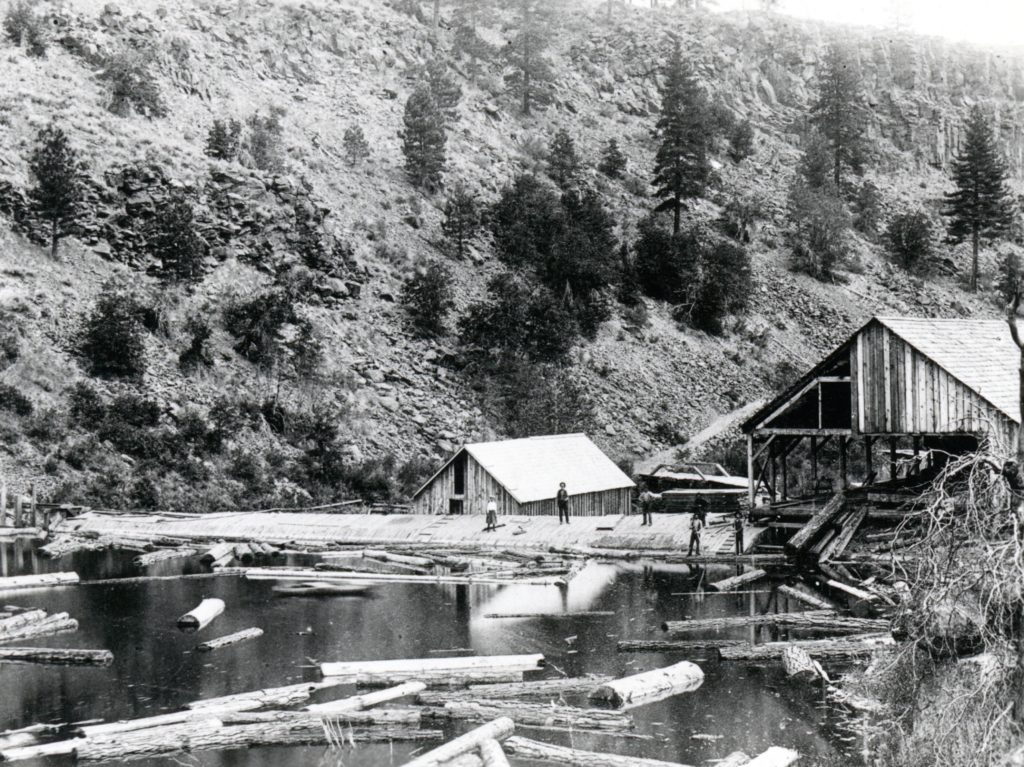
Bremner dam and  sawmill, Susan River Canyon, 1891 . Courtesy of Betty Barry Deal

In April 1963, the Lassen County Historical Society issued its Bulletin 10 entitled Susanville. It included a story by Med Arnold (1885-1967) The Susanville I Knew Over Seventy Years Ago. Those not familiar with Med, he was a grandson of Susanville founder’s Isaac Roop. Susanville’s Mark Street was named for his brother. Lassen High School’s Arnold Athletic Field,  was named after Med.

Med recounts the annual practice of ice-harvesting. One must remember this was before refrigerators. Med wrote: “Ice was cut on the mill pond [Bremner] just above town on the Susan River. Usually a foot and a half  to two feet thick, the ice was hauled into town by sharp shod horses, and was stored in ice houses for summer use by saloons, ice cream parlors, and a few private families. Sawdust used to cover the ice, and kept it nicely from one season to the next. We did, however, have one mild winter in which no ice was harvested. The users solved this problem by hauling in snow from Diamond Mountain.”

Tim


The Susanville Jay Cee’s

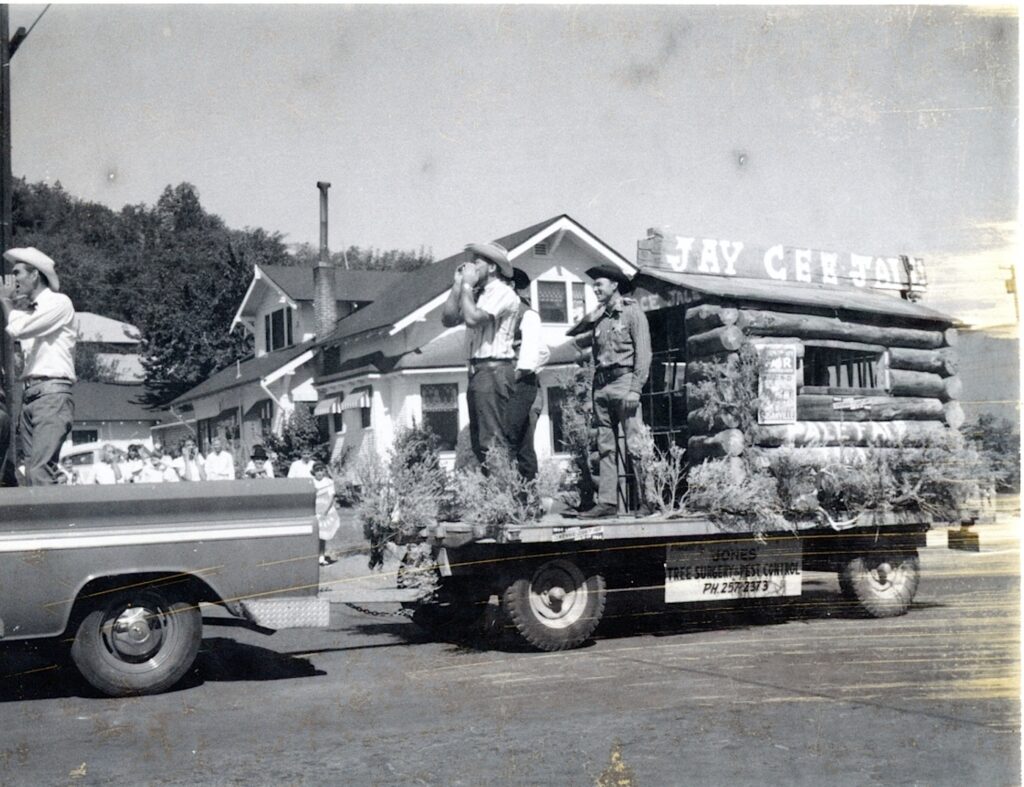
JC Lassen County Fair Parade, no date-Courtesy of Fred & Theresa Nagel

Over the holidays, Fred and Theresa Nagel shared the above photograph of Jay Cee’s parade float. In the early 1950s and to the mid 1960s there was the Susanville Junior Chamber of Commerce, hence the nickname “J.C.” It was my understanding that the members were in the 20 and 30s. It was like the reincarnation of the “20-30 Club.” It was the promotional arm of the Susanville Chamber of Commerce. One of major goals of the JC’s was to promote and organize events of Susanville Centennial of 1954. This is not be confused of centennial of the City of Susanville, but rather the centennial of when Isaac Roop settled there in 1854. It was a success. It was decided to keep the organization, and prepare for the Lassen County Centennial of 1964. After that event, the Susanville Junior Chamber of Commerce faded into oblivion .

Tim

Elk’s Lodge – A Land Title Story

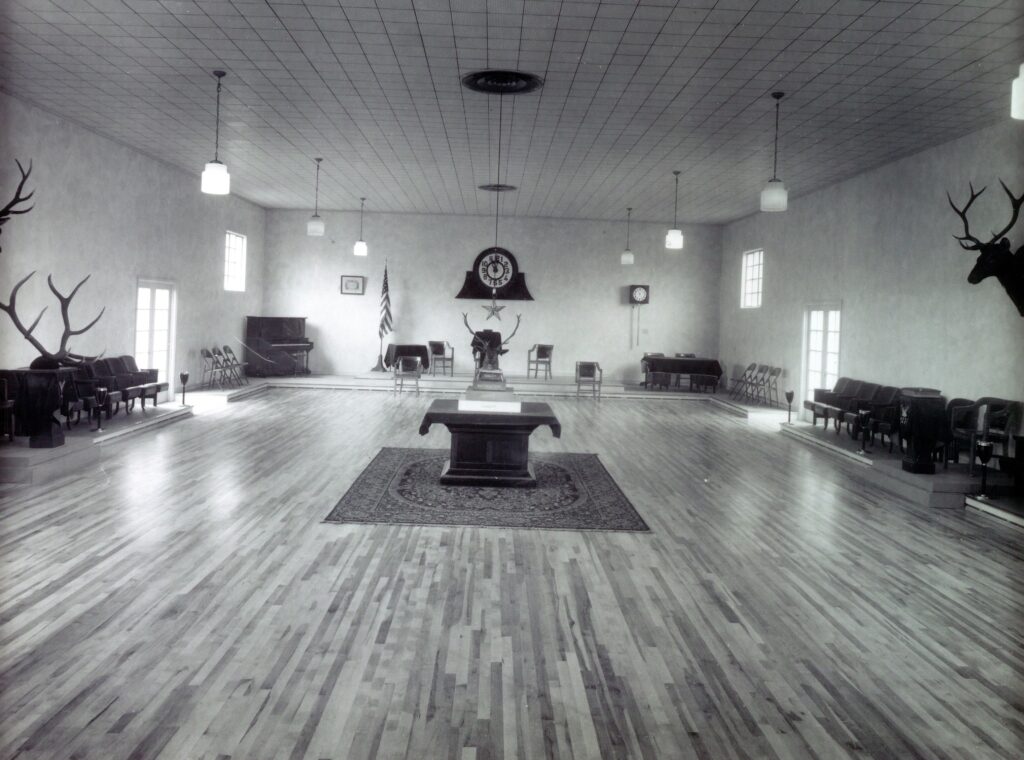
Susanville’s Elks Lodge Hall, 1948

Fratneral organizations once social fabric of many communities, both large and small have been waning. In Susanville, it came as shock to many residents that iconic Elks Lodge that has graced the west end of Susanville will be up for sale. A dwindling membership, maintenance costs  among other things  is cited for cause.

Elks Lodge, Susanville, 1952

Way before the Elks organization, initial property ownership of this prime property is rather vague. It also happens, record wise, the earliest land transaction of Chinese in Lassen County.  On September 14, 1864  Chew Henry sold this lot in Susanville to fellow countryman Hoa for $266. How Chew Henry acquired it, is not known. Ditto, how Hoa disposed it.. In November 1865, Shong Lee sold it to Isaac Roop for $150. Eventually, Sarah Hosselkus bought the property. On March 22, 1884 she sold the lot J.G. Leonard for $450. Leonard in turn commissioned the structure that we know of Elks Lodge today.

Tim


Those January Snowstorms

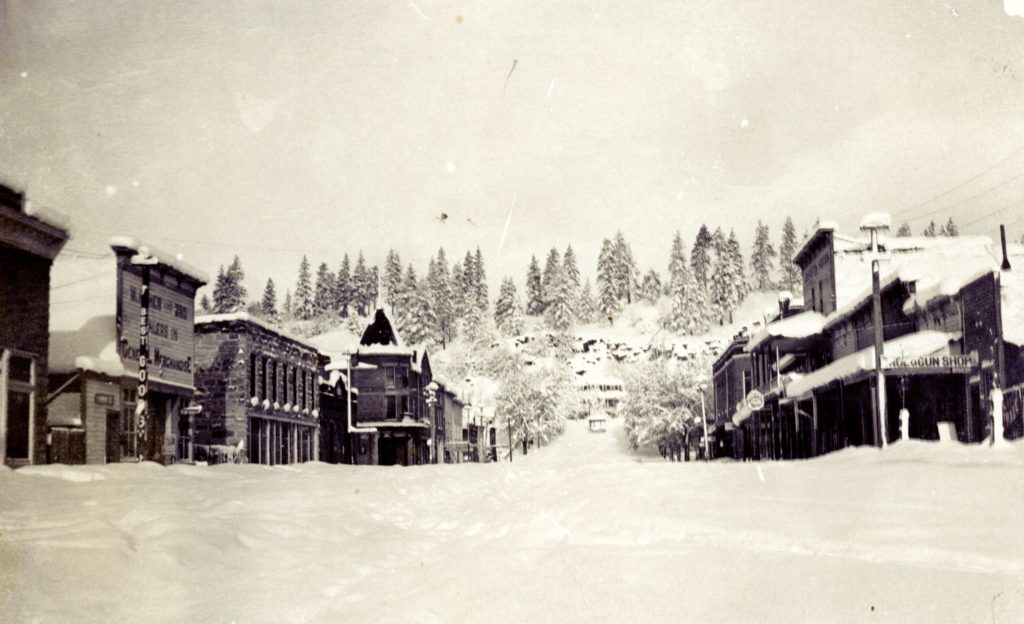
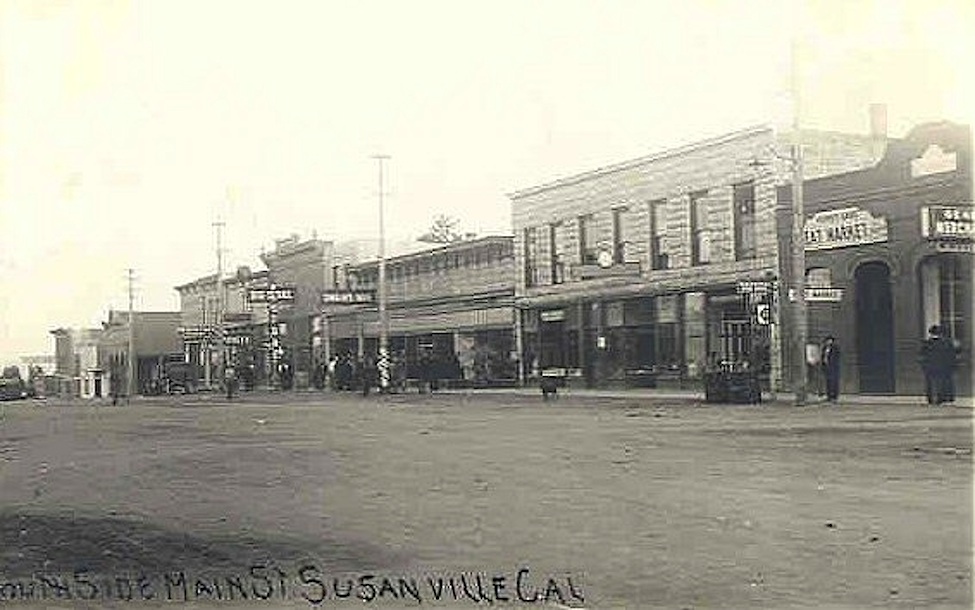
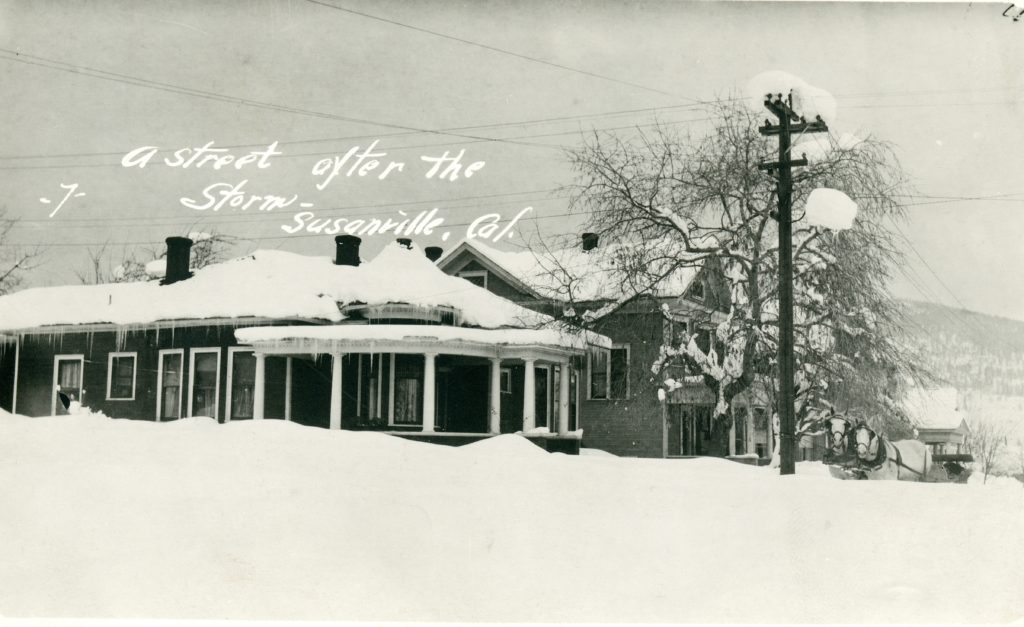
Main Street, Susanville, January, 1907

Typically, the largest snowstorms in this region occur in the month of January.  It was January 1914 that proved to be a record breaker with 93 inches of snowfall that month. It also happen to be a rainy month with  9 inches of rain. In all, the total precipitation for the month was 18.17 inches.

The weather conditions was problematic for the completion of the Fernley & Lassen Railroad to Westwood. Due to the weather whiplash of rain and snow, the soil became saturated and prone mud slides in the Susan River Canyon. Railroad officials, of course, had a lot to worry about, as the construction with the Red River Lumber Company had a completion date to Westwood by. March 1.

In a related railroad matter was the NCO train delays due to frequent wash outs of the track. The US Postal Service had a  contact with the NCO to deliver mail originating from the East. Since the NCO had a poor delivery record of the mail, the Postal Service  by mid-February ordered all mail would be re-routed via the Fernley & Lassen. Many residents of the Honey Lake Valley rejoiced after this announcement, as regular mail delivery would be six days week.

Tim

P.S. – It should noted the other spectrum, there would be dry Januarys in which no snowfall occurred that month. I do know from records searched those rare years occurred in 1893 and 1912. The latter was so mild that baseball games were routinely held.

Main Street Fire, 2005

January 7, 2005

Yesterday, we explored the history of the Spalding Drug Company. When Spalding Drug closed it went through various ownerships and occupants. Looks can be deceiving, yet the building straddles separate property lots. Long time residents will recall that the former Spalding Drug was replaced with The Bootery. On east side, the smaller parcel was occupied by The Smart Shop.

Anyhow, its hard to believe how time quickly marches on. It was on this date, twenty years ago, that this building was destroyed by fire. It could have devastating for me. I had moved out of the second floor  of the building only seven months before the fire. My photographic archives were stored there.

Today, it still remains a vacant lot. There have been proposals, even at least to turn it green space, but as I understand it, the property owners are unwilling to sale.

Tim

Spalding Drug Company

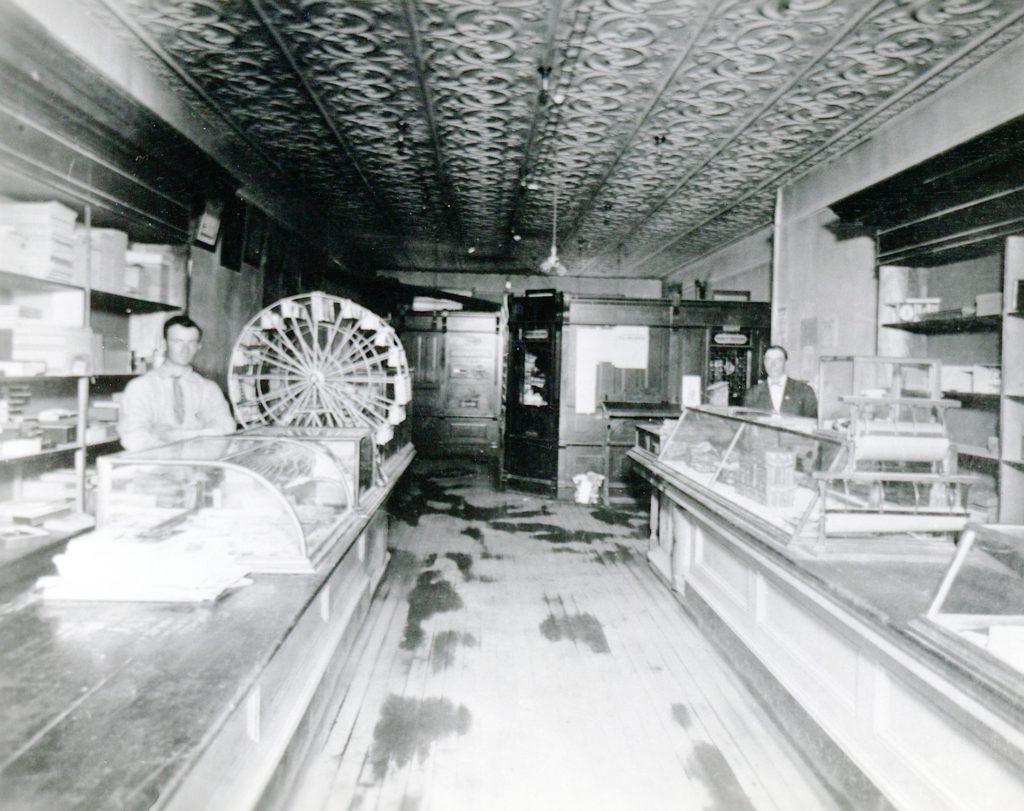
Interior of Spalding Drug, circa 1910. Courtesy of George McDow Jr.

Seasoned residents of the area will have fond memories of a one time iconic local institution the Spalding Drug Company. .It was established in 1865, by Zetus N. Spalding and his brother-in-law, A.C.Neale. Spalding was the pharmacist and Neale tended store and its customers.  The partnership did not last long and two years Spalding bought out Neale. In 1886, Spalding formed another partnership with his son, John Bridger Spalding who was only 19 years old.  In the 1890s, John B. to give the business a more cosmopolitan flair, he renamed it the City Pharmacy. In 1898, Zetus Spalding died an accidental drowning while fishing the Susan River. John B. restored name to the Spalding Drug Company.

South Side, 700 Block, Main Street, Susanville, 1913. The Williams/Spalding building is second from the right.

In 1906, J.B. Williams commenced work on a native stone building for his jewelry business. Spalding by coincidence was Williams neighbor. Spalding became intrigued and joined forces with Williams for construction of two-story native stone building to house both of their respective businesses.

Among other changes was in 1912,  when Spalding entered into partnership with his son, Wright and E.E. Bourne. In 1930, the Spaldings bought out Bourne. John B. Spalding passed away in 1934 and then store his operated by Wright’s family-his wife Ruth and son John. In 1967, the Spalding Drug Company closed its doors after a century in business. 

This, of course, is a brief outline. For an example, many will have fond memories of the soda fountain.

 Subscribe

A Susanville Triangle Update

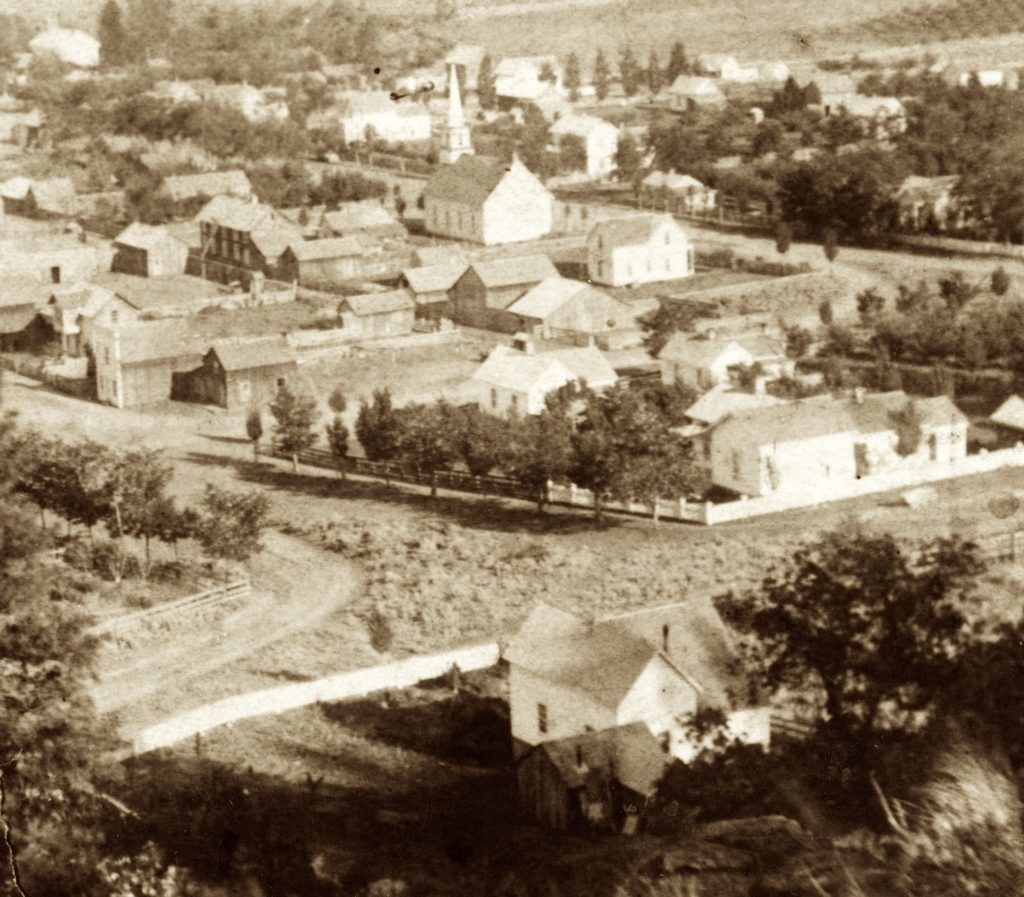
An 1886 view. Courtesy of Bud Lesser

I have addressed this unique property on the west end of Susanville’s Main Street, just below the Elk’s Lodge. While reviewing the Lassen Advocate of May 22, 1914, I came across this tidbit:

“J.A. Adams is circulating a petition for making of what he calls a ‘park’ at the head of Main Street in front of the J. Henry Swain’s residence, where the wagon-ways branch to north and west. A bit of landscape gardening in the triangle at that point might prove to be attractive, but those who remember the old bandstand abuses of twenty or more years ago, will doubt the merit of the proposal, as the town  can not afford to hire  a caretaker at present.”

A 1984 view—Matt Mattinson

Tim

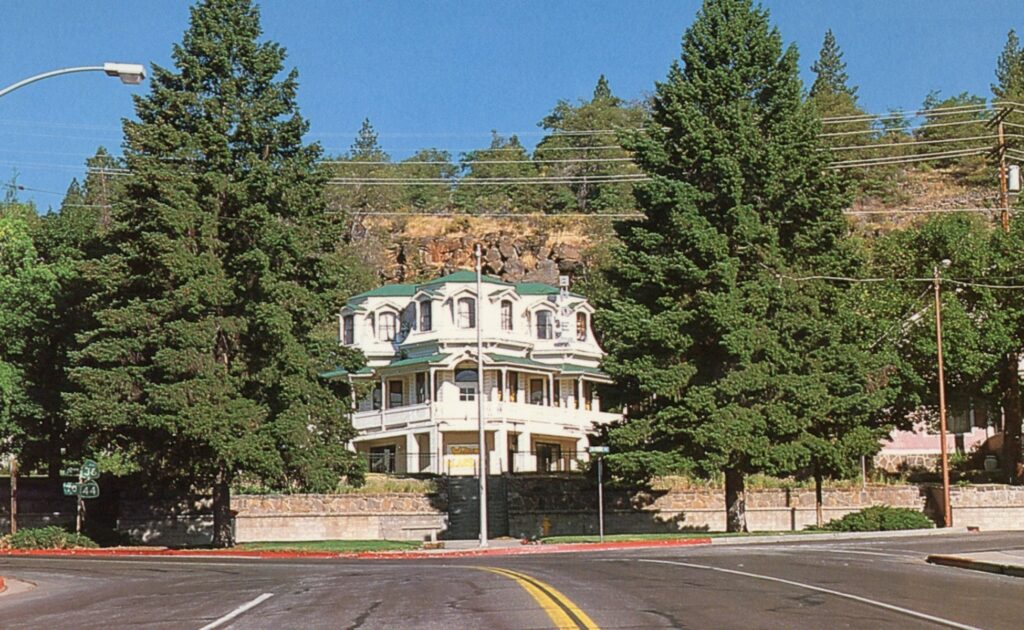
Susanville – Smith Hotel

Smith Hotel, circa 1880. Courtesy of Verna M. Wood

The Smith Hotel, I have found intriguing in the sense of the lack of records. Yet, it was one of the more substantial buildings in Susanville during its day.

The founder, Jacob Smith, a German immigrant whose true spelling of his last name was Schmitt, arrived in Susanville, in the fall of 1864.  Records about his early activities conflict.  According to Fairfield’s history, Smith operated a brewery from 1865 to 1872.  Yet in December 1868 the Lassen Advocate reported that Smith and Doctor R.F. Moody were partners in a drug store. Moody filled the prescriptions and Smith sold them. The Advocate in April 1869 reported that Smith sold his drug store to Dr. Z.N. Spalding and had returned to brewing beer.

In the summer of 1877, Smith hired Henry Tunison to construct his “fire-proof” three-story hotel on the south side of the 800 block of Susanville’s Main Street.  However, only the first floor was made of stone. It was never revealed how much structure cost, but in October 1877 Tunison filed Mechanics Lien for $628.25 against Smith for the construction work.

So much of fire-proof,  as it was destroyed in the big fire of 1882. Some records state that Smith, along with his wife, Sophia, remained in the hotel business and others he continued as a brewer. Dick Harrison, a great-grandson was under the impression that Sophia operated a boarding house, but not a full-fledged hotel.

Tim


Bungalow Style, I Beg To Differ

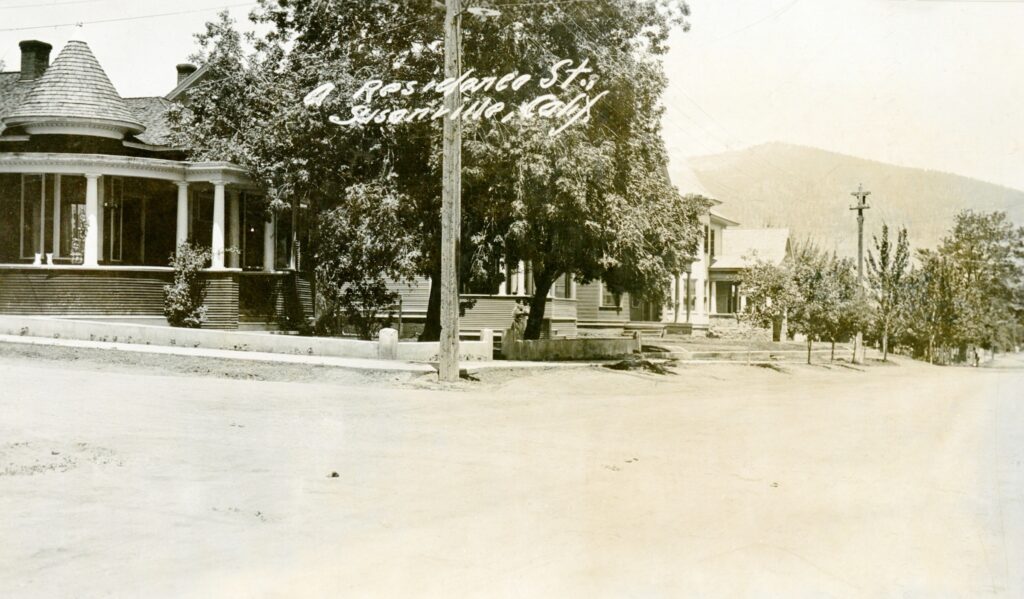
100 North Street, Susanville, circa 1914

Personally, I have special affinity for architecture, but my honest opinion I disagree with this newspaper article as follows.

In July 1908, it was announced that Susanville pioneer merchant David Knoch hired Enhorning & Harrison to  construct a house at 100 North Roop Street. The Lassen Advocate noted: “The Knoch residence on the corner of Roop and Nevada streets is a one-story edifice, 32×62 feet and will contain five rooms, bath, closet and pantry. It will be bungalow style, with a round tower on the corner. The building be wired. throughout, and strictly up-to-date in all its furnishings and appliances.”

100 North Roop Street, January 1916.

First and foremost, bungalow style homes do not have a semi-circular porch. Second, I knew owners Lyle “Dan” & Nadene Wemple and frequently visited them during the late 1970s. The interior of the house basically remained the same as it was built–bland. There were was no wood work features and/or cabinetry associated with a bungalow.

On a side note Enhorning & Harrison kept busy, besides Knoch residence, they built the Borrette next door in that same year. In 1909 they constructed houses of 120 and 130 North Roop Street.

Subscribe